
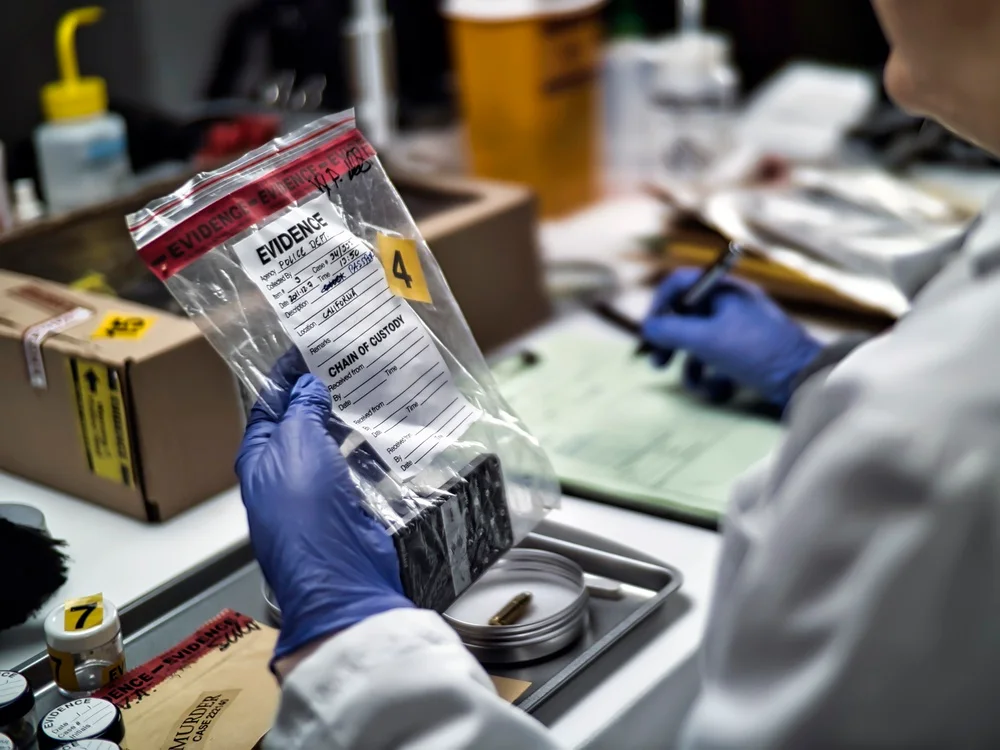
Forensic science and CSI education in Southern California covers several different career tracks. Some programs prepare students to document scenes, photograph evidence, process fingerprints, and maintain chain of custody. Others emphasize chemistry, biology, toxicology, DNA, and instrumental analysis for crime-laboratory work. Digital-forensics programs focus on computers, networks, operating systems, and electronically stored evidence. Forensic psychology is a separate specialty centered on human behavior, assessment, law, and the justice system.
This guide defines Southern California as Los Angeles, Orange, San Diego, Riverside, San Bernardino, Ventura, and Santa Barbara counties. It does not include Imperial or Kern County. A program is included based on its campus or institutional location within those seven counties, not simply because Southern California residents can enroll online.
The verified regional inventory includes graduate criminalistics degrees, associate degrees in forensic science or technology, credit-bearing CSI certificates, noncredit professional training, digital-forensics programs, and two adjacent forensic psychology master’s degrees. No named forensic credential was verified in Santa Barbara County, although Santa Barbara City College offers individual courses in forensics and criminal investigation.
Readers comparing options across California can also browse the broader directory of California forensic science and CSI schools.
Southern California program comparison
The right credential depends first on the type of evidence work you want to perform.
| School and program | Location | Credential | Primary focus |
|---|---|---|---|
| Cal State LA, MS in Criminalistics | Los Angeles County | Master of Science | Laboratory criminalistics |
| National University, Master of Forensic Sciences | San Diego County | Master’s degree | Criminalistics or investigation |
| Ventura College, Forensic Science | Ventura County | Associate in Science | Laboratory science plus field CSI |
| Grossmont College, Forensic Technology | San Diego County | AS and certificate | Crime scenes, photography, fingerprints |
| Southwestern College, Forensic Studies | San Diego County | Associate in Science | Evidence technology and field forensics |
| Palomar College, Forensic Technology | San Diego County | AS and certificate | Evidence collection, processing, and analysis |
| East Los Angeles College, Forensic Crime Scene Investigation | Los Angeles County | AS and certificate | Scene processing and evidence recovery |
| Riverside City College, Crime Scene Investigation | Riverside County | Certificate | CSI, photography, evidence, and investigation |
| Fullerton College, Crime Scene Investigation | Orange County | Skills certificate | Field CSI and evidence procedures |
| Río Hondo College, Crime Scene Investigations and Forensics | Los Angeles County | Certificate | Scene processing and forensic fundamentals |
| Long Beach City College, Criminal Forensics | Los Angeles County | Certificate | Evidence, fingerprints, and investigation |
| UCR Extension, Crime Scene Investigation | Riverside County institution, online delivery | Continuing-education certificate | Broad professional CSI coursework |
| Cal State Long Beach, CSI Certificate | Los Angeles County | Noncredit certificate | Intensive practical CSI training |
| Cal State LA, Forensic Specialist Certificate | Los Angeles County | Professional certificate | CSI or friction ridge examination |
| Riverside City College, Digital Forensic Investigation | Riverside County | Certificate | Computer evidence and cybercrime |
| Southwestern College, Cyber-Forensic | San Diego County | Associate in Science | Cybersecurity and computer forensics |
| San Bernardino Valley College, Digital Forensics | San Bernardino County | Certificate | Digital acquisition, analysis, and reporting |
| Cal State Long Beach, Forensic Studies | Los Angeles County | Undergraduate minor | Interdisciplinary forensic supplement |
| Cal State LA, MS in Forensic Psychology | Los Angeles County | Master of Science | Psychology, law, practicum, and research |
| UC Irvine, Master of Legal and Forensic Psychology | Orange County | Master’s degree | Legal psychology and forensic assessment |
A short CSI certificate can provide focused preparation for evidence collection, photography, or fingerprint work. It is not the educational equivalent of a science degree for laboratory criminalist positions. Likewise, a digital-forensics certificate is not conventional crime-scene training, and a forensic psychology degree does not prepare graduates to analyze DNA or recover latent prints.
Laboratory criminalistics and science-based forensic programs
Laboratory criminalistics generally requires more science preparation than field CSI. Chemistry is especially significant in California because the state’s Criminalist classification requires the equivalent of a degree with a major in a physical or biological science. The stated education requirement includes eight semester hours of general chemistry and three semester hours of quantitative analysis.
A criminal justice degree or CSI certificate alone does not meet that model. Individual public laboratories and local agencies establish their own job classifications, but the state standard offers a useful benchmark for curriculum planning.
California State University, Los Angeles: MS in Criminalistics
Cal State LA provides the region’s clearest graduate route into science-based criminalistics. The campus program is structured as a full-time, two-year Master of Science and requires substantial undergraduate science preparation.
Published prerequisites include general chemistry, organic chemistry with laboratory work, quantitative analysis, physics, and biostatistics. The program also states a 3.0 GPA requirement. These prerequisites separate it from investigation-centered graduate degrees that admit students without a laboratory-science background.
The curriculum approaches criminalistics as scientific evidence analysis rather than solely as crime-scene response. Students complete advanced graduate work, electives, and a research capstone. Internships are encouraged, although they are not presented as a substitute for the research requirement.
This program aligns most directly with applicants who already have a chemistry, biology, biochemistry, or related laboratory-science foundation. Someone with a criminal justice bachelor’s degree but little chemistry would face a substantial prerequisite gap. Cal State LA does not present this degree as an introductory conversion program for applicants with no prior science.
No current FEPAC accreditation listing was verified for the program. Its documented science prerequisites, graduate curriculum, research requirement, and fit with specific laboratory job classifications provide the relevant comparison points.
National University: Master of Forensic Sciences
National University’s 36-credit Master of Forensic Sciences has Criminalistics and Investigation specializations. The tracks lead toward different forms of forensic work.
The Criminalistics specialization requires an undergraduate background in a physical, biological, or laboratory science, unless the program director approves another route. Its coursework includes advanced serology and DNA, toxicology, and trace evidence. Some Criminalistics courses may require in-person laboratory participation.
The Investigation specialization emphasizes field and investigative methods rather than advanced laboratory science. It can fit experienced investigators, evidence personnel, or graduates seeking a forensic-investigation curriculum, but it is not equivalent to the Criminalistics track for chemistry- or biology-based laboratory work.
National University lists online, hybrid, and in-person availability, including its San Diego main campus. Delivery varies by specialization, and the possible in-person laboratory component means the Criminalistics track is not necessarily a fully remote degree.
The university’s current tuition table lists an estimated program amount of $25,830 for the 36-credit degree. That figure is tuition-related, not a complete cost-of-attendance estimate, and it does not include every possible fee, laboratory expense, or travel cost.
Ventura College: AS in Forensic Science
Ventura College’s associate degree combines laboratory science with field-oriented forensic training. Required study includes biology with laboratory work, chemistry, statistics, forensic science with laboratory, evidence law, report writing, courtroom procedures, ethics, career preparation, and forensic photography.
The practical component is unusually clear for an associate program. Students complete a two-unit capstone built around a complex mock crime scene and produce a portfolio documenting their work. An approved internship with a law-enforcement agency or forensic laboratory can replace the capstone.
This mixed curriculum can support entry-level evidence or forensic-support roles and provide a base for further science study. It is not automatically sufficient for California criminalist classifications. The chemistry options shown in the college catalog do not all necessarily reproduce the general chemistry and quantitative analysis sequence used in the state Criminalist standard.
Students planning to transfer for a chemistry, biology, or forensic-science bachelor’s degree should organize general education and major science courses around the receiving institution’s requirements. The associate degree’s statistics, laboratory biology, chemistry, photography, and capstone work can be useful, but transfer efficiency depends on course articulation.
Field CSI, evidence technology, and forensic identification programs
Field CSI programs focus on what happens at the scene and during initial evidence handling. Relevant skills include scene security, written documentation, sketching, photography, fingerprints, impressions, biological-evidence recognition, packaging, chain of custody, report writing, and testimony.
California does not have a single statewide CSI certification process. Agencies also use job titles differently. One department may employ civilian crime scene technicians, while another assigns scene responsibilities to sworn officers. Education is only one part of eligibility because some openings require prior law-enforcement service, evidence-room experience, or agency training.
Grossmont College: Forensic Technology AS and Certificate
Grossmont College in El Cajon has one of the region’s more extensive community-college forensic technology curricula. Both the major and Certificate of Achievement require 42 units. The associate degree adds general education and requires at least 60 total units.
Coursework includes fingerprint identification, beginning and advanced forensic photography, criminal investigation, crime-scene technology, forensic analysis, biology, and chemistry. Laboratory and photography courses account for a meaningful part of the program, and a forensic public-service internship is recommended.
The program’s depth is better suited to sustained preparation than a short introductory CSI certificate. It aligns with evidence technician, forensic specialist, latent-print support, photography, and crime-scene roles. Grossmont advises students interested in criminalist employment to continue their education in a hard science, which accurately reflects the divide between field technology and laboratory analysis.
Southwestern College: AS in Forensic Studies
Southwestern College in Chula Vista awards an Associate in Science in Forensic Studies with a 36-unit major. The curriculum combines criminal law, evidence law, investigation, report writing, evidence technology, latent fingerprints, digital forensic photography, biology, and chemistry.
Investigation and evidence courses include laboratory components. The college also explains that practical or volunteer experience may be needed before paid employment, and it recommends exposure to police agencies or crime laboratories.
This degree is primarily designed for field evidence technician and forensic-support work. Its biology and chemistry requirements provide more scientific context than many short CSI certificates, but the program is not structured as a full chemistry or biological-science major. Students seeking DNA analyst, forensic chemist, toxicologist, or state criminalist positions would need a deeper science sequence.
Palomar College: Forensic Technology AS and Certificate
Palomar College launched its Forensic Technology Associate in Science and Certificate of Achievement in Fall 2026. The college lists the certificate at 41 units and identifies the associate degree as a related pathway at its San Marcos campus.
Current institutional materials describe foundational forensic-science education and hands-on work in evidence collection, processing, and analysis. The career focus includes forensic technician, evidence custodian, and crime-scene specialist roles.
Because the program is new, there is not yet an established record of graduate outcomes. The available official materials also provide less course-level detail than the current pages for Grossmont or Southwestern. Palomar nevertheless adds another substantial field-forensics route in northern San Diego County, especially for learners seeking a full associate degree or longer certificate instead of a brief professional course.
East Los Angeles College: Forensic Crime Scene Investigation AS and Certificate
East Los Angeles College has a 60-unit Associate in Science and a 17-unit Certificate of Achievement in Forensic Crime Scene Investigation at its Monterey Park campus.
The program emphasizes crime-scene response and evidence processing. Topics include scene diagramming, forensic photography, evidence collection, bloodstain work, fingerprints, chemical enhancement, weapon identification, and gunshot residue. Official materials describe the instruction as hands-on.
The certificate provides a relatively compact field-skills route. The associate degree incorporates broader college requirements and can support additional education, although it is not a standard laboratory-science transfer degree. Career alignment includes scene processing, evidence custody, identification work, and coroner-assistant functions.
Riverside City College: Crime Scene Investigation Certificate
Riverside City College’s Crime Scene Investigation Certificate of Achievement requires 24 units. Its published curriculum includes criminalistics, criminal investigation, evidence law, forensic photography, crime-scene investigation, and cybercrime or digital-forensics study.
The program blends technical evidence work with legal and investigative foundations. Scene personnel must understand admissibility, documentation, custody, and investigative procedure in addition to evidence-recovery techniques.
RCC describes a possible completion period of six to 12 months with full-time enrollment. Separate forensic laboratory courses appear in the college’s course inventory, but they are not listed as requirements in the 24-unit certificate. The certificate is therefore best understood as field CSI preparation rather than a laboratory criminalistics credential.
Fullerton College: Crime Scene Investigation Skills Certificate
The Crime Scene Investigation Skills Certificate at Fullerton College requires 16.5 units. Required study includes CSI fundamentals, criminal investigation, evidence rules, report writing, DNA genetic fingerprinting, crime-scene techniques, and photography.
Students must earn at least a C in each course, and at least half of the certificate units must be completed at Fullerton College. Program outcomes include collecting crime-scene evidence with recognized methods.
The curriculum is focused on field and evidence-technician skills. A course labeled DNA genetic fingerprinting adds useful forensic context, but a single course does not provide the molecular biology and laboratory depth expected for DNA analyst positions.
Río Hondo College: Crime Scene Investigations and Forensics Certificate
Río Hondo College in Whittier has a 12-unit Certificate of Achievement. Required courses are Principles of Investigation, Crime Scene Investigation I and II, and Introduction to Forensic Science.
The two-course CSI sequence progresses from foundational scene procedures to more advanced applications. Published course content addresses evidence preservation, blood evidence, fingerprints, photography, scene processing, and legal issues.
At 12 units, this is one of the shorter credit-bearing options in the region. It works better as focused entry-level preparation or supplemental education than as broad scientific training. Its value lies in a tightly defined investigation and scene-processing curriculum.
Long Beach City College: Criminal Forensics Certificate
Long Beach City College’s current program page lists Criminal Forensics as a Certificate of Achievement. The 15-unit curriculum includes evidence, investigation, fingerprint classification and identification, and introductory forensics. Students also select a course in an area such as criminal procedure, criminal law, report writing, or computer use.
The program prepares students for introductory evidence-collection and crime-scene responsibilities. Its emphasis on fingerprint classification gives it a more specific identification component than a general administration-of-justice certificate.
Older college materials used the title Certificate of Accomplishment, while the current program page uses Certificate of Achievement. The current institutional title is the appropriate description for the present program.
Professional and continuing-education CSI certificates
Professional certificates can be useful for working investigators, evidence personnel, criminal justice graduates, and career changers seeking concentrated exposure. They are not interchangeable with college degrees, and they vary in whether they award academic credit.
Cal State Long Beach: Crime Scene Investigation Certificate
Cal State Long Beach runs an 80-hour, noncredit CSI certificate through ten full-day modules. Admission requires high school graduation, and class size is limited.
The curriculum covers scene investigation, fingerprints, biological and trace evidence, impressions, photography, death investigation, firearms, courtroom testimony, and employment interviews. Classroom instruction is paired with mock-scene exercises, culminating in a realistic crime-scene practical. Completion requires attendance in all ten modules.
The official page lists total tuition of $2,550. This is a training cost, not a complete college cost-of-attendance figure.
The certificate is designed for field CSI and evidence collection rather than laboratory science. Its concentrated format can help applicants build practical vocabulary and procedural familiarity, but it does not replace a bachelor’s degree in chemistry or biology where a criminalist classification requires one.
Cal State LA: Forensic Specialist Certificate
Cal State LA’s California Forensic Science Institute provides a Forensic Specialist Certificate with Crime Scene Investigation and Friction Ridge Examination tracks. The program is delivered in person at the Hertzberg-Davis Forensic Science Center, and participants do not need to be enrolled as Cal State LA students.
The specialist tracks permit a narrower focus than a general forensic degree. The CSI track addresses scene-oriented work, while the friction ridge track is relevant to fingerprint detection, processing, comparison, and identification. Training is organized in concentrated modules, with schedules posted for 2026 and 2027.
This professional certificate is most relevant to skill development in scenes or latent prints. It is not a replacement for the formal science education required by many forensic laboratory positions.
UC Riverside Extension: Crime Scene Investigation Certificate
UCR Professional and Global Education provides a 20-unit online CSI certificate with a stated completion period of 12 to 18 months. The current estimated tuition is $5,500.
Course topics include crime-scene management, criminal law, photography, digital forensics, courtroom testimony, fingerprints and impressions, medicolegal death investigation, criminalistics, bloodstain analysis, and report writing. This is one of the broadest topic lists among the region’s continuing-education certificates.
The online delivery provides access without regular campus attendance, but practical experience differs from the recurring in-person laboratory and mock-scene work built into campus programs. Current materials describe hands-on exercises and case studies but provide limited detail about how every practical competency is assessed remotely.
UCR Extension awards a continuing-education certificate, not a UC degree. The program is suited to broad CSI knowledge and professional development rather than meeting science-degree requirements for criminalist employment.
Digital-forensics programs
Digital evidence work involves acquiring, preserving, analyzing, and reporting data from computers or other electronic systems. The curriculum commonly includes operating systems, networks, cybersecurity, forensic software, legal process, and documentation.
That career path differs from photographing a physical scene or analyzing drugs in a chemistry laboratory. Digital specialists may support criminal investigations, civil litigation, incident response, internal corporate investigations, or cybersecurity operations.
Riverside City College: Digital Forensic Investigation Certificate
Riverside City College has an 18-unit Digital Forensic Investigation Certificate of Achievement. Its curriculum combines criminal investigation, evidence law, cybercrime, computer information systems, operating systems, and computer-forensics fundamentals.
The blend of justice and computing courses is useful for learners interested in law-enforcement digital evidence rather than general information technology alone. Coursework addresses evidence collection, handling, analytical software, and operating-system concepts. RCC describes the pathway as approximately one year.
Southwestern College: AS in Cyber-Forensic
Southwestern College’s Cyber-Forensic Associate in Science has a 30- to 32-unit major, plus general education and graduation requirements.
Courses cover cybersecurity, network and system protection, computer forensics, criminal investigation, evidence law, Python, and forensic computer investigation. The program also includes two to four units of work experience, adding an internship or externship component to the technical coursework.
This degree is oriented toward cyber investigations and digital evidence. It is not a substitute for conventional CSI instruction in fingerprints, bloodstains, impressions, or forensic photography, nor does it provide the laboratory chemistry foundation used in criminalistics.
San Bernardino Valley College: Digital Forensics Certificate
The 18-unit Digital Forensics Certificate of Achievement at San Bernardino Valley College concentrates on networks, computer literacy, computer forensics, Linux, systems and network administration, and information-systems security.
Computer-forensics coursework includes laboratory hours and covers digital-media acquisition, preservation, analysis, and investigative reporting. Compared with RCC’s justice-and-computing blend, SBVC places more of its required curriculum in computer and network technology.
Saddleback College in Orange County also includes digital-forensics preparation within its Cyber Operations pathway. That award is a broader cybersecurity credential rather than a named digital-forensics program, so it is not profiled as a direct equivalent to the three programs above.
Related undergraduate and graduate specialties
Some forensic programs apply law and science in ways that do not lead to CSI or criminalist work. Two common examples are interdisciplinary forensic studies and forensic psychology.
Cal State Long Beach: Minor in Forensic Studies
CSULB’s undergraduate minor in Forensic Studies supplements a bachelor’s degree in another field. The minor includes forensic-science survey work, courts, criminal procedure, criminal investigation, criminalistics, and electives such as high-tech crime, forensic psychology, forensic pathology, or an internship.
The minor can supplement a chemistry, biology, engineering, computer science, anthropology, or criminal justice major. Its career value depends heavily on the primary major. Paired with chemistry or biology, it can add legal and investigative context to a science degree. Paired with criminal justice, it broadens forensic exposure but does not create the laboratory depth of a physical- or biological-science major.
Cal State LA: MS in Forensic Psychology
Cal State LA’s Master of Science in Forensic Psychology requires 33 to 34 units. Published prerequisites include introductory psychology, statistics in psychology, abnormal psychology, and psychology of personality.
Graduate coursework covers psychology and law, abnormal psychology, individual testing and case-study methods, courtroom and legal issues, quantitative methods, electives, field experience, and a thesis. Students also complete a nine-month supervised practicum in a forensic setting.
This degree is relevant to behavioral and justice-system work, including assessment-related settings, victim services, corrections, probation, research, and policy. It is not training in crime-scene processing, fingerprint examination, DNA analysis, or forensic chemistry. The program materials also do not identify it as a psychologist-licensure program.
University of California, Irvine: Master of Legal and Forensic Psychology
UC Irvine’s Master of Legal and Forensic Psychology runs for six quarters over two years and consists of 13 courses. Instruction is primarily online, with two online courses during each regular academic quarter and a mandatory week-long introductory residence.
The curriculum covers legal and forensic psychology, data analysis and statistics, research methods, psychology and law, forensic assessment, legal reasoning and jurisprudence, six electives, and a capstone project.
UCI’s program is aimed at the intersection of psychology and legal systems. Potential applications include court liaison work, victim advocacy, case management, research, policy analysis, and related justice-system roles. It does not prepare graduates to collect physical evidence or conduct laboratory criminalistics.
UCI’s catalog specifies a mandatory introductory residence but does not identify where every residence is held. The accurate format description is primarily online, not fully online.
What about Santa Barbara County?
No current named forensic science, CSI, digital-forensics, criminalistics, or forensic psychology credential was verified in Santa Barbara County.
Santa Barbara City College provides courses including Introduction to Forensics and Criminal Investigation. Its named Justice Studies awards, however, are broader programs in areas such as criminology, law enforcement, legal studies, and transfer preparation. Individual forensic courses can support a broader degree, but they are not the same as a named forensic credential.
The available options in Santa Barbara County are therefore better suited to students beginning with a broader justice-studies program or completing individual relevant courses. Learners seeking a dedicated credential would need to compare programs elsewhere in the seven-county region, including Ventura College immediately to the east.
How to choose among Southern California forensic programs
Begin with the job function rather than the word “forensic” in a program title.
For crime-laboratory analysis
Prioritize a bachelor’s degree in chemistry, biology, biochemistry, molecular biology, or another physical or biological science. Build a transcript with general chemistry, organic chemistry, quantitative or analytical chemistry, statistics, and substantial laboratory work. Molecular biology is especially relevant to DNA-oriented paths, while analytical chemistry and instrumentation matter for controlled substances, toxicology, and trace evidence.
Cal State LA’s MS in Criminalistics is the clearest graduate option in this regional inventory for applicants who already have that science preparation. National University’s Criminalistics specialization also requires a science background and includes advanced laboratory subjects, although some courses may require in-person participation.
An associate degree such as Ventura College’s can begin the process, but laboratory criminalist goals usually require transfer into a suitable science bachelor’s program.
For field CSI and evidence technician work
Prioritize photography, fingerprints, evidence recognition, scene documentation, sketching, packaging, chain of custody, report writing, and courtroom testimony. Programs with mock scenes, laboratory exercises, or internships provide more direct practice than survey-only coursework.
Grossmont, Southwestern, Ventura, and the new Palomar programs provide longer associate or certificate routes. ELAC, Riverside City College, Fullerton, Río Hondo, and Long Beach City College have more compact credit-bearing pathways. The CSULB and Cal State LA professional certificates deliver concentrated in-person training outside a conventional degree structure.
Agency requirements still vary. A civilian evidence technician opening can have different qualifications from a sworn CSI assignment, even when both positions perform scene-related tasks. The San Diego Police Department Crime Laboratory, for example, identifies both forensic-science employment opportunities and internships, including work associated with its Forensic Chemistry Unit.
For digital evidence
Choose a curriculum with computer forensics at its center, not merely one digital-evidence elective. RCC combines criminal investigation and computing, Southwestern adds cybersecurity, Python, and work experience, and SBVC emphasizes networks, Linux, administration, security, and forensic analysis.
Digital-forensics applicants also benefit from demonstrable technical ability. Operating-system knowledge, networking, scripting, defensible evidence acquisition, documentation, and analytical reporting are more relevant than conventional wet-laboratory chemistry.
For forensic psychology
Cal State LA and UC Irvine provide different graduate experiences. Cal State LA is campus-based and includes a nine-month supervised practicum plus a thesis. UCI is primarily online, requires a week-long introductory residence, and culminates in a capstone.
Neither program is an alternative to CSI or laboratory-science training. These degrees fit interests in psychology, legal decision-making, assessment, policy, research, advocacy, corrections, or court-related services.
Accreditation, cost, and transfer planning
FEPAC accredits eligible forensic science education programs, but it is not the relevant standard for every program using the word “forensic.” It is generally associated with academic forensic-science programs, not short noncredit CSI courses, digital-forensics certificates, or forensic psychology degrees.
No included program is described here as FEPAC-accredited because no current authoritative listing was verified for it. Curriculum depth, science prerequisites, practical requirements, degree level, and alignment with employer qualifications remain the appropriate comparison points.
Only a few current program-specific prices were reliable enough to include. CSULB lists $2,550 total tuition for its noncredit CSI certificate. UCR Extension estimates $5,500 for its online certificate. National University lists an estimated $25,830 program amount for the Master of Forensic Sciences. These figures are not directly comparable because one is an 80-hour professional course, one is a 20-unit continuing-education certificate, and one is a 36-credit graduate degree. They also do not represent identical categories of fees or total living costs.
Community-college programs can be less expensive on a tuition basis, particularly for California residents, but an associate degree requires more total coursework than a short certificate. Transfer students should plan both the forensic curriculum and the receiving university’s lower-division requirements. A field-oriented associate degree may contain useful biology and chemistry without satisfying the full preparation for a chemistry or biology major.
The most efficient route is the one that preserves the courses needed for the intended occupation. Laboratory criminalistics calls for a science-first plan. Field CSI calls for evidence procedures and repeated practical work. Digital forensics calls for computing depth. Forensic psychology calls for psychology prerequisites, research methods, statistics, and supervised behavioral or legal experience.
Southern California has credible options in each category, but the credentials lead in different directions. Choose the curriculum that teaches the evidence type you expect to handle, then compare its required science, hands-on work, degree level, and delivery format against the hiring standards for that career path.