
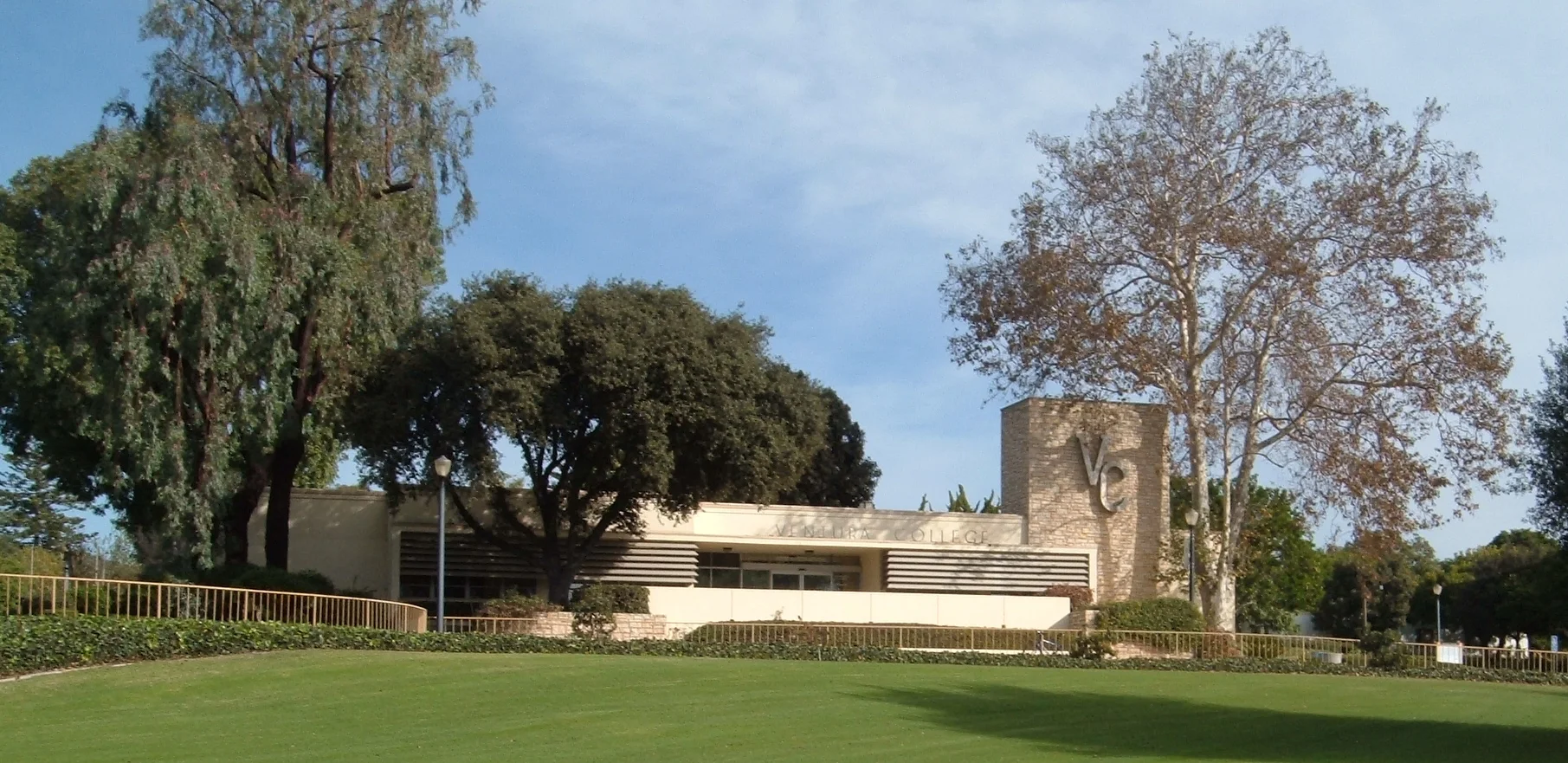
Ventura College offers two direct forensic science credentials in its current catalog: a 60-unit Associate in Science in Forensic Science and a 45-unit Forensic Science Certificate of Achievement. Both use the same 45-unit forensic curriculum. The associate degree adds general education and other degree requirements needed to reach 60 units, while the certificate concentrates on the major courses alone.
This is more than a criminal justice program with one forensic elective. Required coursework covers biology, chemistry, evidence law, report writing, forensic photography, statistics, introductory forensic laboratory methods, and a capstone built around a complex mock crime scene. Electives allow further work in crime-scene processing, fingerprints, trace evidence, forensic anthropology, digital forensics, and crime analytics.
The curriculum is best aligned with evidence technician, forensic technician, crime-scene support, and related entry-level work. It also gives law-enforcement personnel structured preparation for CSI assignments. It is not a substitute for a science-intensive bachelor’s degree for people seeking criminalist, forensic chemist, forensic biologist, or other scientist-level laboratory positions.
Ventura College also has several adjacent programs with limited forensic connections, including cybersecurity, criminal justice, administration of justice, and modern policing. Those alternatives serve different goals and should not be confused with the two dedicated forensic science awards.
Ventura College forensic science programs at a glance
| Program | Credential and length | Forensic curriculum | Practical training | Better aligned with |
|---|---|---|---|---|
| Forensic Science, Associate in Science | A.S., 60 total units with 45 major units | Full forensic core plus four electives | Science laboratories, forensic laboratory, photography laboratory, and 105-hour capstone | Evidence and forensic technician preparation, CSI support, transfer planning |
| Forensic Science, Certificate of Achievement | College certificate, 45 units | Same 45-unit major curriculum as the A.S. | Same major-level laboratory and capstone requirements | Focused forensic coursework without completing an associate degree |
| CyberSecurity Certificate of Achievement | College certificate, 27 units | Cybersecurity curriculum with required Digital Forensics Fundamentals | Hands-on computing and computer-forensics work | Digital evidence and entry-level cybersecurity |
| Administration of Justice AS-T | Transfer associate degree, 60 units | Forensic science, anthropology, and digital forensics are optional | Forensic laboratory work depends on course selection | CSU transfer in criminal justice or a similar major |
| Criminal Justice and Modern Policing credentials | Associate degrees or certificates | Limited required or elective forensic content | Varies by credential and course choices | Broader law-enforcement, corrections, or policing education |
Ventura College appears among the California institutions covered in the site’s broader guide to CSI and forensic science schools.
Forensic Science Associate in Science
The Forensic Science A.S. requires 45 units in the major and at least 60 degree-applicable units overall. The additional units come from general education and other associate-degree requirements. Major courses must be completed with a grade of C or better or an allowable Pass grade.
The 33-unit required core combines scientific foundations with investigative and legal subjects. It includes:
- Introductory biology with laboratory
- Chemistry
- Legal aspects of evidence
- Report writing and courtroom procedures
- Introductory forensic science with laboratory
- Ethics
- Career preparation
- Forensic photography
- Statistics
- A forensic science capstone
Students then select four 3-unit electives. Published options include forensic anthropology, digital forensics, crime analytics, crime-scene management and processing, fingerprint identification, and criminalistics focused on trace and pattern evidence. Related selections in criminology, image editing, and other criminal justice subjects may also be available within the approved list.
The result is a mixed field and laboratory curriculum. Crime-scene documentation, evidence handling, photography, fingerprints, and scene processing support CSI and evidence-unit work. Biology, chemistry, statistics, trace evidence, and introductory laboratory methods provide a scientific foundation, although not the upper-division science depth expected for many scientist-level crime-laboratory positions.
Practical and laboratory work
The A.S. includes substantially more hands-on work than a general criminal justice associate degree. The introductory forensic science laboratory includes 52.5 laboratory hours. Forensic photography includes both lecture and 52.5 hours of laboratory work in digital documentation. Biology and chemistry also contain laboratory components.
The required CJ V59 capstone adds 105 laboratory hours. Students work through a complex mock crime scene and produce a portfolio demonstrating their work. An approved internship with a law-enforcement agency or forensic laboratory may be completed in place of the capstone project.
An internship is therefore an alternative within the capstone structure, not a separately listed universal requirement for every student. The mock-scene option still gives students an extended practical exercise in documentation, evidence processing, analysis, and presentation.
The catalog does not identify the complete degree as fully online. Individual lecture courses can use different delivery modes in different terms, but the required science laboratories, forensic laboratory, photography work, and capstone create scheduled practical obligations. This is not structured as an online-only forensic degree.
A course-planning issue involving CJ V01
The capstone prerequisite sequence requires careful planning. CJ V59 requires CJ V01, Introduction to Criminal Justice, along with specified evidence, report-writing, and forensic preparation. CJ V01 is separate from the required introductory forensic sequence, which consists of CJ/ANTH V35, Introduction to Forensic Science, and CJ/ANTH V35L, Introduction to Forensic Science Laboratory.
CJ V01 appears in the published elective list rather than in the 33-unit required core. A student entering without accepted equivalent credit will therefore generally need to use one of the four elective slots for CJ V01. Selecting four other electives without accounting for this prerequisite could prevent the student from entering CJ V59 on schedule. The catalog’s four-semester sample plan helps organize the prerequisites in the intended sequence.
Career alignment
Ventura College describes the degree as preparation for field evidence technician and forensic laboratory technician work, as well as for police officers pursuing CSI assignments. Those are reasonable matches for the curriculum because it requires photography, evidence law, documentation, laboratory methods, statistics, and a lengthy capstone.
Job titles are not standardized across California. One agency may employ civilian crime-scene or evidence technicians, while another assigns crime-scene duties to sworn personnel. The degree provides relevant education for both settings, but it does not replace an agency’s hiring process, academy requirements, background investigation, or internal assignment standards.
Laboratory criminalist and forensic scientist positions present a different educational question. Ventura requires one introductory biology course with laboratory and one chemistry course, but the program does not provide the sequence of advanced chemistry and biology courses normally associated with bachelor’s-level scientific work. A student aiming for forensic chemistry, DNA analysis, toxicology, or a criminalist classification will likely need a bachelor’s degree with additional coursework such as general chemistry sequences, organic chemistry, analytical chemistry, molecular biology, physics, calculus, and upper-division laboratory study.
The A.S. can still serve as a lower-division starting point. Its CSI and evidence curriculum provides practical context that a conventional science major may lack. Transfer planning needs to preserve the chemistry, biology, mathematics, and physics prerequisites required by the intended bachelor’s program.
Forensic Science Certificate of Achievement
The 45-unit Forensic Science Certificate of Achievement is not a short introductory certificate. It contains essentially the entire forensic major used in the associate degree: 33 core units plus four 3-unit electives. What it removes is the associate degree’s general education component, not the advanced portion of the forensic sequence.
Certificate students complete the same central preparation in biology, chemistry, evidence law, report writing, courtroom procedures, introductory forensic science and laboratory work, photography, ethics, statistics, career preparation, and the capstone. They also choose from the same major electives.
This structure can suit someone who already has a degree and wants concentrated forensic coursework, an incumbent law-enforcement employee preparing for evidence or CSI responsibilities, or a student focused on occupational classes rather than a second associate degree. Because the program is 45 units, it still represents a substantial multi-semester commitment.
The certificate has the same course-planning issue as the A.S. CJ V59 requires CJ V01, Introduction to Criminal Justice, even though CJ V01 appears in the elective group rather than the required core. It is separate from CJ/ANTH V35 and CJ/ANTH V35L, the required introductory forensic science lecture and laboratory courses. Students without accepted equivalent CJ V01 credit generally need to reserve one of their four elective slots for it.
A Certificate of Achievement is an academic credential issued by Ventura College. It is different from a professional certification awarded by a forensic, identification, cybersecurity, or law-enforcement organization. Completing the college certificate does not confer an external professional designation.
Certificate or associate degree?
The forensic coursework is not deeper in one option than the other. Both require 45 major units. The decision rests primarily on the value of earning the associate degree.
The A.S. is generally the more useful route for a first-time college student, someone who wants a completed college degree for employer screening, or a person preparing for later transfer. General education also develops written communication, quantitative reasoning, and broader academic preparation that can matter in hiring and bachelor’s-degree completion.
The certificate can reduce the number of nonmajor classes for someone who already holds a degree or has a defined occupational reason to complete only the forensic sequence. It does not provide the same standalone degree credential, and the current Ventura College federal financial-aid program list displays the Forensic Science A.S. but not the Forensic Science Certificate of Achievement.
What the forensic curriculum prepares students to do
Ventura’s program sits between a field-focused CSI certificate and a laboratory-science degree. Required courses address both areas, and electives allow students to lean further toward one of them.
A field-oriented schedule can emphasize:
- Crime-scene management and processing
- Forensic photography
- Fingerprint recording, development, and comparison
- Evidence documentation and preservation
- Report writing
- Courtroom presentation
- Legal rules governing evidence
The crime-scene course covers management, documentation, collection, processing, analysis, and preservation. Fingerprint coursework includes recording prints, classifying them, developing latent impressions, preparing computer searches, individualization, and courtroom presentation. These are directly relevant to evidence and identification work.
A more laboratory-oriented elective set can add:
- Forensic anthropology
- Criminalistics
- Trace and pattern evidence
- Digital forensics
- Crime analytics
- Statistics
The criminalistics course includes laboratory work with evidence such as fingerprints, shoe prints, tool marks, firearms evidence, paint, hair, and fibers. Forensic anthropology includes collection and evaluation of biological and physical evidence. These courses provide useful exposure, but the overall associate curriculum remains introductory compared with a bachelor’s program centered on chemistry or biology.
Digital forensics is available inside the forensic degree, but it is one elective rather than a complete computing sequence. Someone focused specifically on computers, storage media, network security, and digital evidence has a separate Ventura College option.
Adjacent programs with forensic relevance
Ventura College’s other justice and technology programs can include forensic subjects, but they lead in different directions.
CyberSecurity Certificate of Achievement
The 27-unit CyberSecurity Certificate requires Digital Forensics Fundamentals along with computing, Linux, Windows Server, Python for cybersecurity, computer security, and ethical hacking. Its digital-forensics course addresses computer-investigation processes, disk structures, data acquisition and analysis, technical writing, and forensic tools.
This is the more focused option for digital evidence. It does not include crime-scene photography, fingerprint examination, forensic biology, chemistry, or physical trace-evidence analysis. A prospective digital evidence specialist would gain more relevant computing depth here than by taking digital forensics as a single elective inside the Forensic Science A.S.
The current catalog describes practical, hands-on cybersecurity work. It does not list a required internship or separate residency for the certificate, and it does not designate the entire program as fully online.
Administration of Justice Associate in Science for Transfer
The 60-unit Administration of Justice AS-T is designed for transfer into criminal justice or a similar California State University major. Its core is much smaller than the 45-unit forensic major, but students can select Introduction to Forensic Science with Laboratory, Forensic Anthropology, and Introduction to Digital Forensics from the approved course lists.
Those choices can add introductory forensic exposure to a transfer-oriented criminal justice degree. They are optional, so two students can complete the AS-T with very different levels of forensic preparation. The degree does not require forensic photography, fingerprints, criminalistics, or the 105-hour forensic capstone.
The AS-T is the clearer route for someone prioritizing CSU transfer in criminal justice. Ventura’s Forensic Science A.S. is a standard Associate in Science, not an Associate in Science for Transfer.
Criminal Justice credentials
The Criminal Justice A.S. requires 24 to 25 major units within a 60-unit degree. Students can choose courses such as introductory forensic science, forensic anthropology, digital forensics, crime analytics, or work experience. The major remains broad, with preparation extending to law enforcement, courts, corrections, security, and related justice fields.
The Criminal Justice Certificate of Achievement requires 21 to 22 units. Introductory forensic science with laboratory is one possible elective, but advanced crime-scene, fingerprint, photography, criminalistics, and capstone courses are not required.
These programs work better for broad criminal justice education with some forensic exposure. They are not shorter versions of Ventura’s dedicated forensic awards.
Modern Policing Associate in Science
The Modern Policing A.S. is a 60-unit degree with a 54-unit major. Its curriculum focuses on policing, law, ethics, communication, community engagement, social science, and statistics. Students select among subjects such as legal aspects of evidence, criminal procedure, criminal investigation, or juvenile law.
A published learning outcome mentions investigative techniques and forensic skills, but the curriculum does not require Ventura’s dedicated forensic laboratory, photography, fingerprint, criminalistics, or capstone sequence. This is a policing degree with some investigative relevance, not a forensic science specialization.
Admission, cost, and financial aid
Ventura College uses an open-enrollment admission policy. General admission is available to applicants who are at least 18, have graduated from high school, or hold an equivalent credential, subject to residency rules and individual course prerequisites.
For 2026-2027, the published California-resident enrollment fee is $46 per unit. Based on that rate:
- The 60-unit Forensic Science A.S. equals $2,760 in base enrollment fees
- The 45-unit Forensic Science Certificate equals $2,070 in base enrollment fees
- The 27-unit CyberSecurity Certificate equals $1,242 in base enrollment fees
- The 21-to-22-unit Criminal Justice Certificate equals $966 to $1,012 in base enrollment fees
These figures are enrollment-fee calculations, not total program prices. The health fee is $27 in fall or spring and $22 in summer. A student center fee of $1 per unit applies up to $10 per fiscal year. Books, supplies, parking, transportation, and possible instructional-material charges are separate.
Nonresidents pay the $46 enrollment fee plus $409 per unit in nonresident tuition and a $24-per-unit capital outlay surcharge, along with other applicable charges.
Ventura College’s current list of programs approved for federal financial aid includes the Forensic Science A.S. The displayed list does not include the Forensic Science Certificate of Achievement, so the two credentials should not be presented as having identical federal aid status.
Accreditation
Ventura College is institutionally accredited by the Accrediting Commission for Community and Junior Colleges. Its accreditation was reaffirmed in June 2025, with the current term running through 2030.
Neither forensic credential is FEPAC-accredited. The Forensic Science Education Programs Accreditation Commission accredits eligible bachelor’s and master’s forensic science programs, not associate degrees or community-college certificates. FEPAC accreditation is therefore outside the published scope for these Ventura College awards.
That does not negate the college’s institutional accreditation or the occupational value of the curriculum. It defines the credential level accurately. A student planning eventual transfer into a bachelor’s forensic science program can use FEPAC status as one factor when comparing upper-division destinations.
Choosing the right Ventura College pathway
The Forensic Science A.S. is the clearest Ventura College option for someone seeking a complete associate degree with structured preparation in evidence, crime-scene documentation, photography, laboratory methods, and courtroom procedures. Its four electives can be used to build additional depth in field CSI, fingerprints, trace evidence, forensic anthropology, digital forensics, or analytics. Students entering without equivalent CJ V01 credit should account for Introduction to Criminal Justice when selecting those four electives because it is a prerequisite for the required capstone.
The 45-unit certificate delivers the same forensic major without the associate degree’s general education requirements. It is better suited to people who already have a college degree or need a concentrated academic credential for a defined employment or professional-development purpose.
Digital evidence specialists receive more computing preparation from the CyberSecurity Certificate. Criminal justice students focused on CSU transfer have the Administration of Justice AS-T, while the Criminal Justice and Modern Policing programs better serve broader law-enforcement or justice-system goals.
For field CSI and evidence work, prioritize the photography, crime-scene, fingerprint, documentation, and capstone courses. For laboratory criminalistics, use Ventura’s program as a practical lower-division foundation while preserving the chemistry, biology, mathematics, and physics needed for a science-focused bachelor’s degree.