
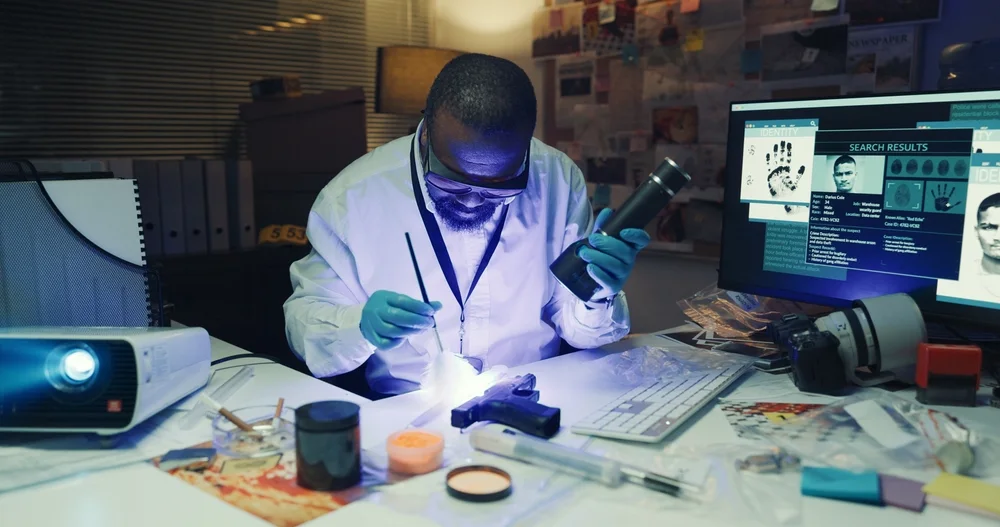
CSI training in California falls into several distinct categories: college certificates for pre-employment preparation, university continuing-education programs, professional certifications for experienced practitioners, and specialized training connected to law-enforcement or forensic-laboratory employment. These credentials serve different purposes and are not interchangeable.
California does not use one statewide license or mandatory certificate for crime scene investigators. Agencies establish their own education, training, and experience requirements. One employer may prioritize college coursework in forensic science, photography, and fingerprints. Another may require a California POST-certified crime scene investigation course. A third may accept a combination of college units and relevant work experience.
The programs below represent a broad, verified selection of current California options. Small local skills awards and agency-restricted courses can be difficult to identify statewide, so this is not a claim that every CSI-related course or certificate in California appears here.
Comparing California CSI certificate and training options
| Program | Credential type | Length | Primary emphasis | Access |
|---|---|---|---|---|
| Cal State LA Forensic Specialist Certificate | University-based professional certificate | 300 hours, nine courses | Crime scenes and friction-ridge examination | Associate degree or current enrollment required |
| CSU Long Beach CSI Certificate | Noncredit certificate of completion | 80 hours | Field CSI, evidence, photography, fingerprints | High school completion; competitive selection |
| UC Riverside CSI Professional Certificate | University continuing-education certificate | 20 units | Broad online CSI curriculum | No program-level prerequisite published |
| Grossmont College Forensic Technology | Certificate of Achievement | 42 units | Crime scenes, prints, photography, biology, chemistry | College enrollment and course prerequisites apply |
| Riverside City College CSI | Career-education certificate | 24 units | Investigation, criminalistics, evidence, reports | Individual course prerequisites may apply |
| Fullerton College Forensic Technician | Undergraduate certificate | 23.5 units | Biotechnology, laboratory skills, chemistry, CSI | Grade of C or better required |
| El Camino College Forensics Option | Certificate of Achievement option | 20 units | Scene investigation, fingerprints, reports, photography | At least half of coursework at El Camino |
| Mt. San Jacinto College CSI | Undergraduate certificate | 18 units | Investigation, evidence, reports, introductory forensics | Four AJ courses must be completed at MSJC |
| City College of San Francisco CSI | Certificate of Achievement | 18 units | Fingerprints, evidence, documentation, reports | Stand-alone or embedded in an associate degree |
| Madera Community College CSI | Certificate of Achievement | 18 units | Investigation, forensic photography, evidence law | No separate program admission requirement identified; course requirements may apply |
| East Los Angeles College Forensic CSI | Certificate of Achievement | 17 units | Criminalistics and field investigation | Course sequencing may apply |
| Fullerton College CSI | Undergraduate certificate | 16.5 units | Scene techniques, DNA, evidence, photography | Grade of C or better; residency requirement |
| Long Beach City College Criminal Forensics | Certificate of Achievement | 15 units | Evidence, investigation, fingerprints | No separate program admission requirement identified; course requirements may apply |
| Rio Hondo College CSI and Forensics | Certificate of Achievement | 12 units | CSI I and II, investigation, forensic science | CSI I precedes CSI II |
| Victor Valley Police Technician Specialist | Career-preparation certificate | 12.5 units | CSI, reports, criminal law, civilian support | Not approved for federal financial aid |
| Napa Valley College CSI | Certificate of Achievement | 10 units | Criminal law, evidence, introductory CSI | No separate program prerequisite published |
| Riverside City College Crime Scene Photography | Employment-competency certificate | 9 units | Forensic and digital photography | Specialized supplement |
| Victor Valley Forensic Specialist | Career-preparation certificate | 3.5 units | Focused crime-scene processing | In person; not approved for federal aid |
| South Bay Regional Public Safety Training CSI course | POST Plan IV course and completion certificate | 40 hours, one semester unit | Intensive hands-on scene processing | Basic Police Academy certificate or equivalent public-safety employment required |
| IAI Certified Crime Scene Investigator | Professional certification | Experience, training, and exam based | Occupational competency | At least one year of qualifying employment |
The table includes direct CSI programs and selected related options. Fingerprint-only credentials, laboratory-oriented study, advanced professional certifications, and employer-restricted training are discussed separately below.
Intensive university-based CSI programs
Cal State LA Forensic Specialist Certificate Program
Cal State LA’s California Forensic Science Institute offers one of the most intensive nondegree options in the state. The Forensic Specialist Certificate contains nine courses and 300 hours of instruction. Students complete both the crime scene investigation track and the friction-ridge examination track rather than selecting only one.
The CSI curriculum covers basic and crime-scene photography, scene procedure, fingerprint processing, footwear and tire impressions, sketching, measurement, evidence collection, report preparation, and courtroom testimony. The friction-ridge sequence introduces analysis, comparison, evaluation, and verification through the ACE-V method. Every course has lecture and practical components.
Practical work is central to the program. Students independently process two mock crime scenes and participate in a moot-court exercise. That combination addresses several skills that repeatedly appear in California job descriptions: documentation, evidence recovery, fingerprints, written reporting, and the ability to explain findings in court.
Admission requires an associate degree or current enrollment in an associate-degree program. Applicants do not have to be Cal State LA students. Instruction is in person at the Hertzberg-Davis Forensic Science Center and is scheduled largely on weekends. Cohorts typically have a maximum of 24 participants.
The published total for the 2026 cohorts was $4,600, including lecture and laboratory instruction, fieldwork supplies, materials, and course resources. The official page lists January and June 2027 cohort options.
This is pre-employment education, not International Association for Identification certification. It is also field and friction-ridge training rather than a chemistry-heavy criminalistics curriculum. Its depth is best aligned with scene-processing, evidence, and fingerprint roles.
CSU Long Beach Crime Scene Investigator Certificate Program
CSU Long Beach offers an 80-hour, noncredit CSI Certificate Program through its Center for Criminal Justice Research and Training. The public program is separate from the university’s POST-certified course for agency-authorized personnel.
Ten modules cover fingerprints, biological and trace evidence, impression evidence, chemical processing, crime-scene photography, death investigation, firearms evidence, fingerprint comparison, interviews, courtroom testimony, and career preparation. Students complete practical scene exercises, including a team crime-scene assignment. Evaluation includes quizzes, a written final examination, and a crime-scene report.
Attendance at all ten modules is mandatory. The course also involves indoor and outdoor exercises and physical activity. It is therefore more practically structured than an entirely online program, although it is much shorter than Cal State LA’s 300-hour certificate or a multi-semester forensic-technology curriculum.
Applicants need a high school diploma or equivalent, and selection is competitive. The program normally enrolls 24 people. Published 2026 and spring 2027 payment schedules total $2,750, consisting of a $275 deposit and three $825 installments. Financial aid is not available for the noncredit course.
CSULB describes the curriculum as based on POST Field Evidence Technician content, but participants do not receive POST credit through this public certificate. It also does not create a statewide CSI certification, academic transcript, guaranteed internship, or guaranteed position.
UC Riverside Crime Scene Investigation Professional Certificate
UC Riverside Professional and Global Education provides a 20-unit online professional certificate with an estimated completion time of 12 to 18 months. Some courses are asynchronous, while others may include scheduled live online sessions.
Required subjects include crime-scene management, criminal law and procedure, photography, digital forensics, fingerprints and impression evidence, medicolegal death investigation, criminalistics, bloodstain pattern analysis, courtroom testimony, and forensic report writing. That subject range is broader than many short community-college certificates, especially in digital evidence, death investigation, and bloodstain analysis.
Estimated tuition is $5,500. The current program page does not list a program-level admission prerequisite. It also does not establish a required campus laboratory, physical residency, or internship.
UCR states that the curriculum addresses instructional topics associated with IAI Crime Scene Investigator certification. Completing the UCR program does not award IAI certification. IAI has separate employment, experience, approved-training, and examination requirements.
The online structure can serve working adults and people who live far from campus programs. The main tradeoff is the absence of a verified, required in-person scene practicum comparable to the mock-scene work at Cal State LA or CSULB. Agency field training remains a separate part of becoming proficient in evidence recovery and scene management.
Broad technical and community-college certificates
Grossmont College Forensic Technology Certificate of Achievement
Grossmont College’s 42-unit certificate uses the same major curriculum as its Forensic Technology associate degree, without the associate degree’s general-education requirements. It is one of the longest sub-baccalaureate options in this group.
Coursework includes fingerprint identification, advanced fingerprint identification, forensic photography, advanced forensic photography, crime scene technology, forensic analysis, criminal investigation, biology with laboratory work, and chemistry. A forensic public-service internship is recommended rather than listed as a required core course.
The combination of photography, latent prints, scene technology, biology, and chemistry provides more technical range than a short administration-of-justice certificate. It is relevant to crime scene technician, forensic specialist, evidence-processing, and latent-print pathways.
The science component also helps students evaluate whether they want to continue into a natural-science degree. It does not, by itself, supply all of the upper-division chemistry or biology preparation that many criminalist, forensic chemist, or DNA analyst positions require. Those laboratory careers commonly call for a bachelor’s degree and specified science coursework.
Riverside City College Crime Scene Investigation Certificate
Riverside City College’s 24-unit Crime Scene Investigation certificate addresses criminal and procedural law, legal aspects of evidence, criminalistics, forensic science, criminal investigation, professional communication, report writing, and proper evidence handling.
The legal and communication courses are directly relevant to field practice. A scene technician must preserve chain of custody, distinguish lawful evidence handling from investigative shortcuts, prepare clear reports, and sometimes explain procedures in court. Technical collection skills alone are not enough.
Riverside City College also has two related certificates that lead in different directions. Its 22-unit Investigative Technician certificate includes criminal law, evidence, advanced investigation, interviewing and interrogation, and academic writing. It is aligned with assistant-level investigation and property or evidence work rather than being a pure CSI program.
The college’s nine-unit Crime Scene Photography Essentials certificate is narrower. Required study covers forensic and crime-scene photography and introductory digital photography, with intermediate or drone photography as the elective. It can supplement broader CSI preparation, but it omits much of the fingerprint, investigation, reconstruction, and report-writing content found in a full CSI certificate.
Fullerton College: two separate forensic pathways
Fullerton College offers a field-oriented Crime Scene Investigation Certificate and a more laboratory-oriented Forensic Technician Certificate.
The 16.5-unit CSI certificate includes crime scene investigation, DNA genetic fingerprinting, report writing, evidence rules, criminal investigation, crime-scene techniques, and photography. Students must earn at least a C in every course, and at least half of the required units must be completed at Fullerton. Department materials document an on-campus crime laboratory and internship opportunities with local partners.
The 23.5-unit Forensic Technician certificate combines crime-scene investigation, DNA genetic fingerprinting, evidence rules, photography, biotechnology lecture and laboratory work, biotechnology laboratory skills, and chemistry. Its Fall 2026 curriculum uses the revised photography requirement reflected in the college’s curriculum records.
The CSI certificate is better aligned with field evidence collection and scene documentation. The Forensic Technician certificate adds laboratory and biotechnology exposure. Even with chemistry included, the latter is not equivalent to a bachelor’s degree in chemistry, biochemistry, biology, or forensic science for criminalist positions that specify extensive natural-science credits.
El Camino College Administration of Justice, Forensics Option
El Camino’s 20-unit Forensics Option combines criminal investigation, forensic crime-scene investigation, fingerprint classification, crime analysis, report writing, drawing, and elementary photography. A grade of C is required, and at least half of the coursework must be completed at El Camino College.
Drawing and photography have practical value in scene documentation. Diagrams preserve spatial relationships that narrative reports and individual photographs may not fully communicate. Fingerprint classification and crime analysis add specialized content beyond a general administration-of-justice award.
This remains a field-oriented certificate. It does not include the chemistry, organic chemistry, molecular biology, quantitative analysis, or instrumental analysis sequence associated with many laboratory-science positions.
Mt. San Jacinto College Crime Scene Investigation Certificate
Mt. San Jacinto College requires 18 units across criminal law, criminal evidence, report writing, criminal investigation, introductory forensics, and forensic anthropology. Four administration-of-justice courses must be completed at MSJC.
Program outcomes address evidence identification, collection, processing, analysis, packaging, preservation, cataloging, and presentation. The inclusion of forensic anthropology introduces the recovery and interpretation of human remains, but an introductory course does not prepare someone to work as a forensic anthropologist. That specialty generally requires graduate education in anthropology.
The college describes this as introductory preparation and expressly states that completing the certificate does not guarantee a position. Its catalog also states that California does not impose occupational licensure for the profession addressed by the program.
City College of San Francisco Crime Scene Investigation Certificate
The City College of San Francisco certificate requires 18 units and has a stated minimum completion time of two semesters. Required study includes criminal law, administration of justice, report writing, fingerprints, forensic evidence, and crime-scene documentation.
CCSF frames the award for two audiences: people seeking entry-level civilian scene or evidence work, and sworn officers seeking CSI assignments. The certificate can be earned independently or incorporated into the Administration of Justice associate degree.
Embedding the courses in an associate degree can be useful when an employer requires 60 semester units or gives preference to degree holders. Kern County, for example, has accepted 60 semester units containing relevant coursework for an entry-level Crime Scene Technician recruitment. That is an employer-specific route, but it illustrates why a certificate plus general education can have more hiring value than the certificate alone.
Madera Community College Crime Scene Investigation Certificate
Madera Community College’s 18-unit Certificate of Achievement is currently identified in the statewide California Community Colleges directory. Detailed curriculum information comes from the college’s 2024-2025 catalog.
Required subjects cover legal aspects of evidence, justice-system procedures, criminal investigation, advanced criminal investigation, forensic photography, and criminal-justice communications. Advanced investigation addresses crime-scene reconstruction, evidence processing, computer and mobile-device forensics, toxicology, serology, and DNA.
The program has a field-investigation emphasis, with dedicated photography and communication courses. Its coverage of scientific specialties is introductory rather than a replacement for laboratory science majors. No separate program admission requirement was identified in the reviewed material, although individual courses may carry prerequisites or advisories.
East Los Angeles College Forensic Crime Scene Investigation
East Los Angeles College currently lists a 17-unit Forensic Crime Scene Investigation Certificate of Achievement and a related 60-unit associate degree. The current pathway confirms the award, while the detailed course list available during research came from the 2024-2025 catalog.
That curriculum included criminal investigation, Criminalistics I and II, ethics in forensic science, directed studies, and offender profiling. Criminalistics and investigation support physical-evidence work. Offender profiling is a different subject and should not be confused with evidence recognition, collection, or laboratory analysis.
ELAC also offers a separate six-unit Fingerprint Classification Skills Certificate. That specialty award is discussed with the fingerprint programs below.
Long Beach City College Criminal Forensics Certificate
Long Beach City College’s 15-unit Certificate of Achievement requires introduction to evidence, introduction to investigation, fingerprint classification and identification, introduction to forensics, and one approved criminal-justice elective. Elective subjects include criminal procedure, criminal law, report writing, or criminal-justice computer use.
Published outcomes include identifying potential evidence, processing a crime scene, and establishing chain of custody. The curriculum is designed for entry-level crime-scene investigation, evidence collection, and fingerprint-related work.
Compared with longer certificates, LBCC provides less room for advanced photography, biology, chemistry, and repeated practical courses. Its evidence, investigation, and fingerprint sequence still maps directly to common field responsibilities. The reviewed certificate document did not identify a separate program admission requirement, but course-level requirements may apply.
Rio Hondo College Crime Scene Investigations and Forensics
Rio Hondo’s current certificate requires 12 units in Principles of Investigation, Crime Scene Investigation I and II, and Introduction to Forensic Science. CSI II requires prior completion of CSI I.
Topics include evidence preservation, bloodstain evidence, DNA, fingerprints, forensic chemistry, photography, reports, reconstruction, and legal issues. The sequence is concise but more focused on CSI than a general criminal-justice certificate with only one forensic elective.
Napa Valley College Law Enforcement-Crime Scene Investigation
Napa Valley College’s 10-unit certificate consists of Introduction to Criminal Law, Introduction to Evidence, and a four-unit Introduction to Crime Scene Investigation course. The college lists crime scene investigator, evidence technician, crime lab assistant, and community service officer among possible career directions.
This is a compact introductory award. Its three-course structure cannot provide the same depth as programs with advanced photography, multiple fingerprint courses, laboratory sciences, and repeated scene exercises. It can serve as an initial skills sequence or complement a broader degree.
Victor Valley College’s three different options
Victor Valley College offers several awards that should be evaluated separately.
The Forensic Specialist Certificate of Career Preparation is a 3.5-unit, four-month, in-person program built around one Crime Scene Investigation course. It covers collection, processing, packaging, transportation, and courtroom testimony. It is a short skills award and is not eligible for federal financial aid.
The Police Technician Specialist Certificate requires 12.5 units in CSI, writing for criminal justice, criminal law, and the community’s relationship with the justice system. It is broader preparation for civilian forensic-specialist or evidence-technician functions.
The Forensic Science, Biology Concentration Certificate requires 25 units in forensic pathology, forensic biology, microbiology, physiology, and biological research. CSI is one option within an elective group rather than a universal requirement.
The biology concentration is the better academic bridge toward further science study, but it is not primarily a scene-processing certificate. Victor Valley’s own catalog explains that advanced forensic-science positions generally require a bachelor’s or graduate degree in a natural or physical science.
Norco College Crime Scene Investigation Certificate
Norco College currently lists a Crime Scene Investigation certificate within Administration of Justice. The college defines its career-technical certificates as awards ranging from 4 to 30 units.
The current program listing verifies that the award exists, but the exact units, course sequence, prerequisites, and practical requirements were not available in the reviewed material. It is included here as a confirmed current option without assigning features that the official program list does not publish.
Fingerprint and forensic-photography certificates
Fingerprint processing, classification, comparison, and latent-print examination are related but different activities. A short fingerprint certificate can introduce classification and evidence procedures. It is not equivalent to the experience and testing required for advanced professional latent-print certification.
Los Angeles City College offers a six-unit Fingerprint Expert Job Skills Certificate. Required courses are Forensic Fingerprint Evidence and Fingerprint Classification. Outcomes include fingerprint-pattern categorization, the Henry classification system, and locating latent or other prints from crime scenes.
Los Angeles Southwest College’s nine-unit Fingerprinting Skill Certificate focuses on fingerprint comparison, fingerprint characteristics, crime-scene evidence, and the use of print evidence in legal proceedings. The college states that internships are available, but its current page does not establish a mandatory internship or guaranteed placement.
East Los Angeles College’s six-unit Fingerprint Classification Skills Certificate consists of Criminal Investigation and Fingerprint Classification. A fingerprint course was offered online in summer 2026, but one online section does not establish that the full certificate is permanently available online. This award is aimed at fingerprint technician and identification-support preparation rather than broad scene processing.
Riverside City College’s nine-unit Crime Scene Photography Essentials certificate takes a different specialty route. It develops forensic and digital photography skills, accurate evidentiary documentation, equipment use, and evidence handling. It works as a photography supplement, not as a substitute for a full CSI curriculum.
Certificate versus professional certification
A college certificate documents completion of an academic curriculum. A professional certification assesses an experienced practitioner against standards established by a credentialing organization. California’s community-college and university certificates do not automatically confer International Association for Identification certification.
The International Association for Identification offers three progressive crime-scene credentials:
- Certified Crime Scene Investigator, or CCSI
- Certified Crime Scene Analyst, or CCSA
- Certified Senior Crime Scene Analyst, or CSCSA
All three are voluntary professional certifications. They are not California licenses.
Certified Crime Scene Investigator
CCSI is the first level, but it is not a student credential. Eligibility requires a high school diploma or equivalent, at least one year of qualifying full-time crime-scene experience, and 48 hours of approved crime-scene training completed within the preceding five years.
Qualifying work must involve substantial responsibility for responding to scenes and locating, documenting, recovering, or analyzing physical evidence. College students without the required occupational experience are generally ineligible.
Applicants take a proctored examination and must earn at least 75 percent. IAI membership is not required. Current initial certification fees are $300 for IAI members and $400 for nonmembers, and fees are nonrefundable.
Certified Crime Scene Analyst and Certified Senior Crime Scene Analyst
CCSA requires at least three years of qualifying experience and 96 approved training hours. CSCSA requires six years of experience, 144 training hours, and an additional professional contribution such as instruction, publication, or presentation, or specified courtroom-testimony training.
These are career-progression credentials. A recent graduate does not move directly into CCSA or CSCSA based only on college units.
Crime-scene certifications follow a five-year renewal cycle. The current IAI crime-scene requirements include 80 continuing-education or professional-development credits, a completed application and fee, and successful passage of a written recertification examination with a minimum score of 75 percent. Approved online courses can count for crime-scene recertification, but the board does not accept online training for initial crime-scene certification.
Ordinary college classes are not automatically accepted as IAI-approved training hours. The IAI Crime Scene Certification Board distinguishes registered academic courses from previously approved open-attendance training. College education can still build relevant knowledge, but academic credit and certification-board training credit are separate records.
The former IAI Certified Crime Scene Reconstructionist credential remains suspended and is not a current certification option.
Advanced IAI specialty certifications
IAI maintains separate certifications for crime-scene work, forensic photography, and latent-print examination. They assess different scopes of practice.
The Certified Forensic Photographer credential is intended for experienced practitioners whose duties center on evidentiary photography and imaging. Applicants undergo education, experience, training, endorsement, background, and employment review. Testing includes a 100-question written examination and two practical stages.
Practical tasks cover crime scenes, latent prints, footwear impressions, night scenes, evidence, vehicles, injuries, one-to-one photography, scale use, and specialty assignments. This is substantially different from completing an introductory college photography course.
The Certified Latent Print Examiner credential covers detection, recovery, photography, preservation, enhancement, analysis, comparison, documentation, reporting, and possible expert testimony. Eligibility uses tiered combinations of education and professional experience. Published routes include a bachelor’s degree plus two years of full-time examiner experience, an associate degree or specified college credit plus three years, or a high school credential plus four years. Applicants also need at least 160 hours of approved latent-print training.
Both specialty certifications currently use the same published initial fee structure of $300 for IAI members and $400 for nonmembers. Neither is an entry-level substitute for CCSI or college CSI education.
California POST and employer-oriented training
The California Commission on Peace Officer Standards and Training maintains a statewide catalog of certified law-enforcement training. Current subjects include Crime Scene Investigation, CSI II, Advanced CSI, Crime Scene and Forensic Photography, Evidence Recovery, reconstruction, trajectories, and footwear and tire impressions.
POST training is a separate credential category from a college certificate or IAI certification. Access is commonly tied to employment by a POST-participating agency, academy completion, or agency sponsorship. Supporting civilian employees can receive Learning Portal access through agency administrators, but the portal is not an unrestricted public CSI certificate.
Employer use of POST training varies. A City of Hayward recruitment for Crime Scene Specialist II required a POST-certified CSI course and addressed later completion of an advanced course. Other agencies use different criteria. San Diego’s classification recognizes routes involving a forensic or physical-science associate degree, a forensic-technology certificate with specified coursework, or 30 college units in fingerprint development, CSI, and forensic photography.
Kern County has accepted 60 semester units containing criminal justice, computer technology, photography, or related science for an entry-level Crime Scene Technician position. Irvine has used an associate degree with forensic or CSI coursework plus paid law-enforcement experience, or an equivalent combination, while treating a forensic academy or CSI certificate as preferred. Redlands has emphasized related training, professional experience, and digital photography.
These examples demonstrate agency variation rather than statewide rules.
South Bay Regional Public Safety Training Consortium CSI course
The South Bay Regional Public Safety Training Consortium scheduled a 40-hour Crime Scene Investigation course in Milpitas for September 28 through October 2, 2026. That specific session carried one semester unit through Gavilan College, a certificate of completion, and POST Plan IV designation.
Training covered scene management, sketching, day and night photography, latent-print recovery, alternate light sources, biological evidence, firearms and trajectory evidence, trace and impression evidence, digital evidence, questioned documents, laboratory submission, safety, and courtroom presentation. Practical exercises required participants to bring appropriate photography equipment.
Eligibility required a Basic Police Academy certificate or equivalent public-safety employment, including qualifying sworn and nonsworn roles. The published fee for that session was $1,656.37, with possible additional charges for participants outside the college registration process. Later sessions can have different dates, locations, units, and prices.
California Department of Justice forensic training
The California Criminalistics Institute, operated by the California Department of Justice Bureau of Forensic Services, provides specialized training for forensic-laboratory and law-enforcement personnel. It reports offering approximately 70 to 90 classes per fiscal year through in-person, hybrid, and on-demand formats.
Course areas include crime scenes, biology and DNA, chemistry, firearms and impressions, microscopy and trace evidence, toxicology, professional development, and health and safety. Depending on the course, instruction can include demonstrations, laboratory exercises, mock scenes, evidence recovery, photography, packaging, written testing, or practical proficiency assessment.
CCI is principally a post-employment resource. Attendance generally requires current employment with a government forensic laboratory, law-enforcement agency, police or sheriff’s department, or qualifying private forensic laboratory. Individual classes can impose additional discipline and experience prerequisites, and registration does not guarantee selection.
Many courses carry no charge for qualifying California public personnel. The institute’s general published rates for out-of-state or private-company participants are $120 per day for in-person instruction and $25 per four hours of online instruction, although individual offerings can publish different fees.
How CSI training aligns with California careers
A field CSI curriculum should develop evidence recognition, scene security, photography, sketching, measurement, fingerprints, biological and trace evidence recovery, packaging, chain of custody, report writing, and courtroom communication. Those subjects recur across California college curricula and agency classifications.
Different job titles can involve overlapping duties:
- Crime scene investigator or crime scene technician: Scene documentation, photography, evidence recognition, collection, packaging, and reports.
- Forensic specialist: A broad agency title that can include scene response, latent-print processing, laboratory support, photography, or evidence examination.
- Evidence or property technician: Evidence intake, documentation, storage, transfer, chain of custody, and property-room work. Some roles include scene response; others do not.
- Latent print examiner: Recovery, enhancement, comparison, documentation, reporting, and testimony involving friction-ridge evidence.
- Forensic photographer: Technically controlled documentation of scenes, evidence, injuries, impressions, and laboratory subjects.
- Criminalist or forensic scientist: Laboratory analysis grounded in chemistry, biology, molecular biology, toxicology, firearms, trace evidence, or another scientific discipline.
A generic administration-of-justice certificate with one CSI course is not equivalent to a laboratory criminalistics degree. Short CSI programs commonly lack organic chemistry, analytical chemistry, molecular biology, statistics, instrumental analysis, and advanced laboratory methods.
Applicants targeting laboratory criminalist work should prioritize a bachelor’s degree with the science credits required by the relevant classification. Grossmont’s 42-unit certificate, Fullerton’s Forensic Technician award, and Victor Valley’s biology concentration contain more laboratory science than many field certificates, but none satisfies every criminalist or DNA analyst requirement.
Choosing a route by career stage
A pre-employment applicant usually needs college-level preparation rather than professional certification. Longer programs at Cal State LA, Grossmont, Riverside City College, Fullerton, CCSF, or similar institutions provide multiple courses across evidence, documentation, and legal procedure. CSULB supplies a shorter, concentrated, in-person route. UCR provides broader online access but without a verified required physical practicum.
Someone seeking a civilian evidence or property position can benefit from report writing, chain of custody, criminal law, evidence procedure, and cataloging in addition to scene processing. Riverside City College’s Investigative Technician certificate and Victor Valley’s Police Technician Specialist award address that wider support role.
A photographer or fingerprint technician can use a specialty certificate to build a focused skill base. Riverside’s photography certificate and the fingerprint awards at LACC, LASC, and ELAC are narrower than full CSI programs. Their value comes from specialization, not breadth.
A sworn officer seeking a CSI assignment may need agency-approved or POST-certified training after hiring. Open-enrollment college study can build prior knowledge, but it does not replace an employer’s assignment process or required in-service course.
An employed CSI can pursue IAI certification after meeting the experience and approved-training requirements. CCSI is the first general crime-scene credential. CCSA and CSCSA recognize progressively greater experience. Certified Forensic Photographer and Certified Latent Print Examiner serve advanced specialty tracks.
The practical sequence is straightforward: build relevant education, qualify for an agency role, complete employer field training, document qualifying experience, and then pursue professional certification when eligible. Readers exploring degree pathways alongside these certificates can use the broader California CSI degree and career resources to compare field investigation with laboratory science routes.