
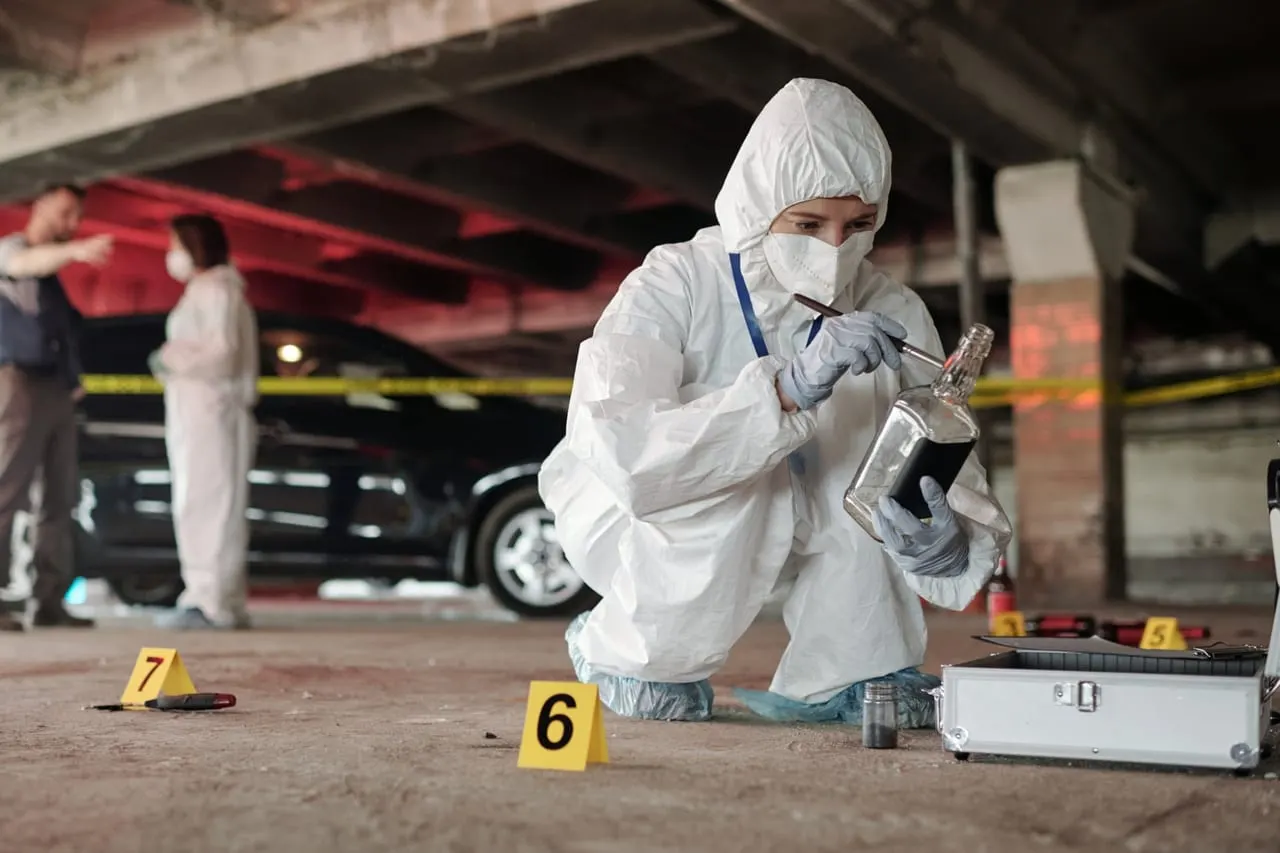
Searching for a “CSI degree” in California can be confusing because there is no single degree with that title that prepares students for every forensic career. California colleges use names such as forensic science, criminalistics, forensic chemistry, crime scene investigation, forensic behavioral sciences, forensic psychology, and criminal justice with a forensics concentration. Some are built around laboratory science, while others focus on field investigation, evidence documentation, human behavior, or related work.
Those differences affect far more than the wording on a diploma. A student who wants to analyze controlled substances, trace evidence, DNA, or other biological samples in a crime laboratory needs substantially more chemistry and biology than someone preparing to photograph and process a crime scene. Forensic psychology is a separate behavioral-science path, while a criminal justice degree may or may not contain enough natural science to meet the requirements for laboratory criminalist jobs.
California’s own Criminalist hiring requirements provide a useful benchmark. Entry-level candidates need the equivalent of a bachelor’s degree with a major in a physical or biological science, including at least eight semester hours of general chemistry and three semester hours of quantitative analysis. A degree with “forensic” in the name does not automatically replace that scientific foundation.
For students comparing CSI and forensic science degrees in California, the most useful place to start is therefore the career rather than the program title. Once you know whether you want laboratory criminalistics, DNA analysis, crime-scene investigation, forensic chemistry, behavioral forensics, or another specialty, the California degree options become much easier to evaluate.
Best CSI and Forensic Science Degree Options in California
The programs below represent different parts of the forensic field, so the ranking should not be read as nine interchangeable choices. UC Davis may be a stronger option for a science graduate pursuing laboratory criminalistics, while Stanislaus State may fit an undergraduate whose primary interest is field CSI. Cal State LA’s forensic psychology degree serves an entirely different career direction.
Programs were evaluated based on the depth of forensic coursework, science preparation, laboratory or practical training, career alignment, accreditation where applicable, flexibility, and cost context.
| Rank | School | Program | Level | Primary Forensic Focus | Format | FEPAC Status |
|---|---|---|---|---|---|---|
| 1 | San José State University | B.S. in Forensic Science | Bachelor’s | Biology, chemistry, digital evidence, CSI | On campus | Not currently FEPAC-accredited; SJSU says its concentrations meet FEPAC educational standards |
| 2 | Sacramento State | B.A. in Chemistry — Forensic Chemistry | Bachelor’s | Chemistry, physical evidence, laboratory analysis | On campus | Not currently FEPAC-accredited |
| 3 | UC Davis | M.S. in Forensic Science | Master’s | Forensic DNA and criminalistics | On campus; full- or part-time | FEPAC-accredited |
| 4 | Cal State LA | M.S. in Criminalistics | Master’s | Laboratory criminalistics | On campus | Not currently FEPAC-accredited |
| 5 | National University | Master of Forensic Sciences | Master’s | Criminalistics or investigation | Online, in person, or hybrid depending on specialization | Not currently FEPAC-accredited |
| 6 | Stanislaus State | B.A. in Criminal Justice — Forensics | Bachelor’s | Field forensics and crime-scene investigation | Primarily on campus | Not currently FEPAC-accredited |
| 7 | Alliant International University | M.S. in Forensic Science, Investigation & Technology | Master’s | Criminalistics, CSI, intelligence analysis | Online plus two weekend residencies | Not currently FEPAC-accredited |
| 8 | Cal State LA | M.S. in Forensic Psychology | Master’s | Psychology and the justice system | On campus | Outside FEPAC’s core forensic-science scope |
| 9 | Fresno State | B.S. in Forensic Behavioral Sciences | Bachelor’s | Psychology, behavior, law and criminal justice | On campus | Outside FEPAC’s core forensic-science scope |
Cost context for California public universities
Five of the programs above are in the California State University system. For 2026–27, CSU lists base full-time systemwide tuition of $6,838 per academic year for undergraduates and $8,548 for graduate students, before campus-based fees and other expenses. Individual program costs can still differ because of fees, summer enrollment, housing, books, transportation, and the number of years needed to finish.
UC Davis uses a separate self-supporting tuition model for its forensic science master’s. The program currently lists tuition of $903 per unit for students entering in fall 2025 or later.
Private programs use their own tuition structures, which are noted below where current official figures are available.
1. San José State University — B.S. in Forensic Science
San José State offers one of California’s broadest undergraduate forensic science degrees. Students can choose concentrations in Biology, Chemistry, Digital Evidence, or Crime Scene Investigation, which makes the program useful for several different forensic directions rather than forcing all students through one curriculum.
The biology and chemistry concentrations are the stronger options for students targeting laboratory work. Depending on the concentration, coursework can include anatomy and physiology, forensic biology and DNA analysis, organic and inorganic chemistry, instrumental analysis, toxicology, physical evidence analysis, and other natural sciences. SJSU also emphasizes hands-on crime-laboratory methods and crime-scene techniques.
The Digital Evidence concentration provides a separate route for students more interested in electronic evidence, while the CSI concentration addresses field-based evidence work. Students specifically targeting CSI should check current availability before applying because SJSU describes that concentration as impacted and says it is accepting only a very limited number of new students.
SJSU is not currently listed as a FEPAC-accredited program, so it should not be described as accredited. The university does state that the curricula of its four forensic science concentrations meet FEPAC educational standards.
For California residents comparing public bachelor’s programs, SJSU also benefits from CSU tuition rather than private-school per-unit pricing. It is a particularly strong fit when a student wants a true forensic science bachelor’s but has not yet decided whether to specialize in laboratory science, digital evidence, or field investigation.
2. Sacramento State — B.A. in Chemistry, Forensic Chemistry Concentration
Sacramento State takes a different approach: students earn a chemistry degree with a forensic chemistry concentration rather than a criminal justice degree with a handful of science classes.
That distinction is important for laboratory careers.
The 120-unit B.A. currently requires 64–77 units in the major. The chemistry core includes two semesters of general chemistry, organic chemistry, quantitative analysis, calculus, and physics. The forensic concentration adds advanced organic chemistry laboratory, physical chemistry, biochemistry and lab work, Introduction to Physical Evidence, and upper-division chemistry electives such as Chemical Instrumentation.
This science foundation aligns closely with the type of preparation California expects for its Criminalist classification, where physical or biological science, general chemistry, and quantitative analysis are explicit education requirements.
The tradeoff is equally clear. Someone whose main goal is photographing scenes, documenting evidence, or doing field investigation may take considerably more chemistry than the job requires. A student targeting analytical laboratory work, drug chemistry, trace evidence, or related criminalistics may see that same chemistry load as the program’s central advantage.
Because Sacramento State is a CSU campus, the bachelor’s uses the system’s public-university tuition structure, though campus fees and living costs are additional.
3. UC Davis — M.S. in Forensic Science
UC Davis is the strongest graduate option in California for students who already have substantial natural- or physical-science preparation and want advanced forensic laboratory training.
The 54-quarter-unit M.S. offers Forensic DNA and Forensic Criminalistics tracks. The DNA track includes molecular techniques, population genetics, forensic DNA analysis, DNA laboratory work, and research. The criminalistics side emphasizes instrumental analysis, trace evidence, drug chemistry, toxicology, spectroscopy, forensic statistics, and other laboratory methods.
This is also a research-focused degree. Students complete a thesis in addition to graduate coursework and practical forensic training, and the program can be completed full time or part time.
UC Davis received full FEPAC accreditation for its M.S. in Forensic Science beginning March 1, 2026, through March 1, 2031. The accredited program includes the DNA Analysis and Criminalistics tracks.
Admission reflects the scientific nature of the degree. Students are expected to arrive with significant undergraduate preparation in natural or physical science and prerequisites such as chemistry, organic chemistry, physics, calculus, and statistics.
The program currently charges $903 per unit, making base tuition for the 54-unit degree substantially different from standard CSU graduate tuition. Books, supplies, health insurance, laboratory materials, and living costs are separate.
For a student who already has the science background and wants advanced forensic DNA or criminalistics training, UC Davis offers a level of specialization that an undergraduate CSI program does not.
4. Cal State LA — M.S. in Criminalistics
Cal State LA’s M.S. in Criminalistics is another serious option for students pursuing laboratory forensic science.
Applicants are expected to have completed substantial science prerequisites, including general and organic chemistry, organic chemistry laboratories, quantitative analysis, physics, and biostatistics. That prerequisite list alone makes clear that this is not simply an advanced criminal justice program.
The physical setting is also notable. Cal State LA’s School of Criminal Justice and Criminalistics is housed in the Hertzberg-Davis Forensic Science Center, which also houses working crime laboratories for the Los Angeles Police Department and Los Angeles County Sheriff’s Department.
Graduate students complete advanced criminalistics study and a research capstone. The university also encourages internships and emphasizes exposure to professional forensic practice.
Students considering Cal State LA should distinguish the criminalistics master’s from a general criminal justice degree. The university itself advises students interested in forensic laboratory science to build a strong natural-science foundation rather than assume a criminal justice bachelor’s is sufficient.
As a CSU graduate program, its base systemwide tuition for full-time graduate enrollment is currently $8,548 for the 2026–27 academic year, before campus fees and other costs.
5. National University — Master of Forensic Sciences
National University broadens the California graduate options because its Master of Forensic Sciences serves both laboratory-oriented and investigation-oriented students.
The 36-semester-credit degree offers two specializations:
- Criminalistics
- Investigation
The Criminalistics specialization includes advanced work in areas such as trace evidence, forensic toxicology, forensic serology, and DNA. National requires students entering that specialization to hold an undergraduate degree in a laboratory or physical science, which is appropriate given the scientific nature of the curriculum.
The Investigation specialization has no specific undergraduate-major requirement and emphasizes advanced forensic investigative techniques rather than laboratory criminalistics.
That makes the two routes meaningfully different. A student should not select Investigation expecting it to substitute for the laboratory-science foundation demanded by many criminalist positions.
National currently lists the MFS as available online, in person, and in hybrid formats, although delivery can differ by specialization and some Criminalistics coursework may require in-person laboratory participation. The university reports an average completion time of about 24 months.
Current published tuition lists the 36-credit program at an estimated $25,830, including its stated course-material fees. Students should verify the current total before enrollment because institutional tuition and fees can change.
National is a practical option for students who need more scheduling flexibility than the traditional campus-based graduate programs at UC Davis or Cal State LA, provided they choose the specialization that actually matches their career goal.
6. Stanislaus State — B.A. in Criminal Justice, Forensics Concentration
Stanislaus State is useful precisely because the university distinguishes field forensics from laboratory criminalistics.
The Criminal Justice B.A. offers a Forensics concentration with prerequisites in chemistry, statistics, human genetics, and psychology. Concentration coursework includes Criminalistics I and II, Forensic DNA Technology, Scientific Evidence and the Law, forensic psychology, and Bodies of Evidence.
The department makes clear, however, that this route is aimed primarily at field-oriented forensic work such as crime-scene investigation. Students who want to become laboratory criminalists are advised to pursue stronger biology or chemistry preparation rather than rely on the criminal justice curriculum alone.
That transparency makes the degree easier to place within the statewide options. It can be a logical route for students interested in scenes, evidence recognition, collection, documentation, and related investigative work without pretending to be equivalent to Sacramento State’s chemistry degree or UC Davis’s graduate criminalistics program.
As a CSU bachelor’s, it also carries the public system’s tuition structure rather than private graduate-school pricing.
7. Alliant International University — M.S. in Forensic Science, Investigation & Technology
Alliant offers a different kind of graduate forensic program built for students who need substantial online flexibility but still want practical components.
The 33-unit M.S. offers three concentrations:
- Criminalistics and Technology
- Crime Scene and Incident Investigation
- Criminal Investigative Intelligence & Analysis
The Criminalistics and Technology concentration covers evidence such as DNA, trace and physical evidence, toxicology, and other identification methods. Crime Scene and Incident Investigation is oriented toward scene and incident work, while the intelligence concentration emphasizes tools such as geospatial analysis, crime mapping, digital and open-source intelligence, data analytics, and threat assessment.
The program is delivered online, primarily asynchronously, but students are required to participate in two on-site weekend residencies and complete a research thesis. Alliant says the 33-unit program can generally be completed in less than a year and a half.
Current tuition for the School of Forensic Science is $580 per unit, excluding other fees and expenses.
Alliant is not the same kind of program as UC Davis. Students whose goal is traditional bench criminalistics should compare the laboratory depth and prerequisites carefully. Its wider range of concentrations, online format, and required residencies may appeal more to working professionals, investigators, or students interested in crime-scene and intelligence applications.
8. Cal State LA — M.S. in Forensic Psychology
Forensic psychology belongs in the broader forensic field, but it is not a substitute for forensic science, criminalistics, or CSI preparation.
Cal State LA’s M.S. in Forensic Psychology focuses on the intersection of psychology and the legal system. Coursework addresses areas such as psychology and law, abnormal psychology, assessment, research, and quantitative methods, while students also complete an extended field experience in a forensic setting.
Possible placements can include courts, sheriff’s departments, prisons, probation programs, counseling programs, and other justice-related agencies.
Students interested in DNA analysis, toxicology, fingerprint examination, drug chemistry, or trace evidence need a different academic foundation. This master’s is designed around human behavior, psychological assessment, legal systems, research, and related professional work.
That makes it a strong option within its own specialty rather than a direct competitor to the laboratory programs ranked above it.
9. Fresno State — B.S. in Forensic Behavioral Sciences
Fresno State provides an undergraduate behavioral-forensics route for students interested in psychology, criminology, and the justice system rather than physical-evidence analysis.
The B.S. in Forensic Behavioral Sciences draws from psychology, anthropology, neuroscience, research, and criminal justice. Current coursework includes forensic evidence and analysis, psychology of crime, forensic neuroscience, behavioral sciences and law, clinical forensic practice, research methods, statistics, and related subjects.
Fresno State is unusually direct about the program’s limitations. The department states that the degree does not prepare students to work in a crime laboratory or as a crime scene investigator and recommends biology or chemistry for those goals.
That caveat is useful rather than negative. It helps students understand that “forensic” can describe behavioral work just as easily as physical-evidence science, and those careers require different academic preparation.
Other California Forensic Programs and Certificates
Not every useful California option belongs in the main ranking. Some are narrower certificates or specialized behavioral-science programs that serve particular career goals.
| School | Program | Level | Primary Focus | Useful For |
|---|---|---|---|---|
| Chico State | Forensic Science Certificate | Certificate | Forensic science alongside another major | Current undergraduates in complementary bachelor’s programs |
| Stanislaus State | Forensic Anthropology track within Anthropology | Bachelor’s pathway | Skeletal analysis, human remains, entomology, forensic DNA | Students interested in forensic anthropology and biological anthropology |
| California Baptist University | M.A. in Forensic Psychology | Master’s | Psychology, criminal behavior, law, profiling, field experience | Students pursuing behavioral or justice-system forensic work |
| Saint Mary’s College of California | M.A. in Forensic Psychology | Master’s | Forensic psychology, trauma, justice systems, field placement | Students interested in behavioral forensics and restorative justice |
| Alliant International University | M.S. in Forensic Behavioral Science | Master’s | Behavioral forensics with multiple specialization options | Working professionals interested in behavioral rather than laboratory forensics |
Chico State Forensic Science Certificate
Chico State’s current Forensic Science Certificate requires 21–24 units and is intended for CSU Chico undergraduates already enrolled in a complementary bachelor’s program. It can add forensic preparation without replacing the student’s underlying academic discipline.
That can work well for a chemistry, anthropology, biology, or another appropriately aligned major when the student wants structured forensic coursework without changing to a separate forensic science degree.
Stanislaus State Forensic Anthropology
Stanislaus State also offers a forensic anthropology track within its anthropology program. Coursework includes Bodies of Evidence, case studies in forensic anthropology, medical and veterinary entomology, and DNA technology in forensic science.
This is a more appropriate route for students interested in human remains, skeletal analysis, and biological anthropology than a CSI or criminal justice concentration. Professional forensic anthropology careers commonly require graduate education beyond the bachelor’s degree.
California Baptist University Forensic Psychology
California Baptist University’s M.A. in Forensic Psychology is a 48-unit, two-year program combining psychology with law and criminal justice. It includes a field experience in the second year and currently lists tuition at $870 per unit plus fees.
CBU explicitly notes that the degree does not by itself qualify graduates for California psychologist licensure. It is better viewed as preparation for behavioral-forensic work, related justice-system careers, or further graduate study.
Saint Mary’s College Forensic Psychology
Saint Mary’s offers a 35-unit M.A. in Forensic Psychology designed to be completed in roughly 1.5 to two years. The curriculum includes criminal behavior, forensic psychology and law, psychometrics and assessment, substance abuse, trauma-related study, and supervised field placement.
Saint Mary’s also offers a double-master’s route combining forensic psychology with counseling for students who want forensic specialization alongside preparation for an MFT/PCC-oriented counseling pathway.
Major CSI and Forensic Science Degree Pathways
The title on a diploma tells only part of the story. The curriculum underneath it determines what a graduate is actually prepared to do.
Forensic science
A strong forensic science program blends natural science with the analysis and interpretation of physical evidence. Depending on the concentration, students may study chemistry, biology, DNA, toxicology, microscopy, trace evidence, instrumental analysis, statistics, evidence handling, quality practices, and courtroom testimony.
Science-heavy forensic science degrees can prepare students for crime-laboratory careers, though applicants should still compare their transcripts against actual employer requirements.
Criminalistics
Criminalistics generally refers to the scientific examination of physical evidence. Drug chemistry, trace evidence, biological evidence, toxicology, materials analysis, firearms-related evidence, and instrumental methods can all fall within the field.
Students interested in becoming criminalists should pay more attention to the science curriculum than to whether the word “criminalistics” appears in the degree title.
California’s Criminalist requirements illustrate why. The state specifies education in a physical or biological science and minimum chemistry preparation rather than simply requiring a degree called forensic science.
Crime scene investigation
CSI programs focus more heavily on what happens before evidence reaches a laboratory.
Coursework may include:
- crime-scene photography
- scene documentation
- sketching and measurement
- evidence recognition
- evidence collection and preservation
- latent prints
- bloodstain documentation
- reconstruction
- report writing
- courtroom testimony
That can be excellent preparation for field-oriented forensic work, but field CSI and laboratory criminalistics are not the same occupation.
Forensic biology
Forensic biology is appropriate for students interested in biological evidence, genetics, DNA analysis, body fluids, molecular methods, and related laboratory work.
Students should look for substantial biology and chemistry rather than a handful of introductory forensic classes. Molecular biology, genetics, biochemistry, statistics, and laboratory methods can be especially useful for DNA-related work.
Forensic chemistry
Forensic chemistry is among the most direct academic routes into chemistry-intensive criminalistics.
Students commonly take:
- general chemistry
- organic chemistry
- quantitative analysis
- instrumental analysis
- physical chemistry
- biochemistry
- physics
- advanced laboratory courses
Sacramento State’s curriculum demonstrates what this looks like in practice: the majority of the academic foundation is chemistry, mathematics, physics, and laboratory science, with forensic coursework built on top.
Criminal justice with a forensic concentration
These programs vary considerably.
A substantial forensic concentration may contain criminalistics, evidence processing, chemistry or biology, statistics, forensic photography, DNA, and crime-scene work. Another program may be little more than a conventional criminal justice major with one or two forensic electives.
Students should inspect the course list rather than relying on the concentration name.
A field-oriented criminal justice degree may be useful preparation for CSI positions while still falling short of the science requirements for a laboratory criminalist.
Forensic anthropology
Forensic anthropology applies biological anthropology and skeletal analysis to legal investigations, particularly cases involving human remains.
This pathway generally begins with anthropology rather than criminal justice. Coursework may include human osteology, biological anthropology, archaeology, forensic case studies, entomology, and DNA-related science.
Graduate education is common for advanced professional work in forensic anthropology.
Forensic psychology
Forensic psychology concerns the intersection of psychology and the legal system.
Depending on the program, students may study:
- criminal behavior
- psychological assessment
- psychopathology
- courts
- corrections
- trauma
- research
- treatment
- psychology and law
It does not train students to process crime scenes or analyze chemical, biological, or trace evidence. Students who eventually want to become licensed psychologists also need to understand that a master’s in forensic psychology does not automatically satisfy the doctoral education required for psychologist licensure.
Certificates, Associate Degrees, Bachelor’s Degrees and Master’s Degrees
The appropriate degree level depends on the kind of forensic work you want.
Certificates
Certificates can add concentrated forensic or CSI training to education or experience a student already has.
For example, Chico State’s certificate is designed to complement an existing undergraduate major rather than replace the bachelor’s degree.
Certificates can also make sense for law-enforcement personnel or graduates who need targeted training in scene processing, evidence handling, photography, or another specialty.
They should not be assumed to replace a science bachelor’s where an employer specifically requires one.
Associate degrees
Associate programs can introduce students to criminal justice, evidence, investigation, photography, and forensic concepts. They may also provide an economical transfer route into a four-year degree.
For laboratory forensic science, however, an associate degree is often not enough. The U.S. Bureau of Labor Statistics lists a bachelor’s degree as the typical entry-level education for forensic science technicians.
Transfer students interested in laboratory science should map chemistry, biology, mathematics, and physics sequences carefully because missing prerequisites can add semesters after transfer.
Bachelor’s degrees
A bachelor’s degree is the standard academic starting point for many forensic science careers.
The major should reflect the intended job. Chemistry, biology, biochemistry, forensic chemistry, and science-intensive forensic science programs usually offer stronger preparation for laboratory work. CSI-oriented forensic science or criminal justice programs may be more appropriate for evidence collection, photography, scene processing, and field investigation.
Master’s degrees
Graduate study lets students specialize after establishing an undergraduate foundation.
UC Davis and Cal State LA provide science-intensive graduate pathways, while National and Alliant offer alternative models with more specialization or scheduling flexibility. Forensic psychology master’s programs operate in a separate behavioral-science category.
A master’s cannot always compensate for missing undergraduate science preparation. UC Davis, Cal State LA, and National’s Criminalistics specialization all demonstrate the importance of arriving with the right scientific prerequisites.
What Is FEPAC Accreditation?
The Forensic Science Education Programs Accreditation Commission (FEPAC) is the specialized accreditor for qualifying collegiate forensic science programs.
FEPAC accredits bachelor’s and master’s programs in forensic science, as well as eligible natural- or computer-science degrees with forensic concentrations. Its accreditation process evaluates factors such as curriculum, faculty, facilities, academic quality, and program outcomes.
As of 2026, UC Davis’s M.S. in Forensic Science is FEPAC-accredited from March 1, 2026 through March 1, 2031.
FEPAC status can be useful because it provides external review against standards created specifically for forensic science education, but it should not be treated as a universal requirement.
Not every legitimate forensic-related program falls within FEPAC’s scope. Forensic psychology and behavioral-forensics programs, for example, belong to different academic traditions. A non-FEPAC program can still provide strong preparation when its curriculum fits the student’s career goal and employer requirements.
SJSU illustrates another important distinction: the university states that its concentrations meet FEPAC educational standards, but that is not the same as being listed as a FEPAC-accredited program.
Why Science Preparation Matters for Crime Laboratory Careers
Students interested in laboratory forensics should examine each curriculum course by course.
A science-oriented program may need substantial preparation in:
- general chemistry
- organic chemistry
- quantitative or analytical chemistry
- instrumental analysis
- biology
- molecular biology or genetics
- biochemistry
- physics
- statistics
- laboratory methods and quality practices
California’s Criminalist classification offers a concrete benchmark. Entry-level candidates need a degree with a major in a physical or biological science, including the equivalent of eight semester hours of general chemistry and three semester hours of quantitative analysis.
That requirement explains why a forensic-themed criminal justice degree may still leave a graduate academically ineligible for a particular laboratory position.
The reverse can also be true. A chemistry or biology graduate who adds suitable forensic coursework, internships, research, or a forensic certificate may be better prepared for certain crime-laboratory jobs than someone whose degree title contains “forensic” but whose curriculum is relatively light on science.
Careers With CSI and Forensic Science Degrees
The Bureau of Labor Statistics groups many laboratory and scene-related roles under the occupation forensic science technicians. The national median annual wage was $72,060 in May 2025, and employment is projected to grow 13% from 2025 through 2035. BLS lists a bachelor’s degree as the typical entry-level education.
That occupational category does not cover every career discussed on this page. Forensic psychologists, anthropologists, digital-evidence specialists, and some investigative positions follow different education and labor-market pathways.
Job titles also vary considerably among agencies.
| Career Direction | Academic Preparation That Commonly Fits |
|---|---|
| Criminalist | Chemistry, biology, biochemistry, forensic chemistry, or science-intensive forensic science |
| Forensic laboratory analyst | Chemistry, biology, forensic science, or another relevant natural science |
| DNA / forensic biology analyst | Biology, molecular biology, genetics, biochemistry, forensic biology |
| Forensic chemistry analyst | Chemistry or forensic chemistry |
| Crime scene investigator | CSI, forensic science, or criminal justice with substantial CSI training; employer requirements vary |
| Evidence technician | CSI, forensic science, criminal justice, or agency-specific training |
| Digital evidence examiner | Digital forensics, computer science, cybersecurity, or forensic science with digital evidence specialization |
| Forensic psychologist | Psychology followed by appropriate graduate and professional training |
| Forensic anthropologist | Anthropology or biological anthropology, commonly followed by graduate study |
One police department may use “forensic specialist” for crime-scene personnel while another agency uses similar terminology for laboratory employees. Students should read actual government job specifications before choosing a degree and look for required majors, science courses, degree level, experience, background checks, and other conditions.
How to Choose a CSI or Forensic Science Program in California
Start with the job rather than the school name.
Look at several current job descriptions for the type of forensic work you want, note the education and coursework they require, and then compare those requirements with each program’s curriculum.
A useful comparison should answer the following questions:
-
Is your goal laboratory work or field work? Chemistry and biology become much more important for criminalists and laboratory analysts. CSI programs can place more emphasis on scene documentation, photography, evidence recovery, reconstruction, and investigation.
-
How much real science is required? Count the chemistry, biology, physics, mathematics, statistics, and laboratory courses rather than relying on the degree title.
-
Does the program offer specialized laboratory training? Instrumental analysis, quantitative analysis, molecular biology, genetics, toxicology, microscopy, and advanced laboratory methods can make a substantial difference for science-based careers.
-
What practical experience is available? Internships, research, mock crime scenes, laboratory exercises, evidence-processing work, and courtroom simulations can help connect coursework with professional practice.
-
Is FEPAC relevant to your path? Accreditation can add value for eligible forensic science programs, but it is not the appropriate standard for every forensic specialty.
-
Will the curriculum satisfy actual employer requirements? This is especially important for California criminalist jobs. Compare the required science courses before enrolling rather than discovering a missing prerequisite after graduation.
-
Does the format fit the subject? Online delivery can work well for theory, intelligence analysis, law, criminal justice, and some digital topics. Laboratory-heavy science is more difficult to reproduce entirely online, which is why students should examine residency and lab requirements closely.
-
What will the program actually cost? Compare tuition, campus fees, laboratory charges, living costs, and time to completion. A public CSU bachelor’s and a private online master’s have very different financial structures even if both use “forensic” in the program title.
-
Are you planning for graduate school? Students considering forensic DNA, criminalistics, forensic anthropology, or forensic psychology later should choose an undergraduate program that includes the prerequisites graduate programs expect.
Finding the Right Forensic Path
There is no single best CSI degree for every California student because the forensic field includes occupations that require very different academic foundations.
Someone who wants to collect and document evidence at homicide scenes does not need exactly the same training as someone who wants to analyze DNA, identify an unknown chemical compound, study skeletal remains, or evaluate human behavior in a legal setting.
For laboratory criminalistics, chemistry and biology should be treated as central rather than decorative additions to the curriculum. For field CSI, evidence processing, photography, scene documentation, and investigative practice carry more weight. Behavioral specialties such as forensic psychology begin with psychology, while forensic anthropology starts from anthropology and biological science.
The strongest program is therefore the one whose coursework lines up with the work you eventually want to perform.
Choosing the career first and then working backward to the curriculum remains the most reliable way to find the right CSI or forensic science degree in California.