
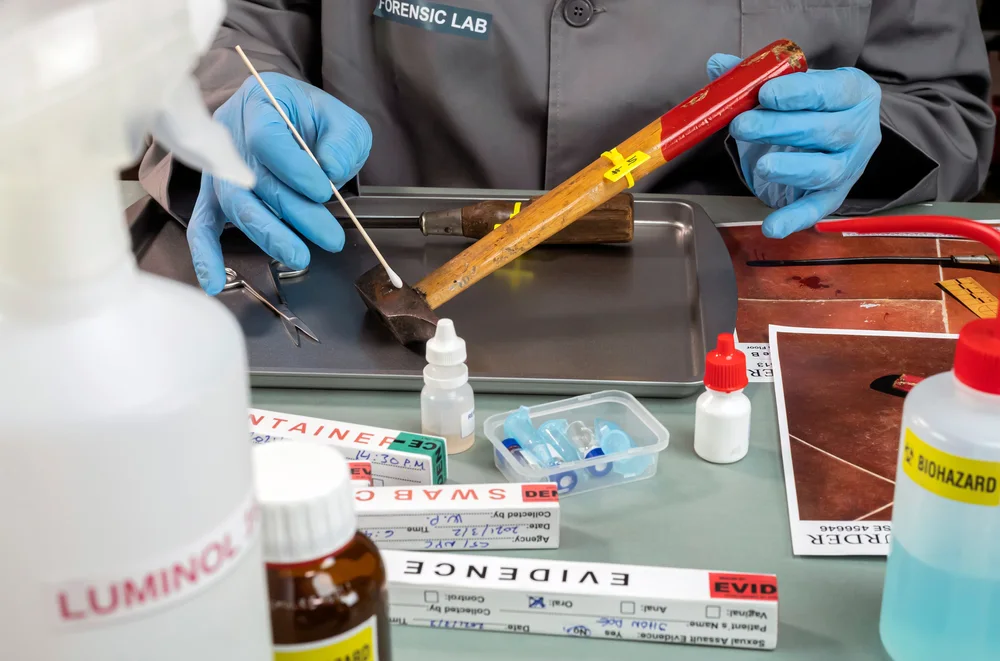
Forensic anthropology applies biological anthropology, human osteology, archaeology, and related sciences to legal questions involving human remains. The work may include determining whether remains are human, recovering buried or scattered remains, developing a biological profile, documenting skeletal trauma, assessing postmortem changes, and helping investigators identify a deceased person.
This is a specialized profession with a long education and training path. A bachelor’s degree can establish the necessary foundation, but professional practice typically requires a relevant master’s or doctoral degree plus supervised laboratory, field, research, and case experience. The American Board of Forensic Anthropology now uses sequential Analyst and Diplomate certification levels, with a qualifying master’s degree serving as the minimum degree for the Analyst route and a qualifying doctorate required for the new Diplomate route.
California offers several useful educational pathways, though few carry the exact title “forensic anthropology.” Some are broad anthropology graduate degrees with strong skeletal-biology resources. Others are undergraduate certificates, course sequences, or adjacent programs in bioarchaeology and human-remains analysis. Degree titles alone do not establish professional preparation. The most useful programs combine osteology, biological anthropology, archaeology, statistics, research, technical writing, field recovery, and supervised analytical experience.
California education options at a glance
The programs below represent verified direct, closely related, and adjacent California pathways. This is not a list of every anthropology department in the state. Broad programs were included only where official materials establish relevant coursework, laboratories, concentrations, or human-remains research opportunities.
| School and pathway | Level | Main forensic anthropology relevance |
|---|---|---|
| California State University, Fullerton Forensic Anthropology Certificate | 12-unit undergraduate certificate | Required human osteology, advanced osteology, and forensic anthropology |
| California State University, Fresno Anthropology pathway | Bachelor’s | Physical and forensic anthropology emphasis or pathway with multiple skeletal-biology courses |
| California State University, Chico MA in Anthropology | Master’s | Biological anthropology, skeletal analysis, research, and access to the Human Identification Laboratory |
| California State University, Los Angeles MA in Anthropology | Master’s | Biological Anthropology option identified by the university as preparation for forensic anthropology and related fields |
| California State University, Fullerton MA in Anthropology | Master’s | Evolutionary anthropology specialization with potential advanced osteology and forensic anthropology coursework |
| San Diego State University MA in Anthropology | Master’s | Thesis-based program with human osteology and biological anthropology laboratory resources |
| Sonoma State University MS in Cultural Heritage and Resources Management | Master’s | Adjacent Natural Sciences and Technology concentration permitting osteology and forensic anthropology courses |
| California State University, Sacramento anthropology coursework | Undergraduate or graduate coursework | Human Osteology and Forensic Anthropology courses |
| California State University, Bakersfield anthropology coursework | Bachelor’s coursework | Human Osteology followed by upper-division Forensic Anthropology |
A focused undergraduate certificate or emphasis can improve preparation for graduate admission, but it is not terminal professional training. The master’s programs listed here vary substantially in purpose. Chico State has the clearest verified connection to active forensic services and human-identification work. Cal State LA, Cal State Fullerton, and San Diego State offer broader anthropology degrees through which a student may develop relevant biological or skeletal expertise. Sonoma State is primarily a cultural heritage and resources management program, even though its Natural Sciences and Technology concentration allows human-remains coursework.
What forensic anthropologists actually do
According to the American Board of Forensic Anthropology, forensic anthropologists address medicolegal questions involving human remains. Their work can begin at the recovery scene and continue through laboratory analysis, reporting, consultation, and testimony.
Common responsibilities include:
- Determining whether suspected remains are human or nonhuman
- Locating and recovering buried, burned, fragmented, or scattered remains
- Using archaeological methods to document remains and associated evidence
- Estimating age at death, sex, stature, and other biological characteristics
- Describing skeletal disease, developmental variation, and healed injuries
- Examining trauma that occurred around the time of death
- Assessing postmortem alteration, weathering, burning, scavenging, and other taphonomic changes
- Comparing skeletal findings with medical, dental, radiographic, or missing-person records
- Preparing technical reports and case documentation
- Explaining methods, conclusions, and limitations in legal proceedings
The National Institute of Justice describes forensic anthropology as the examination of skeletal remains to produce information that may assist with identification and investigation. Biological-profile estimates narrow investigative possibilities, but they do not by themselves identify a person. Identification commonly draws on multiple forms of evidence, potentially including dental records, DNA, medical imaging, distinctive pathology, personal effects, and contextual information.
Methods involving ancestry or population affinity also require careful interpretation. Skeletal estimates are statistical assessments with methodological limits. They are not equivalent to a person’s self-identified race, ethnicity, nationality, or cultural identity.
Forensic anthropology is not forensic pathology
A forensic pathologist is a physician who conducts medicolegal autopsies and determines cause and manner of death within the relevant legal system. A forensic anthropologist analyzes human remains, especially skeletal, decomposed, burned, or fragmented remains, and reports findings within the anthropologist’s area of expertise.
Standards for skeletal-trauma analysis cover the documentation and interpretation of trauma timing and mechanisms, including blunt, sharp, projectile, and thermal trauma. They do not assign cause and manner of death to the anthropologist. Those determinations belong to the authorized medicolegal official, commonly a forensic pathologist, medical examiner, or coroner operating under California law and local structure.
It is also different from CSI and criminalistics
Crime scene investigators document scenes, photograph evidence, collect and package material, maintain chain of custody, and may process fingerprints or other physical evidence. Criminalists typically analyze evidence in a laboratory using chemistry, biology, microscopy, instrumentation, or DNA methods.
Forensic anthropologists can participate in scenes involving human remains, but their specialized contribution is rooted in anatomy, osteology, biological anthropology, taphonomy, and archaeological recovery. Los Angeles County provides a practical example: its medical examiner system uses an anthropologist with a criminalist during the excavation and recovery of buried or skeletonized remains. The specialists collaborate rather than perform interchangeable jobs.
Readers exploring adjacent roles can compare other California forensic and investigative careers, including crime scene investigation and laboratory forensic science.
The education path, step by step
1. Earn a bachelor’s degree with the right foundation
A bachelor’s degree in anthropology is a common starting point, particularly when the curriculum emphasizes biological or physical anthropology. Biology or another related field can also provide a route into graduate study, but missing anthropology, archaeology, and osteology courses may need to be completed separately.
A useful undergraduate plan includes:
- Introductory and biological anthropology
- Human osteology
- Human anatomy and physiology
- Forensic anthropology
- Human variation
- Archaeology
- Archaeological field methods or field school
- Taphonomy
- Zooarchaeology
- Biology
- Chemistry
- Statistics
- Research design
- Ethics
- Technical and scientific writing
Each subject addresses a different professional need. Osteology develops the ability to identify skeletal elements and interpret variation. Anatomy supports trauma and pathology analysis. Archaeology teaches controlled recovery and spatial documentation. Statistics supports population-based estimation methods and research evaluation. Chemistry and biology help with decomposition, material change, genetics, and broader forensic context. Writing courses improve reports that must be clear enough for investigators, attorneys, peer reviewers, and courts.
A general criminal justice degree is usually too far removed from this scientific foundation. It may explain courts, policing, or corrections, but it rarely supplies the necessary depth in human skeletal anatomy, biological anthropology, laboratory methods, and archaeological recovery. A general forensic science degree can also miss the target if it concentrates on DNA, toxicology, trace evidence, or forensic chemistry without osteology and anthropology.
2. Complete archaeological field training
Laboratory osteology and field recovery are separate competencies. A student may become skilled at identifying bones in a laboratory yet remain underprepared to locate, expose, map, document, and recover remains at an outdoor scene.
The AAFS Standards Board’s forensic anthropology scene-processing standard identifies archaeological principles as the foundation for detecting and recovering remains and associated evidence. An archaeological field school can provide experience with excavation, mapping, stratigraphy, context, screening, field notes, and spatial control. Forensic scene training adds evidence handling, chain of custody, scene security, legal documentation, and recovery methods adapted to medicolegal cases.
Field education is valuable even when the training site is archaeological rather than forensic. The core habits of controlled excavation and contextual documentation transfer to forensic recovery, though archaeological training alone does not establish competence in medicolegal procedures.
3. Earn a relevant master’s degree
The broader occupation of anthropologists and archeologists typically requires at least a master’s degree, according to the U.S. Bureau of Labor Statistics. In forensic anthropology, graduate education is also the usual entry point for advanced skeletal analysis, original research, and supervised professional development.
A relevant master’s degree normally has a biological, physical, evolutionary, or forensic anthropology focus. Course titles matter less than the actual study plan. A strong plan includes advanced human osteology, skeletal biology, forensic anthropology, trauma, pathology, taphonomy, statistics, research methods, and a substantial research project.
Thesis research has particular value because it requires the student to formulate a defensible question, analyze data, evaluate prior scholarship, describe limitations, and present conclusions in writing. Those skills transfer directly to forensic reports and expert work. A broad anthropology MA can support this path when appropriate faculty, collections, laboratories, and research supervision are available.
The new ABFA Analyst route makes master’s-level professional certification possible for qualified applicants. It does not turn the master’s degree into a complete professional qualification by itself. Analyst applicants also need documented training and engagement, references, and success on a practical and written examination.
4. Build supervised laboratory and case experience
Professional competence develops through repeated supervised work. Coursework introduces methods, but applied training teaches how to select methods, recognize poor preservation, manage uncertainty, document observations, interpret conflicting findings, and stay within the limits of the evidence.
Useful experience may involve:
- Inventorying and documenting skeletal remains
- Distinguishing human from nonhuman bone
- Reassociating commingled or fragmented remains
- Reconstructing burned or damaged bone
- Collecting measurements
- Estimating biological characteristics
- Documenting pathology and trauma
- Conducting comparative radiographic analysis
- Participating in mock or actual recovery scenes
- Maintaining evidence records and chain of custody
- Drafting reports for review
- Observing testimony preparation
- Conducting publishable skeletal research
Active casework is not guaranteed by admission to an anthropology program. Legal restrictions, laboratory policy, case sensitivity, faculty workload, and a student’s stage of training all affect access. Mock cases, documented collections, archaeological remains, teaching casts, and research datasets can still support method development, but they are not identical to supervised medicolegal casework.
5. Consider a doctorate for advanced practice
The doctorate remains the prevailing route for advanced independent practice, university faculty work, research leadership, and ABFA Diplomate certification. Doctoral study often adds three to nine years after the master’s, depending on the institution, research design, funding, fieldwork, and dissertation progress.
A PhD program need not contain “forensic anthropology” in its title. Biological anthropology, skeletal biology, bioarchaeology, evolutionary anthropology, or a related field can provide suitable preparation when the faculty and research environment support the intended specialty.
Faculty expertise is more informative than a broad program label. UC Santa Cruz, for example, offers biological anthropology graduate study but explicitly states that it does not currently have faculty working specifically in forensic anthropology or osteology. That disclosure illustrates why a biological anthropology doctorate can be academically reputable yet poorly aligned with a particular forensic training goal.
6. Pursue professional certification
ABFA certification is professional certification, not a California government license. As of September 2026, the ABFA is transitioning to sequential Analyst and Diplomate levels.
Under the current published structure:
- A candidate first earns Analyst certification.
- The candidate later pursues Diplomate certification after meeting the doctoral, certification, and case-experience requirements.
The ABFA Analyst certification route currently requires at least a master’s degree in anthropology or a related field with an emphasis in biological or forensic anthropology, subject to the board’s detailed degree and waiver rules. Applicants document training through an Analyst Training Log and submit three references, including one active ABFA Diplomate with direct knowledge of their work.
The Analyst examination includes written questions and practical stations involving specimens, measurements, images, and analytical output. The ABFA’s published process currently requires a score of at least 80 percent to pass.
The redesigned ABFA Diplomate certification requires a qualifying PhD, current Analyst certification or recertification, and a case log documenting experience obtained after applying for Analyst certification. Its examination evaluates advanced theory, method selection, synthesis, and interpretation through case scenarios.
The first application cycle for the new-format Diplomate examination is scheduled for March 1 through March 31, 2027, with the examination planned for January 2028. These dates are part of an active transition, so the ABFA’s current schedule controls for future application cycles.
California undergraduate preparation
Cal State Fullerton Forensic Anthropology Certificate
Cal State Fullerton offers the clearest dedicated undergraduate credential identified in this review. The 12-unit Forensic Anthropology Certificate requires:
- Human Osteology
- Advanced Topics in Human Osteology
- Forensic Anthropology
- One elective in Bioarchaeology, Human Variation, or Human Evolutionary Anatomy
A grade of B or better is required in every certificate course. The sequence concentrates directly on skeletal anatomy and forensic interpretation rather than spreading the coursework across a general forensic science curriculum.
The certificate is focused preparation, not professional qualification as a forensic anthropologist. Twelve units cannot replace graduate research, field recovery, supervised case experience, or the broader biological-anthropology foundation expected for professional practice. Its best use is as part of a bachelor’s degree plan or as concentrated preparation for graduate admission. The official page does not clearly establish eligibility for every type of non-degree or post-baccalaureate student.
Fresno State Physical and Forensic Anthropology pathway
Fresno State describes its undergraduate anthropology program as including a Physical and Forensic Anthropology emphasis or pathway. Recent official catalog materials list a notably concentrated course sequence:
- Human Osteology
- Introduction to Forensic Anthropology
- Human Paleopathology
- Human Evolutionary Theory
- Research Methods in Human Skeletal Biology
The skeletal-biology research course includes metric and nonmetric methods and relevant computer applications. The forensic anthropology course applies medicolegal methods to analytical problems. Paleopathology adds the study of disease and skeletal response, which helps distinguish pathological change from trauma, normal variation, and postmortem damage.
The department also reports internship, fieldwork, and field-school opportunities. Anthropology internships can occur in campus laboratories or outside organizations, although the available placement need not involve active forensic work.
This pathway provides more concentrated undergraduate skeletal coursework than a typical general anthropology major. Graduates would still need advanced education for most professional forensic anthropology roles, but the curriculum can support competitive applications to biological anthropology, skeletal biology, bioarchaeology, or forensic anthropology graduate programs.
Sacramento State and CSU Bakersfield course sequences
California State University, Sacramento offers Human Osteology and Forensic Anthropology coursework. Human Osteology includes hands-on identification, measurement, and age and sex assessment. The forensic anthropology course addresses biological profiling, trauma, medicolegal skeletal analysis, and human-rights applications.
California State University, Bakersfield also offers Human Osteology and Forensic Anthropology. Its sequence covers skeletal growth and alteration, pathology, forensic archaeology, human-versus-nonhuman differentiation, biological profiling, and identification methods.
These are useful course-building options rather than standalone forensic anthropology degrees. Their value increases when they are paired with anatomy, biology, chemistry, statistics, archaeological field methods, independent research, and strong academic writing.
California graduate pathways
Cal State Chico MA in Anthropology
Chico State’s on-campus MA in Anthropology is the clearest verified California graduate pathway connecting biological anthropology education with an operating human-identification laboratory. The broad anthropology degree permits work in biological anthropology, human skeletal biology, and forensic anthropology. Graduate training includes advanced coursework, research, and a thesis.
The Human Identification Laboratory provides forensic anthropology services to law enforcement, medical examiners, attorneys, and state and federal partners. Its work includes:
- Scene recovery and archaeological excavation
- Human-versus-nonhuman identification
- Biological-profile development
- Trauma analysis
- Isotopic analysis
- Comparative radiography
- Analysis of fragmented and burned remains
- California disaster response
Graduate students and undergraduate interns receive experience in skeletal analysis, pathology, trauma, reconstruction, and identification techniques. The laboratory employs multiple full-time forensic anthropologists, giving students proximity to practitioners and active service work that many general anthropology departments cannot provide.
Admission materials currently include recommendations, a statement of purpose, a CV, and a writing sample. GRE scores are not required. The biological-focus application deadline differs from deadlines for other anthropology focuses.
Access to a forensic laboratory does not mean every admitted student will handle active evidence or receive the same case assignments. Even with that limitation, Chico’s combination of graduate research, skeletal analysis, practicing forensic anthropologists, and a laboratory serving outside agencies gives it unusually direct career relevance within California.
Cal State LA MA in Anthropology, Biological Anthropology option
Cal State LA currently offers an MA in Anthropology with a Biological Anthropology option. The university identifies forensic anthropology, bioarchaeology, primatology, and related fields as areas for which the option provides preparation.
Older catalogs and advising materials may refer to a Forensic Anthropology option. The current program name is Biological Anthropology. That change makes it necessary to evaluate the present curriculum rather than rely on archived descriptions.
The degree can provide relevant master’s-level preparation for later doctoral study or work connected to skeletal and biological anthropology. Current official materials reviewed for this guide do not establish that every student completes advanced forensic osteology, obtains active case exposure, or works under an ABFA-certified practitioner. The program’s fit therefore rests on the approved course plan, research topic, current faculty supervision, and available laboratory resources.
Cal State Fullerton MA in Anthropology
Cal State Fullerton’s MA supports specialization in evolutionary anthropology. Its graduate handbook lists Advanced Human Osteology and Forensic Anthropology among methods courses that can be incorporated into an approved study plan.
Students complete a thesis, project, or comprehensive examination option. Classroom instruction may be combined with laboratory and field opportunities, depending on the student’s plan and faculty resources.
The main tradeoff is breadth. This is an anthropology MA rather than a named forensic anthropology degree. A student can build relevant skeletal training through evolutionary anthropology, osteology, forensic coursework, and a suitable research project, but the degree does not impose that pathway on every enrollee. A thesis centered on skeletal biology or a closely related topic generally provides better doctoral preparation than a course-only plan with little original research.
San Diego State University MA in Anthropology
San Diego State offers a thesis-based MA in Anthropology with access to human osteology and biological anthropology resources. Available preparation includes Human Osteology, graduate biological anthropology seminars, bioarchaeology, skeletal biology, and electives connected to faculty research.
The university’s Human Osteology Resource Lab covers paleopathology, dental anthropology, historical bioarchaeology, and forensic anthropology. The Biological Anthropology Research and Teaching Lab also represents forensic anthropology among its specialties. Teaching collections include casts demonstrating trauma, disease, and age and sex estimation.
Original thesis research is required. That requirement supports research design, data analysis, literature review, and sustained technical writing. Students may also participate in faculty-led fieldwork and use departmental laboratories when their projects and supervision permit.
About half of required courses are described as asynchronous or scheduled later in the day. Laboratory work and collection-based research remain campus-dependent, so the program is not fully online. SDSU is best understood as a broad anthropology MA with relevant infrastructure, not as a dedicated forensic anthropology graduate degree.
Sonoma State MS in Cultural Heritage and Resources Management
Sonoma State’s 30-unit MS in Cultural Heritage and Resources Management has a Natural Sciences and Technology concentration that includes human-remains analysis within its scope. Approved supporting courses include:
- Forensic Anthropology Theory and Practice
- Bioarchaeology
- Human Osteology
- Forensic Anthropology Methods
Students complete at least eight units of approved supporting coursework, but the degree does not require every student to take all four forensic or osteology courses. The concentration also requires prior introductory statistics with a grade of C or higher.
A three-unit internship or practicum and a culminating experience are required. These applied components serve the program’s cultural heritage and resources management mission. An internship might involve archaeology, heritage compliance, collections, or another area rather than modern medicolegal casework.
This is an adjacent option for someone interested in bioarchaeology, human-remains analysis, or cultural resource work. Its primary purpose is not the preparation of medical examiner consultants or independent forensic anthropology experts. A student targeting forensic practice would need a carefully designed course and research plan, followed by additional specialized training where necessary.
Choosing a program for forensic anthropology
The strongest program on paper is not necessarily the one with “forensic” in its title. Career preparation depends on what the student can actually study, research, and practice.
Evaluate programs using the following criteria.
Human osteology depth
One introductory osteology course is a foundation, not mastery. Look for advanced osteology, skeletal biology, pathology, trauma, dental anthropology, human variation, and methods courses using documented specimens, measurements, images, or appropriate teaching collections.
Repeated skeletal analysis develops pattern recognition and helps students understand normal variation. It also reduces the risk of misclassifying animal bone, pathology, taphonomic damage, or anatomical variation as trauma.
Faculty expertise and supervision
Graduate training is shaped by the available adviser. Relevant expertise may include forensic anthropology, human osteology, skeletal biology, bioarchaeology, paleopathology, trauma, taphonomy, forensic archaeology, or human identification.
A program can list an appropriate course even when no current faculty member is available to supervise a thesis in that specialty. Current research activity, recent graduate projects, laboratory leadership, and faculty case experience are more informative than an old course catalog alone.
Research requirements
A thesis usually provides stronger preparation for doctoral admission and research-centered work than a general comprehensive examination. It requires original analysis, methodological justification, statistical reasoning, sustained writing, and oral defense.
Project routes can also be useful when they produce substantial analytical or applied work. The underlying question is whether the culminating requirement demonstrates the student’s ability to analyze evidence and defend a conclusion.
Field recovery training
Look for archaeological field school, forensic archaeology, scene documentation, mapping, excavation, evidence handling, and chain-of-custody instruction. Programs centered entirely on laboratory skeletal analysis can leave a graduate underprepared for outdoor recovery.
Conversely, an archaeology-heavy degree may provide strong excavation skills while lacking the human anatomy and biological-profile methods needed for forensic anthropology. Effective preparation covers both recovery and analysis.
Laboratory and case exposure
A human osteology laboratory may support teaching and research without handling active forensic cases. Both have educational value, but they provide different experiences.
Active medicolegal work introduces legal documentation, evidence security, turnaround pressures, multidisciplinary communication, and case-specific uncertainty. Research collections allow repeated method development and larger comparative studies. A well-designed education can use both.
Professional writing and testimony preparation
Forensic conclusions must be documented clearly enough to survive technical review and legal scrutiny. Training should include reports, research papers, oral presentations, evidence-based argument, and candid discussion of limitations.
Courtroom preparation is more than public speaking. Expert witnesses must explain why a method was selected, how observations support an interpretation, what alternative explanations were evaluated, and where the evidence stops.
Employment in California
California does not use a single statewide employment model for forensic anthropologists. A practitioner may be:
- A county medical examiner or coroner employee
- A university faculty member who consults on cases
- A laboratory employee
- A researcher or laboratory administrator
- An independent consultant
- A disaster-response specialist
- A military or federal employee
- A specialist working on human-rights or identification projects
Some counties employ specialists directly. Others obtain services from universities, regional laboratories, contractors, or outside consultants. Dedicated forensic anthropology positions are limited, and no reliable statewide source publishes a count of openings specific to this specialty.
Los Angeles County illustrates a large multidisciplinary medical examiner system. Its Special Operations Response Team includes a forensic anthropologist alongside investigators, forensic attendants, forensic technicians, criminalists, and deputy medical examiners. The anthropologist assists with specialized human-remains work but does not replace those other roles.
Chico State illustrates a different model. Its Human Identification Laboratory provides services to California agencies while training students and supporting research. In such a setting, professional duties can combine casework, teaching, laboratory administration, scholarship, and disaster response.
Many careers are similarly mixed. A practitioner may hold an academic appointment and consult on a limited number of cases, or work in a laboratory role that includes research and agency support. A job search limited to the exact title “forensic anthropologist” can miss positions listed under biological anthropologist, physical anthropologist, human identification specialist, laboratory director, faculty, or consultant.
Licensing and certification in California
No occupation-specific forensic anthropologist license was identified in the California Department of Consumer Affairs licensing table reviewed for this guide. ABFA certification is not a state license.
The absence of a dedicated license does not remove professional or legal standards. Employers set education and experience requirements. Laboratories use quality systems and written procedures. Courts evaluate expert qualifications. Evidence-handling rules apply to casework. Work involving archaeological discoveries, cemetery remains, Native American remains, or modern medicolegal cases can fall under different legal authorities and jurisdictional processes.
Professional certification provides a structured assessment of education, training, and competency. It does not give a practitioner independent control over a death investigation, scene, or disposition of remains.
FEPAC accreditation is not the default quality measure for anthropology programs. FEPAC focuses on forensic science education, particularly laboratory-oriented forensic science programs. Forensic anthropology education is more appropriately evaluated through biological anthropology faculty, osteology, research, archaeological recovery, laboratory resources, supervised experience, and alignment with current professional standards.
Salary and employment outlook
Neither the Bureau of Labor Statistics nor California’s Employment Development Department publishes a wage series limited to forensic anthropologists. Available figures combine forensic practitioners with other anthropologists and archeologists.
The BLS Anthropologists and Archeologists profile reports a national median annual wage of $70,770 as of May 2025. The broad occupation is projected to grow 6 percent from 2025 to 2035, with about 800 openings per year nationally on average.
Those figures include many jobs unrelated to forensic anthropology, such as archaeology, cultural resources management, academic research, and general anthropological consulting. They are useful as broad occupational context, not as a salary forecast for a forensic anthropologist.
California EDD reports the following first-quarter 2026 hourly wages for the broad Anthropologists and Archeologists category:
- Median: $35.70 per hour
- Mean: $38.17 per hour
- 25th percentile: $30.95 per hour
- 75th percentile: $43.46 per hour
Actual compensation can differ based on employer type, academic rank, county pay structure, experience, laboratory responsibilities, consulting activity, location, and whether the position combines teaching, research, administration, and casework. Consulting income can also be irregular and should not be compared directly with a salaried university or county position.
Work conditions and professional demands
The popular image of forensic anthropology often centers on laboratory analysis. Actual work may also involve outdoor recovery scenes, decomposition, burned remains, fragmented bone, difficult terrain, protective equipment, travel, kneeling, lifting, and irregular response schedules.
Laboratory work demands patience and close attention. A case may involve hundreds of fragments, mixed remains, poor preservation, incomplete records, or changes caused by heat, soil, animals, weather, or recovery activity. The analyst must distinguish observation from interpretation and document uncertainty rather than force a conclusion.
Death investigation can also be emotionally difficult. Practitioners may work on homicide cases, child deaths, disasters, unidentified persons, or cases involving extensive trauma. Sustainable careers require professional boundaries, effective supervision, and healthy methods of processing repeated exposure to death and loss.
Communication carries equal weight with technical skill. Reports can affect investigations and legal proceedings. A forensic anthropologist may need to explain complex methods to detectives, attorneys, pathologists, jurors, students, and family-facing officials without overstating what skeletal evidence can establish.
A practical California pathway
A well-planned route can be organized as follows:
-
Complete a bachelor’s degree in anthropology or a closely related science. Build a course plan around biological anthropology, osteology, anatomy, archaeology, statistics, biology, chemistry, ethics, and writing.
-
Add concentrated skeletal training. Cal State Fullerton’s certificate, Fresno State’s physical and forensic pathway, or osteology and forensic anthropology courses at Sacramento State or CSU Bakersfield can strengthen undergraduate preparation.
-
Attend an archaeological field school. Develop excavation, mapping, documentation, context, and recovery skills rather than concentrating exclusively on laboratory analysis.
-
Participate in research or laboratory work. Seek experience with skeletal collections, trauma, pathology, taphonomy, comparative anatomy, metric methods, data analysis, or related human-remains research.
-
Earn a relevant master’s degree. Prioritize advanced osteology, original research, suitable faculty supervision, field recovery, and access to laboratory resources. Chico State, Cal State LA, Cal State Fullerton, and San Diego State represent different versions of this route.
-
Accumulate documented supervised training. Maintain records of methods, laboratory work, reports, recovery exercises, research, presentations, and professional development. Documentation is especially relevant to the ABFA Analyst pathway.
-
Pursue Analyst certification when eligible. A qualifying master’s degree is only one part of the current requirements. Training records, references, and examination performance are also required.
-
Complete a doctorate for Diplomate eligibility and advanced independent practice. Select a PhD environment based on current faculty expertise, skeletal research resources, case exposure, funding, and dissertation feasibility.
-
Build a career across connected settings. University laboratories, county systems, consulting, disaster response, research, teaching, and human-identification work may form parts of the same career rather than separate occupations.
The path is long because professional judgment cannot be compressed into a short credential. Accurate skeletal interpretation comes from sustained study, repeated supervised analysis, field recovery, research, report writing, peer review, and experience recognizing the limits of available evidence.
California provides several credible entry points, but they serve different stages. Undergraduate certificates and course pathways build the foundation. Broad anthropology master’s degrees can provide advanced skeletal research when the faculty and laboratory environment align. Programs connected to active human-identification work offer a closer view of medicolegal practice. Doctoral education and sequential ABFA certification support advanced professional development.
The most efficient route is therefore not the degree with the most forensic terminology. It is the sequence that steadily develops human osteology, archaeology, biological anthropology, quantitative reasoning, research, field recovery, professional writing, and supervised experience.