
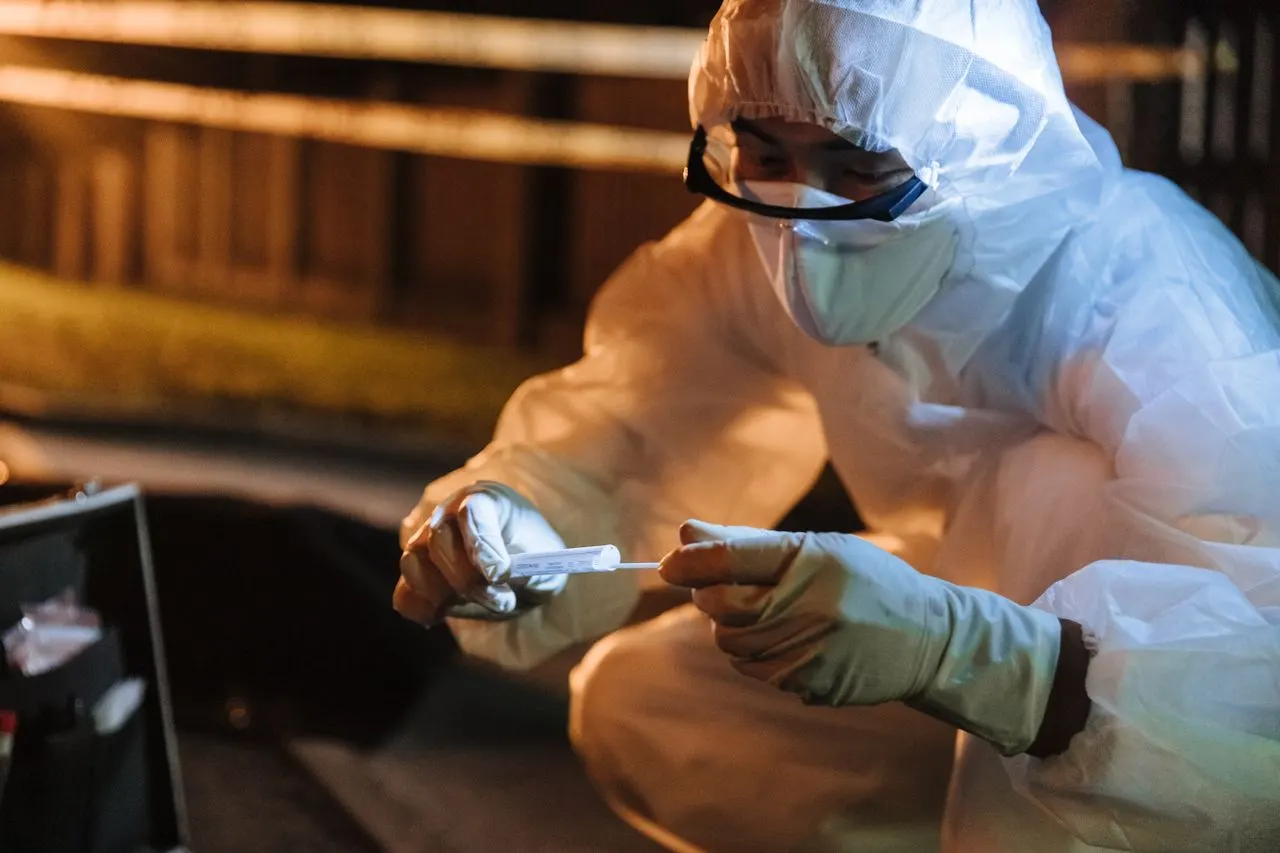
A “crime scene investigation degree” in California can mean several different things. Some colleges offer a degree or concentration explicitly focused on CSI. Others use names such as forensic technology, forensic studies, forensic crime scene investigation, or criminal justice with a forensics concentration.
The curriculum matters more than the label. Field crime-scene work typically emphasizes photography, evidence recognition and collection, fingerprints, scene documentation, measurements, reconstruction, report writing, chain of custody, and courtroom testimony. That is different from laboratory criminalistics, where employers may expect much stronger chemistry, biology, instrumental analysis, or DNA preparation.
California students have options at the bachelor’s, associate, graduate, and certificate levels. The best route depends on whether the goal is a civilian crime scene position, evidence or identification work, a sworn law-enforcement role with CSI duties, or advanced forensic investigation.
For a broader look at the science-heavy side of the field, see our guide to forensic science colleges and degree programs in California. You can also browse the main CSI and forensic science degrees in California hub.
Crime Scene Investigation Degree and Training Options in California
| School | Program | Level | Main CSI Focus | Format |
|---|---|---|---|---|
| San José State University | B.S. in Forensic Science, Crime Scene Investigation concentration | Bachelor’s | CSI, evidence, forensic science | On campus; concentration is impacted |
| Stanislaus State | B.A. in Criminal Justice, Forensics concentration | Bachelor’s | Field forensics and crime-scene work | On campus |
| Grossmont College | A.S. in Forensic Technology | Associate | Fingerprints, photography, crime-scene technology | Primarily on campus |
| Southwestern College | A.S. in Forensic Studies | Associate | Evidence technology, fingerprints, photography | On campus |
| Palomar College | A.S. in Forensic Technology | Associate | Forensic-support and evidence work | On campus |
| East Los Angeles College | A.S. in Forensic Crime Scene Investigation | Associate | Scene processing, evidence recovery, fingerprints | On campus |
| National University | Master of Forensic Sciences, Investigation specialization | Master’s | Advanced forensic and crime-scene investigation | Online, hybrid, and in person depending on course |
| Alliant University | M.S. in Forensic Science, Investigation & Technology | Master’s | Crime-scene and incident investigation | Online + two weekend residencies |
| Cal State LA | Forensic Specialist Certificate | Certificate | CSI and friction-ridge examination | In person |
These programs are not interchangeable. A two-year CSI program may be a practical entry point for evidence or scene-support work, while a bachelor’s degree can provide broader preparation for agencies that require four years of college. The graduate programs are more useful for professionals who already hold a bachelor’s degree and want advanced investigative training.
San José State University — B.S. in Forensic Science, Crime Scene Investigation Concentration
San José State offers the most direct four-year CSI pathway among California public universities. Its B.S. in Forensic Science includes concentrations in Biology, Chemistry, Digital Evidence, and Crime Scene Investigation.
The CSI concentration combines forensic science with the practical work of documenting and processing scenes. Current major materials include courses in forensic science, forensic applications, crime scene investigation, photography and other evidence-focused areas, along with biology and chemistry.
SJSU’s broader forensic science program also exposes students to subjects such as physical evidence, forensic biology, DNA, toxicology, firearms and toolmarks, arson and explosives, and instrumental analysis. The CSI route is not intended to replace the deeper science preparation used for laboratory criminalistics; SJSU itself distinguishes field CSI from crime-laboratory work.
Availability is limited
Students should pay close attention to current admissions information. SJSU continues to identify Crime Scene Investigation as a Forensic Science B.S. concentration in its program and Fall 2026 major materials, but the department also says the concentration is impacted and accepting a very limited number of new students.
That makes SJSU a strong academic option but not one applicants should assume will be open every cycle. The Biology, Chemistry, and Digital Evidence concentrations remain alternatives for students interested in forensic careers, and SJSU also offers a 15-unit Forensic Studies minor with courses in crime scene investigation and forensic science applications.
SJSU says its forensic science concentration curricula meet FEPAC educational standards. That wording is different from saying the program itself is currently FEPAC-accredited, so students comparing accreditation should check the current AAFS directory rather than treating the two claims as equivalent.
Stanislaus State — B.A. in Criminal Justice, Forensics Concentration
Stanislaus State’s Forensics concentration is a particularly useful California option because the university is explicit about what the program is designed to do.
The department says the concentration is intended for students interested in field work such as crime scene investigation. Students aiming for laboratory criminalist positions are advised instead to major in chemistry or biology and consider adding the university’s forensic science minor.
Prerequisites for the Forensics concentration include chemistry, statistics, human genetics, and psychology. The forensic curriculum has included Criminalistics I and II, Forensic DNA Technology, Scientific Evidence and the Law, forensic psychology, and related subjects.
That mix gives students more science than a conventional criminal justice major while keeping the career focus on evidence and investigation rather than advanced laboratory chemistry.
For someone who wants a four-year degree but is more interested in processing scenes than working at a laboratory bench, Stanislaus State offers a clearer fit than many broad criminal justice programs that use “forensics” only as an elective topic.
Grossmont College — A.S. in Forensic Technology
Grossmont College has one of California’s deepest community-college curricula for crime-scene and evidence work.
The A.S. in Forensic Technology requires 42 units in the major, plus general education and other coursework needed to reach the 60-unit associate degree minimum.
Required courses include:
- Fingerprint Identification
- Forensic Photography
- Criminal Investigation
- Crime Scene Technology
- Forensic Analysis
- Advanced Forensic Photography
- Advanced Fingerprint Identification
- Biology with laboratory
- Forensic Chemistry or another approved chemistry course
Grossmont also recommends electives such as a forensic public-service internship.
The combination of fingerprints, photography, scene technology, and advanced practical courses gives the program a stronger CSI identity than a general Administration of Justice degree. Biology and chemistry add useful scientific context without turning the program into a four-year laboratory-science degree.
For California residents, community-college enrollment fees remain $46 per unit in 2026–27 before campus-specific fees, books, supplies, and living costs.
Southwestern College — A.S. in Forensic Studies
Southwestern College in Chula Vista offers a 36-unit major leading to an A.S. in Forensic Studies once general education and other associate-degree requirements are completed.
The required major coursework includes:
- Introduction to Administration of Justice
- Criminal Law
- Legal Aspects of Evidence
- Principles of Investigation
- Written Communication in Administration of Justice
- Evidence Technology
- Latent Fingerprint Examiner
- Digital Forensic Photography
- Introduction to Biology
- Biology Laboratory
- Introduction to General Chemistry
Southwestern describes the program as preparation for field evidence technicians and forensic lab technicians. For CSI-focused students, the strongest parts of the curriculum are evidence technology, latent prints, photography, investigation, and the introductory biology and chemistry foundation.
The college also cautions that practical experience may be important before paid employment. That is a realistic point for students comparing associate programs: volunteering, internships, agency exposure, or other hands-on experience can matter alongside the degree.
Palomar College — A.S. in Forensic Technology
Palomar College added an A.S. in Forensic Technology beginning in Fall 2026, making it one of the newest California community-college options in this field.
Palomar developed the program alongside a 41-unit Forensic Technology Certificate of Achievement. The college describes the new pathway as preparation for forensic-support work, including positions connected with evidence processing and crime laboratories.
New forensic coursework includes hands-on work involving the collection, processing, and analysis of physical evidence. Palomar has identified career directions such as forensic technician, evidence custodian, and crime scene specialist.
Because the program is new, students should use the current 2026–27 catalog and academic plan when registering rather than relying on older Administration of Justice pathways.
Its location also expands the number of CSI-oriented public-college choices in San Diego County, where Grossmont and Southwestern already offer established forensic programs.
East Los Angeles College — A.S. in Forensic Crime Scene Investigation
East Los Angeles College has one of the clearest degree titles for students specifically seeking CSI training: the A.S. in Forensic Crime Scene Investigation.
ELAC’s current pathway lists the associate degree at 60 units and also offers a shorter 17-unit Certificate of Achievement.
The program emphasizes practical scene and evidence skills, including:
- Crime-scene processing
- Evidence identification and recovery
- Crime-scene diagramming
- Digital photography
- Fingerprint classification
- Latent-print development
- Bloodstain evidence
- Criminal investigation
- Criminalistics
- Forensic ethics
ELAC describes potential entry-level directions such as crime scene technician, evidence custodian, coroner’s assistant, and investigative work.
This is a field-oriented degree. Students planning to become laboratory criminalists should compare the curriculum with four-year chemistry, biology, or forensic science requirements before assuming the associate degree will provide enough laboratory science.
Graduate CSI Options in California
Most people do not need a master’s degree to begin a crime-scene career, but California has graduate programs that can make sense for investigators seeking advanced education.
National University — Master of Forensic Sciences, Investigation Specialization
National University’s 36-credit Master of Forensic Sciences includes an Investigation specialization designed for forensic crime and death investigation.
Unlike National’s Criminalistics specialization, the Investigation route does not require a specific undergraduate major.
All MFS students complete a core that includes Crime Scene Investigation, forensic pathology, forensic anthropology, fingerprint analysis, law, and supervised research. The Investigation specialization adds coursework in areas such as:
- Advanced Criminalistics
- Forensic Psychology
- Forensic Photography
- Major Case Investigation
The program is available online, hybrid, and in person depending on the course and specialization. National is based in San Diego and currently lists year-round starts.
This is a graduate route rather than entry-level CSI training. It is more relevant to someone who already holds a bachelor’s degree and wants to deepen investigative skills, move into more advanced responsibilities, or formalize professional experience.
Alliant University — M.S. in Forensic Science, Investigation & Technology
Alliant’s 33-unit online M.S. offers a Crime Scene and Incident Investigation concentration alongside Criminalistics and Technology and Criminal Investigative Intelligence & Analysis.
The CSI concentration covers forensic investigations involving areas such as violent crime, transportation incidents, arson, and identity analysis. The broader degree integrates law, science, technology, evidence collection, and forensic investigation.
Most coursework is asynchronous, but the program is not entirely remote. Students complete two on-site weekend residencies and a research thesis.
Alliant’s format can work for experienced professionals who need an online graduate schedule but still want some hands-on component. It is broader and more technology-oriented than a traditional CSI certificate.
Certificates for Focused CSI Training
A full degree is not always necessary, particularly for students who already have college education or professionals adding a specialty.
Cal State LA — Forensic Specialist Certificate
Cal State LA’s California Forensic Science Institute offers one of the most intensive nondegree CSI programs in the state.
The Forensic Specialist Certificate combines two tracks:
- Crime Scene Investigation
- Friction Ridge Examination
The program is in person and includes extensive hands-on instruction. Applicants must hold at least an associate degree or be currently enrolled in an associate-degree program.
The current program totals 300 hours. Training includes scene work and fingerprint examination, with instruction from forensic practitioners. Cal State LA’s current 2026 payment page lists full registration at $4,600, including required program supplies.
This program is particularly relevant for someone who already meets a general education requirement and wants concentrated, practical forensic-specialist training rather than another full degree.
Other California CSI certificates
Several community colleges offer shorter CSI programs:
| College | Program | Current Scope |
|---|---|---|
| Río Hondo College | Crime Scene Investigations & Forensics Certificate | 12 units covering CSI I and II, investigation, and introductory forensic science |
| Long Beach City College | Criminal Forensics Certificate | 15 units emphasizing evidence, investigation, fingerprints, and forensics |
| Victor Valley College | Forensic Specialist Certificate of Career Preparation | Short program centered on crime-scene evidence collection and processing |
Certificates can be useful for targeted skill development, but they do not override the hiring requirements of a particular agency.
What Do You Study in a Crime Scene Investigation Program?
CSI coursework tends to focus on preserving the scene and turning physical evidence into a documented, legally defensible record.
Subjects may include:
- Crime-scene photography
- Scene sketches and measurements
- Evidence recognition
- Evidence collection and packaging
- Chain of custody
- Fingerprint development and comparison
- Bloodstain documentation
- Impression evidence
- Crime-scene reconstruction
- Report writing
- Criminal law and evidence
- Courtroom testimony
- Forensic ethics
More science-oriented programs may add chemistry, biology, DNA, microscopy, toxicology, or forensic laboratory methods.
The amount of science matters because CSI and laboratory criminalistics are different jobs. A CSI may locate, document, collect, and preserve evidence at the scene. A criminalist or laboratory analyst may later examine that evidence using chemical, biological, microscopic, or instrumental methods.
Students who want the laboratory side should also review California forensic science degree programs.
Associate Degree or Bachelor’s Degree for CSI?
There is no single statewide degree requirement for every crime scene investigator position in California.
Employers use different titles and minimum qualifications. Some agencies hire civilian crime-scene technicians or forensic specialists. Other departments assign scene work to sworn police officers or deputies. Fingerprint, evidence, photography, and forensic-specialist classifications may have their own education and experience rules.
The U.S. Bureau of Labor Statistics says forensic science technicians typically need a bachelor’s degree, while California EDD’s current occupational profile says employers in the state are often looking for candidates with an associate degree. The apparent mismatch reflects how broad the occupation is and how much local hiring standards vary.
A recent City of Los Angeles Forensic Print Specialist classification provides another example: its education pathway can involve a four-year degree or 60 semester units combined with the required experience.
That is why students should look at actual job classifications from several California agencies before deciding that an associate or bachelor’s degree is universally required.
An associate degree can make sense when:
- You want focused CSI and evidence training at lower cost.
- Local agencies you are targeting accept two years of college.
- You may transfer later.
- You want to build practical skills before committing to a four-year program.
A bachelor’s degree can be useful when:
- You want access to jobs requiring four years of college.
- You want broader forensic science preparation.
- You may eventually move into supervision, specialized analysis, or graduate education.
- You want more flexibility if your career goals change.
For additional four-year forensic options, see California bachelor’s degrees in forensic science.
Can You Earn a CSI Degree Online?
California has limited online options specifically at the undergraduate CSI level.
Stanislaus State says its forensic-focused criminal justice degree is not offered fully online, and SJSU’s CSI pathway is campus-based. Community-college forensic programs also rely heavily on photography, fingerprints, scene exercises, and other practical work.
At the graduate level, National University offers online and hybrid study in its MFS Investigation specialization, while Alliant’s M.S. is online with two required weekend residencies.
Students who need more distance options can also look at online forensic science degrees, but should inspect the curriculum carefully. An online forensic program may focus on laboratory science, digital evidence, management, or another specialty rather than crime-scene work.
CSI Careers and Salary
Crime-scene personnel can work under titles such as:
- Crime scene investigator
- Crime scene technician
- Forensic specialist
- Forensic identification specialist
- Evidence technician
- Evidence specialist
- Latent-print examiner
- Forensic photographer
- Property and evidence technician
Titles vary by agency, and the responsibilities behind them vary too.
The U.S. Bureau of Labor Statistics groups many scene and laboratory workers under forensic science technicians. BLS reports a national median annual wage of $72,060 in May 2025 and projects employment to grow 13% from 2025 to 2035.
California wage data are higher. The California Employment Development Department reported a statewide median of $50.46 per hour in the first quarter of 2026 for forensic science technicians.
Those figures should not be read as a guaranteed CSI salary. The occupational category includes different forensic specialties, and pay depends on agency, location, education, experience, union agreements, shift assignments, and whether a role is sworn or civilian.
How to Choose a CSI Program in California
Start with the type of agency and work you want rather than the program name.
If you want field crime-scene work, look closely at photography, fingerprints, evidence recovery, scene documentation, reconstruction, report writing, and practical exercises.
If you are interested in latent prints, a program such as Grossmont or Cal State LA’s certificate provides more specialized fingerprint training than many general forensic degrees.
If you may want laboratory criminalistics later, choose a program that gives you enough biology, chemistry, and mathematics to transfer efficiently into a science-heavy bachelor’s degree.
Cost can also change the calculation. California community-college enrollment remains $46 per unit for residents in 2026–27 before other fees, making an associate program a relatively inexpensive way to build CSI skills or prepare for transfer.
Finally, check hiring requirements before enrolling. Pull up current classifications from several police departments, sheriff’s offices, district attorney laboratories, coroner or medical examiner offices, and other agencies where you could realistically work. Compare their education and experience requirements with the curriculum.
CSI education in California is not built around one standard credential. The state has bachelor’s concentrations, associate degrees, graduate investigation programs, and practical certificates. Once you know whether you want scenes, fingerprints, evidence, laboratory work, or investigative leadership, the list becomes much easier to narrow.