
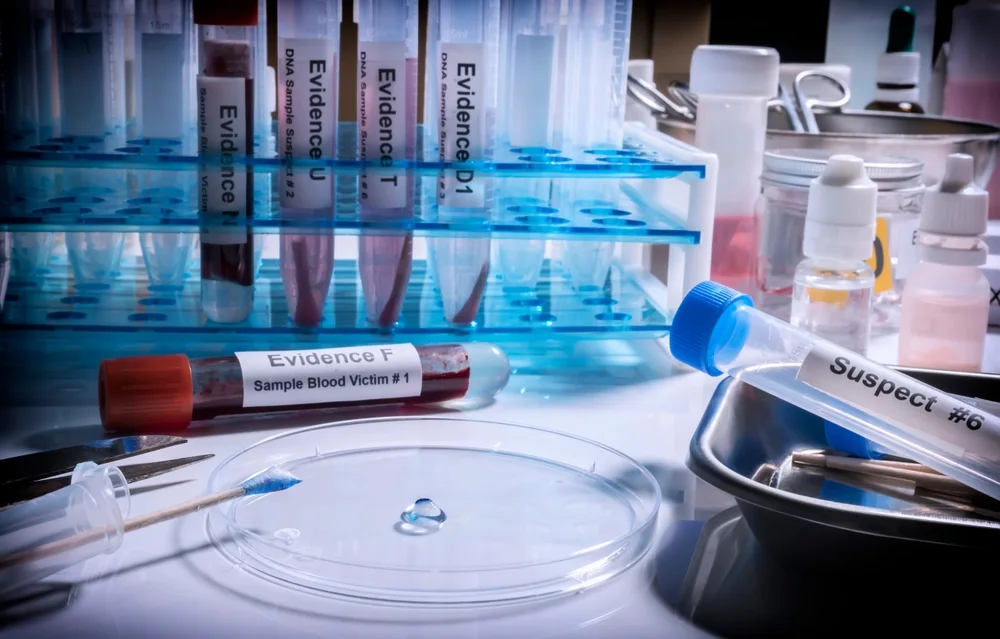
California laboratory forensic scientists are frequently hired under the title Criminalist. Their work involves examining physical evidence, interpreting analytical results, writing technical reports, and testifying in court. Depending on the laboratory and assignment, a criminalist may analyze drugs, DNA, trace materials, firearms evidence, toxicology samples, latent prints, or other evidence.
The standard entry route is a bachelor’s degree built around laboratory science. Chemistry, biology, biochemistry, molecular biology, physics, criminalistics, and forensic science can all be appropriate majors when the transcript contains the courses required by the employer. A criminal justice or criminology degree without substantial chemistry, biology, mathematics, and laboratory work usually does not provide the preparation expected for scientific casework.
A practical route into the profession is:
- Choose a laboratory-based science major aligned with the forensic specialty you want to pursue.
- Complete the chemistry, biology, mathematics, statistics, physics, and laboratory courses required by target employers.
- Build applied experience through research, an internship, laboratory employment, or a substantial capstone.
- Apply through California state, county, and municipal hiring systems.
- Complete any required examination, background investigation, drug screening, and medical screening.
- Finish the laboratory’s supervised training and competency process before handling casework independently.
This guide focuses on scientific evidence analysis in California laboratories. Crime scene investigation, digital evidence, forensic psychology, forensic anthropology, and medical pathology follow different educational and hiring paths. Related options are covered in the broader California forensic career guide.
What a forensic scientist does in California
The California Department of Justice Bureau of Forensic Services describes its forensic scientists as professionals who collect, analyze, and compare physical evidence and may testify in state or federal court. Its disciplines include controlled substances, toxicology, biology and DNA, firearms, impression evidence, trace evidence, and crime scene analysis.
California’s state system is only one part of the employment picture. Counties and cities also operate laboratories or employ scientific personnel. Job titles include:
- Criminalist
- Forensic scientist
- Forensic analyst
- Forensic laboratory technician
- DNA analyst
- Forensic biologist
- Forensic chemist
- Toxicologist
- Latent print examiner
- Firearms examiner
- Forensic casework technician
A title alone may not reveal the balance of laboratory and field duties. Sacramento County Criminalists, for example, may analyze evidence, investigate scenes, prepare reports, and testify as expert witnesses. A Kern County Criminalist I recruitment combined a primary laboratory assignment with secondary crime scene response. Other organizations separate laboratory scientists from crime scene personnel.
Typical duties can include:
- Examining submitted evidence and maintaining chain of custody
- Preparing samples for chemical, biological, microscopic, or instrumental testing
- Operating and maintaining laboratory instruments
- Comparing questioned evidence with known reference samples
- Interpreting DNA profiles or chemical data
- Reviewing quality-control results
- Documenting methods, observations, and conclusions
- Writing reports for investigators, attorneys, and courts
- Consulting with law enforcement personnel
- Participating in evidence collection or scene reconstruction
- Giving expert testimony
- Completing proficiency tests and continuing technical training
The work is controlled by written methods, quality systems, accreditation requirements, technical reviews, and documentation standards. A conclusion must be supported by the evidence and recorded in enough detail for another qualified professional to evaluate the work.
Forensic scientist, criminalist, and crime scene investigator are not interchangeable titles
Criminalistics concerns the collection, preservation, examination, and interpretation of physical evidence. In many California government laboratories, Criminalist is the classification used for laboratory scientists.
Criminology is a social-science field focused on crime, behavior, institutions, and social systems. It is not laboratory criminalistics. A criminology curriculum can be useful for policy, research, corrections, or related work, but it generally lacks the chemistry and biological science sequence needed for criminalist positions.
Crime scene investigation has a different educational emphasis. A CSI-focused curriculum normally prioritizes:
- Evidence recognition and recovery
- Scene documentation
- Forensic photography
- Fingerprint processing
- Measurements and diagramming
- Reconstruction
- Chain of custody
- Report writing
- Courtroom testimony
Laboratory criminalistics places greater weight on subjects such as:
- General and organic chemistry
- Quantitative or analytical chemistry
- Biology and molecular biology
- Biochemistry
- Genetics
- Statistics
- Physics
- Instrumental analysis
- Laboratory methods
- Quality assurance
Some California criminalists respond to scenes, but that does not make every CSI position a forensic scientist position. A crime scene investigator may be a civilian employee in one jurisdiction and a sworn officer assignment in another. Evidence and property technicians may focus on evidence intake, storage, transport, and chain-of-custody functions rather than laboratory interpretation.
Digital evidence is another separate pathway. Computer forensics can involve data acquisition, mobile devices, networks, multimedia analysis, and cybersecurity. It calls for substantial computing preparation rather than the chemistry and biology sequence used by many traditional crime laboratories.
Step 1: Earn a science-based bachelor’s degree
The U.S. Bureau of Labor Statistics identifies a bachelor’s degree as the typical entry-level education for forensic science technicians. The California criminalist employers reviewed for this guide also normally require a bachelor’s degree for scientist or analyst classifications.
California does not require every applicant to hold a degree titled “forensic science.” Several majors can lead to criminalist work:
- Chemistry
- Biochemistry
- Biology
- Molecular biology
- Microbiology
- Physics
- Pharmacology
- Criminalistics
- Forensic chemistry
- Forensic science with a natural or physical science emphasis
The content of the degree matters more than its title. A chemistry graduate with quantitative analysis, organic chemistry, instrumentation, physics, and biology may be better prepared for a drug chemistry assignment than a forensic studies graduate whose program contains little laboratory science. A molecular biology graduate with genetics, biochemistry, statistics, and hands-on DNA methods may be more competitive for forensic biology than someone with a broad forensic survey degree.
California DOJ education requirements
The California DOJ Criminalist examination provides a useful planning benchmark. Its current minimum education requirement is equivalent to college graduation with a major in a physical or biological science, including:
- Eight semester hours of general chemistry
- Three semester hours of quantitative analysis
College seniors may take the examination, but they must document graduation before appointment. An otherwise qualified applicant who lacks quantitative analysis may take the examination but must complete that course before appointment.
These are California DOJ requirements, not a single rule imposed on every city and county laboratory. Local specifications differ.
Los Angeles County generally requires a bachelor’s degree specializing in criminalistics, chemistry, biology, biochemistry, or a closely related scientific field, including at least eight semester units of general chemistry. Certain assignments require three semester units of quantitative analysis.
The City of Los Angeles requires a four-year physical or natural science degree and at least eight semester units, or 12 quarter units, of general chemistry.
Oakland’s forensic casework support specification calls for a criminalistics or closely related natural or physical science degree with at least 17 semester units of chemistry. That chemistry must include laboratory instruction and general and organic chemistry. Forensic biology assignments also require coursework supporting DNA analysis.
Sacramento County accepts several natural science majors, as well as criminalistics or forensic science with a natural or physical science emphasis. Its specification lists at least eight semester units of general chemistry or biology.
These variations explain why transcript planning should begin before graduation. Meeting one agency’s minimum does not establish eligibility for every other laboratory or specialty.
Step 2: Build the right undergraduate transcript
A well-planned transcript preserves access to several criminalist specialties. General chemistry and quantitative analysis deserve early attention because they appear explicitly in California requirements. Organic chemistry, statistics, biology, and physics broaden the positions for which a graduate can compete.
A useful foundation may include:
Chemistry
- General chemistry with laboratory
- Organic chemistry with laboratory
- Quantitative analysis
- Analytical chemistry
- Instrumental analysis
- Biochemistry
- Physical chemistry
- Inorganic chemistry
- Forensic chemistry or toxicology
Quantitative analysis is especially significant in California. It teaches measurement, calibration, uncertainty, chemical equilibria, and analytical problem-solving. A general forensic science survey course normally is not a substitute.
Biological science
- General biology with laboratory
- Cell biology
- Molecular biology
- Genetics
- Microbiology
- Biochemistry
- Anatomy and physiology
- PCR and sequencing methods
- Population genetics
Biology courses are central to DNA and body-fluid analysis. They can also support toxicology and other specialties, but the required mix differs by laboratory.
Mathematics and statistics
- College algebra or precalculus
- Calculus
- General statistics
- Biostatistics
- Population genetics
- Research methods
Statistics is used in data interpretation, validation, population-frequency calculations, quality assessment, and scientific reporting. DNA work requires particularly careful course planning.
Physics and instrumentation
- General physics with laboratory
- Optics
- Mechanics
- Electricity and magnetism
- Microscopy
- Spectroscopy
- Chromatography
- Instrumental methods
Physics can support firearms, toolmarks, trajectory analysis, microscopy, materials analysis, and the operation of analytical instruments.
Keep copies of course descriptions, laboratory outlines, and syllabi. A course with an unusual title may still cover required content, but the hiring agency or DNA laboratory may need enough documentation to evaluate it. Saving those materials at the time each course is completed is easier than reconstructing them years later.
Step 3: Choose coursework for a forensic specialty
There is no single ideal transcript for every forensic assignment. Planning around a likely specialty gives the degree more technical depth.
Forensic DNA and biology
A candidate targeting forensic DNA analysis should emphasize:
- Molecular biology
- Genetics
- Biochemistry
- Cell biology
- Statistics or population genetics
- PCR and sequencing
- Laboratory-based molecular methods
The FBI Quality Assurance Standards for Forensic DNA Testing Laboratories require forensic DNA analysts to have at least a bachelor’s degree or equivalent in biology, chemistry, or a forensic science-related field. Analysts also need at least nine credit hours of biology- or chemistry-related coursework that provides a foundation for DNA analysis.
Analysts hired, appointed, promoted, or qualified on or after July 1, 2020 must complete statistics or population genetics coursework. Education is only one part of qualification. The laboratory must also document appropriate training, experience, and competency.
A generic biology degree can be suitable if its electives are planned carefully. A curriculum dominated by ecology, organismal biology, or environmental science may leave gaps in molecular biology, genetics, biochemistry, and statistics.
Drug chemistry and forensic chemistry
Prospective drug chemists and general criminalists benefit from:
- General chemistry
- Organic chemistry
- Quantitative analysis
- Analytical chemistry
- Instrumental analysis
- Physical chemistry
- Inorganic chemistry
- Statistics
- Laboratory quality assurance
Drug chemistry casework often depends on chromatography, spectroscopy, controlled-substance identification, method validation, uncertainty, and precise documentation. A chemistry-centered degree offers the clearest undergraduate preparation for this work.
Toxicology
Toxicology preparation can draw from:
- Analytical chemistry
- Organic chemistry
- Biochemistry
- Pharmacology
- Physiology
- Instrumental analysis
- Statistics
- Toxicology
- Quality-control methods
Some toxicology positions have requirements that differ from general criminalist classifications. Clinical or public-health settings may also operate under standards that are not identical to those of a traditional crime laboratory.
Trace evidence
Trace evidence work may involve glass, fibers, paint, soil, gunshot residue, fire debris, or other small materials. Helpful subjects include:
- Analytical chemistry
- Organic and inorganic chemistry
- Microscopy
- Materials science
- Geology or mineralogy
- Instrumental analysis
- Statistics
This specialty rewards broad scientific preparation because the evidence can vary substantially from case to case.
Firearms and toolmarks
Relevant preparation can include:
- Physics
- Mechanics
- Trigonometry
- Microscopy
- Materials science
- Photography
- Evidence examination
- Statistics
Many techniques are learned during structured employer training. A strong physical-science foundation supports that later specialization.
Crime scene response
A laboratory scientist who expects to assist at scenes can add:
- Forensic photography
- Evidence recognition and collection
- Bloodstain pattern principles
- Scene documentation
- Reconstruction
- Chain of custody
- Report writing
- Courtroom testimony
These courses supplement laboratory science. They do not replace the chemistry and biology needed for analytical criminalist work.
California degree pathways related to laboratory forensic science
California offers multiple undergraduate and graduate routes relevant to criminalistics. The programs below are verified examples, not an exhaustive directory of every certificate, minor, anthropology option, toxicology degree, or general science major in the state.
San José State University BS in Forensic Science
San José State offers concentrations in forensic biology, forensic chemistry, crime scene investigation, and digital evidence. The biology and chemistry concentrations align most directly with laboratory scientist employment. The crime scene concentration focuses more heavily on scene-processing functions, while digital evidence leads toward computer and multimedia examination.
The curriculum combines foundational and advanced biology, chemistry, and physics with forensic applications. San José State states that each concentration’s curriculum meets FEPAC educational standards. That language describes curriculum alignment; it is not the same as a current FEPAC accreditation listing.
Forensic science majors complete a required three-unit internship. That requirement adds structured workplace exposure to the academic program, although the type of placement will influence how closely the experience resembles criminalist casework.
CSU East Bay BS in Biological Sciences, Forensic Science Concentration
CSU East Bay’s biology-based concentration includes general and organic chemistry, calculus, physics, genetics, quantitative analysis, PCR and sequencing, criminal investigation, criminal identification, forensic science, and forensic instrumentation.
The concentration is oriented toward biological evidence and molecular methods. Its inclusion of quantitative analysis also addresses a course named in the California DOJ Criminalist requirements. DNA-focused graduates still need the full combination of molecular biology, biochemistry, genetics, and statistics required by the particular laboratory and assignment.
Multiple laboratory courses and molecular-analysis subjects provide relevant technical preparation. Current program materials reviewed for this guide do not list a universal external internship requirement.
CSU East Bay BS in Chemistry, Bioanalytical and Forensics Concentration
CSU East Bay also offers a separate chemistry route. Required preparation includes general and organic chemistry, quantitative analysis, biochemistry, genetics, physics, physical chemistry, PCR and sequencing, and bioanalytical and forensic instrumentation.
This curriculum is better aligned with forensic chemistry and broad criminalist work than the university’s biology concentration, while still including biological and molecular subjects. The extensive chemistry and instrumentation sequence can support drug chemistry, toxicology, trace evidence, and graduate forensic study.
The program includes substantial laboratory work. No required external internship was identified in the materials reviewed.
California Baptist University BS in Forensic Chemistry
California Baptist University’s forensic chemistry major contains 71 to 75 units. It includes chemistry, instrumental analysis, introductory forensic science, and forensic chemistry laboratory work, along with criminal justice context.
The senior capstone can be completed through a crime laboratory internship, a supervised research project, or a literature-based thesis. An internship offers workplace exposure, while supervised research can provide stronger experience with experimental design, instrumentation, data interpretation, and technical writing. The literature option has a different practical emphasis.
The chemistry-focused curriculum is relevant to general criminalist and forensic chemistry positions. A graduate pursuing forensic DNA work would need enough molecular biology, genetics, biochemistry, and statistics to meet the standards used by a target DNA laboratory.
Sacramento State BA in Chemistry, Forensic Chemistry Concentration
Sacramento State offers a BA in Chemistry with a Forensic Chemistry concentration. The 120-unit degree includes 64 to 77 major units, with general chemistry, organic chemistry, quantitative analysis, calculus, physics, biochemistry, and laboratory work.
The forensic component includes Introduction to Physical Evidence and choices such as chemical instrumentation, advanced biochemistry laboratory, physical chemistry laboratory, and inorganic chemistry laboratory. Elective selection can materially change a graduate’s technical preparation, so instrumentation and advanced laboratory options are useful for prospective criminalists.
The BA label is not a reliable indicator of scientific depth by itself. The actual chemistry sequence, laboratory credits, and advanced electives are what employers evaluate.
Cal State LA MS in Criminalistics
Cal State LA offers an in-person MS in Criminalistics for applicants with substantial natural or physical science preparation. Published prerequisites include biology, biostatistics, general chemistry, quantitative analysis, organic chemistry with laboratories, and physics. Applicants are considered with at least a 3.0 GPA in the final 60 semester units or 90 quarter units and in the undergraduate major.
The program requires a research-project capstone. Internships are encouraged, but the reviewed materials do not identify an internship as a universal graduation requirement.
This graduate route is aligned with advanced criminalistics study, research, and laboratory science. It is not a substitute for missing undergraduate science foundations because those subjects are part of the admission preparation.
UC Davis MS in Forensic Science
UC Davis offers an in-person, research-focused MS with Forensic Criminalistics and Forensic DNA tracks. The program requires 54 quarter units, 15 classes, and a thesis. Full-time and part-time enrollment are available.
The Criminalistics track covers instrumental analysis, trace evidence, drug chemistry, toxicology, forensic statistics, human identification, case reports, and homicide crime scene investigation. The DNA track includes molecular techniques, forensic DNA analysis, population genetics, and a DNA typing laboratory. UC Davis states that its DNA track is structured to meet SWGDAM educational guidelines for DNA analysts and technical leaders.
Admission requires a bachelor’s degree in a natural or physical science, general and organic chemistry with laboratories, physics with laboratory, calculus, and statistics. Biology is also required for the DNA track. The minimum listed overall and prerequisite GPA is 3.0.
The current American Academy of Forensic Sciences directory lists the UC Davis program with full FEPAC accreditation from March 1, 2026 through March 1, 2031. FEPAC accredits academic programs, not individual scientists.
Tuition for entrants beginning in fall 2025 or later is listed at $903 per quarter unit. Health insurance, books, supplies, laboratory materials, and living expenses are separate. Because entry-level California criminalist positions normally begin at the bachelor’s level, the cost of graduate school is easier to justify when it serves a defined purpose such as DNA specialization, advanced research, technical development, or career progression.
What FEPAC accreditation means
The Forensic Science Education Programs Accreditation Commission accredits eligible bachelor’s and master’s programs in forensic science, as well as certain natural science or computer science programs with forensic concentrations. It is recognized by the Council for Higher Education Accreditation.
FEPAC standards address scientific foundations, advanced science coursework, laboratory-based forensic instruction, evidence processing, quality assurance, ethics, law, courtroom testimony, professional practice, and capstone work. Chemistry-track standards include general and organic chemistry laboratories, biology, and physics.
FEPAC is programmatic academic accreditation. It is separate from:
- A university’s institutional accreditation
- A crime laboratory’s ISO/IEC 17025 accreditation
- An individual professional certification
- A government job examination
- A professional license
- Employer competency authorization
A FEPAC-accredited degree can provide a structured forensic curriculum, but California employers still assess the applicant’s major, transcript, laboratory credits, specialty courses, and experience. Many criminalists enter through chemistry, biology, biochemistry, or other science programs that are not FEPAC-accredited forensic science degrees.
The reviewed general California Criminalist specifications rely primarily on academic qualifications, hiring examinations, screening, and employer training rather than one generic statewide forensic scientist license. Specialty rules, regulations, and laboratory standards can add further requirements.
Step 4: Gain laboratory, research, or internship experience
A relevant internship can show how evidence moves through a working laboratory, but placements are limited. The California Criminalistics Institute recommends experience in a crime laboratory, toxicology laboratory, medical examiner’s office, or coroner’s facility.
The California DOJ reports that the California Criminalistics Institute, Forensic Library, and Bureau of Forensic Services occasionally offer internships, depending on staffing and placement capacity. The agency also reports that many Bureau of Forensic Services employees began as CCI or Forensic Library interns. Its stated drug-use policy applies to applicants for those specific internships and BFS employment.
Useful alternatives to a crime laboratory internship include:
- Faculty-supervised chemistry or biology research
- Instrumental analysis projects
- Molecular biology or genetics laboratory work
- Toxicology or clinical laboratory experience
- Quality-control laboratory employment
- Evidence or property-room work
- Medical examiner or coroner internships
- A thesis or substantial scientific capstone
Research experience is especially useful when it involves calibration, controls, validation, uncertainty, data analysis, technical writing, or independent laboratory work. Those habits transfer well to forensic quality systems.
An internship does not replace the required degree or science credits. Its value lies in applied exposure, professional references, and evidence that the candidate can follow detailed procedures in a regulated environment.
Step 5: Apply through state and local hiring systems
California forensic laboratory hiring is decentralized. Applicants may pursue positions with:
- California Department of Justice
- County sheriff or district attorney laboratories
- County medical examiner or coroner systems
- Municipal police laboratories
- Toxicology laboratories
- Federal agencies operating in California
- Private or contract laboratories
Search beyond “forensic scientist.” Criminalist is one of the most productive terms in California. Other useful terms include forensic biologist, DNA analyst, forensic chemist, toxicologist, laboratory technician, forensic casework technician, and latent print examiner.
Read each classification specification and vacancy separately. The classification document establishes the general job series, while a particular posting may identify an assignment, specialty, work location, schedule, or additional screening process.
The California DOJ Criminalist examination
The California DOJ examination accepts applications continuously as of the research date. The online assessment accounts for 100 percent of the examination score, and candidates need at least 70 percent for placement on the eligible list.
The assessment evaluates coursework and experience in areas that can include:
- Organic chemistry
- Biochemistry
- Genetics
- Molecular biology
- Statistics
- Inorganic chemistry
- Physical chemistry
- Anatomy
- Physiology
- Microbiology
- Pharmacology
Eligible-list status is not a job offer. It allows the candidate to compete for appointments covered by that list. Current eligibility expires after 12 months.
The state application process can require detailed descriptions of education and experience. Transcript preparation is therefore part of the application, not an afterthought. Course titles, credit values, laboratory components, and degree conferral dates need to be clear.
County and city systems use their own processes. A written, online, or structured examination may assess scientific reasoning, analytical methods, relevant coursework, and experience. Interviews can address laboratory judgment, communication, ethics, evidence handling, quality procedures, and the ability to explain technical findings.
Step 6: Complete screening and background requirements
Government forensic hiring commonly includes several stages:
- Minimum-qualification review
- Transcript evaluation
- Competitive examination or structured assessment
- Interview
- Reference checks
- Fingerprinting
- Background investigation
- Drug screening
- Medical screening when required
- Driver’s-license review for positions involving travel or callouts
The California DOJ Criminalist process requires drug screening. Los Angeles County requires a California Class C driver’s license for job-related functions. Oakland’s casework-support specification requires a background investigation and a valid California driver’s license. A Kern County recruitment warned that a background check and post-offer medical and drug screening could apply.
Background investigations can be extensive because criminalists handle controlled evidence, access sensitive records, and testify as scientific witnesses. Accuracy and candor in application materials are essential. An omitted job, inconsistent date, false academic claim, or incomplete disclosure can create a credibility issue that reaches beyond ordinary hiring concerns.
Work conditions also deserve attention. The City of Los Angeles specification notes that criminalists may receive callouts at any hour and face biological, chemical, environmental, and crime scene hazards. Other assignments may involve court schedules, personal protective equipment, controlled substances, decomposed material, firearms evidence, or emotionally difficult case facts.
Step 7: Complete employer training and competency testing
Graduation establishes scientific preparation. It does not authorize a new employee to conduct every type of casework independently.
Entry-level criminalists generally complete extensive supervised training after hiring. Los Angeles County describes mandatory classroom and hands-on in-service training for its entry classification. Santa Clara County identifies Criminalist I as a training classification.
Training can cover:
- Evidence handling and chain of custody
- Laboratory safety
- Quality assurance and document control
- Instrument operation
- Analytical methods
- Method validation
- Controls and calibration
- Report writing
- Technical and administrative review
- Legal standards
- Expert testimony
- Discipline-specific interpretation
- Moot court or testimony exercises
- Competency examinations
- Proficiency testing
The California Criminalistics Institute provides specialized training in chemistry, firearms, impressions, microscopy, trace evidence, biology, DNA, crime scenes, toxicology, professional development, and health and safety. Its instruction primarily serves working government forensic and law enforcement personnel. It is professional development after or alongside employment, not a replacement for an entry-level science degree.
Independent casework generally begins only after the laboratory documents that the employee is competent in the assigned method or discipline. Advanced assignments require additional training and authorization.
Salary and employment outlook
Salary data for this field require careful interpretation because federal and state labor sources use the broad Forensic Science Technicians occupation. That category combines some crime scene and laboratory functions and does not provide exact pay for every criminalist, DNA analyst, toxicologist, forensic chemist, or CSI title.
The BLS reported:
- A national median annual wage of $72,060 in May 2025
- Projected employment growth of 13 percent from 2025 through 2035
- About 2,800 openings per year on average during that period
The California Employment Development Department reported the following statewide wage estimates for the first quarter of 2026:
- Mean hourly wage: $51.87
- Median hourly wage: $50.46
- 25th-percentile hourly wage: $39.94
- 75th-percentile hourly wage: $65.64
These estimates cover the broad SOC 19-4092 occupation. Actual compensation depends on the public agency, classification level, collective bargaining terms, geographic area, specialty, experience, overtime, on-call responsibilities, and current salary schedule.
Government laboratories often use a classification series. A criminalist may progress from a trainee or entry level to journey-level, senior, supervisory, quality-assurance, or management work. Sacramento County, for example, uses multiple Criminalist levels tied to increasing experience and technical responsibility. Its specification allows a relevant master’s degree to substitute for one year of experience at higher levels.
Is a master’s degree necessary?
A master’s degree is not the normal minimum for entry-level California criminalist work. The California DOJ, Los Angeles County, Sacramento County, the City of Los Angeles, and the reviewed Kern County recruitment all provide bachelor’s-level routes.
Graduate education can be useful for:
- Developing expertise in forensic DNA, toxicology, chemistry, or instrumentation
- Completing substantial research
- Addressing a targeted academic gap
- Preparing for technical leadership
- Pursuing teaching or advanced scientific work
- Becoming more competitive in a specialized applicant pool
- Supporting advancement where a graduate degree can substitute for experience
Graduate school is less effective when used to avoid the foundational science sequence. Programs such as UC Davis and Cal State LA already expect substantial chemistry, biology, physics, mathematics, and statistics before admission.
An applicant with a qualifying bachelor’s degree may benefit more from entering a criminalist classification and completing paid employer training than from delaying applications for a general graduate credential. By contrast, an applicant pursuing DNA interpretation, research-intensive work, or a specific advanced specialty may have a clear reason to complete a thesis-based master’s degree.
A practical education plan by career goal
General California criminalist
Prioritize a chemistry, biochemistry, biology, or laboratory-focused forensic science degree that includes:
- General chemistry with laboratory
- Quantitative analysis
- Organic chemistry with laboratory
- Biology
- Physics
- Statistics
- Instrumental analysis
- Technical writing
- Multiple upper-division laboratory courses
This foundation keeps several laboratory specialties available.
Forensic chemist or controlled-substances analyst
Choose a chemistry-heavy program with:
- Analytical chemistry
- Organic chemistry
- Quantitative analysis
- Instrumental analysis
- Physical chemistry
- Inorganic chemistry
- Extensive laboratory work
Chemistry depth is more valuable here than a broad set of introductory forensic courses.
Forensic DNA analyst
Build around:
- Molecular biology
- Genetics
- Biochemistry
- Cell biology
- Statistics or population genetics
- PCR and sequencing
- Hands-on molecular laboratory work
Map the transcript to the FBI DNA standards and the laboratory’s specific education rules.
Toxicology analyst
Combine:
- Analytical and organic chemistry
- Biochemistry
- Pharmacology
- Physiology
- Instrumentation
- Statistics
- Toxicology coursework
Some positions may sit outside a general criminalist series and use their own specialty requirements.
Laboratory scientist with crime scene duties
Retain the full science core, then add:
- Evidence collection
- Scene documentation
- Photography
- Reconstruction
- Bloodstain pattern principles
- Report writing
- Courtroom presentation
A scene concentration without adequate chemistry and biology is better aligned with field CSI employment than laboratory criminalistics.
Final planning checklist
A strong California forensic scientist plan can be evaluated through a few concrete questions:
- Does the degree contain enough laboratory science for a criminalist classification?
- Are eight semester units of general chemistry included?
- Is there a three-semester-unit quantitative analysis course?
- Does the transcript include organic chemistry, statistics, biology, and physics?
- Is there enough instrumentation and upper-division laboratory work?
- For DNA, are molecular biology, genetics, biochemistry, and statistics or population genetics present?
- Does the program provide research, an internship, or a substantial laboratory capstone?
- Are course descriptions and syllabi saved for future transcript review?
- Does the target agency combine laboratory work with crime scene response?
- Are the work schedule, callout expectations, hazards, and screening process acceptable?
- Would a master’s degree serve a specific specialty or advancement goal, or is the bachelor’s degree already sufficient for entry applications?
The most direct route is a laboratory-based bachelor’s degree planned around actual California criminalist coursework. General chemistry and quantitative analysis establish a useful statewide foundation, while organic chemistry, biochemistry, molecular biology, genetics, statistics, physics, and instrumentation determine which specialties remain available.
Degree titles provide only a starting point. The decisive evidence is the transcript: which sciences were completed, whether the courses included laboratories, and how closely that preparation matches the analytical work of the hiring laboratory. Once hired, the employer supplies the method-specific training and competency process required for independent forensic casework.