
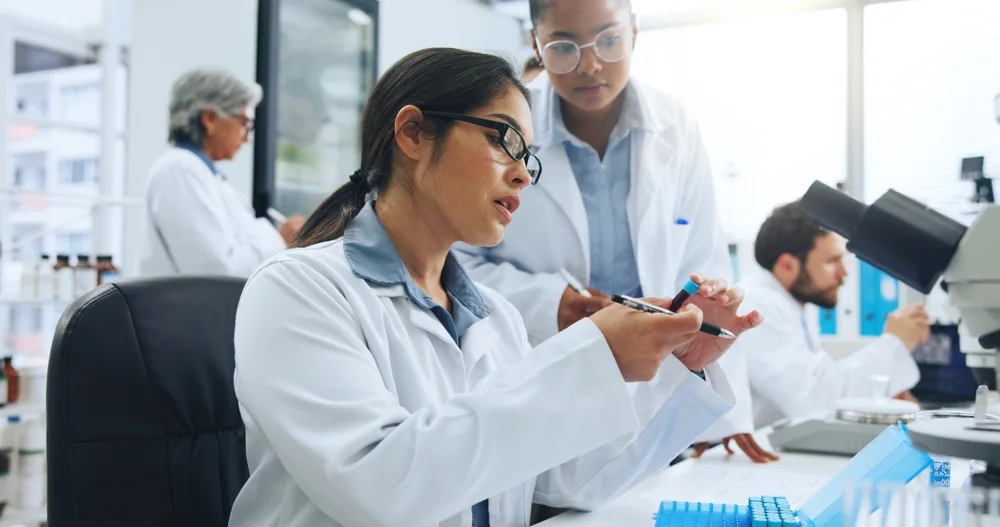
California does not have one job title called “forensic scientist” with a single statewide set of qualifications. Public crime laboratories commonly use the title Criminalist, while city and county agencies may advertise positions as Forensic Scientist, DNA Analyst, Forensic Biology Analyst, Firearms Examiner, Forensic Toxicologist, Latent Print Examiner, or Digital Forensics Examiner.
For laboratory criminalistics, a bachelor’s degree in a physical, biological, or closely related natural science is the practical entry-level standard among the California agencies reviewed here. Chemistry is especially significant. Many criminalist classifications require at least eight semester units of general chemistry, and some require quantitative analysis, organic chemistry, biochemistry, molecular biology, genetics, or statistics.
An associate degree can qualify a person for certain technician or support positions, but it generally does not meet the reviewed requirements for independent California criminalist casework. A criminal justice or criminology degree is also usually too light in laboratory science unless it includes the natural-science major and specific courses required by the employer.
The usual pathway is:
- Earn a relevant science bachelor’s degree.
- Complete the chemistry, biology, mathematics, and laboratory courses required for the intended specialty.
- Develop practical laboratory experience through research, internships, employment, or advanced laboratory courses.
- Apply to the appropriate state or local classification and submit transcripts when requested.
- Complete the employer’s screening process.
- Finish post-hire training and pass competency testing before conducting independent casework.
California requirements vary enough that degree planning should begin with actual criminalist specifications, not the name of a college major alone.
California forensic scientist requirements at a glance
Many entry-level California criminalist and crime-laboratory scientist positions require the following:
- A bachelor’s degree in chemistry, biology, biochemistry, forensic science, criminalistics, physics, microbiology, or another employer-approved physical or biological science
- At least eight semester units of general chemistry for many state, city, and county classifications
- Quantitative analysis for the California Department of Justice Criminalist classification and certain local assignments
- Additional specialty courses for DNA, toxicology, drug chemistry, forensic alcohol, or other disciplines
- College transcripts documenting the degree and required courses
- Laboratory training before independent casework
- Competency testing in the assigned forensic discipline
- A background investigation or criminal-history review
- Fingerprinting and, at some agencies, drug screening, medical review, or a polygraph examination
- A valid California driver’s license for classifications that include crime-scene response or travel
- The ability to prepare technical reports and testify in court
These are common features, not a universal checklist for every job containing the word “forensic.” Digital evidence, latent print, crime-scene, laboratory support, and sworn law-enforcement positions can follow different qualification systems.
What California agencies mean by “forensic scientist”
The California Department of Justice Bureau of Forensic Services describes its forensic scientists as professionals who collect, analyze, and compare physical evidence. Its disciplines include biology and DNA, toxicology, alcohol, controlled substances, firearms, impression evidence, trace evidence, and crime-scene analysis. Scientists may also present their findings in state or federal court.
California DOJ commonly calls these scientists criminalists. Criminalistics concerns the collection, preservation, examination, and interpretation of physical evidence. It is different from criminology, which examines crime, criminal behavior, institutions, and social responses to crime.
That difference affects degree selection. A criminology or criminal justice program can be relevant to policing, corrections, investigation, policy, and court administration, but those degrees often lack the chemistry and laboratory sequence required for criminalist work. A laboratory employer evaluates the transcript, not simply whether the diploma has a crime-related title.
Crime-scene work also needs separate treatment. Some California criminalists divide their time between laboratory analysis and scene response. Kern County, for example, described a 2026 Criminalist I position as having a primary laboratory assignment and a secondary crime-scene response assignment. Other agencies place scene processing in a dedicated civilian or sworn classification.
A crime scene investigator may focus on photography, evidence recognition, fingerprints, measurements, documentation, collection, packaging, and chain of custody. A laboratory criminalist may use chemical, biological, microscopic, or instrumental methods to analyze that evidence and draw scientific conclusions. Some positions combine those functions, but an education designed only for scene processing may not contain enough chemistry or biology for laboratory employment.
The broader forensic scientist career overview provides additional context on the occupation. The requirements below concentrate on California education, hiring, and training expectations.
How requirements differ among California employers
The California DOJ standard is a useful planning benchmark, but city and county laboratories set their own qualifications. The following comparison shows why applicants need to plan by transcript and specialty.
| Employer or classification | Degree requirement | Required or notable coursework | Other conditions |
|---|---|---|---|
| California DOJ Criminalist | College degree with a major in a physical or biological science | Eight semester hours of general chemistry and three semester hours of quantitative analysis | State examination process; drug screening applies to the series |
| City of Los Angeles Criminalist | Four-year degree with a major in a physical or natural science | Eight semester units of general chemistry | California driver’s license before appointment; work can include scene response and hazardous evidence |
| Los Angeles County Criminalist | Bachelor’s degree specializing in criminalistics, chemistry, biology, biochemistry, or a closely related scientific field | At least eight semester units of general chemistry | Extensive mandatory in-service training before progression to independent duties |
| City of San Diego Criminalist I, 2026 recruitment | Bachelor’s degree in specified forensic, natural-science, or digital-forensics fields, or a qualifying closely related science route under the recruitment options | Eight semester units of general chemistry and three semester units of organic chemistry or biochemistry | Proof of degree and coursework; California driver’s license at hiring; conditional screening could include fingerprinting, polygraph, medical review, and drug and alcohol testing |
| Sacramento County Criminalist I | Bachelor’s degree in a listed natural-science or forensic-science field with a natural or physical science emphasis | Eight semester units of general chemistry or biology | Background review and California driver’s license; irregular hours and hazardous evidence are possible |
| Contra Costa County Criminalist I | Bachelor’s degree in forensic science, chemistry, biology, biochemistry, toxicology, or a closely related natural science | DNA assignments name molecular biology, genetics, biochemistry, and statistics; forensic alcohol assignments require quantitative analysis | Driver’s license and background investigation; assignment-specific requirements apply |
| Ventura County Forensic Scientist | Bachelor’s degree in biochemistry, chemistry, physics, biology, microbiology, forensic science, or a closely related field | Eight semester units of general chemistry; DNA work requires nine units across molecular biology, genetics, and biochemistry, plus statistics or population genetics | Driver’s license and background investigation; laboratory and after-hours scene work are possible |
| Santa Clara County Criminalist I | Bachelor’s degree in a natural or applied science or related field | Coursework must support the assigned discipline and applicable laboratory, FBI, or California standards | County driving authorization; assignments can include DNA, toxicology, firearms, latent prints, trace evidence, questioned documents, scenes, or digital evidence |
| Kern County Criminalist I, 2026 recruitment | Bachelor’s degree in chemistry, biochemistry, criminalistics, forensic science, biology, or a closely related laboratory science | Chemistry route included 24 semester units covering general, quantitative, organic, and inorganic chemistry; biology route included 12 units covering DNA foundations, with statistics or population genetics as applicable | Applicants had to submit degrees, transcripts, licenses, and certificates by the filing deadline; background, medical, and drug screening could apply |
The table reveals several patterns. First, the bachelor’s degree is the normal floor for California criminalist work. Second, general chemistry is the most consistently repeated course. Third, specialty requirements can be considerably more detailed than the basic degree requirement.
A degree that satisfies one county’s classification may leave a course deficiency for another. Ventura County lists quantitative analysis as desirable rather than universal, while the California DOJ requires three semester hours for its Criminalist classification. San Diego’s 2026 recruitment required organic chemistry or biochemistry in addition to general chemistry. Kern County used substantially larger chemistry or biological-science course totals for its recruitment.
A master’s degree is not a reliable way to repair an unrelated undergraduate record. San Diego allowed a master’s degree to replace no more than one year of required experience under its recruitment structure, but the graduate degree did not replace the qualifying bachelor’s degree. Someone with a criminal justice bachelor’s degree and a loosely related master’s degree could still lack the required undergraduate science foundation.
Choosing the right bachelor’s degree
Chemistry
Chemistry is usually the safest broad preparation for drug chemistry, toxicology, trace evidence, fire debris, forensic alcohol, and many general criminalist positions. It naturally provides access to general chemistry, organic chemistry, analytical chemistry, instrumental analysis, and quantitative methods.
A chemistry major also aligns well with the California DOJ requirement for a physical or biological science major. It does not guarantee eligibility for every specialty, however. A chemistry graduate pursuing forensic DNA analysis still needs the biological foundations and statistics required for that work.
Useful chemistry coursework includes:
- General chemistry with laboratory
- Organic chemistry with laboratory
- Quantitative or analytical chemistry
- Instrumental analysis
- Inorganic chemistry
- Biochemistry
- Physical chemistry
- Toxicology or pharmacology, where available
- Statistics
- Laboratory quality assurance
- Technical or scientific writing
Quantitative analysis deserves special attention. Colleges may call the relevant course quantitative chemical analysis, analytical chemistry, or another similar title. Because California DOJ specifically requires three semester hours of quantitative analysis, a curriculum that covers analytical chemistry only as a small part of another course can create a transcript-review problem.
Biology, molecular biology, and biochemistry
Biology can support forensic biology and DNA work when the degree includes molecular and cellular science rather than concentrating mainly on ecology or organismal biology. The strongest preparation includes genetics, molecular biology, biochemistry, cell biology, microbiology, and statistics.
Biochemistry is a useful bridge between chemistry and biological analysis. It can also support toxicology and drug-related work, depending on the rest of the transcript. A biochemistry major still benefits from quantitative chemistry and instrumental analysis if the goal is broad criminalist eligibility rather than DNA alone.
For DNA-oriented applicants, relevant courses include:
- Molecular biology
- Genetics
- Biochemistry
- Cell biology
- Statistics or population genetics
- Microbiology
- Immunology
- Laboratory-intensive molecular methods
- Bioinformatics, where relevant
- Research design and scientific writing
Retaining detailed course descriptions and syllabi is practical. DNA standards and employer specifications sometimes evaluate course content rather than relying entirely on the title printed on a transcript.
Forensic science or criminalistics
A forensic science degree can be excellent preparation when it contains a genuine natural-science core, substantial laboratory work, and advanced chemistry or biology. The word “forensic” on the diploma is not enough.
A science-based program may include general and organic chemistry, biology, physics, statistics, instrumental methods, forensic microscopy, evidence interpretation, quality assurance, and courtroom testimony. A less scientific program may emphasize criminal justice, investigation, law, and survey-level forensic courses without progressing through analytical laboratory methods.
Review the course sequence as if it were being submitted to a human-resources analyst. Count the semester units in general chemistry. Identify a separate quantitative analysis course. Look for upper-division laboratory science. Then compare the record with several current or recent job specifications.
A forensic science program can also be accredited by the Forensic Science Education Programs Accreditation Commission, commonly called FEPAC. FEPAC accredits eligible academic programs, not graduates or working scientists. Programmatic accreditation can indicate that a curriculum has undergone discipline-specific review, but it is neither a California occupational license nor a substitute for an employer’s transcript requirements.
Criminal justice and criminology
A typical criminal justice or criminology bachelor’s degree is not equivalent to a physical or biological science degree. Courses in policing, courts, corrections, criminal law, research methods, and crime theory do not replace general chemistry, quantitative analysis, molecular biology, or instrumental analysis.
That does not make the degree unusable across the entire forensic field. It may support crime-scene, evidence, intelligence, investigative, administrative, or law-enforcement pathways, depending on the employer. It is simply a poor default for laboratory criminalistics.
A criminal justice student who wants to become a criminalist would usually need extensive additional science education. Completing a few introductory forensic electives is unlikely to satisfy classifications requiring a natural-science major or large chemistry sequence.
Physics, computer science, and other technical majors
Physics may qualify under classifications that accept physical sciences, particularly when paired with chemistry and relevant laboratory methods. It can also support areas involving trajectories, optics, imaging, and measurement.
Digital forensics is less uniform. One agency may place digital evidence within a criminalist series, while another may hire through information technology, cybersecurity, law-enforcement, or investigative classifications. Wet-laboratory chemistry requirements are not universal across digital evidence jobs. Computer science, cybersecurity, information systems, scripting, operating systems, networks, and digital evidence tools can be more relevant to those positions.
The same title variation appears in latent print and firearms work. Some agencies employ scientists within a general criminalist series. Others use specialty classifications with their own education and training standards. NIST’s forensic standards library lists a current 2025 second edition of an education standard for firearm and toolmark examiner trainees, illustrating how discipline-specific standards can supplement general employer qualifications.
Planning a transcript for broad criminalist eligibility
A student who wants access to several California laboratory disciplines should build beyond the minimum eight units of general chemistry. The following academic plan provides wider coverage:
- Complete a full general chemistry sequence with laboratories. Many California classifications explicitly require eight semester units, which often corresponds to two courses with laboratory components.
- Take quantitative or analytical chemistry as a distinct course. This directly addresses the California DOJ requirement and supports measurement, calibration, uncertainty, and instrumental work.
- Add organic chemistry and biochemistry. San Diego named organic chemistry or biochemistry, and both subjects support drug, toxicology, and biological analysis.
- Study instrumental analysis. Exposure to chromatography, mass spectrometry, spectroscopy, and validated analytical methods is useful preparation for modern crime laboratories.
- Complete statistics. Statistical reasoning supports quality control, method validation, measurement interpretation, and DNA analysis.
- Add biology courses appropriate to the intended specialty. Molecular biology, genetics, and cell biology are especially relevant to forensic biology.
- Develop technical writing skills. Criminalists produce reports that may be reviewed by other scientists, attorneys, judges, and jurors.
- Choose laboratory-intensive electives. Repeated experience with documentation, controls, contamination prevention, calibration, and data interpretation is more useful than a transcript dominated by lecture-only survey courses.
Grades can affect competitiveness even when a job specification lists only course completion. Laboratories need employees who can apply scientific principles under documented quality systems. Strong performance in analytical courses and sustained research or laboratory employment provides better evidence of readiness than a collection of unrelated forensic electives.
Course timing also matters. California DOJ allows candidates to take its Criminalist examination while finishing the quantitative analysis requirement, but that course must be completed before appointment. This flexibility does not remove the requirement.
Specialty-specific requirements
Forensic DNA and biology
DNA analysis has some of the clearest national education and training controls. The FBI Quality Assurance Standards for Forensic DNA Testing Laboratories, effective July 1, 2025, require a forensic DNA analyst to have a bachelor’s or advanced degree in a biology-, chemistry-, or forensic science-related area.
The analyst must also complete at least nine credit hours of biology- or chemistry-related coursework that provides a foundation for DNA analysis. Analysts hired, appointed, promoted, or qualified on or after July 1, 2020 must complete coursework covering statistics or population genetics.
California employers may express those standards through named subjects. Contra Costa County identifies molecular biology, genetics, biochemistry, and statistics for DNA assignments. Ventura County requires nine college units across molecular biology, genetics, and biochemistry, plus statistics or population genetics. Kern County’s biological route referenced coursework covering DNA foundations and statistics or population genetics as applicable.
Education is followed by a documented laboratory training program. New analysts and technicians must pass competency testing before participating in independent casework. For a new analyst, competency testing includes practical and written or oral components.
A biology degree with little molecular science can therefore be too broad for DNA work. Conversely, a chemistry degree may satisfy the general degree category but still need molecular biology, genetics, biochemistry, and statistics.
Controlled substances, forensic alcohol, and toxicology
Chemistry and biochemistry are generally better foundations for controlled-substance analysis, toxicology, forensic alcohol, and trace chemical work than low-science criminal justice programs.
Coursework commonly useful in these areas includes:
- Organic chemistry
- Quantitative analysis
- Instrumental analysis
- Biochemistry
- Toxicology
- Pharmacology
- Statistics
- Physiology
- Quality assurance and method validation
Forensic alcohol work can involve additional California controls. The California Department of Public Health’s Forensic Alcohol Laboratory Program receives personnel qualification records that include transcripts or diplomas, training summaries, qualifying tests, and laboratory notification. It also receives documentation of annual proficiency testing.
These provisions concern forensic alcohol analysis rather than every forensic scientist in California. Contra Costa County, for example, requires quantitative analysis and eligibility for the applicable forensic alcohol trainee certification for those assignments. That assignment-specific framework is not a general statewide forensic scientist license.
Forensic toxicology also has multiple employment settings. Crime laboratories, medical examiner or coroner offices, and specialized toxicology laboratories can use different classifications. Environmental and public-health toxicologist jobs should not be treated as direct equivalents to crime-laboratory toxicology positions merely because the titles overlap.
Firearms and toolmarks
Firearms and toolmark examiners compare bullets, cartridge cases, firearms, toolmarks, and related evidence. Entry requirements vary among agencies, and much of the discipline-specific development occurs after hiring.
A natural-science degree remains useful, but agencies and laboratories may apply specialty standards that address trainee education and structured training. The existence of a current firearm and toolmark examiner trainee education standard does not create one identical statewide hiring rule. It shows that general criminalist qualifications are only one layer of professional preparation.
Relevant academic subjects can include physics, chemistry, materials science, microscopy, statistics, and laboratory measurement. Mechanical aptitude and careful comparative observation are also valuable, but they do not replace a required bachelor’s degree where the classification specifies one.
Latent prints and impression evidence
Latent print work can fall within a criminalist series, a specialized examiner classification, or a technician pathway. Preparation often emphasizes pattern comparison, photography, evidence processing, documentation, and courtroom communication.
Science coursework remains useful because examiners work within quality systems and must understand method limitations, validation, contamination control, and evidence integrity. The specific degree rule, however, can differ from the chemistry-heavy requirements used for drug analysis or toxicology.
Crime-scene response
Some criminalists respond to scenes in addition to completing laboratory work. City of Los Angeles criminalists collect and preserve evidence, perform physical and chemical analyses, prepare reports, and testify. Sacramento County’s classification also covers chain of custody, scene work, reports, and expert testimony.
Useful crime-scene preparation includes:
- Evidence recognition and recovery
- Scene photography
- Measurement and diagramming
- Fingerprint development and collection
- Biological evidence handling
- Packaging and contamination prevention
- Chain of custody
- Report writing
- Courtroom testimony
- Safety around chemicals, firearms, biohazards, and unstable scenes
A CSI-focused curriculum may provide good scene training while lacking the chemistry sequence required for laboratory criminalist jobs. The reverse can also occur: a strong chemistry graduate may need substantial post-hire instruction in scene documentation and evidence recovery.
Laboratory experience before applying
Internships are useful preparation, but they do not usually replace the qualifying degree or named courses. The California DOJ’s California Criminalistics Institute identifies internships in crime laboratories, toxicology laboratories, and coroner or medical examiner facilities as useful career preparation.
Relevant experience can also come from:
- University chemistry or molecular biology research
- Analytical testing laboratories
- Environmental or pharmaceutical laboratories
- Medical or clinical laboratories, where duties are relevant
- Quality-control laboratories
- Toxicology laboratories
- Evidence-processing or casework-support positions
- Laboratory assistant work involving documented procedures
- Research projects using chromatography, spectroscopy, microscopy, or molecular methods
The strongest experience demonstrates disciplined documentation, adherence to procedures, contamination prevention, instrument operation, quality control, data interpretation, and safe handling of materials. Merely working in a room called a laboratory says little about the level of responsibility.
Research experience can be especially helpful when it requires maintaining a notebook, preparing standards and controls, troubleshooting methods, analyzing data, and presenting findings. Those habits transfer more directly to forensic laboratory work than observational experience alone.
Technician positions versus scientist positions
Broad occupational descriptions sometimes say an associate degree may qualify a person for forensic science technician work. That statement is accurate for some jobs nationally, but it does not describe the minimum education for the California criminalist classifications reviewed here.
Oakland provides a useful example. Its Forensic Technician classification identifies a casework-support role distinct from Criminalist and Latent Print Examiner positions that examine evidence, interpret findings, draw conclusions, and provide opinion testimony. Even Oakland’s criminalistics support track requires a bachelor’s degree in criminalistics or a closely related natural or physical science, along with at least 17 semester units of chemistry that include laboratory-based general and organic chemistry.
Titles alone can be misleading. An evidence technician might manage property, package evidence, assist with processing, enter records, or support laboratory operations. A criminalist may independently analyze evidence, interpret results, issue conclusions, and testify as an expert. Occupational statistics can group related workers together even though their education and authority differ.
An associate degree may provide access to selected evidence, property, scene-support, or laboratory-assistant positions. It is not the best endpoint for someone targeting California criminalist employment. Completing a transfer-oriented chemistry, biology, or related science curriculum and then earning a bachelor’s degree provides a more direct route.
The California hiring process
Meeting the academic minimum establishes eligibility. It does not guarantee an interview or appointment. Agencies can prefer applicants with stronger science preparation, relevant instrumentation, research experience, internships, advanced coursework, or prior laboratory employment.
State examinations and eligibility lists
California DOJ uses a civil-service process for its Criminalist classification. Candidates take the relevant examination and, if successful, can be placed on an eligibility list used for vacancies throughout California. The examination is continuously open under the current bulletin.
The hiring process can then include an application to a specific vacancy, interview, transcript review, background clearance, fingerprinting, drug testing where required, and probation after appointment. New state employees generally complete a six- or twelve-month probationary period depending on classification.
Passing the examination is not the same as being hired. It establishes civil-service eligibility for consideration.
Transcript and document review
Recent recruitments show that course requirements are actively screened. San Diego required proof of degree and coursework. Kern County required applicants to submit diplomas, transcripts, licenses, and certificates by the filing deadline.
A useful transcript audit includes:
- Degree title and awarding institution
- Major field
- Number of general chemistry units
- Presence of chemistry laboratories
- Quantitative or analytical chemistry
- Organic chemistry
- Biochemistry
- Instrumental analysis
- Molecular biology
- Genetics
- Statistics or population genetics
- Upper-division laboratory courses
- Specialty courses named in the announcement
Quarter units and semester units are not interchangeable. Employers may state acceptable equivalents, but the conversion must still produce the required total.
Background and fitness screening
Background investigations are common because criminalists handle evidence that affects criminal proceedings and may testify as expert witnesses. California DOJ employees undergo fingerprint clearance, and some positions receive a more extensive investigation.
Local procedures vary. Reviewed California postings and specifications included combinations of:
- Criminal-history review
- Fingerprinting
- Reference checks
- Drug screening
- Alcohol testing
- Medical examination
- Polygraph examination
- Driver-record review
- Background investigation
Driver’s-license requirements also appear frequently because criminalists may travel between laboratories, courts, law-enforcement facilities, and crime scenes.
Interviews
A forensic laboratory interview may assess scientific knowledge, communication, judgment, quality practices, ethics, evidence handling, and willingness to work under difficult conditions. Candidates may need to explain laboratory projects in precise terms rather than simply listing instruments used.
A strong answer about laboratory experience describes the objective, method, controls, documentation, results, limitations, and corrective action taken when a procedure failed. Crime laboratories value scientific reasoning and defensible documentation, not just familiarity with forensic television terminology.
Post-hire training and competency
A bachelor’s degree usually qualifies a new scientist to enter training. It does not ordinarily authorize immediate independent casework.
Los Angeles County’s entry-level Criminalist classification includes extensive mandatory in-service training before progression to independent duties. Sacramento County identifies Level I as a training and developmental level for people with little or no forensic casework experience. The California DOJ Criminalist classification is also an entry, training, and subjourney-level classification.
Training can cover:
- Laboratory quality systems
- Evidence security and chain of custody
- Standard operating procedures
- Instrument operation and maintenance
- Method limitations
- Sampling plans
- Contamination prevention
- Interpretation criteria
- Report writing
- Technical and administrative review
- Court testimony
- Crime-scene procedures
- Safety and hazardous materials
- Legal disclosure obligations
Before independent casework, trainees generally complete practical exercises and demonstrate competency. DNA laboratories operate under detailed federal quality assurance standards, but training and competency assessment also appear across other forensic disciplines.
Proficiency testing continues after initial qualification in many laboratory systems. Forensic alcohol provides a California example involving annual proficiency documentation. Competency testing establishes the ability to begin assigned work, while proficiency testing evaluates continued performance under a laboratory’s quality framework.
Licensing, certification, and accreditation
No single general California forensic scientist license was identified across the reviewed state and local classifications. Qualification usually rests on the employer’s education requirements, selection process, laboratory training, competency testing, and discipline-specific standards.
Certain assignments can have additional state controls. Forensic alcohol analysis is one example. Those requirements should not be generalized to DNA, firearms, controlled substances, or every other discipline.
Professional certification generally comes later. The American Board of Criminalistics offers credentials in areas including biological evidence screening, drug analysis, forensic DNA, foundational knowledge, and seized drug analysis. Eligibility requires an appropriate degree and generally requires active criminalistics work and professional experience.
The American Board of Forensic Toxicology also requires applicants to be actively engaged in forensic toxicology and applies education and post-degree experience requirements to its certification categories. These credentials document practitioner development. They do not replace the initial qualifying degree.
Accreditation is different from individual certification. FEPAC accredits academic programs. Laboratory accreditation evaluates laboratory systems and activities. California DOJ’s Bureau of Forensic Services is accredited by ANAB to ISO/IEC 17025 for activities within its accredited scope. None of these forms of accreditation turns an individual graduate into a licensed forensic scientist.
Work conditions and professional responsibilities
Forensic science is evidence-driven work conducted under legal and scientific scrutiny. A criminalist’s conclusions can affect charging decisions, plea negotiations, trials, appeals, and post-conviction review.
Daily responsibilities may include:
- Receiving and documenting evidence
- Protecting chain of custody
- Selecting and applying validated methods
- Preparing standards, controls, and samples
- Operating analytical equipment
- Evaluating data and limitations
- Writing technical reports
- Participating in peer or technical review
- Communicating with investigators and attorneys
- Testifying about methods and conclusions
- Maintaining training and proficiency records
- Responding to crime scenes
The environment can be physically and emotionally demanding. California specifications describe exposure to blood, bodily fluids, decomposing material, hazardous chemicals, bodies, dangerous locations, irregular hours, weekends, holidays, and after-hours callouts.
Accuracy must take priority over speed or advocacy. A forensic scientist serves the evidence and scientific method rather than one side of a criminal case. Reports need to distinguish observations, analytical results, interpretations, and limitations clearly enough to withstand technical and courtroom review.
Salary and employment outlook
California wage data are available under the broader forensic science technicians occupation rather than every individual criminalist or specialty title.
The California Employment Development Department reported a statewide median hourly wage of $50.46 and a mean hourly wage of $51.87 for forensic science technicians in the first quarter of 2026. These figures cover the broad SOC 19-4092 occupational group. They are not guaranteed starting wages for California criminalists, DNA analysts, forensic toxicologists, firearms examiners, or crime-scene investigators.
Nationally, the Bureau of Labor Statistics reported a median annual wage of $72,060 in May 2025 for forensic science technicians. BLS projected 13 percent employment growth from 2025 through 2035, with about 2,800 openings per year nationwide.
BLS also says an associate degree may be sufficient for some jobs in the broad occupation. California criminalist planning should follow actual state and local specifications instead. The reviewed California criminalist classifications overwhelmingly require a bachelor’s degree.
Pay varies by agency, bargaining unit, classification level, location, specialty, and experience. Public-sector salary schedules may also include steps, differentials, overtime rules, and benefits that are not reflected in a single occupational wage estimate.
A practical California preparation plan
A high school student or community college student targeting laboratory criminalistics can begin with college-preparatory chemistry, biology, physics, mathematics, and writing. At community college, prioritize transferable laboratory science courses rather than accumulating disconnected criminal justice electives.
A practical transfer sequence may include:
- Two semesters of general chemistry with laboratories
- Two semesters of general biology with laboratories
- Calculus or the mathematics sequence required by the intended major
- Statistics
- Physics
- Organic chemistry where transferable and appropriately sequenced
- General education requirements
- Research or laboratory employment where available
At the university level, complete a chemistry, biochemistry, molecular biology, biology, forensic science, or other qualifying natural-science major. Add the courses missing from the target specialty.
Someone pursuing broad criminalist eligibility can use the California DOJ benchmark as a minimum planning reference: a physical or biological science major, eight semester hours of general chemistry, and three semester hours of quantitative analysis. Building beyond that benchmark with organic chemistry, instrumental analysis, biochemistry, statistics, and advanced laboratories creates more options across local agencies.
A DNA-focused plan needs molecular biology, genetics, biochemistry, and statistics or population genetics. A drug chemistry or toxicology plan needs deeper chemistry, especially organic, analytical, and instrumental coursework. A crime-scene-focused plan should add photography, evidence recovery, fingerprints, documentation, and scene processing without sacrificing the laboratory sciences required for criminalist positions.
Before graduation, organize an application file containing:
- Official and unofficial transcripts
- Course descriptions for specialized classes
- Laboratory and research summaries
- Internship records
- Instrumentation experience
- Presentations, posters, or publications
- Driver’s-license information where relevant
- Professional references
- Certificates from substantive laboratory or safety training
Then collect several recent postings from the agencies and disciplines of interest. Use them to identify recurring course requirements and specialty differences. One announcement is too narrow for degree planning, but several will show whether the transcript supports the intended path.
The strongest general route into California crime-laboratory science is a laboratory-intensive bachelor’s degree in chemistry, biochemistry, molecular biology, biology, forensic science, or another accepted natural science, supported by the exact chemistry and specialty courses used in current criminalist classifications. That education establishes entry eligibility. Employer training, competency testing, supervised casework, and continuing proficiency development complete the transition from science graduate to practicing forensic scientist.