
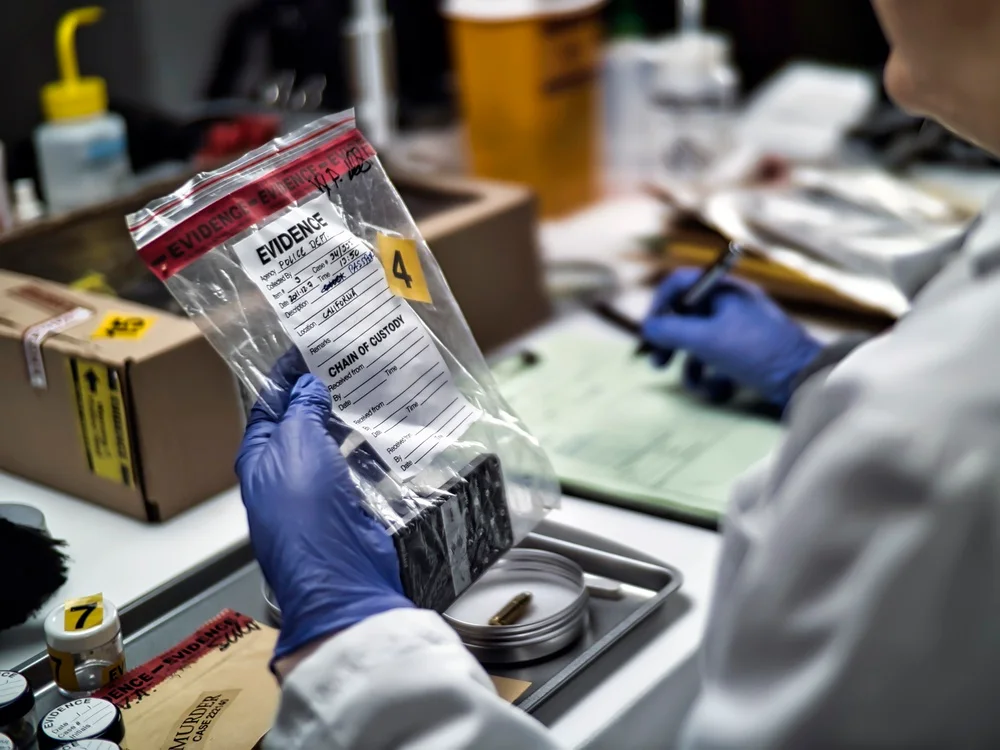
Forensic science and CSI education in Los Angeles County spans several distinct career paths. Cal State LA offers graduate laboratory criminalistics and intensive crime-scene training. Community colleges provide shorter, lower-cost certificates for scene processing, evidence collection, photography, and fingerprint work. USC and CSU Dominguez Hills cover digital evidence through different academic routes, while Cal State LA and Azusa Pacific University offer psychology programs connected to courts and forensic practice.
This guide defines Los Angeles as Los Angeles County only. It includes qualifying programs in Los Angeles, Long Beach, Carson, Azusa, Monterey Park, Sylmar, Whittier, and Westwood. Campuses in Orange, Ventura, Riverside, and San Bernardino counties belong to the broader Southern California region and are not included here. Readers comparing options beyond the county can use the broader directory of California forensic science and CSI schools.
The main choice is not simply between schools. It is between laboratory criminalistics, field CSI, fingerprint examination, digital forensics, forensic psychology, and adjacent scientific preparation. Those routes lead to different jobs and require different coursework.
Los Angeles County program comparison
| School and program | Credential | Primary focus | Format and practical training |
|---|---|---|---|
| Cal State LA M.S. in Criminalistics | Master of Science | Laboratory criminalistics | Primarily campus-based; laboratory analysis, instrumentation, and required research project |
| Cal State LA Forensic Specialist Certificate | Professional certificate | Field CSI and friction-ridge examination | 300 hours, fully in person, with mock scenes, laboratory exercises, and moot court |
| Cal State LA M.S. in Forensic Psychology | Master of Science | Psychology and law | Campus cohort, thesis, and nine-month supervised forensic practicum |
| CSU Long Beach CSI Certificate | Professional certificate | Crime-scene processing | 80 hours with classroom instruction, simulations, and a final practical scene |
| East Los Angeles College Forensic Crime Scene Investigation | 60-unit A.S. or 17-unit certificate | CSI and evidence work | College-credit route with scene processing, photography, fingerprints, and evidence recovery |
| Los Angeles Mission College Crime Scene Technology | 16-unit certificate | Field investigation and forensic photography | College-credit program with forensic science, homicide investigation, and photography |
| Río Hondo College Crime Scene Investigations and Forensics | 12-unit certificate | Entry-level scene and evidence work | Criminalistics, CSI, investigation, and forensic science courses |
| Long Beach City College Criminal Forensics | 15-unit certificate | Evidence collection and fingerprint work | College-credit certificate covering evidence, investigation, fingerprints, and chain of custody |
| Los Angeles City College Fingerprint Expert | Six-unit job skills certificate | Fingerprint classification and evidence | Two-course pathway focused on forensic fingerprint evidence and classification |
| USC Digital Forensics | 18-unit minor or 10-unit specialization | Digital evidence and cyber investigations | Add-on credentials for current USC undergraduates |
| CSU Dominguez Hills M.S. in Cyber Security | Master of Science | Cybersecurity with cyber-forensics coursework | In-person graduate degree with a required cyber-forensics course and supervised project |
| Azusa Pacific Clinical Psychology PsyD | Doctor of Psychology with forensic concentration | Forensic mental-health practice | Campus doctorate with forensic practicum, research, three practicum years, and internship |
| UCLA Anthropology B.S. | Bachelor of Science | Scientific anthropology and possible graduate preparation | Campus degree with physical science, life science, mathematics, and statistics |
Match the curriculum to the job
A crime scene investigator documents scenes, recognizes and recovers evidence, takes photographs, prepares sketches, preserves chain of custody, and may testify about collection procedures. Chemistry-intensive laboratory analysis is usually a separate function. Depending on the Los Angeles County employer, a CSI may be a civilian employee, a crime-scene technician, a forensic specialist, an evidence technician, or a sworn officer working a specialized assignment.
A criminalist or crime-laboratory analyst applies natural science to evidence. Relevant preparation commonly includes chemistry, biology, quantitative analysis, statistics, laboratory methods, and instrumentation. California’s official Criminalist classification requires a college major in a physical or biological science, along with the equivalent of eight semester hours of general chemistry and three semester hours of quantitative analysis. A field-CSI certificate or criminal justice degree without that science preparation does not satisfy those stated educational requirements.
Digital forensics is another separate specialty. Its practitioners acquire and examine data from computers, mobile devices, networks, and storage media. Coursework in cybersecurity, operating systems, networks, malware, forensic acquisition, and cyber law is more relevant than bloodstain documentation or impression casting.
Forensic psychology concerns human behavior, assessment, treatment, research, and legal decision-making. It is not physical-evidence analysis. Forensic anthropology is also distinct, typically requiring extensive anthropology and biological science preparation followed by advanced specialized study.
Laboratory criminalistics at Cal State LA
Master of Science in Criminalistics
Cal State LA’s M.S. in Criminalistics is the most directly aligned program in this Los Angeles County inventory for prospective criminalists and crime-laboratory scientists. It is a science graduate degree, not a criminal justice master’s with a few forensic electives.
Admission requires a bachelor’s degree in a natural or physical science. Listed prerequisite preparation includes two semesters each of biology, general chemistry, organic chemistry with laboratories, and physics, plus biostatistics and quantitative analysis. Applicants need at least a 3.0 GPA in their final 60 semester units and a 3.0 GPA in the undergraduate major. The program admits a fall cohort, with a published March 15 application deadline.
The curriculum covers scientific measurement, evidence interpretation, laboratory analysis, research methods, legal constraints, ethics, and professional responsibilities. Students use instrumentation and methods associated with forensic subdisciplines. A research project serves as the required capstone. Internships in public or private laboratories are encouraged, but placements are not guaranteed.
Most courses are scheduled in the evening, although some electives are offered during the day. The program operates through the Hertzberg-Davis Forensic Science Center, which brings together Cal State LA, the LAPD Scientific Investigation Division, the Los Angeles County Sheriff’s Department Scientific Services Bureau, and the California Forensic Science Institute.
For 2026-2027, full-time CSU graduate systemwide tuition is $8,548 per academic year for enrollment above six units per term. Cal State LA mandatory fees, books, housing, transportation, and other expenses are additional. Nonresident students also pay supplementary per-unit tuition.
The American Academy of Forensic Sciences records show that the program held FEPAC accreditation from January 2011 through January 2016. That historical term does not establish current accreditation. The degree should not be described as currently FEPAC-accredited based on the available record.
FEPAC accreditation is relevant to eligible bachelor’s and master’s programs in forensic science or natural and computer sciences with forensic concentrations. It does not apply automatically to short CSI certificates, forensic psychology programs, or anthropology degrees. The AAFS FEPAC resource explains the commission’s scope.
Field CSI, fingerprints, and evidence collection
Los Angeles County has several field-oriented programs, but they differ substantially in length and depth. Cal State LA’s professional certificate contains 300 hours of in-person instruction. CSU Long Beach offers an 80-hour training program. Community-college certificates range from six to 17 units, while East Los Angeles College also offers a 60-unit associate degree.
Cal State LA Forensic Specialist Certificate
The Cal State LA Forensic Specialist Certificate is a six-month, 300-hour professional program conducted in person at the Hertzberg-Davis Forensic Science Center. It combines two required tracks: crime scene investigation and friction-ridge examination. Participants cannot select only one track and still earn the certificate.
CSI instruction includes basic and crime-scene photography, scene procedures, latent-print processing, impression recovery, sketching, measurement, evidence collection, packaging, mock scenes, and courtroom testimony. The friction-ridge portion adds more concentrated fingerprint examination training. Participants independently process mock crime scenes and complete a moot-court exercise.
Weekend scheduling accommodates employed participants, but it still requires substantial campus attendance. The fingerprint track meets Friday evenings through Sunday, while the CSI track meets on Saturdays and Sundays. Cohorts are capped at no more than 24 participants.
The minimum admission threshold is an associate degree or current enrollment in an associate degree program. A person with a bachelor’s or graduate degree also meets that threshold, and regular Cal State LA enrollment is not required. Applications may be placed on a waitlist ordered by submission date.
The official 2026 price is $4,600, including required lecture, laboratory, and fieldwork supplies. That is considerably more than the base enrollment charges for a California community-college certificate, but the Cal State LA program also provides substantially more documented training hours and requires both CSI and friction-ridge work.
This certificate targets civilian forensic specialist, crime-scene specialist, forensic identification, latent-print, and field-evidence positions. It is not a substitute for the natural-science bachelor’s degree and chemistry coursework required for many criminalist jobs.
CSU Long Beach Crime Scene Investigation Certificate
CSU Long Beach offers an 80-hour CSI certificate through its criminal justice training unit. The course is modeled on California POST Field Evidence Technician training and endorsed by the Los Angeles County Forensic Supervisors Group.
Instruction covers fingerprints, biological and trace evidence, impression evidence, chemical processing, photography, death investigation, firearms evidence, interviews, scene analysis, and courtroom testimony. The program concludes with a team-based exercise at a realistic mock crime scene.
The university explicitly separates CSI work from laboratory science. Crime-scene personnel primarily document, recover, and preserve evidence, while laboratory analysts conduct specialized scientific examination. The program also explains that many laboratory jobs require a science bachelor’s degree.
California has no single statewide CSI certification process. Completion documents training, but hiring agencies retain their own standards for education, experience, background screening, and sworn or civilian status. A current official price was not published on the program page used for this guide.
East Los Angeles College Forensic Crime Scene Investigation
East Los Angeles College offers two named credentials at its Monterey Park campus: a 17-unit Certificate of Achievement and a 60-unit Associate of Science in Forensic Crime Scene Investigation. It is the only verified Los Angeles County community-college option in this inventory with both a dedicated forensic crime-scene certificate and an associate degree under the same program.
The curriculum emphasizes evidence identification, recovery, scene processing, criminalistics, fingerprint work, photography, death-scene investigation, ethical practice, and presentation of findings. Official program materials describe practical work such as scene diagramming, evidence collection, fingerprint development, bloodstain examination, photography, firearms-related evidence, and mock-scene processing.
The certificate provides a shorter occupational sequence. The associate degree adds general education and enough additional coursework to reach at least 60 units. The degree can be more useful for applicants seeking a college credential beyond a short certificate or planning later transfer, although transfer applicability depends on the receiving institution and major.
At California’s resident community-college enrollment rate of $46 per semester unit, base enrollment charges are approximately $782 for the 17-unit certificate and $2,760 for 60 associate-degree units. Those calculations exclude books, supplies, campus charges, transportation, and nonresident tuition.
ELAC identifies crime-scene technician, evidence custodian, coroner’s assistant, and criminal investigator among the related occupational categories. Its curriculum is aligned more closely with field evidence work than with chemistry- or biology-based criminalist positions.
Los Angeles Mission College Crime Scene Technology Certificate
Los Angeles Mission College in Sylmar offers a 16-unit Certificate of Achievement in Crime Scene Technology. Required subjects include criminal investigation, introductory forensic science, advanced forensic science, homicide investigation, and forensic photography.
The sequence addresses fingerprinting, impression casting, evidence documentation, photography, evidence examination, and death-investigation methods. Advanced Forensic Science requires the introductory forensic course, so sequencing affects completion time.
Some forensic science sections have been offered online, including introductory and advanced classes in Fall 2026. The full certificate has not been established as an online credential, and photography or applied work can involve different delivery requirements by term.
At $46 per unit, the base resident enrollment charge for 16 units is about $736. Books, local college fees, photography supplies, and nonresident tuition are separate. The catalog recommends completing an associate degree in administration of justice to be more competitive for employment. The certificate alone is a focused occupational award rather than broad college or natural-science preparation.
Río Hondo College Crime Scene Investigations and Forensics Certificate
Río Hondo College in Whittier offers a 12-unit Certificate of Achievement built from four courses: Introduction to Criminalistics, Crime Scene Investigation, Principles of Investigation, and Introduction to Forensic Science.
Topics include scene documentation, evidence preservation, bloodstain evidence, DNA, fingerprints, photography, reports, and legal issues. The program is intended both for entry-level civilian scene or evidence work and for law-enforcement personnel adding CSI preparation.
Several courses in the published curriculum carry prerequisites, so the 12-unit total does not necessarily mean that every student can finish the sequence in a single term. The program page does not list a required internship.
Base California-resident enrollment charges are approximately $552 for 12 units, excluding books, supplies, and college fees. Río Hondo expressly explains that the certificate does not guarantee employment because each agency controls its own qualifications.
Long Beach City College Criminal Forensics Certificate
Long Beach City College’s 15-unit Criminal Forensics Certificate of Achievement is housed in the Administration of Justice program. Required subjects include evidence, criminal investigation, fingerprint classification and identification, and introductory forensics. One additional course is selected from criminal procedure, criminal law, criminal justice writing, or computer use in criminal justice.
Published outcomes include identifying evidence, processing a scene, and preserving chain of custody. The curriculum is directed toward entry-level crime-scene investigation and evidence-collection work rather than laboratory chemistry or biology.
At the statewide resident rate, 15 units produce approximately $690 in base enrollment charges. College fees, books, supplies, and nonresident charges are additional. Current department information uses the title Certificate of Achievement, although an older official curriculum document used Certificate of Accomplishment.
Los Angeles City College Fingerprint Expert Job Skills Certificate
Los Angeles City College offers a narrow six-unit Fingerprint Expert Job Skills Certificate. It requires ADM JUS 053, Forensic Fingerprint Evidence, and ADM JUS 062, Fingerprint Classification, completed with grades of C or better.
Coursework covers fingerprint patterns, print-taking procedures, major-case prints, fingerprint charts used for testimony, the Henry classification system, pattern interpretation, crime-scene fingerprint searches, and preservation procedures. Program outcomes include classifying fingerprint records and locating latent or other prints at scenes.
This is not a general CSI certificate. It concentrates on latent-print and ten-print preparation. The shorter curriculum may suit someone adding fingerprint knowledge to an existing administration of justice or evidence background, while Cal State LA’s 300-hour certificate provides broader scene-processing instruction and a much longer friction-ridge component.
Forensic Fingerprint Evidence was offered asynchronously online in Fall 2026, but available schedules do not establish a fully online path for both required courses. The current LACC catalog also identifies the job skills certificate as ineligible for the federal and state aid programs listed in its award table.
Digital forensics and cybersecurity
USC Digital Forensics Minor and Specialization
USC offers an 18-unit Digital Forensics minor and a 10-unit specialization for current undergraduates. These are add-on credentials within a USC degree, not freestanding programs for outside applicants.
The curriculum begins with information security and moves into digital forensics and cybersecurity investigations. Elective options cover malware analysis, Apple forensics, mobile-device forensics, compromised-network investigation, incident response, and cyber law.
Applied work includes deleted-file recovery, forensic acquisition, device and network examination, documentation, reporting, and preparation of findings for court. A directed project or internship is available through the broader academic structure, but it is not listed as a universal requirement for every participant.
This route is designed for digital evidence and cyber investigation. It does not train students to photograph physical scenes, cast impressions, analyze biological evidence, or meet science requirements for criminalist classifications.
CSU Dominguez Hills M.S. in Cyber Security
CSU Dominguez Hills offers a 30-unit M.S. in Cyber Security at its Carson campus. It is broader than digital forensics, but Foundations of Cyber Forensics is one of six required core courses. Advanced Cyber Forensics is available as an elective, although university materials identify it as infrequently offered.
Other coursework addresses security analytics, network security, hacking prevention, operating-system security, cloud security, and practical cybersecurity. Students also complete an individually supervised graduate project. Program learning outcomes include conducting and evaluating forensic investigations involving computer-network traffic.
The degree requires in-person attendance and is not an online program. Classes are commonly scheduled on Friday evenings and weekends for working adults. Under the published full-time sequence, completion can take approximately 18 months.
Applicants need a bachelor’s degree and at least a 2.5 GPA. Those without an appropriate computing background can be required to take leveling coursework.
CSUDH publishes tuition of $759 per unit, equal to $22,770 for the 30-unit degree, before books and other fees. Its estimated total program cost is approximately $23,000 to $25,000.
Compared with USC, CSUDH serves a different audience. USC’s options are undergraduate additions with several specialized digital-forensics electives. CSUDH provides a graduate cybersecurity degree in which one cyber-forensics course is required, while the advanced course remains optional and is not regularly scheduled. Applicants seeking a curriculum dominated by digital evidence should account for that balance.
Forensic psychology in Los Angeles County
Cal State LA M.S. in Forensic Psychology
Cal State LA’s 33- to 34-unit M.S. in Forensic Psychology combines psychology, research, and legal-system study. Courses include psychology and law, abnormal psychology, psychological testing and case-study methods, quantitative methods, legal issues, electives, and a thesis.
A nine-month supervised practicum provides experience in an approved forensic setting. Possible settings include courts, corrections, probation, victim services, and social-service agencies.
Prerequisite preparation includes introductory psychology, statistics, abnormal psychology, and personality. The curriculum supports psychology-and-law research and work in criminal justice environments. It does not prepare graduates to collect physical evidence or perform chemical, biological, firearms, or trace-evidence analysis.
Full-time CSU graduate systemwide tuition for 2026-2027 is $8,548 per academic year, before Cal State LA campus fees and living costs. The program page does not state that the master’s degree alone leads to California psychologist licensure.
Azusa Pacific University Clinical Psychology PsyD with Forensic Psychology Concentration
Azusa Pacific University offers a 133-unit Clinical Psychology PsyD at its main campus in Azusa. An embedded Forensic Psychology Concentration adds Forensic Assessment, Family Forensic Psychology II, participation in forensic psychology research, and a forensic psychology practicum.
The overall doctorate normally takes five to six years. Clinical training includes three years of practicum and a full-time, yearlong internship. The PsyD is accredited by the American Psychological Association, which is psychology accreditation rather than forensic-science accreditation.
Applicants with a bachelor’s or master’s degree in psychology or a closely related field can apply without additional prerequisite courses. Applicants from unrelated majors must complete introductory psychology, abnormal psychology, and introductory statistics.
APU lists 2026-2027 tuition at $1,165 per unit. Its published base tuition calculation for 133 units is $154,945, excluding university fees, clinical-training expenses, transportation, books, and living costs.
The doctorate is the more extensive clinical route of the two verified forensic psychology options. Its concentration addresses assessment in criminal, civil, and family contexts, including competency, criminal responsibility, violence risk, child custody, and expert testimony. Completion of the concentration is not itself psychologist licensure, and APU describes it as preparation for forensic internships and postdoctoral training rather than a guarantee of placement.
Cal State LA’s master’s is shorter and includes a thesis plus a nine-month practicum. APU’s PsyD is a lengthy clinical doctorate with broader professional psychology training and an optional forensic concentration. Neither belongs in the same career category as CSI or criminalistics.
Anthropology as adjacent preparation
UCLA Anthropology Bachelor of Science
UCLA’s Anthropology B.S. is not a forensic anthropology degree. It combines anthropology with physical science, life science, mathematics, and statistics, and UCLA identifies forensic science as one possible career or graduate-study direction.
The degree can provide relevant undergraduate preparation for later study involving human biology or scientific anthropology. Elective selection will influence how closely the curriculum supports that goal. The undergraduate program page does not list required forensic casework, a CSI internship, or a forensic anthropology practicum.
Someone targeting forensic anthropology will generally need more specialized advanced preparation than this bachelor’s degree alone provides. Someone targeting a criminalist position must separately compare the completed chemistry and quantitative-analysis courses with the employer’s stated science requirements.
Cost and transfer planning
Community-college certificates have the lowest published base enrollment charges in this Los Angeles County group. At $46 per semester unit for California residents, the approximate base charges are:
- Río Hondo College, 12 units: $552
- Long Beach City College, 15 units: $690
- Los Angeles Mission College, 16 units: $736
- East Los Angeles College certificate, 17 units: $782
- East Los Angeles College associate degree, 60 units: $2,760
These figures are enrollment-fee calculations, not total cost of attendance. Books, laboratory or photography supplies, health and campus fees, parking, transportation, and housing are excluded. Eligible students can receive a California College Promise Grant fee waiver.
The Cal State LA Forensic Specialist Certificate costs $4,600 for its 2026 cohort, including required lecture, laboratory, and fieldwork supplies. Its price is higher than a community-college certificate, but its documented 300-hour curriculum is also more intensive than the shorter college-credit sequences.
Transfer planning depends on the career target. An associate degree in forensic crime-scene investigation can support field-CSI preparation, but it does not supply the natural-science major required for California’s Criminalist classification. A transfer student aiming at crime-laboratory work should prioritize a bachelor’s major in chemistry, biology, biochemistry, or another qualifying physical or biological science, then preserve room for general chemistry, organic chemistry, quantitative analysis, statistics, physics, and laboratory courses.
A criminal justice transfer degree is more appropriate for justice administration, law enforcement, courts, and some investigative routes. It is not equivalent to a laboratory science major merely because it includes an introductory forensics class.
Choosing a Los Angeles program by career goal
For crime-laboratory analysis, begin with science. Cal State LA’s M.S. in Criminalistics requires the kind of chemistry, biology, statistics, and physics background associated with criminalist hiring standards. An applicant missing quantitative analysis or organic chemistry laboratory work will need additional undergraduate science preparation before this route becomes viable.
For field CSI and evidence work, compare practical depth with credential length. Cal State LA provides the longest verified non-degree training program and includes both broad scene work and friction-ridge examination. CSU Long Beach offers a concentrated 80-hour practical certificate. ELAC provides the only verified named community-college associate degree in this county inventory, along with a shorter certificate. Los Angeles Mission, Río Hondo, and Long Beach City College provide lower-unit certificate routes with different combinations of investigation, photography, fingerprints, and evidence procedure.
For fingerprint specialization, LACC offers the shortest focused credential at six units. It is narrower than a general CSI program. Cal State LA’s certificate requires more time and money but incorporates fingerprint examination into a larger 300-hour scene-investigation curriculum.
For digital evidence, USC is the direct undergraduate option for current USC students. CSUDH is an in-person graduate cybersecurity route with required introductory cyber forensics, but its curriculum is not devoted entirely to forensic examination.
For psychology and legal practice, Cal State LA offers a master’s with a thesis and nine-month practicum. APU offers a clinical psychology doctorate with an embedded forensic concentration, several years of practical training, and a full-time internship. The difference in time, tuition, and intended professional level is substantial.
For anthropology, UCLA provides scientific undergraduate preparation rather than a named forensic credential. It is best understood as a foundation for later specialization, not immediate CSI or crime-laboratory training.
The most useful next step is to identify the exact function you want to perform with evidence. Scene documentation calls for photography, fingerprints, evidence recovery, report writing, and chain-of-custody practice. Criminalist work calls for a qualifying science degree and substantial laboratory coursework. Digital investigations require computing and cybersecurity. Forensic psychology requires psychology training and supervised clinical or research experience. Choosing by that division will prevent a short program with “forensic” in its title from being mistaken for preparation it was never designed to provide.