
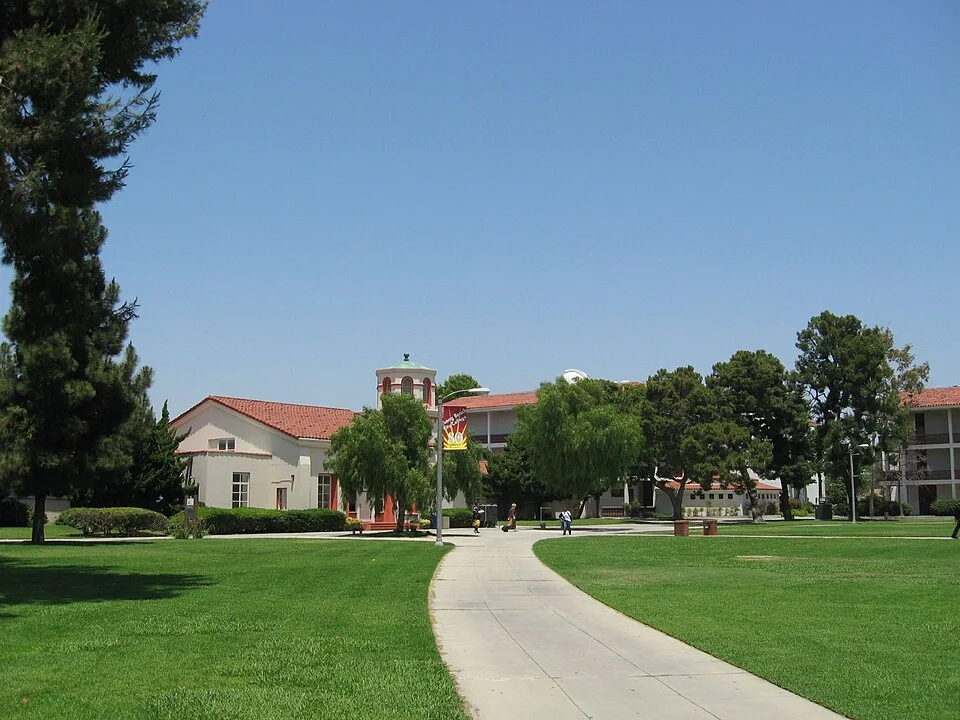
Long Beach City College has one credential devoted directly to physical crime-scene work: the 15-unit Criminal Forensics Certificate of Achievement. Its required courses cover evidence rules, criminal investigation, scene documentation, physical evidence collection, fingerprint identification, and introductory forensic methods.
LBCC also offers broader Administration of Justice credentials that include evidence or investigation coursework, plus Information Technology Cybersecurity programs with a required computer-forensics course. These alternatives serve different goals. The Administration of Justice programs emphasize the wider criminal justice system, while the cybersecurity programs focus on networks, systems, cybercrime, and digital evidence.
None of these programs is a chemistry- or biology-based laboratory criminalistics degree. The Criminal Forensics certificate is designed for introductory crime-scene, evidence, and fingerprint work. It does not contain the natural-science curriculum required for the California Department of Justice Criminalist classification, which calls for education equivalent to a college major in a physical or biological science, including specified coursework in general chemistry and quantitative analysis.
LBCC forensic and related programs at a glance
| Program | Credential | Primary focus | Forensic or investigative content | Best aligned with |
|---|---|---|---|---|
| Criminal Forensics | 15-unit Certificate of Achievement | Physical crime scenes and fingerprints | Evidence, investigation, scene processing, fingerprints, introductory forensics | Entry-level crime-scene, evidence, and fingerprint support work |
| Administration of Justice | Associate in Arts | Broad criminal justice education | Evidence and investigation are required; fingerprints and forensics are available as electives | An associate degree with a CSI-oriented elective plan |
| Administration of Justice | 24-unit Certificate of Achievement | Law enforcement, courts, and corrections | Introduction to Evidence is required | General entry-level criminal justice preparation |
| Administration of Justice | Associate in Science for Transfer | CSU transfer in criminal justice or criminology | Evidence and investigation are selectable courses, not universal requirements | Transfer rather than specialized CSI preparation |
| Information Technology Cybersecurity | Associate in Science | Cybersecurity, networks, systems, and cloud security | Computer Forensics and Investigation is required | Cybersecurity and digital-evidence interests |
| Information Technology Cybersecurity | 27-unit Certificate of Achievement | Technical cybersecurity training | Computer Forensics and Investigation is required | Focused technical training without completing an associate degree |
LBCC does not currently list a separate forensic chemistry, forensic biology, forensic anthropology, forensic psychology, toxicology, or forensic photography credential. Its photography programs are designed around professional imaging and digital media rather than crime-scene photography. Its anthropology curriculum does not identify a forensic anthropology credential or specifically titled forensic anthropology course.
Criminal Forensics Certificate of Achievement
The Criminal Forensics Certificate of Achievement is LBCC’s most direct route into crime-scene and fingerprint coursework. It requires 15 units, usually five three-unit courses, and carries plan code 3029.
The four required courses are:
- ADJUS 6: Introduction to Evidence
- ADJUS 8: Introduction to Investigation
- ADJUS 19: Fingerprint Classification and Identification
- ADJUS 255: Introduction to Forensics
Students then select one elective from:
- ADJUS 3: Criminal Procedures
- ADJUS 4: Criminal Law
- ADJUS 10: Writing for Criminal Justice
- ADJUS 17: Computer Use in Criminal Justice
This sequence introduces the main procedural subjects associated with field-oriented CSI work. Program outcomes include identifying potential evidence, processing a crime scene, and establishing chain of custody.
What the courses cover
ADJUS 6 addresses evidence law, admissibility, arrest, search, and seizure. This legal foundation is relevant because collection methods and documentation affect whether physical evidence can be used effectively in an investigation or court proceeding.
ADJUS 8 covers crime-scene searches, recording and documentation, and the collection and preservation of physical evidence. Those subjects align more closely with crime scene technician and evidence technician duties than with scientific laboratory analysis.
ADJUS 19 adds fingerprint pattern recognition, recording, development, and comparison. Students receive exposure to latent-print techniques, and a visit to a local crime laboratory may be required. The possible field trip is not an internship or laboratory practicum, but it can show how evidence moves from scene collection into a forensic laboratory environment.
ADJUS 255 introduces scientific methodologies used in criminal investigations. It gives the certificate a broader forensic component, although the published curriculum does not require chemistry, biology, organic chemistry, quantitative analysis, molecular biology, statistics, or instrumental analysis.
The elective can refine the certificate slightly. ADJUS 10 is useful for report writing, crime-scene interviewing, documentation, and courtroom testimony. Criminal Procedures or Criminal Law adds legal depth. Computer Use in Criminal Justice provides broader technology exposure, but it is not equivalent to the computer-forensics course required in LBCC’s cybersecurity programs.
Practical training and limitations
The certificate includes applied topics in scene documentation, evidence collection, and fingerprints, but the required courses are cataloged as lecture courses rather than dedicated laboratory courses. The current program requirements do not list an internship, field placement, residency, or separate forensic laboratory requirement.
This is an introductory crime-scene credential, not a laboratory criminalistics program. Its clearest career alignment is with evidence recognition, chain of custody, scene processing, fingerprint fundamentals, and investigative documentation.
Agency hiring standards still vary. A California crime scene investigator may be a civilian employee in one department and a sworn assignment in another. Some evidence or property positions emphasize chain of custody, inventory, and secure storage, while latent print positions may require comparison experience beyond the introductory methods taught in a short certificate.
Why the certificate does not qualify as criminalist preparation
The distinction between scene investigation and laboratory criminalistics can be seen in California’s official hiring standards. The current California Department of Justice Criminalist examination bulletin requires education equivalent to a college major in a physical or biological science. That education must include at least eight semester hours of general chemistry and three semester hours of quantitative analysis.
The state bulletin also describes entry-level Criminalist work as technical laboratory analysis. Its examination scope identifies scientific subjects and methods such as organic chemistry, biochemistry, biology, genetics, molecular biology, statistics, chromatography, spectroscopy, microscopy, and instrumental analysis.
The LBCC Criminal Forensics certificate does not provide that degree or science sequence. Someone targeting the California DOJ Criminalist classification needs a physical or biological science education that satisfies the stated chemistry and quantitative-analysis requirements. The certificate could add investigative context, but it cannot replace the required science major.
Those California DOJ qualifications are specific to the state Criminalist classification. They should not be presented as universal requirements for every municipal, county, state, or private forensic position. They do, however, demonstrate why a field-oriented crime-scene certificate and a science-based criminalistics degree lead toward different types of work.
Current credential title
Older LBCC catalogs and pages may refer to Criminal Forensics as a Certificate of Accomplishment with plan code 4019. The current credential is a Certificate of Achievement with plan code 3029. The change took effect around the 2022-23 academic period, while the basic 15-unit structure remained consistent.
Administration of Justice degree options
LBCC’s Administration of Justice programs cover law enforcement, courts, corrections, criminal law, and related social systems. They are broader than the Criminal Forensics certificate, but the degree routes can include useful investigative coursework.
Administration of Justice Associate in Arts
The Administration of Justice AA requires at least 60 degree-applicable units, including general education and a 24-unit major. Introduction to Evidence and Introduction to Investigation are required. Students can then use Fingerprint Classification and Identification and Introduction to Forensics as their two major electives.
That elective combination allows a student to complete all four core subjects found in the Criminal Forensics certificate while also earning an associate degree. The AA is therefore LBCC’s most adaptable degree-level option for physical crime-scene coursework within a wider criminal justice education.
The main tradeoff is science depth. Even with both forensic electives, the AA remains an Administration of Justice degree. It does not add the physical or biological science major, general chemistry, quantitative analysis, or laboratory methods required for the California DOJ Criminalist classification.
The AA can serve plans involving evidence work, law enforcement, corrections, courts, or later transfer. It is less concentrated than the Criminal Forensics certificate, but the general education component and broader major may be useful for positions that require or prefer an associate degree.
Administration of Justice Associate in Science for Transfer
The AS-T requires at least 60 transferable semester units and an 18- to 19-unit major. Its primary purpose is transfer into a California State University criminal justice or criminology program.
Students take Introduction to Administration of Justice and Criminal Law, then select courses from lists that include Criminal Procedures, Introduction to Evidence, Introduction to Investigation, and Introduction to Corrections. Because of the selection structure, an AS-T student can take both Evidence and Investigation, but not every graduate will complete both.
The AS-T does not require Fingerprint Classification and Identification or Introduction to Forensics. It is consequently less concentrated in CSI subjects than either the Criminal Forensics certificate or a CSI-oriented version of the Administration of Justice AA.
This route works better for a planned CSU criminal justice or criminology transfer than for immediate specialization in scene processing. A student planning to pursue science-based criminalistics would need a transfer route that includes the required physical or biological science courses. The Administration of Justice AS-T is not structured around that objective.
Administration of Justice Certificate of Achievement
The broader Administration of Justice Certificate of Achievement requires 24 units. Its core includes Introduction to Administration of Justice, Criminal Procedures, Criminal Law, Community and Human Relations, and Introduction to Evidence. Students also complete nine units selected from fields such as communication, English, political science, psychology, or sociology.
Introduction to Evidence gives the program some relevance to evidence handling and investigations. However, the certificate does not contain the concentrated investigation, fingerprint, and introductory forensics sequence required by the Criminal Forensics credential. Its published requirements also do not specify a crime-scene laboratory, forensic practicum, internship, or field placement.
The two certificates have different purposes. Criminal Forensics is the direct route for scene and fingerprint topics. The Administration of Justice certificate provides broader preparation related to law enforcement, corrections, and court settings.
Digital evidence through Information Technology Cybersecurity
Digital evidence requires a different skill set from physical crime-scene processing. LBCC addresses this area through its Information Technology Cybersecurity AS and Certificate of Achievement.
Both programs require COSS 272: Computer Forensics and Investigation, a three-unit course covering cybercrime investigation, data recovery, and the collection, analysis, recovery, and preservation of digital forensic evidence. COSN 5 is recommended preparation, and the cybersecurity certificate already includes relevant computer-hardware study.
Information Technology Cybersecurity Associate in Science
The AS requires at least 60 total units, including a 27-unit technical core. The curriculum covers computer hardware, networking, Linux, scripting, cloud security, network security, computer forensics, and ethical hacking.
The degree is relevant to cybercrime and digital evidence, but its broader orientation is systems and network security. It does not prepare students for fingerprints, biological evidence, chemical analysis, or physical scene reconstruction.
A student interested in recovering deleted files, preserving digital evidence, or understanding cybercrime procedures will find more relevant technical content here than in the Criminal Forensics certificate. Someone seeking physical crime-scene instruction should choose the ADJUS route instead.
Information Technology Cybersecurity Certificate of Achievement
The 27-unit certificate uses the same technical core without the full associate-degree general education requirement. It provides concentrated cybersecurity training that includes one computer-forensics course.
LBCC also offers Computer Security and Networking credentials in which computer forensics can appear as an elective. Because students can finish those programs without taking COSS 272, they are not dedicated digital-forensics pathways.
Neither Information Technology Cybersecurity credential should be grouped with physical CSI education. Digital evidence preservation and data recovery require technical computing skills, while the Criminal Forensics certificate focuses on evidence at physical scenes, fingerprint fundamentals, and investigative procedure.
Delivery format and time to completion
Relevant Administration of Justice courses, including ADJUS 6, 8, 19, and 255, have institutional approval for online or hybrid delivery. Approval means a course can be taught in those formats. It does not establish that all five certificate courses are available remotely during the same term.
The Criminal Forensics certificate is therefore not a guaranteed fully online program. Actual delivery is course-specific and changes with the schedule. LBCC reports that some certificates can be completed in as little as one semester, depending on course load and availability, but the current materials do not promise one-semester completion for every Criminal Forensics student.
Courses are generally available during fall and spring, with some winter and summer offerings. Fast completion depends on whether all required courses and a suitable elective are scheduled in compatible sections.
The possible crime-laboratory visit in ADJUS 19 may also add an in-person component when required. It remains a course field trip rather than an internship, residency, or laboratory practicum.
Admission and enrollment
LBCC uses general community college admission rather than a separately published selective-admission process for Criminal Forensics. Eligible applicants include high school graduates, people with an equivalent credential, adults over 18 without a diploma, and qualifying minors using approved enrollment routes.
New students apply through OpenCCC and receive an LBCC student ID. First-time college students must complete LBCC’s online New Student Orientation before registering for classes. Other students follow the onboarding requirements assigned to their enrollment category. The current catalog descriptions do not list prerequisites for the four required Criminal Forensics courses.
The absence of a lengthy prerequisite sequence makes the certificate accessible as an introductory program. It also explains why the curriculum begins with foundational evidence, investigation, fingerprint, and forensic concepts rather than advanced scientific analysis.
Students planning to continue into an associate degree can compare the certificate courses with the Administration of Justice AA requirements. Because the AA can incorporate the certificate’s core subjects through required courses and electives, it provides a logical degree route for someone who wants both focused CSI coursework and broader college preparation.
Tuition, fees, and cost planning
California residents currently pay $46 per unit in enrollment fees. At that rate, the 15-unit Criminal Forensics certificate carries a base enrollment charge of $690.
That calculation is not the complete program cost. Fall and spring enrollment includes mandatory health and student representation fees, while the College Services Card is listed separately. Books, supplies, transportation, and course-material fees can add to the total. A required crime-laboratory visit, if assigned in ADJUS 19, could also create a transportation expense.
LBCC’s published 2026-27 cost-of-attendance budget estimates annual tuition and fees at $1,564 for California residents and $13,340 for nonresidents. Those figures are financial-aid budget estimates, not fixed prices for completing the Criminal Forensics certificate. The broader cost-of-attendance budget separately accounts for housing, food, books, transportation, and personal expenses.
Associate degree costs depend on residency and the number of enrolled units. At the resident rate, 60 units correspond to $2,760 in base enrollment charges before mandatory term fees, books, materials, and living expenses.
The 27-unit Information Technology Cybersecurity certificate would generate $1,242 in base resident enrollment charges at $46 per unit. That figure excludes mandatory term fees, books, computing materials, and other course-specific costs.
Accreditation
Long Beach City College is institutionally accredited by the Accrediting Commission for Community and Junior Colleges. Institutional accreditation applies to the college as a whole.
The Criminal Forensics certificate is not FEPAC-accredited, and it is below the degree level eligible for that form of accreditation. The Forensic Science Education Programs Accreditation Commission accredits qualifying bachelor’s and master’s programs in forensic science, including eligible natural science or computer science programs with forensic concentrations and bachelor’s-level CSI programs.
FEPAC is most relevant when comparing bachelor’s or graduate education in forensic science. It is not the appropriate measure for judging a 15-unit community college certificate focused on introductory crime-scene and fingerprint work.
The Administration of Justice and Information Technology Cybersecurity credentials should likewise be described under LBCC’s institutional accreditation unless a current authoritative source establishes separate programmatic accreditation. Institutional accreditation does not convert any of these programs into a specialized accredited forensic science degree.
Choosing the right LBCC route
The Criminal Forensics Certificate of Achievement is the clearest LBCC option for learning introductory scene processing, evidence handling, fingerprint classification, latent-print basics, and chain of custody. It is short, focused, and relatively inexpensive at the California resident enrollment rate.
The Administration of Justice AA is better suited to someone who wants an associate degree and broader criminal justice coursework while retaining the option to take both Fingerprint Classification and Identification and Introduction to Forensics. It can incorporate the same four core subjects as the Criminal Forensics certificate, but it remains a criminal justice degree rather than a natural-science program.
The AS-T serves a different purpose. It is designed for CSU transfer in criminal justice or criminology, and its selection structure provides less consistent forensic preparation. Evidence and investigation are available, but neither Fingerprint Classification and Identification nor Introduction to Forensics is required.
The Administration of Justice certificate supports a broader law enforcement, courts, and corrections goal. Its required evidence course is relevant, but it is not a substitute for the focused Criminal Forensics curriculum.
Choose Information Technology Cybersecurity when the intended specialty is cybercrime or digital evidence. Its computer-forensics course addresses data recovery and evidence preservation, while the rest of the program concentrates on operating systems, networks, cloud security, server protection, and ethical hacking.
For the California DOJ Criminalist classification, prioritize a physical or biological science degree that includes at least eight semester hours of general chemistry and three semester hours of quantitative analysis. LBCC’s Criminal Forensics certificate can add scene-investigation context, but it does not fulfill that science-based education standard. Other forensic employers and job titles use their own requirements, so the relevant comparison is between the actual job function and the curriculum: field CSI routes emphasize scene processing and documentation, digital-evidence routes emphasize computing, and criminalist routes require substantial laboratory science.
Readers comparing LBCC with other institutions can use the directory of California CSI and forensic science schools to separate field-oriented crime-scene programs from laboratory science and digital-forensics pathways.