
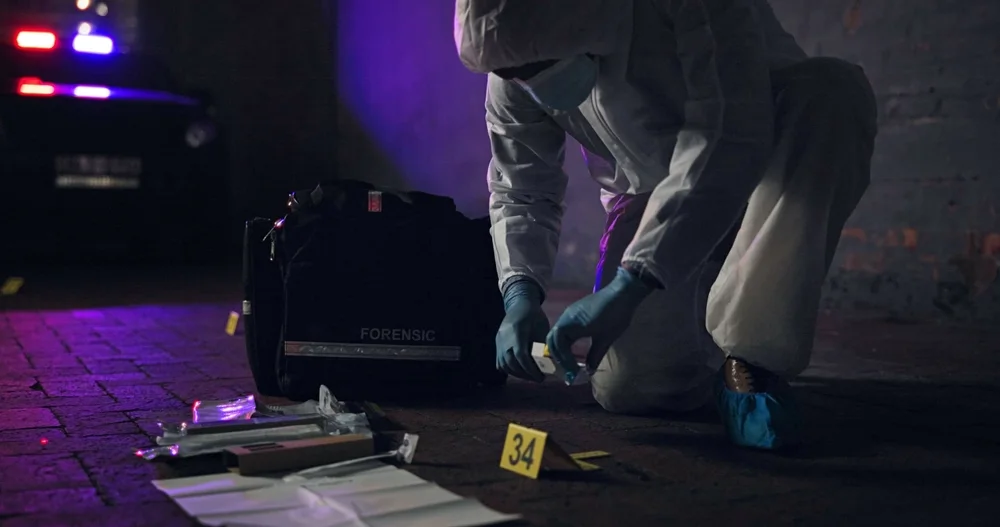
Becoming an evidence technician in California starts with identifying which kind of evidence job you want. The title is not uniform across the state. One police department may use “evidence technician” for a civilian employee who manages a secure property room. Another may use it for a specialist who photographs crime scenes, develops latent fingerprints, collects biological material, and testifies in court. Some agencies combine both assignments.
Those differences change the education, experience, schedule, and technical preparation required. Property-room positions may accept high school completion plus records, inventory, clerical, or law-enforcement support experience. Field-oriented positions are more likely to require college coursework, an associate degree, evidence-technology education, photography or fingerprint skills, and prior experience handling physical evidence.
There is no single statewide evidence-technician license or universal degree requirement across the California public-employer classifications reviewed here. Agencies establish their own minimum qualifications, conduct background investigations, and provide or require training according to the assignment.
The practical path into evidence work
A realistic route into this career usually follows these steps:
- Choose between property-room work, field evidence work, and laboratory science.
- Read California job duties rather than relying on titles.
- Build education and experience that match the target assignment.
- Develop accurate records, chain-of-custody, photography, or evidence-processing skills.
- Prepare for a detailed government application and background investigation.
- Apply under several related job titles.
- Complete agency training and pursue advanced credentials as your responsibilities grow.
California evidence positions can be highly accessible to applicants with relevant work experience, but they are also positions of public trust. Accuracy, security, documentation, and judgment carry more weight than a broadly related degree with no practical connection to the actual duties.
Evidence technician, crime-scene technician, and criminalist are different careers
The three broad career tracks overlap, but they are not interchangeable.
| Career track | Typical duties | Common preparation | Science intensity | Work setting |
|---|---|---|---|---|
| Property and evidence technician | Receive, label, secure, inventory, release, transport, audit, and dispose of property and evidence | High school through college, plus records, inventory, clerical, warehouse, or law-enforcement support experience | Usually limited laboratory science | Secure property room, police facility, courthouse, laboratory transport |
| Field evidence or crime-scene technician | Photograph and document scenes, collect evidence, process fingerprints, prepare diagrams and reports, preserve chain of custody, testify | College coursework, evidence-technology certificate, associate degree, forensic education, or relevant experience | Moderate, depending on the agency and evidence types | Crime scenes, vehicles, hospitals, autopsies, police facilities |
| Criminalist or crime-lab analyst | Scientifically examine and interpret evidence using laboratory methods and instrumentation | Bachelor’s degree in a physical or biological science with required chemistry coursework | High | Government crime laboratory |
A property and evidence technician commonly controls the physical custody of evidence after it enters an agency. California POST’s Law Enforcement Evidence and Property Management Guide identifies receipt, storage, safekeeping, release, disposal, tracking, court exhibits, and evidence viewing among the core functions of evidence and property operations.
Field positions move closer to crime-scene investigation. San Diego County’s Forensic Evidence Technicians identify, document, collect, preserve, and transport physical evidence from crime scenes and autopsies. Stockton’s Evidence Technician series includes photography, sketches, gunshot-residue testing, evidence processing, reports, chain-of-evidence work, and testimony.
A criminalist performs scientific analysis in a laboratory. The California Department of Justice explains that criminalists generally need a four-year degree in chemistry, biology, physics, biochemistry, molecular biology, or another physical or biological science. California’s state Criminalist classification also specifies general chemistry and quantitative-analysis coursework.
A criminal justice degree, CSI certificate, or program with “forensic” in its title is therefore not automatically preparation for criminalist employment. A field evidence technician may document and recover biological material, while a criminalist analyzes that material through laboratory methods. Readers comparing related occupations can explore the broader set of California CSI and forensic career paths before choosing an education route.
How California agencies divide the work
Agency organization matters as much as the job title. California employers use at least three models.
Separate property-room and field classifications
Tulare County maintains a Property and Evidence Technician classification focused on receiving, securing, tracking, preserving, releasing, and disposing of evidence. It separately classifies Field Evidence Technicians who work at crime scenes and in laboratory settings. Their duties include photography, evidence collection, diagrams, fingerprint processing, reports, testimony, and on-call service.
This model creates two distinct career tracks within the same county. An applicant qualified through clerical law-enforcement experience may fit the property-room role but lack the technical preparation expected for field processing.
Combined property and crime-scene duties
Other employers place both functions in one series. Brentwood’s Property and Evidence Technician classification combines property-room administration with collecting, processing, and preserving crime-scene evidence. Yuba County similarly combines custody, collection, processing, preservation, disposition, and chain-of-custody recordkeeping.
Combined positions require a broader skill set. The technician may spend one shift handling controlled storage and another collecting or preparing evidence for outside testing.
Primarily field-oriented forensic positions
El Cajon’s Forensic Evidence Technician classification centers on crime-scene processing, photography, latent prints, biological and trace evidence, transportation, and testimony. San Diego County also uses a field-oriented forensic evidence title involving crime scenes and autopsies.
Search job postings by duties and qualifications, not by title alone. Useful search terms include:
- Evidence Technician
- Property and Evidence Technician
- Evidence and Property Technician
- Field Evidence Technician
- Forensic Evidence Technician
- Forensic Technician
- Property Officer
- Evidence Officer
- Crime Scene Technician
- Crime Scene Investigator
A “property technician” vacancy may offer a viable entry route even when “evidence technician” searches return no local openings. Conversely, a forensic technician posting may demand scene-processing skills that are absent from a property-room job.
Step 1: Select the target role
The first decision is whether you want controlled evidence custody, field investigation, or scientific laboratory analysis.
Property-room work
Property-room personnel maintain a secure, traceable record of where evidence came from, where it is stored, who accessed it, and how it was released or disposed of. Typical tasks include:
- Receiving and booking evidence
- Inspecting packaging and documentation
- Assigning storage locations
- Entering and updating database records
- Maintaining chain-of-custody logs
- Moving evidence to laboratories or court
- Processing lawful releases
- Researching case status and retention rules
- Coordinating destruction or disposal
- Conducting inventories and audits
- Handling firearms, narcotics, money, biological material, and found property
- Responding to evidence-viewing requests
- Testifying about custody procedures
The work rewards consistency and attention to detail. A mislabeled container, unauthorized release, missing signature, or unexplained movement can affect a criminal case.
Field evidence work
Field technicians respond to scenes and document conditions before evidence is disturbed. Depending on the agency, they may:
- Photograph scenes and individual items
- Prepare measurements, notes, and diagrams
- Locate and recover fingerprints
- Collect biological, trace, firearm, or impression evidence
- Package evidence to prevent loss or contamination
- Process vehicles and other surfaces
- Conduct gunshot-residue tests
- Transport evidence
- Write technical reports
- Maintain chain of custody
- Present testimony about collection and documentation
- Assist at autopsies or scenes involving human remains
This route demands technical competence and tolerance for irregular schedules, hazardous environments, and emotionally difficult scenes. Some agencies use civilian technicians, while others assign related duties to sworn personnel or investigators.
Laboratory criminalistics
Laboratory work is the science-intensive path. It may involve forensic biology, DNA, controlled substances, toxicology, firearms, trace evidence, or other specialties. Preparation normally requires substantially more chemistry and biology than a property-room or field-focused criminal justice curriculum.
Anyone who may eventually pursue criminalist employment should plan undergraduate science coursework early. California’s Criminalist classification requires a physical or biological science major, at least eight semester hours of general chemistry, and three semester hours of quantitative analysis. Organic chemistry, analytical chemistry, molecular biology, statistics, instrumentation, and laboratory methods can also support specialized laboratory preparation.
Step 2: Meet the education requirement for the actual assignment
California employers use markedly different qualification patterns. There is no statewide rule requiring every evidence technician to earn a degree.
High school plus relevant experience
Some property-room classifications provide a route based on high school completion and directly related employment.
Yuba City’s 2026 Property and Evidence Technician recruitment required completion of twelfth grade and one year of responsible records-management experience, preferably in law enforcement. Tulare County’s property-focused classification uses high school completion, supplemental training, and one year of clerical or administrative support experience in a law-enforcement setting as its typical pattern.
Hayward lists high school completion plus two years of inventory experience in a highly controlled environment for its journey-level property-control role. Familiarity with the criminal justice system is desirable.
These examples show that inventory control and records accuracy can be relevant professional preparation. Useful experience may come from:
- Police records
- Sheriff’s office support work
- Controlled warehouses
- Medical or pharmaceutical inventory
- Court operations
- Records management
- Public-safety clerical positions
- Quartermaster or supply operations
- Regulated property storage
- Community service or police service positions
General retail stocking is less directly aligned unless it involved controlled access, auditable records, discrepancy resolution, and strict release procedures. Applications are stronger when they describe those functions precisely.
College units or an associate degree
College education becomes more common when a position includes crime-scene processing, fingerprints, photography, or technical evidence recovery.
El Cajon’s field-oriented classification calls for two years of college study with substantial coursework in evidence technology, criminalistics, or a closely related field, plus at least six months of related experience. Oceanside required an associate degree or at least 60 college units in evidence technology, biology, chemistry, or a related subject for the cited forensic role.
San Diego County accepted several qualification routes, including an associate of science degree combined with evidence-technology education, one year of physical-evidence experience that included fingerprint processing, or two years as an evidence technician in a law-enforcement agency.
Relevant coursework for field assignments can include:
- Crime-scene photography
- Evidence recognition and collection
- Fingerprint classification and development
- Crime-scene documentation
- Evidence packaging and preservation
- Criminal investigation
- Report writing
- Courtroom testimony
- Criminal law and procedure
- Biological evidence handling
- Forensic chemistry fundamentals
- Statistics
- Digital imaging
- Chain-of-custody practices
An associate degree or 60 transferable units can broaden eligibility, but course selection matters. A degree composed mainly of broad criminal justice survey classes provides less technical preparation than one that includes photography, fingerprints, evidence processing, and laboratory-based science.
Bachelor’s degree routes
Some classifications accept or prefer a bachelor’s degree, particularly when the role encompasses advanced scene processing. Stockton’s Evidence Technician I qualification routes included a bachelor’s degree in a forensic discipline or criminal justice with a forensic concentration. The city also offered routes based on an associate degree or 60 college units plus experience, or high school plus two years of relevant experience.
A bachelor’s degree can help with competitive selection and later advancement, but it is not a universal requirement for California evidence-room employment. Paying for a four-year forensic program solely to pursue inventory-centered property jobs may be unnecessary if nearby employers accept related experience.
Career goals should shape the major:
- Property and evidence custody: criminal justice, records management, public administration, information systems, or relevant work experience can be useful.
- Field crime-scene work: forensic science, evidence technology, criminalistics, biology, chemistry, photography, or criminal justice with substantial evidence coursework aligns more closely.
- Crime-laboratory analysis: choose a physical or biological science major and complete the required chemistry, quantitative analysis, statistics, and laboratory work.
Step 3: Build relevant experience before applying
Experience can substitute for education in some classifications and strengthen applications for college-based routes.
Experience for property-room positions
The strongest transferable functions are controlled intake, accurate data entry, secure storage, inventory reconciliation, legal or administrative records, and authorized release. Work involving confidential files, firearms, pharmaceuticals, medical specimens, money, or other regulated materials may demonstrate familiarity with accountability systems.
Police records and law-enforcement support positions offer particularly direct preparation because they introduce agency databases, report terminology, confidentiality rules, public records procedures, and criminal justice workflows. Warehouse or inventory work can also qualify when it involves strict controls rather than ordinary stocking.
Candidates should be able to describe:
- The kinds of items or records controlled
- How access was restricted
- Which databases or tracking systems were used
- How discrepancies were identified and resolved
- Who could authorize releases
- How audits or inventories were conducted
- Whether hazardous or sensitive materials were handled
- How confidentiality and record accuracy were maintained
Experience for field positions
Field-oriented employers look for evidence collection, fingerprint processing, photography, scene documentation, and safe packaging. Relevant experience can come through employment, internships, structured volunteer assignments, or supervised educational laboratories.
San Diego County’s recruitment recognized paid and unpaid experience, including internships. That does not mean every agency credits internships identically, but supervised practical work can provide concrete examples for an application and interview.
Useful activities include:
- Photographing mock crime scenes with scales and evidence markers
- Preparing scene notes and diagrams
- Practicing latent-print development under instruction
- Packaging mock biological, trace, and impression evidence
- Writing reports based on observations
- Maintaining sample chain-of-custody documentation
- Learning contamination-control practices
- Observing courtroom testimony or evidence proceedings
- Completing an internship in a law-enforcement, coroner, medical-examiner, or laboratory setting
Practical exercises need competent supervision. Evidence collection is governed by agency procedure, safety rules, and legal requirements, not simply classroom technique.
Step 4: Develop the skills agencies screen for
Evidence work combines technical tasks with administrative precision.
Chain of custody
Chain of custody records each transfer, examination, location, and authorized release of evidence. Technicians must create records that can withstand audit and courtroom scrutiny. Good practice includes accurate identifiers, dates, times, signatures, destinations, storage locations, and reasons for movement.
Evidence packaging and preservation
Different evidence requires different handling. Biological material, firearms, narcotics, wet items, sharp objects, digital devices, and trace evidence present different contamination, deterioration, and safety concerns. POST recommends training in packaging, DNA evidence handling, firearms, narcotics awareness, courtroom procedures, and purging practices.
Database accuracy
Property rooms may contain large numbers of individually tracked items. A technician must search, update, reconcile, and audit records without losing the connection between the physical item and its database history. Basic computer comfort is not enough; the job requires disciplined data quality.
Photography and documentation
Field technicians must create images that are technically clear, accurately scaled, and logically sequenced. Reports and diagrams need to let another investigator understand what was observed, where an item was found, and how it was recovered.
Communication and testimony
Technicians communicate with officers, detectives, laboratories, prosecutors, courts, property owners, vendors, and other agencies. They may testify about collection methods or chain-of-custody controls. Clear explanations and impartial documentation matter more than dramatic presentation.
Safe material handling
Evidence can include firearms, ammunition, controlled substances, chemicals, biohazards, decomposition fluids, sharp objects, and human remains. Training, protective equipment, packaging procedures, and exposure protocols are part of the occupation.
Step 5: Understand training and certification
California POST currently lists Field Evidence Technician as course number 31550. The existence of this course does not create a universal pre-employment requirement. Agencies handle training differently.
Oceanside’s cited forensic recruitment required POST Basic Field Evidence Technician training within one year after hiring, advanced training within two years, and International Association for Identification Crime Scene Investigator certification within three years. Tulare County specifies completion of a California Department of Justice evidence course or a comparable course within 24 months for its property classification. Hayward requires possession of, or the ability to obtain, IAPE training certification during probation.
These are employer-specific conditions. They illustrate a common pattern: the agency hires someone who meets its education and experience requirements, then requires defined training during probation or within a stated period.
Professional resources include:
- California POST, which lists law-enforcement training such as Field Evidence Technician
- California Association for Property and Evidence, which provides property and evidence training and information sharing
- International Association for Property and Evidence training
- International Association for Identification certification boards, covering crime-scene investigation, latent prints, forensic photography, footwear, bloodstain patterns, forensic video, and other specialties
- Agency training provided through laboratories, prosecutors, courts, coroners, probation departments, and neighboring law-enforcement agencies
CAPE membership, IAPE training, IAI certification, and POST courses serve different purposes. None functions as one mandatory California license for all evidence technicians.
Before paying for a private credential, compare its curriculum with recent qualifications from the agencies where you plan to work. A field photography and fingerprint course has limited relevance to a vacancy centered entirely on inventory control, while a property-room seminar will not replace the scene-processing education required for a forensic evidence position.
Step 6: Prepare for the government hiring process
Public-sector applications are screened against stated minimum qualifications. A candidate may have relevant experience and still be screened out if the application does not describe it.
Complete every application field
Yuba City’s 2026 recruitment warned that a resume would not substitute for the completed application. Government agencies frequently evaluate employment dates, hours worked, duties, education, and supplemental-question responses directly from the application form.
Avoid entries such as “see resume.” Describe the qualifying work in concrete terms:
- Managed controlled inventory with restricted access
- Entered and reconciled item records in a tracking database
- Maintained confidential law-enforcement records
- Released property only after documented authorization
- Conducted scheduled inventories and investigated discrepancies
- Photographed and documented scenes
- Collected and packaged physical evidence
- Processed items for latent fingerprints
- Prepared reports and maintained chain-of-custody records
Include employment dates, average hours, supervisor information, and the percentage of time spent on relevant duties when requested.
Keep application materials ready
Evidence recruitments may have firm deadlines or close after receiving a limited number of qualified applications. Maintain an updated file containing:
- College transcripts
- Training certificates
- Driver’s license information
- Complete employment dates
- Supervisor names and contact information
- Residential history
- Professional references
- Detailed descriptions of relevant duties
- Volunteer and internship records
- Explanations of employment gaps when requested
This preparation reduces errors when an opening has a short application period.
Expect background screening
Evidence technicians have access to controlled substances, weapons, money, personal property, sensitive records, and material central to criminal cases. Background investigations are common.
Verified California processes have included combinations of:
- Criminal-history review
- Fingerprinting
- Employment verification
- Credit-history review
- Drug-use history
- Driving-record review
- Polygraph examination
- Computer Voice Stress Analysis
- Reference interviews
Fresno County’s 2026 recruitment required a background investigation and a polygraph or Computer Voice Stress Analysis examination. Sacramento’s senior recruitment listed criminal-history review, fingerprinting, a polygraph, a credit check, and review of drug-use history.
Not every agency uses every screening tool. Accuracy and completeness are the sound preparation strategy. Review dates, addresses, employment history, citations, driving issues, and other required disclosures before submitting the background packet.
Maintain a usable driving record
A valid California driver’s license appears frequently in evidence classifications. Technicians may transport evidence, travel to laboratories and courts, respond to scenes, or move between agency facilities. Yuba City, Stockton, San Diego County, and Sacramento each included driver’s-license requirements in the reviewed materials.
Working conditions
The work environment varies sharply between property-room and field assignments.
Property-room conditions
A property technician may spend substantial time standing, lifting containers, using inventory systems, retrieving items from shelving, and transporting evidence. Secure facilities can include refrigerated or hazardous-material storage. The position may involve contact with weapons, narcotics, chemicals, biological evidence, odors, and contaminated packaging even without crime-scene response.
Work hours may be more regular than field response, but some agencies require nights, weekends, holidays, overtime, or call-back availability. Fresno County’s recruitment required willingness to work nights, weekends, and holidays.
Field conditions
Field technicians may work outdoors, inside damaged buildings, around traffic, in confined spaces, or at scenes involving decomposition and human remains. El Cajon identifies unhealthy crime scenes, chemical exposure, after-hours on-call assignments, independent casework, and lifting more than 25 pounds. San Diego County’s recruitment required acceptance of chemical and biological hazards, irregular hours, evenings, weekends, holidays, on-call work, and contact with deceased individuals.
Physical demands can include prolonged standing and walking, bending, crawling, climbing, lifting, fine visual examination, and wearing protective equipment. Emotional demands are also higher in assignments involving violent deaths, child victims, autopsies, or major incidents.
A field role is not simply a more active version of property-room work. It carries different exposure, schedule, judgment, and documentation requirements.
Salary in California
There is no dedicated federal or California occupational category that isolates all property and evidence technicians. Salary figures for “forensic science technicians” include scientific and crime-scene occupations that may require more education and perform different work. They should not be treated as an exact wage benchmark for an evidence-room position.
Current or recent agency recruitments provide more role-specific examples:
- Fresno County Property and Evidence Technician I: $51,220 to $62,270 annually in the 2026 recruitment
- Yuba City Property and Evidence Technician: $54,696 to $66,468 annually in the 2026 recruitment
- Sacramento Senior Evidence and Property Technician: $59,763.37 to $84,093.06 annually in the September 2026 recruitment
The Sacramento figure is for a senior classification with leadership and training responsibilities. It is not directly comparable to the entry or journey-level Fresno County and Yuba City positions.
Pay varies by agency, region, collective bargaining agreement, experience, job level, and whether the assignment includes technical scene work. Benefits may also form a substantial portion of public-sector compensation.
The California Employment Development Department reported a first-quarter 2026 median of $50.46 per hour and a mean of $51.87 per hour for the broader Forensic Science Technicians category. The 25th percentile was $39.94, and the 75th percentile was $65.64. Those figures encompass workers who collect, identify, classify, and analyze evidence, including roles beyond property-room custody.
Nationally, the Bureau of Labor Statistics reported a May 2024 median annual wage of $67,440 for forensic science technicians. BLS states that a bachelor’s degree is typical for that broader occupation, although an associate degree may qualify applicants for some positions.
Employment outlook
California EDD projects employment in the broader Forensic Science Technicians category to increase from 2,200 positions in 2022 to 2,600 in 2032. That represents 400 additional positions, or 18.2 percent growth.
BLS projects 13 percent national growth for forensic science technicians from 2024 through 2034. Local and state government employ most workers in the federal category.
Neither projection isolates property and evidence technicians. Evidence-room staffing depends on public budgets, agency size, evidence volume, retention rules, technology, and local classification practices. The figures are useful for understanding the broader forensic occupation, but they are not a precise forecast of California evidence-room vacancies.
Actual openings also arise through retirements, promotions, transfers, and employee turnover. Because evidence units are often small, a city may hire infrequently even when the occupation is stable.
Advancement options
Evidence technicians can advance without becoming sworn officers or laboratory scientists. California agencies use titles such as Technician I, Technician II, Senior Technician, Lead Technician, Evidence Supervisor, and Property and Evidence Supervisor.
Higher-level assignments may include:
- Training new technicians
- Reviewing packaging and documentation
- Resolving inventory discrepancies
- Coordinating audits
- Interpreting retention and disposition rules
- Handling complex releases or destruction orders
- Managing high-liability evidence
- Writing procedures
- Liaising with laboratories, prosecutors, and courts
- Directing staff workflow
- Preparing for inspections
- Testifying about unit practices
Sacramento’s senior classification leads and trains technicians while overseeing storage, transportation, release, and disposal. Brentwood uses a flexibly staffed series in which advancement from level I to level II depends on proficiency, qualifications, performance, and management approval.
Field technicians may develop specialties in latent prints, forensic photography, footwear impressions, bloodstain patterns, or crime-scene reconstruction. IAI certifications can support advancement in those technical areas, although eligibility requirements and employer recognition vary by specialty.
Moving from evidence custody into laboratory criminalistics requires additional science education. Years of property-room experience do not replace California’s required physical or biological science degree and chemistry coursework for the state Criminalist classification.
Choosing the right preparation route
A practical plan depends on the job family you intend to enter.
Route A: Property-room entry without a degree
This route fits applicants with high school completion and experience in controlled inventory, records, warehousing, clerical law-enforcement work, or another accountable storage environment.
Focus on:
- Records and database accuracy
- Inventory controls and audits
- Secure intake and authorized release
- Confidentiality
- Hazardous-material awareness
- Detailed government applications
- Entry-level property and evidence vacancies
Relevant college coursework can improve competitiveness, but nearby job announcements may place more weight on directly related experience.
Route B: Field evidence technician
This route requires more technical preparation. Build coursework or supervised experience in photography, fingerprints, biological evidence, packaging, scene diagrams, report writing, and courtroom testimony.
An evidence-technology certificate, associate degree, or two years of relevant college study may satisfy some employers. Others provide alternative experience routes. Internships can help document applied skills, especially when the work includes physical evidence and fingerprint processing.
Route C: Combined property and field work
Combined positions require both administrative control and scene competence. Prepare for database work, inventories, release procedures, photography, collection, packaging, and reports. Yuba County and Brentwood illustrate this blended model.
A candidate with only classroom crime-scene experience may lack controlled-inventory preparation. Someone with warehouse experience alone may lack photography and evidence-recovery skills. Build the weaker side deliberately.
Route D: Laboratory criminalist
Choose a physical or biological science major and map the chemistry requirements before enrolling. Prioritize general chemistry, quantitative or analytical chemistry, organic chemistry, biology, molecular biology, statistics, laboratory methods, and instrumentation according to the intended specialty.
Criminal justice coursework can add legal context, but it should not displace the laboratory science required for criminalist eligibility.
A focused California job-search strategy
Search municipal, county, sheriff, police, district attorney, medical examiner, coroner, and state employment systems. Use several job titles and set alerts where available.
For every opening, compare five items:
- Primary duties: Is the job property-room, field, laboratory-adjacent, or combined?
- Minimum education: Does it accept high school, college units, an associate degree, or a bachelor’s degree?
- Experience substitutions: Can relevant work replace education?
- Post-hire requirements: Are POST, IAPE, IAI, or agency courses required during probation?
- Working conditions: Does the job include on-call response, autopsies, hazardous evidence, or irregular shifts?
Then tailor the application to the published screening criteria. A generic statement that you “handled evidence” is weaker than a description of the evidence types, tracking system, packaging duties, fingerprint work, photography, reports, and custody records involved.
The most direct route into California evidence work is to match your preparation to a defined assignment. Property-room careers reward controlled inventory and records experience. Field positions call for photography, fingerprints, scene documentation, evidence recovery, and tolerance for difficult working conditions. Laboratory criminalistics requires a separate, science-intensive education plan.
Start with recent local classifications, build the exact skills they repeatedly request, and maintain application materials so you can respond quickly. That approach is more reliable than choosing a broad forensic degree first and hoping it aligns with every job carrying an evidence-related title.