
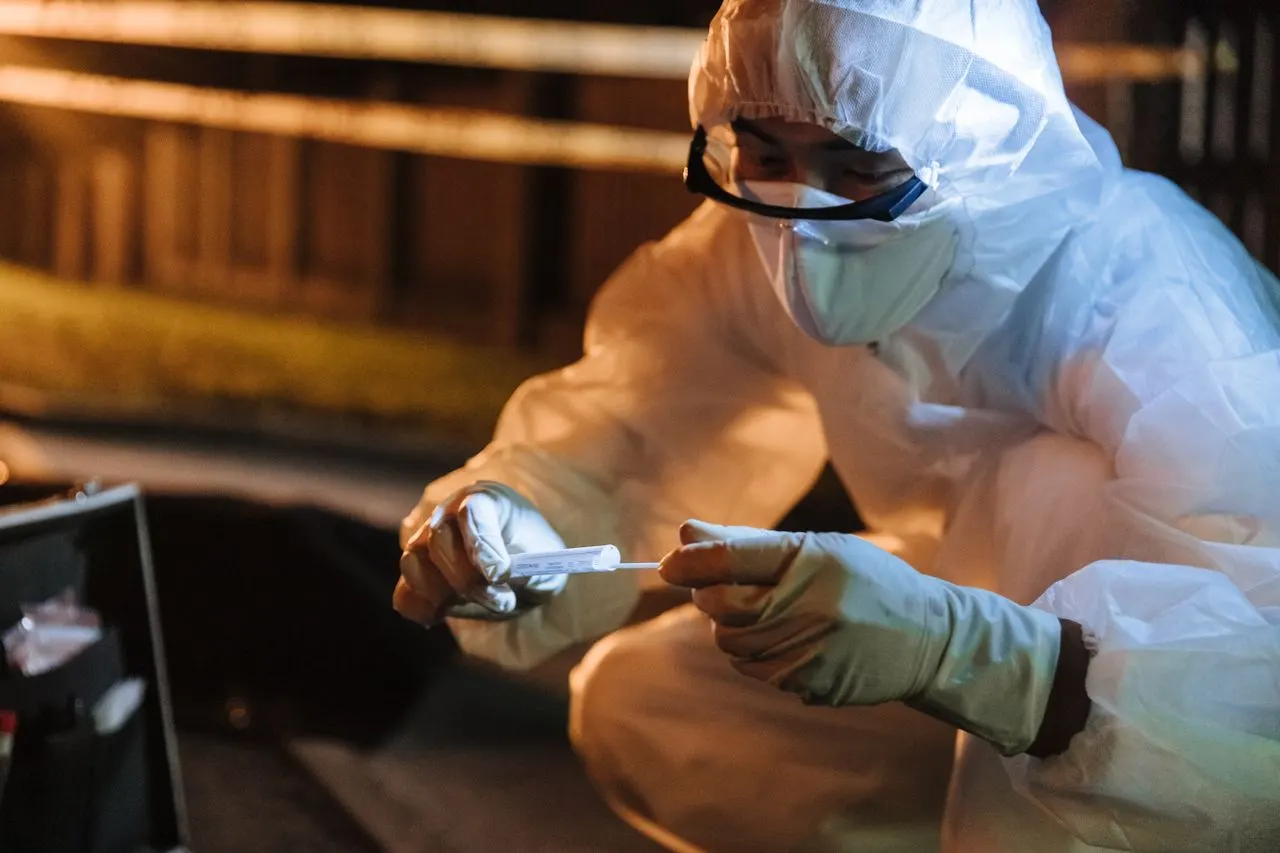
California students looking for a forensic science degree quickly run into a naming problem: relatively few colleges in the state offer a bachelor’s or master’s degree literally called forensic science, yet several universities provide strong preparation through forensic chemistry, criminalistics, biology, crime scene investigation, and related specialties.
Those programs can lead in very different directions. Someone hoping to analyze DNA, drugs, trace materials, or other physical evidence in a crime laboratory generally needs substantial chemistry or biology. A student interested in crime scene investigation may spend more time on photography, evidence documentation, recovery techniques, fingerprints, and reconstruction. Digital evidence follows another technical path altogether.
California’s own Criminalist hiring requirements show why the coursework deserves close attention. The state requires the equivalent of a bachelor’s degree with a major in a physical or biological science, including at least eight semester hours of general chemistry and three semester hours of quantitative analysis. Applicants who otherwise qualify but are missing quantitative analysis may take the examination, but they must complete that coursework before appointment. California’s Criminalist examination bulletin spells out the current requirements.
A program with “forensic” in its name is therefore not automatically good preparation for laboratory criminalistics. At the same time, a chemistry degree with the right forensic coursework can be an excellent route into the field.
This guide focuses on California colleges with substantial forensic science, criminalistics, forensic chemistry, or closely related scientific training rather than general criminal justice programs that happen to offer a forensic elective.
Forensic Science Programs in California at a Glance
| School | Program | Level | Main Focus | Format | FEPAC |
|---|---|---|---|---|---|
| San José State University | B.S. in Forensic Science | Bachelor’s | Biology, chemistry, digital evidence, CSI | On campus | Curricula meet FEPAC educational standards; not currently listed as accredited |
| Sacramento State | B.A. in Chemistry, Forensic Chemistry | Bachelor’s | Chemistry and laboratory analysis | On campus | Not currently listed |
| UC Davis | M.S. in Forensic Science | Master’s | Forensic DNA and criminalistics | In person; full- or part-time | FEPAC accredited |
| Cal State LA | M.S. in Criminalistics | Master’s | Laboratory criminalistics | On campus | Not currently listed |
| National University | Master of Forensic Sciences | Master’s | Criminalistics or investigation | Online, hybrid and in person depending on specialization | Not currently listed |
| Alliant International University | M.S. in Forensic Science, Investigation & Technology | Master’s | Criminalistics, CSI, intelligence analysis | Online plus two weekend residencies | Not currently listed |
These aren’t six versions of the same degree. San José State provides the clearest undergraduate forensic science route, Sacramento State approaches the field through chemistry, and UC Davis and Cal State LA are graduate programs intended for students who already have substantial science preparation. National and Alliant broaden the options with flexible graduate study that can lead toward either scientific or investigative work depending on the concentration.
San José State University — B.S. in Forensic Science
San José State offers one of California’s most complete undergraduate forensic science programs. The B.S. is divided into four concentrations:
- Biology
- Chemistry
- Digital Evidence
- Crime Scene Investigation
The concentration choice has a major effect on the degree a student actually earns. Biology and chemistry provide the stronger foundation for conventional crime laboratory work. Digital Evidence moves toward computers and electronically stored information, while Crime Scene Investigation focuses more heavily on field methods.
SJSU describes the program as combining scientific theory with hands-on training in crime laboratory methods and crime scene techniques. Depending on the concentration, coursework can cover forensic biology and DNA analysis, anatomy and physiology, organic and inorganic chemistry, instrumental analysis, toxicology, forensic photography, physical evidence, firearms and toolmarks, arson investigation, and digital evidence. SJSU’s forensic science program page provides the current concentration details.
Students interested in laboratory careers should look closely at the biology and chemistry routes. Someone leaning toward drug analysis and chemical evidence will generally need different preparation from a student interested in DNA and other biological material.
The CSI concentration is built around another type of work: recognizing, documenting, collecting, and interpreting evidence at scenes. SJSU currently identifies this concentration as impacted and says space for new students is very limited, while applications remain open for biology, chemistry, and digital evidence.
What SJSU’s FEPAC language means
SJSU says the curricula for its four forensic science concentrations meet FEPAC educational standards. It should not be described as a currently FEPAC-accredited program, however, because SJSU does not appear in the present directory of accredited programs maintained by the American Academy of Forensic Sciences.
Cost is comparatively straightforward for California residents because SJSU is part of the CSU system. For fall 2026, the university lists full-time undergraduate tuition of $3,419 per semester, with mandatory campus fees added separately. Housing, books, transportation, and other living expenses are additional. SJSU publishes its current charges through the Bursar’s Office.
For an undergraduate who knows forensic science is the goal but has not yet narrowed that interest to biology, chemistry, digital evidence, or field CSI, the four-concentration structure offers more room to specialize than most California bachelor’s programs.
Sacramento State — B.A. in Chemistry, Forensic Chemistry Concentration
Sacramento State takes a chemistry-first approach. Its B.A. in Chemistry with a Forensic Chemistry concentration is fundamentally a chemistry degree rather than a criminal justice program with added forensic courses.
The 120-unit bachelor’s requires 64–77 units within the major. Students complete general and organic chemistry, quantitative analysis, calculus, physics, biochemistry, and laboratory coursework along with the forensic concentration. The current curriculum also includes Introduction to Physical Evidence and advanced chemistry options.
For students aiming at laboratory criminalistics, this structure has practical advantages. Drug analysis, trace evidence, unknown-substance identification, and many other forensic specialties depend on analytical chemistry and laboratory technique. Quantitative analysis is also specifically named in California’s minimum qualifications for Criminalist positions.
The degree is considerably less oriented toward field investigation. A student primarily interested in scene photography, evidence recovery, fingerprints, or investigative procedure may be taking far more advanced chemistry than the intended career requires. For someone who wants to work with chemical evidence in a laboratory, the same workload becomes one of the program’s strongest features.
Sacramento State lists 2026–27 California-resident undergraduate tuition of $3,419 per semester for students taking more than six units, plus $1,409 in mandatory campus fees, for a published semester charge of $4,828 before housing and other educational expenses. Sacramento State’s Bursar page provides the current figures.
The university also offers a 21-unit Forensics Investigations minor restricted to Chemistry and Biological Science majors. That creates another viable option: earn a conventional natural-science degree and add formal coursework in forensic evidence and investigation.
UC Davis — M.S. in Forensic Science
UC Davis offers California’s most clearly science- and research-oriented graduate degree specifically in forensic science.
The 54-quarter-unit M.S. is intended for students who already have substantial preparation in the natural or physical sciences. Students choose between two tracks: Forensic DNA and Forensic Criminalistics.
Forensic DNA
The DNA track emphasizes biological evidence and molecular analysis. Students interested in DNA laboratories, genetics, biological material, and related forensic biology work will find this route more closely aligned with those specialties.
Forensic Criminalistics
The criminalistics track turns toward physical and chemical evidence. Coursework can include instrumental analysis, trace evidence, toxicology, spectroscopy, microscopy, drug chemistry, and other laboratory methods.
Both routes combine advanced coursework with practical exercises and research. UC Davis describes the program as in person and offers both full- and part-time enrollment. Full-time students can generally complete the degree in about two years, while part-time students may take roughly three.
The admissions expectations are revealing. Applicants should normally hold an undergraduate degree in a physical or natural science, engineering, or a closely related discipline and have completed general chemistry, organic chemistry, physics, calculus, and statistics. Biology, biochemistry, and genetics are also recommended. UC Davis lists the current degree and prerequisite requirements in its catalog.
California’s current FEPAC-accredited option
UC Davis received full accreditation from the Forensic Science Education Programs Accreditation Commission effective March 1, 2026 through March 1, 2031. The official FEPAC directory lists the M.S. and its DNA Analysis and Criminalistics tracks.
Students entering in fall 2025 or later are currently charged $903 per unit. Health insurance, books, laboratory materials, supplies, and living expenses are separate from that instructional rate. UC Davis publishes current program charges and financial-aid information here.
UC Davis is primarily a graduate specialization route, not a workaround for missing undergraduate science. Its curriculum assumes students arrive with much of the chemistry, physics, mathematics, and other scientific groundwork already completed.
Cal State LA — M.S. in Criminalistics
Cal State LA uses the traditional term criminalistics for its laboratory-focused forensic science master’s degree.
Criminalistics generally refers to the scientific examination and interpretation of physical evidence rather than the entire investigative process. Cal State LA’s program reflects that emphasis through chemistry, biology, laboratory methods, measurement, experimentation, evidence interpretation, legal issues, and scientific communication.
The admissions standards are deliberately science-heavy. Cal State LA says that degrees such as criminal justice, psychology, or anthropology do not satisfy the graduate science requirement simply because the applicant has completed a few science classes. Appropriate backgrounds can include chemistry, biology, biochemistry, molecular genetics, physics, and comparable natural sciences.
Applicants are also expected to have completed coursework that includes:
- General biology
- Biostatistics
- General chemistry
- Quantitative analysis
- Organic chemistry
- Organic chemistry laboratories
- Physics
Students missing quantitative analysis may complete it concurrently with graduate coursework.
Internships with public and private laboratories are encouraged, and students complete a research project as the program’s capstone. Many criminalistics courses are scheduled during evening hours, although some electives are only offered during the day.
Cal State LA also has an unusual physical setting for this kind of degree. Its School of Criminal Justice and Criminalistics operates in the Hertzberg-Davis Forensic Science Center, alongside forensic operations associated with the Los Angeles Police Department and Los Angeles County Sheriff’s Department.
For fall 2026, the university lists California-resident graduate/post-baccalaureate tuition of $4,274 for students taking more than six units. Mandatory campus charges bring the published semester amount to $4,821.04 before living expenses and other costs. Cal State LA publishes the current fee schedule here.
A Southern California science graduate looking for laboratory criminalistics rather than a broad investigative master’s should have this program high on the research list.
National University — Master of Forensic Sciences
National University’s 36-semester-credit Master of Forensic Sciences is built around two specializations that lead in different directions:
- Criminalistics
- Investigation
The Criminalistics route is the more scientifically oriented of the two. Coursework includes areas such as trace evidence, advanced forensic toxicology, forensic serology and DNA, and advanced DNA analysis. National requires applicants to this specialization to hold an undergraduate degree in a laboratory or physical science.
The Investigation specialization does not have the same undergraduate-major requirement. Its curriculum is aimed more toward crime scenes, major-case investigation, forensic photography, criminalistics concepts, law, and forensic psychology.
Treating the two tracks separately is important when comparing National with programs such as UC Davis and Cal State LA. A student taking the Investigation route is not receiving the same type of graduate laboratory preparation as someone entering Criminalistics with an existing science degree.
National lists online, in-person, and hybrid study, although availability depends on the specialization and individual course. Some Criminalistics classes may require in-person laboratory participation. The university gives an average completion time of approximately 24 months.
Current pricing lists the MFS at $683 per semester credit, plus a $105 course-material fee. National’s published estimate for the 36-credit program is $25,830. That figure is a program-cost estimate rather than a complete cost of attendance with housing, transportation, and personal expenses. Current National University tuition information is available here.
The program gives working students more flexibility than a traditional campus master’s, particularly on the Investigation side. Anyone using the Criminalistics specialization to prepare for laboratory employment should still compare both undergraduate and graduate coursework against individual employer requirements.
Alliant International University — M.S. in Forensic Science, Investigation & Technology
Alliant’s 33-unit M.S. in Forensic Science, Investigation & Technology stretches beyond conventional laboratory forensic science. Its three concentrations reach from physical evidence to crime-scene work and intelligence analysis:
- Criminalistics and Technology
- Crime Scene and Incident Investigation
- Criminal Investigative Intelligence & Analysis
The Criminalistics and Technology concentration covers topics involving DNA, trace and physical evidence, toxicology, pharmacological evidence, evidence preservation, and identification methods.
Crime Scene and Incident Investigation moves toward field and event investigation, including violent crime, transportation incidents, arson, and identity analysis.
The Criminal Investigative Intelligence & Analysis concentration takes the program furthest from traditional bench science, with work involving geospatial analysis, crime mapping, open-source and digital intelligence, data analytics, identity analysis, and threat assessment.
Alliant delivers most of the degree online and asynchronously, with optional synchronous sessions, but students also complete two required on-site weekend residencies. A research thesis is part of the program, which Alliant says can typically be completed in less than a year and a half.
The broader curriculum can appeal to working professionals interested in CSI, intelligence, technology, or investigative applications. Students whose goal is a conventional chemistry- or biology-intensive crime laboratory position should inspect the Criminalistics and Technology requirements closely rather than assuming every concentration has the same scientific depth.
For 2026–27, Alliant lists tuition for this master’s program at $580 per unit, excluding applicable fees and other costs. Current rates are published on Alliant’s tuition page.
Other Forensic Science and CSI Programs in California
Not every worthwhile forensic program needs to be a four-year or graduate degree. California community colleges and universities also offer associate programs, certificates, and minors that can support field CSI work, provide transfer preparation, or complement a natural-science major.
| School | Program | Level | Emphasis |
|---|---|---|---|
| East Los Angeles College | Forensic Crime Scene Investigation | A.S. / Certificate | Evidence recovery and crime-scene processing |
| Long Beach City College | Criminal Forensics | Certificate | CSI and evidence collection |
| Diablo Valley College | Crime Scene Investigator | Certificate | CSI techniques and evidence processing |
| Chico State | Forensic Science Minor | Minor | Evidence, forensic anthropology and laboratory methods |
| Cal State LA | Forensic Specialist Certificate | Professional certificate | CSI and friction-ridge examination |
East Los Angeles College offers both a 60-unit A.S. and a 17-unit Certificate of Achievement in Forensic Crime Scene Investigation. The curriculum concentrates on identifying, documenting, and recovering evidence and can support preparation for work such as crime scene technician or evidence custodian.
Long Beach City College’s 15-unit Criminal Forensics certificate covers evidence, criminal investigation, fingerprints, and basic forensic practice. Diablo Valley College offers a Crime Scene Investigator certificate supported by a CSI laboratory with fingerprint-development equipment and technologies such as 3D laser scanning.
Chico State’s current offering is a Forensic Science Minor. Older references may still point to a Forensic Science Certificate, but that certificate was discontinued for the 2026–27 catalog and replaced by the minor. Chico describes hands-on opportunities through its Human Identification Laboratory and positions the minor as a complement to majors such as anthropology, biochemistry, biology, chemistry, and criminal justice.
Cal State LA’s Forensic Specialist Certificate is another field-oriented option. It concentrates on crime scene investigation and friction-ridge examination rather than functioning as a replacement for a bachelor’s degree in the natural sciences.
What Degree Do You Need for Forensic Science?
There isn’t one required major across the entire field. The better question is what degree matches the specific type of evidence you want to work with.
Laboratory criminalistics
Students aiming for criminalist, DNA-analysis, drug-chemistry, trace-evidence, or other laboratory positions generally need a strong natural-science foundation.
Depending on the specialty, appropriate majors may include:
- Forensic science with substantial biology or chemistry
- Chemistry
- Forensic chemistry
- Biology
- Molecular biology
- Biochemistry
- Another qualifying physical or biological science
The course sequence can be just as important as the major. General chemistry, organic chemistry, quantitative or analytical chemistry, biology, genetics, molecular biology, biochemistry, statistics, and laboratory methods may all appear in employer or graduate-school prerequisites.
California’s Criminalist classification offers an unusually concrete benchmark: a physical or biological science major, at least eight semester hours of general chemistry, and three semester hours of quantitative analysis. The current state bulletin is available through CalCareers.
Crime scene investigation
Field CSI emphasizes a different skill set. Programs may cover forensic photography, fingerprints, evidence recognition and recovery, measurements, documentation, scene reconstruction, chain of custody, report writing, and courtroom procedures.
Educational requirements also vary by agency. Some departments employ civilian crime scene personnel, while others assign those responsibilities to sworn law-enforcement officers.
Digital evidence
Digital forensics belongs closer to computing than chemistry. Students interested in computers, mobile devices, storage media, networks, or other electronic evidence may be better served by a digital-evidence concentration, computer science, cybersecurity, or a dedicated digital-forensics program.
SJSU’s Digital Evidence concentration is an example of how forensic science programs are beginning to separate this work from traditional biological and chemical evidence.
Bachelor’s or Master’s Degree?
For most students entering scientific forensic work, the bachelor’s degree is the starting point. The U.S. Bureau of Labor Statistics lists a bachelor’s degree as the typical entry-level education for forensic science technicians, although individual positions can have different requirements. BLS describes the occupation and educational expectations here.
An undergraduate student does not necessarily need a diploma labeled “forensic science.” A chemistry, biology, or biochemistry degree with carefully selected forensic coursework can provide strong laboratory preparation while preserving broader options outside forensic work.
A master’s degree becomes more useful when the student already has the foundation and wants additional specialization. UC Davis and Cal State LA build directly on undergraduate natural science. National separates its Criminalistics and Investigation routes, while Alliant extends into incident investigation and intelligence analysis.
Graduate school can deepen expertise, add research experience, and support specialization. It cannot be assumed to erase missing undergraduate prerequisites when an employer specifically requires certain science courses or a qualifying natural-science degree.
What FEPAC Accreditation Tells You
The Forensic Science Education Programs Accreditation Commission, or FEPAC, accredits qualifying bachelor’s and master’s programs in forensic science as well as certain natural- or computer-science programs with forensic concentrations.
FEPAC operates through the American Academy of Forensic Sciences and evaluates areas such as curriculum, faculty, facilities, program quality, and student outcomes.
As of September 2026, UC Davis is the California institution currently appearing in the FEPAC accredited-program directory, with accreditation for its M.S. in Forensic Science running from March 2026 through March 2031. The current program directory is maintained by AAFS.
Accreditation is useful information, but it should not become the only filter. A strong chemistry program can provide excellent preparation for criminalistics without being a FEPAC program at all, and not every institution chooses to pursue programmatic accreditation.
The more useful question is whether the curriculum provides the science, laboratory training, practical experience, and prerequisites your intended job actually requires.
Can You Study Forensic Science Online?
California students now have some online and hybrid graduate choices, but laboratory science is one field where delivery format deserves extra scrutiny.
National University offers online, in-person, and hybrid options depending on specialization and course availability, with some Criminalistics coursework potentially requiring in-person laboratory participation.
Alliant delivers its master’s primarily online but requires two weekend residencies.
UC Davis, on the other hand, runs its forensic science M.S. as an in-person program with substantial laboratory and research components.
Online delivery is easier to adapt to subjects such as law, intelligence analysis, investigative theory, digital topics, and some evidence-management coursework. When the career goal involves analytical instruments, chemistry, biology, or physical evidence examination, students should find out exactly where and how the hands-on training occurs.
Forensic Science Jobs and Pay in California
Forensic science technicians collect or analyze evidence used in criminal investigations. Some spend much of their time at crime scenes, while others work primarily in laboratories.
The Bureau of Labor Statistics reported a $72,060 national median annual wage in May 2025 for forensic science technicians. Employment is projected to grow 13% from 2025 to 2035, compared with 3% for all occupations, with roughly 2,800 openings projected each year on average. BLS publishes the current occupational outlook here.
California wages are higher than the national median in current state data. The California Employment Development Department reported a statewide median hourly wage of $50.46 for forensic science technicians in the first quarter of 2026. Pay can vary considerably by agency, location, specialty, education, and experience.
Common titles can include:
- Criminalist
- Forensic science technician
- Forensic laboratory analyst
- DNA analyst
- Forensic biologist
- Forensic chemistry analyst
- Crime scene investigator
- Evidence technician
- Forensic specialist
- Latent-print examiner
- Digital forensic examiner
Those titles are not standardized. A “forensic specialist” at one agency may spend most of the day processing crime scenes, while another employer could use similar language for laboratory work. Government job specifications are usually more useful than job titles when deciding what degree to pursue.
Before You Pick a Program
A few curriculum checks can prevent an expensive mismatch.
If laboratory work is the goal, count the chemistry and biology courses. Look specifically for organic chemistry, quantitative or analytical chemistry, instrumentation, molecular biology, genetics, biochemistry, statistics, and advanced laboratory work. Then compare that list with actual criminalist or laboratory analyst postings.
Students aiming at CSI should spend more time examining the practical side of the program: photography, fingerprint processing, scene documentation, evidence collection, reconstruction, report writing, mock scenes, internships, and agency partnerships.
Cost deserves the same kind of close reading. CSU programs may combine relatively modest resident tuition with mandatory campus fees. Private and self-supporting graduate programs usually price by the unit. Laboratory materials, required residencies, insurance, housing, transportation, and other charges can widen the gap between the advertised tuition rate and what a student ultimately spends.
Transfer students need to plan science sequences especially carefully. Chemistry, physics, mathematics, and biology courses often have prerequisites and must be taken in order. Missing a single course can postpone several others and add a semester or more to the degree.
California does not offer dozens of equivalent forensic science programs, but the choices that do exist cover several distinct routes. SJSU gives undergraduates four forensic concentrations. Sacramento State builds forensic preparation around chemistry. UC Davis and Cal State LA serve students who already have a serious science foundation, while National and Alliant give graduate students more flexibility in how far they lean toward laboratory work, investigation, or technology.
For students still deciding whether forensic science, CSI, criminalistics, forensic psychology, anthropology, or another specialty fits best, the broader guide to CSI and forensic science degrees in California compares those pathways side by side.
Before applying anywhere, pull up the curriculum and a few real job descriptions at the same time. The match between those two documents will tell you more about a program’s usefulness than the degree title alone.