
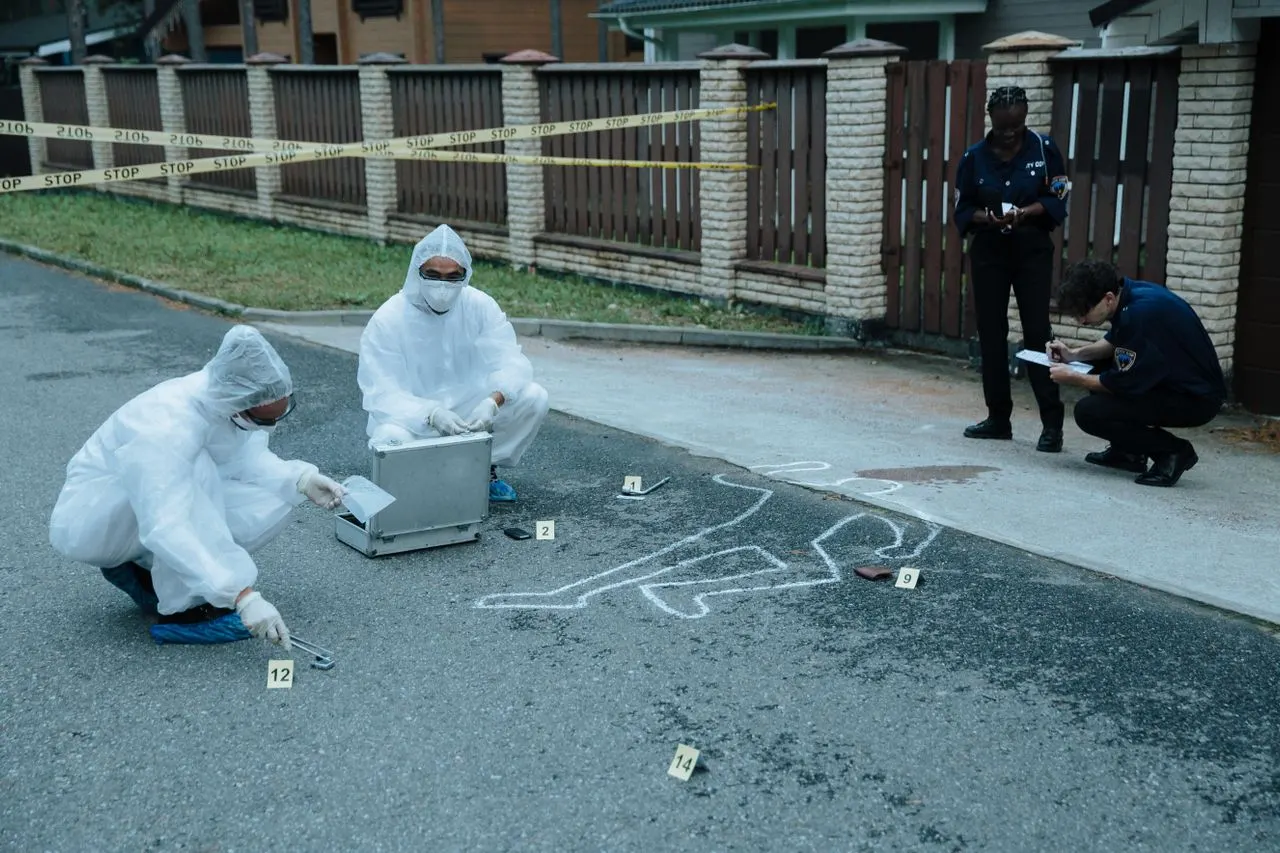
Forensic science degree requirements in California vary more than the degree titles suggest. An associate program built around crime-scene work can require photography, evidence handling, fingerprints, and introductory science. A bachelor’s program aimed at laboratory criminalistics may require multiple semesters of chemistry, biology, physics, calculus, statistics, and laboratory work. At the master’s level, some programs will not admit students unless that science foundation is already in place.
There are also three separate sets of requirements to keep straight:
- Admission requirements determine whether you can enter a program.
- Degree requirements determine what you must complete to graduate.
- Employer requirements determine whether the degree and coursework qualify you for a particular forensic job.
Those three overlap, but they are not interchangeable. A student can meet every requirement for a forensic degree and still be missing coursework required by a specific crime laboratory.
For examples of California programs at each level, see the main guide to forensic science colleges and degree programs in California.
Forensic Science Degree Requirements by Level
| Degree Level | Typical Academic Requirements | What to Watch For |
|---|---|---|
| Associate degree | About 60 semester units including general education and a forensic/CSI major | Often field- or technician-oriented; may not include enough chemistry for criminalist work |
| Bachelor’s degree | Usually at least 120 semester units, including general education, major courses, science labs, and electives | Science requirements vary sharply between laboratory, digital evidence, and CSI tracks |
| Master’s degree | Often 30–54 graduate units depending on semester/quarter system | Science-heavy programs may require a natural-science bachelor’s and specific prerequisites before admission |
| Certificate/minor | Varies widely | Useful for specialization, but usually does not replace the degree required by an employer |
The exact numbers depend on the school. For example, Ventura College’s A.S. in Forensic Science requires 60 total units, Sacramento State’s forensic chemistry bachelor’s requires 120, National University’s Master of Forensic Sciences requires 36 semester credits, and UC Davis’s M.S. in Forensic Science requires 54 quarter units.
Science Requirements Matter Most for Laboratory Careers
Students aiming for laboratory criminalistics should expect considerably more science than students preparing for field crime-scene work.
Common requirements in science-heavy forensic programs include:
- General chemistry
- Organic chemistry
- Quantitative or analytical chemistry
- Biology
- Genetics or molecular biology
- Biochemistry
- Physics
- Calculus
- Statistics
- Instrumental analysis
- Laboratory coursework
Not every program requires every subject, and the sequence depends on the specialty. DNA-oriented study leans more heavily on biology, genetics, molecular biology, and statistics. Forensic chemistry places more weight on chemistry, quantitative analysis, instrumentation, and related laboratory methods.
The important point is that the word forensic in a program title does not tell you how much science is actually required.
California Criminalist Requirements Are a Useful Benchmark
California’s state Criminalist classification provides one of the clearest examples of why students should compare a degree with actual employment requirements.
The current minimum education requirement is the equivalent of a bachelor’s degree with a major in a physical or biological science, including:
- Eight semester hours of general chemistry
- Three semester hours of quantitative analysis
A student who has the qualifying science degree and general chemistry but has not yet completed quantitative analysis may take the examination, but must complete the quantitative-analysis requirement before appointment. The state also requires a drug screening test for positions in the Criminalist series. California publishes the current Criminalist requirements through CalCareers.
This requirement is more specific than simply earning a bachelor’s degree. A criminal justice degree with several forensic electives may be excellent preparation for evidence or investigative work while still failing to meet the educational minimum for this laboratory classification.
The same principle applies beyond state employment. County and municipal laboratories can set their own requirements for DNA, toxicology, drug chemistry, trace evidence, firearms, or other specialties. Students should read current job specifications before finalizing a major or concentration.
Associate Degree Requirements
California associate degrees in forensic science and related fields generally require at least 60 degree-applicable semester units, combining general education with major coursework.
Ventura College is a useful example. Its A.S. in Forensic Science requires 60 total units, including 45 major units. Students complete biology and laboratory work, chemistry, statistics, forensic science and forensic laboratory courses, legal evidence, photography, report writing, ethics, a capstone, and forensic electives. Ventura’s general associate-degree rules also require a cumulative 2.0 GPA, a C or better or Pass in major coursework, and at least 12 semester units completed in residence within the district.
Other California associate programs may lean more heavily toward crime scenes than laboratory science. Grossmont College’s A.S. in Forensic Technology, for example, includes fingerprints, forensic photography, criminal investigation, crime-scene technology, forensic analysis, biology with lab, and chemistry in its 42-unit major.
An associate degree can be a practical starting point for CSI support, evidence technician, identification, or related work. It is not enough by itself for California’s state Criminalist classification.
Students considering this route can compare the current associate degrees in forensic science in California.
Bachelor’s Degree Requirements
Bachelor’s programs are where the differences among forensic pathways become especially important.
A four-year degree normally requires at least 120 semester units, but the amount of science inside those 120 units can vary substantially. Laboratory-oriented programs may resemble chemistry or biology majors. CSI programs can devote more of the curriculum to scene documentation, evidence recovery, photography, reconstruction, and investigative techniques.
San José State University
San José State’s B.S. in Forensic Science currently offers concentrations in Biology, Chemistry, Digital Evidence, and Crime Scene Investigation. The program includes hands-on training in crime-laboratory methods and crime-scene techniques, with topics that can include organic and inorganic chemistry, forensic biology and DNA, instrumental analysis, toxicology, physical evidence, forensic photography, firearms, and toolmarks.
For currently enrolled SJSU students who want to declare the Biology, Chemistry, or Digital Evidence concentrations, the department requires a minimum 3.0 overall GPA and grades of C or better in specified qualifying and support courses. Biology and Chemistry applicants must complete CHEM 1A or BIOL 30 as part of that preparation, while Digital Evidence uses FS 12. The CSI concentration is impacted and has limited space.
Those are program-entry rules for current SJSU students; they should not be confused with the university’s separate freshman or transfer admission process.
Sacramento State
Sacramento State’s B.A. in Chemistry with a Forensic Chemistry concentration illustrates a much more chemistry-intensive path.
The degree requires 120 total units and 64–77 units in the major. Core requirements include General Chemistry I and II, Organic Chemistry, Organic Chemistry Laboratory, Quantitative Analysis, Calculus I and II, and physics. The forensic concentration adds advanced organic chemistry laboratory, physical chemistry, biochemistry and its laboratory, Introduction to Physical Evidence, and advanced chemistry electives.
Sacramento State requires at least a C- in courses required for the chemistry major and minor, with CHEM 1A requiring a C or better. The university also requires at least 120 semester units for a bachelor’s degree, including upper-division and general-education requirements.
For students interested in laboratory criminalistics, this curriculum is a good reminder that a degree does not need to be titled “Forensic Science” to provide strong forensic preparation.
See California bachelor’s degrees in forensic science for a fuller comparison of the state’s undergraduate pathways.
Master’s Degree Admission Requirements
Graduate forensic science programs often expect students to arrive with science prerequisites already completed.
That can surprise applicants coming from criminal justice, psychology, or other fields. A master’s degree may contain advanced forensic science, but many programs are not designed to teach several years of missing undergraduate chemistry and biology first.
UC Davis M.S. in Forensic Science
UC Davis requires appropriate undergraduate preparation in a physical or natural science, engineering, or a closely related field. Examples listed by the university include chemistry, biochemistry, molecular biology, biology, genetics, and engineering.
Applicants are expected to have a 3.0 GPA or higher and prior coursework that includes:
- One year of general chemistry
- One quarter of organic chemistry
- One quarter of general physics
- Mathematics through calculus
- Statistics
General biology, biochemistry, and genetics are recommended. Once admitted, students complete 54 quarter units in either the DNA or Criminalistics track.
Cal State LA M.S. in Criminalistics
Cal State LA is even more explicit about the required science foundation. Applicants must hold a bachelor’s degree in a natural or physical science. The program states that unrelated majors such as criminal justice, psychology, or anthropology do not qualify merely because the applicant has completed several science courses.
Prerequisites include the equivalent of:
- Two general biology courses
- Biostatistics
- General Chemistry I and II
- Quantitative Analysis
- Organic Chemistry I and II
- Two organic chemistry laboratories
- Physics I and II
Quantitative Analysis may be completed concurrently with graduate coursework if it is the only missing prerequisite. Cal State LA also requires a 3.0 GPA in both the undergraduate major and the last 60 semester units or 90 quarter units for consideration. Applications are due March 15, and new Criminalistics students are admitted for fall only.
National University Master of Forensic Sciences
National University’s 36-credit Master of Forensic Sciences shows why students must read concentration-specific requirements.
The Criminalistics specialization requires an undergraduate degree in a laboratory or physical science, or approval from the academic program director. The Investigation specialization has no specific undergraduate-major requirement.
Both lead to the same master’s degree, but the entry requirements reflect different career directions. Criminalistics is intended for evidence analysis and laboratory-oriented study; Investigation is designed around forensic crime and death investigation.
Alliant University
Alliant’s M.S. in Forensic Science, Investigation & Technology is a 33-unit online program with concentrations in Criminalistics and Technology, Crime Scene and Incident Investigation, and Criminal Investigative Intelligence & Analysis. Students also complete a research thesis and two on-site weekend residencies.
The program is a useful example of why “online” does not necessarily mean that every degree requirement can be completed from home.
Students comparing California graduate options can see the broader list in California master’s degrees in forensic science.
What FEPAC Standards Say About Forensic Science Education
The Forensic Science Education Programs Accreditation Commission, or FEPAC, provides another useful reference point for evaluating degree requirements.
FEPAC accredits qualifying bachelor’s and master’s programs in forensic science or in natural or computer science with a forensic concentration, as well as bachelor’s programs in crime scene investigation. It does not accredit associate degrees.
Its July 2026 undergraduate standards call for a foundation in scientific and laboratory problem solving, advanced science work, forensic science coursework, laboratory instruction, and professional topics such as courtroom testimony, law, quality assurance, ethics, evidence handling, report writing, cognitive bias, and human factors.
For graduate programs outside digital evidence, FEPAC’s current standards call for a bachelor’s degree in forensic or natural science, or equivalent coursework in a relevant field, along with a process for evaluating whether the applicant has enough scientific background for graduate study. Graduate curricula are also expected to include advanced forensic knowledge, ethics, practical experience, expert-testimony preparation, and a capstone experience.
These are accreditation standards, not statewide admission rules. A California program can be legitimate without FEPAC accreditation, and an individual employer can impose requirements that are different from FEPAC’s educational framework.
Do Forensic Science Degrees Require Internships or Practical Training?
Not universally, but practical training is common and particularly valuable in forensic education.
SJSU incorporates internships and describes placements with partners such as the Santa Clara County District Attorney Crime Lab, the coroner’s office, and local law enforcement.
Other programs use laboratory courses, research projects, mock evidence work, capstones, residencies, or theses instead of—or in addition to—an internship. Cal State LA encourages graduate criminalistics students to pursue laboratory internships and requires a research capstone. Alliant requires a research thesis and two weekend residencies.
Students should therefore check the type of practical requirement rather than simply asking whether a program has one. A CSI student benefits from scene processing and evidence documentation; a future DNA analyst needs laboratory experience that develops a different set of skills.
Minimum Grades and GPA Requirements
There is no California-wide GPA requirement for forensic science degrees.
Each institution sets its own rules. Examples include:
- Ventura College requires a cumulative 2.0 GPA for its associate degree and C-or-better or Pass grades in major coursework.
- Sacramento State requires at least a C- in chemistry-major requirements, with a C or better in CHEM 1A.
- SJSU currently requires a 3.0 overall GPA for enrolled students applying to declare its Biology, Chemistry, or Digital Evidence forensic science concentrations.
- UC Davis lists a 3.0 undergraduate GPA as appropriate preparation for its M.S. in Forensic Science.
- Cal State LA requires a 3.0 GPA in the undergraduate major and in the last 60 semester units or 90 quarter units for Criminalistics applicants.
A minimum GPA only establishes eligibility for consideration where the university says so. It does not guarantee admission to a competitive program.
Transfer Students Need to Plan the Science Sequence Early
Transfer planning can be more complicated in forensic science than in majors with fewer prerequisite chains.
General chemistry may be required before organic chemistry. Mathematics can be a prerequisite for chemistry or physics. Biology, genetics, analytical chemistry, and upper-division laboratory courses may all depend on earlier classes being completed in sequence.
Sacramento State’s forensic chemistry roadmap, for example, spreads general chemistry, organic chemistry, quantitative analysis, calculus, physics, biochemistry, and advanced laboratory work across several years. SJSU advises community-college students to complete as many lower-division major requirements as possible before transfer.
A student who completes a field-oriented CSI associate degree and then decides to transfer into a chemistry-heavy bachelor’s may still need substantial lower-division science. If laboratory work is already the goal, build the transfer plan around the eventual bachelor’s requirements rather than around the shortest associate-degree path.
Background Checks, Drug Testing, and Other Employment Requirements
These are generally job requirements, not degree requirements.
FEPAC’s current standards say accredited programs should advise students that forensic employment is likely to involve suitability requirements and background checks similar to those used in law enforcement.
California’s Criminalist classification also requires drug screening. Individual agencies may impose additional requirements involving background investigations, driving records, firearms policies, security clearances, or other conditions depending on the job.
Students do not need to treat these as university admission requirements unless the school specifically says so, but they are worth understanding before investing several years in a narrowly specialized career path.
Before You Choose a Degree
The most useful way to evaluate forensic science degree requirements is to work backward from the job.
For laboratory criminalistics, compare the curriculum against actual chemistry, biology, mathematics, and laboratory requirements used by employers. For field CSI, look more closely at photography, fingerprints, evidence recognition, scene documentation, reconstruction, report writing, and practical exercises. Digital evidence programs should be evaluated against computing, cybersecurity, networking, and digital-forensics requirements rather than wet-lab science.
Then check the program itself for four things:
- What do you need before admission?
- What courses, labs, internship, thesis, or capstone are required to graduate?
- Does the degree include the coursework required by the employers you care about?
- If you may continue to graduate school, does the undergraduate curriculum include the prerequisites for the next degree?
Those questions are more reliable than judging a program by its title. In forensic science, the transcript usually matters more than the wording on the diploma.