
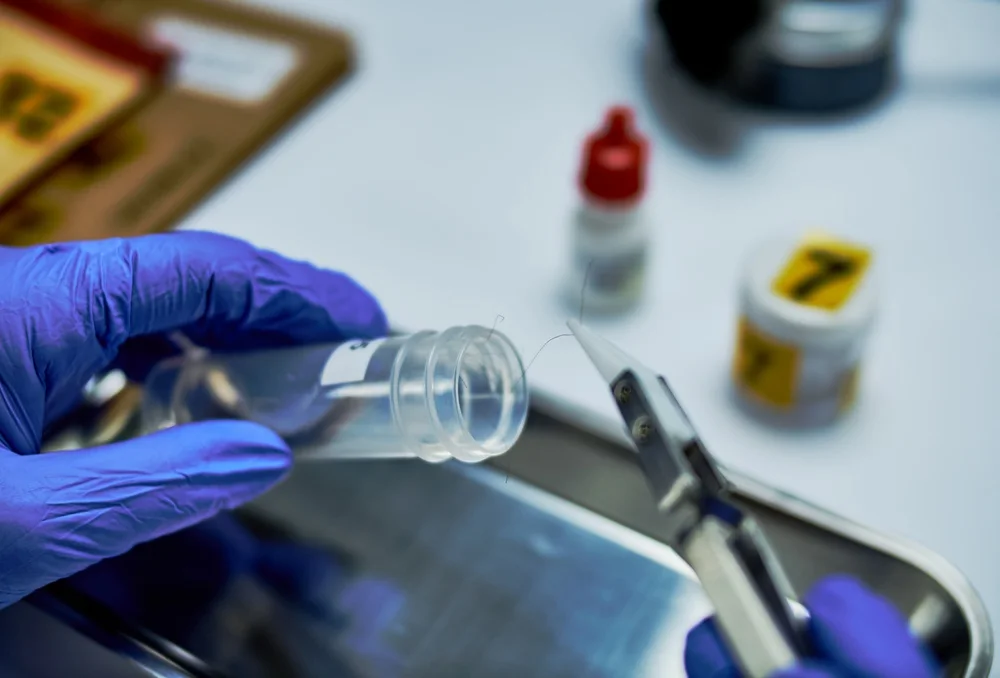
California State University, Sacramento offers a formally named BA in Chemistry with a Forensic Chemistry concentration. Its forensic anthropology option is structured differently. Sacramento State does not award a degree titled “forensic anthropology.” Instead, undergraduates can pursue a BA in Anthropology with an Archaeology and Biological Anthropology concentration and select courses in osteology, human skeletal analysis, forensic anthropology, and bioarchaeology.
The university also has two relevant minors. The Minor in Forensics Investigations adds criminal investigation, law, policing, and physical-evidence coursework to a Chemistry or Biological Sciences major. The Minor in Information Security and Computer Forensics provides a separate technical route into cyber forensics and digital evidence.
These options prepare students for different types of work. The forensic chemistry concentration is the clearest path toward crime-laboratory and criminalist preparation. The anthropology concentration is an undergraduate foundation for skeletal analysis and eventual graduate study. The investigations minor adds legal and investigative context but is not a full crime-scene investigation degree. The computer forensics minor addresses electronic evidence rather than biological or chemical evidence.
Sacramento State forensic program comparison
| Program | Credential | Primary emphasis | Practical or laboratory component | Most relevant direction |
|---|---|---|---|---|
| BA in Chemistry, Forensic Chemistry concentration | Bachelor of Arts, 120 total units | Chemistry, quantitative analysis, biochemistry, instrumentation, and physical evidence | Multiple chemistry laboratories, with advanced instrumental and biochemical laboratory options | Criminalist, forensic chemistry, crime-laboratory work, graduate science study |
| BA in Anthropology, Archaeology and Biological Anthropology concentration | Bachelor of Arts, 120 total units | Archaeology, biological anthropology, osteology, skeletal analysis, and bioarchaeology | Laboratory and fieldwork options; Human Skeletal Analysis includes a six-hour lab | Graduate study in forensic anthropology, biological anthropology, bioarchaeology, or archaeology |
| Minor in Forensics Investigations | 21-unit undergraduate minor | Criminal law, investigation, courts, policing, and physical evidence | Investigative and evidence coursework, but no analytical chemistry sequence | Supplement to Chemistry or Biological Sciences |
| Minor in Information Security and Computer Forensics | 15-unit undergraduate minor | Internet security, cyber forensics, electronic evidence, and programming | Cyber-forensics projects using digital tools | Digital evidence, cyber investigation, and incident response |
| Chemistry Honors Program | Optional honors designation | Faculty-directed scientific research and thesis writing | Two semesters of research or an approved summer research experience | Graduate science education and research-oriented laboratory work |
Sacramento State is a public university in Sacramento and holds active institutional accreditation from WSCUC. Its relevant forensic offerings are primarily campus-based. The laboratory-intensive chemistry and skeletal-analysis courses require in-person practical work and are not presented as online programs.
Readers comparing Sacramento State with other institutions can also review the broader directory of California forensic science and CSI schools.
BA in Chemistry with a Forensic Chemistry concentration
Sacramento State’s Forensic Chemistry concentration is a 64- to 77-unit major within a 120-unit Bachelor of Arts degree. Despite the BA designation, this is a substantial natural-science program. Its required foundation includes general chemistry, organic chemistry with laboratory work, quantitative analysis, calculus, and physics.
The concentration then adds advanced organic chemistry laboratory, physical chemistry, biochemistry, a biochemistry laboratory, Introduction to Criminal Justice and Society, and Introduction to Physical Evidence. Students also select at least six units from advanced inorganic chemistry with laboratory, chemical instrumentation, physical chemistry laboratory, or advanced biochemistry laboratory.
This structure gives the program considerably more laboratory-science depth than a criminal justice degree with a few forensic electives. Chemical instrumentation can cover spectroscopy, mass spectrometry, chromatography, and electrochemistry. Advanced organic chemistry laboratory emphasizes instrumental analysis and advanced laboratory techniques. Biochemistry laboratory work can include chromatography, electrophoresis, enzyme kinetics, and bioinformatics.
The degree also develops laboratory habits relevant to forensic analysis: experimental design, technical reporting, troubleshooting, data interpretation, quality control, and safe handling of chemical materials. The current curriculum does not list an internship as a universal requirement, so its practical strength comes primarily from repeated academic laboratory work.
Alignment with California criminalist requirements
The California Department of Justice’s entry-level Criminalist classification requires a college major in a physical or biological science. It also specifies the equivalent of eight semester hours of general chemistry and three semester hours of quantitative analysis.
Sacramento State’s Forensic Chemistry curriculum explicitly includes general chemistry and quantitative analysis, along with organic chemistry, biochemistry, physics, calculus, and advanced laboratory options. On curriculum alone, it is much more closely aligned with California criminalist education requirements than Sacramento State’s BS in Criminal Justice.
Meeting stated coursework requirements is only one part of competing for laboratory employment. State and local crime laboratories may evaluate the number and level of courses completed in areas such as analytical chemistry, molecular biology, genetics, statistics, or instrumental analysis according to the assignment. Students interested in chemistry-based evidence should prioritize chemical instrumentation and advanced laboratory electives. Those targeting biological evidence would benefit more from biochemistry and related biological science coursework.
Laboratory criminalistics versus field CSI
This degree is oriented more toward laboratory criminalistics than field crime-scene processing. Its verified strengths are chemistry, quantitative analysis, instrumentation, biochemistry, physical evidence, and laboratory reporting.
A field-focused CSI curriculum would usually devote more required coursework to scene photography, evidence recognition and recovery, latent prints, documentation, scene reconstruction, chain of custody, and testimony. Sacramento State’s concentration includes introductory criminal justice and physical-evidence courses, but the published requirements do not show a complete field-CSI sequence.
That curriculum balance is appropriate for students pursuing chemical analysis, controlled-substance testing, toxicology preparation, trace evidence, or broader criminalist work. It is less direct for someone whose principal goal is photographing scenes, collecting fingerprints, documenting bloodstain evidence in the field, or working as a civilian crime scene technician.
Job titles are not standardized across California. One agency may employ civilian crime scene investigators, while another may assign crime-scene duties to sworn personnel. The chemistry degree is best evaluated against laboratory-oriented requirements rather than assuming it prepares graduates identically for every position carrying a forensic or CSI title.
Chemistry Honors option
The Chemistry Honors Program can be combined with the Forensic Chemistry BA. It adds two semesters of faculty-directed research or an approved summer research experience, followed by a Chemistry Honors thesis.
Research can be useful preparation for graduate school or scientific laboratory employment, especially when a project includes analytical instruments, biochemical techniques, method development, statistics, or extensive data analysis. The honors designation does not add crime-scene training, but it can provide deeper experience with independent scientific work than the standard curriculum alone.
Anthropology preparation for forensic anthropology
Sacramento State’s relevant anthropology degree is the BA in Anthropology with an Archaeology and Biological Anthropology concentration. It is a 43- to 44-unit major within a 120-unit bachelor’s degree.
The degree begins with the major subfields of anthropology and includes introductory biological anthropology with laboratory work. Within the concentration, students can select Human Osteology, Human Skeletal Analysis, Forensic Anthropology, Bioarchaeology, Human Variation, Human Paleontology, statistics, archaeological analysis, laboratory work, and fieldwork.
Forensic Anthropology is an elective, not a required course for everyone completing the concentration. A student can therefore graduate from this program without following a specifically forensic sequence. Building a useful forensic anthropology foundation requires deliberate course selection.
A focused undergraduate plan would include:
- Biological anthropology with laboratory
- Human Osteology
- Human Skeletal Analysis
- Forensic Anthropology
- Bioarchaeology
- Statistics
- Archaeological laboratory or field methods
- Additional biological science where scheduling permits
Human Skeletal Analysis provides the strongest verified hands-on skeletal component. It requires Human Osteology and includes a two-hour seminar plus a six-hour laboratory. Course content includes skeletal measurement, estimation of biological characteristics, pathology, trauma, ethics, human rights, and the professional roles of forensic anthropologists and archaeologists. The laboratory involves substantial work with human skeletal remains.
The Forensic Anthropology course surveys medicolegal skeletal analysis, development of a biological profile, postmortem interval questions, trauma, and human-rights investigations. It requires lower-division biological science preparation and is typically offered in fall and spring according to the current catalog.
Career limits of the bachelor’s degree
The anthropology BA is undergraduate preparation, not a terminal qualification for independent forensic anthropology practice. The U.S. Bureau of Labor Statistics reports that anthropologists and archaeologists typically need at least a master’s degree to enter the occupation, and advanced forensic anthropology work commonly requires graduate education plus supervised practical experience.
Sacramento State can provide relevant preparation through osteology, skeletal analysis, bioarchaeology, fieldwork, and laboratory courses. A graduate program would then provide the advanced research, casework exposure, professional mentorship, and specialized methods generally associated with forensic anthropology careers.
The degree also supports paths outside medicolegal forensic anthropology. Archaeological fieldwork, cultural-resource management preparation, museum work, biological anthropology research, and human osteology all draw on portions of the same curriculum. Students committed to forensic anthropology should use electives to develop both biological depth and archaeological recovery skills because forensic anthropologists may participate in locating, documenting, and recovering human remains as well as analyzing them in a laboratory.
Minor in Forensics Investigations
The Minor in Forensics Investigations is a 21-unit academic minor restricted to Chemistry and Biological Sciences majors. It is not open under the current eligibility rule to Anthropology or Criminal Justice majors.
Applicants need at least 45 completed units and a minimum 2.6 overall GPA. CRJ 1, CRJ 2, and CRJ 4 must be completed with grades of C or better before application; in-progress prerequisites are not accepted. All required minor courses must also be completed with a C or better.
Coursework covers the criminal justice system, criminal law, investigative techniques, courts, policing, advanced criminal investigation, and physical evidence. This gives science majors a better understanding of how evidence moves through investigations and the courts.
The minor complements the Forensic Chemistry concentration because the chemistry degree supplies scientific depth while the minor adds investigative and legal context. Some coursework appears in both areas, including introductory criminal justice and physical evidence, but the current sources do not establish how overlap affects the final number of additional units.
Sacramento State also offers CRJ 155 Forensic Science I, a lecture-and-laboratory course covering fingerprints, impression evidence, firearms and toolmarks, physical-fit comparison, bloodstain pattern interpretation, quality assurance, ethics, and laboratory reports. That course is not part of the current minor’s required curriculum. It is also restricted to declared Criminal Justice majors unless department permission is granted.
The minor is therefore broader in criminal justice procedure than in technical scene processing. It does not replace a natural-science major for criminalist employment, nor does it provide the full chemistry and instrumentation sequence needed for laboratory analysis.
Minor in Information Security and Computer Forensics
Sacramento State’s Minor in Information Security and Computer Forensics is a separate 15-unit technical credential. It is available to majors other than Computer Engineering, and every course applied to the minor requires a C- or better.
The curriculum includes introductory computer science, an approved internet-technology course, an approved programming course, CSC 115 Internet Security, and CSC 116 Cyber Forensics. The Cyber Forensics course addresses cyber-crime scene analysis, categories of electronic evidence, incident investigations, applicable laws and standards, and projects using digital-forensic tools.
This minor is Sacramento State’s clearest named route into digital evidence. It is relevant to cyber investigation, computer-forensics support, security incident response, and electronic-evidence handling. It is not preparation for chemical analysis, forensic anthropology, DNA analysis, or physical crime-scene processing.
Course sequencing deserves attention because CSC 116 is typically offered in summer according to the current catalog. A minor that requires summer enrollment can affect both scheduling and cost, particularly when it extends enrollment beyond a student’s planned fall and spring terms.
Sacramento State also offers broader cybersecurity certificates containing computer-forensics coursework. Their primary purpose is cybersecurity and information assurance rather than dedicated digital-forensics education, so they serve a different objective from this named minor.
Related Criminal Justice study
The BS in Criminal Justice is a 60-unit major with electives in advanced investigation, physical evidence, digital evidence, and cyber forensics. It can support careers in law enforcement, public safety, investigation, intelligence, corrections, and related government work.
It is not a forensic science degree. The required curriculum does not contain the chemistry, quantitative analysis, physics, biochemistry, or instrumental laboratory sequence found in the Forensic Chemistry BA. It also does not satisfy the physical- or biological-science major requirement stated for California’s Criminalist classification.
The Criminal Justice major is impacted and has separate admission requirements. An internship is available as an elective rather than required for all majors. This route works better for criminal justice and investigative interests than for laboratory criminalistics.
Admission and transfer planning
First-year applicants follow Sacramento State’s general CSU admission process, including high school completion and the 15-course A-G pattern with grades of C or better. ACT and SAT scores are not used to determine general CSU admission eligibility.
Admission to the university does not remove the science prerequisites built into the Forensic Chemistry degree. CHEM 1A has chemistry and mathematics readiness requirements, and the major proceeds through sequential courses in calculus, general chemistry, organic chemistry, quantitative analysis, physics, physical chemistry, and biochemistry. Starting below calculus or college chemistry can lengthen the sequence.
Upper-division transfer applicants generally need 60 transferable semester units, good academic standing, completion of the Golden Four with C or better, and at least 30 units of CSU General Education Breadth or IGETC. Sacramento State may use a higher GPA threshold for transfer applicants outside its local admission area.
Transfer planning is especially consequential for forensic chemistry because many courses depend on earlier lectures and laboratories. Completing articulated general chemistry, calculus, physics, and organic chemistry courses before transfer can preserve progress, but laboratory equivalencies and prerequisite chains determine where a student enters the Sacramento State sequence. Chemistry transfer majors must complete at least three required chemistry courses at Sacramento State while also satisfying university residence requirements.
Anthropology transfers have greater elective flexibility, but the forensic-relevant sequence still requires planning. Human Skeletal Analysis requires Human Osteology, while Forensic Anthropology requires lower-division biological science. Delaying those prerequisites can limit access to advanced skeletal courses before graduation.
Tuition and estimated attendance costs
For fall 2026 and spring 2027, California resident undergraduates taking more than six units pay:
- $3,419 per semester in systemwide tuition
- $1,409 per semester in mandatory campus fees
- $4,828 per fall or spring semester in tuition and mandatory fees
- $9,656 for two full-time semesters
Nonresident students pay an additional $471 per unit.
These figures do not include housing, books, transportation, laboratory supplies, food, or personal expenses. Sacramento State’s official 2026-2027 cost-of-attendance budgets estimate annual totals of $28,424 for a student living with parents, $36,444 for a student living on campus, and $40,904 for a student living off campus. Cost of attendance is a financial-aid planning estimate, not the tuition bill.
Laboratory-heavy science degrees can also carry indirect costs related to supplies and scheduling. Anthropology fieldwork and digital-forensics summer enrollment can create different expenses. Published 2026-2027 charges remain subject to authorized changes.
Accreditation and program recognition
Sacramento State has active WSCUC institutional accreditation. Institutional accreditation covers the university as a whole and is separate from specialized recognition of an individual program.
The Sacramento State catalog reports American Chemical Society recognition for its chemistry programs and specifically identifies the BS in Chemistry as ACS-approved. ACS approval of a chemistry program and an individual graduate receiving an ACS-certified degree are related but separate designations. The Forensic Chemistry BA should not be described automatically as an ACS-certified degree.
Sacramento State was not listed in the current FEPAC accredited-program directory reviewed during the program research. The Forensic Chemistry concentration is therefore not presented here as FEPAC-accredited. FEPAC programmatic accreditation is distinct from WSCUC institutional accreditation and ACS chemistry approval.
FEPAC is also not the appropriate standard for evaluating Sacramento State’s general anthropology concentration or its computer-forensics minor. Those credentials serve different academic and occupational areas.
Choosing among Sacramento State’s forensic pathways
The Forensic Chemistry BA is the appropriate starting point for chemistry-based criminalistics and crime-laboratory work. Its combination of general chemistry, quantitative analysis, organic chemistry, biochemistry, physics, instrumentation, and repeated laboratory experience aligns directly with the science preparation California expects for criminalist applicants.
Adding the Forensics Investigations minor gives a Chemistry or Biological Sciences major more exposure to investigative procedure, criminal law, courts, and physical evidence. It is useful for understanding how scientific evidence fits into a case, but it does not convert the chemistry degree into a complete field-CSI curriculum.
The Archaeology and Biological Anthropology concentration fits an interest in human remains, osteology, skeletal trauma, bioarchaeology, or archaeological recovery. The strongest forensic sequence includes Human Osteology, Human Skeletal Analysis, Forensic Anthropology, statistics, and field or laboratory experience. Graduate education is the expected next stage for professional forensic anthropology work.
The Information Security and Computer Forensics minor serves an entirely different evidence domain. It provides required technical study in programming, internet security, cyber forensics, electronic evidence, and digital investigative tools. It is the relevant Sacramento State option for digital-evidence careers, not an alternative to chemistry or anthropology.
Career goals should drive course selection early. Laboratory criminalistics calls for the deepest available chemistry and instrumental work. Skeletal analysis calls for osteology, biological anthropology, archaeology, and graduate preparation. Digital investigation calls for programming, network knowledge, security, and cyber-forensics projects. Sacramento State offers credible routes in each area, but they lead to distinct professional roles rather than a single interchangeable forensic career.