
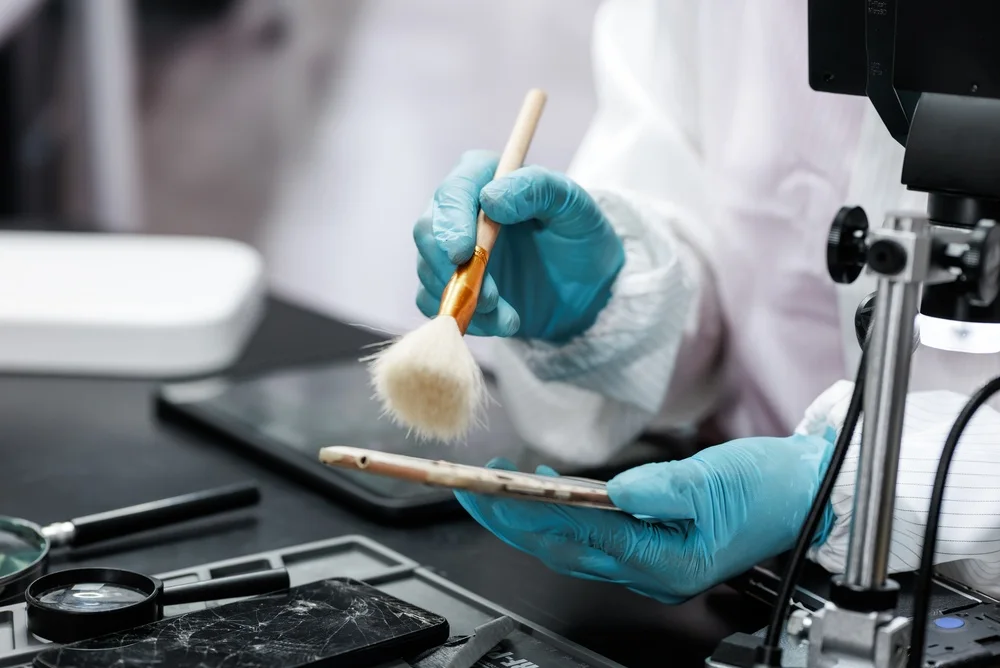
Criminalistics is the scientific examination of physical evidence. It includes collecting and preserving evidence, analyzing materials in a laboratory, interpreting results, preparing reports, and explaining findings in court. Depending on the laboratory and assignment, a criminalist may work with DNA, controlled substances, toxicology, firearms, trace materials, fingerprints, or other evidence.
That work is different from criminal justice administration, criminology, forensic psychology, and many crime-scene investigation programs. A criminal justice degree may explain courts, policing, corrections, and investigative systems without supplying the chemistry and biology courses required for laboratory employment. Crime-scene programs usually concentrate on photography, documentation, fingerprints, evidence recovery, and chain of custody. Those are useful skills, but they do not replace advanced laboratory science.
California criminalistics education falls into three broad categories:
- Dedicated criminalistics or forensic science degrees with substantial laboratory content.
- Chemistry or biology degrees with forensic concentrations or emphases.
- Crime-scene, forensic technology, and evidence programs designed primarily for field or technician work.
The right category depends on the intended job. A prospective laboratory criminalist needs to evaluate science courses at the transcript level. Someone pursuing crime-scene or evidence technician work may benefit more from applied instruction in photography, scene processing, latent prints, documentation, and evidence handling.
The programs below represent a broad, verified selection of current California options. Community-college certificates and small forensic minors change frequently and are not always indexed consistently, so this should not be treated as an exhaustive inventory of every local program. Readers comparing other forensic education routes can also review the broader guide to CSI and forensic degree options in California.
California criminalistics degree comparison
| School and program | Credential | Primary orientation | Format | FEPAC status | Strongest alignment |
|---|---|---|---|---|---|
| UC Davis MS in Forensic Science, Criminalistics Track | Master’s | Laboratory criminalistics | In person, full time or part time | Thesis-based option is FEPAC-accredited | Trace evidence, drug chemistry, toxicology, instrumental analysis |
| Cal State LA MS in Criminalistics | Master’s | General laboratory criminalistics | Full-time, campus-based | Not currently verified as FEPAC-accredited | Crime-laboratory science and physical-evidence analysis |
| National University Master of Forensic Sciences | Master’s | Criminalistics or investigation | Online, in person, or hybrid, with possible on-site laboratories | Not currently verified as FEPAC-accredited | Graduate specialization after a science bachelor’s degree |
| San José State BS in Forensic Science | Bachelor’s | Biology, chemistry, digital evidence, or CSI | Campus-based | University says curricula meet FEPAC educational standards; not listed as accredited | Varies by concentration |
| California Baptist University BS in Forensic Chemistry | Bachelor’s | Chemistry-centered forensic science | Campus-based | Not currently verified as FEPAC-accredited | Chemical evidence, laboratory science, graduate study |
| UC Davis BS in Applied Chemistry, Forensic Chemistry Emphasis | Bachelor’s | Chemistry-intensive laboratory science | Campus-based | Not currently verified as FEPAC-accredited | Controlled substances, trace evidence, toxicology |
| Cal State East Bay BS in Chemistry, Bioanalytical and Forensics | Bachelor’s | Chemistry and bioanalytical science | Campus-based | Not currently verified as FEPAC-accredited | Forensic chemistry and graduate preparation |
| Cal State East Bay BS in Biological Sciences, Forensic Science | Bachelor’s | Biology and DNA-oriented science | Campus-based | Not currently verified as FEPAC-accredited | Forensic biology and laboratory preparation |
| Sacramento State BA in Chemistry, Forensic Chemistry | Bachelor’s | Chemical analysis | Campus-based | Not currently verified as FEPAC-accredited | Chemical criminalistics and laboratory employment |
| Grossmont College Forensic Technology | Associate degree or certificate | Evidence and crime-scene technology | Primarily campus-based | FEPAC does not accredit associate degrees or stand-alone certificates | Evidence technician, latent-print, and scene support work |
| Southwestern College AS in Forensic Studies | Associate degree | Field evidence and technician preparation | Primarily campus-based | FEPAC does not accredit associate degrees | Field evidence and forensic laboratory technician roles |
| East Los Angeles College Forensic Crime Scene Investigation | Associate degree or certificate | Crime-scene and evidence work | Primarily campus-based | FEPAC does not accredit associate degrees or stand-alone certificates | CSI and evidence technician preparation |
| Chico State Forensic Science Minor | Undergraduate minor | Evidence analysis, human identification, and forensic anthropology | Campus-based | FEPAC does not accredit stand-alone minors | Supplement to anthropology, biology, chemistry, or criminal justice |
Direct graduate criminalistics programs
UC Davis MS in Forensic Science, Criminalistics Track
The University of California, Davis offers a 54-quarter-unit Master of Science in Forensic Science with Criminalistics and DNA tracks. The Criminalistics track is one of the clearest California graduate routes into scientific evidence analysis.
The program is in person and permits full-time or part-time enrollment. Full-time completion can take two years, while part-time study generally requires longer. UC Davis does not currently offer the forensic science degree as a fully online program.
Applicants are expected to hold a bachelor’s degree in a relevant natural science, physical science, or engineering field. Published preparation includes general chemistry, organic chemistry, physics, calculus, and statistics. Biology, biochemistry, and genetics are recommended. A 3.0 GPA is generally expected.
The Criminalistics curriculum covers forensic fundamentals, homicide crime-scene investigation, case reporting, statistics, human identification, toxicant analysis, analytical instrumentation, seminars, electives, and research. Its laboratory and research requirements distinguish it from investigation-centered master’s degrees that provide less advanced analytical science.
Students can pursue Plan I, which includes a thesis, or Plan II, which uses a capstone. The accreditation wording requires precision. The thesis-based option is FEPAC-accredited, and the American Academy of Forensic Sciences directory lists the UC Davis MS DNA Analysis and Criminalistics tracks with full accreditation from March 1, 2026, through March 1, 2031. Applicants considering the non-thesis plan should ask the university how FEPAC status applies to their intended completion route.
Published tuition for entrants in fall 2025 or later is $903 per quarter unit. Multiplying that rate by 54 units produces $48,762 in tuition. That amount does not include health insurance, books, supplies, laboratory materials, housing, transportation, or other living expenses. Part-time enrollment may distribute tuition across more terms, but it can also extend living and commuting costs.
The curriculum aligns with trace evidence, controlled-substance analysis, toxicology, instrumental analysis, and related crime-laboratory specialties. It may also support applicants entering with a strong science degree who need focused forensic coursework and supervised research. Admission to the program does not guarantee qualification for a particular government classification, so course records still need to be compared with each vacancy announcement.
Cal State LA MS in Criminalistics
California State University, Los Angeles offers a full-time Master of Science in Criminalistics. Official program materials describe a two-year sequence connected to the Hertzberg-Davis Forensic Science Center.
The admissions background is science-heavy. Expected preparation includes biostatistics, general chemistry, quantitative analysis, organic chemistry with laboratories, and physics. Published standards include a 3.0 GPA in the final 60 semester units or 90 quarter units, a 3.0 GPA in the undergraduate major, and two recommendation letters. The program accepts fall applications, and applicants need to monitor both university and departmental deadlines.
The degree uses physical and natural science to support general criminalistics study. A research project is required as the capstone, and internships are encouraged. The program’s setting provides a direct connection to forensic science instruction and professional practice through the Hertzberg-Davis Forensic Science Center.
No current FEPAC accreditation was verified for the program. Cal State LA should not be described as currently FEPAC-accredited based on older records or past status. Program quality, institutional accreditation, curriculum content, and FEPAC accreditation are separate questions.
Cal State LA does not offer an undergraduate criminalistics degree. Its undergraduate Criminal Justice major addresses criminal justice administration rather than criminalistics or forensic science. The university directs undergraduates interested in laboratory criminalistics toward chemistry, biology, biochemistry, natural science, or physics. That guidance reflects the scientific foundation expected in the MS and in many criminalist job announcements.
The degree is a direct match for applicants who already have the necessary chemistry and laboratory background. Someone with a criminal justice bachelor’s degree and limited science coursework may need substantial prerequisite study before becoming eligible. Completing prerequisites can add time and expense, so a transcript review should happen before application.
Cal State LA also offers an in-person Forensic Specialist Certificate focused on crime-scene investigation and friction-ridge examination. It requires at least an associate degree and includes hands-on work, but it is a professional certificate rather than a criminalistics degree. Its purpose is closer to field evidence and identification work than graduate laboratory science.
National University Master of Forensic Sciences
National University’s 36-semester-credit Master of Forensic Sciences offers Criminalistics and Investigation specializations. The two options should not be treated as equivalent.
The Criminalistics specialization requires an undergraduate degree in a laboratory or physical science. Its coursework includes trace evidence, advanced toxicology, forensic serology and DNA, and advanced DNA analysis. The broader core covers crime-scene investigation, pathology, anthropology, photography, fingerprints, digital evidence, and supervised research.
The Investigation specialization has no specified undergraduate-major requirement and emphasizes investigative and field subjects. It may fit experienced investigators or evidence personnel seeking broader forensic knowledge, but it is not the same preparation as advanced chemistry, biology, or instrumental analysis.
Delivery can be online, in person, or hybrid. Some Criminalistics courses may require on-site laboratory participation, so the program should not be assumed to be fully online. Applicants living far from the relevant instructional location need written confirmation of laboratory dates, residency expectations, travel frequency, and whether required courses are available in their preferred format.
A supervised research project is required. That component gives students an opportunity to apply forensic methods to a defined problem, though applicants should ask how projects are supervised, what laboratory resources are available, and whether research can be matched to their intended specialty.
National University published an estimated total of $25,830 for the program based on 36 credits and applicable course-material fees at the time of research. It is an institutional estimate rather than a universal final price. Travel, in-person laboratory attendance, housing during required sessions, and other ancillary expenses may be additional.
No current FEPAC accreditation was verified. Prospective laboratory criminalists should examine the exact course sequence, laboratory contact hours, and undergraduate prerequisites rather than relying on the degree title alone.
Direct bachelor’s programs
San José State University BS in Forensic Science
San José State University offers a Bachelor of Science in Forensic Science with four concentrations:
- Biology
- Chemistry
- Digital Evidence
- Crime Scene Investigation
These concentrations lead toward different occupations. The Biology and Chemistry options align most closely with traditional laboratory criminalistics. Biology can support preparation for DNA, serology, and other biological evidence work. Chemistry can support controlled-substance analysis, toxicology, trace evidence, and instrumental analysis.
The Crime Scene Investigation concentration focuses more heavily on scene processing and field evidence. Likely subjects include evidence recognition, recovery, photography, fingerprints, documentation, firearms, toolmarks, entomology, and reconstruction-related methods. It can prepare graduates for CSI and evidence assignments, but applicants for laboratory criminalist positions must still satisfy each employer’s science-course requirements.
Digital Evidence is another distinct specialty. Computer and mobile-device examinations require technical preparation that differs from wet chemistry, molecular biology, and physical crime-scene work. It belongs within forensic science broadly, but it should not be used as evidence of qualification for a chemistry-based criminalist vacancy.
SJSU reports hands-on crime-laboratory and crime-scene training, faculty research opportunities, and internships with forensic laboratories, the coroner’s office, law-enforcement agencies, and partner organizations. Internship availability can depend on agency screening, schedules, transportation, and competition, so applicants should ask whether placement is required, guaranteed, or arranged independently.
Accreditation language needs to remain exact. SJSU states that each concentration’s curriculum meets FEPAC educational standards. The program was not found in the current FEPAC-accredited directory. Meeting educational standards is not the same as holding FEPAC accreditation.
The CSI concentration was impacted and accepting a limited number of new students when researched. Capacity restrictions can affect admission, changes of major, and internal transfers. Applicants should verify current status directly with SJSU before selecting a concentration.
Transfer planning can be demanding in the Biology and Chemistry options because prerequisite chains may include mathematics, general chemistry, organic chemistry, biology, physics, and upper-division laboratories. Missing one prerequisite can delay several later courses. California community-college students should use current articulation agreements and then obtain departmental confirmation for concentration-specific requirements.
California Baptist University BS in Forensic Chemistry
California Baptist University offers a Bachelor of Science in Forensic Chemistry combining chemistry, biology, genetics, criminal justice, forensic laboratory work, and advanced forensic chemistry.
The university lists concentrations in Criminal Justice Systems, Criminalistics, and Advanced Chemistry. Those options do not provide identical preparation. Criminalistics and Advanced Chemistry have closer relevance to laboratory evidence analysis, while Criminal Justice Systems places more emphasis on the agencies and processes surrounding forensic work.
The degree requires sequenced chemistry, biology, mathematics, and laboratory courses. Because advanced science classes depend on earlier prerequisites, the four-year plan needs to be reviewed before enrollment. Transfer credit for chemistry laboratories deserves close attention since lecture equivalency does not always guarantee laboratory equivalency.
Instrumental-analysis training is part of the program. The senior capstone may take the form of a crime-laboratory internship, faculty-supervised research, or a literature-based thesis. Those options differ in practical exposure. An internship can provide experience with professional procedures and quality systems, while faculty research may offer more direct laboratory investigation. A literature thesis develops research and writing but does not provide the same bench experience.
No current FEPAC accreditation was verified. Applicants should compare each concentration’s required courses against the hiring standards of laboratories they may target. A chemistry-centered degree can be academically relevant while still lacking a specific employer prerequisite, such as a required amount of quantitative analysis or molecular biology.
As a private university, California Baptist uses its own undergraduate tuition and fee schedule. Program cost should be calculated with current tuition, mandatory fees, laboratory expenses, housing, and financial aid. The required-unit count alone is not a reliable estimate of total cost.
Chemistry and biology degrees with forensic concentrations
A degree does not need “criminalistics” in its title to prepare someone for crime-laboratory work. Chemistry and biology programs may provide deeper laboratory science than a broad forensic degree, especially when they include quantitative analysis, instrumental methods, molecular biology, statistics, and research.
UC Davis BS in Applied Chemistry, Forensic Chemistry Emphasis
UC Davis places undergraduate forensic chemistry within the Bachelor of Science in Applied Chemistry. The current catalog identifies a Forensic Chemistry emphasis rather than a separately titled forensic chemistry bachelor’s degree.
The program emphasizes the identification and quantitative analysis of trace scientific evidence. The major requires at least 102 units and includes general chemistry, organic chemistry, physics, calculus, biology, statistics, instrumental analysis, physical chemistry, toxicology, and introductory forensic science.
This is a chemistry-intensive route. Its depth can support preparation for controlled-substance analysis, trace evidence, toxicology, and graduate forensic science. It is less focused on field photography, latent-print development, and scene documentation than a dedicated CSI program.
Extensive chemistry laboratory work is built into the degree. Independent research may be available, though it should not be presented as a universal graduation requirement without checking the student’s catalog year and chosen electives.
Transfer students face a tightly sequenced set of science prerequisites. General chemistry and calculus often lead into organic chemistry, physics, physical chemistry, and instrumental analysis. A missing prerequisite can affect several terms, so transfer planning should include more than completion of general education and overall unit totals.
No current FEPAC accreditation was verified for the undergraduate program. The scientific curriculum can still be relevant to criminalist recruitment, but eligibility depends on the employer’s stated course requirements.
Cal State East Bay BS in Chemistry, Bioanalytical and Forensics Concentration
Cal State East Bay offers a chemistry bachelor’s degree with a Bioanalytical and Forensics concentration. The department describes it as preparation for forensic chemistry careers and related graduate study.
The program is rooted in a standard chemistry progression rather than a general criminal justice curriculum. Students complete prerequisite mathematics and laboratory sciences before moving into upper-division chemistry and bioanalytical work. That structure fits occupations involving chemical measurements and laboratory interpretation.
Cal State East Bay’s Forensic Science Research Center supports education, research, internships, mentorship, networking, and hands-on training. Access to those activities can strengthen a student’s record, but internship and research availability should be confirmed rather than assumed.
No current FEPAC accreditation was verified. A transcript comparison remains necessary for positions requiring a stated number of chemistry units, quantitative analysis, organic chemistry, or other specialty courses.
Cal State East Bay BS in Biological Sciences, Forensic Science Concentration
The Biological Sciences degree with a Forensic Science concentration follows a biology-oriented route. The verified roadmap includes cell and molecular biology, organismal biology, genetics, organic chemistry, physics, quantitative analysis, PCR and sequencing fragment analysis, forensic instrumentation, criminal investigation, criminal identification, and a forensic science survey.
This combination has closer alignment with DNA and forensic biology than with controlled-substance chemistry. PCR, genetics, molecular biology, and sequencing-related instruction are especially relevant to biological evidence work.
The curriculum also includes substantial chemistry and physics. Even so, applicants interested in California criminalist classifications should confirm that the completed courses meet exact chemistry and quantitative-analysis requirements. Course titles do not always reveal the number of qualifying lecture and laboratory units.
Research and internship opportunities may be available through the Forensic Science Research Center. Laboratory experience beyond routine class exercises can improve preparation for evidence handling, documentation, method validation, quality assurance, and technical writing.
Sacramento State BA in Chemistry, Forensic Chemistry Concentration
Sacramento State offers a 120-unit Bachelor of Arts in Chemistry with a Forensic Chemistry concentration. The major accounts for 64 to 77 units.
Required study includes general chemistry, organic chemistry, quantitative analysis, calculus, physics, advanced organic laboratory work, physical chemistry, biochemistry with a laboratory, criminal justice, physical evidence, and advanced chemistry electives.
The inclusion of quantitative analysis is directly relevant to California’s state Criminalist education standard. Advanced laboratory work, physical chemistry, and biochemistry also provide a scientific foundation that a general criminal justice program would not supply.
Sacramento State’s chemistry programs have American Chemical Society recognition. ACS recognition relates to chemistry education and should not be described as FEPAC accreditation. No current FEPAC accreditation was verified for the forensic chemistry concentration.
The university’s former Biological Science concentration in Forensic Biology was suspended beginning with the 2020-2021 catalog cycle. It should not be listed as a current admission option. The active forensic route verified here is the Chemistry BA with the Forensic Chemistry concentration.
Associate degrees, certificates, and minors
Associate-level forensic programs often prepare students for crime-scene, evidence, fingerprint, or support positions. They may also provide an introduction before transfer. They generally do not replace a chemistry- or biology-based bachelor’s degree for laboratory criminalist recruitment.
Grossmont College Forensic Technology AS and Certificate
Grossmont College offers an Associate in Science and a Certificate of Achievement in Forensic Technology. The pathway emphasizes investigation, evidence collection, preservation, analysis, and skills related to latent-print or evidence work.
The associate degree includes general education and college graduation requirements in addition to the forensic technology major. The certificate is a shorter occupational credential and should not be confused with the full associate degree.
Applied evidence-processing instruction supports preparation for evidence technician, latent-print, crime-scene, and forensic support roles. Exact laboratory and field hours can vary by course and term, so the current schedule and course descriptions should be reviewed.
Grossmont’s catalog cautions that forensic scientist positions usually require a bachelor’s degree or higher. That warning is especially relevant to laboratory criminalist jobs requiring a physical or biological science major.
Southwestern College AS in Forensic Studies
Southwestern College’s Associate in Science in Forensic Studies centers on locating, documenting, collecting, preserving, and analyzing evidence in criminal and civil investigations.
Required subjects include evidence technology, latent fingerprint examination, digital forensic photography, introductory biology with a laboratory, and introductory general chemistry. The science courses provide useful context, but introductory biology and chemistry alone do not equal a full laboratory-science bachelor’s degree.
The program identifies field evidence technician and forensic laboratory technician work as potential areas of preparation. The college also advises that volunteering or other practical experience may be needed before paid employment.
This route may fit someone seeking applied field skills, an entry-level evidence role, or a foundation for later transfer. Transfer-bound students should verify which courses apply to a bachelor’s major and which count only as electives.
East Los Angeles College Forensic Crime Scene Investigation AS and Certificate
East Los Angeles College lists two awards in Forensic Crime Scene Investigation:
- A 60-unit Associate of Science
- A 17-unit Certificate of Achievement
The program is housed within the Administration of Justice and Fire Technology pathway. Its title and placement indicate a crime-scene and evidence orientation rather than advanced laboratory criminalistics.
The associate degree includes the broader requirements associated with a 60-unit college award. The 17-unit certificate is a shorter occupational sequence. An older program document describes the certificate as designed for completion in approximately 12 months, but historical cost figures from that document should not be used as current tuition information.
The current pathway page does not provide enough detail to describe every practical requirement. Applicants should request the latest catalog worksheet and ask how much instruction covers photography, fingerprints, evidence packaging, report writing, scene documentation, courtroom testimony, and supervised practical exercises.
Chico State Forensic Science Minor
Chico State’s campus-based Forensic Science minor introduces evidence collection, documentation, analysis, human identification, forensic anthropology techniques, laboratory methods, scientific data interpretation, report writing, and legal and ethical standards.
The minor is designed to complement majors such as anthropology, biology, chemistry, and criminal justice. Its value depends heavily on the primary major. Paired with chemistry or biology, it can add forensic context to a strong science curriculum. Paired with anthropology, it can support interest in human identification and forensic anthropology. Paired with criminal justice alone, it does not create the full science background commonly required for criminalist work.
The program page describes small hands-on classes and access to forensic laboratory resources, including the Human Identification Laboratory. The laboratory supports research, training, and services, but it is not itself a separate degree program.
Chico State previously offered a Forensic Science Certificate. Although the certificate appears in older catalog material, the approved 2026-2027 curriculum lists it for discontinuation and introduces the current minor. New applicants should use the minor’s current requirements unless the department directly confirms eligibility under an older certificate plan.
California Criminalist education requirements
California employers do not all use the title “criminalist” in the same way. State agencies, county laboratories, municipal departments, and independent laboratories may set different education and experience standards. A crime scene investigator may be a civilian employee in one department and a sworn-officer assignment in another.
The State of California’s Criminalist classification provides a useful baseline for evaluating degrees. Its education standard requires the equivalent of graduation with a major in a physical or biological science. The coursework must include:
- Eight semester hours of general chemistry
- Three semester hours of quantitative analysis
A forensic degree does not automatically satisfy those requirements. A program can contain crime-scene investigation, photography, fingerprints, and criminal law while lacking a qualifying science major or quantitative-analysis course.
Likewise, satisfying the state minimum does not guarantee selection. Laboratories may prefer or require additional coursework related to the assignment. DNA positions may call for molecular biology, genetics, biochemistry, and statistics. Toxicology and drug chemistry can demand organic chemistry, analytical chemistry, pharmacology, or instrumental analysis. Trace evidence assignments may rely heavily on microscopy, materials analysis, and physical chemistry.
Before enrolling, compare the planned transcript against several recent job announcements from relevant employers. Record the exact wording used for the major, chemistry units, biology courses, laboratory requirements, and acceptable substitutions. Academic advisers can explain a degree, but the hiring agency decides whether a transcript meets its standards.
Laboratory criminalistics versus CSI preparation
Laboratory criminalistics programs usually devote substantial time to:
- General and organic chemistry
- Quantitative or analytical chemistry
- Biology and molecular biology
- Genetics and biochemistry
- Physics and calculus
- Statistics
- Instrumental analysis
- Toxicology
- Laboratory quality systems
- Research methods
- Technical reporting
Crime-scene and evidence programs place greater emphasis on:
- Evidence recognition and recovery
- Scene photography
- Sketching and documentation
- Latent fingerprints
- Evidence packaging
- Chain of custody
- Bloodstain or pattern documentation
- Scene reconstruction
- Report writing
- Courtroom testimony
Some degrees include both areas, but the balance matters. A person seeking controlled-substance analysis does not need the same preparation as an evidence technician. A latent-print examiner follows another route, and a digital evidence specialist needs computer science and technical forensic methods that differ from chemistry-based criminalistics.
Job titles alone can be misleading. “Forensic science technician” may refer to field or laboratory work. “Crime lab analyst” can cover DNA, toxicology, drug chemistry, or another unit. “Criminalist” often signals a scientist, but local definitions vary. Read duties and minimum qualifications rather than relying on the title.
How FEPAC accreditation applies
The Forensic Science Education Programs Accreditation Commission, or FEPAC, accredits eligible bachelor’s and master’s programs in forensic science, as well as certain natural science or computer science programs with forensic concentrations.
FEPAC accreditation is programmatic. It does not automatically apply to every program at an institution. Institutional accreditation and FEPAC accreditation are also separate.
Among the California programs reviewed, UC Davis was the only institution found in the current FEPAC directory. Its MS DNA Analysis and Criminalistics tracks are listed with full accreditation through March 1, 2031, with the university identifying the thesis-based option as accredited.
San José State says its forensic science curricula meet FEPAC educational standards. That wording should be preserved. It does not mean the program is currently FEPAC-accredited.
FEPAC does not accredit associate degrees, stand-alone certificates, or minors as independent credentials. A lack of FEPAC accreditation does not automatically make a chemistry degree, CSI program, or anthropology minor unsuitable. Accreditation is most relevant when comparing eligible bachelor’s and master’s forensic science programs. Curriculum content and employer eligibility still require separate review.
Transfer and prerequisite planning
Criminalistics degrees can be difficult to transfer into late because science courses follow strict sequences. A typical progression may run through:
- College algebra, precalculus, or calculus
- General chemistry with laboratories
- Organic chemistry with laboratories
- Quantitative or analytical chemistry
- Physics
- Instrumental analysis or physical chemistry
- Upper-division forensic laboratories
Biology routes can add general biology, genetics, cell biology, molecular biology, biochemistry, and statistics. Many upper-division courses are offered only after several prerequisites have been completed.
California community-college students should check articulation for each course, including the laboratory component. A lecture course may transfer while its laboratory does not. Quarter-to-semester unit conversions can also affect requirements stated as a minimum number of semester hours.
Transfer planning should answer four questions:
- Does the course satisfy university admission requirements?
- Does it satisfy the major requirement?
- Does it satisfy a concentration requirement?
- Will a target employer count it toward hiring eligibility?
Those answers are not always identical. A university may accept a class as elective credit even when it does not replace a required major course. An employer may also reject a broadly titled forensic course as a substitute for quantitative chemistry.
Evaluating cost and program format
Public university tuition varies by residency, enrollment level, campus fees, and academic year. Private universities set their own rates. Community colleges add enrollment fees, campus charges, laboratory materials, and nonresident tuition where applicable.
Cost comparisons need to separate:
- Tuition
- Mandatory campus fees
- Laboratory and course-material charges
- Health insurance
- Books and equipment
- Housing and food
- Transportation
- Travel for internships or required laboratory sessions
UC Davis publishes a graduate forensic science tuition rate of $903 per quarter unit for entrants in fall 2025 or later. The resulting $48,762 calculation covers tuition for 54 units, not total attendance costs.
National University published an estimated Master of Forensic Sciences program cost of $25,830 based on 36 credits and applicable course-material fees. Students may still incur travel or lodging expenses if Criminalistics laboratories require in-person participation.
Online delivery can reduce commuting, but criminalistics cannot always be completed remotely. Instrumental analysis, microscopy, chemistry laboratories, serology, DNA methods, and practical crime-scene exercises require equipment and supervised work. Any program advertised with online components should be checked for on-campus laboratories, short residencies, internship attendance, or location-specific courses.
A practical program-selection checklist
Before applying, review the program against the intended occupation rather than the appeal of its title.
For laboratory criminalist or forensic scientist work
Look for:
- A physical or biological science major
- General chemistry with laboratories
- Organic chemistry with laboratories
- Quantitative or analytical chemistry
- Biology, genetics, or molecular biology where relevant
- Physics and calculus
- Statistics
- Instrumental analysis
- Substantial upper-division laboratory work
- Research or an evidence-based capstone
- Technical writing and courtroom communication
- Internship access in an operating laboratory
For CSI or evidence technician work
Look for:
- Crime-scene documentation
- Digital photography
- Evidence recognition and recovery
- Fingerprint processing
- Packaging and preservation
- Chain of custody
- Sketching and measurement
- Report writing
- Courtroom testimony
- Repeated practical exercises
- Internship, volunteer, or agency-placement opportunities
Questions to ask the department
Request direct answers to the following:
- Which courses include supervised laboratory work?
- How many students share laboratory instruments and workstations?
- Is an internship required, optional, or independently arranged?
- Are all required courses offered every term?
- Can transfer students finish within the advertised timeline?
- Does the program track employment outcomes by concentration?
- Which local or state laboratories have hired recent graduates?
- Are online students required to travel for laboratory courses?
- Which completion plans are covered by current FEPAC accreditation?
- Will the department perform a prerequisite review before application?
California offers several credible routes into criminalistics, but they serve different goals. UC Davis and Cal State LA provide direct graduate laboratory preparation. SJSU and California Baptist offer named undergraduate forensic degrees with concentration choices. UC Davis, Cal State East Bay, and Sacramento State provide chemistry or biology pathways that may align closely with criminalist hiring standards. Grossmont, Southwestern, and East Los Angeles College concentrate more on evidence and crime-scene work, while Chico State’s minor supplements another bachelor’s major.
The safest decision starts with the intended job description. Build the degree around the required science, laboratory, and field competencies, then verify every prerequisite against current university and employer records.