
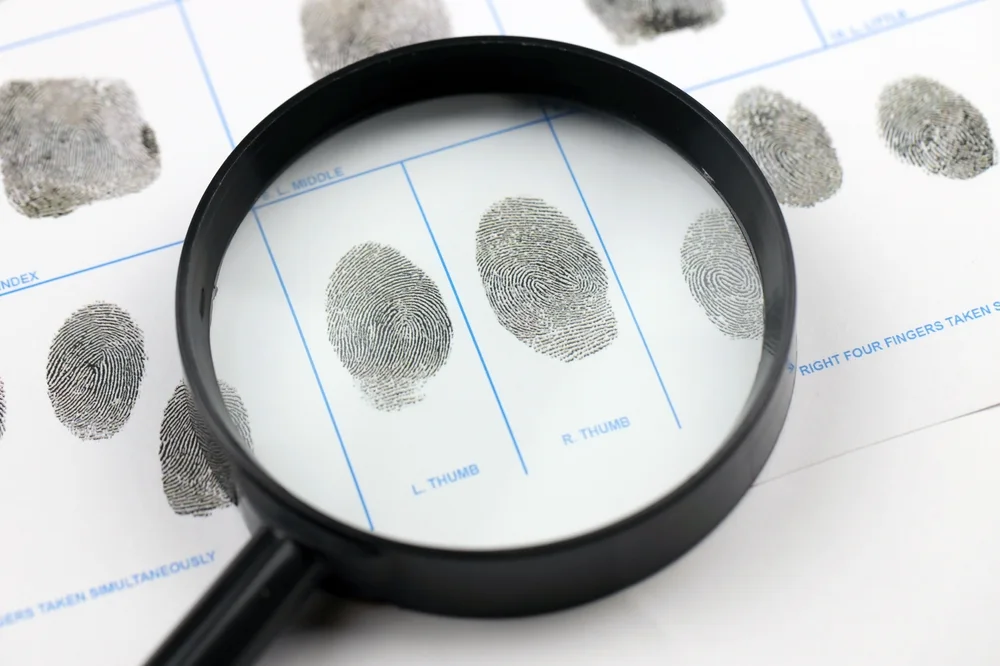
California colleges rarely use Criminalistics as the title of a standalone bachelor’s degree. Most undergraduate preparation for criminalistics is housed in forensic science, chemistry, biology, applied chemistry, bioanalytical science, or crime-scene investigation programs. California Baptist University provides the closest title match through its Forensic Chemistry BS with a Criminalistics concentration.
The correct degree depends on the work you want to perform. Laboratory criminalists generally need substantial chemistry or biology coursework. Crime scene investigators focus more heavily on documentation, photography, fingerprints, evidence recovery, reconstruction, chain of custody, and courtroom communication. Digital evidence specialists need technical preparation that differs from both wet-laboratory science and field investigation.
Those paths should not be treated as interchangeable. A degree containing the words forensic, criminalistics, or criminal justice does not automatically satisfy the education requirements for a California criminalist position.
The programs below represent verified California bachelor’s pathways that directly or closely relate to criminalistics as of September 24, 2026. Because schools use several different program names, the comparison includes science-based criminalistics degrees, CSI preparation, digital evidence study, and one field-oriented criminal justice concentration. Fresno State’s behavioral science degree is discussed separately because the university expressly says it does not prepare graduates for crime-laboratory or CSI work.
California criminalistics bachelor’s programs at a glance
| School and program | Degree | Primary orientation | Main academic emphasis |
|---|---|---|---|
| San Jose State University, Forensic Science: Chemistry | BS | Laboratory criminalistics | Chemistry, instrumental analysis, toxicology, physical evidence |
| San Jose State University, Forensic Science: Biology | BS | Forensic biology and DNA | Genetics, biochemistry, cellular biology, DNA analysis |
| San Jose State University, Forensic Science: Crime Scene Investigation | BS | CSI and evidence processing | Scene documentation, photography, fingerprints, reconstruction |
| San Jose State University, Forensic Science: Digital Evidence | BS | Digital forensics | Digital evidence collection, preservation, examination, and reporting |
| University of California, Davis, Applied Chemistry: Forensics | BS | Forensic chemistry | Analytical chemistry, instrumentation, toxicology, physical chemistry |
| California Baptist University, Forensic Chemistry | BS | Laboratory criminalistics | Chemistry, forensic laboratories, criminalistics, instrumental analysis |
| Sacramento State, Chemistry: Forensic Chemistry | BA | Forensic chemistry | Quantitative analysis, organic chemistry, biochemistry, physical evidence |
| CSU East Bay, Biological Sciences: Forensic Science | BS | Forensic biology | Genetics, PCR, sequencing, molecular biology, forensic instrumentation |
| CSU East Bay, Chemistry: Bioanalytical and Forensics | BS | Chemistry and bioanalysis | Quantitative analysis, instrumental analysis, genetics, PCR, biochemistry |
| Stanislaus State, Criminal Justice: Forensics | BA | Field investigation and CSI | Criminalistics, evidence, forensic DNA topics, law, investigation |
This is not a ranking. The strongest academic match changes with the occupation. A chemistry concentration may provide excellent preparation for controlled-substance or trace-evidence analysis while offering less direct training in crime-scene photography. A CSI concentration may develop scene-processing skills without supplying the chemistry credits needed for a state criminalist classification.
Readers comparing bachelor’s study with graduate and other degree levels can also review the broader guide to criminalistics degrees in California.
First decide between laboratory criminalistics, CSI, and digital evidence
The word criminalistics is often used for the scientific examination of physical evidence. In a crime laboratory, that work can involve controlled substances, toxicology, DNA and biological evidence, trace materials, firearms, fire debris, or other analytical specialties. Chemistry, biology, statistics, scientific instrumentation, and documented laboratory competence carry substantial weight.
Crime-scene work has a different center of gravity. A crime scene investigator or technician may document scenes, photograph evidence, develop or recover fingerprints, collect biological material, prepare sketches, preserve chain of custody, write reports, and testify in court. Some agencies use civilian personnel for this work. Others assign sworn officers. Titles and minimum qualifications vary among state, county, municipal, and federal employers.
Digital evidence is another distinct specialty. Its practitioners preserve, examine, interpret, and report evidence from computers, mobile devices, storage media, and related technology. A student interested in computer forensics should not select a chemistry curriculum merely because both fields are placed under a forensic science department.
Job titles also require caution. Forensic science technician, criminalist, crime-lab analyst, forensic chemist, and forensic biologist may describe related laboratory roles, but employers do not always use the terms identically. The same is true for crime scene investigator, evidence technician, and property and evidence technician. Degree planning should begin with actual job announcements from the agencies or laboratories where you might apply.
What California requires for the state Criminalist classification
The California DOJ Criminalist examination bulletin provides a useful benchmark for science preparation. California’s state Criminalist classification requires graduation with a major in a physical or biological science. Applicants also need the equivalent of:
- Eight semester hours of general chemistry
- Three semester hours of quantitative analysis
An applicant may take the examination before completing quantitative analysis, but the course must be finished before appointment. Examination eligibility is only part of the hiring process. Appointment can depend on transcript review, the examination, background requirements, available positions, and any qualifications attached to a specific laboratory discipline.
These are California state classification requirements, not universal rules for every forensic employer in California. Local governments, federal laboratories, private companies, and law-enforcement agencies may publish different standards. DNA positions can require defined combinations of molecular biology, genetics, biochemistry, and statistics. Toxicology positions may seek advanced chemistry, pharmacology, or toxicology. Firearms and toolmark units may use another set of science and training expectations.
The California Criminalistics Institute reports that criminalists usually hold four-year degrees in chemistry, physics, biology, biochemistry, molecular biology, or another physical or biological science. It also distinguishes criminalists from separate crime-scene technicians or investigators and explains that considerable discipline-specific training occurs after hiring.
That framework helps explain why a chemistry or biology degree can be better preparation for laboratory criminalistics than a broad criminal justice bachelor’s degree. The label on the diploma is less decisive than the major classification, transcript, laboratory record, and specialty courses.
San Jose State University BS in Forensic Science
San Jose State University offers four concentrations within its BS in Forensic Science: Chemistry, Biology, Crime Scene Investigation, and Digital Evidence. The concentrations share forensic science foundations but lead toward substantially different kinds of work.
SJSU states that the curricula meet American Academy of Forensic Sciences Forensic Science Education Programs Accreditation Commission educational standards. That wording should be read precisely. The undergraduate program was not verified in the current FEPAC accredited-program directory, so meeting FEPAC educational standards is not the same as holding current FEPAC accreditation.
The program incorporates hands-on crime-laboratory or crime-scene training, depending on concentration. Internship partners may include local law-enforcement agencies, the Santa Clara County District Attorney Crime Laboratory, and the coroner’s office. Internship placements are not guaranteed merely by enrolling, and individual requirements should be confirmed through the department.
For Fall 2026, SJSU listed full-time undergraduate basic registration fees of $4,776.50. Nonresident tuition, housing, food, transportation, course fees, and other expenses are additional.
Chemistry concentration
The Chemistry concentration is SJSU’s laboratory-oriented route for evidence analyzed through chemical methods. Its curriculum combines the forensic science core with organic and inorganic chemistry, instrumental analysis, toxicology, physical evidence, arson and explosives, forensic applications, and scientific communication.
This concentration aligns most directly with areas such as controlled-substance analysis, toxicology, trace evidence, and fire-debris examination. Instrumental analysis is especially relevant because modern laboratories rely on documented analytical methods and instruments rather than simple observational testing.
A prospective California criminalist should still audit the degree plan against the state classification. Chemistry content alone does not confirm that a transcript contains the required three semester hours of quantitative analysis. Students should identify the exact course satisfying that requirement and retain catalog descriptions in case an employer requests documentation.
Biology concentration
The Biology concentration emphasizes anatomy and physiology, cellular biology, genetics, biochemistry, forensic biology, and DNA analysis alongside the broader forensic core. It is the more direct SJSU choice for biological evidence and DNA-oriented laboratory interests.
DNA employment can involve requirements beyond a general biology sequence. Job postings may identify molecular biology, genetics, biochemistry, statistics, or population genetics by name. Prospective applicants should compare each required course with current laboratory postings and discuss specialty requirements with academic advisers before using electives.
Laboratory experience also matters. Coursework involving DNA extraction, amplification, separation, interpretation, contamination control, and scientific reporting can be more relevant than a biology elective with no laboratory component. An internship or faculty research experience may provide additional evidence of technical competence, although it does not replace required academic credits.
Crime Scene Investigation concentration
The CSI concentration focuses on scene documentation, evidence recognition and collection, forensic photography, fingerprints, reconstruction, biological evidence, firearms and toolmarks, death investigation, and courtroom communication. Applied scene exercises and an internship or approved experiential component connect the curriculum to field procedures.
This concentration targets crime-scene investigator, crime-scene technician, evidence-processing, forensic photography, and scene-reconstruction work. Those occupations require accurate written records and careful evidence handling in addition to technical scene skills. A visually dramatic exercise does not replace the routine demands of measurements, notes, packaging, reports, quality procedures, and testimony.
SJSU reported that the concentration was impacted and accepting very few new students at the time of research. Applicants should verify current capacity, major-entry rules, and change-of-major restrictions before assuming they can enter the concentration after enrolling at the university.
The CSI concentration should not automatically be treated as preparation for a laboratory criminalist appointment. A graduate’s eligibility would depend on the completed science major and transcript, including general chemistry and quantitative analysis.
Digital Evidence concentration
The Digital Evidence concentration combines forensic science foundations with the collection, preservation, examination, interpretation, and reporting of digital material. Its technical focus separates it from SJSU’s biology, chemistry, and CSI options.
Digital evidence personnel may work with storage media, computers, mobile devices, forensic images, metadata, deleted files, and documented examination procedures. Evidence integrity and reporting remain central, but the underlying methods are computational rather than chemical or biological.
This route is relevant to digital evidence and computer-forensics work. It is not a substitute for a wet-laboratory science degree when an employer requires a physical or biological science major, nor should a chemistry curriculum be assumed to provide digital-forensics preparation.
UC Davis BS in Applied Chemistry, Forensics
UC Davis houses its undergraduate forensic pathway within the BS in Applied Chemistry. The Forensics emphasis requires at least 102 quarter units and begins with chemistry, physics, calculus, biology, toxicology, and statistics. Advanced study includes analytical chemistry, instrumental analysis, organic chemistry, physical chemistry, environmental toxicology, and electives.
The curriculum is centered on quantitative laboratory analysis. It is better aligned with chemical identification, toxicology, trace analysis, and instrumental methods than with field-only scene processing. Students interested primarily in photography, fingerprint development, and scene reconstruction would need to compare the degree with a dedicated CSI program.
UC Davis offers a separate MS in Forensic Science, and that graduate program received FEPAC accreditation for March 1, 2026 through March 1, 2031. The accreditation applies to the master’s program and its DNA Analysis and Criminalistics tracks. It does not apply to the undergraduate Applied Chemistry degree.
The bachelor’s curriculum supplies a substantial chemistry base for criminalist work, but specialty planning remains necessary. A student targeting forensic DNA may need more genetics, molecular biology, biochemistry, and statistics than the standard forensic chemistry emphasis requires. Toxicology-bound students may want additional physiology, pharmacology, or advanced toxicology where available.
For students entering in 2026-27, UC Davis listed $15,588 in systemwide tuition and fees plus $2,490 in campus-based fees. Housing, food, health insurance, books, transportation, personal expenses, and nonresident supplemental tuition were separate.
Undergraduate research can strengthen laboratory development, but a universal internship requirement was not verified. Applicants who want an agency-based placement should ask how often undergraduates obtain forensic internships, whether placements carry academic credit, and what prerequisites must be completed first.
California Baptist University BS in Forensic Chemistry
California Baptist University offers a campus-based BS in Forensic Chemistry that combines chemistry, biology, genetics, criminal justice, and forensic science. Its current catalog lists 73 to 77 program units and three concentrations:
- Criminal Justice Systems
- Criminalistics
- Advanced Chemistry
The Criminalistics concentration requires 16 units. Among California bachelor’s programs, this is the closest match to a search for a criminalistics degree because the named concentration sits inside a science-based forensic chemistry bachelor’s program.
The course progression includes general, organic, analytical, instrumental, and advanced chemistry, along with laboratory prerequisites. Dedicated forensic science and forensic chemistry laboratory courses add an applied evidence context. The precise balance of chemistry, criminal justice, and advanced laboratory work varies by concentration, so applicants should examine the catalog requirements for the option they intend to complete.
The senior capstone can be fulfilled through a crime-laboratory internship, a faculty-supervised research project, or a literature-based thesis. These formats produce different kinds of preparation. An internship can provide exposure to laboratory operations and quality systems. Research emphasizes experimental design and data interpretation. A literature thesis develops scientific reading and writing but may provide less bench experience.
CBU was not verified as currently FEPAC-accredited. Applicants should evaluate the individual science and mathematics requirements, access to instruments, laboratory hours, faculty research, and capstone format rather than inferring programmatic accreditation from the degree title.
For 2026-27, CBU listed estimated traditional undergraduate tuition of $42,264 and estimated fees of $2,460. Housing and meal-plan costs were separate. Financial aid and net price can differ substantially by student, so the published tuition figure should not be treated as the amount every student pays.
A California criminalist applicant should verify that the final course plan includes the required quantitative analysis credit. The presence of analytical and instrumental chemistry does not, by itself, prove that a state reviewer will accept a particular course as quantitative analysis.
Sacramento State BA in Chemistry, Forensic Chemistry
Sacramento State offers a BA in Chemistry with a Forensic Chemistry concentration. The BA designation can be misleading to readers who assume it indicates a light science curriculum. The 120-unit degree contains 64 to 77 major units and requires general chemistry, organic chemistry, quantitative analysis, calculus, and physics.
Concentration coursework includes advanced organic chemistry laboratory work, physical chemistry, biochemistry with laboratory study, criminal justice, physical evidence, and selected advanced laboratory or instrumentation courses. It is a chemistry degree with a forensic application, not a criminal justice degree carrying a small science component.
The verified inclusion of general chemistry and quantitative analysis directly corresponds to the two chemistry areas named in the California Criminalist classification. Eligibility still depends on completing the applicable courses with an acceptable transcript and meeting all other hiring requirements.
Multiple chemistry laboratories provide technical preparation, although a required internship was not identified. Applicants should ask about access to undergraduate research, analytical instruments, faculty-supervised projects, and nearby agency placements. Laboratory employers often assess whether candidates can document procedures, handle samples, interpret data, and communicate results, not merely whether they passed lecture courses.
The curriculum is naturally aligned with forensic chemistry and may support work involving drugs, toxicology, trace evidence, or other chemical analysis. A student planning for a DNA unit should add or verify coursework in genetics, molecular biology, biochemistry, and statistics.
For 2026-27, Sacramento State listed full-time undergraduate charges of $3,419 in tuition plus $1,409 in mandatory campus fees per semester. The reported semester total was $4,828 before housing, food, books, transportation, and other educational expenses.
CSU East Bay forensic biology and chemistry pathways
California State University, East Bay offers two distinct bachelor’s routes: a Biological Sciences BS with a Forensic Science concentration and a Chemistry BS with a Bioanalytical and Forensics concentration. Both are laboratory-oriented, but they differ in scientific emphasis.
The university’s Forensic Science Research Center supports research involving Bay Area agencies. Current interns have included students from both concentrations, and reported projects have included fingerprint research involving fired cartridge cases. Research and internships are available, but universal participation was not verified.
For 2026-27, CSU East Bay listed resident undergraduate tuition of $6,838 for the academic year and estimated mandatory fees of $1,616. Housing, food, books, transportation, personal expenses, and nonresident tuition were separate.
Biological Sciences BS, Forensic Science concentration
The Biological Sciences pathway is structured as a 120-unit degree. The roadmap progresses through biology, general chemistry, calculus, physics, genetics, organic chemistry, and quantitative analysis. Upper-division work includes molecular and cellular biology, organismal biology, genetic analysis, PCR and sequencing, criminal identification, criminal investigation, forensic science, and bioanalytical and forensic instrumentation.
This combination supports preparation for biological criminalistics and laboratory work involving molecular methods. PCR and sequencing provide direct relevance to DNA analysis, while quantitative analysis and chemistry broaden the student’s scientific foundation.
Course titles still need to be compared with employer requirements. A laboratory can ask for specific credits in genetics, molecular biology, biochemistry, or statistics, sometimes with laboratory components. A degree concentration named Forensic Science does not waive those transcript-level requirements.
Students should also evaluate how frequently the advanced methods are practiced in laboratories. Exposure to PCR in lecture differs from repeated work involving sample preparation, controls, contamination prevention, data analysis, and formal reporting.
Chemistry BS, Bioanalytical and Forensics concentration
The Chemistry BS includes general chemistry laboratories, organic chemistry, quantitative analysis, cell and molecular biology, organismal biology, genetics, biochemistry, physics, bioanalytical and forensic instrumentation, PCR and sequencing, instrumental analysis, and physical chemistry.
Its mix of chemistry and biological analysis is broader than a conventional chemistry-only forensic concentration. Quantitative and instrumental analysis support chemical evidence work, while genetics, biochemistry, PCR, and sequencing introduce methods relevant to biological evidence.
The university identifies forensic chemistry careers and graduate forensic science study as intended directions. Research through the Forensic Science Research Center may add applied experience, although an internship is not a verified universal graduation requirement.
For California state criminalist planning, the explicit quantitative analysis requirement is useful. Applicants should still confirm that their degree is recorded as a qualifying physical science major and that the completed general chemistry sequence meets the required semester-hour equivalent.
Between CSU East Bay’s two concentrations, the biology route is more directly centered on biological systems and molecular science. The chemistry route gives greater weight to chemical analysis and instrumentation while retaining notable genetics and molecular content.
Stanislaus State BA in Criminal Justice, Forensics concentration
Stanislaus State currently offers a Criminal Justice BA with a Forensics concentration. The department describes the concentration as preparation primarily for fieldwork such as crime scene investigation rather than crime-laboratory criminalist work.
Preparatory coursework includes chemistry, statistics, biology, and psychology in addition to criminal justice prerequisites. The most recent detailed official curriculum brochure located lists Criminalistics I and II, Forensic DNA Technology, Bodies of Evidence, Scientific Evidence and the Law, criminal procedure, and approved criminal justice electives. Because that detailed brochure dates to 2023, students should use their applicable catalog and current advising materials to confirm exact courses and units.
The program’s field orientation can fit crime-scene investigation, evidence work, and related investigative roles. It should not be represented as equivalent to a chemistry or biology major. Stanislaus State itself advises people seeking crime-laboratory criminalist careers to major in chemistry or biology and add the Forensics minor.
The distinction is especially relevant under the California state Criminalist classification, which requires a physical or biological science major. A Criminal Justice BA does not become a physical or biological science degree because it includes chemistry or forensic courses.
The degree is campus-based and is not offered fully online, although individual courses may occasionally be available online. An internship appears among related departmental offerings, but a universal current internship requirement for every concentration student was not independently confirmed.
For 2026-27, Stanislaus State listed resident undergraduate tuition of $6,838 for the academic year and campus fees of $2,308. Living costs, books, transportation, personal expenses, loan fees, and nonresident tuition were additional.
An adjacent option: Fresno State Forensic Behavioral Sciences
Fresno State’s BS in Forensic Behavioral Sciences uses forensic terminology, but it belongs in a separate category. The curriculum applies psychology, anthropology, linguistics, criminology, and related behavioral sciences to legal and criminal justice settings.
Current requirements include criminology, statistics, forensic evidence and analysis, ethics, psychology of crime, forensic neuroscience, behavioral sciences and law, clinical forensic practice, and research methods. This can support interests connected with behavioral analysis, corrections, probation, interviewing, risk assessment, victim services, or further study related to forensic psychology.
Fresno State explicitly states that the degree does not prepare graduates for crime-laboratory or crime-scene-investigator work. The university recommends biology or chemistry for those goals. It therefore should not be counted as a direct criminalistics bachelor’s program despite the word forensic in its title.
For 2026-27, Fresno State listed full-time resident undergraduate tuition of $6,838 for the academic year and campus fees of $1,796. Books, housing, food, transportation, and personal expenses were separate budget categories.
FEPAC accreditation and California bachelor’s programs
The Forensic Science Education Programs Accreditation Commission accredits qualifying bachelor’s and master’s forensic science programs, including certain natural science or computer science degrees with forensic concentrations. FEPAC accreditation is programmatic. It is separate from a university’s institutional accreditation and from recognition by organizations such as the American Chemical Society.
No California bachelor’s program in this guide was verified as currently FEPAC-accredited through the official directory as of September 24, 2026. SJSU says its four undergraduate concentrations meet FEPAC educational standards, but that statement cannot be converted into a claim of FEPAC accreditation.
UC Davis does have a currently accredited forensic science program, but it is the MS in Forensic Science rather than the undergraduate Applied Chemistry degree.
The absence of FEPAC accreditation does not independently establish that a program is weak. Many programs have not applied. It does mean the applicant must inspect the curriculum carefully rather than relying on accreditation as an external confirmation of forensic science content.
A useful review should cover:
- Calculus or other required mathematics
- Statistics
- General and organic chemistry
- Quantitative or analytical chemistry
- Biology, genetics, and molecular biology
- Biochemistry
- Physics
- Instrumental analysis
- Required laboratory hours
- Forensic science core courses
- Research, internship, or capstone expectations
- Scientific writing and courtroom communication
- Faculty specialties and access to instruments
Professional standards are one part of the decision. Employer eligibility remains a separate question.
Transfer planning for criminalistics bachelor’s degrees
Criminalistics-oriented science majors often have long prerequisite chains. General chemistry may lead to organic chemistry, which may precede biochemistry, instrumental analysis, toxicology, or advanced laboratory courses. Calculus can be a prerequisite for physics or physical chemistry. Biology sequences may need to be completed before genetics, molecular biology, or PCR-based work.
A transfer student who finishes general education but delays the science sequence may need more than two years after transfer. The risk is higher in programs where upper-division courses are offered once per year or where laboratories have limited capacity.
Before transferring, map each lower-division course to the destination university’s articulation rules. Pay close attention to:
- Whether the entire general chemistry sequence transfers
- Whether transferred chemistry courses include laboratories
- Calculus preparation and placement
- Organic chemistry sequence requirements
- Calculus-based versus algebra-based physics
- Biology sequence equivalencies
- Statistics requirements
- Minimum grades for major admission
- Impacted-major or concentration restrictions
- Residency rules for upper-division major credits
SJSU’s impacted CSI concentration deserves additional attention because the university was accepting very few new students into it at the time of research. Admission to the university does not necessarily guarantee access to a restricted concentration.
California community colleges can provide lower-division chemistry, biology, physics, mathematics, criminal justice, forensic science, and CSI coursework. However, the official California Community Colleges approved baccalaureate list did not identify a forensic science, criminalistics, or CSI bachelor’s degree. Students using a community college route should plan to transfer for bachelor’s completion.
Saving course descriptions and syllabi can also be useful. Employers or graduate programs sometimes need more information than the course title provides, especially when assessing quantitative analysis, molecular biology, statistics, or specialized laboratory content.
Science courses to verify before graduation
A student targeting laboratory criminalistics should conduct a transcript audit before the final year rather than waiting until job applications begin.
Core California criminalist check
Confirm that the degree and transcript show:
- A major in a physical or biological science
- At least eight semester hours, or the accepted equivalent, of general chemistry
- At least three semester hours, or the accepted equivalent, of quantitative analysis
Quarter-unit programs require careful conversion. The employer or state reviewer determines whether a course satisfies the classification.
Forensic chemistry and toxicology preparation
Useful coursework can include:
- Organic chemistry with laboratory work
- Quantitative or analytical chemistry
- Instrumental analysis
- Physical chemistry
- Biochemistry
- Toxicology
- Pharmacology or physiology
- Statistics
- Quality assurance and method validation
- Advanced analytical laboratory work
Instrumentation matters because crime laboratories use methods that require calibration, controls, documented procedures, data interpretation, and defensible reporting.
Forensic biology and DNA preparation
A DNA-focused plan should examine:
- Genetics
- Molecular biology
- Cell biology
- Biochemistry
- Statistics
- Population genetics
- PCR and sequencing
- Microbiology where relevant
- Upper-division biology laboratories
Employer postings should control the final elective plan. The phrase forensic biology in a degree title does not guarantee completion of every course a DNA unit requires.
CSI preparation
Crime-scene education should include practical work in:
- Evidence recognition and recovery
- Scene notes, sketches, and measurements
- Forensic photography
- Fingerprints
- Biological evidence collection
- Packaging and preservation
- Chain of custody
- Scene reconstruction
- Death investigation
- Report writing
- Courtroom testimony
Science remains useful in CSI work, but chemistry depth is not the only criterion. Field competence, documentation, physical stamina, scheduling flexibility, communication, and agency-specific hiring rules also matter.
Internships, research, and laboratory preparation
An internship can reveal how forensic work differs from classroom exercises. Actual laboratories operate through quality systems, technical reviews, proficiency expectations, safety procedures, documentation controls, and evidence security. Crime-scene units face call schedules, difficult environments, interagency coordination, and extensive report writing.
Availability is often competitive. Some placements require completed prerequisite courses, minimum GPAs, background screening, fingerprinting, or a commitment extending beyond one term. A program’s reference to internship partners should not be read as a placement guarantee.
Research is another useful form of preparation. It can develop experimental design, recordkeeping, uncertainty analysis, troubleshooting, scientific reading, and formal presentation. A chemistry or biology research project does not need to involve criminal evidence to build transferable laboratory skills.
When comparing programs, ask specific questions:
- Is an internship required, optional, or one of several capstone choices?
- How many majors obtained forensic agency placements during the last academic year?
- Can research substitute for an internship?
- Which instruments can undergraduates operate directly?
- Are advanced laboratories taught by faculty, graduate assistants, or other instructors?
- Do students complete independent reports based on their own data?
- Are laboratory courses routinely full?
- Does the program help with background-screening requirements?
- Can transfer students complete prerequisites early enough to qualify for placements?
Answers to these questions reveal more than a general promise of hands-on learning.
Forensic minors and certificates as add-on credentials
A science major paired with a forensic minor or certificate can be a practical alternative to a standalone forensic bachelor’s degree. The science major may preserve eligibility for laboratory classifications while the add-on credential introduces evidence, law, or forensic applications.
Chico State offers an undergraduate Forensic Science Certificate for current undergraduates completing a complementary bachelor’s degree. The certificate includes a required internship. It is not a standalone bachelor’s degree.
Stanislaus State offers a Forensics minor that the department recommends for chemistry or biology majors interested in criminalist work. This pairing follows the department’s own distinction between laboratory science and its field-oriented Criminal Justice Forensics concentration.
The University of La Verne offers a 28-semester-hour Forensic Investigation and Identification minor. Coursework includes forensic anthropology, human osteology, forensic archaeology, forensic investigations, archaeological laboratory methods, and skeletal biology. The minor can support interests in human remains and field recovery, but it is not a criminalistics bachelor’s degree.
An add-on credential should fit around the necessary science courses rather than displace them. A chemistry major who drops quantitative analysis or instrumental analysis to complete a loosely related minor may weaken laboratory eligibility rather than improve it.
How to compare costs accurately
Published tuition does not equal total cost of attendance. Universities may report tuition, mandatory campus fees, housing, food, books, transportation, health insurance, personal expenses, and nonresident charges in separate categories.
The 2026-27 figures in this guide illustrate several different pricing structures:
- CSU campuses generally listed resident undergraduate tuition of $6,838 per academic year, with campus fees varying by institution.
- SJSU listed Fall 2026 full-time basic registration fees of $4,776.50.
- UC Davis listed $15,588 in systemwide tuition and fees plus $2,490 in campus-based fees for entering students.
- California Baptist University listed traditional undergraduate tuition of $42,264 plus estimated fees of $2,460.
These amounts are not directly comparable without accounting for housing, grants, scholarships, transportation, time to degree, and nonresident charges. A lower tuition rate can lose some of its advantage if prerequisite sequencing adds an extra semester. A nearby campus can reduce living costs even when its published tuition is higher.
Laboratory programs can also carry course fees, protective equipment expenses, or travel costs connected with internships and research. Ask the financial aid office and department for current estimates rather than constructing a program total from tuition alone.
Choosing a program by career target
A laboratory chemistry goal points toward UC Davis Applied Chemistry, Sacramento State Forensic Chemistry, California Baptist University Forensic Chemistry, SJSU Chemistry, or CSU East Bay Bioanalytical and Forensics. Compare quantitative analysis, instrumental methods, toxicology, physical chemistry, and advanced laboratory access within that group.
Forensic biology and DNA interests align more closely with SJSU Biology or CSU East Bay Biological Sciences. CSU East Bay’s chemistry concentration also includes genetics, PCR, sequencing, and biochemistry, giving it a mixed chemical and biological profile.
CSI preparation is clearest in SJSU’s Crime Scene Investigation concentration and Stanislaus State’s field-oriented Forensics concentration. The SJSU route is a Forensic Science BS, while Stanislaus State awards a Criminal Justice BA and explicitly directs prospective laboratory criminalists toward chemistry or biology instead.
Digital evidence has its own route through SJSU’s Digital Evidence concentration. Candidates should compare its computing and technical depth with digital-forensics, cybersecurity, or computer science programs required by their intended employers.
Behavioral interests belong in another category. Fresno State’s Forensic Behavioral Sciences BS addresses psychological, criminological, and behavioral applications, not crime-laboratory or CSI preparation.
The final decision should rest on a course-by-course review. Start with several current job announcements, identify the required major and named courses, and build a degree plan that satisfies those requirements while providing repeated laboratory or field practice. In California criminalistics hiring, the transcript often says more than the program title.