
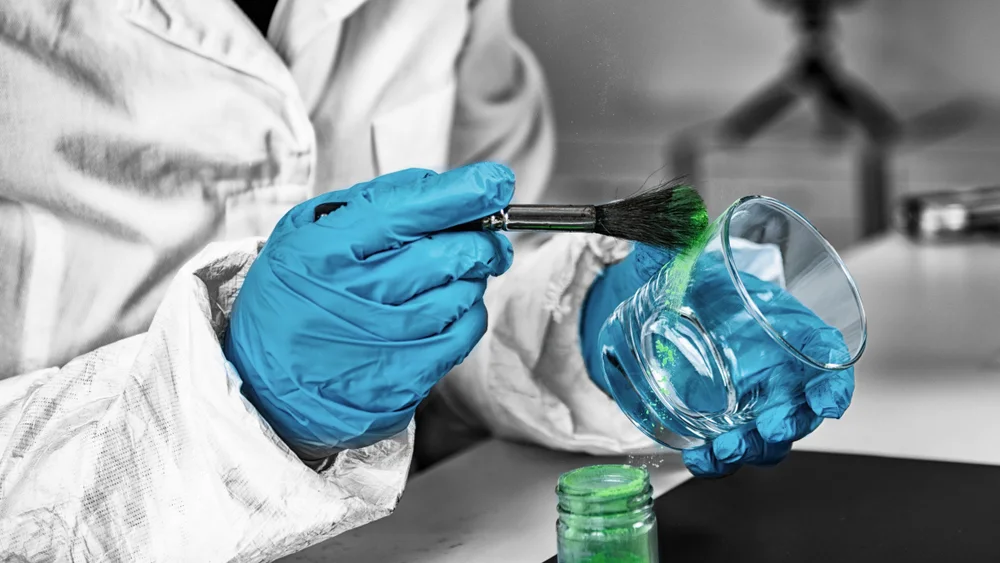
Criminalistics usually refers to the scientific examination of physical evidence. In a crime laboratory, that can include forensic chemistry, DNA and biology, toxicology, firearms, toolmarks, controlled substances, trace evidence, and impression evidence. Online colleges often use the same language more broadly for programs centered on crime-scene photography, fingerprints, evidence collection, investigations, and criminal justice.
Those are different educational paths. A student preparing for field-based crime-scene work needs courses in scene processing, documentation, evidence recovery, chain of custody, photography, and report writing. A student targeting a California criminalist or crime-laboratory analyst position usually needs a much deeper foundation in chemistry, biology, mathematics, and laboratory methods.
The programs below reflect that range. They include fully online degrees, primarily online programs with campus laboratory sessions, criminal justice degrees with CSI concentrations, and hybrid options requiring substantial in-person work. No verified fully remote program in this review offered a standalone Bachelor of Science in Criminalistics with the laboratory depth associated with traditional campus criminalistics degrees. Arizona State University came closest through its online forensic science curriculum, but it includes required in-person laboratory experiences in Arizona.
Readers who are still comparing degree levels and specializations can also review the broader guide to criminalistics degrees in California.
Comparing online and hybrid criminalistics-related bachelor’s programs
| School and program | Format | Science and laboratory depth | Primary career alignment |
|---|---|---|---|
| Arizona State University, BS in Forensic Science | Primarily online with intensive Arizona laboratory sessions | Extensive chemistry, biology, physics, mathematics, analytical chemistry, and forensic laboratories | Laboratory criminalistics, forensic analysis, crime-lab preparation |
| Columbia Southern University, BS in Forensic Investigation | 100% online | Limited prescribed natural-science depth; strong evidence and investigative coursework | Evidence collection, investigations, scene-related work |
| Liberty University, BS in Criminal Justice with CSI cognate | Online | One general natural-science elective in the published plan; four-course CSI cognate | Scene photography, management, reports, testimony |
| Purdue University Global, BS in Criminal Justice with CSI concentration | 100% online | Includes forensic chemistry and trace evidence, but remains a criminal justice degree | CSI, fingerprints, trace-evidence awareness, supervision |
| Salem University, BA in Criminal Justice, CSI | 100% online or blended | CSI practicum and specialty courses; limited verified laboratory-science sequence | Scene management, photography, impressions, firearms |
| Columbia College, South Carolina, Criminal Justice with Forensic concentration | Online | Includes DNA and crime-scene courses with labs, although online lab delivery is not publicly explained | CSI, fingerprints, evidence documentation |
| Tiffin University, Bachelor of Criminal Justice in Criminalistics | Asynchronous online or on campus | Applied evidence curriculum rather than chemistry-intensive laboratory science | CSI, evidence technician, investigations |
| Saint Leo University, Criminal Justice-Criminalistics bachelor’s | Online, on campus, or at education centers | Applied criminalistics within criminal justice | Physical evidence, fingerprints, field investigation |
| American InterContinental University, BS in Criminal Justice with Forensic Science specialization | Fully online | Includes forensic biology and practical criminalistics exercises, but not a full science-major sequence | Scene and death investigation, evidence work |
| SUNY Canton, BS in Forensic Criminology | 100% online | Research, criminology, policy, and program analysis rather than physical-evidence laboratories | Justice research, policy, victim services, program evaluation |
| Fort Hays State University, BS in Criminalistics, Crime Mapping and Spatial Analysis | Hybrid with required in-person work | Chemistry laboratory, criminalistics, statistics, GIS, and spatial analysis | Crime analysis, GIS, intelligence, mapping |
| SUNY Canton, BTech in Criminal and Forensic Investigation | Approximately 75% online | Strong practical investigation curriculum with face-to-face upper-level instruction | CSI, death investigation, evidence and autopsy support |
| Keiser University, BS in Forensic Investigations | Hybrid with required Florida attendance | Forensic biology, chemistry, fingerprints, photography, criminalistics, and practical laboratories | Physical-evidence investigation, CSI, criminalistics support |
| Post University, BS in Criminal Justice with CSI concentration | Fully online | Field-oriented CSI and evidence curriculum rather than laboratory science | Scene processing, documentation, collection, chain of custody |
California criminalist requirements change the degree decision
California’s state Criminalist classification provides a useful benchmark for laboratory-oriented applicants. The current CalCareers Criminalist examination bulletin requires the equivalent of a college degree with a major in a physical or biological science. The qualifying education must include eight semester hours of general chemistry and three semester hours of quantitative analysis.
That requirement immediately separates science degrees from most online criminal justice programs. A bachelor’s degree containing “forensic,” “CSI,” or “criminalistics” in its title is not sufficient by title alone. A criminal justice curriculum with photography, fingerprints, and evidence collection can be relevant to field work while still lacking the science major and chemistry credits required for a state criminalist appointment.
California city, county, and state employers establish their own qualifications, so the state classification is not a universal rule for every forensic position. Some agencies employ civilian crime-scene investigators or evidence technicians. Others assign scene work to sworn personnel. Job titles such as forensic science technician, criminalist, crime-scene investigator, and evidence technician can describe different duties from one agency to another.
For laboratory work, the safer educational foundation is a physical or biological science degree with substantial laboratory coursework. Chemistry, biochemistry, molecular biology, genetics, analytical or quantitative chemistry, statistics, physics, and instrumental analysis are more relevant to crime-lab preparation than a broad criminal justice core. The California Department of Justice’s criminalistics guidance similarly directs prospective criminalists toward a four-year science degree and discusses chemistry, biology, and related preparation.
The strongest online curricular match for laboratory criminalistics
Arizona State University: Online Bachelor of Science in Forensic Science
Arizona State University’s 120-credit Bachelor of Science in Forensic Science is the most science-intensive online option identified in this review. The curriculum requires two semesters each of general biology, general chemistry, organic chemistry, and physics. It also includes genetics, biochemistry, calculus, statistics, analytical chemistry, forensic analysis, testimony and ethics, and laboratory-bearing forensic courses.
This sequence is substantially different from a criminal justice degree with a four-course CSI concentration. Students study the scientific disciplines that underlie forensic biology, toxicology, DNA analysis, comparative evidence, and chemical examination. They also complete at least two upper-division forensic electives with laboratory components.
The online designation does not mean the entire degree can be completed from California. Organic chemistry and biochemistry laboratories may require accelerated sessions on an Arizona campus. The Fundamental Skills in Forensic Science laboratory is offered as an eight-day West Valley campus experience, and the online capstone is an in-person laboratory intensive. ASU permits some approved laboratory coursework to be transferred from a local institution, but the acceptability of a particular course depends on the university’s transfer evaluation.
Travel therefore belongs in the enrollment budget. Airfare or mileage, lodging, meals, local transportation, and time away from employment can materially increase the cost. Summer laboratory scheduling can also affect how financial aid applies during a particular term. ASU uses an individualized online tuition calculator rather than a single flat program price, so a credible cost comparison needs to include both the university estimate and the student’s travel plan.
First-year competency expectations include three years of laboratory science, four years of mathematics, four years of English, two years of social science, two years of the same second language, and one year of fine arts or career and technical education. Transfer admission follows a separate review process.
ASU’s curriculum provides the closest verified match here for a California resident planning laboratory criminalistics. Even so, the degree title does not itself establish eligibility for the California Criminalist classification. The transcript must show the required general chemistry and quantitative-analysis credit. ASU requires analytical chemistry, but agencies evaluating minimum qualifications may examine the course content and credit value rather than relying solely on the course name.
Internships are available but competitive and not guaranteed. California DOJ recommends related experience in crime laboratories, toxicology laboratories, and medical examiner or coroner facilities, so students pursuing bench work should treat internship preparation as a separate part of the degree plan.
Fully online forensic investigation and CSI-focused programs
These degrees are more accessible to California residents who cannot travel regularly, but most are designed around field investigation or criminal justice rather than laboratory criminalistics.
Columbia Southern University: BS in Forensic Investigation
Columbia Southern offers a 120-credit Bachelor of Science in Forensic Investigation in a 100% online format. The university advertises asynchronous delivery and 11 annual start dates. It may accept as many as 90 transfer credits after evaluation, which can shorten the route for students with substantial prior college work.
The major covers Introduction to Forensic Investigation, Criminal Investigation, Criminal Evidence and Legal Issues, Crime Scene, Forensics, and Evidence Collection, Fire Investigation and Analysis, Pathology of Death, Forensic Psychology, and digital-forensics subjects. Its emphasis is the recognition, collection, preservation, legal governance, and admissibility of evidence.
This is an investigations-focused curriculum, not a laboratory criminalistics degree. The published requirements do not prescribe the extended chemistry, biology, physics, and analytical laboratory sequence associated with crime-lab scientist preparation. It fits evidence collection and investigative interests better than toxicology, forensic chemistry, or molecular-biology goals.
Published tuition is $278 per credit. At that rate, 120 credits would equal $33,360 in tuition before transfer credits, discounts, fees, books, or future price changes. That calculation is tuition only, not total cost of attendance.
Liberty University: BS in Criminal Justice, Crime Scene Investigation
Liberty’s online degree is a 120-credit Bachelor of Science in Criminal Justice with a 12-credit Crime Scene Investigation cognate. The cognate consists of Introduction to Forensics, Crime Scene Photography, Crime Scene Management, and Court and Expert Witness Testimony.
Most of the curriculum remains criminal justice. Required subjects include criminology, corrections, judicial process, criminal law, constitutional criminal procedure, investigations, administration, ethics, and report writing. Only one general natural-science elective appears in the published degree plan.
The program therefore aligns with documentation, scene photography, coordination, reporting, and courtroom communication. It does not provide the natural-science major required by California’s state Criminalist specification.
Liberty generally uses eight-week and full-semester online subterms. Its program materials warn that some courses can involve alternate formats, scheduled sessions, required logins, or travel, but they do not identify whether those conditions apply to a specific CSI course. Published 2026-2027 online undergraduate tuition is $410 per credit at full-time enrollment and $475 per credit at part-time enrollment. A separate military undergraduate rate of $250 per credit is listed.
Liberty has a FEPAC-accredited forensic science bachelor’s program, but it is a separate on-campus degree. The online criminal justice program with the CSI cognate is not the program listed in FEPAC’s directory.
Purdue University Global: BS in Criminal Justice with Crime Scene Investigation concentration
Purdue Global’s Bachelor of Science in Criminal Justice requires 180 quarter credits and is delivered fully online in ten-week courses. The university identifies 34 courses and estimates four years of study before transfer-credit adjustments.
The 24-quarter-credit CSI concentration includes Forensic Fingerprint Analysis, Crime Scene Investigation II, Forensic Chemistry and Trace Evidence Analysis, and Supervisory Practices in Criminal Justice. These courses provide more direct attention to fingerprints, trace evidence, and scene operations than a general criminal justice major.
The concentration remains a small part of a broader degree covering criminal justice systems, law, management, research, ethics, technology, and a capstone. It is not structured as a physical- or biological-science major. Students targeting field CSI, evidence processing, or supervisory work will find closer curricular alignment than applicants preparing for chemistry-intensive crime-lab positions.
An internship is optional. The official materials reviewed did not identify a campus residency. Tuition is $371 per quarter credit, and Purdue Global publishes estimated full-program tuition of $66,780 before transfer credit or other reductions. Fees and living expenses are separate.
Salem University: BA in Criminal Justice, Crime Scene Investigation
Salem University offers its Crime Scene Investigation bachelor’s in fully online and blended formats. Online students take one course per month, and the university uses rolling monthly starts.
The degree combines approximately 75 foundational and elective credits, 30 criminal justice core credits, and a 15-credit CSI specialization. Specialty coursework covers crime-scene photography, fingerprints and impression evidence, scene management, ballistics and firearm identification, and digital evidence. The criminal justice core adds law, constitutional procedure, criminal investigation, research, statistics, ethics, and a capstone.
Salem describes a hands-on practicum, but current public materials do not explain whether fully online students complete practical exercises virtually, locally, with supplied materials, or at a campus. That unresolved delivery detail affects how much directly supervised scene-processing experience an online student receives.
The curriculum is more applicable to crime-scene documentation and evidence processing than to laboratory analysis. A substantial chemistry and biology sequence was not identified. Salem is institutionally accredited by the Higher Learning Commission and approved to offer distance education, but FEPAC programmatic accreditation was not verified for this degree. A clear current per-credit tuition rate was not available in the reviewed program materials.
Columbia College, South Carolina: Criminal Justice with Forensic Criminal Justice concentration
Columbia College lists its forensic criminal justice concentration among its online undergraduate programs. Online classes use seven-week terms without required login times, and the school states that students may transfer up to 90 credits.
Coursework includes Forensic DNA with Lab, FBI Fingerprint Recognition and Comparison, and Forensic Crime Scene Investigation with Lab. Published topics include toxicology, DNA, bloodstain-pattern analysis, fingerprints, scene protocols, and evidence documentation. This gives the program more explicit laboratory content than several CSI concentrations based solely on criminal justice courses.
Two material details remain unclear in the public materials. The program page uses Bachelor of Arts language in one location and Bachelor of Science language elsewhere. It also does not explain whether online laboratory courses use home kits, simulations, local facilities, or campus sessions. The curriculum can therefore be described accurately, but the final award title and practical laboratory format remain unresolved.
For 2026-2027, online undergraduate tuition is $427 per credit. A $51-per-credit resource and technology fee applies from fall 2026 through spring 2027 and includes electronic books. Physical books may cost extra.
Tiffin University: Bachelor of Criminal Justice in Criminalistics
Tiffin offers a 122-credit Bachelor of Criminal Justice in Criminalistics through asynchronous online and campus formats. Courses use seven-week terms, and the university’s current application system lists the criminalistics major for online enrollment.
The curriculum addresses crime-scene processing, evidence documentation and handling, fingerprints, blood and biological evidence, firearms, drugs, toolmarks, trace evidence, death investigation, criminal trial evidence, and courtroom presentation. Tiffin explicitly frames the major around CSI and forensic-evidence work rather than laboratory analysis.
A 150-hour professional internship is required. The university also describes crime-scene-house exercises and mock investigations. Public materials do not fully explain how every practical exercise is completed by remote students, although the internship provides a defined experiential component absent from many online competitors.
Tiffin’s current published tuition is $535 per credit. This route is closely aligned with crime-scene investigator, evidence technician, forensic technician, and investigative work. It should not be read as equivalent to a chemistry or biology degree merely because the award uses the criminalistics name.
Saint Leo University: Criminal Justice-Criminalistics bachelor’s degree
Saint Leo’s 120-credit criminal justice degree with a criminalistics specialization is available online, on campus, and through education centers. The specialization covers crime-scene investigation, forensic science, physical-evidence recognition and comparison, fingerprint analysis, evidence preservation, and bloodstain interpretation.
The broader academic foundation is criminal justice rather than natural science. No advanced chemistry or biology prerequisites were identified on the program page. The degree consequently fits scene investigation and evidence work more closely than forensic chemistry, toxicology, or DNA laboratory analysis.
Saint Leo discusses field placements, forensic-laboratory activities, fingerprint examination, and optional police-academy opportunities. Its public online description does not establish that a campus laboratory or field placement is mandatory for every distance student. The university is institutionally accredited by SACSCOC; FEPAC accreditation was not verified for this program.
American InterContinental University: BS in Criminal Justice, Forensic Science specialization
American InterContinental University offers this 180-quarter-credit bachelor’s degree entirely online in five-week courses. Although the specialization uses the forensic science label, the awarded degree is a Bachelor of Science in Criminal Justice.
Specialization courses include Criminalistics I and II, Criminal Investigation, Forensic Biology, and Medicolegal Death Investigation. The wider curriculum covers research methods, criminal law, constitutional procedure, psychopathology and criminality, and a senior criminal justice capstone.
Criminalistics II includes practical laboratory exercises and crime-scene documentation. The program page does not describe whether those exercises rely on home supplies, simulations, or another remote method. The verified requirements also do not show the extended chemistry sequence expected in a laboratory-science major.
This curriculum is best aligned with evidence, scene, and death-investigation interests. AIU states that there are no program-specific prerequisites beyond its general undergraduate admission documentation. The university system is institutionally accredited by the Higher Learning Commission, while FEPAC accreditation was not verified for this specialization.
Post University: BS in Criminal Justice with Crime Scene Investigation concentration
Post University offers a 120-credit Bachelor of Science in Criminal Justice online and on campus. Crime Scene Investigation is one of its named concentrations, and the university’s authorization disclosure states that students located in any U.S. state may enroll in its online programming.
The criminal justice core includes criminal law and procedure, criminology, courts, corrections, law enforcement, ethics, research, and forensic science. The CSI concentration focuses on processing scenes, recognizing and collecting physical evidence, maintaining chain of custody, documenting findings, and preserving evidence.
This is a field-investigation route rather than a laboratory criminalistics degree. Its subjects correspond to the daily work of scene processors and evidence personnel, but the verified curriculum does not establish the chemistry sequence needed for California state criminalist appointments.
Post describes fingerprinting and crime-scene documentation but does not publicly identify a mandatory campus residency, internship, or laboratory session for online students. The available page also does not expose the complete concentration course sequence or explain the delivery of practical exercises. Post is institutionally accredited by the New England Commission of Higher Education. Specialized forensic-science accreditation was not verified.
Adjacent online option for criminology and policy
SUNY Canton: Bachelor of Science in Forensic Criminology
SUNY Canton’s 122-credit Bachelor of Science in Forensic Criminology can be completed fully online. Courses are available in seven-week and 14-week sessions.
Despite the word “forensic,” this is primarily a criminology, research, and justice-policy degree. The curriculum emphasizes criminological theory, research design, scientific-method applications, evidence-based justice practices, ethics, program outcomes, victim services, and policy analysis.
It can support work in justice research, court services, victim services, offender programming, policy analysis, and some law-enforcement settings. It is not a substitute for a CSI-intensive curriculum or a laboratory degree in forensic chemistry or biology. FEPAC accreditation is not a particularly useful measure for this program because its central purpose is criminology and justice-system analysis, not forensic laboratory science.
Hybrid and partially online programs requiring substantial travel
These programs offer relevant online coursework but require in-person participation. California residents need to evaluate them as travel or temporary-relocation programs, not as conventional distance degrees.
Fort Hays State University: BS in Criminalistics, Crime Mapping and Spatial Analysis
Fort Hays State offers a 120-credit Bachelor of Science in Criminalistics with a Crime Mapping and Spatial Analysis concentration. It combines criminalistics, university chemistry with laboratory work, forensic science, criminal investigation, statistics, geographic information systems, cartography, remote sensing, geostatistics, spatial-data analysis, ethics, and criminal law.
The program is hybrid. Much of the academic work can be completed online, but laboratories and practical experiences require in-person attendance. The main program page does not specify how often a California student must travel to Kansas or whether attendance can be consolidated.
Its career focus is also more specialized than the degree title might suggest. Crime analysis, GIS, intelligence analysis, and spatial mapping are central. The curriculum contains chemistry and forensic science, but it is less focused on bench laboratory criminalistics than Fort Hays State’s campus-only forensic chemistry and forensic biology concentrations.
This program fits applicants who want to analyze where and how crime occurs using spatial data. It is less suitable for someone seeking a fully remote degree or a curriculum dominated by toxicology, DNA methods, or analytical chemistry.
SUNY Canton: Bachelor of Technology in Criminal and Forensic Investigation
SUNY Canton’s Bachelor of Technology in Criminal and Forensic Investigation is approximately 75% online. Upper-level core courses use a face-to-face total-immersion format, so the campus component is more substantial than an occasional weekend laboratory.
The curriculum includes forensic photography, latent prints and impressions, investigative interviewing, crime-scene investigation, death investigation, questioned documents, forensic drug analysis, firearms and toolmarks, skeletal identification, and criminal law and procedure. Students may complete an investigative internship or five upper-level program electives. The optional internship is described as 600 hours.
Admission is competitive. SUNY Canton lists an 80 high-school average, readiness for college algebra and composition, a minimum 2.0 transfer GPA, and a 2.5 GPA for priority admission.
Among the field-oriented choices, this program provides extensive practical coverage for crime-scene technicians, evidence personnel, death investigators, autopsy technicians, and criminal investigators. Its New York attendance requirement substantially reduces its convenience for California residents.
Keiser University: BS in Forensic Investigations
Keiser’s 126-credit Bachelor of Science in Forensic Investigations includes an Investigations concentration and is available on campus or in a hybrid format. The university explicitly requires campus attendance because students use forensic equipment, complete laboratories, and participate in practical crime-scene training. The required in-person work occurs in Florida.
The curriculum includes forensic photography and imaging, fingerprint identification and development, biological evidence, forensic legal concepts, field investigative procedures, forensic biology, forensic chemistry, forensic anthropology, medico-legal death investigation, advanced evidence documentation, and Criminalistics I and II. Natural-science options include biology, chemistry, physics, and associated laboratories.
Keiser provides materially more physical-evidence and laboratory work than most online criminal justice concentrations. Students also complete forensic-investigation externship coursework or an approved capstone alternative. Public information does not specify the number, duration, or scheduling of required campus sessions, which makes advance travel budgeting difficult.
Admission conditions include a qualifying assessment score, a Level 2 criminal background check, and an interview with the campus program director. Lower-division general education and major courses must be completed with grades of C or better before progression, and the published graduation requirement includes a 2.5 GPA.
This path can support CSI and physical-evidence preparation, but it is not a California-based low-residency program. A student living in California should plan for Florida attendance rather than treating the campus component as optional travel.
How FEPAC accreditation applies to these degrees
The Forensic Science Education Programs Accreditation Commission accredits qualifying bachelor’s and master’s programs in forensic science, as well as some natural-science or computer-science programs with forensic concentrations. This is programmatic accreditation, which is separate from a university’s institutional accreditation.
Institutional accreditation applies to the college or university as a whole. FEPAC accreditation applies to a particular program. A university can therefore be institutionally accredited without having a FEPAC-accredited forensic program.
The distinction is especially relevant at Liberty University. FEPAC’s current directory lists Liberty’s on-campus Bachelor of Science in Forensic Science. That listing does not extend to Liberty’s online Bachelor of Science in Criminal Justice with a Crime Scene Investigation cognate.
None of the online physical-forensics bachelor’s programs in this review was verified as a current FEPAC-accredited online program. Absence from the directory does not mean a program was rejected or that it lacks value. It means the degree should not be advertised or interpreted as FEPAC-accredited.
FEPAC is most relevant when evaluating a degree intended for forensic laboratory science. It is less useful for assessing a criminology program, a criminal justice degree, or a field-investigation curriculum whose primary purpose lies outside laboratory analysis.
Choosing a degree by the work you want to perform
Laboratory criminalist or crime-lab analyst
Prioritize a physical or biological science major with extensive laboratory work. The curriculum should include general chemistry, organic chemistry, biology, statistics, and upper-level science appropriate to the intended specialty. Analytical or quantitative chemistry is particularly relevant to California’s state Criminalist requirement.
ASU is the closest online curricular match among the programs reviewed, though its Arizona laboratories make it a low-residency option rather than a fully remote one. A general online bachelor’s in chemistry or biology with properly supervised laboratory courses may align better with California criminalist minimum qualifications than a criminal justice degree carrying a forensic concentration.
Specialty goals should shape the science electives. DNA and forensic biology work calls for genetics, molecular biology, biochemistry, and statistics. Drug chemistry and toxicology benefit from organic chemistry, analytical chemistry, instrumental analysis, and physiology. Trace evidence and materials analysis may require chemistry, microscopy, physics, and instrumentation.
Crime-scene investigator or crime-scene technician
Prioritize crime-scene photography, scene documentation, evidence recognition and recovery, fingerprints, impression evidence, bloodstain documentation, chain of custody, report writing, and courtroom testimony.
Tiffin has one of the broadest verified field-oriented curricula and requires a 150-hour internship. SUNY Canton’s BTech provides extensive practical content but requires significant in-person attendance in New York. Keiser combines scene work with laboratory courses but requires travel to Florida. Post, Liberty, Purdue Global, Salem, Saint Leo, Columbia Southern, Columbia College, and AIU provide fully online or primarily online alternatives with different levels of practical detail.
The job title still requires careful interpretation. A California agency may employ civilian CSI personnel, assign scene work to sworn officers, or divide duties among evidence technicians, forensic specialists, photographers, and latent-print examiners.
Evidence or property technician
Evidence technicians often need strong knowledge of packaging, preservation, chain of custody, documentation, legal procedure, property-room controls, and report writing. A field-oriented criminal justice or forensic investigation degree can be relevant even without advanced chemistry.
Columbia Southern’s emphasis on collection, preservation, legal governance, and admissibility fits this direction. Post’s concentration directly addresses chain of custody and evidence preservation. Tiffin adds broad physical-evidence coverage and an internship.
Crime analyst or GIS specialist
Fort Hays State’s Crime Mapping and Spatial Analysis concentration is the clearest match in this group. Its combination of GIS, cartography, geostatistics, crime analysis, and spatial data differs substantially from evidence collection and crime-lab analysis.
SUNY Canton’s Forensic Criminology degree can also support research and evidence-based justice work, but it is centered more on criminology, policy, and program outcomes than technical GIS.
Digital evidence specialist
Digital evidence is a separate specialty from physical-evidence criminalistics. Several programs listed here include one or two digital-evidence courses, but that limited exposure is not equivalent to a digital forensics degree. A student targeting computer, mobile-device, network, or cloud evidence should prioritize computing, operating systems, cybersecurity, scripting, data recovery, and dedicated digital-forensics laboratories.
Practical limits of studying forensic subjects online
Laboratory criminalistics involves hands-on technique, contamination control, evidence handling, instrument operation, quality assurance, documentation, and competency assessment. Simulations and remote exercises can teach concepts, but they do not reproduce every physical skill used in an accredited laboratory.
Program format therefore deserves more attention than the word “online” in a marketing headline. ASU requires intensive Arizona laboratories. Fort Hays State requires in-person laboratories and practical experiences. Keiser requires Florida campus attendance. SUNY Canton’s investigative BTech uses face-to-face upper-level immersion. Those requirements add travel and time costs, but they also provide directly supervised practical work.
Fully online CSI programs solve the location problem differently. Some describe practicums, laboratory exercises, or hands-on activities without publishing detailed delivery methods. Salem, Columbia College, AIU, Saint Leo, Post, and Tiffin leave at least some practical-format questions unresolved in their public materials. The honest conclusion is not that practical training is absent. Rather, the available materials do not establish exactly how every remote exercise is supervised and assessed.
Internship structure is another useful separator. Tiffin requires a 150-hour professional internship. Purdue Global makes its internship optional. ASU offers competitive internships that are not guaranteed. Keiser includes externship coursework or an approved capstone alternative. SUNY Canton’s investigative program permits an internship or an approved set of upper-level electives.
Cost and transfer planning
Published per-credit prices are not directly comparable when schools use different credit systems. Purdue Global and AIU use quarter credits, while most other programs use semester credits. Program totals also change with accepted transfer credit, enrollment intensity, fees, books, and annual tuition adjustments.
Several verified prices provide a starting point:
- Columbia Southern University publishes undergraduate tuition of $278 per semester credit. At 120 credits, that equals $33,360 in tuition before transfer credit, discounts, and additional costs.
- Liberty publishes 2026-2027 online undergraduate tuition of $410 per credit for full-time enrollment and $475 per credit for part-time enrollment.
- Purdue Global publishes tuition of $371 per quarter credit and estimated full-program tuition of $66,780 before transfer reductions.
- Columbia College, South Carolina publishes online undergraduate tuition of $427 per credit plus a $51-per-credit resource and technology fee for fall 2026 through spring 2027.
- Tiffin publishes tuition of $535 per credit.
A lower per-credit rate does not necessarily produce the lowest final bill. Columbia Southern may accept up to 90 transfer credits. Liberty permits up to 75% of the degree to transfer, subject to evaluation, while requiring at least 30 Liberty credits and at least 25% of the major and cognate in residence. Columbia College reports that online students may transfer up to 90 credits.
Laboratory travel changes the calculation for hybrid and low-residency programs. ASU applicants need a budget for Arizona laboratory sessions. Keiser students need a Florida attendance plan. Fort Hays State and SUNY Canton can require longer or repeated periods away from California. Those costs should be added to tuition and mandatory fees rather than treated as incidental expenses.
A practical decision framework
Start with the intended job function, not the program title.
Choose a science-heavy path for laboratory criminalistics. ASU provides the clearest verified online-oriented curriculum in this category, with the tradeoff of required Arizona laboratory work. A chemistry or biology bachelor’s with the appropriate laboratory sequence can also be more useful for California criminalist eligibility than a criminal justice degree labeled forensic science.
Choose a CSI or forensic investigation curriculum for scene work. Tiffin, Post, Liberty, Purdue Global, Salem, Saint Leo, Columbia Southern, Columbia College, and AIU all emphasize some combination of photography, evidence collection, fingerprints, scene management, documentation, investigations, or courtroom procedure. Their science depth varies, but none should be substituted for a physical- or biological-science major when a job specifically requires one.
Choose a hybrid practical program only when travel is realistic. Keiser provides broad physical-evidence and laboratory coverage but requires Florida attendance. SUNY Canton’s investigative BTech offers extensive practical content with substantial time in New York. Fort Hays State combines criminalistics with GIS and crime mapping, with required in-person work.
Choose the adjacent criminology route for research and policy. SUNY Canton’s fully online Forensic Criminology degree is appropriate for evidence-based justice practice, program evaluation, victim services, and policy analysis. It is not designed as crime-scene or laboratory training.
Finally, map the actual required courses against several California job announcements before committing to a curriculum. For a laboratory goal, look for the science major, chemistry credits, quantitative analysis, and upper-level laboratory work. For field CSI, prioritize scene processing, photography, fingerprints, documentation, evidence preservation, and testimony. That course-level comparison is more reliable than choosing a degree because “forensic” or “criminalistics” appears in its name.