
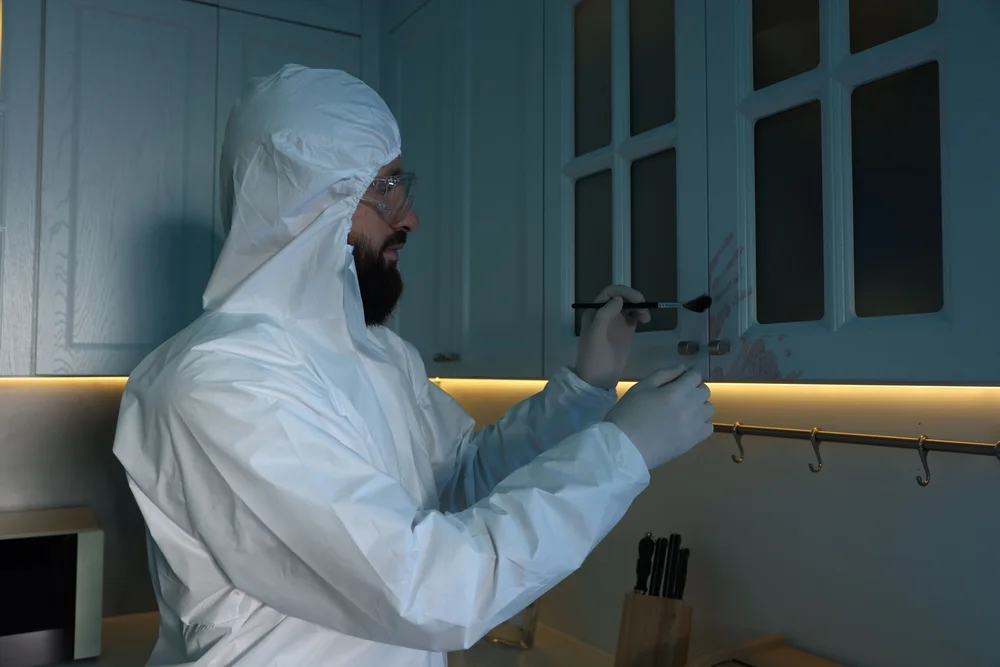
California colleges offer several associate degrees related to criminalistics, but current programs generally use titles such as Forensic Science, Forensic Technology, Forensic Studies, Forensic Crime Scene Investigation, or Crime Scene Investigations. No verified current California associate degree in this review uses “Criminalistics” as its exact title.
The title difference reflects meaningful curriculum differences. Most associate-level programs in this field emphasize crime-scene processing, fingerprints, photography, evidence handling, documentation, and investigative procedures. California laboratory criminalists usually need a bachelor’s degree in a physical or biological science with specified chemistry coursework. An associate degree can provide useful preparation for evidence, identification, forensic support, and some civilian crime-scene positions, but it is not the usual qualifying degree for criminalist employment.
The programs below were verified through official college sources as of September 25, 2026. The list covers current direct degrees, a closely related investigations degree, two associate-plus-certificate pathways, and a separate digital-forensics option. Minor omissions remain possible because statewide program databases can contain historical listings and not every college catalog is indexed consistently.
California criminalistics-related associate degrees compared
| College | Current award | Program orientation | Science and laboratory preparation | Format and practical notes |
|---|---|---|---|---|
| Ventura College | Forensic Science AS | Physical evidence, field work, and introductory laboratory science | Biology lab, chemistry, forensic science lab, statistics, photography, and capstone | Applied campus-oriented curriculum with laboratory and photography requirements |
| Grossmont College | Forensic Technology AS | Crime scenes, fingerprints, photography, and trace and pattern evidence | Biology lab, chemistry option, and multiple forensic courses with laboratory hours | Internship is recommended, not required in the major |
| Southwestern College | Forensic Studies AS | Evidence technology, latent prints, photography, and investigation | Biology lab and general chemistry | Catalog emphasizes the value of practical or volunteer experience |
| Palomar College | Forensic Technology AS | Physical evidence and forensic technician preparation | Final detailed course table was not available in the reviewed materials | New program launched for Fall 2026 |
| East Los Angeles College | Forensic Crime Scene Investigation AS | Evidence recognition, recovery, documentation, and scene processing | Oriented more toward field CSI than advanced laboratory science | Current 60-unit associate degree with a related 17-unit certificate |
| ATA College | Criminal Justice AS, Crime Scene Investigations emphasis | Criminal justice, public safety, and field crime-scene procedures | Much lighter natural-science content than the documented public-college forensic science degrees | Accelerated 60-week schedule; traditional, hybrid, and distance formats may be offered |
| San Diego Miramar College | Administration of Justice Investigations Specialization AS | Investigation, criminal law, evidence, and law-enforcement forensics | No verified multilevel forensic laboratory sequence comparable to Ventura or Grossmont | Morning, afternoon, evening, weekend, and online classes are offered within the department |
| Fullerton College | Administration of Justice AS plus separate CSI certificate | Broad criminal justice degree supplemented by specialized CSI training | Specialized science depth was not established in the reviewed material | Internships with local partners are advertised |
| City College of San Francisco | Administration of Justice AS plus separate 18-unit CSI certificate | Fingerprints, forensic evidence, documentation, law, and report writing | Field and identification emphasis rather than laboratory criminalistics | The CSI certificate is separate from the associate degree |
| Coastline College | Digital Forensics and Incident Response AS | Cyber investigations and electronic evidence | Digital laboratories rather than chemistry, biology, or physical crime-scene science | Separate specialty for digital evidence and incident response |
Among the programs with fully documented curricula, Ventura provides the broadest combination of laboratory science, forensic methods, photography, statistics, writing, and capstone work. Grossmont has a concentrated sequence in scene processing, fingerprints, photography, and forensic analysis. Southwestern blends an Administration of Justice foundation with evidence technology and introductory science. ELAC is directly focused on field crime-scene work. Palomar is the newest option, although its final detailed curriculum was not fully accessible during this review.
Readers planning beyond the associate level can also review other California criminalistics degree pathways, especially if the long-term objective is laboratory work.
Direct forensic science, forensic technology, and CSI degrees
Ventura College Forensic Science Associate in Science
Ventura College offers a 45-unit Forensic Science major within an associate degree requiring at least 60 total units. Its required curriculum covers more academic and occupational ground than the other fully documented associate programs in this review.
The science foundation includes biology with laboratory work, chemistry, a forensic science lecture course, and a dedicated forensic science laboratory. Required applied subjects include forensic photography and digital documentation, legal aspects of evidence, report writing, courtroom procedures, ethics, statistics, career preparation, and a forensic science capstone. Available electives include crime-scene management, fingerprint identification, digital forensics, forensic anthropology, crime analytics, and criminalistics topics involving trace and pattern evidence.
This combination supports two objectives. A student interested in field evidence work receives instruction in documentation, collection, preservation, photography, and chain of custody. Someone planning further study receives introductory science and statistics that can contribute to a longer academic sequence. The capstone also provides a structured endpoint beyond completing a collection of unrelated occupational courses.
Ventura’s catalog identifies field evidence technician and forensic laboratory technician as relevant occupational directions. An introductory associate-level laboratory curriculum, however, is not equivalent to the bachelor’s-level physical or biological science education commonly required for criminalist or forensic scientist positions.
The degree is primarily campus-oriented because laboratory science, photography, applied forensic work, and the capstone cannot be reduced to a purely lecture-based online sequence. Individual course modalities can vary, but the official materials do not establish a fully online path.
Ventura College is institutionally accredited by the Accrediting Commission for Community and Junior Colleges, with accreditation reaffirmed in June 2025 through 2030. That is institutional accreditation, not specialized FEPAC accreditation.
California residents pay a 2026-27 enrollment fee of $46 per unit. Health, student center, laboratory, materials, and other applicable charges are additional. Nonresidents pay nonresident tuition on top of the enrollment fee. Because the degree requires general education as well as the 45-unit major, the major-unit count alone does not represent the full enrollment cost.
Among the curricula documented in detail, Ventura has the broadest verified combination of biology, chemistry, statistics, forensic laboratory work, photography, legal preparation, and a capstone. The degree is not an Associate Degree for Transfer, and the available sources do not establish a universal transfer pathway into a specific bachelor’s major. Students intending to continue into chemistry, biology, biochemistry, or forensic science need a course plan based on the prerequisite and articulation requirements of the intended university program.
Grossmont College Forensic Technology Associate in Science
Grossmont College’s Forensic Technology AS requires a 42-unit major plus general education and electives. Its curriculum is concentrated on physical evidence and the techniques commonly associated with crime-scene and identification work.
Required subjects include fingerprint identification, advanced fingerprint identification, forensic photography, advanced forensic photography, criminal investigation, crime-scene technology, forensic analysis, criminal law, community and justice studies, biology with laboratory, and a chemistry option. Compared with a broad Administration of Justice degree containing one forensic elective, this is a sustained technical sequence.
Course sequencing matters. Crime Scene Technology requires prior forensic photography, while Forensic Analysis follows Crime Scene Technology. Students progress from documentation into scene work and then into more advanced evidence analysis rather than taking the courses in any order.
The practical content is substantial for an associate degree. Crime Scene Technology includes three laboratory hours and addresses applied scene processing. Forensic Analysis also includes three laboratory hours, with topics such as trace evidence, bloodstain patterns, impression evidence, firearms, questioned documents, toxicology, and serology. These subjects provide exposure to major evidence categories, although associate-level exposure does not qualify a graduate as a specialized laboratory examiner.
Grossmont recommends a two-unit Forensic Public Service Internship consisting of 108 hours of paid or unpaid work experience. The internship is not listed as a mandatory major course. A student can complete the published major without it, but the experience can provide evidence-handling practice, agency exposure, and examples of professional work for future applications.
The curriculum directly supports crime-scene processing, forensic photography, fingerprint work, and physical-evidence assignments. Grossmont’s own career information indicates that forensic scientist occupations usually require a bachelor’s degree or higher, which is consistent with California’s criminalist requirements and national employment patterns.
Several courses contain laboratory hours, so the degree is an applied campus program rather than a fully online forensic degree. The official catalog does not establish that all requirements can be completed remotely.
Grossmont identifies ACCJC as its institutional accreditor. As with every associate degree on this page, FEPAC accreditation is not available at this degree level. California community college residents generally pay the statewide $46-per-unit enrollment fee, with local, course, campus, and nonresident charges added as applicable.
Grossmont devotes a large share of its major to photography, fingerprints, scene processing, and physical evidence. A student targeting laboratory chemistry, DNA analysis, toxicology, or another science-intensive specialty would need a stronger chemistry or biology transfer sequence than this occupational major provides by itself.
Southwestern College Forensic Studies Associate in Science
Southwestern College offers a career-technical Forensic Studies AS with a 36-unit major. General education and other associate-degree requirements are completed in addition to the major.
The curriculum includes administration of justice, criminal law, evidence, principles of investigation, justice report writing, evidence technology, latent fingerprint examination, digital forensic photography, introductory biology with laboratory, and general chemistry. The mix is practical and legal, with enough science to introduce biological and chemical concepts without approaching the depth of a bachelor’s degree in chemistry, biology, biochemistry, or forensic science.
Evidence law and report writing deserve attention in a CSI curriculum. Collecting an item correctly is only part of the job. Technicians also have to document where it was found, describe the collection method, preserve chain of custody, prepare a clear report, and potentially explain their work in court. Southwestern’s inclusion of evidence, investigation, writing, fingerprint examination, and photography addresses that wider workflow.
Biology laboratory and general chemistry strengthen the degree beyond a purely criminal justice curriculum. One introductory sequence, however, does not provide the upper-division laboratory background expected for forensic chemistry, forensic biology, DNA analysis, toxicology, or California criminalist work.
The catalog explains that practical experience is commonly needed before paid employment and identifies volunteer service with crime laboratories or police agencies as one way to develop experience. No required internship was established in the reviewed degree requirements. The evidence technology, latent-print, photography, biology laboratory, and chemistry courses still give the curriculum an applied component.
Southwestern’s required courses support field evidence, fingerprint, photography, criminal-identification, and crime-scene work. The general chemistry and biology requirements can also begin a science sequence, but their applicability to a bachelor’s major depends on the receiving university’s current articulation and prerequisite rules.
California resident enrollment is $46 per unit. Nonresident tuition, health charges, campus fees, books, transportation, and course materials are separate. Southwestern participates in the ACCJC accreditation process, and ACCJC accepted its midterm report in January 2026.
Palomar College Forensic Technology Associate of Science
Palomar College introduced its Forensic Technology AS and related Certificate of Achievement for Fall 2026. The college’s Administration of Justice department lists both awards, and the certificate is identified as a 41-unit program.
Official development material describes physical-evidence collection, processing, and analysis as central subjects. That places the program within the direct forensic technology category rather than among general Administration of Justice degrees with a single optional forensic course.
The live curriculum system did not expose a reliable final degree course table during this review. The current official evidence therefore does not supply the AS major-unit total, complete required-course list, chemistry and biology requirements, laboratory hours, internship requirements, delivery modalities, or course sequence. The degree itself is current and was publicly announced by Palomar as available for Fall 2026.
Its newness creates a different planning situation from established programs at Ventura, Grossmont, and Southwestern. Those colleges publish sufficiently detailed curricula to compare individual science, photography, fingerprint, and laboratory requirements. Palomar’s verified public material establishes the program’s existence and physical-evidence focus, but not the same level of curricular detail.
The verified program description points toward forensic technician, evidence custodian, and crime-scene support preparation. The available materials do not document the science sequence needed for California criminalist eligibility, and FEPAC does not accredit associate degrees.
East Los Angeles College Forensic Crime Scene Investigation Associate of Science
East Los Angeles College offers a 60-unit Associate of Science in Forensic Crime Scene Investigation. ELAC also lists a related 17-unit Certificate of Achievement.
The program focuses on evidence identification, evidence recovery, crime-scene processing, criminalistics concepts, fingerprints, photography, and documentation. These subjects place it squarely within field CSI education. The occupational areas identified by the college include crime scene technician, evidence custodian, coroner’s assistant, and criminal investigation.
ELAC’s degree is directly relevant to readers seeking a named CSI associate program in Los Angeles County. Unlike an Administration of Justice degree paired with an optional certificate, the associate award itself is titled Forensic Crime Scene Investigation.
The available official descriptions characterize the curriculum as hands-on. They do not list a mandatory internship in the material reviewed, and they do not establish that the entire degree can be completed online. The applied photography, processing, and evidence-recovery content indicates a curriculum built around practical scene skills rather than asynchronous lecture study alone.
This is a field-oriented degree. Its focus on evidence recovery, fingerprints, documentation, and scene processing is appropriate for CSI support functions. A student targeting laboratory criminalistics would need additional education in chemistry, biology, or another qualifying science discipline.
ATA College Criminal Justice AS with Crime Scene Investigations emphasis
ATA College in El Cajon offers an Associate of Science in Criminal Justice with a Crime Scene Investigations emphasis. It is a private career-college option with a published 60-week schedule, 1,200 clock hours, and approximately 71 semester credits.
The curriculum combines criminal justice, criminal law, criminal procedure, evidence, courts, report writing, hiring preparation, physical fitness, general education, and a strategic operations capstone. Emphasis courses include Search and Seizure, Crime Scene Documentation, Crime Scene Processing, Domestic Violence, and Sex Offenders.
Crime Scene Processing covers scene protection, photography, evidence recognition and preservation, fingerprint development, witness separation, and chain of custody. Those topics are relevant to field investigation and public-safety work. The central CSI courses are listed primarily as lecture-format courses, however, and the program contains much less natural science than Ventura, Grossmont, or Southwestern.
ATA labels the program as available through traditional, hybrid, or distance education formats, subject to scheduling. Under the catalog’s format definition, a hybrid program requires at least 50 percent of instruction on campus. The published format labels therefore do not mean that every student can complete the full CSI emphasis remotely.
The 2026 catalog lists estimated total program charges of $23,890 for the Associate of Science in Criminal Justice. Optional certification costs, identification verification, transportation, and personal expenses may be additional. This figure is an estimated program charge from the catalog, not a statewide public-college enrollment rate.
The program’s career alignment is criminal justice, public safety, investigation, security, and field crime-scene procedure. It is not a laboratory criminalistics degree. Its science content does not supply the bachelor’s-level physical or biological science education required for California’s Criminalist classification.
ATA states that the institution is accredited by the Council on Occupational Education. The U.S. Department of Education identifies the Council on Occupational Education as an active nationally recognized accrediting agency. ATA also states that it is approved to operate in California by the Bureau for Private Postsecondary Education.
Institutional accreditation does not create a blanket transfer guarantee. The receiving college or university decides whether ATA coursework applies as transfer credit and how accepted credits fit a particular degree. The current evidence also does not establish that every ATA program is independently eligible for every federal or state financial-aid category. ATA’s enrollment agreement and program-specific aid disclosures govern those issues for an enrolled student.
The practical comparison with a California community college is straightforward. ATA offers an accelerated schedule and a criminal justice-centered CSI emphasis at a published estimated charge of $23,890. The public programs generally have a much lower resident enrollment rate and, in several cases, more documented biology, chemistry, or forensic laboratory work. ATA fits a career-college route focused on criminal justice and field procedure, while Ventura, Grossmont, and Southwestern provide stronger documented science or laboratory components.
A closely related investigations degree
San Diego Miramar College Administration of Justice Investigations Specialization AS
San Diego Miramar College offers an Associate of Science in Administration of Justice Investigations Specialization. California classifies it under TOP code 2105.40, Forensics, Evidence, and Investigation, and the college identifies it as a career-technical education award.
The current program is broader than a degree titled Forensic Science or Forensic Technology. Official college materials describe Administration of Justice training involving criminal law, evidence, investigations, crime-scene management, forensic analysis, contemporary police technologies, and related justice functions.
Miramar’s department offers morning, afternoon, evening, weekend, and online classes. That scheduling range can help working students, but it does not establish that every degree requirement is offered online every term.
The exact 2026-27 course table was not reliably extractable from the current catalog or program mapper during research. Available official evidence supports describing the award as an investigations-focused Administration of Justice degree, not as a multilevel laboratory criminalistics program. No current detailed laboratory sequence comparable to Grossmont’s scene technology and forensic analysis courses or Ventura’s forensic science laboratory and capstone was verified.
This route works better for investigation, law-enforcement support, and broader Administration of Justice goals than for chemistry- or biology-based laboratory careers. Some agency CSI assignments are held by sworn officers, and an investigations degree may fit that organizational model. The degree itself does not replace academy training, agency selection requirements, or a qualifying science bachelor’s degree for criminalist work.
Associate degree plus CSI certificate pathways
Some California colleges provide a general Administration of Justice associate degree and a separate Crime Scene Investigation certificate. These can form a useful education plan, but they are not named forensic science or criminalistics associate degrees.
Fullerton College Administration of Justice AS and Crime Scene Investigation certificate
Fullerton College offers an Administration of Justice Associate in Science and a separate Crime Scene Investigation certificate. The department states that its curriculum includes criminal law, evidence procedures, investigations, and forensics.
The associate degree supplies the broader justice foundation. The certificate provides the focused CSI component. Fullerton also advertises internship opportunities with local partners for students interested in crime-scene investigation and forensics.
This structure provides a broad criminal justice credential alongside specialized scene-processing study. It is not a named criminalistics or forensic science associate degree because CSI is a separate certificate rather than the title or formal concentration of the AS.
Detailed current science requirements, certificate-to-degree course overlap, and online availability were not established in the reviewed material. The pathway is therefore classified as adjacent to the direct degrees.
City College of San Francisco Administration of Justice AS and CSI certificate
City College of San Francisco lists an Administration of Justice AS and a separate 18-unit Crime Scene Investigation certificate. The certificate curriculum includes fingerprints, forensic evidence, crime-scene documentation, criminal law, report writing, and introductory administration of justice.
This sequence addresses several central field skills. Fingerprint work and scene documentation support identification and evidence-processing functions, while report writing and criminal law connect technical work to investigation and court use.
The available official page does not identify a mandatory internship or field placement for the certificate. It also does not state that every certificate course applies to the Administration of Justice major in every education plan. The two current awards can be combined, but they remain administratively separate credentials.
CCSF provides an adjacent route for civilian crime-scene, evidence-handling, and criminal-identification preparation in the San Francisco area. Its structure is closer to Fullerton’s broad AS plus certificate model than to Ventura’s integrated forensic science degree.
Digital evidence is a separate forensic specialty
Coastline College Digital Forensics and Incident Response AS
Coastline College offers a Digital Forensics and Incident Response Associate of Science requiring 27 major units and at least 60 total degree units.
The curriculum addresses cyber investigations, evidence acquisition, digital chain of custody, incident detection and analysis, timeline analysis, anti-forensic methods, containment and recovery, forensic reporting, and expert testimony. Career directions identified by the college include digital forensics examiner, digital forensics technician, cybercrime analyst, cyber incident analyst, and incident responder.
This program belongs in a criminalistics discussion only with a clear specialty distinction. Digital evidence work involves computers, storage media, networks, logs, mobile devices, cybersecurity incidents, and electronic records. Physical CSI programs concentrate on scenes, fingerprints, photography, biological material, impressions, trace evidence, firearms-related evidence, and property collection.
Coastline’s courses use hands-on digital-forensics and incident-response exercises. The program does not contain the conventional chemistry, biology, and physical crime-scene laboratory sequence associated with criminalistics. Likewise, a physical-evidence degree does not provide the computing and incident-response preparation found in Coastline’s curriculum.
Core course outlines permit online, live-online, and laboratory modalities. The reviewed catalog material did not establish that every requirement is available fully online in every term.
An associate degree is not the usual route to California criminalist jobs
California uses “Criminalist” for a laboratory-centered state classification with defined science requirements. The California Criminalist examination bulletin requires education equivalent to graduation from college with a major in a physical or biological science. The education must include eight semester hours of general chemistry and three semester hours of quantitative analysis.
A forensic-focused associate degree by itself does not meet that standard. Even programs that require biology and chemistry remain associate degrees and generally contain fewer advanced science courses than a qualifying bachelor’s major.
The California Department of Justice Criminalistics Institute explains that criminalists usually hold four-year degrees in a physical or biological science. It also distinguishes laboratory criminalists from crime-scene personnel. Scenes may be handled by nonlaboratory technicians, investigators, or specially trained police officers.
The U.S. Bureau of Labor Statistics similarly reports that forensic science technicians typically need a bachelor’s degree, although some positions may accept an associate degree. Job titles are not standardized across California agencies, so a “forensic technician” at one employer may have different duties and education requirements from a similarly titled position elsewhere.
An associate degree is more directly relevant to roles such as:
- Crime scene technician
- Evidence technician
- Property and evidence technician
- Forensic photography assistant
- Criminal-identification technician
- Latent-print support technician
- Coroner or investigative support assistant
- Entry-level digital forensics technician
- Law-enforcement support or investigative aide
Some agencies employ civilian CSIs. Others assign crime-scene duties to sworn officers who must complete academy training and satisfy law-enforcement hiring standards. A CSI-focused associate degree can provide technical preparation, but it does not determine whether a particular agency treats the job as civilian or sworn.
Planning an associate degree for transfer into laboratory criminalistics
Readers aiming for a crime laboratory should plan backward from a science bachelor’s degree rather than choosing courses solely because they have “forensic” in the title. The strongest associate-level plan may be a chemistry, biology, biochemistry, or physical science transfer curriculum supplemented by forensic electives.
For laboratory criminalistics, prioritize courses such as:
- General chemistry with laboratory
- Quantitative or analytical chemistry
- Organic chemistry
- Biology with laboratory
- Molecular or cell biology
- Genetics
- Physics
- Statistics
- Calculus when required by the intended science major
- Instrumental analysis
- Scientific writing and laboratory methods
A field CSI course can still be useful. It teaches how evidence reaches the laboratory, why packaging affects analysis, how contamination occurs, and how chain of custody is documented. It cannot substitute for the chemistry and biology sequence needed to analyze controlled substances, toxicological samples, DNA, trace material, or other laboratory evidence.
Ventura has the broadest documented mix of science and CSI subjects among the reviewed associate degrees. It requires biology, chemistry, statistics, forensic laboratory work, photography, and a capstone. Southwestern also includes biology laboratory and general chemistry. Grossmont requires biology with laboratory and a chemistry option while devoting more of the major to technical scene, fingerprint, and photography courses.
Those curriculum features do not establish that any one of the degrees is the strongest transfer option. Ventura’s Forensic Science AS is not an Associate Degree for Transfer, and the reviewed articulation sources do not establish a universal pathway into a particular California bachelor’s program. Course selection should follow the prerequisite structure for the intended university science major, using current articulation information where available.
A class titled forensic chemistry may count as an occupational elective while failing to replace the general chemistry sequence required by a university science major. General education patterns also differ from major preparation. Completing an associate degree does not guarantee junior standing within a tightly sequenced chemistry or biology major if prerequisite science courses remain unfinished.
Citrus College provides a useful example of another route. Its catalog identifies forensic science as an unavailable major and recommends biological sciences or physical science instead. That advice reflects the reality that a strong science foundation can be more valuable than a forensic title for laboratory career goals.
What to compare in a CSI-focused associate program
Evidence processing and documentation
A field-oriented program should cover evidence recognition, scene protection, search methods, collection, packaging, preservation, chain of custody, sketches, notes, and reports. ELAC emphasizes evidence identification and recovery. Grossmont builds a sequence through photography, scene technology, and forensic analysis. Ventura combines documentation with laboratory work and legal procedures.
Repeated practice matters more than a single survey course. A program that requires several connected courses in photography, scene processing, fingerprints, and evidence analysis provides more technical depth than a general criminal justice major with one introductory forensic elective.
Photography
Photography is a technical evidence skill rather than a general visual-arts requirement. Useful coursework addresses scales, lighting, perspective, overall and close-up images, scene orientation, image records, and documentation standards. Grossmont requires both forensic photography and advanced forensic photography. Ventura requires forensic photography and digital documentation. Southwestern includes digital forensic photography.
A photography sequence also reveals how much of a program is designed around actual field documentation. Programs that mention photography only as one topic inside a general investigations course may provide less practice than curricula with dedicated introductory and advanced courses.
Fingerprints and pattern evidence
Fingerprint courses should move beyond basic classification into development, comparison, documentation, and evidence handling. Grossmont requires introductory and advanced fingerprint identification. Southwestern includes latent fingerprint examination. ELAC and CCSF also include fingerprint-related preparation.
Pattern evidence may include impressions, bloodstain patterns, firearms-related evidence, and other physical relationships. Grossmont’s Forensic Analysis course includes trace evidence, bloodstain patterns, impression evidence, firearms, and questioned documents.
Associate-level coursework can introduce these categories and their documentation. Specialized examiner positions may require additional education, agency training, supervised casework, competency testing, and discipline-specific qualifications.
Laboratory science
Biology and chemistry requirements help distinguish a forensic science curriculum from a criminal justice program with CSI electives. Ventura includes biology laboratory, chemistry, forensic lecture and laboratory courses, and statistics. Southwestern requires biology laboratory and general chemistry. Grossmont includes biology laboratory and a chemistry option.
None of these associate programs provides the advanced chemistry or biology depth of a science bachelor’s degree. Their science content functions as a foundation or introduction. Readers planning for laboratory work should give priority to courses that satisfy the intended bachelor’s major, even when that means taking additional science beyond the forensic associate requirements.
Writing, law, and testimony
Evidence work produces records that can become part of a criminal case. Report writing, criminal law, evidence law, ethics, courtroom procedure, and testimony therefore belong in a practical curriculum. Ventura requires report writing, courtroom procedures, ethics, and legal aspects of evidence. Southwestern includes evidence, investigation, criminal law, and justice report writing. CCSF’s certificate includes criminal law and report writing.
Strong technical writing is useful across field and laboratory roles. A scene technician records observations and collection procedures, while a laboratory analyst documents methods, results, limitations, and quality-control steps. Weak documentation can reduce the usefulness of otherwise careful technical work.
Internship and agency experience
Grossmont recommends a 108-hour internship but does not list it as a required major course. Fullerton advertises internship opportunities through local partners. Southwestern advises that practical experience is commonly expected and identifies volunteer work with laboratories or police agencies as useful preparation.
Program materials for Ventura, ELAC, CCSF, and Palomar did not establish mandatory internships. Laboratory courses, capstones, photography assignments, and scene-processing exercises still provide practical training, but supervised agency experience adds exposure to workplace procedures, evidence security, professional communication, and organizational expectations.
Silence about a required internship does not establish that optional work experience is unavailable. It means the current program materials reviewed here do not list an internship as a mandatory degree component.
Costs and delivery format
California community college residents pay a statewide enrollment fee of $46 per semester unit for 2026-27. This is an enrollment charge, not the full cost of attendance. Students may also pay health, student center, laboratory, materials, parking, transportation, books, technology, and other campus fees. Nonresident tuition is additional.
A 60-unit associate degree involves more than the listed major. Ventura’s 45 major units, Grossmont’s 42, Southwestern’s 36, and Coastline’s 27 all sit within broader degree requirements. Calculating cost from the major alone would omit general education and electives.
Public-college enrollment charges can also vary according to residency, previous coursework, financial-aid eligibility, fee waivers, and the number of units needed after placement or transfer-credit evaluation. Laboratory and photography courses may add material expenses beyond the basic enrollment fee.
ATA College uses a private-college pricing model. Its 2026 catalog lists estimated total charges of $23,890 for the Criminal Justice AS, with some optional and personal expenses outside that amount. Its published total should be compared with the full public-college education plan rather than with a single semester or the units in a public major alone.
Online availability also requires precise interpretation. A college may offer online Administration of Justice lectures while requiring campus attendance for chemistry, biology, photography, evidence processing, or laboratory courses. Miramar offers online classes within its department, and ATA lists traditional, hybrid, and distance formats, but neither fact proves that every student can complete every CSI requirement without attending in person.
No direct laboratory-oriented program in this review was established as a fully online degree. Coastline has the clearest connection to online-capable coursework, but its specialty is digital evidence rather than physical crime-scene processing.
Accreditation and program claims
The Forensic Science Education Programs Accreditation Commission, or FEPAC, accredits qualifying bachelor’s and master’s programs. Associate degrees fall outside its stated scope.
None of the programs in this article should be called FEPAC-accredited. This does not indicate that the degrees lack value. It means FEPAC is not the relevant programmatic accreditation mechanism at the associate level.
Institutional accreditation is separate. Ventura, Grossmont, and Southwestern have verified ACCJC accreditation information in the sources reviewed. ATA states that it is institutionally accredited by the Council on Occupational Education, which the U.S. Department of Education recognizes as an active accrediting agency. ATA also reports approval to operate in California from the Bureau for Private Postsecondary Education.
Institutional accreditation addresses the college as a whole. It does not certify that an associate curriculum meets FEPAC standards, guarantee that another institution will accept every course, or establish that every program at an institution qualifies for every type of financial aid.
Accreditation also does not erase career distinctions. An institutionally accredited Administration of Justice degree remains different from a chemistry bachelor’s degree, just as an accredited cybersecurity program remains different from a physical-evidence CSI program.
Programs not included as current named criminalistics associate degrees
California’s statewide program portals contain certificates, renamed awards, and historical records alongside current degrees. This review did not count a college as offering a criminalistics associate degree merely because it teaches a forensic course.
De Anza College’s Forensic Criminal Investigation Technician award is currently identified as a certificate, not an associate degree. Los Angeles Mission College also has a Crime Scene Technology certificate connected to broader Administration of Justice study rather than a named forensic associate degree.
Golden West College appears in older or statewide records under Criminal Justice: Forensics, Evidence, and Investigation. Its official 2026-27 catalog lists current Administration of Justice degrees but not that former forensic award, so it is omitted from the current program profiles.
Fresno City College’s current materials identify Forensic Evidence as a certificate. An archived Forensic Evidence AS major sheet states that the associate program was deleted effective Spring 2022. It is therefore not included as a current forensic associate degree.
Riverside City College surfaced a Crime Scene Investigation certificate proposal rather than a verified associate degree. Citrus College explicitly identifies forensic science as an unavailable major.
These exclusions keep the comparison focused on current degrees and clearly documented associate-plus-certificate pathways rather than inflating the list with individual electives, certificate-only options, or historical program titles.
Choosing a route by career objective
A reader targeting field CSI or evidence work should prioritize photography, fingerprints, evidence recognition, collection, documentation, chain of custody, report writing, and scene-processing laboratories. Grossmont, ELAC, Ventura, and Southwestern all address those areas, although their balance differs.
Grossmont devotes a concentrated technical sequence to photography, fingerprints, crime-scene technology, and forensic analysis. Ventura combines field methods with biology, chemistry, statistics, legal preparation, laboratory work, and a capstone. Southwestern blends evidence technology and identification subjects with introductory biology and chemistry. ELAC provides a direct 60-unit CSI degree centered on evidence recovery and scene processing.
Palomar belongs in the direct-program group as a new Forensic Technology AS, but the available public evidence is not detailed enough for a course-by-course comparison. Miramar is an investigations-focused Administration of Justice route, and its current published materials do not document the same forensic laboratory depth as Ventura or Grossmont.
ATA provides an accelerated private-college route with criminal justice and CSI emphasis courses. Its published estimated charges are much higher than the basic public community college enrollment rate, and its documented science content is lighter. Its verified Council on Occupational Education accreditation and reported California approval resolve the institutional-status question, but transfer credit remains subject to the receiving institution’s policies. The available evidence also does not establish program-specific eligibility for every form of financial aid.
Fullerton and CCSF offer a broad Administration of Justice associate degree combined with a separate CSI certificate. This structure supports a general justice education with added scene-processing coursework, but neither route is a named forensic science associate degree.
Coastline serves a different objective. Its curriculum covers cyber incidents, electronic evidence, forensic acquisition, incident analysis, reporting, and digital chain of custody. Readers interested in physical scenes, fingerprints, biological evidence, or forensic chemistry need a different curriculum.
Anyone committed to becoming a California criminalist should build the education plan around a qualifying bachelor’s degree in physical or biological science. At the associate level, prioritize transferable chemistry, biology, mathematics, and laboratory courses that satisfy the intended bachelor’s major. For field crime-scene and evidence roles, prioritize repeated applied work in documentation, photography, fingerprints, evidence handling, scene processing, and technical report writing.