Southwestern College offers two career-focused associate degrees related to forensic work, but they prepare students for different types of evidence.
The Forensic Studies Associate in Science concentrates on physical evidence, crime-scene procedures, fingerprints, photography, investigation, and introductory laboratory science. The Cyber-Forensic Associate in Science combines digital evidence investigation with cybersecurity, programming, information systems security, and required work experience.
Both are associate degrees housed in the Criminal Justice area. Neither is a short-term certificate, and Southwestern College does not advertise either degree as a fully online program. Each requires at least 60 total units once general education and graduation requirements are included.
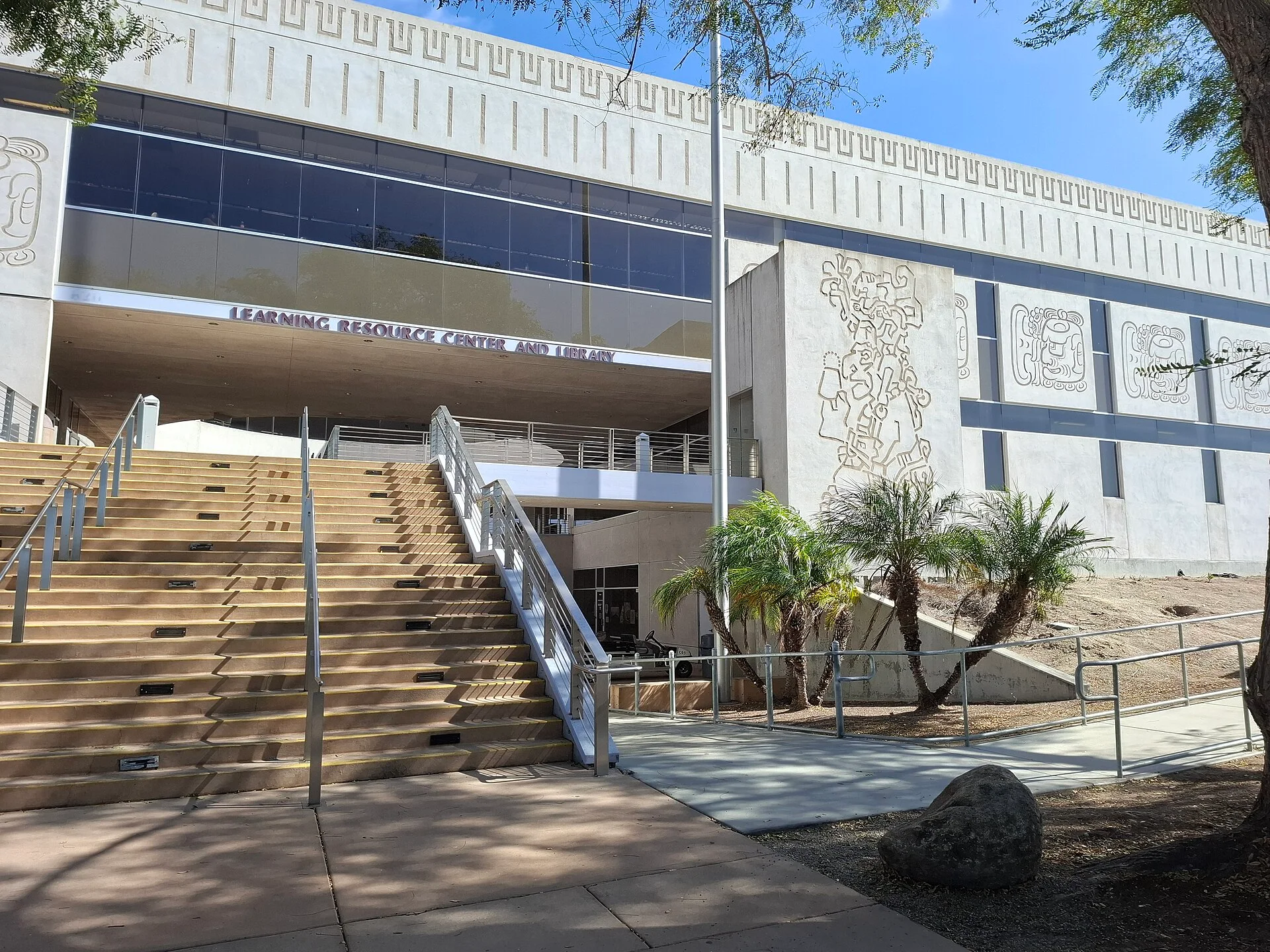
Southwestern College’s principal campus is in Chula Vista, with additional district locations in National City, Otay Mesa, San Ysidro, and Crown Cove. Most college classes and services are based at the Chula Vista campus, although individual course locations and delivery formats vary by term.
Southwestern College forensic program comparison
| Program | Major requirements | Primary subjects | Practical component | Closest career alignment |
|---|---|---|---|---|
| Forensic Studies Associate in Science | 36 major units | Scene investigation, evidence technology, fingerprints, forensic photography, biology, chemistry, criminal law | Multiple laboratory and practical courses; no required internship listed | Field evidence technician, crime-scene support, evidence handling, fingerprint or photography support |
| Cyber-Forensic Associate in Science | 30 to 32 major units | Computer forensics, cybersecurity, Python, information security, digital evidence law, investigation | Laboratory courses plus 108 to 216 hours of required work experience | Computer-forensics support, digital-evidence technician work, cybersecurity support, incident-response support |
The practical difference is straightforward. Forensic Studies deals primarily with evidence from physical scenes, while Cyber-Forensic addresses evidence stored on computers and electronic devices. The Cyber-Forensic degree also extends beyond evidence examination into network defense, vulnerabilities, incident response, security analysis, and penetration testing.
Forensic Studies Associate in Science
Southwestern College’s Forensic Studies AS is a 36-unit career and technical education major. Its current title is Forensic Studies, even though the official catalog URL retains an older crime-scene-investigator label.
The curriculum is designed around field evidence and crime-scene support. Required subjects include:
- Criminal law
- Rules of evidence
- Principles of investigation
- Investigative report writing
- Evidence technology
- Latent fingerprint examination
- Digital forensic photography
- Introductory biology with laboratory work
- Introductory general chemistry with laboratory work
Several of these classes have substantial practical components. AJ 166, Principles of Investigation, covers crime-scene examination, recording, physical-evidence collection, and preservation. It includes three laboratory hours per week and serves as a prerequisite for more advanced courses.
AJ 171, Evidence Technology, builds on AJ 166 and also includes three weekly laboratory hours. AJ 216, Latent Fingerprint Examiner, addresses pattern recognition, classification, comparison, and fingerprint recording systems. AJ 222, Digital Forensic Photography, covers photography in both crime-scene and laboratory settings. These courses provide more direct evidence-processing practice than a general criminal justice associate degree normally offers.
The science component consists of introductory biology and CHEM 100, an introductory general chemistry course. CHEM 100 includes lecture and laboratory work in areas such as stoichiometry, solutions, acids and bases, gas laws, equilibrium, and chemical reactions. Elementary algebra proficiency is required.
Career alignment and limitations
This curriculum is most closely aligned with field evidence and scene-support functions. Depending on an agency’s hiring standards, relevant titles could include evidence technician, property and evidence technician, forensic laboratory support technician, crime-scene support technician, or related entry-level roles.
Agency terminology is inconsistent. A California police department might employ civilian crime-scene personnel, while another department could assign scene duties to sworn officers. Sworn assignments can require academy completion and law-enforcement employment in addition to a relevant degree.
Southwestern College describes the degree as preparation for field evidence technician and forensic laboratory technician work. It also advises that practical experience is commonly needed before paid employment and identifies volunteer experience with police agencies or crime laboratories as one possible way to develop that background. The current degree requirements do not list an internship.
The program is not equivalent to a bachelor’s degree in laboratory criminalistics. Laboratory criminalists and forensic scientists commonly need deeper preparation in chemistry, biology, organic chemistry, quantitative analysis, statistics, molecular biology, or scientific instrumentation.
The California Department of Justice Criminalist classification, for example, requires education equivalent to a bachelor’s degree with a major in a physical or biological science. Its education standards also specify the equivalent of eight semester hours of general chemistry and three semester hours of quantitative analysis. The Forensic Studies AS does not meet those requirements by itself.
The program’s value is concentrated in a different occupational lane. It provides substantially more training in scene processing, evidence handling, fingerprints, and forensic photography than it provides in advanced laboratory science.
Course sequencing
The Forensic Studies major requires advance planning because several courses follow a prerequisite sequence or are listed in particular terms.
AJ 171 Evidence Technology and AJ 222 Digital Forensic Photography both require AJ 166 Principles of Investigation. AJ 171 and AJ 216 are listed for fall, while AJ 222 is listed for spring. AJ 167 has an English prerequisite or placement requirement, and CHEM 100 requires elementary algebra proficiency.
Missing a fall-only or spring-only course could extend the completion timeline. A sensible sequence places AJ 166 early, followed by AJ 171, AJ 216, and AJ 222 according to their listed rotation. Biology and chemistry also need space in the schedule because they include laboratory hours rather than lecture alone.
Recommended electives include biological anthropology, anatomy, computer-aided design and drafting, logic, and camera, lighting, and sound fundamentals. These electives do not convert the degree into a laboratory science program, but they can reinforce specific interests such as human remains, visual documentation, or technical scene representation.
Cyber-Forensic Associate in Science
The Cyber-Forensic AS requires 30 to 32 major units. It combines criminal investigation and evidence law with coursework from Computer Information Systems.
Required study includes:
- Digital information systems
- Introductory cybersecurity
- Information systems security
- Cybersecurity analysis
- Computer-forensics fundamentals
- Python programming for security analysis and penetration testing
- Principles of investigation
- Legal aspects of evidence
- Forensic computer investigation
- Two to four units of CIS work experience
This is broader than a narrowly defined digital-evidence examination program. Students study how to acquire and analyze computer data, but they also address cyber threats, vulnerabilities, security architecture, incident response, penetration testing, and defensive security.
CIS 179, Computer Forensics Fundamentals, introduces data acquisition, disk structures, operating-system boot processes, forensic tools, analysis, and technical writing. The course includes both lecture and laboratory hours and is listed in fall and spring.
AJ 288, Forensic Computer Investigation, applies investigative concepts to computer-related crime and electronic devices. Topics include search warrants, investigative software, privacy, jurisdiction, and forensic methodology. The class has a laboratory component and recommends prior preparation in introductory information systems and criminal investigation.
Python is part of the required curriculum through CIS 182. Rather than teaching programming as an isolated software-development subject, the course applies it to security analysis and penetration testing. Prior Python or programming preparation is recommended. CIS 169 also recommends earlier work in cybersecurity and Python, which creates a progression from foundational computing into more advanced security analysis.
Required work experience
Unlike the Forensic Studies AS, the Cyber-Forensic degree includes required work experience. Students complete two to four units through CIS 290.
Southwestern College’s Work Experience Education rules require an approved internship site before the course begins. The expected time commitment depends on the number of units:
- Two units require 108 internship hours
- Three units require 162 internship hours
- Four units require 216 internship hours
Internships can be paid or unpaid. The college generally expects completion of three or four core courses before work-experience participation.
This requirement adds a meaningful scheduling consideration. A student taking two units must still accommodate 108 workplace hours alongside classes, employment, and transportation. It also provides structured occupational experience in a field where employers often evaluate technical ability, documentation practices, and familiarity with investigative procedures in addition to academic coursework.
Career alignment
The Cyber-Forensic curriculum is relevant to entry-level computer-forensics support, digital-evidence intake, cybersecurity support, incident-response assistance, and continued study in cybersecurity or digital forensics. Some digital-forensics examiner positions require a bachelor’s degree, professional experience, security clearances, law-enforcement status, or specialized certifications beyond this associate degree.
The degree does not automatically award an industry certification. The catalog states that coursework can prepare students for certification examinations, but graduation and professional certification are separate outcomes.
Students mainly interested in recovering, preserving, and documenting digital evidence receive exposure to forensic processes and evidence law. Those interested in broader cybersecurity work also study defensive security, risk, threat detection, vulnerabilities, programming, and penetration testing. The curriculum therefore supports both investigative support and entry-level security functions rather than focusing entirely on forensic imaging and device examination.
Are these degrees available online?
Southwestern College does not advertise either forensic degree as fully online. Numerous required courses are approved for distance education, but that designation does not establish that every requirement is available online in the sequence needed for graduation.
The Forensic Studies degree includes laboratory or practical work in investigation, evidence technology, latent fingerprints, forensic photography, biology, and chemistry. Cyber-Forensic includes scheduled laboratory courses and required workplace experience. Current term schedules determine whether an individual class is online, live online, hybrid, or in person.
The current catalog does not establish an online-only completion sequence for either degree. Laboratory, practical, and work-experience requirements remain part of the curricula regardless of how individual lecture sections are delivered.
Admissions and associate degree requirements
Applicants to Southwestern College credit programs use CCCApply. Identity verification is part of the application process, and the college states that identity verification is required for course enrollment beginning October 1, 2026.
Neither forensic degree is presented as a separately selective-admission program. Individual courses have prerequisites or recommended preparation, particularly in English, algebra, investigation, information systems, cybersecurity, and programming.
Both programs lead to an Associate in Science degree. The major alone is not the full credential. Southwestern College requires at least:
- 60 total degree-applicable units
- 21 units of general education
- At least 18 units in the major or area of emphasis
- A grade of C, 2.0, or better, or Pass where permitted, in required program and general education courses
- At least 12 degree-applicable units completed at Southwestern College
The 36-unit Forensic Studies major and 30-to-32-unit Cyber-Forensic major therefore must be combined with general education and any additional units needed to reach the 60-unit minimum.
Tuition and other costs
The current California resident enrollment fee is $46 per unit. At that rate:
- The 36-unit Forensic Studies major carries $1,656 in base enrollment fees.
- The 30-to-32-unit Cyber-Forensic major carries $1,380 to $1,472 in base enrollment fees.
- A 60-unit associate degree carries $2,760 in base enrollment fees.
These figures are not total program prices. Students also need to account for health, student center, representation, activity, parking, and course material fees where applicable. Books, computing equipment, laboratory supplies, transportation, internship travel, and living expenses are separate.
Some forensic courses have their own material fees. Cyber-Forensic students may also need to plan for transportation to an internship site and any technology required for computing courses.
Nonresidents pay $377 per unit in nonresident tuition in addition to the $46 enrollment fee. Eligible California students may receive financial aid or a California College Promise Grant that covers enrollment fees.
Accreditation
Southwestern College is institutionally accredited by the Accrediting Commission for Community and Junior Colleges. ACCJC accepted the college’s 2025 Midterm Report in January 2026, and the college has maintained institutional accreditation since 1961.
Neither Forensic Studies nor Cyber-Forensic appears on Southwestern College’s list of separately programmatically accredited programs. Institutional accreditation and specialized forensic-program accreditation are different designations.
Neither associate degree is accredited by the Forensic Science Education Programs Accreditation Commission. Under the current FEPAC scope, qualifying bachelor’s and master’s programs in forensic science, natural science with a forensic concentration, and digital evidence are eligible for accreditation. Associate degrees fall outside that degree-level scope. The lack of FEPAC accreditation is therefore not evidence of a deficiency in these two programs.
Transfer planning and the best route for each career goal
The Forensic Studies AS is the more direct route for physical evidence, scene documentation, latent prints, and forensic photography. Its multiple practical courses create a field-oriented curriculum, but the science sequence is too limited for many criminalist and forensic laboratory analyst positions.
Students targeting laboratory criminalistics should plan beyond the associate degree. A bachelor’s degree in chemistry, biology, biochemistry, forensic science, or another qualifying natural science is the more appropriate academic goal. Chemistry needs especially careful planning because an introductory chemistry course is not the same as a sequence in general chemistry, organic chemistry, analytical chemistry, and quantitative analysis.
The Cyber-Forensic AS fits a different objective. It is better aligned with digital evidence, computer investigation, cybersecurity, and incident-response support. The required work experience is an advantage for employment preparation, although it also adds 108 to 216 hours to the schedule. Students intending to transfer can use the associate curriculum to build foundations in computing, Python, security, and investigative law before pursuing a bachelor’s degree in cybersecurity, computer science, information systems, or digital forensics.
Southwestern College’s current inventory does not include a separate forensic certificate, digital-forensics certificate, forensic anthropology concentration, or fire-investigation credential. Anthropology contains limited forensic anthropology material, and other departments touch on law-enforcement or investigative applications, but they are not additional forensic programs.
Readers comparing these options with other institutions can review additional California school profiles. Within Southwestern College, the decision comes down to the evidence involved: choose Forensic Studies for physical scenes and evidence documentation, or Cyber-Forensic for computers, electronic evidence, and cybersecurity. For a career as a laboratory criminalist, use the associate-level coursework as preliminary preparation and build a transfer plan centered on a qualifying natural science bachelor’s degree.