
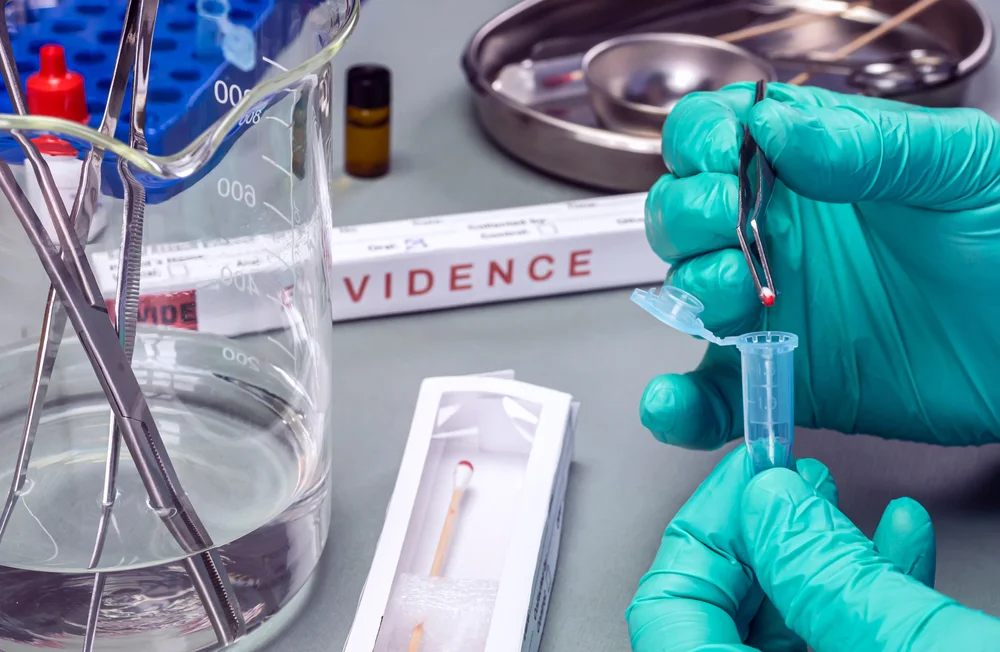
A criminalist is generally a forensic laboratory scientist who examines physical evidence and explains the results in reports and court testimony. The role is different from a crime analyst, who typically studies crime data and patterns. It is also different from a dedicated crime scene investigator, although some California criminalists respond to scenes, document evidence, and assist with reconstruction.
The most reliable path into California criminalistics is to earn a bachelor’s degree in a physical or biological science, complete the chemistry and laboratory courses required by the agencies and specialties you plan to pursue, gain practical laboratory experience, and compete through the hiring system used by each employer. New hires then complete supervised training, competency testing, and proficiency requirements before conducting independent casework.
A degree with “forensic” in its title is not enough by itself. California employers evaluate the science content of the degree, including chemistry, biology, mathematics, statistics, and laboratory instruction. A criminal justice program with only one or two survey-level forensic courses is usually poor preparation for laboratory criminalist positions.
The California pathway at a glance
A practical sequence looks like this:
- Choose a laboratory-focused career target. Decide whether you are primarily interested in drug chemistry, toxicology, forensic biology and DNA, trace evidence, firearms and toolmarks, forensic alcohol, latent prints, digital evidence, or crime-scene work.
- Earn an appropriate bachelor’s degree. Chemistry, biochemistry, biology, molecular biology, and laboratory-oriented forensic science are common routes.
- Complete the required science courses. General chemistry is a frequent minimum, while quantitative analysis, organic chemistry, biochemistry, genetics, molecular biology, and statistics become relevant for particular employers or disciplines.
- Build laboratory competence. Undergraduate research, internships, analytical instrumentation, evidence-handling exercises, and scientific writing can strengthen an application.
- Search several job titles. California agencies use titles such as Criminalist, Criminalist I, Forensic Scientist, and related forensic laboratory classifications.
- Complete the employer’s selection process. This can include a civil-service examination, application screening, interviews, transcript review, fingerprinting, a background investigation, drug screening, a medical examination, or a polygraph.
- Finish post-hire laboratory training. Entry-level criminalists commonly work under supervision until they demonstrate competency in the methods and evidence types assigned to them.
- Progress toward independent casework and testimony. Advancement usually depends on casework experience, accurate documentation, proficiency testing, technical knowledge, and the ability to explain scientific conclusions in court.
The rest of this guide explains each step, including how California requirements vary among state, county, and municipal laboratories. Other forensic and investigative occupations are covered on the site’s broader California careers page.
What criminalists actually do
California criminalists analyze evidence for law enforcement agencies, prosecutors, medical examiners, coroners, and other public agencies. The work can include:
- Conducting chemical, biological, microscopic, or instrumental examinations
- Identifying controlled substances
- Testing blood or other biological material
- Developing and comparing DNA profiles
- Examining firearms, ammunition, and toolmarks
- Analyzing toxicology or forensic-alcohol evidence
- Comparing trace materials such as fibers, glass, paint, or debris
- Developing or comparing latent prints
- Processing crime scenes
- Documenting evidence and maintaining chain of custody
- Writing technical reports
- Participating in peer or technical review
- Testifying as an expert witness
- Completing competency and proficiency testing
- Supporting method validation and laboratory quality assurance
The California Department of Justice Bureau of Forensic Services performs work in toxicology, alcohol analysis, controlled substances, clandestine laboratories, biology and DNA, firearms, impression evidence, trace evidence, and crime-scene analysis. Its scientists may testify in state and federal cases. The bureau operates 10 regional crime laboratories and the Jan Bashinski DNA Laboratory, serving jurisdictions that do not have access to their own city or county laboratory services.
Duties differ considerably by employer. Los Angeles County defines criminalists around physical, biological, and chemical analysis, but employees may later respond to scenes and testify as experts. Sacramento County combines laboratory analysis with crime-scene investigation, technical reporting, and testimony. Santa Clara County’s Criminalist I classification can include physical, chemical, biological, or digital analysis, including computer forensics and audio-video evidence.
This variation is why the title alone cannot tell you what a position involves. Read the listed discipline, unit assignment, and minimum coursework rather than relying only on “Criminalist” or “Forensic Scientist.”
Criminalist versus crime scene investigator
Criminalists and crime scene investigators can work with the same evidence, but their primary responsibilities often differ.
A laboratory criminalist may spend most of the workweek preparing samples, operating analytical instruments, interpreting test results, documenting methods, reviewing data, and writing reports. A crime scene investigator usually concentrates more heavily on scene documentation, photography, evidence recognition, evidence recovery, fingerprints, measurements, packaging, chain of custody, and reconstruction.
Some California classifications combine these functions. City of Los Angeles criminalists collect and preserve evidence as well as perform physical and chemical analyses. Sacramento County criminalists can investigate scenes and conduct laboratory work. Contra Costa County’s nonsworn Criminalist I classification can be assigned to crime-scene investigation, DNA, latent prints, controlled substances, toxicology, forensic alcohol, comparative evidence, or quality assurance.
Other agencies maintain separate crime-scene and laboratory positions. A person interested primarily in photography, scene processing, and evidence collection should compare criminalist openings with crime scene investigator and evidence technician classifications. Someone targeting drug chemistry, DNA, toxicology, or trace evidence needs deeper natural-science preparation.
Crime analyst is a separate occupation. Crime analysts commonly use databases, statistics, mapping, and intelligence methods to examine patterns and support policing decisions. That work is not equivalent to laboratory examination of physical evidence.
Step 1: Earn a science-based bachelor’s degree
A bachelor’s degree is the normal entry credential for California criminalist work. The safest majors are those that provide substantial laboratory science rather than relying on a small number of forensic survey courses.
Commonly relevant majors include:
- Chemistry
- Biochemistry
- Biology
- Molecular biology
- Microbiology
- Physics
- Pharmacology
- Criminalistics
- Forensic science with a natural-science emphasis
The best major depends partly on the intended specialty. Chemistry and biochemistry provide broad preparation for controlled-substance analysis, toxicology, forensic alcohol, and trace evidence. Biology, molecular biology, and biochemistry are better aligned with forensic biology and DNA when the curriculum includes the named courses required by DNA standards.
A forensic science or criminalistics major can be appropriate when it contains enough chemistry, biology, mathematics, and laboratory work. Program titles are less informative than the transcript. A science-heavy forensic science degree may prepare a graduate well, while a program housed mainly in criminal justice may leave the graduate short of required laboratory coursework.
Why criminal justice is usually not the right major
Criminal justice programs focus on policing, courts, corrections, law, administration, and social science. Those subjects can provide useful context, but they do not replace chemistry and biology for laboratory analysis.
The California DOJ Criminalist classification requires a major in a physical or biological science. DNA personnel standards also require substantial science preparation. Under the FBI’s forensic DNA quality assurance standards, a qualifying analyst needs an appropriate science-related bachelor’s or advanced degree with laboratory science integral to the degree, plus specified academic work in biochemistry, genetics, molecular biology, and statistics or population genetics.
A criminal justice degree lacking these science lectures and laboratories does not satisfy that DNA education pattern. Adding a forensic concentration to a criminal justice degree may still leave major gaps in chemistry, molecular biology, quantitative analysis, and instrumental methods.
Anyone already enrolled in criminal justice who wants to become a criminalist should assess whether there is enough time to add a chemistry, biology, or biochemistry major or a substantial science minor. A few electives rarely reproduce the laboratory sequence built into a natural-science degree.
Step 2: Plan the transcript around actual employer requirements
California does not impose one identical academic pattern across every criminalist employer. The requirements below illustrate the range.
| Employer or classification | Academic pattern in the reviewed specification |
|---|---|
| California DOJ Criminalist | Physical- or biological-science major, eight semester hours of general chemistry, and three semester hours of quantitative analysis |
| Los Angeles County Criminalist | Bachelor’s degree specializing in criminalistics, chemistry, biology, biochemistry, or a closely related scientific field, including at least eight semester units of general chemistry |
| City of Los Angeles Criminalist | Four-year degree with a major in a physical or natural science and eight semester or 12 quarter units of general chemistry |
| Sacramento County Criminalist | Accepted science majors or criminalistics or forensic science with a natural- or physical-science emphasis, plus eight semester or 12 quarter units of general chemistry or biology |
| San Diego County Criminalist II | Chemistry, biology, or a closely related bachelor’s degree with at least eight semester units of general chemistry; DNA assignments have additional courses |
| Orange County Forensic Scientist I | Bachelor’s degree in forensic sciences, chemistry, biochemistry, biology, or a closely related scientific field with laboratory experience |
| Fresno County Criminalist II | Experienced-level route requiring 24 semester units across general chemistry, quantitative analysis, and organic chemistry with a laboratory component |
| Santa Clara County Criminalist I | Bachelor’s degree in a natural or applied science or related field, followed by discipline-specific qualifications and competency requirements |
The California DOJ pattern is a useful planning benchmark, especially for applicants who want access to state positions. It is not a statewide rule for every city and county laboratory. Los Angeles and Sacramento illustrate broader entry patterns, while Fresno County’s experienced-level specification is considerably more chemistry intensive.
A useful criminalist course-planning list
Not every criminalist needs every course below, but these subjects appear across general laboratory preparation and specialty standards:
- General chemistry with laboratory
- Quantitative or analytical chemistry with laboratory
- Organic chemistry with laboratory
- Biochemistry
- General biology with laboratory
- Genetics
- Molecular biology
- Microbiology
- Physics
- Statistics
- Population genetics
- Calculus or other college mathematics
- Instrumental analysis
- Physical chemistry
- Toxicology
- Scientific writing
- Quality assurance or laboratory management
- Forensic evidence and criminalistics laboratory courses
Chemistry is especially valuable because it preserves access to a wider range of analytical disciplines. The California DOJ requires general chemistry and quantitative analysis for appointment. Fresno County’s experienced-level Criminalist II specification requires coursework spanning general chemistry, quantitative analysis, and organic chemistry, including laboratory work.
For DNA, the transcript should clearly show biochemistry, genetics, molecular biology, and statistics or population genetics. A general biology degree can still be insufficient if one of those named subjects is missing.
Retain official course descriptions and syllabi for specialized classes. A laboratory may need to determine whether a course with an unusual title covers a required subject. “Cellular Processes,” for example, may contain molecular biology content, but the course title alone may not establish that.
Step 3: Choose coursework for the intended specialty
Criminalistics includes several disciplines with different academic needs. Choosing a target early helps prevent missing a prerequisite that is difficult to add after graduation.
Controlled substances and forensic chemistry
Drug chemistry work involves identifying unknown powders, tablets, plant material, liquids, and other substances. Preparation commonly emphasizes:
- General chemistry
- Quantitative or analytical chemistry
- Organic chemistry
- Instrumental analysis
- Laboratory quality control
- Statistics
Experience with gas chromatography, mass spectrometry, infrared spectroscopy, liquid chromatography, and related methods can strengthen preparation. The exact instruments vary by laboratory, but familiarity with calibration, controls, uncertainty, maintenance records, and data interpretation transfers across methods.
Toxicology and forensic alcohol
Toxicology examines drugs, alcohol, poisons, and metabolites in biological specimens. Chemistry, biochemistry, pharmacology, physiology, and instrumental analysis are relevant.
California forensic-alcohol work also operates under Title 17 requirements. The California Department of Public Health receives documentation concerning analyst education, training, competency testing, and qualifications. Analysts performing forensic-alcohol analysis participate in annual proficiency testing.
This specialty therefore involves more than meeting a general bachelor’s-degree minimum. The analyst must complete the regulated training and competency process associated with the work.
Forensic biology and DNA
DNA is one of the most prescriptive disciplines academically. Under the FBI’s Quality Assurance Standards for Forensic DNA Testing Laboratories, which took effect July 1, 2025, analysts need appropriate education, laboratory training, competency testing, proficiency testing, and continuing professional development.
Relevant undergraduate subjects include:
- Biochemistry
- Genetics
- Molecular biology
- Statistics or population genetics
- Cell biology
- Laboratory methods
San Diego County’s DNA option specifically names molecular biology, biochemistry, genetics, and statistics or population genetics. Advanced DNA leadership positions can require graduate education and additional experience.
A biology major aimed at ecology or environmental science may not include all four core DNA subjects. A molecular biology or biochemistry curriculum is often more efficient for this career target.
Trace evidence
Trace evidence can involve hair, fibers, glass, paint, debris, soil, gunshot residue, or other small materials. Useful preparation includes chemistry, microscopy, physics, materials science, and instrumental analysis.
The work rewards careful observation and disciplined interpretation. Analysts must document the condition of small samples, avoid contamination, understand the limitations of comparison methods, and explain the significance of findings without overstating them.
Firearms and toolmarks
Firearms and toolmark examiners study firearms, ammunition components, function, trajectories, and marks left by tools or weapon mechanisms. Physics, mechanics, microscopy, mathematics, and criminalistics laboratory work can be relevant.
Some California criminalist classifications include firearms and toolmarks among several possible assignments. Hiring into a broad classification does not mean every new employee receives training in every discipline. Laboratories qualify analysts for the specific casework they will perform.
Latent prints and impressions
Latent print work involves development, documentation, comparison, and interpretation of friction-ridge evidence. Impression evidence can include footwear and tire marks.
These assignments may exist inside a criminalist series or in separate latent print examiner classifications. The educational route therefore varies more than it does for DNA. Science courses remain useful, but some agencies place greater emphasis on discipline-specific training, comparison ability, documentation, and competency testing.
Digital evidence
Santa Clara County includes digital analysis, computer forensics, and audio-video evidence within its Criminalist I classification. Other California agencies classify this work separately and may favor computer science, information systems, cybersecurity, or technical experience.
A wet-laboratory criminalistics curriculum is not universally appropriate for digital evidence. Someone committed to computer forensics should compare criminalist classifications with digital forensic examiner and digital evidence specialist positions rather than assuming all agencies use the same science-degree route.
Step 4: Develop practical laboratory experience
College establishes the academic foundation, but employers still train new criminalists in their own validated methods, documentation systems, quality procedures, legal obligations, and evidence-handling practices.
Useful pre-employment experience includes:
- Undergraduate research
- Faculty-supervised laboratory projects
- Internships in public or private laboratories
- Work as a laboratory assistant
- Chemistry or biology teaching laboratories
- Instrument operation and maintenance
- Sample preparation
- Method validation exercises
- Quality-control documentation
- Technical report writing
- Moot testimony or scientific presentations
- Evidence packaging and chain-of-custody exercises
Research experience can be useful even when the project is not forensic. A chemistry project involving chromatography, calibration curves, controls, uncertainty, and a formal report develops skills relevant to analytical casework. A molecular biology laboratory using extraction, amplification, contamination controls, and documented workflows can support preparation for forensic biology.
Scientific writing deserves special attention. Criminalists must produce reports that other scientists, attorneys, investigators, judges, and jurors can understand. Clear descriptions of methods, findings, limitations, and conclusions are part of the job, not an administrative afterthought.
Laboratory quality systems also shape daily work. The California DOJ Bureau of Forensic Services is accredited by ANAB to ISO/IEC 17025 for forensic testing activities listed within its scope. Accredited laboratories use controlled procedures, technical review, document control, corrective action, equipment records, competency assessment, and proficiency testing. Exposure to quality-assurance concepts gives applicants a more realistic understanding of professional laboratory practice.
Step 5: Search beyond the title “Criminalist”
California agencies do not use one naming system. Relevant searches can include:
- Criminalist
- Criminalist I
- Criminalist trainee
- Forensic Scientist
- Forensic Scientist I
- Forensic Laboratory Analyst
- Forensic Chemist
- Forensic Biologist
- DNA Analyst
- Toxicologist
- Controlled Substances Analyst
- Firearms Examiner
- Latent Print Examiner
- Digital Evidence Examiner
Orange County, for example, uses the title Forensic Scientist I for entry-level work involving laboratory analysis, evidence collection, crime-scene work, reporting, and possible expert testimony. Its classification covers forensic biology, DNA, toxicology, controlled substances, firearms, toolmarks, trace evidence, forensic alcohol, crime-scene investigation, and autopsy-related work.
Searching only “criminalist” would overlook that career route. Search by discipline and employer as well as title.
Most sampled criminalist classifications are civilian, but the structure is not uniform statewide. Contra Costa County maintains both a nonsworn Criminalist I classification and sworn Deputy Sheriff Criminalist classifications. The sworn route can require completion of a POST-certified police academy and acquisition of a Basic POST certificate within the specified period.
Applicants who want civilian laboratory work should read the classification type and law-enforcement status carefully. A sworn criminalist position can carry academy, peace-officer, and operational requirements that are absent from civilian laboratory employment.
Step 6: Navigate California state and local hiring systems
California DOJ hiring differs from city and county civil-service hiring.
For many state classifications, applicants without prior state service first complete an examination. The California DOJ Criminalist examination accepts applications continuously. The online assessment is weighted as 100 percent of the examination score, and a score of at least 70 percent is required for placement on the eligible list.
Eligible-list placement is not a job offer. It establishes eligibility to compete for vacancies. The broader sequence can include:
- Meeting the classification’s minimum qualifications
- Completing the examination
- Obtaining eligible-list status
- Applying to a specific vacancy
- Participating in interviews or supplemental assessments
- Submitting transcripts for education review
- Completing references and required clearances
- Receiving a final offer after human-resources approval
The state allows college seniors who otherwise meet the educational pattern to take the Criminalist examination, but they must provide proof of graduation before appointment. An applicant missing quantitative analysis may take the examination but must complete that coursework before appointment.
Cities and counties use their own employment systems. Their examinations may take the form of training-and-experience ratings, written tests, technical questionnaires, structured interviews, or other assessments. Meeting a minimum requirement permits competition; it does not guarantee selection.
Background investigations and suitability screening
Criminalists work with controlled substances, sensitive records, firearms evidence, biological material, and evidence tied to criminal prosecutions. Employers therefore apply public-safety screening standards.
Depending on the agency and position, the process can include:
- Fingerprinting and Live Scan
- Criminal-history review
- Employment and reference checks
- Education and transcript verification
- Drug screening
- Medical examination
- Driving-record review
- Detailed background investigation
- Polygraph examination
The California DOJ Criminalist series requires drug screening, and a medical examination may apply. DOJ employment also involves fingerprint clearance, with more extensive background review for some positions. Sacramento County conducts fingerprinting and a background investigation. Orange County’s Forensic Scientist I specification includes a background investigation and polygraph requirement.
A valid driver’s license can also appear in agency specifications. City of Los Angeles criminalists, for example, must possess a valid California driver’s license before appointment.
These conditions are employer-specific rather than a single uniform statewide checklist.
Step 7: Complete post-hire training and competency requirements
Graduation and hiring begin the professional qualification process. They do not finish it.
The California DOJ describes Criminalist as an entry, training, and subjourney classification. Los Angeles County entry-level employees participate in mandatory in-service training. Contra Costa County Criminalist I employees begin with supervised on-the-job instruction. Santa Clara County requires criminalists to establish competency and maintain proficiency in each specialty in which they perform casework.
Training can include:
- Laboratory safety
- Evidence handling and chain of custody
- Validated analytical procedures
- Instrument operation
- Data interpretation
- Report preparation
- Technical and administrative review
- Legal standards
- Moot court or testimony preparation
- Competency examinations
- Supervised casework
- Proficiency tests
New employees may spend a substantial period working under supervision before independently issuing reports. The length and structure depend on the discipline, laboratory, prior experience, and complexity of the methods.
DNA analysts have additional quality-standard requirements. Forensic-alcohol analysts also complete documented qualifications and annual proficiency testing. These systems help establish that an analyst can perform assigned work reliably, not merely that the analyst completed an academic degree.
What the working environment is like
Criminalistics combines controlled laboratory procedures with the pressures of legal casework. Much of the job may take place at a laboratory bench or computer workstation, but some positions include field response.
The work can involve:
- Human blood and other biological material
- Controlled substances and unknown chemicals
- Firearms and ammunition
- Damaged or contaminated evidence
- Human remains or disturbing photographs
- Hazardous scenes
- Personal protective equipment
- Evening, weekend, or on-call assignments
- Strict deadlines
- Cross-examination in court
City of Los Angeles criminalists may be on call at any hour and can encounter dangerous locations, human remains, and biological or chemical hazards. Contra Costa County Criminalist I employees may also be placed on call for crime-scene response.
Accuracy is central because laboratory reports can affect charging decisions, plea negotiations, trials, and appeals. Analysts must be willing to document mistakes, follow corrective-action procedures, submit work to review, and explain limitations. Speed matters, but it cannot replace defensible scientific work.
Court testimony adds another dimension. Criminalists must explain technical methods in plain language, remain within the scope of their expertise, and respond to adversarial questioning. Strong public speaking helps, but testimony rests first on sound methods, complete records, and careful conclusions.
Is a master’s degree required?
A master’s degree is generally not required for entry-level California criminalist classifications. The sampled state and local routes typically begin with a relevant bachelor’s degree and specified coursework.
Graduate education can support:
- Advanced scientific specialization
- Research and method development
- Technical leadership
- Supervisory advancement
- DNA technical-leader preparation
- Teaching or training assignments
- Movement into highly specialized laboratory work
The California Senior Criminalist classification illustrates one possible benefit. An outside applicant generally needs four years of professional physical- or biological-science laboratory experience beyond the trainee level, including at least two years as a criminalist with independent quantitative and qualitative analysis responsibility. One year of relevant postgraduate education can substitute for one year of the general experience requirement.
That substitution does not eliminate the need for professional criminalistics experience. Graduate school is most useful when it adds advanced laboratory work, research, and specialty knowledge rather than simply adding another credential.
California criminalist salary and job outlook
The closest statewide occupational data cover forensic science technicians, a broader category that includes laboratory and crime-scene roles beyond positions formally titled criminalist.
For the first quarter of 2026, the California Employment Development Department reported:
- Mean hourly wage: $51.87
- 25th percentile: $39.94 per hour
- Median: $50.46 per hour
- 75th percentile: $65.64 per hour
Annualized at 2,080 hours, those figures are approximately:
- Mean: $107,890
- 25th percentile: $83,075
- Median: $104,957
- 75th percentile: $136,531
These are occupational estimates, not guaranteed criminalist salaries. Actual compensation varies by agency, classification level, union agreement, location, specialty, schedule, and experience.
Agency class specifications show how wide the range can be. When researched, Los Angeles County listed $7,098.18 to $9,060.82 per month for its Criminalist classification. Sacramento County listed an annual span of $74,541.60 to $158,437.44 across Criminalist Levels I through IV. San Diego County listed $117,312 to $144,081.60 for its journey-level Criminalist II classification. Contra Costa County listed $123,884.74 to $136,582.94 for Criminalist I.
Those examples represent different dates and career levels. They are not direct comparisons of equivalent entry jobs. Active vacancy announcements provide the applicable range, appointment level, and benefits for a current recruitment.
California projects favorable growth in the broader occupation. EDD projected forensic science technician employment to rise from 2,200 positions in 2022 to 2,600 in 2032. That represents 400 additional positions and 18.2 percent growth.
Nationally, the Bureau of Labor Statistics reported a May 2025 median annual wage of $72,060 for forensic science technicians. BLS projected 13 percent employment growth from 2025 through 2035, with about 2,800 openings per year on average. State and local governments employ most workers in the occupation.
Growth does not eliminate competition. Public laboratories are specialized employers, and individual units may hire only when vacancies, budgets, and caseloads support recruitment. Broad science preparation helps applicants compete across more than one discipline or agency.
Advancement from trainee to senior criminalist
Criminalist career ladders commonly move through several stages:
- Trainee or entry classification: Supervised instruction, competency development, and limited casework
- Journey-level criminalist: Independent analysis, report writing, evidence interpretation, and testimony
- Advanced specialist or senior criminalist: Complex cases, method development, training, validation, or technical review
- Technical leader or quality role: Discipline oversight, compliance, proficiency programs, audits, and quality systems
- Supervisor or laboratory manager: Personnel, resources, policy, workload, accreditation, and strategic operations
Sacramento County uses four criminalist levels that progress from training-level work to advanced casework, method development, and staff leadership. California’s Senior Criminalist classification is an experienced position rather than the normal entry point. One qualifying state route requires two years as a Criminalist at Range C.
Advancement depends on more than time served. Laboratories need analysts who can produce reliable casework, maintain proficiency, teach methods, conduct technical review, manage difficult testimony, and contribute to validation or quality-assurance projects.
Professional certification
California’s reviewed entry specifications do not establish one general statewide criminalist license. Specialty standards, sworn-status requirements, laboratory competency systems, and regulated forensic-alcohol qualifications can still apply.
The American Board of Criminalistics offers examinations in areas including Biological Evidence Screening, Drug Analysis, Forensic DNA, Foundational Knowledge, and Seized Drug Analysis. Certification involves an application, credential review, examination, and continuing maintenance.
ABC diplomate eligibility generally includes:
- At least a bachelor’s degree in natural science or forensic science from an accredited institution
- At least two years of full-time professional experience in the certification field
- Active work in criminalistics
- Authorization to perform casework or an equivalent professional credential
- Passage of the applicable examination
These requirements make certification primarily a post-entry professional credential. It can document expertise after an analyst has acquired casework experience, but it is not a substitute for the science degree and coursework required at hiring.
Does FEPAC accreditation matter?
The Forensic Science Education Programs Accreditation Commission accredits qualifying bachelor’s and master’s forensic science programs. FEPAC review provides added assurance that a program has been evaluated against forensic science education standards.
California employer specifications reviewed for this guide do not impose FEPAC graduation as a universal requirement. Chemistry, biology, biochemistry, and other natural-science degrees remain established routes into criminalist employment.
FEPAC also recognizes that strong nonaccredited programs exist. For a nonaccredited forensic science degree, compare the curriculum with FEPAC’s science and mathematics expectations and with the actual employer classifications you intend to pursue.
The practical priority is sufficient science depth. A program’s marketing language cannot compensate for missing general chemistry, quantitative analysis, organic chemistry, molecular biology, genetics, biochemistry, statistics, or laboratory instruction.
A four-year preparation plan
A deliberate college plan can preserve access to several criminalistics disciplines.
First year
Concentrate on foundational science and mathematics:
- General chemistry with laboratory
- General biology with laboratory
- College mathematics or calculus
- Introductory statistics
- Scientific writing
Start reviewing California classifications early enough to identify courses such as quantitative analysis that might not be mandatory for the major.
Second year
Move into core laboratory subjects:
- Organic chemistry with laboratory
- Analytical or quantitative chemistry
- Genetics
- Physics
- Additional statistics
Seek a laboratory assistant, undergraduate research, or faculty project. Early research experience can make later internships and advanced instrument courses more accessible.
Third year
Add specialty preparation:
- Biochemistry
- Molecular biology
- Instrumental analysis
- Microbiology or toxicology
- Criminalistics laboratory courses
- Quality assurance
Students targeting DNA should have a clear plan for biochemistry, genetics, molecular biology, and statistics or population genetics. Chemistry-focused applicants should prioritize quantitative methods, instrumental analysis, and organic chemistry.
Fourth year
Complete advanced laboratory work and prepare for recruitment:
- Senior research or capstone project
- Advanced instrumental methods
- Forensic electives tied to the intended discipline
- Technical writing and presentations
- Internship or additional research, when available
Collect transcripts, course descriptions, syllabi, project summaries, and a list of laboratory instruments used. Begin monitoring recruitment cycles before graduation. California DOJ permits otherwise-qualified seniors to take the state Criminalist examination, although graduation must be documented before appointment.
Final application checklist
A strong California criminalist application begins with an academic record that clearly meets the stated requirements. Before applying, assemble:
- Official or unofficial transcripts as requested
- A course list matching each required subject
- Course descriptions for titles that do not plainly identify the content
- Laboratory and research experience
- Instrumentation experience
- Technical reports, presentations, or publications that can be described in the application
- Employment dates and detailed duty statements
- A valid driver’s license where required
- Accurate information for background and reference forms
Read each supplemental questionnaire literally. Public employers commonly score applications according to the information entered, not according to what a reviewer might infer from a résumé. Describe the scientific method used, type of samples handled, instruments operated, quality controls followed, reports written, and level of supervision.
The degree choice remains the most consequential early decision. Chemistry and biochemistry preserve broad access to analytical laboratory work. Biology or molecular biology can lead effectively to forensic DNA when all required subjects are included. A laboratory-oriented forensic science degree can also work well when its science content matches employer standards. Criminal justice is better aligned with policing, courts, corrections, and administration than with bench-level criminalistics.
After the degree, the path is competitive but clear: match the transcript to the discipline, search both Criminalist and Forensic Scientist titles, complete the applicable civil-service process, pass suitability screening, and be prepared for extensive supervised laboratory training. California agencies use different classifications and specialty requirements, but all place the same basic demands on professional criminalists: scientific competence, careful documentation, defensible interpretation, and the ability to explain evidence accurately.