
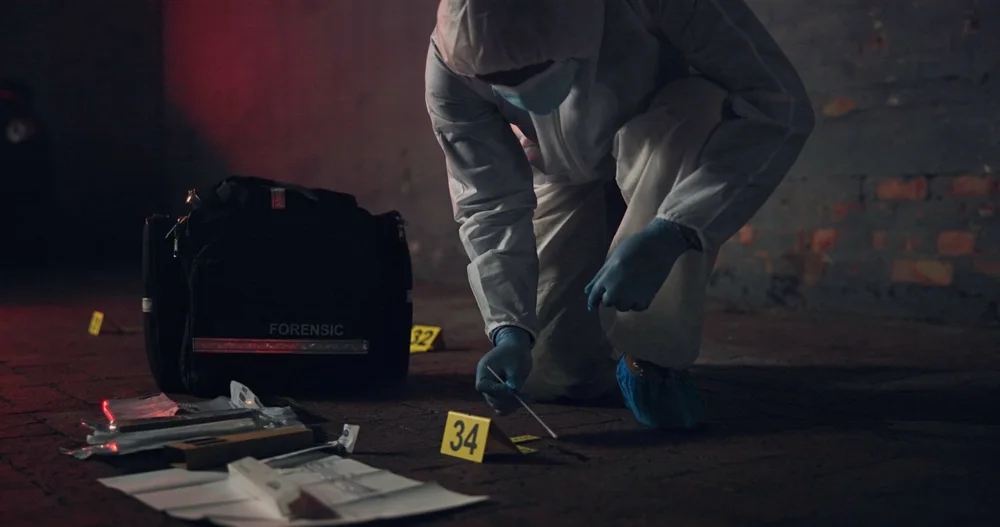
Becoming a crime scene investigator in California does not follow one statewide formula. California agencies use several titles for this work, including crime scene investigator, crime scene specialist, forensic identification specialist, forensics specialist, field evidence technician, and crime scene technician. Some positions are civilian jobs, while other agencies assign crime scene duties to sworn peace officers.
Education requirements also vary. A bachelor’s degree is a broadly recognized route into the forensic science technician occupation, but California employers also use associate-degree, college-unit, forensic-certificate, and experience-based qualification paths. Several civilian classifications require prior law-enforcement evidence experience even when they do not require a four-year degree.
The practical path is to decide whether you want civilian scene work, a sworn law-enforcement career, or laboratory criminalistics. Those routes overlap, but they require different preparation.
The California CSI career paths at a glance
The term “crime scene investigator” is often used as a general description rather than a standardized job title. Before selecting a degree, identify which type of work you want to perform.
| Career path | Main focus | Common educational preparation | Sworn training requirement | Science depth | Typical setting |
|---|---|---|---|---|---|
| Civilian crime scene investigator or forensic specialist | Scene documentation, photography, evidence recovery, fingerprints, reports, testimony | Requirements range from college coursework or a certificate to an associate or bachelor’s degree; many employers also require experience | Usually no POST basic training for explicitly civilian classifications | Applied biology, chemistry, statistics, evidence processing, and photography are useful; depth varies by employer | Police department, sheriff’s office, medical examiner or coroner support, evidence unit |
| Sworn officer assigned to crime scene work | Law enforcement combined with scene processing or investigative duties | Education requirements depend on the hiring agency and officer classification | POST basic training applicable to the classification, which may use the Regular Basic Course, Specialized Investigators’ Basic Course, or another authorized route | Often less laboratory science than a criminalist degree, unless the officer has specialized education | Police department or sheriff’s office |
| Laboratory criminalist or forensic scientist | Scientific examination of evidence, such as DNA, controlled substances, toxicology, firearms, or trace evidence | Bachelor’s degree in a physical or biological science, usually with substantial chemistry or biology coursework | No general police academy requirement for civilian laboratory scientists | High. Laboratory positions may require general chemistry, organic or analytical chemistry, molecular biology, statistics, and instrumental methods | Government crime laboratory, state forensic laboratory, regional laboratory |
| Hybrid forensic or identification specialist | Field response plus latent-print examination, AFIS work, chemical processing, or limited laboratory procedures | Often an associate or bachelor’s degree plus forensic coursework and experience | Depends on whether the classification is civilian or sworn | Moderate to high in the assigned specialty | Police forensic unit, identification bureau, or combined field and laboratory section |
Many local CSI classifications are civilian. Newport Beach’s Police Crime Scene Investigator works under senior crime scene staff and sworn personnel, while Pomona explicitly calls its position “Crime Scene Investigator (Non-Sworn).” Contra Costa County places its Crime Scene Investigator II classification in a non-sworn bargaining unit, and Anaheim identifies its Forensic Specialist positions as civilian.
That does not mean every California CSI job is civilian. The U.S. Bureau of Labor Statistics notes that some crime scene investigators working for police departments are sworn officers. Those employees must meet peace-officer hiring standards and complete the POST basic training required for their classification, in addition to learning crime scene procedures.
A step-by-step route into California crime scene investigation
1. Choose between field investigation, sworn law enforcement, and laboratory science
Start with the daily work rather than the job title.
A field-focused CSI documents scenes, photographs evidence, prepares diagrams, searches for latent prints, collects biological and physical evidence, packages items, maintains chain of custody, writes reports, and testifies in court. Depending on the agency, the position may also include presumptive tests, impression casting, AFIS work, autopsy attendance, evidence-room duties, or limited laboratory processing.
A sworn investigator has law-enforcement authority and may perform crime scene work as one assignment within a broader police career. The route includes agency hiring standards, peace-officer screening, and the POST basic training applicable to the classification. Depending on the position, this may involve the Regular Basic Course, the Specialized Investigators’ Basic Course, or another authorized pathway.
A criminalist primarily applies laboratory science to evidence. Criminalists may occasionally respond to scenes, but their preparation is built around chemistry, biology, quantitative analysis, instrumentation, laboratory quality systems, and specialized forensic disciplines. California Department of Justice criminalists, for example, perform laboratory analyses and can assist with scientific investigations and crime scene examinations.
Choosing the wrong educational route can restrict later options. A criminal justice degree with a few CSI classes can support field-investigation work, but it normally does not contain enough chemistry or biology for laboratory criminalist classifications. A science-heavy forensic degree preserves more flexibility between scene work and laboratory employment, provided it includes practical evidence-processing instruction.
2. Study actual California job classifications before choosing a degree
California has no single civilian CSI curriculum. A useful planning method is to collect 10 to 20 current or archived job specifications from agencies in areas where you could realistically work. Search several titles:
- Crime Scene Investigator
- Crime Scene Technician
- Crime Scene Specialist
- Forensic Specialist
- Forensics Specialist
- Forensic Identification Specialist
- Field Evidence Technician
- Identification Technician
- Evidence Technician
- Latent Print Examiner
- Criminalist
Separate each employer’s education requirement from its experience requirement. They are often independent.
San Diego’s Crime Scene Specialist II classification illustrates the issue. Its listed education routes include an associate degree in forensic or physical science, an approved type of forensic technology certificate, or at least 30 semester units containing specified crime scene coursework. The classification also lists two years of professional law-enforcement crime-scene-processing experience. Completing the coursework route alone does not satisfy the separate experience component.
Look for repeated course requirements across the specifications you collect. California employer examples identify subjects such as:
- Crime scene investigation
- Evidence technology
- Criminalistics
- Forensic photography
- Latent-print development and comparison
- Biology with laboratory work
- Chemistry with laboratory work
- Mathematics or statistics
- English composition
- Technical or report writing
- Evidence collection and preservation
- Courtroom testimony
- Chain-of-custody procedures
Retain catalog descriptions, laboratory syllabi, unofficial transcripts, internship records, and training certificates. A job announcement may require proof that a course covered a specific subject or included laboratory work. A course title alone may not demonstrate the content.
3. Complete education aligned with the target role
There is no universal degree level for California CSI employment. Verified employer classifications show several viable education structures.
Bachelor’s degree
A bachelor’s degree offers the broadest educational base, especially when the major is forensic science, chemistry, biology, biochemistry, or another laboratory science. It also aligns with the BLS description of a bachelor’s degree as the typical entry-level education for the broader forensic science technician occupation.
For field CSI work, a useful bachelor’s curriculum includes photography, scene processing, evidence handling, fingerprints, report writing, statistics, biology, and chemistry. Programs that rely almost entirely on criminal justice theory provide less direct preparation for physical evidence work.
A science degree is the better route for anyone who wants to remain eligible for crime-laboratory positions. California Department of Justice criminalist applicants need a college degree with a major in a physical or biological science, including eight semester hours of general chemistry and three semester hours of quantitative analysis. A degree carrying the word “forensic” does not satisfy those requirements unless the underlying major and coursework meet the stated science standard.
Associate degree or 60-semester-unit route
Several California agencies accept an associate degree or 60 college units.
Oceanside’s Forensic Specialist classification requires an associate degree or 60 semester units in evidence technology, biology, chemistry, or a related field, along with six months of increasingly responsible forensic operations or crime-scene-processing experience.
Contra Costa County’s Crime Scene Investigator II requires an associate degree containing coursework in English composition or report writing, mathematics or statistics, and laboratory chemistry or biology. Applicants also need two years of law-enforcement-agency experience identifying, collecting, and preserving evidence and writing crime scene reports.
Tulare County’s Field Evidence Technician II lists an associate degree or 60 units in criminal justice, criminology, or a closely related field. It is a journey-level position requiring three years of relevant forensic experience, including one year directly in crime scene investigation within a law-enforcement agency.
An associate degree can satisfy the educational component at selected agencies, but the more advanced civilian classifications often pair it with substantial experience. Applicants using this route need a deliberate plan for gaining evidence-related work before pursuing journey-level positions.
Certificate or specified coursework
Some classifications recognize forensic certificates or a defined block of college courses. Pomona lists two years of college coursework in criminal justice or a related field, or completion of a forensic certification program, as a typical education route. San Diego recognizes qualifying certificate and specified-coursework pathways in its Crime Scene Specialist II specification.
Costa Mesa’s July 2026 Crime Scene Investigator recruitment listed a route involving a high school diploma supplemented by college coursework in police science or a related field, plus one year of public-safety support experience. Evidence collection, photography, latent-print work, report writing, and specialized forensic training were preferred.
Certificate and coursework pathways are real, but they are not shortcuts around practical experience. Employers can require one or more years of professional scene-processing, forensic-support, or law-enforcement evidence work in addition to the credential.
Criminal justice degree
Criminal justice can be appropriate for field-oriented careers when it includes applied forensic training. It can provide knowledge of police operations, criminal procedure, report writing, courts, and public safety organizations.
Its limitation is science depth. A criminal justice curriculum without laboratory biology, laboratory chemistry, statistics, and evidence-processing courses is weaker preparation for technical forensic work. It is particularly unsuitable as the sole preparation for California DOJ criminalist employment because the state classification requires a physical or biological science major and specified chemistry coursework.
A field-focused criminal justice student can improve preparation by adding:
- General biology with laboratory
- General chemistry with laboratory
- Statistics
- Forensic or evidence photography
- Latent-print processing
- Crime scene documentation
- Technical writing
- Mock-scene laboratory courses
- Internship or supervised practicum experience
The resulting transcript should reflect physical evidence work, not only policing and legal theory.
4. Build hands-on evidence experience
Education is only part of the hiring equation. Current California classifications repeatedly require experience with evidence detection, collection, preservation, photography, fingerprints, forensic operations, or law-enforcement support.
Relevant feeder positions can include:
- Property and evidence technician
- Evidence-room assistant
- Forensic technician
- Identification technician
- AFIS technician
- Criminalistics laboratory technician
- Public-safety support specialist
- Community service officer
- Police cadet
- Forensic photographer
- Laboratory assistant
- Morgue or coroner support position
- Internship with a law-enforcement, medical examiner, or forensic unit
The first job may contain only part of the CSI function. Evidence-room work builds chain-of-custody knowledge and familiarity with packaging, documentation, storage, and release procedures. A police support position can provide experience with reports, databases, agency procedures, and sensitive records. Laboratory assistance can develop quality-control habits and evidence-handling discipline.
Los Angeles County’s 2026 Forensic Identification Specialist I recruitment used separate education-based and experience-based qualification routes. Qualifying experience could include forensic support or latent-print work. The duties included scene documentation, physical-evidence recovery, impression casting, latent-print comparison, reports, and expert testimony.
Coursework should include physical practice whenever possible. Online instruction can cover forensic theory, legal principles, chain of custody, and documentation standards, but employability also depends on competent performance. Useful practical components include:
- Photographing scenes in low light and difficult environments
- Producing overall, midrange, and close-up evidence photographs
- Preparing scene diagrams
- Searching for and developing latent prints
- Collecting biological evidence without cross-contamination
- Packaging wet, dry, sharp, fragile, and trace evidence
- Casting footwear or tire impressions
- Writing objective reports
- Maintaining evidence logs
- Processing mock scenes under time constraints
- Explaining procedures in simulated testimony
The National Institute of Justice crime scene guide describes a structured process extending from initial response and scene assessment through evidence processing, final documentation, and submission. Crime scene work is methodical documentation and preservation, not simply taking photographs and placing objects into evidence bags.
5. Prepare for a detailed hiring process
Civilian status does not remove the public-trust requirements associated with handling criminal evidence. Background investigations are common, and some agencies use several additional screening tools.
Costa Mesa’s 2026 recruitment stated that its process could include:
- Comprehensive background investigation
- Fingerprint check
- Polygraph examination
- Psychological evaluation
- Medical evaluation
- Drug screening
Oceanside’s Forensic Specialist specification includes medical, background, polygraph, and psychological screening. Contra Costa County requires a background investigation and medical clearance for respirator use. Newport Beach requires a qualifying background history and an acceptable driving record.
Applications and personal-history statements need to be complete and internally consistent. Background investigators can compare employment records, education, driving history, legal history, drug-use disclosures, financial information, and prior application materials. An unexplained inconsistency can create a credibility problem even when the underlying issue would not necessarily have disqualified the applicant.
A California driver’s license is also a common operational requirement because scene personnel travel to incidents, laboratories, autopsies, storage facilities, and court. Costa Mesa, Newport Beach, and San Diego provide examples of classifications requiring or permitting the applicant to obtain an appropriate California license by appointment.
6. Complete supervised training after hiring
New crime scene personnel generally receive supervised on-the-job training before working independently. Agency methods can differ in evidence packaging, report systems, photography equipment, laboratory submission rules, latent-print procedures, safety protocols, and call-out practices.
Training may involve competency assessments before an employee is authorized to handle particular scene types or technical processes without direct supervision. An entry-level hire could progress through property crimes, vehicle processing, basic fingerprint work, serious assaults, death investigations, complex scenes, and expert testimony.
Oceanside provides a clear example of post-employment credentialing. Its Forensic Specialist classification requires a POST-certified Basic Field Evidence Technician certificate within one year, an Advanced Field Evidence Technician certificate within two years, and International Association for Identification Crime Scene Investigator certification within three years.
Those requirements belong to that employer. POST field-evidence certificates are not universal statewide prerequisites for every civilian CSI job.
Civilian and sworn CSI routes are different hiring systems
Many people enter the field specifically because they want forensic work without becoming police officers. California has civilian routes, but those positions can still involve law-enforcement facilities, criminal records, firearms evidence, violent scenes, court testimony, and extensive background screening.
Civilian crime scene employees usually lack arrest authority and do not perform the full range of patrol duties. Their technical responsibilities can nevertheless be extensive. Anaheim’s civilian Forensic Specialist II performs complex scene work, latent-print processing, specialized photography, independent field assignments, and expert testimony.
Fremont’s entry-level Forensics Specialist I illustrates a blended technical position. Its duties can include field crime-scene response, friction-ridge examination, chemical evidence processing, forensic photography, laboratory procedures, AFIS work, autopsy attendance, and testimony. Some departments therefore combine tasks that other agencies divide among field CSIs, latent-print examiners, and laboratory technicians.
The sworn route starts with peace-officer eligibility. The California Commission on Peace Officer Standards and Training identifies statewide selection standards covering legal eligibility, fingerprinting, education, moral character, background investigation, and medical and psychological suitability. POST-participating agencies also use a reading and writing assessment and an oral interview. Agencies can add physical ability testing, drug screening, polygraph examinations, or higher education requirements.
California does not use one basic-training model for every sworn classification. The POST Regular Basic Course is the entry-level training route for many peace officers. Certain investigative classifications may instead require the Specialized Investigators’ Basic Course or allow another authorized route based on the classification, governing law, POST rules, prior qualifying training, and the employing agency.
The Specialized Investigators’ Basic Course has a minimum 591-hour requirement across 37 learning domains and covers subjects such as case management, surveillance, weapons, and arrest and control. It applies only when a specific classification falls under the relevant POST training requirement.
Do not pursue a police academy solely because a job contains the initials “CSI.” First determine whether the positions you want are civilian, sworn, or available through both routes. Sworn assignments require the POST basic training applicable to the classification, which may involve the Regular Basic Course, the Specialized Investigators’ Basic Course, or another authorized route specified by law, POST rules, or the employing agency. These sworn training requirements do not apply generally to civilian forensic classifications.
CSI versus criminalist: how much science do you need?
Field investigators and laboratory criminalists both work with physical evidence, but their responsibilities are not interchangeable.
A CSI recognizes, documents, collects, and preserves evidence at a scene. The investigator may perform presumptive tests or basic processing, but most evidence is submitted elsewhere for specialized examination. DNA profiling, toxicology, controlled-substance confirmation, firearms comparison, and many trace-evidence analyses require laboratory personnel, validated methods, instrumentation, and laboratory quality systems.
A criminalist conducts scientific analyses and interprets results. California Department of Justice criminalists work in fields that can include biology and DNA, toxicology, controlled substances, firearms, impressions, and trace evidence. They may also support scene examination and reconstruction. The DOJ Bureau of Forensic Services operates as the scientific arm of the California Attorney General’s Office, with forensic testing activities accredited by ANAB to ISO/IEC 17025 within the listed scope.
The overlap is genuine but limited. A criminalist may go to a scene, and a municipal CSI may perform chemical processing or presumptive testing. Neither example turns all CSIs into laboratory scientists.
For broad career flexibility, prioritize a curriculum containing:
- General chemistry
- Organic chemistry
- Quantitative or analytical chemistry
- General biology
- Molecular biology or genetics
- Statistics
- Instrumental analysis
- Laboratory quality assurance
- Forensic laboratory methods
- Technical writing
- Crime scene processing
Field-only applicants do not always need the full chemistry sequence, but laboratory chemistry and biology remain useful. They support contamination control, safe evidence handling, presumptive testing, biological evidence recognition, and communication with crime-laboratory personnel.
Certification and professional development
No general state-issued civilian CSI license was identified in the California sources reviewed for this guide. Employers establish their own qualifications, training processes, and competency requirements. Professional certifications can support advancement, but they do not replace employer training or required experience.
The International Association for Identification offers three crime scene credentials:
- Certified Crime Scene Investigator
- Certified Crime Scene Analyst
- Certified Senior Crime Scene Analyst
IAI certification is a professional credential rather than a California license. Its crime scene certification process requires recent full-time employment involving crime scene activities. College students generally are not eligible because they lack the required occupational experience. Certification lasts five years and requires renewal, and the examination uses a 75 percent passing score. IAI membership is not required to apply.
This structure places IAI certification later in the career path. A student ordinarily completes relevant education, gains employment or qualifying experience, develops documented competency, and then applies for the appropriate certification level. Some agencies list IAI credentials as desirable, while Oceanside requires CSI certification within three years after appointment.
Anaheim lists IAI Crime Scene or Latent Print certification as desirable for its Forensic Specialist II rather than as a universal entry condition. Employer treatment of certification therefore ranges from preferred to required after hiring.
What crime scene investigators actually do
The work begins with controlling contamination and documenting conditions before evidence is moved. Depending on agency responsibilities and the type of incident, a CSI may:
- Receive a call-out and gather information about the scene.
- Enter using appropriate personal protective equipment.
- Coordinate with officers, detectives, fire personnel, medical personnel, or coroner staff.
- Establish a scene log or controlled entry process.
- Conduct an initial survey.
- Take overall, midrange, and close-up photographs.
- Prepare measurements, sketches, or diagrams.
- Search for biological material, fingerprints, trace evidence, weapons, impressions, and other relevant items.
- Collect and package evidence using methods suitable for each item.
- Label and document every transfer to preserve chain of custody.
- Perform approved field tests or evidence-processing procedures.
- Submit items to an evidence unit or forensic laboratory.
- Write a detailed report.
- Testify about scene conditions, collection methods, and evidence handling.
Local duties can extend beyond scene response. Los Angeles County’s Forensic Identification Specialist I includes latent-print comparison and impression casting. Fremont combines scene work with friction-ridge and laboratory procedures. Tulare County’s Field Evidence Technician II includes evidence-room management. Oceanside lists autopsy attendance, basic evidence examination, automated fingerprint-system work, and after-hours call-outs.
These combinations affect both education and job searching. Someone who wants field photography but not latent-print comparison should read duty statements closely. Someone interested in fingerprints may find broader opportunities under identification or forensics specialist titles rather than searching only for “crime scene investigator.”
Working conditions and schedule
CSI work is not a predictable desk schedule. Crime scenes occur at all hours, and evidence conditions deteriorate if response is delayed.
Verified California classifications include rotating shifts, weekends, holidays, overtime, extended shifts, and 24-hour call-outs. Los Angeles County’s 2026 recruitment described rapid on-call response within a round-the-clock operation, including nights and holidays. Contra Costa County’s classification can involve on-call work at complex scenes and autopsies.
The physical environment can include:
- Bodily fluids and biological hazards
- Decomposed remains
- Hazardous chemicals
- Firearms and sharp objects
- Confined spaces
- Poor weather
- Remote or difficult scene access
- Prolonged standing and bending
- Lifting or moving equipment and objects
- Respirator use
- Disturbing scenes involving violence, death, or sexual assault evidence
Newport Beach’s specification describes exposure to chemicals, biological hazards, confined spaces, inclement weather, and lifting or moving objects weighing up to 50 pounds. Contra Costa County requires medical clearance related to respirator use. Anaheim identifies biohazards, decomposed bodies, chemicals, outdoor conditions, and irregular field environments.
Emotional readiness is part of career suitability. Scene personnel must remain objective and methodical while documenting traumatic events. They also need enough communication skill to work with victims, witnesses, officers, medical personnel, attorneys, and jurors without compromising evidence or making unsupported conclusions.
Salary and employment outlook in California
Salary data for the exact title “crime scene investigator” are limited because federal and state labor agencies group field investigators with other forensic science technicians under Standard Occupational Classification 19-4092. That category can include both crime-scene personnel and laboratory staff.
The California Employment Development Department occupation profile reported the following statewide wages for forensic science technicians in the first quarter of 2026:
| Wage measure | California hourly wage |
|---|---|
| 25th percentile | $39.94 |
| Median | $50.46 |
| Mean | $51.87 |
| 75th percentile | $65.64 |
These figures describe the broader occupation. They are not an exact pay scale for every municipal or county CSI classification.
Individual employer examples show how compensation can vary. Costa Mesa’s July 2026 Crime Scene Investigator recruitment listed an annual range of $79,980 to $107,172. Contra Costa County listed an August 2026 salary range of $87,428.76 to $108,926.96 for Crime Scene Investigator II. Both are dated examples from specific employers, not statewide starting salaries.
Nationally, BLS reported a May 2025 median annual wage of $72,060 for forensic science technicians. It projected 13 percent employment growth from 2025 through 2035, with approximately 2,800 openings per year on average across the United States.
The California EDD’s 2022 to 2032 employment projections show statewide employment in the broader forensic science technician occupation increasing from 2,200 jobs in 2022 to 2,600 in 2032. That represents 400 additional positions and 18.2 percent growth. The numbers include more than jobs carrying the exact CSI title, so they should be read as an occupational trend rather than a forecast of field-investigator vacancies alone.
Public-sector pay comparisons should include more than base salary. Shift differentials, overtime eligibility, standby pay, pension participation, health benefits, probationary periods, and union representation can materially affect total compensation. The published salary range also may include journey-level steps that a new employee will not receive immediately.
How to become competitive without prior CSI employment
The recurring challenge is that many agencies want experience for jobs applicants hope will provide their first experience. A staged approach is more realistic than waiting only for positions titled Crime Scene Investigator.
Build technical coursework
Complete courses with applied components in scene photography, fingerprint processing, evidence collection, report writing, biology, chemistry, and statistics. Develop a record showing what was practiced and how performance was assessed.
Pursue forensic support work
Evidence rooms, police support units, identification sections, laboratories, and coroner-related settings can provide exposure to chain of custody, secure records, evidence packaging, safety procedures, and agency operations. Even when a role does not respond to scenes, it can create directly relevant experience.
Develop professional photography skills
Crime scene photography requires accurate scale, focus, perspective, exposure, and sequencing rather than artistic effect. A technical portfolio from supervised coursework can demonstrate familiarity with overall, midrange, close-up, low-light, macro, and evidence-scale photography. Sensitive or restricted case images should never be used as personal portfolio material.
Strengthen report writing
California employers specifically mention English composition, report writing, and courtroom testimony. Reports need to separate observations from interpretations, document procedures in sequence, use accurate terminology, and withstand review by detectives, laboratories, attorneys, and courts.
Apply under multiple titles
A narrow search for “CSI” will miss relevant classifications. San Diego uses Crime Scene Specialist, Los Angeles County uses Forensic Identification Specialist, Fremont uses Forensics Specialist, and Tulare County uses Field Evidence Technician. Other agencies may use evidence, identification, photography, or laboratory titles.
Treat entry-level and journey-level vacancies differently
A classification containing “II,” “senior,” “journey,” or “advanced” usually expects prior professional experience. Tulare County’s Field Evidence Technician II, Contra Costa County’s Crime Scene Investigator II, and Anaheim’s Forensic Specialist II are examples of jobs with developed technical responsibilities.
An entry-level classification may still require some forensic support experience, but it is more likely to provide structured training and progression. Read the classification series to see whether an agency employs trainees, level I staff, or technical assistants below the journey level.
Choosing the right educational route
A practical decision can be made by working backward from the target position.
Target: civilian field CSI
Prioritize crime scene processing, photography, latent prints, evidence packaging, biology, chemistry, statistics, report writing, and courtroom communication. An associate or bachelor’s degree can work, depending on the agency. Practical experience is often the main barrier, so combine education with internships, public-safety support, evidence-room work, or another qualifying forensic role.
Target: sworn investigator with CSI responsibilities
Prepare for the complete peace-officer hiring process, not only forensic coursework. The route can involve POST selection standards, classification-specific basic training, patrol or investigative experience, and later assignment to a scene or identification unit. Depending on the classification, the training route may be the Regular Basic Course, the Specialized Investigators’ Basic Course, or another authorized pathway. A forensic degree can support technical work, but it does not replace peace-officer eligibility and required POST training.
Target: laboratory criminalist with possible scene response
Choose a physical or biological science major. Include the chemistry and quantitative-analysis coursework required by the California DOJ criminalist classification, and add deeper laboratory study where available. A generic criminal justice degree or a field-only CSI certificate is too light in science for this route.
Target: latent prints or a hybrid identification position
Combine scene processing with friction-ridge examination, AFIS, chemical print development, photography, and laboratory safety. Fremont and Los Angeles County show that these duties can appear in classifications that also respond to scenes and provide testimony.
A focused California action plan
The most efficient route begins with a defined occupational target and a transcript built around recurring employer requirements.
- Choose the primary path: civilian scene investigation, sworn law enforcement, laboratory criminalistics, or a hybrid identification specialty.
- Collect California job specifications: use multiple titles and include city, county, and state employers.
- Map recurring requirements: separate education, coursework, experience, driver’s-license, schedule, screening, training, and certification requirements.
- Select the appropriate degree level: a certificate or associate degree can fit selected field positions, while a science bachelor’s degree preserves access to laboratory careers.
- Add practical forensic training: prioritize photography, fingerprints, evidence handling, mock scenes, laboratory work, report writing, and testimony.
- Gain related experience: use evidence, public-safety support, identification, laboratory, photography, cadet, or technician roles as entry points.
- Prepare for public-trust screening: maintain complete records and provide consistent, accurate personal-history information.
- Complete agency training: supervised competency development continues after appointment, while sworn employees must complete the POST basic training required for their classification.
- Pursue professional certification after gaining experience: IAI crime scene certification is generally a later-career credential, not an entry-level substitute.
California’s CSI market is broad enough to support several entry routes but fragmented enough that job title alone is unreliable. The best educational choice follows the work you intend to perform. Field investigators need documented skill in scene processing and evidence handling. Sworn investigators must satisfy peace-officer selection and classification-specific training requirements. Laboratory criminalists need substantially deeper chemistry or biology preparation.
Readers comparing this occupation with related options can explore the broader California forensic and crime scene career guide. The immediate next step is to select one of the three main paths, then build education and experience around the actual California classifications that hire for it.