
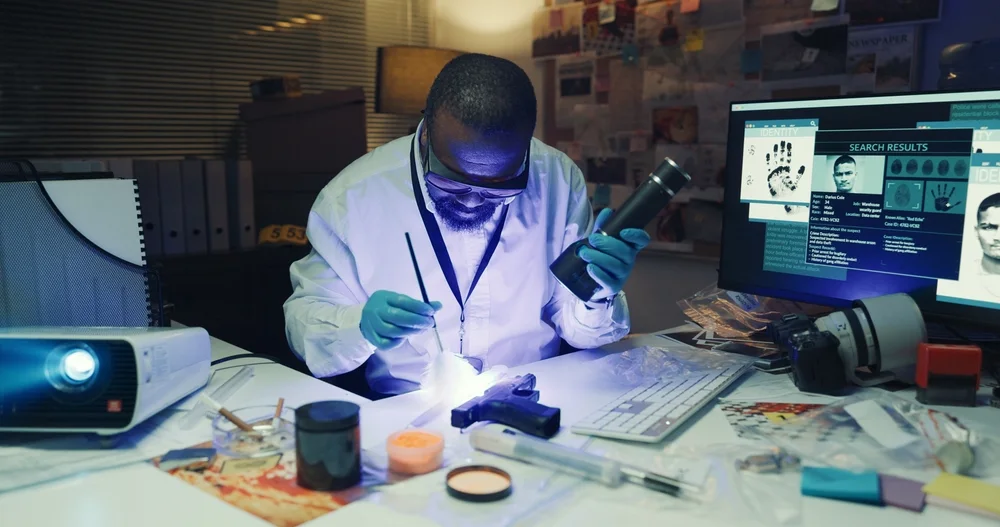
Becoming a medical examiner in California means becoming a physician who specializes in forensic pathology. It is not a career entered through a bachelor’s degree in forensic science, criminal justice, crime scene investigation, or biology alone.
The usual route requires a bachelor’s degree, four years of medical school, a three- or four-year pathology residency, and a one-year forensic pathology fellowship. Physicians must also satisfy California licensing requirements and pursue the pathology board credentials commonly required by county employers.
This physician pathway is different from the education required for a medical examiner investigator, death investigator, autopsy technician, forensic toxicologist, or forensic anthropologist. Those professionals may contribute to the same death investigation, but they do not perform the physician’s role of conducting medical examinations, diagnosing disease and injury, and issuing medical opinions about cause and manner of death.
The pathway at a glance
A typical route to medical examiner work in California looks like this:
- Earn a bachelor’s degree and complete medical school prerequisites.
- Graduate from an accredited MD or DO medical school.
- Complete an anatomic pathology residency or a combined anatomic and clinical pathology residency.
- Complete a 12-month ACGME-accredited forensic pathology fellowship.
- Meet the requirements for a California physician and surgeon license through the appropriate medical board.
- Earn primary board certification in anatomic pathology or anatomic and clinical pathology.
- Pursue forensic pathology subspecialty certification.
- Apply for forensic pathologist or deputy medical examiner positions in county medical examiner, coroner, or sheriff-coroner systems.
The approximate minimum is 12 years after high school through the anatomic pathology route: four years of college, four years of medical school, three years of anatomic pathology residency, and one year of forensic pathology fellowship. Combined anatomic and clinical pathology adds a fourth residency year, making the typical minimum about 13 years.
These timelines assume continuous full-time progression. Research years, delayed medical school entry, extended training, or time between residency and fellowship can lengthen the process.
Medical examiner, forensic pathologist, and coroner are not identical titles
California does not have one uniform county death investigation structure. Depending on the county, medicolegal death investigations may be handled through a medical examiner’s office, a coroner’s office, a sheriff-coroner department, or a related arrangement.
A medical examiner is generally a physician trained in forensic pathology. A coroner, by contrast, is not necessarily a physician. In a coroner system, the elected or appointed coroner may retain forensic pathologists to perform autopsies and provide medical opinions.
County structure affects job titles and reporting relationships. A physician doing forensic autopsies might be called a forensic pathologist, deputy medical examiner, medical examiner, or physician specialist. The underlying medical qualifications are more informative than the title alone.
California Government Code Section 27491 assigns the coroner responsibility for investigating specified deaths. The law covers numerous categories, including violent, sudden, unusual, unattended, accidental, suicidal, homicidal, poisoning-related, and injury-related deaths. It also addresses certain deaths in which the deceased had not been attended by a physician or qualifying hospice nurse during the preceding 20 days.
The legal office responsible for the case and the physician performing the postmortem examination can therefore be different entities. A county coroner may have legal jurisdiction while a contracted or county-employed forensic pathologist performs the medical examination.
Readers exploring other investigative occupations can review the broader California forensic career pathways. The education described in this article applies specifically to the physician medical examiner route.
Step 1: Earn a bachelor’s degree and prepare for medical school
Medical examiners begin with the same foundational education as other physicians. According to the U.S. Bureau of Labor Statistics, physicians typically complete a bachelor’s degree followed by four years of medical school and specialty-dependent graduate medical training.
There is no single required undergraduate major for this path. Biology, chemistry, biochemistry, and related sciences can fit naturally with medical school prerequisites, but the bachelor’s major itself does not confer medical examiner qualifications. An applicant must build the scientific foundation required for medical school admission and later medical training.
Useful undergraduate preparation generally includes:
- Biology
- General and organic chemistry
- Physics
- Mathematics
- Statistics
- Laboratory science
- Writing and communication
- Behavioral or social science coursework required by the selected medical schools
A forensic science major can lead to medical school if it includes the necessary prerequisites and the student remains competitive for admission. The word “forensic” in a degree title provides no substitute for medical education. Many forensic science programs are designed for laboratory analysts, crime scene personnel, or evidence specialists rather than future physicians.
Students planning early for forensic pathology should prioritize rigorous chemistry and biology courses, laboratory competence, and strong academic performance. Later medical and pathology training requires the interpretation of disease processes, injuries, toxicology findings, microscopic tissue changes, and medical records. Introductory crime scene courses do not replace that scientific preparation.
An undergraduate degree also provides time to learn whether medicine is the right professional direction. The medical examiner pathway involves years of physician training before specialization in death investigation begins. Someone primarily interested in scene documentation, evidence collection, or investigative interviews may find a nonphysician death investigation career better aligned with those interests.
Step 2: Earn an MD or DO degree
Both allopathic and osteopathic physicians can become forensic pathologists in California. An MD is not the only eligible medical degree.
The Medical Board of California licenses physicians with MD degrees. Its requirements include graduation from a board-approved medical school, the required postgraduate training credit, and completion of the applicable examinations.
The Osteopathic Medical Board of California licenses physicians with DO degrees. Its listed requirements include graduation from a medical school accredited by the Commission on Osteopathic College Accreditation, qualifying postgraduate training, and completion of all three levels of COMLEX-USA.
Either degree can lead to pathology residency, forensic pathology fellowship, board certification, and medical examiner employment. The American Board of Pathology accepts qualifying MD and DO graduates, along with eligible Canadian and international medical graduates, under its certification requirements.
Medical school is where the future forensic pathologist develops broad physician competence. Training in anatomy, pathology, physiology, pharmacology, infectious disease, internal medicine, surgery, pediatrics, and other fields supports later interpretation of deaths involving natural disease, trauma, drugs, toxins, and multiple contributing conditions.
Forensic pathology is not studied in isolation from general medicine. A medical examiner may encounter cardiovascular disease, cancer, infection, pediatric disease, drug toxicity, blunt trauma, firearm injuries, or complex interactions among disease and injury. The physician must first understand human disease before specializing in its postmortem investigation.
Step 3: Complete a pathology residency
After medical school, the physician enters postgraduate medical education in pathology. Under current American Board of Pathology requirements, the two principal routes into forensic pathology are:
| Residency route | Required training length | Primary scope |
|---|---|---|
| Anatomic pathology | 36 months | Disease diagnosis through tissues, organs, surgical pathology, cytopathology, and autopsy pathology |
| Anatomic and clinical pathology | 48 months | Anatomic pathology plus broader clinical laboratory medicine |
The three-year anatomic pathology route is the shorter direct foundation for forensic pathology. Combined anatomic and clinical pathology takes four years and provides additional training in clinical laboratory medicine.
Both routes can satisfy the primary specialty foundation for forensic pathology certification. The choice affects training breadth and total time rather than access to the subspecialty itself.
Current American Board of Pathology requirements also state that primary certification applicants in anatomic pathology or combined anatomic and clinical pathology must complete at least 30 autopsies by the time they apply for certification. Those residency autopsies introduce postmortem technique and clinicopathologic interpretation, but they are not the end of forensic training.
Hospital autopsies and medicolegal autopsies have overlapping medical methods but different purposes, jurisdictional settings, documentation demands, and legal implications. The forensic pathology fellowship supplies concentrated experience with deaths investigated under medical examiner or coroner authority.
Residents generally must complete at least two years of pathology training before beginning a pathology subspecialty fellowship. In practice, forensic pathology fellows commonly enter after completing an anatomic pathology or combined anatomic and clinical pathology residency.
Step 4: Complete a forensic pathology fellowship
A forensic pathology fellowship is the defining specialty training for physician medical examiner work. Under the ACGME forensic pathology program requirements, an accredited fellowship lasts 12 months.
The fellowship is intensive supervised physician practice, not an academic certificate added to an unrelated degree. An accredited institution or office must conduct at least 500 medicolegal autopsies annually, with additional case volume required when more fellows are appointed. Each fellow should personally perform at least 200 autopsies.
Training encompasses much more than dissection. Current requirements include experience with:
- Medicolegal autopsies
- External examinations
- Toxicology
- Death-scene investigation
- Documentation and case logs
- Interpretation of injuries and natural disease
- Correlation of medical findings with investigative information
- Court-related observation or testimony
- Progression toward independent forensic pathology practice
Fellows learn to combine the autopsy with scene findings, medical history, investigative reports, toxicology, microscopy, and other testing. A medical examiner’s conclusion is based on the entire case rather than the autopsy alone.
San Diego County’s 2026 forensic pathology fellowship recruitment provides a practical example of this training environment. The posting described multidisciplinary case meetings, in-house investigations, toxicology, scene attendance, call responsibilities, and court exposure. It listed annual compensation of $113,006.40, which was a physician training salary rather than typical post-fellowship medical examiner pay.
Fellowship conditions vary by sponsoring institution and office. Some programs are based directly in medical examiner or coroner agencies, while others may have academic affiliations. The educational objective remains preparation for autonomous forensic pathology practice.
Applying for fellowship
Forensic pathology participates in the National Resident Matching Program’s Pathology Fellowship Match. Applicants commonly use the Association of American Medical Colleges’ MyERAS system to submit applications and supporting documents to participating programs.
ERAS and the Match are separate systems. Submitting an ERAS application does not register an applicant for the NRMP Match. Application calendars, participating programs, and procedural details are updated by season.
For 2026 appointments, 40 participating forensic pathology programs offered 71 positions nationally. Forty-nine positions filled and 22 were unfilled. Of 51 applicants who preferred forensic pathology, 49 matched in the specialty.
Those figures describe one national appointment cycle. They are not a count of California fellowships, and they do not mean that unmatched positions remain continuously available after the Match. They do, however, provide context for a subspecialty that has fewer training positions than larger medical fields.
Step 5: Obtain a California physician license
California physician licensure and pathology board certification are separate processes. California licenses the person to practice medicine. The American Board of Pathology certifies the physician’s specialty qualifications.
For MD graduates, the Medical Board of California states that graduates of U.S. and Canadian medical schools need 12 months of approved postgraduate training for initial license eligibility. International medical graduates need 24 months. Initial license renewal carries additional postgraduate training requirements, including evidence of 36 months of approved training or qualifying continued enrollment, with verification required by the applicable renewal point.
For DO graduates, the Osteopathic Medical Board of California lists 12 months of AOA- or ACGME-accredited postgraduate training among its eligibility requirements, along with completion of all three COMLEX-USA levels.
Meeting initial license eligibility does not mean a resident has completed the training needed to work independently as a forensic pathologist. Pathology residency and fellowship continue well beyond the initial postgraduate threshold for many applicants.
The American Board of Pathology requires a full and unrestricted medical license for certification. A temporary or training license is not sufficient for that purpose. Physicians must therefore coordinate state licensure with their residency, fellowship, and board examination plans.
California does not issue a separate “forensic pathology license.” The state credential is a physician and surgeon license. Forensic pathology is established through accredited postgraduate training, specialty certification, case experience, and employer credentialing.
Step 6: Complete pathology board certification
The American Board of Pathology offers primary certification in anatomic pathology and combined anatomic and clinical pathology. It also offers subspecialty certification in forensic pathology.
Under current requirements, an applicant for forensic pathology certification must:
- Hold primary certification in anatomic pathology or anatomic and clinical pathology
- Complete 12 months in an ACGME-accredited forensic pathology program
- Meet the board’s licensing and other eligibility requirements
- Pass the forensic pathology certification examination
The forensic pathology examination covers natural and violent deaths, injury patterns, toxicology, molecular biology, anthropology, criminalistics, public health, jurisprudence, management, and safety. This breadth reflects the medical, scientific, administrative, and legal dimensions of the occupation.
Forensic pathology subspecialty certification is not framed as a single statewide statutory license required in identical form for every physician working with every California coroner. County employers, however, commonly require relevant pathology certification, require eligibility for certification, or offer additional compensation for forensic pathology certification.
Los Angeles County’s May 2026 recruitment required American Board of Pathology certification in anatomic pathology or combined anatomic and clinical pathology. It also required completion of a forensic pathology fellowship or equivalent board-approved training and a California physician and surgeon certificate. Candidates with forensic pathology board certification qualified for an additional 5.5 percent of base monthly salary.
San Luis Obispo County’s forensic pathologist classification likewise required a California physician and surgeon certificate and specified pathology board credentials. These examples show why board certification is a central employment qualification even though individual job classifications use different wording.
What medical examiners actually do
Medical examiners investigate deaths that fall under medicolegal jurisdiction. Their role is to produce a medical explanation of death based on postmortem examination and the complete investigative record.
Typical responsibilities include:
- Reviewing the circumstances and location of death
- Examining the body externally
- Performing medicolegal autopsies
- Identifying disease and injury
- Collecting tissue, fluids, trace material, or other specimens
- Requesting and interpreting toxicology testing
- Reviewing medical records and investigative reports
- Evaluating microscopic findings
- Documenting injuries and medical findings
- Determining cause and manner of death
- Preparing formal reports
- Consulting with investigators, attorneys, public health agencies, and other physicians
- Providing expert testimony about medical findings and opinions
Los Angeles County describes deputy medical examiners as physicians trained in forensic pathology. Their work can include autopsies, evidence and specimen collection, toxicology and microscopic review, and determination of cause and manner of death.
San Luis Obispo County’s classification includes autopsies, review of medical records, inspection of sudden, violent, or unexpected deaths, report preparation, consultation, and expert-witness service.
The medical examiner does not determine criminal guilt. A physician may classify a death as homicide based on medical findings and the circumstances of death, but “homicide” as a manner-of-death classification does not decide whether a crime occurred or identify who is legally responsible. Those are separate legal questions.
Cause and manner of death
Cause and manner of death are related but distinct conclusions.
The cause of death is the disease or injury responsible for death. Examples can include a specific natural disease, a gunshot wound, blunt force injuries, or toxic effects of a drug.
The manner of death classifies the circumstances in which the cause arose. Common categories include:
- Natural
- Accident
- Suicide
- Homicide
- Undetermined
A person can die from the same medical cause under different circumstances, leading to a different manner classification. Determining both requires analysis of the body, medical history, scene, investigative information, and laboratory findings.
County employment requirements in California
California counties do not use one identical job specification. Job titles, organizational structures, experience requirements, and credential language can differ.
Recent official county materials nevertheless show a consistent professional profile. Competitive staff forensic pathologist positions commonly call for:
- A valid California physician and surgeon license
- Completion of an anatomic pathology or combined anatomic and clinical pathology residency
- Completion of forensic pathology fellowship training
- American Board of Pathology credentials in anatomic pathology or AP/CP
- Forensic pathology board certification or eligibility
- Ability to perform autopsies and issue cause-and-manner opinions
- Ability to prepare defensible reports
- Ability to provide expert testimony
Senior and chief positions can require additional case experience, administrative work, staff supervision, budgeting, policy development, or office leadership. Those executive responsibilities are separate from the core clinical qualifications.
County employment may also involve credential review, background procedures, and assessment of professional history. The physician’s conclusions can affect criminal investigations, civil litigation, insurance matters, public health surveillance, and family records, so documentation and defensibility receive close scrutiny.
Salary for medical examiners in California
There is no reliable statewide wage figure limited only to California medical examiners. The strongest occupational datasets combine forensic pathologists with other pathologists, while county job postings provide narrower but time-sensitive examples.
The Bureau of Labor Statistics reported a May 2025 national median annual wage of $312,400 for physicians classified as pathologists. This category includes pathologists outside forensic medicine, so it is not an exact medical examiner median and is not California-specific.
The California Employment Development Department’s pathologist category explicitly includes medical examiners. For the first quarter of 2026, EDD reported a statewide mean wage of $109.27 per hour. Again, the category covers pathologists generally rather than isolating physicians in county forensic practice.
County recruitment materials illustrate how actual compensation can vary:
- Los Angeles County: A May 2026 forensic pathologist recruitment listed $20,968.42 to $28,112.58 per month. Forensic pathology board certification qualified candidates for an additional 5.5 percent of base monthly salary.
- San Luis Obispo County: A July 2024 classification revision listed an annual range of $291,324.80 to $390,395.20.
- San Diego County fellowship: A 2026 forensic pathology fellow recruitment listed $113,006.40 per year. This was a postgraduate training salary, not staff forensic pathologist compensation.
These figures represent different counties, dates, and career stages. A fellowship salary should not be compared directly with the salary of a fully trained, board-certified staff physician. County benefits, call expectations, recruitment incentives, pension arrangements, and leadership duties can also affect total compensation.
Employment outlook
The California Employment Development Department projected employment in the broad pathologist category to rise from 1,200 in 2022 to 1,400 in 2032. That is a projected increase of 16.7 percent, with 550 total openings across the projection period. The category includes medical examiners but is not limited to forensic pathology.
Nationally, the Bureau of Labor Statistics projected 4.8 percent employment growth for pathologists from 2025 to 2035. Its projection for physicians and surgeons overall was 4 percent during the same period.
The U.S. Department of Justice’s Bureau of Justice Assistance identifies a national shortage of practicing board-certified forensic pathologists. Federal initiatives have supported fellowship training and improvements in medical examiner-coroner offices.
A national shortage does not remove the profession’s entry barriers. Candidates still must gain admission to medical school, complete residency and fellowship, obtain licensure, meet certification standards, and compete for county positions. Job availability also depends on county budgets, retirements, office staffing models, and geographic preference.
The shortage does suggest that trained forensic pathologists serve a specialized workforce need. The 2026 Match data also showed that national fellowship capacity was not fully filled in that cycle, with 22 of 71 offered positions unfilled. That result should be read as a snapshot of one appointment year rather than proof that fellowship admission is easy.
Working conditions and professional demands
Forensic pathology is a medical career centered on death, injury, disease, and legal investigation. Daily work can involve severe trauma, decomposition, child deaths, homicides, suicides, fatal accidents, and cases that attract public or media attention.
Physical and biological risks are managed through safety protocols, personal protective equipment, facility controls, and careful handling of specimens. Physicians can encounter communicable disease hazards, chemical hazards, sharp instruments, and decomposed remains.
The emotional demands are also substantial. The medical examiner must remain objective while working on deaths that are disturbing, controversial, or personally devastating to surviving families. Compassion and professionalism are necessary, but conclusions must remain grounded in medical evidence.
Documentation occupies a large part of the job. Autopsy findings, diagrams, photographs, specimen records, toxicology results, and final opinions must be clear enough to withstand review months or years later. A report may be examined by law enforcement, prosecutors, defense attorneys, civil attorneys, public health officials, other physicians, and family members.
Court testimony introduces another demand. The physician must explain medical findings in understandable language, respond to adversarial questioning, and distinguish established findings from interpretation. The job requires precise writing and speaking in addition to technical medical skill.
Depending on the office, physicians may have call responsibilities, respond to scenes, consult with investigators outside ordinary business hours, or manage high case volumes. Fellowship training begins developing these abilities through scene exposure, court observation, supervised casework, and progressive responsibility.
Medical examiner investigator and other related careers
Not everyone searching for “medical examiner” is seeking a physician career. Several nonphysician occupations work in or alongside medical examiner and coroner offices.
Medical examiner investigator
Medical examiner investigators gather information from death scenes, hospitals, law enforcement agencies, witnesses, and families. They may document the scene, establish identity, arrange transport, collect records, and provide investigative findings to the forensic pathologist.
Los Angeles County expressly distinguishes its investigators from deputy medical examiners. Investigators support forensic pathologists but are not the physicians who perform the medical examination and issue the medical opinion.
This path does not require medical school, pathology residency, or physician licensure. Education and hiring requirements vary by agency and can involve death investigation, criminal justice, nursing, emergency medical work, biological science, or related experience.
Autopsy or forensic pathology technician
Autopsy technicians assist with postmortem procedures, specimen handling, preparation, photography, sanitation, documentation, and facility operations. They work under professional direction and do not independently perform the physician’s diagnostic role.
A technician position can provide practical exposure to an autopsy service, but it is not an abbreviated route to becoming a forensic pathologist. A technician who later wants to become a medical examiner still must complete the full MD or DO pathway.
Forensic toxicologist
Forensic toxicologists analyze biological specimens for drugs, alcohol, poisons, and other substances. Their laboratory findings can inform a medical examiner’s opinion, but toxicologists do not perform the physician’s complete postmortem examination.
This field usually follows a chemistry, toxicology, pharmacology, or related laboratory science route rather than medical school, though physicians can also develop expertise in toxicology.
Forensic anthropologist
Forensic anthropologists apply skeletal biology and anthropology to human remains. Their work can assist with identification, biological profile development, trauma assessment, and recovery of remains.
They are consultants or specialists within the broader investigation, not substitutes for forensic pathologists. The educational route generally centers on graduate anthropology training rather than an MD or DO degree.
Coroner
A coroner’s qualifications depend on the jurisdiction. In many systems, coroners are elected officials and are not required to be physicians. They can retain forensic pathologists to perform autopsies and provide medical conclusions.
Becoming a coroner is therefore not the same educational goal as becoming a medical examiner. The former depends heavily on local law and county structure. The latter generally requires physician training in forensic pathology.
Is forensic pathology the right medical specialty for you?
The profession fits people who want to practice medicine through postmortem diagnosis and public service rather than routine treatment of living patients. It combines anatomic pathology, injury interpretation, toxicology, death-scene information, legal procedure, and written medical opinion.
A strong fit usually includes comfort with:
- Extensive science and physician training
- Regular work with deceased bodies
- Severe trauma and decomposition
- Careful autopsy technique
- Detailed records and report writing
- Objective decisions under legal scrutiny
- Court testimony
- Collaboration with investigators and laboratory specialists
- Cases involving grieving families and public concern
Interest in forensics alone is not enough. The decisive educational question is whether the applicant wants to become a physician and complete pathology training. Someone who prefers field investigation without medical school should examine medicolegal death investigation. Someone drawn to laboratory analysis may prefer toxicology, forensic biology, or chemistry. Someone focused on skeletal remains may be better aligned with forensic anthropology.
Planning the route efficiently
The most direct planning sequence begins during college. Complete the prerequisites for medical school, build a strong foundation in chemistry and biology, and evaluate whether the day-to-day work of physicians and pathologists fits your goals. Do not choose an undergraduate program merely because “forensic” appears in its title.
During medical school, pathology exposure can clarify whether anatomic pathology is a good specialty match. The residency decision then involves a practical tradeoff. Anatomic pathology requires three years under current board standards and provides the shorter route to forensic pathology. Combined anatomic and clinical pathology requires four years and adds broader clinical laboratory training.
The fellowship year converts general pathology preparation into supervised medicolegal practice. Its volume requirement is substantial: each fellow should perform at least 200 autopsies. Toxicology, external examinations, death scenes, documentation, and court experience are integral parts of the year.
Licensure and board certification should be planned alongside training rather than left until the end. MD and DO physicians apply through different California boards, and the American Board of Pathology requires a full and unrestricted medical license for certification.
Forensic pathology fellowship applicants also need to manage ERAS and NRMP as separate application systems when their selected programs participate in both. Current calendars and participation can change by appointment season.
The completed pathway leads to county employment as a forensic pathologist, deputy medical examiner, or similarly titled physician. Recent California county requirements show that the practical employment standard is clear: accredited pathology training, forensic pathology fellowship experience, California physician licensure, and strong board credentials.
A bachelor’s degree begins the journey, but the professional qualification comes from becoming a licensed physician and completing pathology specialization. That is the defining difference between a California medical examiner and the many nonphysician specialists who support medicolegal death investigations.