
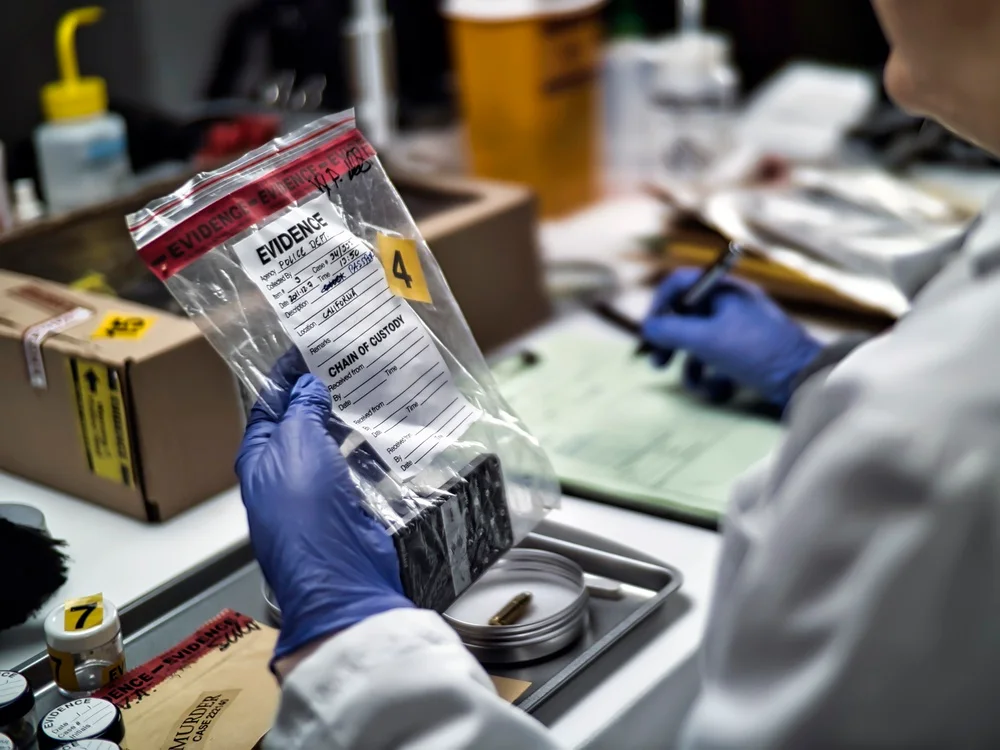
“Autopsy technician” is an umbrella term rather than a single standardized California job title. County coroners, medical examiners, sheriff-coroner offices, and pathology departments advertise similar work under titles such as forensic autopsy technician, autopsy assistant, coroner technician, forensic pathology technician, forensic assistant, and forensic technician.
California has no single statewide education formula for these positions. Verified county requirements range from a high school diploma with no prior experience to college science coursework, mortuary training, an associate degree, or previous work with deceased persons. A bachelor’s degree is useful for some career paths, but it is not universally required for technician-level autopsy work.
A practical route into the occupation is to:
- Identify the counties or medical examiner offices where you could realistically work.
- Compare their autopsy-support classifications and minimum qualifications.
- Complete targeted coursework in anatomy, physiology, biology, medical terminology, and related subjects.
- Gain qualifying experience in a morgue, mortuary, pathology department, coroner’s office, funeral home, emergency medical setting, or other approved environment.
- Apply under every relevant job-title variation.
- Prepare for civil-service screening, a background investigation, physical requirements, and employer-provided safety training.
The occupation combines medical procedures, evidence handling, sanitation, photography, recordkeeping, and respectful care of deceased people. It also involves direct exposure to traumatic injuries, decomposition, biological hazards, sharp instruments, chemicals, and grieving families. Career planning should account for those realities as seriously as education and salary.
What an autopsy technician actually does
Autopsy technicians provide technical support before, during, and after postmortem examinations. The forensic pathologist is the physician who performs and interprets the medicolegal autopsy. The technician prepares the decedent and work area, assists with the physical examination, handles specimens and evidence, documents procedures, and restores and cleans the body after the examination.
The exact scope varies by agency. Duties found across California county classifications include:
- Receiving, identifying, and releasing decedents
- Preparing bodies for examination
- Positioning and moving decedents
- Setting up instruments and supplies
- Opening and closing body cavities
- Removing or assisting with the removal of organs
- Assisting with cranial examinations
- Collecting blood, tissue, toxicology, microbiology, and histology specimens
- Labeling, tracking, storing, and shipping biological samples
- Preserving physical evidence and maintaining chain of custody
- Photographing decedents, injuries, organs, and specimens
- Taking or assisting with radiographs
- Fingerprinting remains
- Cleaning instruments, tables, rooms, and protective equipment
- Managing biological and chemical waste
- Recording case information in paper or electronic systems
- Preparing documentation for death certificates or case files
- Providing testimony about procedures or evidence handling
- Supporting mass-fatality operations
Some positions extend beyond the autopsy suite. Riverside County’s Coroner Technician classification includes decedent recovery and transportation, dispatch, intake and release, radiography, photography, evidence handling, and clerical work. Marin County’s non-sworn Coroner Forensic Technician handles and transports decedents in addition to assisting with autopsies. Shasta County may assign an autopsy technician to death-scene support.
Other classifications remain more concentrated on morgue operations. Los Angeles County’s journey-level Autopsy Technician performs direct autopsy assistance, specimen preservation, body closure, sanitation, and related morgue work. Sonoma County’s Forensic Assistant supports forensic pathologists while maintaining the morgue and autopsy facilities.
Job titles alone do not reliably identify the scope. “Forensic technician” can mean autopsy support in one department and crime-scene, fingerprint, or laboratory work in another. The listed duties provide more useful career information than the title.
California entry requirements vary widely
California does not appear to require a dedicated statewide autopsy-technician license. The occupation was not identified as a license type in the California Department of Consumer Affairs’ licensing resources or license-search system. Instead, counties and other employers establish their own education, experience, driving, physical, and background standards.
The following examples illustrate the range of verified entry points. They are employer examples, not statewide rules.
| California employer | Classification | Representative qualification route |
|---|---|---|
| Riverside County | Coroner Technician | High school diploma or equivalent; the published recruiting guidelines list no prior experience requirement |
| Fresno County | Forensic Autopsy Technician | High school diploma or GED plus six months of paid medical-setting experience, or 15 semester units including at least one relevant science or forensic course |
| Stanislaus County | Forensic Autopsy Technician | 12 semester units in biology, anatomy, or related study, or six months of relevant autopsy, embalming, grief-counseling, medical, or law-enforcement experience |
| Sacramento County | Coroner Technician I/II | 30 semester or 45 quarter units in natural science, emergency medical technology, paramedicine, or related study, or one year of paid or volunteer autopsy-assistance experience |
| Los Angeles County | Forensic Technician I | One year handling, transporting, and preparing deceased persons for postmortem examinations, or an Associate of Science in mortuary science |
| Kern County | Autopsy Assistant | High school diploma or equivalent plus one year working directly with decedents or patients; anatomy, physiology, biology, and medical-terminology coursework may substitute |
| Marin County | Coroner Forensic Technician | Relevant academic coursework or one year in a morgue, hospital, mortuary, or similar facility involving human remains |
| San Luis Obispo County | Forensic Autopsy Technician | 60 semester or 90 quarter units in a relevant field, or two years of related experience |
| Shasta County | Autopsy Technician | 30 college credits in biology, anatomy, forensic science, or a related field plus one year of relevant experience; experience can substitute for education |
| Santa Clara County | Associate Forensic Pathology Technician | High school diploma or equivalent plus one year working with deceased bodies in a mortuary, morgue, coroner, pathology laboratory, or medical examiner office |
| San Mateo County | Forensic Autopsy Technician | Typically a high school diploma or equivalent plus at least one year of relevant hospital, coroner, medical examiner, or morgue experience |
| Tulare County | Autopsy Assistant I | Two years of college study in an approved subject plus two years of relevant work with decedents or patients; a related bachelor’s degree can provide an experience equivalency |
| Ventura County | Forensic Pathology Trainee | Medically oriented education or experience providing knowledge of forensics, biology, chemistry, or criminalistics |
| San Diego County | Forensic Autopsy Specialist | A journey-level role with degree, specialized training, licensure, or experience routes involving mortuary science, human science, pathology, or autopsy work |
These classifications reveal several viable entry strategies. Riverside County has published a high-school-level route without prior experience in its recruiting guidelines. Fresno County accepts a relatively small block of college coursework. Sacramento County accepts either relevant college units or a full year of paid or volunteer autopsy-assistance experience. Santa Clara and San Mateo counties place greater emphasis on prior work with deceased persons.
San Diego County’s Forensic Autopsy Specialist is a more specialized, journey-level classification. Its qualifying routes include completion of an accredited pathologists’ assistant program or an associate degree or higher in mortuary science, human science, or a related subject combined with specified experience or licensure. That is not evidence that graduate pathologists’ assistant education is standard for California autopsy technicians. It is one route into one county’s higher-level classification.
Current recruitment announcements control hiring when their language differs from an older class specification. Salary schedules, examination methods, and substitution rules can also change through county policy or labor agreements.
Choosing the right education
The most efficient education plan depends on the target employers. A four-year forensic science degree may provide useful preparation, but many county classifications do not require one. Conversely, a general criminal justice degree can leave major gaps if it contains little anatomy, biology, medical terminology, or laboratory instruction.
Start by comparing several employer classifications in the region where you want to work. Look for recurring requirements measured in semester units, degree fields, or specific experience. Build the education plan around those requirements rather than relying on the word “forensic” in a program title.
High school preparation
A high school diploma or equivalent is the educational baseline in several reviewed classifications. Useful high school subjects include:
- Biology
- Chemistry
- Anatomy and physiology, where available
- Health science
- Medical terminology
- Photography
- Computer applications
- Technical writing
High school preparation alone qualifies applicants under some published guidelines, but competition can favor candidates with college science courses or direct medical and mortuary experience. Riverside County’s no-experience guideline demonstrates that entry without college is possible. It does not represent every county’s hiring standard.
Targeted community college coursework
Community college can provide a direct, lower-credit route where employers accept specified college units. Fresno County’s alternate route requires 15 semester units with at least one course in anatomy, physiology, biology, chemistry, forensics, life science, or a closely related subject. Stanislaus County accepts 12 semester units in biology, anatomy, or related coursework as one route.
A focused course sequence might include:
- Human anatomy with laboratory
- Human physiology with laboratory
- General biology
- Microbiology
- General chemistry
- Medical terminology
- Introduction to pathology
- Forensic science
- Evidence handling
- Criminal procedure
- Technical report writing
- Digital photography
- Basic computer documentation
Anatomy and physiology are especially relevant because technicians work directly with organs, tissues, body cavities, anatomical landmarks, injuries, and postmortem changes. Medical terminology supports communication with pathologists and accurate records. Biology, chemistry, and microbiology help with specimen handling, contamination control, and laboratory procedures.
Evidence courses have a different purpose. They address labeling, packaging, preservation, chain of custody, and documentation. Those skills matter in medicolegal offices because biological material, clothing, projectiles, trace material, and personal property can become evidence.
Photography and radiography also appear in several California classifications. Los Angeles County’s Forensic Technician II performs forensic photography and radiography. Santa Clara County’s journey-level technician classification includes photography, radiography, and histology support. San Mateo County includes both imaging functions in its technician duties.
Associate degrees
An associate degree can satisfy or support several employer routes. Relevant majors include:
- Mortuary science
- Biology
- Health science
- Forensic science
- Medical laboratory technology
- Criminal justice with substantial science coursework
- Emergency medical technology
- Paramedicine
Los Angeles County lists an Associate of Science degree in mortuary science as an alternative to a year of experience for its Forensic Technician I classification. San Diego County includes associate-level education in mortuary science, human science, or a related field within some qualification routes for Forensic Autopsy Specialist.
Mortuary science aligns well with decedent care, anatomy, embalming procedures, sanitation, restorative techniques, and funeral-service operations. It can also lead toward regulated funeral-service occupations. Working as an autopsy technician, however, is not the same as practicing as a licensed embalmer or funeral director. San Diego County describes California embalmer licensure as desirable for its specialist classification rather than mandatory for every incumbent.
Bachelor’s degrees
A bachelor’s degree may broaden access to forensic, laboratory, supervisory, and graduate-level opportunities, but it is not a universal requirement for technician positions. Ventura County listed a bachelor’s degree in forensics, biology, chemistry, criminology, or a related field as desirable for a trainee and technician recruitment, not mandatory.
Relevant bachelor’s majors include biology, forensic science, chemistry, biomedical science, anthropology, mortuary science where available, and other human-science fields. Curriculum still matters more than the degree label. A science-heavy program with anatomy, physiology, microbiology, chemistry, laboratory methods, statistics, and documentation can be more useful for this occupation than a broadly titled forensic program centered mainly on policing and criminal law.
A bachelor’s degree can also support later movement into specialized forensic laboratory work, medicolegal death investigation, management, or graduate pathology education. Those occupations have separate hiring standards, so the degree should be chosen with the longer career plan in view.
Readers comparing broader education and occupation options can explore the site’s California forensic and investigative career guides.
How to gain relevant experience
Hands-on experience is often the harder qualification to obtain. Many agencies want applicants who have already worked around deceased persons, patients, pathology specimens, medical terminology, or controlled evidence. Acceptable experience differs by employer, but California specifications identify several recurring sources.
Coroner or medical examiner internships
Sacramento County provides a verified example of an internship route. The county offers paid and unpaid student internships, subject to departmental availability, and lists the Coroner’s Office among its internship contacts. Participants must be enrolled in an accredited institution leading to a certificate or degree.
Sacramento’s Coroner Technician specification also recognizes paid, volunteer, and internship experience. Its specified one-year Coroner’s Office internship can provide partial substitution toward the experience requirement. Internship participation is not guaranteed, and the credit available depends on the applicable classification rules.
Ventura County offered a paid, extra-help Medical Examiner’s Intern position in October 2025. Duties included supervised autopsy assistance, death-scene work, evidence and specimen collection, decedent identification, radiography, photography, and preparation of the autopsy suite. It was a temporary employment opportunity rather than a permanent program or guaranteed route to a county technician position.
These examples show the type of experience that directly addresses county requirements: exposure to morgue procedures, documentation, specimen collection, evidence control, sanitation, imaging, and medicolegal protocols.
Mortuary and funeral-home work
Mortuary experience appears repeatedly in California job specifications. It can provide familiarity with human remains, universal precautions, body movement, preparation procedures, documentation, and professional conduct around bereaved families.
Los Angeles County accepts experience handling, transporting, and preparing deceased persons for postmortem examinations as one route to Forensic Technician I. Santa Clara County recognizes experience in a mortuary, morgue, coroner, pathology laboratory, or medical examiner office. Marin, San Luis Obispo, Shasta, San Mateo, Kern, and Sonoma also identify mortuary or human-remains experience as relevant preparation.
Not every funeral-home role includes autopsy exposure. Transportation, removal, embalming assistance, body preparation, and morgue duties usually align more closely than reception or general office work.
Hospital and pathology experience
Hospitals may employ morgue attendants, pathology support staff, laboratory assistants, specimen processors, transporters, and related personnel. Such roles can develop medical terminology, infection-control habits, specimen tracking, sanitation, and experience with deceased patients.
Kern County accepts experience working directly with decedents or patients in a hospital, emergency medical service, funeral home, or related setting. Fresno County accepts paid medical-setting experience under one route. Los Angeles County’s journey-level Autopsy Technician specification recognizes experience as an anatomical pathology laboratory assistant.
Hospital autopsy-support roles can be harder to find because they may be advertised under pathology, histology, laboratory, morgue, or patient-transport titles rather than “autopsy technician.”
Emergency medical and patient-care work
Some employers recognize medically oriented experience even when it did not occur in a morgue. Sacramento County accepts coursework in emergency medical technology and paramedicine. Kern County recognizes direct work with patients in hospitals, emergency medical services, and related settings. Ventura County’s trainee route accepts education or experience that provides relevant knowledge of biology, chemistry, forensics, or criminalistics.
Emergency and patient-care backgrounds can demonstrate infection control, medical vocabulary, documentation, shift reliability, exposure to death, and safe body movement. They do not provide the same procedural experience as assisting with autopsies, so journey-level positions may still require direct forensic-autopsy work.
Volunteer experience
Sacramento County explicitly recognizes volunteer autopsy-assistance experience. Other employers may define qualifying work more narrowly or require paid experience. Volunteer work should involve documented duties, dates, hours, supervision, and direct relevance to the classification.
Maintain detailed records of:
- Employer or agency name
- Supervisor’s name and contact information
- Start and end dates
- Average weekly hours
- Paid, volunteer, internship, or extra-help status
- Number and type of cases supported
- Specific specimen, evidence, imaging, sanitation, and documentation duties
County applications often evaluate experience according to months, full-time equivalency, and exact task descriptions. A résumé statement such as “helped in a morgue” provides far less evidence than a precise description of decedent intake, body preparation, specimen labeling, instrument setup, chain-of-custody records, and post-procedure sanitation.
Search for more than “autopsy technician”
Searching only one title will miss a substantial share of relevant California openings. Use combinations of the following terms:
- Autopsy technician
- Forensic autopsy technician
- Autopsy assistant
- Coroner technician
- Coroner forensic technician
- Forensic technician
- Forensic pathology technician
- Associate forensic pathology technician
- Forensic pathology trainee
- Forensic autopsy specialist
- Forensic assistant
- Morgue technician
- Morgue attendant
- Pathology technician
- Medical examiner intern
Search county government career sites as well as hospital and health-system employment pages. In many California counties, the coroner function is housed within the sheriff’s department. Elsewhere, a medical examiner or health department operates the autopsy facility. Agency structure affects where positions are posted.
Classification specifications are useful even when no opening is active. They show the title, duties, qualification routes, physical demands, and career level used by an employer. Job alerts can then be created for that exact title.
Avoid assuming that every “forensic technician” vacancy involves autopsies. Review the duty statement for references to decedents, postmortem examinations, morgue operations, pathologists, tissue collection, evisceration, toxicology samples, radiography, or body preparation.
Building a competitive application
County hiring usually rewards precise documentation rather than broad statements about interest in forensic science. Application reviewers compare the submitted education and experience against the classification’s published minimum qualifications.
Document college units accurately
Where a county requires 12, 15, or 30 semester units, list the course title, institution, units, completion date, and grade if requested. Quarter units may be converted according to the employer’s rules. Transcripts are commonly used to establish that the required coursework was completed.
Course names do not always communicate content clearly. A course titled “Human Structure and Function,” for example, may cover anatomy and physiology but look less obvious than a course bearing those exact terms. A catalog description can help document relevance if the application permits supporting materials.
Describe direct duties
Experience descriptions should identify work with deceased persons, patients, specimens, evidence, or pathology procedures. Useful details include:
- Receiving and releasing remains
- Verifying identity
- Assisting with removals or transportation
- Positioning bodies
- Preparing instruments
- Supporting dissection
- Collecting and labeling specimens
- Taking photographs or radiographs
- Recording property
- Following chain-of-custody procedures
- Cleaning contaminated surfaces and instruments
- Using personal protective equipment
- Preparing reports
- Communicating with pathologists, investigators, funeral homes, or families
Do not overstate experience. Autopsy assistance, embalming assistance, specimen processing, and death-scene investigation are related but different functions.
Prepare for civil-service hiring
Depending on the county, the process can include:
- A supplemental application
- Transcript review
- A written examination
- Training-and-experience scoring
- A structured panel interview
- Placement on an eligibility list
- A department interview
- Reference checks
- Fingerprinting
- A criminal background investigation
- A driving-record review
- Drug screening
- A medical or physical assessment
- Respirator clearance or fit testing
Stanislaus County’s reviewed recruitment included a background investigation. Tulare County requires a comprehensive background investigation for its Autopsy Assistant I classification. Sacramento County applications require detailed documentation of qualifying education, paid work, volunteer service, or internship experience.
Driving requirements also appear frequently because technicians may transport decedents, travel between facilities, retrieve evidence, or respond outside the main morgue. Los Angeles, San Mateo, Shasta, San Bernardino, San Luis Obispo, Marin, and other reviewed employers specify a California driver’s license or transportation requirement.
Physical, emotional, and safety demands
Autopsy work requires more than comfort with medical terminology. Technicians routinely encounter traumatic injuries, advanced decomposition, odors, infectious material, sharp instruments, power tools, chemical exposure, and emotionally difficult cases involving children or violent deaths.
Physical duties can include prolonged standing, bending, reaching, pushing heavy equipment, lifting with assistance, transferring bodies, manipulating limbs, and performing repetitive hand tasks. Shasta County cites lifting up to 50 pounds. Riverside County requires the ability to lift and carry substantial weight. Los Angeles County classifies its Forensic Technician I work as arduous.
Schedules are not always limited to weekday business hours. Santa Clara, San Mateo, Shasta, Stanislaus, and other counties describe combinations of flexible shifts, weekends, holidays, overtime, standby, and callback duty. Mass-fatality events can create additional demands.
Professional conduct includes maintaining accuracy and dignity under difficult conditions. Technicians may interact with investigators, funeral homes, physicians, attorneys, law-enforcement personnel, and families. Some classifications include court testimony or public contact. Emotional composure must coexist with respectful treatment of each decedent.
Workplace hazard controls
Autopsy facilities operate under occupational-safety rules rather than relying on an employee’s personal tolerance for risk. California’s bloodborne-pathogen standard treats unfixed human tissue and organs, including tissue from deceased people, as potentially infectious material. Covered employers must provide exposure controls, training, protective measures, and post-exposure procedures.
California also classifies autopsy procedures capable of aerosolizing pathogens as high-hazard procedures under its aerosol-transmissible-disease standard. Saws, water sprays, and manipulation of infected tissue can produce additional exposure risks.
Formaldehyde is another concern in pathology environments. California’s formaldehyde standard establishes an eight-hour permissible exposure limit of 0.75 parts per million and a 15-minute limit of 2 parts per million. Covered workplaces must use applicable monitoring, engineering controls, personal protective equipment, hazard communication, and training.
CDC guidance identifies additional hazards involving sharps, power tools, formalin, radiation sources, contaminated surfaces, and infectious material. Common controls include:
- Gloves selected for the procedure
- Protective gowns, aprons, or suits
- Face and eye protection
- Respiratory protection where required
- Cut-resistant protection
- Ventilation and local exhaust systems
- Sharps controls
- Safe saw and instrument procedures
- Surface and instrument disinfection
- Exposure reporting and medical follow-up
- Radiation-safety procedures
- Hazardous-waste segregation
Safety training normally occurs after hiring and continues as required. Prior science or healthcare education helps applicants understand these systems, but it does not replace employer-specific instruction.
Salary in California
There is no reliable single statewide average salary specifically for autopsy technicians. Public wage databases usually place this work within broader occupational categories, while county salaries vary by geography, classification level, labor agreement, and seniority step.
The following county figures were published in the classifications or recruitments reviewed in September 2026:
| Employer and classification | Published annual salary |
|---|---|
| Stanislaus County Forensic Autopsy Technician, 2025 recruitment | $47,153.60 to $57,304 |
| Tulare County Autopsy Assistant I | $50,862.30 to $61,987.65 |
| Sacramento County Coroner Technician I/II, 2026 recruitment | $52,074.72 to $66,461.04 |
| Sacramento County Coroner Technician I/II class range | $53,640.72 to $68,444.64 |
| San Bernardino County Autopsy Assistant | $53,289.60 to $73,236.80 |
| Shasta County Autopsy Technician | $54,816 to $69,948 |
| Los Angeles County Autopsy Technician-Photographer, recruitment closed May 1, 2026 | $58,560 to $70,803.36 |
| Santa Clara County Associate Forensic Pathology Technician | $72,350.72 to $87,204 |
| San Mateo County Forensic Autopsy Technician | $75,857.60 to $94,827.20 |
| Santa Clara County Forensic Pathology Technician | $87,759.36 to $105,998.88 |
These figures are dated employer ranges, not a statewide pay scale. The sample shows both geographic and career-level variation. Entry classifications in parts of the Central Valley began around the upper $40,000s or low $50,000s, while the top of a Bay Area journey-level range exceeded $100,000.
Benefits can add substantial value in county employment. Public-sector packages may include health coverage, retirement contributions, paid leave, overtime rules, shift differentials, and other negotiated benefits. The supplied salary ranges do not represent total compensation or total cost of living.
Broader forensic wage and outlook data
The U.S. Bureau of Labor Statistics does not report autopsy technicians as a separate occupation. Its forensic science technician profile includes crime-scene and laboratory roles beyond autopsy support. The national median annual wage for that broader occupation was $67,440 in May 2024, and BLS projects 13 percent employment growth from 2024 through 2034.
California’s Employment Development Department reported a first-quarter 2026 statewide mean wage of $51.87 per hour and a median wage of $50.46 per hour for the broad forensic science technician category. EDD projects employment in that category to increase from 2,200 positions in 2022 to 2,600 in 2032, an 18.2 percent gain.
Those figures provide context for the wider forensic labor market. They are not autopsy-technician-specific wage or growth estimates. County salary schedules are more useful for evaluating actual autopsy-support pay.
Autopsy technician compared with related careers
Several occupations work around death investigation, pathology, or forensic evidence, but they require different education and carry different responsibilities.
Forensic pathologist
A forensic pathologist is a physician trained to perform and interpret medicolegal autopsies. The pathologist determines medical findings, evaluates injuries and disease, orders or interprets testing, and develops the medical opinion regarding cause and manner of death.
An autopsy technician supports this work but does not replace the physician. Technician education requirements are much shorter and vary by employer.
Deputy coroner or medicolegal death investigator
Death investigators respond to scenes, gather circumstances, interview witnesses or family members, review medical history, document the scene, coordinate identification, and help determine whether a case falls under the coroner or medical examiner’s jurisdiction.
Some autopsy-support positions include transportation or limited scene duties, but that does not make every technician a deputy coroner or investigator. Investigative authority, peace-officer status, training, and assignment structure differ by agency.
Pathologists’ assistant
A pathologists’ assistant is a separate anatomic-pathology profession. Responsibilities can include surgical specimen examination and dissection, autopsy work, education, administration, and research.
Under the current ASCP pathologists’ assistant credential route, examination eligibility includes at least a bachelor’s degree and recent completion of a NAACLS-accredited pathologists’ assistant program. These are graduate-level professional programs.
A county forensic pathology technician is not automatically a pathologists’ assistant merely because the titles sound similar. San Diego County permits completion of an accredited pathologists’ assistant program as one route into its Forensic Autopsy Specialist classification, but that is not the ordinary minimum route for technician jobs across California.
Crime-scene technician
Crime-scene technicians document scenes, photograph evidence, recover fingerprints, collect biological and physical material, create diagrams, and maintain chain of custody. They ordinarily work at scenes rather than assisting with postmortem dissection.
Some skills overlap, particularly photography, evidence handling, documentation, and courtroom testimony. The anatomical, specimen, sanitation, and morgue components of autopsy work require different preparation.
Embalmer or funeral director
Embalmers preserve and prepare bodies for funeral services. Funeral directors arrange services and manage funeral-home operations. These are regulated funeral-service occupations with licensing requirements that differ from county autopsy-technician hiring.
Mortuary-science education and embalming experience can qualify an applicant for some autopsy roles because they provide anatomy, sanitation, body-preparation, and human-remains experience. The occupations remain distinct.
Advancement opportunities
A common advancement path moves from trainee or associate status to journey-level technical work, then to senior, lead, or supervisory responsibilities.
Santa Clara County uses an Associate Forensic Pathology Technician as its training-level classification. The employee is expected to become eligible for promotion after one year. Its journey-level Forensic Pathology Technician classification includes more advanced autopsy support, evisceration, photography, radiography, histology support, hazardous-waste handling, evidence preservation, testimony, training, and mass-fatality response.
Sacramento County identifies a potential career ladder that includes:
- Coroner Technician Level I/II
- Senior Coroner Technician
- Supervising Coroner Technician
- Assistant Coroner
Los Angeles County also illustrates technical progression. Forensic Technician I employees perform entry-level autopsy and morgue support. Forensic Technician II includes difficult autopsies, forensic photography, radiography, evidence preservation, and more advanced specimen duties. The county’s listed progression requires experience at the first level plus photography training or equivalent preparation.
Other advancement routes can involve:
- Morgue or autopsy-suite supervision
- Training new technicians
- Quality assurance and safety coordination
- Evidence or property management
- Forensic photography or radiography specialization
- Medicolegal death investigation
- Pathology laboratory work
- Emergency management and mass-fatality planning
- Additional education for pathologists’ assistant or other laboratory professions
Moving into laboratory criminalistics usually requires stronger chemistry, biology, statistics, and instrumental-analysis preparation than many autopsy-technician classifications demand. Advancement into a pathologists’ assistant career requires the separate accredited graduate education and certification pathway.
A practical California career plan
Begin with employers rather than a degree title. Select at least three counties, medical examiner offices, or health systems within a realistic commuting or relocation area. Find their autopsy-support classifications using all verified title variations.
Create a comparison sheet with these columns:
- Job title
- Department
- Minimum education
- Required college units
- Accepted degree fields
- Required experience
- Experience substitutions
- Driver’s-license requirement
- Physical demands
- Background process
- Schedule
- Salary range
- Entry, journey, or supervisory level
Next, identify the qualification route that appears across the greatest number of target employers. In many regions, anatomy and physiology, biology, medical terminology, and hands-on work with decedents or patients will cover more requirements than a general criminal justice curriculum.
A candidate starting without college or medical experience can use the following sequence:
- Complete anatomy and physiology with laboratory work.
- Add medical terminology, biology, and microbiology or chemistry.
- Pursue mortuary, hospital, pathology, EMS, specimen-processing, or coroner-office experience.
- Document hours and exact duties.
- Create alerts for all local title variations.
- Apply to trainee, associate, intern, extra-help, and entry-level classifications.
- Continue adding relevant coursework while applying.
A candidate already working in a funeral home or mortuary should emphasize removal, transportation, body preparation, embalming assistance, sanitation, identification, documentation, and direct work with human remains. Someone with hospital or EMS experience should emphasize infection control, patient handling, medical terminology, exposure to death, specimen procedures, and accurate records.
Applicants with a bachelor’s degree but no hands-on experience may still need an entry-level, trainee, internship, mortuary, or pathology-support role. Degree level cannot substitute for direct experience unless the employer’s qualification rules expressly allow it. Tulare County, for example, provides an equivalency involving a related bachelor’s degree, while Santa Clara County’s associate classification normally emphasizes a year of work with deceased bodies.
The strongest preparation is a documented combination of relevant science education, practical exposure, evidence awareness, safety discipline, and accurate technical communication. California provides multiple entry routes, but they converge on the same professional demands: careful work around human remains, dependable handling of specimens and evidence, and respectful performance under physically and emotionally difficult conditions.