
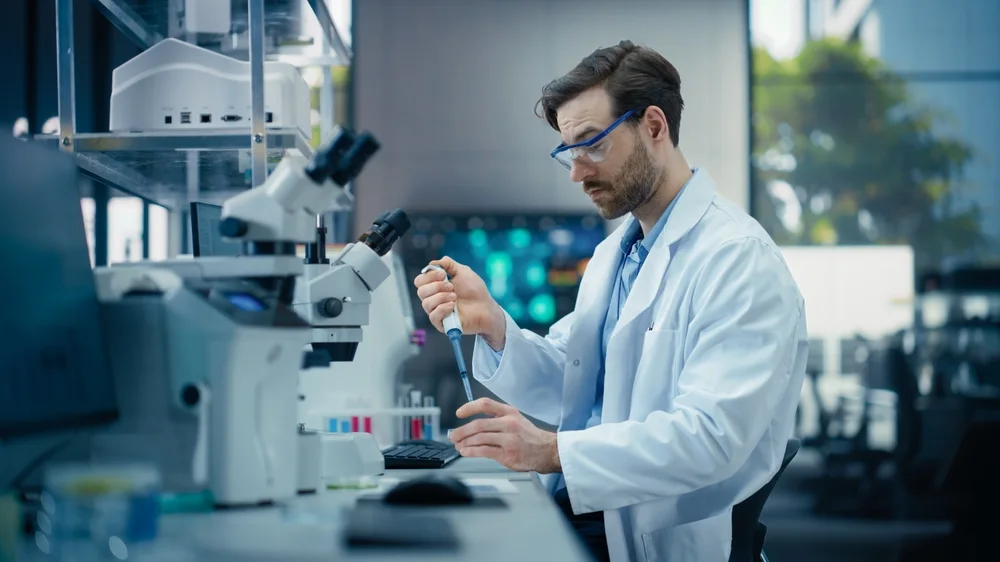
California does not appear to offer a currently verified degree titled exactly “Forensic Toxicology.” The state does, however, have several credible routes into the field. They include forensic science and forensic chemistry degrees with toxicology coursework, broader toxicology degrees with substantial laboratory science, and graduate criminalistics programs that cover toxicological evidence.
The degree title matters less than the transcript. Forensic toxicology laboratories commonly need scientists who understand analytical chemistry, drug metabolism, biological specimens, quantitative methods, instrumentation, quality control, and legal evidence procedures. A forensic-branded degree that lacks enough chemistry can be less useful for laboratory employment than a chemistry, biochemistry, pharmacology, or toxicology degree with the right courses.
Among the California programs reviewed here, the UC Davis MS in Forensic Science Criminalistics track is the most direct verified graduate route. Its curriculum includes Analysis of Toxicants and an analytical instrumentation laboratory. At the undergraduate level, UC Davis offers two especially relevant pathways: Applied Chemistry with a Forensic Chemistry emphasis and Environmental Toxicology with a Forensic Science and Regulatory Toxicology emphasis framework. National University also has a graduate Criminalistics specialization with a dedicated Advanced Forensic Toxicology course.
Other programs prepare students through forensic chemistry, instrumental analysis, molecular biology, criminalistics, pharmacology, or environmental toxicology. They are not interchangeable, so the right route depends on whether the goal is routine casework, postmortem toxicology, forensic alcohol analysis, controlled-substance analysis, toxicology research, or another laboratory specialty.
This comparison covers verified degrees at California institutions. It does not attempt to inventory every out-of-state online program that may accept California residents.
Readers comparing this specialty with other educational routes can also review the broader guide to CSI and forensic science degrees in California.
California forensic toxicology degree comparison
| School and program | Level | Forensic toxicology alignment | Format | Defining curriculum features |
|---|---|---|---|---|
| UC Davis MS in Forensic Science, Criminalistics track | Master’s | Direct | In person, full time or part time | Analysis of Toxicants, analytical instrumentation laboratory, forensic statistics, case reporting, thesis or capstone |
| National University Master of Forensic Sciences, Criminalistics specialization | Master’s | Direct | Online, in person, or hybrid; some laboratory participation may be in person | Advanced Forensic Toxicology, trace evidence, serology and DNA, supervised research |
| UC Davis BS in Applied Chemistry, Forensic Chemistry emphasis | Bachelor’s | Direct undergraduate science route | On campus | Analytical chemistry, toxicant analysis, instrumentation, organic and physical chemistry, toxicology electives |
| UC Davis BS in Environmental Toxicology | Bachelor’s | Direct toxicology route with broader environmental scope | On campus | Quantitative toxicant analysis, experimental toxicology, biological effects, environmental fate, forensic and regulatory electives |
| San José State BS in Forensic Science, Chemistry concentration | Bachelor’s | Closely related | Primarily on campus | Organic and inorganic chemistry, instrumental analysis, forensic chemistry, toxicology, physical evidence |
| Cal State LA MS in Criminalistics | Master’s | Closely related | Primarily in person | Graduate criminalistics, research methods, forensic laboratory science, forensic toxicology and controlled-substance analysis |
| CSU East Bay BS in Chemistry, Bioanalytical and Forensics concentration | Bachelor’s | Closely related | Primarily on campus | Quantitative analysis, biochemistry, instrumental analysis, forensic instrumentation, genetics and molecular methods |
| CSU East Bay BS in Biological Sciences, Forensic Science concentration | Bachelor’s | Related, biology centered | Primarily on campus | Organic chemistry, quantitative analysis, forensic instrumentation, molecular biology, PCR and sequencing |
| Sacramento State BA in Chemistry, Forensic Chemistry concentration | Bachelor’s | Related | On campus | Quantitative, organic, physical, and biochemical chemistry; physical evidence; advanced laboratory work |
| California Baptist University BS in Forensic Chemistry | Bachelor’s | Related | On campus | Analytical and instrumental methods, forensic laboratories, concentration options, internship or research capstone |
| UC Davis Pharmacology and Toxicology Graduate Program | Master’s and PhD | Advanced toxicology, not forensic centered | On campus and research based | Drugs and toxins, metabolism, pharmacokinetics, toxicology specialties, research rotations |
| UC Riverside Environmental Toxicology Graduate Program | Master’s and PhD | Advanced toxicology, not forensic centered | On campus and research based | Analytical chemistry, metabolism, molecular toxicology, statistics, quantitative research |
| USC MS in Molecular Pharmacology and Toxicology | Master’s | Advanced laboratory toxicology | Laboratory based | Drug effects, cell physiology, metabolism, biochemistry, neuropharmacology and environmental toxicology |
| UCLA PhD in Environmental and Molecular Toxicology | Doctorate | Advanced research route | Onsite, weekdays | Toxicodynamics, molecular pharmacology, disease mechanisms, epidemiology and dissertation research |
The first ten programs integrate forensic science or forensic chemistry directly into the degree. The final four develop advanced toxicology expertise but do not center legal evidence handling, chain of custody, forensic reporting, or courtroom practice.
What forensic toxicology preparation actually requires
Forensic toxicology applies chemistry, biology, pharmacology, and analytical measurement to questions with legal consequences. The specimens may include blood, urine, tissue, hair, or other biological materials. The work can involve detecting a substance, measuring its concentration, interpreting how the body absorbed or metabolized it, and explaining the result in a defensible report.
Several specialties fall under or near the forensic toxicology umbrella:
- Postmortem toxicology evaluates drugs, alcohol, poisons, and metabolites in death investigations.
- Human-performance toxicology examines whether alcohol, medication, or another substance may have affected behavior or physical performance.
- Forensic alcohol analysis focuses on alcohol testing and interpretation, often in driving or workplace cases.
- Controlled-substance analysis identifies seized materials. It overlaps with forensic chemistry but is not the same as testing biological specimens.
- Clinical toxicology supports diagnosis and treatment of poisoning or overdose. Its medical purpose differs from forensic casework.
- Environmental toxicology studies how chemicals move through ecosystems or affect organisms and human populations.
- Molecular toxicology examines toxic effects and mechanisms at the cellular or molecular level.
A laboratory-oriented undergraduate plan should normally contain general chemistry, organic chemistry, quantitative or analytical chemistry, and substantial laboratory work. Physical chemistry is useful and appears in professional education standards. Biochemistry, biology, physiology, pharmacology, toxicology, statistics, and instrumental analysis add the knowledge needed to interpret drugs and toxins in biological systems.
Instrumentation deserves special attention. Modern toxicology depends heavily on separation and detection techniques, including chromatography and mass spectrometry. A transcript containing instrumental analysis, toxicant analysis, and advanced chemistry laboratories gives employers more evidence of laboratory readiness than a general survey course in forensic science.
Evidence procedures form another layer of preparation. Casework requires documentation, preservation, quality assurance, report writing, and an understanding of how laboratory results enter legal proceedings. A forensic science or criminalistics curriculum can add evidence handling, documentation, and legal reporting to a traditional chemistry or toxicology education.
Direct graduate pathways
UC Davis MS in Forensic Science, Criminalistics track
UC Davis offers a 54-quarter-unit Master of Science in Forensic Science with Criminalistics and DNA tracks. The Criminalistics track is the closer match for toxicology because it emphasizes instrumental analysis, trace evidence, drug chemistry, and toxicants.
Required track work includes Analysis of Toxicants and the Forensic Science Analytical Instrumentation Laboratory. The larger curriculum covers forensic science fundamentals, forensic statistics, human identification, case reports, seminar work, and either thesis research or a capstone. Additional offerings can include forensic toxicology and forensic alcohol topics.
The program is in person, with full-time and part-time attendance options. UC Davis does not currently describe it as an online degree. Applicants need a bachelor’s degree in a physical or natural science, engineering, or a closely related field and at least a 3.0 GPA. Academic preparation includes one year of general chemistry, one quarter of organic chemistry, one quarter of physics, calculus, and statistics. Biology, biochemistry, and genetics are recommended.
The research structure is substantial. The thesis plan includes 15 to 16 research units, while the capstone route provides an applied alternative. Students also encounter mock crime-scene and courtroom exercises in addition to laboratory methods.
UC Davis describes the thesis-based option as FEPAC-accredited. The university’s accreditation statement is specifically attached to that option, so it should not be extended to the capstone plan.
For students entering in fall 2025 or later, the university lists tuition at $903 per unit. Across 54 units, that equals $48,762 in program tuition. Health insurance, books, supplies, laboratory materials, housing, transportation, and other living expenses are separate. California residents and nonresidents pay the same listed per-unit program fee.
This program has the clearest combination of toxicant analysis, forensic instrumentation, legal context, and graduate research among the verified California options. It is still an MS in Forensic Science, not an MS in Forensic Toxicology.
National University Master of Forensic Sciences, Criminalistics specialization
National University’s Master of Forensic Sciences requires at least 36 semester credits and offers Criminalistics and Investigation specializations. The Criminalistics specialization is the relevant route for laboratory toxicology.
Its curriculum includes a three-credit Advanced Forensic Toxicology course addressing toxicological samples, collection and preservation, poisons, analytical procedures, gas chromatography-mass spectrometry, and evidentiary issues. Other specialization courses include Trace Evidence, Forensic Serology and DNA, and Advanced Forensic DNA Analysis. Supervised master’s research completes the program.
Admission to the Criminalistics specialization normally requires an undergraduate degree in a laboratory or physical science. The academic program director can approve an exception, but the normal expectation reflects the scientific level of the specialization.
National University advertises online, in-person, and hybrid delivery. Some Criminalistics courses may require in-person laboratory participation, so the specialization is not accurately described as a guaranteed fully online route. The current program materials do not state where every possible laboratory session is held.
Compared with UC Davis, National University requires fewer listed credits and provides more delivery flexibility. UC Davis offers the more extensive verified research and instrumentation structure, while National University provides an explicit Advanced Forensic Toxicology course within a multidisciplinary criminalistics master’s.
Cal State LA MS in Criminalistics
Cal State LA’s MS in Criminalistics is built for graduates with a natural or physical science background. Prerequisites include general chemistry, organic chemistry with laboratories, quantitative analysis, physics, and biostatistics. Applicants need at least a 3.0 GPA in the last 60 semester units and a 3.0 GPA in the undergraduate major for consideration.
The curriculum covers graduate criminalistics, forensic laboratory science, and research methods. A four-unit course titled Forensic Toxicology and Controlled Substances Analysis was scheduled in person for fall 2026, confirming that toxicology remains active within the program. The course combines the toxicological and analytical study of drugs with controlled-substance analysis.
A research capstone is required, while internships are encouraged rather than listed as a universal requirement. The program operates at the Hertzberg-Davis Forensic Science Center, which also houses the Los Angeles Police Department Scientific Investigation Division and the Los Angeles County Sheriff’s Department Scientific Services Bureau. That setting places graduate education near working public forensic laboratories.
New graduate students enter in the fall, and the published application deadline is March 15. The degree serves a broader criminalistics mission, so toxicology is one component rather than the sole subject.
Undergraduate programs with the strongest toxicology and analytical chemistry alignment
UC Davis BS in Applied Chemistry, Forensic Chemistry emphasis
The UC Davis Bachelor of Science in Applied Chemistry offers a Forensic Chemistry emphasis with a notably detailed analytical curriculum. Depending on course choices, the catalog lists 99 to 115 units of major requirements.
The degree begins with chemistry, calculus, physics, biology, statistics, and introductory forensic science. Advanced work includes organic chemistry laboratories, physical chemistry, instrumental analysis, forensic applications of analytical chemistry, environmental toxicology, and quantitative analysis of toxicants. Elective possibilities include mass spectrometry, experimental toxicology, advanced toxicology, legal aspects of toxicology, and additional statistics.
Multiple laboratory courses are required. Undergraduate research is strongly encouraged, although it is not listed as mandatory for every student.
This route is better aligned with analytical casework than a degree dominated by criminal justice or crime-scene processing. It also gives students room to build a transcript relevant to professional standards through physical chemistry, toxicology, instrumentation, and mass spectrometry.
The main tradeoff is that it remains a chemistry degree. Students gain strong measurement science, but a forensic laboratory internship or research project can add experience with evidentiary documentation, validated methods, biological specimens, and case reporting.
UC Davis BS in Environmental Toxicology
UC Davis also offers a BS in Environmental Toxicology with a Forensic Science and Regulatory Toxicology emphasis framework. This is a broader toxicology education than the Applied Chemistry degree.
Preparation includes biology, general and organic chemistry, mathematics, statistics, and physics. The core addresses the biological effects of toxicants, environmental fate, exposure, regulation, risk assessment, quantitative toxicant analysis, and experimental toxicology. Required laboratory work includes quantitative analysis and experimental toxicology.
The degree can provide deeper study of how toxic substances interact with organisms and the environment. That foundation is relevant to toxicological interpretation, but environmental exposure and regulatory science occupy substantial space in the curriculum.
Students targeting medicolegal laboratories can use the emphasis electives to add analytical chemistry, biochemistry, pharmacology, mass spectrometry, and forensic applications. Internships and research projects are recommended rather than universally required.
Between the two UC Davis bachelor’s routes, Applied Chemistry provides the clearer chemistry and instrumentation identity. Environmental Toxicology gives broader training in toxic effects, exposure, biological response, and regulation. A student drawn to analytical drug testing may prefer Applied Chemistry, while someone interested in toxicology research, public health, regulation, or environmental exposure may find the Environmental Toxicology curriculum closer to the intended career.
San José State BS in Forensic Science, Chemistry concentration
San José State’s BS in Forensic Science offers Chemistry, Biology, and Digital Evidence concentrations. The Chemistry concentration is the most relevant of the three for toxicology-oriented laboratory preparation.
Coursework includes organic and inorganic chemistry, instrumental analysis, forensic chemistry, toxicology, physical evidence analysis, statistics, report writing, forensic methods, and senior seminar work. Chemistry and forensic laboratory requirements provide hands-on scientific training rather than treating forensic science as an exclusively investigative subject.
SJSU states that its concentration curricula meet FEPAC educational standards. That wording does not mean the bachelor’s program is currently FEPAC-accredited. Program accreditation is a separate status listed through the official FEPAC directory.
This degree integrates forensic context earlier and more directly than a conventional chemistry major. Its breadth provides exposure to several crime-laboratory disciplines. For toxicology positions with detailed chemistry-credit requirements, the finished transcript carries more weight than the concentration name. Analytical chemistry, physical chemistry, biochemistry, toxicology, and advanced instrumentation are the courses most likely to affect fit.
CSU East Bay BS in Chemistry, Bioanalytical and Forensics concentration
CSU East Bay lists the Chemistry BS Bioanalytical and Forensics concentration in its 2026-2027 degree-roadmap inventory. The curriculum combines chemistry with biological and molecular methods.
Students progress through calculus, general chemistry, organic chemistry, quantitative analysis, biochemistry, physical chemistry, Bioanalytical and Forensic Instrumentation, and Instrumental Analysis. Genetics, PCR, sequencing, fragment analysis, and other molecular laboratory methods broaden the program beyond a conventional analytical chemistry sequence.
The combination is useful for toxicological work involving complex biological samples. Quantitative analysis and instrumental analysis are directly relevant to measuring drugs and toxins, while biochemistry and molecular methods support an understanding of biological systems.
The reviewed curriculum does not establish a dedicated forensic toxicology sequence. It instead provides a scientific base across forensic chemistry and bioanalysis. That balance can support entry-level laboratory applications or graduate forensic science study, particularly when paired with research involving chromatography, mass spectrometry, method development, or biological specimens.
CSU East Bay BS in Biological Sciences, Forensic Science concentration
CSU East Bay’s Biological Sciences BS with a Forensic Science concentration takes a more biology-centered approach. It includes general chemistry, organic chemistry, quantitative analysis, Bioanalytical and Forensic Instrumentation, molecular biology, genetics, PCR and sequencing, criminal investigation, and criminal identification.
This route can be relevant to toxicology because forensic specimens are biological. Knowledge of molecular biology, genetics, and laboratory analysis can support work involving blood, tissue, and other human samples.
Compared with the university’s Chemistry concentration, however, this program places less emphasis on a continuous upper-division chemistry sequence. The Chemistry concentration is the more direct choice for positions that prioritize analytical chemistry and instrumental measurement. The Biological Sciences concentration is better aligned with students seeking broader preparation across biological evidence and forensic laboratory work.
A separate mandatory internship is not listed in the reviewed program materials. Laboratory courses are embedded throughout the chemistry and biology sequence.
Additional forensic chemistry options
Sacramento State BA in Chemistry, Forensic Chemistry concentration
Sacramento State offers a 120-unit BA in Chemistry with a Forensic Chemistry concentration. Despite the Bachelor of Arts designation, the major contains a substantial science sequence.
Required preparation includes general chemistry, organic chemistry, quantitative analysis, calculus, physics, biochemistry, advanced organic and biochemistry laboratories, criminal justice, and physical evidence study. Electives can include chemical instrumentation, inorganic chemistry, a physical chemistry laboratory, or an advanced biochemistry laboratory.
Chemical instrumentation is elective rather than explicitly required. Toxicology-oriented students benefit most from selecting it, since instrumental methods are central to modern drug and poison analysis. Adding toxicology, pharmacology, independent research, or a laboratory internship would address subject areas less visible in the required curriculum.
For fall 2026 and spring 2027, Sacramento State lists full-time resident undergraduate tuition and mandatory campus fees at $4,828 per semester. That figure is not total cost of attendance. Books, housing, transportation, personal costs, and nonresident tuition are separate.
This program offers a lower published resident price than the private undergraduate option discussed below, but price alone does not decide career alignment. Its required chemistry base is useful, while toxicology and instrumentation require more deliberate elective planning.
California Baptist University BS in Forensic Chemistry
California Baptist University’s BS in Forensic Chemistry contains 71 to 75 program units. Students choose among Criminal Justice Systems, Criminalistics, and Advanced Chemistry concentrations.
The curriculum includes general, organic, and analytical chemistry, instrumental and laboratory techniques, forensic science with laboratory work, and advanced forensic chemistry. The concentration choice changes the balance between laboratory science and criminal justice.
The senior capstone may take the form of a crime-laboratory internship, a faculty-supervised research project, or a literature thesis. An internship can supply practical laboratory exposure, but it is one capstone option rather than the only route.
The university includes forensic toxicologist on its list of possible careers and also states that some careers require further education. The published material does not establish that every concentration supplies the chemistry and toxicology coursework required by every employer or American Board of Forensic Toxicology category. Advanced Chemistry or Criminalistics is more closely related to laboratory work than a concentration weighted toward criminal justice systems.
Published 2026-2027 traditional undergraduate tuition is $42,264 per year for students taking 13 to 18 units per semester. Published fees add $2,460. Housing, meals, books, and other expenses are separate, while institutional scholarships can reduce the amount a student pays.
Broader toxicology graduate degrees
The following programs teach toxicology at an advanced level but are not forensic science degrees. They fit research, academic, environmental, pharmaceutical, regulatory, and specialized laboratory goals more directly than routine entry-level forensic casework.
UC Davis Pharmacology and Toxicology graduate degrees
UC Davis offers MS Plan I, MS Plan II, and PhD options through its Pharmacology and Toxicology Graduate Group. Areas of study include drugs and toxins, xenobiotic metabolism, pharmacokinetics, neurotoxicology, pulmonary toxicology, and environmental toxicology.
The program combines core courses with experimental research. First-year research rotations expose students to laboratories and help connect scientific interests with faculty research.
This is advanced toxicology training rather than a criminalistics curriculum. The program’s central materials do not describe evidence custody, forensic case reporting, courtroom testimony, or legal standards as primary components. It may suit a student pursuing toxicology research or a highly specialized laboratory career, but it is not a substitute for forensic practice education in every setting.
UC Riverside Environmental Toxicology MS and PhD
UC Riverside’s Environmental Toxicology Graduate Program awards both MS and PhD degrees. Training includes toxicology core courses and electives in chemistry, biology, environmental science, engineering, biomedical science, and statistics.
Research areas include analytical chemistry, proteomics, metabolism, cellular and molecular toxicology, genetic toxicology, neurotoxicology, and the fate of environmental chemicals. Students receive training in research design, quantitative methods, data analysis, laboratory research, seminars, and professional development.
The analytical and mechanistic work can transfer to some forensic research contexts. The main orientation, however, is environmental toxicology rather than medicolegal evidence analysis. It is a better match for research on exposure, chemical fate, biological mechanisms, and environmental effects than for a student seeking a narrowly structured crime-laboratory degree.
USC MS in Molecular Pharmacology and Toxicology
USC’s MS in Molecular Pharmacology and Toxicology emphasizes drug interactions with cell physiology, metabolism, biochemistry, neuropharmacology, medicinal chemistry, and environmental toxicology. USC describes the research areas as primarily laboratory based.
The degree can develop advanced knowledge of how drugs and toxicants act in biological systems. That scientific depth is relevant to toxicological interpretation and pharmaceutical research.
The verified program information does not identify a dedicated sequence in forensic evidence handling, chain of custody, courtroom testimony, or criminalistics. It is therefore best viewed as a laboratory pharmacology and toxicology degree with possible relevance to specialized forensic work, not a forensic toxicology credential by title or design.
UCLA PhD in Environmental and Molecular Toxicology
UCLA offers an onsite PhD in Environmental and Molecular Toxicology. A master’s degree is not required. The program identifies chemistry or biology with quantitative preparation as an ideal background and requires at least one four-unit undergraduate statistics course for admission.
Coursework includes toxicodynamics, molecular pharmacology, mechanisms of human disease, environmental science, epidemiology, and biomedical-research ethics. Doctoral students complete written and oral qualifying examinations, original dissertation research, and an oral defense.
This is an advanced research pathway, not a conventional entry route into forensic toxicology. Its strongest alignment is with mechanistic toxicology, academic research, public health, and specialized scientific investigation.
How California employers evaluate forensic toxicology preparation
California employers do not use a single statewide education formula for every toxicology-related position. A county forensic toxicologist, state criminalist, coroner laboratory scientist, private laboratory analyst, and forensic alcohol specialist can have different minimum qualifications.
The California Department of Justice reports that criminalists commonly hold four-year degrees in physical or biological science. Chemistry preparation, including general chemistry and quantitative analysis, is relevant to criminalist hiring. DOJ also identifies toxicology, controlled substances, biology, and trace evidence as areas in which criminalists may work.
Contra Costa County’s Forensic Toxicologist I classification provides a concrete example. It requires a bachelor’s degree in toxicology, pharmacology, biochemistry, or a closely related laboratory science. The degree must include at least 12 semester units or 18 quarter units of chemistry, including quantitative analysis.
That classification illustrates why an exact forensic toxicology degree title is unnecessary. It also shows why a generic criminal justice degree is generally weak preparation for laboratory toxicology. The employer is looking for laboratory science and specified chemistry coursework.
Job titles require careful reading. A “forensic scientist” at one laboratory may perform toxicology, while another agency may use “criminalist,” “forensic toxicologist,” “laboratory analyst,” or “forensic alcohol analyst.” The same title can also carry different education requirements across agencies.
A practical transcript-planning checklist includes:
- General or inorganic chemistry with laboratory work
- Organic chemistry with laboratory work
- Quantitative or analytical chemistry
- Physical chemistry
- Instrumental analysis
- Biochemistry
- General biology, physiology, or molecular biology
- Toxicology
- Pharmacology
- Statistics
- Chromatography and mass spectrometry where available
- Research methods and quality assurance
- Scientific writing and forensic report preparation
Not every position requires every course on this list. Completing more of the core chemistry sequence preserves access to employers and professional pathways that count specific chemistry credits.
Laboratory experience, internships, and research
Course titles establish academic exposure, but laboratories hire people to produce reliable results under controlled procedures. Repeated laboratory practice is therefore more useful than a single introductory forensic survey.
Strong experience can come from:
- Analytical chemistry laboratories
- Toxicology or pharmacology research
- Instrumental analysis using chromatographic or spectrometric methods
- Method development and validation
- Sample extraction and preparation
- Work with biological matrices
- Quality-control documentation
- Undergraduate or graduate research
- Internships in crime, toxicology, coroner, or medical examiner laboratories
The California DOJ specifically recommends internships at crime laboratories, toxicology laboratories, and medical examiner or coroner facilities. Access can be competitive, so university research is a meaningful second route. A chemistry laboratory investigating drugs, metabolites, environmental contaminants, or analytical measurement can develop relevant technical habits even when the project is not labeled forensic.
The programs differ in how they integrate practical work. UC Davis’s forensic MS includes analytical instrumentation and research or capstone work. National University requires supervised master’s research, with possible in-person laboratory participation in some Criminalistics courses. Cal State LA requires a research capstone and encourages internships. California Baptist allows an internship, research project, or literature thesis as the senior capstone.
At Sacramento State and the CSU East Bay programs, laboratory work is built into chemistry or biology courses. Independent research or an external internship can add case-relevant experience beyond the required sequence.
FEPAC accreditation and ABFT certification
FEPAC and the American Board of Forensic Toxicology serve different purposes.
The Forensic Science Education Programs Accreditation Commission, or FEPAC, accredits qualifying bachelor’s and master’s forensic science programs. Accreditation applies to a specific program, not automatically to every forensic-related degree at a university.
UC Davis currently describes the thesis-based option within its MS in Forensic Science as FEPAC-accredited. The accreditation claim should remain limited to that plan. San José State says its concentration curricula meet FEPAC educational standards, which is different from holding current FEPAC accreditation.
FEPAC is not the usual accreditation framework for general environmental toxicology, pharmacology, molecular toxicology, or public health doctoral programs. The lack of FEPAC status is not a meaningful criticism of a research toxicology degree that was not designed as a forensic science program.
ABFT certifies qualified forensic toxicology professionals. Its fellow and diplomate education standards call for a natural or life science degree and extensive chemistry preparation, including inorganic, organic, analytical, and physical chemistry. ABFT also has an analyst category with separate coursework, employment, and experience rules.
Certification requires professional forensic toxicology experience in addition to education. Finishing a degree does not by itself create ABFT eligibility. A program can provide the academic base, while supervised employment supplies the professional experience required later.
Choosing a route by career goal
A student seeking the most direct California graduate education in forensic toxicology should begin with the UC Davis MS Criminalistics track and National University’s Criminalistics specialization. UC Davis has the more extensive verified combination of toxicant analysis, instrumentation, forensic statistics, and research. National University offers multiple delivery modes and a dedicated Advanced Forensic Toxicology course, although some laboratory participation may require in-person attendance.
Science graduates who want a broader criminalistics master’s can add Cal State LA to the comparison. Its active forensic toxicology and controlled-substance course, research capstone, science prerequisites, and location at the Hertzberg-Davis Forensic Science Center support laboratory-oriented study.
At the bachelor’s level, the UC Davis Applied Chemistry degree provides the clearest chemistry, instrumentation, and toxicant-analysis sequence. The UC Davis Environmental Toxicology degree is stronger for biological effects, exposure, regulation, and toxicology as a broader scientific discipline.
San José State offers a balanced forensic science education with a Chemistry concentration, while CSU East Bay’s Chemistry pathway combines analytical chemistry with bioanalytical and molecular methods. Sacramento State supplies a solid chemistry base at a published CSU resident tuition level, but students need to use electives for chemical instrumentation and additional toxicology. California Baptist integrates forensic laboratory work and flexible capstone options at a substantially higher published private-university tuition rate.
A biology-centered forensic degree can support work with biological evidence, but chemistry remains central to most toxicology laboratory pathways. Students choosing CSU East Bay’s Biological Sciences concentration should preserve as much analytical chemistry and instrumentation as the curriculum allows.
Research-oriented applicants have a different set of choices. UC Davis Pharmacology and Toxicology, UC Riverside Environmental Toxicology, USC Molecular Pharmacology and Toxicology, and UCLA Environmental and Molecular Toxicology provide deeper study of mechanisms, metabolism, exposure, or experimental toxicology. They are best aligned with research, academic, pharmaceutical, public-health, environmental, or specialized laboratory careers rather than routine forensic casework alone.
The most useful final comparison is not “forensic” versus “non-forensic” in the program title. It is the actual balance among chemistry, toxicology, biological science, instrumentation, laboratory practice, research, and legal evidence training. A degree that covers those areas in the right proportions gives a California student the strongest base for the specific toxicology laboratory role being pursued.