
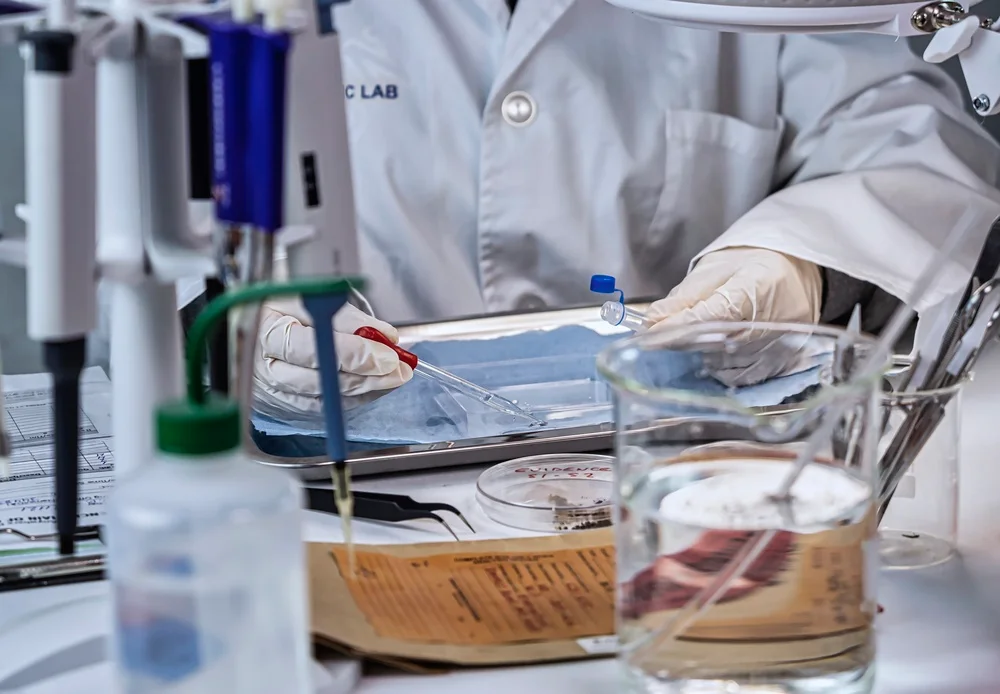
California does not currently have a verified university program titled specifically “Master of Science in Forensic Toxicology.” California residents still have several viable routes into graduate-level forensic toxicology study:
- Complete a specialized online degree while remaining in California.
- Enroll in a California forensic science or criminalistics master’s program and build a toxicology focus through coursework, research, and laboratory experience.
- Relocate for a campus-based program with a formal forensic toxicology concentration, specialty track, internship, clerkship, or laboratory-intensive thesis.
These routes are not interchangeable. A working laboratory analyst may benefit from an online master’s centered on toxicology theory, quality assurance, pharmacology, and data interpretation. A recent science graduate without instrumental laboratory experience will usually gain more from a campus program that includes chromatography, mass spectrometry, biological specimen preparation, method validation, research, and supervised laboratory work.
The degree name also requires close attention. Some universities award an MS in Forensic Toxicology. Others award an MS in Forensic Science, Chemistry, Biomedical Forensic Sciences, Veterinary Medical Sciences, or Criminalistics with a toxicology concentration or specialty. California employers evaluate the underlying science education and laboratory preparation, not simply the presence of “forensic” in the degree title.
The programs below include the strongest verified direct degrees, named toxicology concentrations, California-based related programs, and selected broader forensic science options with meaningful toxicology study. It is a focused list rather than a claim that every forensic chemistry program containing a toxicology course has been included. Readers comparing other degree levels can also review the broader guide to forensic toxicology education in California.
Comparing the main master’s options
| University and credential | Format | Credits | Toxicology focus and practical component | Current FEPAC status | Published tuition information |
|---|---|---|---|---|---|
| University of Florida, MS in Veterinary Medical Sciences with Forensic Toxicology concentration | Online, primarily asynchronous | 32 | Direct toxicology curriculum; online quality and analytical study; no required campus laboratory identified | Not verified as FEPAC-accredited | $575 per credit; about $18,400 base tuition |
| University of Toledo, MS in Forensic Toxicology | Online and asynchronous | 30 | Direct degree; mock case report capstone; no campus visit | Not verified as FEPAC-accredited | Estimated $22,503.60 for a California resident using the published general online graduate rate |
| Oklahoma State University, Master of Forensic Science with Forensic Chemistry/Toxicology concentration | Fully online | 30 thesis or 32 non-thesis | Combined toxicology and forensic chemistry focus; thesis available with faculty approval | Accreditation voluntarily withdrawn effective January 1, 2024 | About $14,352 for the 32-credit online route at published fall 2026 rates |
| UC Davis, MS in Forensic Science, Criminalistics Track | California campus program | 54 quarter units | Analysis of Toxicants, instrumentation laboratory, electives, and 16 units of thesis research | FEPAC-accredited through March 1, 2031 | $903 per unit; about $48,762 in tuition |
| Cal State LA, MS in Criminalistics | California campus program | Current total not established in the reviewed sources | Broad laboratory criminalistics and research capstone; no current named toxicology concentration verified | No current FEPAC claim verified | Current program total not established |
| National University, Master of Forensic Sciences, Criminalistics specialization | Online, hybrid, or in person depending on coursework | At least 36 semester credits | Broad criminalistics degree with Advanced Forensic Toxicology; some courses may require in-person laboratory work | Not verified as FEPAC-accredited | Current program total not established |
| Virginia Commonwealth University, MS in Forensic Science, Forensic Chemistry/Drugs and Toxicology concentration | Campus, full time | At least 42 | Toxicology, drug analysis, instrumentation laboratories, directed research, and laboratory instruction at a state forensic laboratory | VCU identifies the concentration as FEPAC-accredited | Current program total not established |
| Thomas Jefferson University, MS in Forensic Toxicology | Campus, full time | 40 | Laboratory courses, research, clerkship, interpretive toxicology, and analytical toxicology | Specialized forensic toxicology accreditation is not claimed | Current program total not established |
| University of Kentucky, MS in Forensic Toxicology and Analytical Genetics, Toxicology/Chemistry concentration | Campus and laboratory-based | 36 | Instrumental chemistry, toxicology, drug metabolism, and six internship credits | Not verified as FEPAC-accredited | $1,122 per credit; about $40,392 in tuition |
| John Jay College, MS in Forensic Science, Forensic Toxicology specialization | New York City campus | 42 to 44 | Formal toxicology specialization and required thesis | FEPAC-accredited through March 1, 2031 | Current nonresident total not established |
| University of Central Florida, Chemistry MS, Forensic Science Track, Forensic Toxicology concentration | Online completion possible with research access | About 32 to 34 | Analytical toxicology of human biological matrices; original research and thesis | Current status for this exact track not established | Current California-resident total not established |
| Boston University, MS in Biomedical Forensic Sciences, Forensic Chemistry-Toxicology specialty track | Boston campus | 38 | Toxicology lecture and laboratory options, advanced toxicology, independent research, thesis, and specialty examination | No current FEPAC claim included here | Approximate 2026-27 program tuition published at $104,972 |
| Rutgers University-Camden, MS in Forensic Science | New Jersey campus | 38 | Broader program with toxicology or pharmacology coursework and eight research credits | No current FEPAC claim verified | Current program total not established |
Calculated totals in the table use published per-credit rates and do not include living costs, books, health insurance, laboratory materials, travel, or charges not included in the cited rate. Program authorization to enroll residents of a particular state can change, so California residents entering an online program need the school’s current state-authorization status at the time of application.
Online forensic toxicology master’s programs accessible from California
Online study is most effective when the student already has a solid laboratory foundation. Toxicology laboratories rely on practical skills that are difficult to reproduce through asynchronous instruction, including extraction of drugs from biological specimens, instrument maintenance, chromatographic troubleshooting, calibration, validation, uncertainty assessment, and interpretation of complex analytical data.
An online degree can still provide valuable graduate education in pharmacology, toxicokinetics, quality systems, statistics, regulation, and case interpretation. The central question is whether the student needs primarily advanced academic knowledge or also needs to develop entry-level laboratory technique.
University of Florida MS with Forensic Toxicology concentration
The University of Florida offers one of the most direct online curricula available to California residents. The formal award is an MS with a major in Veterinary Medical Sciences. The forensic toxicology concentration appears on the transcript rather than the diploma, a credential detail that applicants should understand before comparing it with programs formally titled MS in Forensic Toxicology.
The 32-credit program is entirely online and includes asynchronous elements. Most students finish in two to three years, although the university allows up to seven years. Admission requires a bachelor’s degree in a natural science and a minimum 3.0 upper-division GPA. The GRE is not required.
Coursework includes Forensic Toxicology I and II, General Toxicology, Laboratory QA/QC, pharmacology, drug biotransformation and molecular mechanisms, toxic substances, statistics, and final literature or special-topics work. This is a focused academic sequence rather than a broad criminal justice curriculum. It addresses the scientific and quality-system knowledge used in toxicology laboratories without diverting much of the degree into crime scene processing, policing, or general investigations.
Published tuition is $575 per credit plus fees for all students regardless of location. Base tuition for 32 credits calculates to approximately $18,400 before mandatory fees, books, and other expenses.
The program fits employed analysts, laboratory staff, and natural science graduates who already possess hands-on undergraduate laboratory preparation. Its online design is less effective as a sole source of practical training for someone who has never conducted instrumental analysis. Laboratory QA/QC instruction and analytical theory are useful, but they are not the same as repeatedly preparing specimens and operating GC-MS or LC-MS/MS systems under supervision.
University of Toledo MS in Forensic Toxicology
The University of Toledo’s 30-credit MS is a fully online, asynchronous degree offered in seven-week courses. Its planned sequence can be completed in five semesters, and both full-time and part-time study are available. No campus visit is required.
The curriculum covers toxicology, pharmacology, molecular toxicology, forensic testing methods, laboratory quality systems, law and regulation, data interpretation, and research synthesis. The final independent capstone culminates in a mock case report. That model emphasizes analysis and communication rather than a wet-laboratory thesis.
Admission requires a bachelor’s degree, at least a 2.70 undergraduate GPA, transcripts, and a resume or CV. The absence of a more restrictive published science-degree requirement may broaden access, but the needs of forensic toxicology employers remain science-heavy. A student entering with limited chemistry, biology, or analytical laboratory work would still have a weaker technical foundation than a graduate who completed substantial undergraduate chemistry and instrument-based research.
This is a new program. It received state approval in 2026, and its first cohort began in fall 2026. As a result, long-term completion, placement, and graduate outcome data are not yet available.
The university’s published 2026-27 general rate for nonspecific 100 percent online graduate programs is $745.12 per credit, including the general fee. Non-Ohio online students pay an additional $5 per credit. Applying those figures to 30 credits produces an estimated cost of $22,503.60 before books and other expenses. Because the forensic toxicology degree is newly launched, the current sources do not establish whether it falls into a different program-specific billing category.
Toledo offers a direct degree title and high scheduling flexibility. Its capstone is better aligned with professional case synthesis than with acquiring bench technique, so it is most useful when employment, undergraduate research, or another training setting supplies practical laboratory experience.
Oklahoma State University Master of Forensic Science, Forensic Chemistry/Toxicology
Oklahoma State combines forensic chemistry and toxicology in a fully online Master of Forensic Science concentration. The non-thesis route requires at least 32 credits. A 30-credit thesis route is available with faculty permission, and most students complete the degree in about two years.
Recommended undergraduate majors include chemistry, biology, and biochemistry. The program also recommends one year of general chemistry and one year of organic chemistry. Those recommendations align more closely with laboratory career preparation than admission based only on possession of any bachelor’s degree.
The concentration covers forensic science foundations and specialized chemistry and toxicology study. Depending on the academic plan, students complete a comprehensive examination, research project, or thesis. The thesis route requires six research credits, a defense, and publication or presentation of the work.
For California residents beginning in fall 2026, Oklahoma State lists nonresident online tuition of $421 per credit, a $25-per-credit web course fee, and a $2.50-per-credit graduate master’s fee. A 32-credit estimate is approximately $14,352 before other expenses. Among the online options with verified prices, that is the lowest published estimate in this comparison.
Accreditation information needs accurate historical wording. Oklahoma State’s MS in Forensic Science voluntarily withdrew from FEPAC accreditation effective January 1, 2024. It is not currently accurate to call the program FEPAC-accredited, even if older web pages or third-party directories still use that description.
The combined chemistry and toxicology structure has relevance to both biological toxicology analysis and controlled-substance laboratory work. The regular online route remains academically focused. Students without practical chromatography, mass spectrometry, extraction, or method-validation experience will need to gain those skills through employment, an internship, research, or separate laboratory training.
California-based alternatives
Remaining in California narrows the field. The state offers credible graduate study in forensic science and criminalistics, but the available degrees are broader than a dedicated forensic toxicology master’s.
UC Davis MS in Forensic Science, Criminalistics Track
UC Davis provides the closest verified California-based graduate pathway for toxicology-oriented criminalistics. The university awards an MS in Forensic Science, not an MS in Forensic Toxicology, and the criminalistics track covers multiple laboratory disciplines.
The 54-quarter-unit track includes forensic science fundamentals, case reports, statistics, homicide scene investigation, human identification, Analysis of Toxicants, an analytical instrumentation laboratory, at least nine elective units, and 16 units of thesis research. Toxicology-focused students can use the substantial research requirement to develop deeper experience in a defined analytical problem.
UC Davis reports toxicology-related research and internships involving LC-MS/MS, cannabinoids, opiates, emerging drugs, and methods for postmortem blood. These subjects have direct relevance to modern toxicology laboratories. Access to instrumentation, a research adviser, and a sustained thesis project gives this route a practical advantage over coursework-only online programs for a new scientist.
Admission is appropriately science-intensive. Applicants need a bachelor’s degree in a natural or physical science. Prerequisites include general chemistry with laboratory, organic chemistry with laboratory, physics with laboratory, calculus, and statistics. Both the overall GPA and prerequisite-course GPA must be at least 3.0.
The program is currently FEPAC-accredited through March 1, 2031. FEPAC accreditation applies to the MS in Forensic Science and its criminalistics and DNA tracks. It does not change the award title into a forensic toxicology degree, but it provides independent review of the broader forensic science curriculum.
Tuition for students entering in fall 2025 or later is listed at $903 per unit, with the same rate for California, out-of-state, and international students. At 54 units, published tuition calculates to $48,762. Health insurance, books, supplies, laboratory materials, and living expenses are additional.
UC Davis is best aligned with an applicant seeking research, laboratory instrumentation, and a broad criminalistics education while remaining in California. Building a toxicology identity requires deliberate choices in thesis topic, electives, internship, and research placement. The degree also includes subjects outside toxicology, which can be useful for criminalist positions that rotate staff across laboratory sections.
Cal State LA MS in Criminalistics
Cal State LA offers an in-state MS in Criminalistics housed in the Hertzberg-Davis Forensic Science Center. It is a broad laboratory criminalistics degree rather than a named forensic toxicology pathway.
The program expects substantial science preparation, including chemistry, quantitative analysis, organic chemistry, physics, biology, and statistics. Applicants need at least a 3.0 GPA in both the last 60 semester units and the undergraduate major for consideration. Admission to the university does not itself guarantee admission to the Criminalistics MS.
Current program materials describe advanced chemical and biological science, forensic laboratory methods, scientific measurement, evidence interpretation, legal context, and a required research capstone. Students are encouraged to pursue internships with public or private laboratories. The current official pages reviewed for this guide do not provide enough evidence to describe toxicology as a named concentration or current required course.
Older Cal State LA catalogs have listed a dedicated forensic toxicology course, but that historical curriculum should not be represented as the present degree structure. The verified current value of this option lies in its science prerequisites, forensic laboratory setting, and research requirement.
Cal State LA is relevant to California residents who want broad criminalistics preparation and cannot relocate. A toxicology career plan would need to be supported by a suitable research project, analytical chemistry experience, and laboratory placement rather than by the concentration name on the transcript.
National University Master of Forensic Sciences, Criminalistics specialization
National University offers a California-based Master of Forensic Sciences with online, in-person, and hybrid availability that varies by specialization and course. The criminalistics specialization requires at least 36 semester credits and admits applicants with an undergraduate degree in laboratory science or physical science.
Its curriculum is broad. Topics include crime scene investigation, forensic pathology, anthropology, fingerprints, digital evidence, research, trace evidence, serology, DNA, and Advanced Forensic Toxicology. Some criminalistics courses may require in-person laboratory participation.
This is not a dedicated toxicology concentration. One advanced toxicology course within a wide-ranging criminalistics program does not provide the same depth as a sequence containing analytical toxicology, pharmacology, drug metabolism, biological specimen analysis, quality systems, and toxicology research.
National University’s format can serve a working professional who wants broad forensic education and some toxicology exposure. It is less closely aligned with specialized forensic toxicologist preparation than the University of Florida, Toledo, Oklahoma State, UC Davis, VCU, Jefferson, or Kentucky programs.
Laboratory-intensive programs that require relocation
Relocation programs often cost more once housing and travel are included, but several provide the type of sustained laboratory work that is difficult to deliver online. These options deserve priority for applicants who have strong science coursework but limited experience with analytical instrumentation.
Virginia Commonwealth University MS in Forensic Science, Forensic Chemistry/Drugs and Toxicology
Virginia Commonwealth University offers a formal forensic chemistry/drugs and toxicology concentration within its MS in Forensic Science. The 42-credit program is structured for full-time completion over two years in Richmond.
Concentration coursework includes Analytical Considerations in Forensic Toxicology, Applications in Forensic Toxicology, Instrumentation in Forensic Chemistry and its laboratory, Advanced Drug Analysis, statistics, expert testimony, and directed research. The curriculum connects toxicology with seized-drug chemistry, instrumentation, research, and courtroom communication.
Several required laboratory courses are taught at the Virginia Department of Forensic Science laboratory. This provides a closer connection to operating forensic laboratory environments than a degree delivered only through online lectures and virtual assignments.
Applicants to the concentration need at least nine credits of upper-level chemistry or biochemistry. Relevant preparation may include instrumental analysis, quantitative analysis, physical chemistry, pharmacology, or general biochemistry. The catalog also identifies an undergraduate GPA above 2.9.
VCU states that the concentration is FEPAC-accredited. Among the relocation choices, it offers one of the clearest combinations of formal toxicology study, analytical chemistry, hands-on laboratory work, and recognized forensic science program accreditation.
The concentration is broader than forensic toxicology alone. Its drug-analysis and forensic chemistry coverage can be an advantage for public laboratories that hire scientists into controlled substances, toxicology, or general chemistry sections.
Thomas Jefferson University MS in Forensic Toxicology
Thomas Jefferson University offers a 40-credit, full-time MS in Forensic Toxicology designed for completion in two years. Instruction is provided through the university and its partnership with the Center for Forensic Science Research and Education.
Courses are taught at Jefferson’s Center City campus and the CFSRE facility in Willow Grove, Pennsylvania. California residents would need to relocate to the Philadelphia area and account for transportation between instructional locations.
The curriculum covers analytical and interpretive forensic toxicology, advanced analytical toxicology, laboratory courses, pharmacology, statistics, law and ethics, regulation, research, professional development, and management electives. Subject areas include postmortem toxicology, human-performance toxicology, and workplace drug testing.
Practical work is a defining element. The program includes hands-on study in a forensic laboratory environment, research, and a clerkship. Compared with an online coursework model, this structure gives an early-career scientist more direct opportunities to connect theory with specimen processing, analytical procedures, quality expectations, and case interpretation.
Jefferson states that no organization currently accredits specialized programs specifically in forensic toxicology. FEPAC accredits eligible forensic science programs, but a specialized forensic toxicology degree should not be labeled FEPAC-accredited without current evidence applying to that exact program.
Current program-specific tuition was not established in the reviewed sources. The educational model is still clear: this is a direct, laboratory-oriented professional degree for someone prepared to relocate and study full time.
University of Kentucky MS in Forensic Toxicology and Analytical Genetics
The University of Kentucky offers a 36-credit MS with separate forensic toxicology/chemistry and forensic/analytical genetics concentrations. The toxicology route combines forensic science foundations with analytical chemistry and professional laboratory experience.
Coursework includes statistics, professional communication, standards and quality practices, ethics, forensic and analytical toxicology, instrumental techniques, biochemistry, and drug metabolism. Six internship credits are built into the concentration.
The internship requirement is a meaningful difference from online degrees that leave practical training outside the formal curriculum. Supervised workplace experience can help students connect analytical methods, documentation, quality controls, and reporting standards with actual laboratory operations.
A bachelor’s degree in biology, chemistry, forensic science, or a related subject is preferred. The GRE is not required. Applicants from other majors may be considered when they have adequate chemistry and biology foundations.
Published tuition is $1,122 per credit. At 36 credits, that produces an estimated tuition total of $40,392 before fees, housing, relocation, and other expenses. Kentucky is a direct science-heavy choice for a student seeking instrumental chemistry and formal internship experience.
John Jay College MS in Forensic Science, Forensic Toxicology specialization
John Jay College in New York City offers a 42- to 44-credit MS in Forensic Science with a formal forensic toxicology specialization. The curriculum combines chemistry, biology, physics, law, laboratory methods, electives, and research.
Every student completes a thesis. That requirement provides a deeper research experience than a program ending in a literature review or general capstone, although the quality and career relevance of the work will depend on the laboratory, methods, and research question involved.
John Jay’s MS in Forensic Science is FEPAC-accredited through March 1, 2031. It provides a current accredited route for an applicant who wants broad forensic science preparation and a named toxicology specialization.
The program is campus-based and requires relocation to New York City. Current nonresident tuition and total attendance costs were not established in the reviewed materials.
Boston University MS in Biomedical Forensic Sciences
Boston University’s 38-credit MS in Biomedical Forensic Sciences includes a forensic chemistry-toxicology specialty track. The formal degree remains Biomedical Forensic Sciences. Students who complete the designated specialty curriculum and pass a topic-specific competency examination receive the specialty designation on their transcript.
The broader curriculum includes forensic chemistry, toxicology, crime scene investigation, forensic biology, trace evidence, law and ethics, and research. Toxicology-oriented students can add a Forensic Toxicology Laboratory and Advanced Topics in Forensic Toxicology.
Independent research and a written thesis are required. Students also complete a general competency examination, followed by the specialty examination needed for the transcript designation. The structure provides a formal method of documenting toxicology study within a broader degree.
The program requires approximately two years of campus-based coursework, laboratory training, and research in Boston. Boston University publishes an approximate 2026-27 program tuition total of $104,972, excluding other cost-of-attendance components. That price is substantially higher than the verified tuition estimates for the public online programs and several public campus options.
Rutgers University-Camden MS in Forensic Science
Rutgers-Camden offers a 38-credit campus-based MS in Forensic Science. It can be completed full time or part time, with a typical duration of four to six semesters.
The current program consists of 30 credits of coursework and eight research credits. Its published fall 2026 sequence includes a choice between Forensic Toxicology and Fundamentals of Pharmacology and Pharmacokinetics. Other subjects include forensic chemistry, laboratory work, statistics, forensic biology, pattern evidence, crime scene investigation, and advanced electives.
Students conduct continuing research with a faculty adviser and finish with a capstone paper in publishable form and a public presentation. That research structure can support toxicology preparation when the adviser, project, methods, and instrumentation align with the field.
Older Rutgers materials described a Chemistry/Toxicology Track. The current program is better described as a unified forensic science MS with toxicology coursework and possible toxicology-focused research. It is less specialized than a formal toxicology concentration.
A research-dependent online option: University of Central Florida
The University of Central Florida Chemistry MS, Forensic Science Track includes a forensic toxicology concentration focused on analytical work with human biological matrices. The degree requires approximately 32 to 34 credits, original research, and a written thesis.
Online completion is possible, but the research requirement creates a major practical limitation. A remote student employed by a forensic laboratory is expected to provide a supervisor letter authorizing use of laboratory instrumentation for thesis research. UCF warns that completion of the research component may not be possible without suitable instrument access. Prerequisites and electives also may not all be available online.
This arrangement can work well for an analyst already employed in a California laboratory. The student can integrate graduate research with approved workplace instrumentation and supervision. It is a poor fit for a new graduate expecting the university to reproduce a fully equipped toxicology laboratory through remote instruction.
Applicants should have a bachelor’s degree in forensic science or another physical science supported by at least 30 college-level science credits. The application requires a resume, three recommendations, and a statement of purpose. The GRE is not required.
How to evaluate science preparation before applying
A graduate program cannot erase deficiencies in the undergraduate transcript merely by placing “forensic” in the degree name. Before comparing program branding, conduct a course-by-course audit in these areas:
- General chemistry with laboratory
- Organic chemistry with laboratory
- Quantitative or analytical chemistry
- Instrumental analysis
- Physical chemistry
- General biology
- Biochemistry or molecular biology
- Calculus
- Statistics
- Physiology
- Pharmacology
- General toxicology
- Laboratory quality assurance and quality control
Not every toxicology position requires every course on this list, but chemistry depth affects both admissions and employment. Instrumental analysis and quantitative chemistry are especially valuable for laboratory roles involving calibration, chromatography, mass spectrometry, validation, and measurement uncertainty.
California’s Department of Justice Criminalist classification illustrates why the full transcript matters. The entry classification requires a college major in a physical or biological science, including eight semester hours of general chemistry and three semester hours of quantitative analysis. Relevant job knowledge includes toxicological analysis, chromatography, general chemistry, and microchemistry.
That standard applies to the California DOJ classification, not every city, county, private, medical examiner, or hospital laboratory in the state. Agencies can use titles and eligibility rules differently. Still, it shows why a broad forensic master’s cannot automatically compensate for missing foundational science coursework.
Applicants lacking analytical or quantitative chemistry may need additional undergraduate science courses rather than a more general graduate degree. Someone with a chemistry or biochemistry bachelor’s and substantial instrumental work faces a different problem: selecting graduate study that adds forensic interpretation, pharmacology, toxicokinetics, quality systems, legal context, and research rather than repeating basic science.
Online study versus laboratory-based study
The main tradeoff is not simply convenience versus relocation. It is academic specialization versus direct access to instruments, specimens, research supervision, and workplace practice.
Online coursework can work well when:
- The student already works in a forensic, clinical, pharmaceutical, environmental, or analytical laboratory.
- Undergraduate study included substantial wet-laboratory chemistry and instrumental analysis.
- The goal is advancement into quality, interpretation, supervision, method development, or a specialized toxicology section.
- Work schedules make campus attendance impractical.
- A local employer can provide research access, as required by UCF’s remote thesis model.
Campus study is generally better aligned when:
- The student has strong lecture science but little instrument time.
- Career preparation requires repeated specimen extraction and method development.
- A thesis will be the applicant’s main source of research experience.
- The program includes an internship or clerkship in a functioning laboratory.
- The student needs faculty guidance in developing a technical research portfolio.
Programs also use different final requirements. These affect the type of work a graduate can show to an employer.
- Literature or special-topics project: Demonstrates scientific reading and synthesis, but provides limited evidence of bench technique.
- Mock case report: Develops interpretation and professional reporting skills without requiring original laboratory research.
- Research project: Can include data analysis, method work, or applied inquiry, depending on access to specimens and instruments.
- Thesis: Usually requires a sustained question, methods, data, analysis, and defense. Its practical value depends on the technical depth of the project.
- Internship or clerkship: Provides exposure to workplace procedures, documentation, quality systems, and laboratory culture.
- Workplace-based thesis: Can be highly relevant for an employed analyst but is generally unavailable to a newcomer without laboratory access.
Thomas Jefferson’s laboratory and clerkship structure, Kentucky’s six internship credits, VCU’s state-laboratory instruction, and UC Davis’s instrumentation and thesis requirements provide more built-in practical development than a fully asynchronous coursework program. Florida, Toledo, and Oklahoma State provide greater geographic and scheduling flexibility, especially for people whose jobs already supply laboratory experience.
FEPAC accreditation and professional certification are separate issues
The Forensic Science Education Programs Accreditation Commission, or FEPAC, accredits eligible bachelor’s and master’s forensic science programs. In this comparison, UC Davis and John Jay have verified accreditation through March 1, 2031, and VCU identifies its forensic chemistry/drugs and toxicology concentration as FEPAC-accredited.
A non-FEPAC program is not automatically deficient. FEPAC itself advises comparing a non-accredited program’s science, mathematics, and forensic curriculum with its standards. Specialized degrees may also sit outside the common structure of a general forensic science program.
Accreditation status can change. Oklahoma State voluntarily withdrew its MS in Forensic Science from FEPAC accreditation effective January 1, 2024. Older descriptions calling it accredited are no longer current.
FEPAC accreditation is also different from individual certification through the American Board of Forensic Toxicology. Completing a master’s degree does not by itself produce ABFT certification. ABFT fellow and diplomate applicants need specified education in biology, chemistry, pharmacology, or toxicology, including at least 32 semester hours of chemistry covering inorganic, organic, analytical, and physical chemistry. They also need at least three years of qualifying professional forensic toxicology experience after earning the applicable degree. Analyst certification likewise requires qualifying professional experience.
Graduate school can strengthen the educational side of that pathway. It does not replace post-degree professional practice.
Forensic toxicology is not the same as California clinical toxicology licensure
California’s Clinical Toxicologist license concerns directing a CLIA-certified clinical laboratory in toxicology. It is a specialized clinical laboratory credential, not a general requirement for employment as a forensic toxicologist, criminalist, or laboratory analyst.
The clinical license requires an MS or doctorate in chemistry, specified graduate chemistry coursework, training, experience, and board certification. California also states that forensic, academic, veterinary, research, and student laboratory experience does not count toward the clinical license’s experience requirement.
A person pursuing forensic toxicology in a crime laboratory should not use clinical laboratory director licensure rules as a substitute for the hiring requirements of forensic employers. The two paths involve different regulatory and experience structures.
Programs not included as active primary options
The University of Illinois Chicago still has an MS in Forensic Toxicology catalog entry, but the catalog states that new students are not being admitted until further notice. It is therefore excluded from the active comparison.
Other forensic chemistry programs, including options at Temple University and Texas Tech University, contain meaningful toxicology coursework. They were not elevated into the main list because they do not use a formal forensic toxicology concentration title in the verified materials reviewed here. Expanding the list to every forensic chemistry degree with one or two toxicology courses would blur the difference between dedicated toxicology preparation and general forensic chemistry education.
Choosing a route based on career stage
A current laboratory employee can reasonably prioritize flexibility and advanced subject knowledge. The University of Florida provides an established 32-credit online toxicology curriculum. Oklahoma State offers a lower verified online cost and combines chemistry with toxicology, although it is no longer FEPAC-accredited. Toledo provides a direct MS title and asynchronous format, but it is new and does not yet have a long graduate-outcomes record. UCF can support a workplace-based thesis when the employer supplies approved instrument access.
A recent chemistry, biology, or forensic science graduate with limited practical experience should give more weight to laboratory access. UC Davis provides the strongest verified California-based combination of toxicant analysis, instrumentation, thesis research, and current FEPAC accreditation. Cal State LA offers a broader in-state criminalistics route with substantial science expectations and a research capstone, but no current named toxicology concentration was verified.
Relocation expands the choices. Thomas Jefferson directly integrates analytical and interpretive toxicology with laboratories, research, and a clerkship. Kentucky adds six internship credits to instrumental chemistry and toxicology coursework. VCU combines toxicology, seized-drug analysis, instrumentation, research, and instruction at a state forensic laboratory. John Jay offers a named toxicology specialization within a FEPAC-accredited forensic science MS. Boston University offers a transcript-designated specialty but at a much higher published tuition level.
Career changers without a natural or physical science degree face a more basic decision. Before investing in a forensic master’s, they need enough chemistry, biology, mathematics, and laboratory preparation to meet graduate admissions standards and compete for scientific laboratory positions. A broad criminal justice or investigations degree will not replace organic chemistry, analytical chemistry, biology, statistics, or instrument-based laboratory work.
The most productive sequence is to begin with the target role, audit the existing science transcript, identify missing laboratory experience, and then compare each program’s final requirement. Toxicology coursework is useful, but a thesis, internship, clerkship, or employer-supported research project can be the part of the degree that most clearly demonstrates readiness for technical laboratory work.