
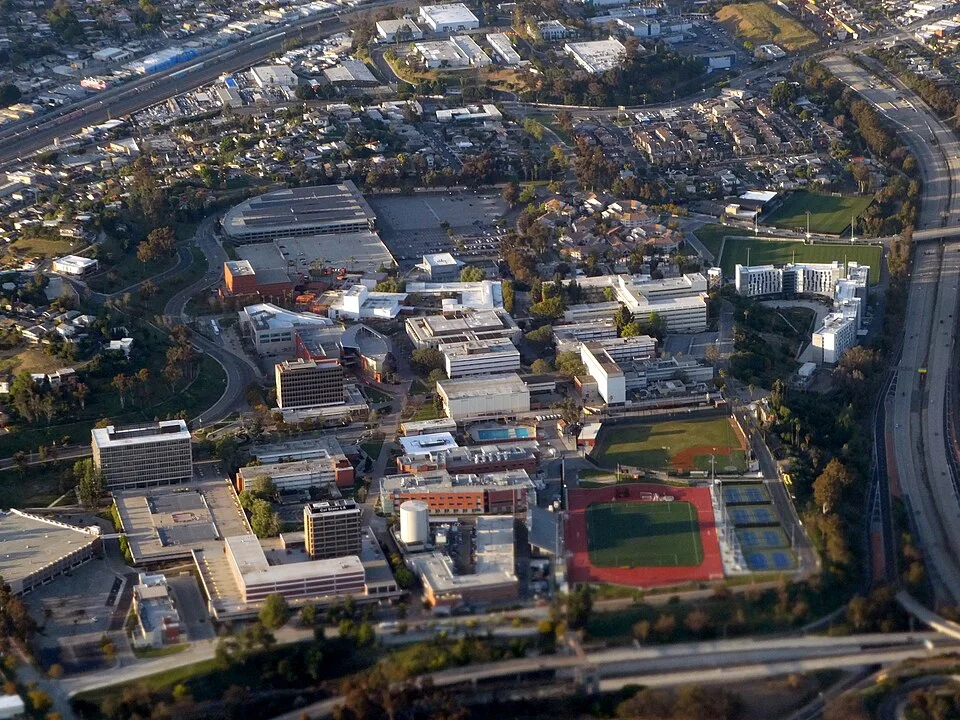
California State University, Los Angeles offers several distinct routes into forensic work, but they prepare graduates for different occupations. The M.S. in Criminalistics centers on scientific evidence analysis and crime-laboratory practice. The Anthropology M.A. provides a forensic anthropology pathway within biological anthropology. A nondegree Forensic Specialist Certificate focuses on crime-scene processing, photography, and friction-ridge examination. Cal State LA also offers an M.S. in Forensic Psychology, an adjacent option concerned with psychology, law, courts, and corrections.
These credentials are not interchangeable. A prospective criminalist needs substantially more chemistry and laboratory science than a crime-scene technician. A forensic anthropologist requires advanced training in human osteology and skeletal analysis. A forensic psychologist follows a behavioral-science route rather than a physical-evidence curriculum.
Cal State LA’s forensic activities are associated in part with the Hertzberg-Davis Forensic Science Center. The center brings together the university, the California Forensic Science Institute, the Los Angeles Police Department Scientific Investigation Division, and the Los Angeles County Sheriff’s Department Scientific Services Bureau. That institutional setting supports teaching, research, and professional training, although enrollment does not guarantee an internship or employment with either agency.
Readers comparing Cal State LA with other institutions can also review this broader directory of California schools offering CSI and forensic education.
Cal State LA forensic programs compared
| Program | Credential | Main subject area | Practical component | Primary career alignment |
|---|---|---|---|---|
| M.S. in Criminalistics | Master of Science | Laboratory analysis of biological, chemical, and physical evidence | Laboratory methods, instrumentation, reconstruction work, and a research capstone | Criminalist, forensic scientist, crime-lab analyst, and scientifically intensive evidence roles |
| Anthropology M.A., Biological Anthropology option | Master of Arts | Human skeletal biology, osteology, forensic anthropology, and bioarchaeology | Laboratory and seminar work, research, and a thesis or approved comprehensive examinations | Forensic anthropology, human-remains analysis, recovery work, bioarchaeology, and doctoral study |
| Forensic Specialist Certificate | Nondegree university certificate | Crime-scene investigation and friction-ridge examination | 300 hours of in-person laboratory and field instruction | Crime-scene specialist, forensic specialist, print specialist, evidence photographer, and related field roles |
| M.S. in Forensic Psychology | Master of Science | Psychology, law, assessment, courts, and corrections | Nine-month supervised practicum and thesis | Behavioral and legal work in courts, corrections, probation, counseling, victim services, and related settings |
Cal State LA does not currently list an undergraduate forensic science degree. Its present minors inventory also does not include the Forensic Science Minor found in older catalogs. The university explicitly describes its Criminal Justice B.S. as preparation for criminal justice administration rather than criminalistics or forensic science.
That point has practical consequences. An undergraduate criminal justice degree from Cal State LA does not, by itself, provide the science prerequisites needed for the Criminalistics M.S. The university directs people interested in criminalistics toward majors such as chemistry, biology, biochemistry, natural sciences, or physics.
M.S. in Criminalistics: Cal State LA’s laboratory-forensics degree
The Master of Science in Criminalistics is Cal State LA’s principal academic route for laboratory forensic science. It is a full-time, two-year, campus-based program that accepts new students for fall admission. Most criminalistics courses meet during evening hours, although some electives can be scheduled during the day.
The program applies the natural and physical sciences to evidence used in the judicial system. Its learning outcomes cover biological, chemical, and physical evidence; laboratory instrumentation; experimental controls; data validity; forensic documentation; evidence interpretation; reconstruction; scientific writing; and testimony. Students are expected to understand both the capabilities and limitations of forensic methods.
Current course scheduling provides concrete evidence of this orientation. Fall 2026 offerings included Ethical, Managerial and Contemporary Issues in Forensic Science, Forensic Toxicology, and Crime Scene Reconstruction with seminar and laboratory components. The scheduled criminalistics courses met in the Hertzberg-Davis Forensic Science Center.
Although reconstruction appears in the curriculum, this is not primarily a short-form CSI training program. Its defining feature is advanced scientific analysis. Applicants targeting drug chemistry, toxicology, trace evidence, forensic biology, or general criminalist positions will find the curriculum more relevant than the field-focused certificate.
Admissions and science prerequisites
The M.S. is designed for applicants who already possess substantial science preparation. Cal State LA requires a bachelor’s degree in a natural or physical science. A degree in criminal justice, psychology, or anthropology does not satisfy that requirement on its own.
The published prerequisite list includes:
- Introductory biology
- Biostatistics
- Genetics
- General chemistry
- Organic chemistry with laboratories
- Quantitative analysis
- Physics
Applicants also need at least a 3.0 GPA in the final 60 semester units and a 3.0 GPA in their undergraduate major. Two recommendation letters are required. The GRE is not required.
These requirements make the program a poor fit for someone seeking a quick conversion from a nonscience major into laboratory criminalistics. Missing organic chemistry, quantitative analysis, genetics, or physics can represent a substantial amount of prerequisite study. In contrast, a chemistry, biochemistry, biology, or related science graduate with the required laboratory courses enters with preparation closer to what the curriculum expects.
Cal State LA’s program FAQ describes fall-only admission with a March 15 application deadline. Because the program follows a cohort-oriented, full-time structure, applicants should plan around a two-year sequence rather than assume they can complete it through occasional evening enrollment.
Research, laboratory training, and internships
Laboratory analysis and instrumentation are incorporated into the program’s learning outcomes. Students work with experimental controls, evaluate data quality, interpret evidence, document findings, and communicate scientific conclusions. The program also includes a required research project as its capstone.
Internships with public and private laboratories are encouraged. Current materials do not describe an internship as a universal graduation requirement, so the research project is the verified required culminating experience. The program reports typical cohorts of approximately 15 to 18 students.
The presence of evening courses may help with scheduling, but the M.S. remains a full-time, campus-based degree. Laboratory work, daytime electives, and the research requirement limit its suitability for anyone seeking a fully online or entirely after-work program.
Career alignment
This degree has the closest alignment with laboratory criminalistics among Cal State LA’s offerings. The science prerequisites and advanced analytical curriculum are relevant to work involving chemical, biological, and physical evidence.
Job titles still vary by agency. A California criminalist position may involve drug analysis, toxicology, trace materials, firearms evidence, forensic biology, or another specialty. Employers commonly evaluate the exact science coursework on an applicant’s transcript, not merely whether the degree title contains “forensic” or “criminalistics.”
The M.S. can also support evidence interpretation and scientifically intensive reconstruction work, but people seeking entry-level training in scene photography, fingerprint processing, evidence collection, and scene documentation have a more directly targeted option in the Forensic Specialist Certificate.
Anthropology M.A. with forensic anthropology preparation
Cal State LA currently lists an Anthropology M.A. with a Biological Anthropology option. The Anthropology Department’s graduate program page identifies forensic anthropology, primatology, bioarchaeology, and related fields as potential career directions within biological anthropology.
The department also continues to link a 36-unit worksheet titled “Biological Anthropology Option, Forensic Anthropology.” That worksheet requires:
- Human Osteology
- Forensic Anthropology
- Advanced Forensic Anthropology
- Biological anthropology seminars
- Archaeology coursework
- Anthropological theory
- Research-proposal writing
- Approved electives
- A statistics, analytical-methods, or language skills requirement
Forensic topics include skeletal analysis, human-remains recovery, reconstruction methods, estimation of time since death, and legal issues. Students complete either a thesis or, with approval, comprehensive examinations.
The current university graduate inventory names Biological Anthropology as the formal option and does not separately list Forensic Anthropology as its own M.A. option. The department-linked forensic worksheet is marked effective Fall 2016. The most accurate description, therefore, is an Anthropology M.A. Biological Anthropology option with a forensic anthropology pathway or concentration of coursework, rather than a separately titled current degree in Forensic Anthropology.
Preparation and co-requisites
The departmental worksheet states that students without an undergraduate anthropology degree may need 12 to 18 units of co-requisite preparation. This requirement reflects the program’s grounding in anthropology theory, biological anthropology, archaeology, and research methods.
A science background alone is not necessarily a substitute for foundational anthropology study. Similarly, an anthropology background does not supply the chemistry sequence required for general criminalistics. The two degrees lead toward different forms of forensic practice.
Career alignment
This pathway is relevant to skeletal remains, human identification, recovery contexts, biological profile development, medicolegal anthropology, and bioarchaeology. It can also provide preparation for doctoral study, which is often significant for advanced professional work in forensic anthropology.
It is not a general crime-laboratory degree. The curriculum does not replace the chemistry, organic chemistry, quantitative analysis, molecular biology, or instrumental-analysis preparation used in many criminalist specialties. An applicant interested in toxicology, controlled-substance analysis, DNA laboratory work, or trace evidence would be better served by the Criminalistics M.S. and its science prerequisites.
Conversely, the Criminalistics M.S. does not replace advanced osteology and anthropological training. Work involving human skeletal remains requires specialized knowledge of anatomy, biological variation, taphonomy, recovery, and anthropological interpretation.
Forensic Specialist Certificate: field CSI and fingerprint training
The Forensic Specialist Certificate Program is a six-month, nondegree program administered through the California Forensic Science Institute. It combines two mandatory tracks:
- Crime Scene Investigation
- Friction Ridge Examination
Participants must complete both tracks to earn the certificate. The sequence consists of nine courses and 300 instructional hours. Verified topics include basic and crime-scene photography, scene procedures, evidence sketching, measurement, evidence collection, documentation, fingerprint processing, and friction-ridge examination.
This is in-person training at the Hertzberg-Davis Forensic Science Center. Classes are held on weekends, with some Friday evening fingerprint instruction. The program incorporates laboratory exercises and crime-scene fieldwork rather than online or self-paced study. Typical cohorts have no more than 24 participants.
Eligibility and program structure
Applicants must either hold an associate degree or be enrolled in an associate-degree program. They do not need to be Cal State LA degree students. This creates an accessible route for community college students and graduates who want concentrated CSI and fingerprint instruction without entering a master’s program.
The weekend format can accommodate weekday obligations, but 300 hours over six months is intensive. Both the CSI and friction-ridge components are compulsory, so participants cannot complete only the photography or scene-processing portion and receive the full certificate.
The 2026 program flyer advertised two cohorts beginning January 16 and June 19. Official pages also list scheduling information for 2027.
Cost
The most detailed official FAQ published a price of $4,500 for the 2025 cohorts. That amount included required lecture, laboratory, and fieldwork supplies. A current price was not displayed in the retrieved 2026 flyer, so $4,500 is a historical published program amount rather than a confirmed price for later cohorts.
This certificate uses its own program pricing and is not billed like a standard graduate degree. It is also an institutional certificate, not a professional certification or state license.
Career alignment
The curriculum directly addresses duties associated with field evidence work. Cal State LA names roles such as:
- Forensic specialist
- Crime-scene specialist
- Crime scene investigator
- Forensic print specialist
- Evidence or forensic photographer
Agency job structures differ across California. Some departments employ civilian crime-scene personnel, while others assign scene duties to sworn officers. A certificate can document relevant technical education, but it does not replace an employer’s requirements for education, work experience, background screening, or sworn status.
The certificate is more targeted than the Criminalistics M.S. for scene photography, evidence documentation, fingerprint work, and physical evidence recovery. It is less suitable for chemistry-based laboratory positions because it does not provide a bachelor’s or graduate science degree or the extensive chemistry prerequisites expected in those roles.
M.S. in Forensic Psychology: an adjacent forensic field
Cal State LA’s M.S. in Forensic Psychology is a 33 to 34 unit graduate degree addressing the intersection of psychology and law. Its curriculum includes psychology and law, abnormal psychology, psychological testing, research or statistics, selected legal or criminal justice coursework, electives, a thesis, and a supervised practicum.
The nine-month practicum can involve settings such as courts, corrections, probation, law enforcement, counseling, or victim-service organizations. This experiential requirement gives the program a different practical focus from laboratory criminalistics or evidence processing.
Career interests involving behavior, assessment, courts, correctional systems, or victim services fit this degree. Crime-scene processing, latent-print examination, forensic chemistry, DNA analysis, and skeletal identification do not. FEPAC accreditation is not applicable because forensic psychology is outside the accreditor’s forensic-science program scope.
Tuition, fees, and annual cost
For the 2026-2027 academic year, Cal State LA estimated $9,648 in graduate tuition and mandatory fees for two full-time semesters. Fall 2026 tuition and mandatory campus fees were $4,821.04 for enrollment above six units and $3,027.04 for enrollment of zero to six units.
Nonresident students paid an additional $471 per unit. Current rates are published through Cal State LA’s student fees page.
Tuition and mandatory fees are only part of the financial picture. Cal State LA’s full 2026-2027 graduate cost-of-attendance estimates were:
- $31,406 for commuters
- $40,210 for students living on campus
- $40,822 for students living off campus
Those figures include estimated housing, food, transportation, books, personal expenses, and loan fees. They are planning budgets rather than the amount billed directly by the university. A two-year Criminalistics M.S. total cannot be calculated reliably from one year’s rate because future fees, enrollment levels, residency status, and living arrangements can change.
The Forensic Specialist Certificate uses separate program pricing rather than the standard graduate tuition schedule.
FEPAC accreditation status
The Forensic Science Education Programs Accreditation Commission, or FEPAC, accredits qualifying bachelor’s and master’s programs in forensic science, along with certain natural science or computer science degrees that contain forensic concentrations. It is programmatic accreditation rather than institutional accreditation.
Cal State LA’s Criminalistics M.S. is not listed in the current AAFS directory of FEPAC-accredited programs. FEPAC’s historical record reports that the program voluntarily withdrew from accreditation during the 2015 review cycle. It therefore cannot be described as currently FEPAC-accredited.
FEPAC does not govern the nondegree Forensic Specialist Certificate. It is also not the relevant accrediting framework for anthropology or forensic psychology. Those programs need to be evaluated according to their own disciplines, curricula, research expectations, and practical requirements.
Choosing the appropriate Cal State LA route
Start with the work itself, then evaluate the curriculum required to perform it.
Choose the M.S. in Criminalistics for laboratory-oriented forensic science. Its entry requirements in chemistry, biology, genetics, statistics, quantitative analysis, and physics reflect the scientific foundation needed for evidence analysis. Applicants without that preparation face significant prerequisite work before admission.
Choose the Biological Anthropology option with forensic anthropology coursework for skeletal analysis, human-remains recovery, osteology, bioarchaeology, or preparation for further graduate study in forensic anthropology. Its anthropology and skeletal-biology curriculum is specialized and does not function as broad criminalist preparation.
Choose the Forensic Specialist Certificate for concentrated, hands-on education in crime-scene procedures, photography, documentation, evidence collection, and friction-ridge examination. It is the clearest Cal State LA route for field CSI and fingerprint interests, especially for associate-degree students or graduates who do not need a master’s degree.
Choose the M.S. in Forensic Psychology for behavioral and legal work involving courts, assessment, corrections, probation, counseling, or victim services. It belongs to the psychology profession, not physical-evidence examination.
Undergraduate planning is especially consequential for future criminalists. Cal State LA’s Criminal Justice B.S. does not provide the required laboratory-science foundation. A chemistry, biology, biochemistry, physics, or related natural-science major, combined with the specified prerequisite courses, provides a more direct foundation for the Criminalistics M.S. and science-based crime-laboratory employment.