
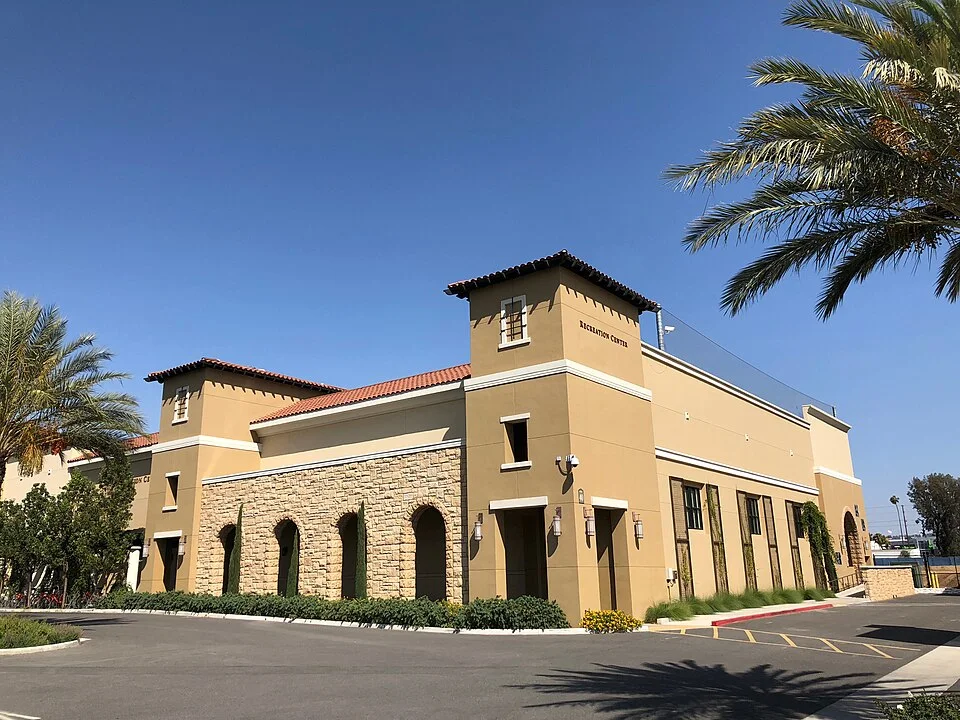
California Baptist University offers two distinct routes into forensic study at its Riverside campus. The Forensic Chemistry BS focuses on laboratory science, chemical analysis, and criminalistics. The Forensic Psychology MA and several psychology concentrations focus on behavior, law, assessment, research, and justice-system settings.
Those routes lead toward different occupations. Laboratory criminalists need substantial chemistry or biology preparation. Crime scene personnel concentrate more heavily on evidence recognition, collection, preservation, photography, documentation, and investigation. Forensic psychology careers involve human behavior and the legal system, while independent practice as a psychologist requires doctoral education and state licensure.
CBU also has related options in criminal justice, counseling psychology, clinical psychology, computer science, and cybersecurity. These are useful pathways for specific goals, but they are not interchangeable forensic degrees.
CBU forensic and related programs at a glance
| Program | Format | Forensic emphasis | Best-aligned direction |
|---|---|---|---|
| Forensic Chemistry BS | On campus | Chemistry, instrumental analysis, criminalistics, laboratory work | Criminalist, crime-lab, analytical chemistry, graduate science study |
| Forensic Chemistry minor | On campus | Chemistry, quantitative analysis, instruments, forensic laboratory courses | Supplement to a science major |
| Forensic Psychology MA | On campus, primarily evening schedule | Psychology, law, criminal behavior, research, nine-month practicum | Justice-system support, research, advocacy, probation or parole settings, doctoral preparation |
| Psychology BA with Forensic Psychology concentration | On campus | Psychology foundation plus forensic behavior courses | Graduate study, human services, justice-support work |
| Behavioral Science BA with Forensic Psychology concentration | On campus | Interdisciplinary behavioral science and forensic psychology | Social services, victim services, research, community programs |
| Sociology BA with additional Forensic Psychology concentration | On campus | Social systems, culture, justice populations, forensic psychology | Corrections, policy, community services, social research |
| Counseling Psychology MS with Forensic Psychology concentration | On campus | Clinical counseling preparation plus 18 forensic units | Counseling licensure path involving justice-system populations |
| Clinical Psychology PsyD with Forensic Psychology track | On campus | Clinical doctorate with nine-unit forensic track | Psychologist licensure path and forensic-clinical practice |
| Criminal Justice BS | On campus | Investigation, evidence collection, reports, mock crime scenes | Field investigation, law enforcement, crime-scene support |
| Criminal Justice MS | Fully online, asynchronous | Leadership, investigation, crime analysis, evidence procedures | Criminal justice leadership, analysis, investigative development |
| Computer Science BCS with Cybersecurity concentration | On campus | Computer forensics, incident response, forensic analysis | Cybersecurity and some digital-evidence roles |
| Cybersecurity BS | Fully online, asynchronous | Cyber defense with one computer-forensics course | Cybersecurity, incident response, entry-level digital investigation support |
CBU is a private Christian university in Riverside and is institutionally accredited by the WASC Senior College and University Commission. Readers comparing CBU with other institutions can also review the broader directory of California schools with CSI and forensic programs.
Forensic Chemistry BS
The Forensic Chemistry BS is CBU’s primary laboratory-forensics degree. The current undergraduate catalog lists 73 to 77 program units, although the public program page displays a slightly lower range. The catalog is the more appropriate source for current degree planning.
The curriculum is built around chemistry rather than criminal justice. Required preparation includes general chemistry with laboratories, organic chemistry, quantitative chemical analysis, instrumental analysis, forensic chemistry with laboratory work, biology, physics, calculus, statistics, criminal justice, and introductory forensic science. This is the type of foundation needed for work involving the scientific examination of physical evidence.
Students select one of three concentrations:
- Criminal Justice Systems, which adds more study of law and the justice system
- Criminalistics, which incorporates genetics, cell and molecular biology, and biochemistry
- Advanced Chemistry, which provides greater depth through subjects such as physical chemistry, inorganic chemistry, biochemistry, or research
The concentration choice affects career preparation. Criminalistics is the more relevant route for evidence areas involving DNA, biological material, or molecular methods. Advanced Chemistry is better aligned with analytically demanding laboratory work and graduate chemistry study. Criminal Justice Systems adds legal and procedural context, but students targeting laboratory employment should preserve as much advanced science as their schedule allows.
Laboratory work is embedded throughout the major. CBU also describes instruction using instrumental methods found in crime laboratories. The senior capstone can take the form of a crime-laboratory internship, faculty-supervised research project, or literature-based thesis. Because these are alternative capstone routes, a crime-lab internship is not universal for every student.
Alignment with California criminalist requirements
California’s state Criminalist classification illustrates why the science content matters. The state specifies the equivalent of a bachelor’s degree with a major in a physical or biological science, including eight semester hours of general chemistry and three semester hours of quantitative analysis. Criminalists conduct laboratory examinations and can also assist with crime-scene work.
CBU’s chemistry major, general chemistry sequence, and quantitative analysis coursework align directly with those educational subjects. By comparison, the university’s forensic psychology and criminal justice degrees do not supply the same laboratory-science foundation.
That alignment is not a guarantee of eligibility for every crime-lab position. Agencies can require particular combinations of organic chemistry, biochemistry, molecular biology, genetics, statistics, microscopy, or professional experience depending on the evidence discipline. Within CBU’s available options, however, the Forensic Chemistry BS is the clear route for laboratory criminalistics.
The program is covered by CBU’s WSCUC institutional accreditation. No authoritative current evidence establishes that the Forensic Chemistry BS is accredited by the Forensic Science Education Programs Accreditation Commission. FEPAC accreditation is programmatic and separate from university-wide accreditation.
Forensic Chemistry minor
The 24-unit Forensic Chemistry minor is a substantial laboratory sequence rather than a brief survey of forensic topics. It includes:
- General Chemistry I and II with laboratories
- Introduction to Forensic Science with laboratory
- Quantitative Chemical Analysis with laboratory
- Instrumental Analysis
- Forensic Chemistry with laboratory
Its sequencing makes the minor most practical for chemistry, biochemistry, biology, or another science major. General chemistry is the entry point, and later analytical courses depend on the earlier science foundation.
The minor can add useful forensic context and instrumental-analysis experience to a science degree. It is not equivalent to the Forensic Chemistry BS, and pairing it with a nonscience major does not create a physical or biological science major. That limitation is especially relevant to California Criminalist positions, which specify both a qualifying science major and particular chemistry preparation.
No separate internship requirement is listed for the minor. Its practical training comes primarily through the required laboratory courses.
Forensic Psychology MA
CBU’s 48-unit Forensic Psychology MA is a two-year, on-campus program with classes normally scheduled in the evening. The university reports that most students attend two evenings per week, a structure that can accommodate employment more readily than a daytime-only program. It is not presented as a fully online degree.
The curriculum combines psychology, legal study, investigation, and research. Subjects include advanced criminal law, legal research, criminal investigation, statistics, qualitative research methods, biological bases of behavior, psychopathology and criminality, criminal profiling, social psychology, forensic psychology, and psychological evaluation. Students complete either culminating evaluation work or a thesis-related pathway.
A two-semester, nine-month practicum takes place during the second year. Potential settings include courts, law enforcement, probation, victim advocacy, and related community agencies, with on-site supervision and assistance from the program’s practicum director. Students must also pass a four-hour written comprehensive examination.
This degree is most relevant to work where psychology intersects with courts, corrections, victim services, policy, research, case management, probation, parole, or law-enforcement support. It can also provide preparation for doctoral study. It does not train students to analyze chemical evidence, process DNA, or perform other crime-laboratory functions.
Admission and cost
Applicants need a completed bachelor’s degree and official transcripts. CBU publishes a minimum GPA of 2.75, calculated either cumulatively or over the last 60 semester units or 90 quarter units. Prerequisites include General Psychology, Abnormal Psychology, and Methods of Research. Missing prerequisites can be completed during the first two semesters.
The application includes a $45 fee and either a statement of purpose or program interview. Published priority deadlines are May 15 for fall and November 1 for spring, with standard deadlines of August 1 and December 1.
CBU lists tuition at $870 per unit. Multiplying the current rate by 48 units produces $41,760 in tuition before fees, but that is only a calculation at the published rate, not a guaranteed program total. Graduate students enrolled in five or more units also have a listed general fee of $365 per semester.
This is a nonlicensure master’s degree
CBU explicitly states that the Forensic Psychology MA does not qualify graduates for California psychologist licensure. California requires a qualifying doctoral degree, 3,000 hours of supervised professional experience, the Examination for Professional Practice in Psychology, the California Psychology Laws and Ethics Examination, specified coursework, fingerprints, and Board approval.
A graduate may work in settings where forensic psychology knowledge is useful, but the MA does not authorize independent practice as a psychologist. Applicants seeking a clinical license need to distinguish this program from CBU’s Counseling Psychology MS and Clinical Psychology PsyD.
Undergraduate forensic psychology concentrations
CBU attaches its undergraduate forensic psychology concentration to several broader bachelor’s degrees. These are not standalone forensic psychology degrees, and none leads directly to psychologist licensure. The main decision is which base discipline best supports the intended graduate or employment path.
Psychology BA with Forensic Psychology concentration
The Psychology BA provides the most direct undergraduate foundation for later graduate study in psychology. Its curriculum includes research methods, statistics, cognitive psychology, abnormal psychology, tests and measurements, social psychology, psychophysiology, counseling theory, and a capstone or field experience.
The 12-unit forensic concentration adds Developmental Psychology: Adolescence and Adulthood, Introduction to Forensic Psychology, Psychopathic Mind, and Social Psychology. The catalog requires those concentration units to be distinct from the base major.
Compared with the Behavioral Science and Sociology routes, the Psychology BA provides greater depth within psychology itself. It is the more logical undergraduate choice for someone planning a psychology master’s or doctorate, assuming the student also completes the science, statistics, and research prerequisites required by the intended graduate program.
No concentration-specific forensic practicum is listed. Practical experience comes through the broader major’s field experience or research capstone.
Behavioral Science BA with Forensic Psychology concentration
The Behavioral Science BA combines anthropology, psychology, and sociology. It includes research methods and statistics, then adds the optional forensic psychology concentration as distinct coursework beyond the interdisciplinary major.
This broader structure fits interests in victim services, community programs, social services, behavioral research, and justice-system populations. Students complete an internship or capstone, although the published materials do not identify a required forensic placement.
The tradeoff is reduced disciplinary depth. It has less focused psychology preparation than the Psychology BA and far less laboratory science than the Forensic Chemistry BS.
Sociology BA with additional Forensic Psychology concentration
The Sociology BA examines culture, inequality, social institutions, theory, and research. CBU requires a Cultural Sociology concentration and allows students to add a Forensic Psychology concentration consisting of at least 12 distinct upper-division units.
This route is better aligned with corrections, justice policy, community organizations, victim services, social research, and the study of institutional responses to crime. The concentration supplies behavioral and forensic context, while the underlying degree remains sociology.
The additional concentration adds coursework beyond both the major and required Cultural Sociology concentration. Early degree mapping is useful because those distinct-unit requirements can affect the number of semesters needed.
Licensure-oriented psychology options
CBU has two graduate pathways that place forensic coursework inside a larger clinical or counseling degree. They serve different professional levels and should be evaluated separately from the nonlicensure Forensic Psychology MA.
Counseling Psychology MS with Forensic Psychology concentration
The Counseling Psychology MS is a 63-unit clinical counseling program that can expand to as many as 87 units with optional sequences. CBU states that the curriculum meets California educational requirements for marriage and family therapist licensure and, with the PCC sequence, professional clinical counselor licensure.
The optional Forensic Psychology concentration adds 18 units to the on-campus program. Required subjects include Theories and Perspectives of Criminal Behavior, Advanced Social Psychology, Forensic Psychology, and Special Topics. Electives can include Criminal Investigations, Criminal Profiling, Biological Bases of Behavior, legal research, or criminal law.
This concentration supplements a degree centered on assessment, diagnosis, counseling, treatment, ethics, family systems, research, and supervised clinical practice. It is suited to a counseling career involving justice-system clients, mandated treatment, correctional settings, victims, or families affected by crime.
The base degree includes supervised clinical practicum and required personal psychotherapy. The forensic concentration itself is not a separate license, nor is it a replacement for California’s postdegree supervised experience, examination, and application requirements.
Tuition is currently listed at $864 per unit plus fees. A reliable concentration-specific total is difficult to calculate because the final unit count depends on the student’s selected licensure coursework and how the plan is structured.
Clinical Psychology PsyD with Forensic Psychology elective track
The Clinical Psychology PsyD is a 128-unit, five-year doctoral program. It includes psychological assessment, intervention, research, ethics, clinical practica, a dissertation, a clinical competency examination, and a full-time 12-month internship or equivalent.
Its nine-unit forensic elective track consists of:
- Legal Research and Reasoning
- Theories and Perspectives of Criminal Behavior
- Forensic Psychology
The forensic psychology course addresses California legal and ethical issues relevant to forensic practice. The track remains a small component of a broader clinical doctorate, not a forensic-only PsyD.
Among CBU’s offerings, this is the pathway most closely connected to eventual psychologist licensure and licensed forensic-clinical work. Graduation is only one part of the process. California’s supervised-hour, examination, coursework, fingerprinting, and Board requirements still apply.
CBU lists tuition at $1,111 per unit. Applying that rate to 128 units yields $142,208 before fees, clinical training expenses, internship-related costs, and future tuition changes. Because the program spans about five years, the current rate is not a dependable final total.
CBU reported that the PsyD held APA accredited-on-contingency status through September 28, 2026. The supplied authoritative material does not establish its status after that date, so the time-limited designation should not be read as a statement about later accreditation.
Criminal justice routes for field investigation and crime analysis
Criminal Justice BS
The on-campus Criminal Justice BS is a 43-unit general criminal justice degree with meaningful investigation content. Required coursework in Fundamentals of Criminal Investigation and Report Writing covers investigation theory, evidence collection and preservation, field notes, the use of forensic science, report writing, and case preparation.
CBU also describes mock crime-scene investigations and opportunities for training in CSI, firearms, internships, and applied investigation. The available sources describe these as opportunities rather than a dedicated CSI practicum completed by every student.
This route is more applicable to field investigation, law enforcement, evidence handling, and crime-scene support than to laboratory analysis. It does not contain the chemistry and biology depth expected for criminalist or forensic chemist work. Agency requirements also vary because some California departments employ civilian crime scene personnel while others assign scene duties to sworn officers.
Online Criminal Justice MS
The 30-unit Criminal Justice MS is fully online and asynchronous. Its central emphasis is criminal justice and law-enforcement leadership, but two courses have direct investigative relevance.
One covers crime-scene preservation, evidence collection, interviewing, reports, search and seizure, and police procedures. Another addresses crime analysis, intelligence, mapping, behavioral geography, crime linkage, and forecasting.
The program is appropriate for professionals developing leadership, investigative, or crime-analysis skills. Its published curriculum does not include an in-person crime-scene laboratory or required forensic internship, and it is not a graduate laboratory-science degree. CBU lists tuition at $675 per unit plus fees for the stated academic year.
Cybersecurity and digital-evidence pathways
Computer Science BCS with Cybersecurity concentration
The on-campus Bachelor of Computer Science includes a cybersecurity concentration with required work in information security, computer forensics, network traffic analysis, incident response, recovery, and secure systems. The incident-response course includes forensic analysis, service and data restoration, incident reporting, and a laboratory component.
Computer science students also complete a preapproved, supervised internship of at least 200 hours. The combination of programming, systems knowledge, mathematics, cybersecurity, laboratory work, and internship experience provides a stronger technical base for digital-evidence work than a criminal justice curriculum with only a computer-investigation elective.
CBU states that the Computer Science BCS is accredited by the Computing Accreditation Commission of ABET. That is computing accreditation, not forensic-science accreditation. The degree prepares primarily for computing and cybersecurity roles, with some digital-forensics applications.
Online Cybersecurity BS
The online Cybersecurity BS is a 48-unit major delivered asynchronously. Its curriculum includes Computer Forensics, covering incident preparation, detection, data collection, analysis, remediation, and legal compliance.
CBU describes the degree as an NSA-validated Cyber Defense Program of Study through academic year 2031. This designation concerns cyber-defense education and is not the same as accreditation of a forensic science or digital forensics program.
Compared with the on-campus computer science route, the online BS provides greater scheduling flexibility but less verified forensic depth. It contains a computer-forensics course within a broad cybersecurity curriculum rather than a dedicated sequence in digital evidence, forensic imaging, mobile-device analysis, evidence validation, and forensic laboratory procedure. Tuition is listed at $541 per unit plus fees for the stated academic year.
Tuition and accreditation
For 2026-2027, CBU lists full-time undergraduate tuition of $42,264 for 13 to 18 units, plus $2,460 in mandatory fees. The university’s published annual direct-cost estimate for a residential undergraduate using the listed shared housing and minimum meal plan is $57,942. Books, transportation, personal expenses, extra units, and future tuition changes can increase the total.
CBU is institutionally accredited by WSCUC, which reaffirmed accreditation in June 2025. Institutional accreditation applies to the university as a whole. It does not mean that the Forensic Chemistry BS has FEPAC accreditation or that a psychology concentration carries professional licensure status.
Current sources do not establish an active standalone CSI certificate, digital forensics degree, forensic anthropology degree, forensic nursing program, or forensic biology degree at CBU. Older official records and WSCUC’s inventory reference a post-master’s Forensic Psychology Certificate, but no current program page, admissions page, or current graduate-catalog listing was verified. It is therefore not included as a current offering.
Choosing the right CBU pathway
Career target should drive the program choice:
- Laboratory criminalist or forensic chemist: Choose the Forensic Chemistry BS. The Criminalistics concentration adds molecular and biological preparation, while Advanced Chemistry provides deeper analytical science.
- Field CSI or criminal investigation: The Criminal Justice BS has the most relevant evidence, reporting, and investigation content, but it is not a laboratory criminalistics degree.
- Justice-system psychology without a clinical license: The Forensic Psychology MA provides the deepest dedicated study of psychology and law, plus a nine-month practicum.
- Licensed counseling involving forensic populations: The Counseling Psychology MS with the 18-unit forensic concentration combines licensure-oriented counseling education with criminal behavior and psychology-law coursework.
- Licensed psychologist and forensic-clinical practice: The Clinical Psychology PsyD is the relevant doctoral route, subject to California licensing requirements and current programmatic accreditation status.
- Undergraduate preparation for psychology graduate school: The Psychology BA with the forensic concentration offers the clearest disciplinary foundation among CBU’s three undergraduate behavioral options.
- Digital evidence and cyber incident response: The Computer Science BCS cybersecurity concentration provides the stronger technical and internship foundation. The online Cybersecurity BS offers a more flexible route with a smaller verified computer-forensics component.
- A forensic supplement to another science degree: The Forensic Chemistry minor adds analytical and laboratory coursework, but it should complement rather than replace a qualifying science major.
CBU’s program range is broad enough to support laboratory, behavioral, clinical, investigative, and cyber interests. The most productive comparison is not simply “forensics versus forensic psychology.” It is chemistry versus behavior, laboratory evidence versus field investigation, nonlicensure study versus clinical licensure, and physical evidence versus digital systems. Choosing along those lines keeps the curriculum tied to the actual work the graduate intends to pursue.