
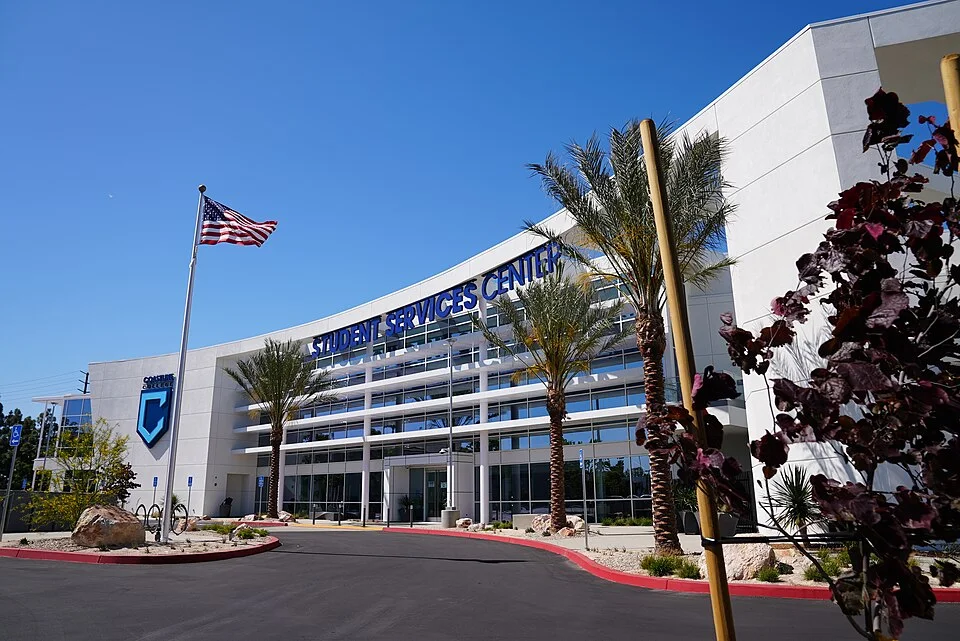
Coastline College offers two programs devoted specifically to digital forensics and incident response: a 60-unit Associate of Science and a 27-unit Certificate of Achievement. Both focus on computers, networks, cyber incidents, and digital evidence. They are not physical crime-scene investigation programs, nor do they provide the chemistry and biology curriculum associated with criminalistics laboratories.
The two credentials share the same nine-course technical core. The associate degree adds general education and electives to create a complete 60-unit college degree, while the certificate concentrates on technical coursework. Coastline also offers broader cybersecurity programs that can include forensic electives, plus AI-focused cybersecurity awards with limited digital-evidence content.
Coastline is a public two-year college accredited by the Accrediting Commission for Community and Junior Colleges. The college promotes its cybersecurity programs as online, and required digital-forensics courses use remote laboratory environments. Individual sections may be asynchronous online, scheduled live-online, hybrid, or offered in another format depending on the term.
Coastline’s digital forensics programs at a glance
| Program | Credential | Required units | Forensic depth | Primary use |
|---|---|---|---|---|
| Digital Forensics and Incident Response AS | Associate of Science | 60 total, including a 27-unit major | Fixed introductory and intermediate digital-forensics and incident-response sequence | A complete associate degree for entry-level technical work or later transfer |
| Digital Forensics and Incident Response Certificate | Certificate of Achievement | 27 | Same technical core as the AS | Concentrated training without general education |
| Cybersecurity AS | Associate of Science | 60 total, including a 27-unit major | Forensics available through electives | Broad cyber-defense education with customizable technical electives |
| Cybersecurity Certificate | Certificate of Achievement | 27 | Can include several forensic electives | Customizable cybersecurity training, including optional mobile-device forensics |
| Cybersecurity Analyst Certificate | Certificate of Achievement | 21 | Introductory forensic or incident-response course available as an elective | General security analyst preparation |
| AI for Cybersecurity AS | Associate of Science | 60 total, including a 31-unit major | One required cybercrime and evidence-related course, but no required digital-forensics sequence | AI-assisted threat detection, security analysis, and cyber defense |
| AI for Cybersecurity Certificate | Certificate of Achievement | 31 | Limited required digital-evidence coverage | Technical AI and cybersecurity training rather than forensic examination |
The two DFIR awards are Coastline’s direct digital-forensics programs. The other credentials are alternatives for people whose goals extend into security operations, network defense, incident coordination, or AI-supported threat analysis.
Digital Forensics and Incident Response Associate of Science
Coastline’s Digital Forensics and Incident Response Associate of Science requires 60 degree-applicable units. The major accounts for 27 units, with general education and electives completing the degree.
The major consists of nine required courses:
- Introduction to Cybersecurity
- Computer Networking Principles
- Contemporary Operating Systems
- Introduction to Digital Forensics
- Introduction to Incident Response
- Cybercrime and CSIRT Coordination
- Network Security
- Intermediate Digital Forensics
- Intermediate Incident Response
This fixed sequence gives the degree greater forensic depth than Coastline’s general cybersecurity degree. Students do not have to assemble the specialization through elective choices. Digital evidence examination, incident response, cybercrime law, networking, operating systems, and security fundamentals are all required.
Digital-evidence examination
The introductory digital-forensics course has 54 lecture hours and 18 laboratory hours. It addresses chain of custody, data acquisition, Windows artifacts, anti-forensic methods, timeline analysis, evidence reporting, and expert-witness testimony. Hands-on assignments take place in remote laboratory environments.
Intermediate Digital Forensics moves beyond basic computer acquisition into network, mobile-device, memory, Windows, Linux, Mac, cloud, and anti-forensic analysis. Students analyze a simulated case, write an evidence report, and complete mock testimony. These assignments reflect several core duties described in the federal O*NET profile for digital forensics analysts, including preserving evidence, analyzing digital media and logs, documenting findings, and preparing reports or testimony.
The intermediate course introduces mobile-device analysis, but the degree does not require Coastline’s separate Mobile Device Forensics course. That course examines device seizure, extraction tools, cloud storage, Faraday bags, mobile evidence, and reporting. It is available through other parts of Coastline’s cybersecurity curriculum.
Incident response and cybercrime
The degree gives incident response equal billing with forensic examination. Introduction to Incident Response covers case studies, industry tools, advanced persistent threats, timeline analysis, case management, documentation, technical reporting, and threat hunting.
Intermediate Incident Response adds incident scoping, vulnerability assessment, obfuscation, forensic artifacts, social-media forensics, memory forensics, Linux forensics, compliance, ethics, and evidence reporting. This creates meaningful overlap between post-incident investigation and active security response.
Cybercrime and CSIRT Coordination addresses international, federal, and state cybercrime law, court jurisdiction, ethics, evidence-collection procedures, incident reporting, technical writing, compliance, and the operation of a Cyber Security Incident Response Team. The legal and reporting components are useful because technically correct evidence handling can still fail an investigation if acquisition, documentation, or custody practices are poor.
Career alignment
The program aligns most directly with entry-level work involving digital evidence and cyber incidents. Coastline identifies occupations such as:
- Digital forensics technician
- Digital forensics examiner
- Cybercrime analyst
- Cyber incident analyst
- Incident responder
- Vulnerability analyst
Job titles are not standardized. A digital forensics technician might perform acquisition and basic examination under supervision, while an examiner position could require a bachelor’s degree, extensive IT experience, professional certifications, or prior investigative work. Public agencies may also impose background, driving, citizenship, or law-enforcement-related requirements that are separate from the academic credential.
The degree also supports security-operations work, but digital forensics and general information security are not identical fields. The U.S. Bureau of Labor Statistics reports that information security analysts typically need a bachelor’s degree and related experience, although some enter through other combinations of education, training, and certifications.
Coastline’s AS provides a technical starting point rather than a universal qualification for analyst or examiner positions. Its strongest preparation is in remote forensic analysis, incident documentation, operating-system artifacts, networks, and cyber response. It does not cover physical scene photography, fingerprint processing, bloodstain evidence, forensic biology, toxicology, or analytical chemistry.
Degree requirements and transfer implications
No separate selective application is listed for the DFIR degree. Coastline’s general admission rules apply. Adults age 18 or older qualify for general admission, while younger applicants must meet the college’s eligibility conditions.
Individual courses have advisories rather than a formal program-level prerequisite sequence. For example, prior computing preparation is advised for Introduction to Digital Forensics, and earlier forensic coursework is advised before the intermediate course. Advisories represent recommended preparation, not formal admission requirements.
Graduation requires at least 60 degree-applicable units, a cumulative GPA of 2.0, a Coastline GPA of at least 2.0, grades of C or higher in the program of study, and at least 12 residence units within the Coast Colleges.
The DFIR AS is a local associate degree, not an Associate Degree for Transfer. Coastline permits students to use local general education or Cal-GETC under the catalog’s degree rules, but receiving universities determine how cybersecurity and forensic courses apply to a bachelor’s major. Anyone planning to transfer should map the 60-unit degree against the intended university program early, especially if the destination major requires calculus, advanced programming, computer architecture, or additional laboratory science.
Digital Forensics and Incident Response Certificate of Achievement
The 27-unit Certificate of Achievement uses the same nine-course technical core as the associate degree. It therefore provides the same required DFIR classes without the associate degree’s general-education and elective requirements.
This structure is efficient for someone who already has a degree, has completed general education elsewhere, or works in IT and wants concentrated instruction in forensic examination and incident response. The certificate also provides a shorter academic route for building technical skills before deciding whether to complete an associate degree.
The practical assignments are substantial for an online certificate. Required courses include remote laboratory work, forensic imaging and acquisition, Windows and Linux artifact analysis, network and memory analysis, simulated cases, anti-forensic analysis, vulnerability work, evidence reports, technical writing, timelines, and mock testimony. There is no required internship or work-experience course.
Certificate students must earn a C or higher in required courses, although a Pass may be accepted under college rules, and maintain a 2.0 overall GPA. At least 12 units must be completed at Coastline, and at least half of the certificate’s units must be taken there. Students also must petition for graduation.
The certificate is an academic college credential, not a professional certification. It does not award CompTIA, vendor, or forensic-examiner certification. Course preparation can complement later certification study, but passing a Coastline course is separate from passing an external certification examination.
Online laboratories and scheduling
Coastline advertises its cybersecurity programs as available online. The DFIR curriculum is suited to distance delivery because the forensic courses use remote laboratory environments rather than requiring a traditional physical evidence laboratory.
Online study does not mean every section is guaranteed to be asynchronous. Coastline distinguishes among asynchronous Coastline ONLINE classes, scheduled LIVEONLINE classes, hybrid courses, and a limited number of face-to-face classes. The current catalog also notes that some courses may not be offered every semester or every year.
The format works well for computer-based evidence because students can practice acquisition, artifact review, memory analysis, reporting, and timeline reconstruction remotely. It is less relevant to people seeking physical CSI experience with cameras, latent prints, impression evidence, biological samples, or scene reconstruction. Coastline’s practical training concerns digital systems and cyber incidents.
Broader cybersecurity routes with forensic electives
Cybersecurity Associate of Science
The Cybersecurity AS also requires 60 total units with a 27-unit major, but its curriculum is broader than the fixed DFIR degree. Its foundation covers cybersecurity, networking, operating systems, Python, and network security. Students then select four specialized electives.
Available options include introductory and intermediate digital forensics, introductory and intermediate incident response, Cybercrime and CSIRT Coordination, and Work Experience Education. A carefully selected group of electives can produce substantial exposure to digital evidence and incident investigation. Another student could complete the same degree with a different security focus and much less forensic coursework.
This degree is the program Coastline associates with its National Security Agency Center of Academic Excellence in Cyber Defense designation, renewed through 2029. CAE-CD is a federal designation related to cyber-defense education. It is not specialized digital-forensics accreditation, and Coastline does not identify the DFIR degree or certificate as the designated program of study.
The Cybersecurity AS works better than the DFIR AS for a student seeking broad security education and elective control. The fixed DFIR degree is more direct for someone committed to evidence examination and incident investigation.
Cybersecurity Certificate of Achievement
The 27-unit Cybersecurity Certificate combines a 15-unit foundation with four electives. Its options include Introduction to Digital Forensics, Intermediate Digital Forensics, Mobile Device Forensics, incident-response courses, and Cybercrime and CSIRT Coordination.
A forensic-oriented elective package could cover computer evidence, mobile devices, cybercrime, and response procedures. The flexibility comes with a tradeoff: the credential is titled Cybersecurity, and digital-forensics courses are not required. It is not a named forensic concentration.
Mobile Device Forensics is a notable option here because it is not required in either direct DFIR award. Someone targeting phone and tablet evidence could use the general certificate to include that course, though doing so may mean omitting another specialized elective.
Cybersecurity Analyst Certificate of Achievement
The 21-unit Cybersecurity Analyst Certificate has a required foundation in cybersecurity, networks, operating systems, Python, and network security. Students choose two electives, and Introduction to Digital Forensics and Introduction to Incident Response are among the options.
This is an analyst-oriented security certificate with optional introductory exposure to forensics. Intermediate digital forensics, mobile-device forensics, and cybercrime law are not part of its listed elective choices. It is therefore less aligned with digital-evidence examination than either DFIR award or a deliberately customized Cybersecurity Certificate.
AI for Cybersecurity programs
Coastline’s current catalog includes an AI for Cybersecurity Associate of Science and an AI for Cybersecurity Certificate of Achievement.
The associate degree requires 60 total units with a 31-unit major. The certificate requires 31 units. Their technical curriculum combines statistics, Python, data science, artificial intelligence, network security, ethical hacking, AI cybersecurity applications, emerging cybersecurity trends, and Cybercrime and CSIRT Coordination.
The required cybercrime course includes 14 laboratory hours and covers digital evidence, criminal investigations, evidence collection, incident reporting, legal issues, and CSIRT functions. That provides relevant investigative context, but neither AI award requires Introduction to Digital Forensics or Intermediate Digital Forensics. Their emphasis is AI-supported cybersecurity, threat detection, intrusion prevention, and security analysis rather than sustained forensic acquisition and examination.
The AI associate degree is listed as financial-aid eligible. The 31-unit AI certificate is not identified as financial-aid eligible in the current catalog.
Tuition and fees
For the 2026-2027 academic year, California residents pay an enrollment fee of $46 per unit. At that rate:
- The 27-unit DFIR Certificate represents $1,242 in enrollment fees.
- The 60-unit DFIR Associate of Science represents $2,760 in enrollment fees if all 60 units are taken at Coastline.
- The 21-unit Cybersecurity Analyst Certificate represents $966 in enrollment fees.
- A 31-unit AI for Cybersecurity Certificate represents $1,426 in enrollment fees.
These calculations cover base enrollment fees only. Health, college-services, student-representation, parking, books, technology, equipment, and other applicable charges are separate. Transferred coursework could reduce the units taken at Coastline, while repeated or additional courses would increase the total.
For Summer 2026 through Spring 2027, nonresidents pay an additional $428 per unit plus a $28-per-unit nonresident capital-outlay charge. That creates a substantial price difference between resident and nonresident enrollment.
Both direct DFIR awards are listed as financial-aid eligible. Financial-aid eligibility for a program does not mean every student receives aid or that aid covers all educational expenses.
Accreditation and institutional status
Coastline College is institutionally accredited by the Accrediting Commission for Community and Junior Colleges. ACCJC reaffirmed the college’s accreditation in June 2026.
No separate specialized accreditation was identified for the Digital Forensics and Incident Response degree or certificate. The NSA CAE-CD designation applies to Coastline’s broader Cybersecurity Associate of Science as the designated program of study. It should not be described as accreditation of the DFIR awards.
A proposed Bachelor of Science in Data Breach Operations was not an available catalog program as of the 2026-2027 catalog. Coastline announced in March 2026 that the proposal had provisional state approval and ACCJC substantive-change approval, but final state review remained pending. It therefore is not a current bachelor’s option for enrollment.
Choosing among Coastline’s options
The DFIR Associate of Science is the clearest route for a first-time college student who wants a complete degree built around digital evidence and cyber incident response. Its required sequence removes the risk of graduating without intermediate forensics or incident-response training. The general-education component can also support later bachelor’s study, although the degree has no AS-T transfer guarantee.
The DFIR Certificate provides the same technical curriculum in 27 units. It is a more concentrated route for an experienced IT worker, a degree holder adding forensic skills, or someone who does not currently need another general-education credential.
The broader Cybersecurity AS offers greater control over electives and carries Coastline’s identified CAE-CD program association. It fits security-operations goals well, but forensic depth depends on course selection. The Cybersecurity Certificate offers similar customization and uniquely allows Mobile Device Forensics as an elective.
Coastline’s AI for Cybersecurity awards are better aligned with AI-supported defense, threat detection, and security analytics than with forensic examination. Their required cybercrime course covers evidence and incident coordination, but it does not replace the two-course digital-forensics sequence in the DFIR programs.
Readers comparing Coastline with other California institutions can also review the broader directory of California CSI and forensic schools. For Coastline specifically, the practical decision is between a fixed DFIR curriculum and a customizable cybersecurity curriculum. Choose the fixed sequence for sustained work with digital evidence, forensic artifacts, reports, and incident cases. Choose the broader cyber route when network defense, security analysis, or mobile forensics electives are at least as central as examination work.