
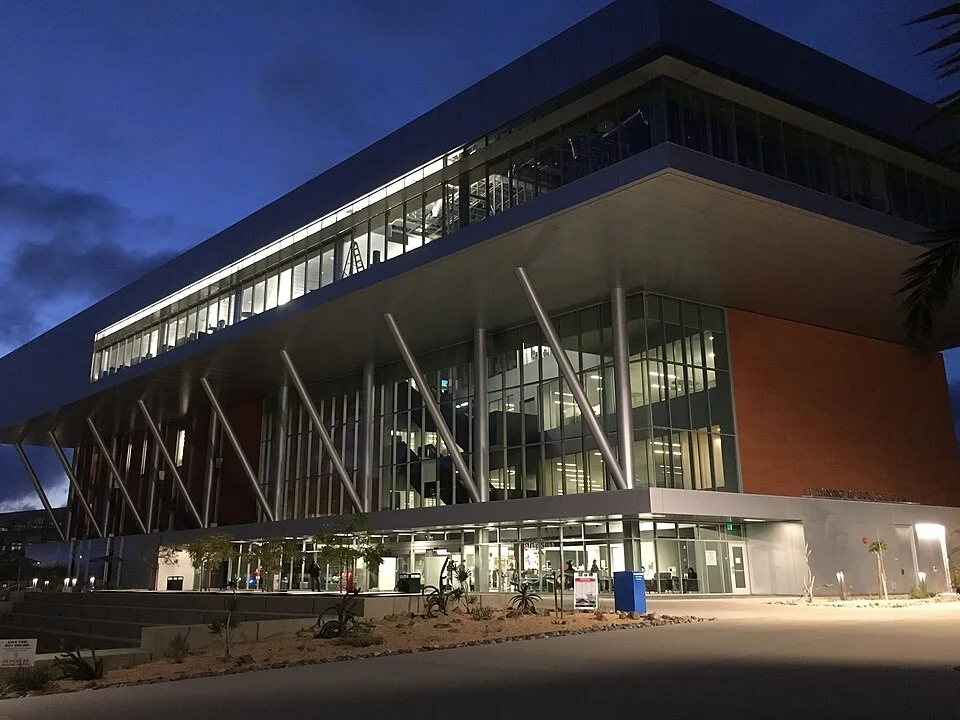
Palomar College offers one dedicated Forensic Technology curriculum through two credentials: a 60-unit Associate of Science and a 41-unit Certificate of Achievement. Both launched in fall 2026 and share the same 41-unit technical core. The difference is that the associate degree adds general education and any additional coursework needed to reach the college’s 60-unit degree minimum.
The curriculum is built primarily for crime-scene, evidence, fingerprint, photography, and forensic-support work. It includes introductory biology and chemistry, but it is not a laboratory criminalistics degree. Students targeting scientist positions in California crime laboratories will need substantially more education in chemistry, biology, quantitative analysis, and other upper-division sciences.
Palomar also has two cybersecurity credentials with a required computer-forensics course. Those are adjacent digital-evidence pathways rather than alternatives to the physical-evidence and crime-scene curriculum.
Palomar College forensic programs at a glance
| Program | Technical or major units | Total units | Main purpose | Career alignment |
|---|---|---|---|---|
| Forensic Technology Associate of Science | 41 | At least 60 | Complete the forensic core plus general education and associate-degree requirements | Crime scene technician, evidence technician, property/evidence work, CSI trainee, forensic-support positions |
| Forensic Technology Certificate of Achievement | 41 | 41 | Complete the occupational forensic core without the full associate-degree package | The same general field and evidence roles, especially when paired with prior education or public-safety experience |
The certificate is not a shorter introduction to the subject. It contains the full 41-unit occupational curriculum. The A.S. places that curriculum inside a broader college degree with general education.
Palomar is a public two-year community college based in San Marcos, north of San Diego. The college also operates education centers in Escondido, Fallbrook, and Rancho Bernardo, although the Administration of Justice Department identifies San Marcos as its location and administers Forensic Technology through the Public Safety area.
Forensic Technology Associate of Science
The Forensic Technology Associate of Science requires a 41-unit major within a degree of at least 60 semester units. General education and any additional applicable units complete the degree.
Palomar developed the program as a four-consecutive-semester sequence. That is an intended academic map rather than a guaranteed completion time. Beginning and advanced classes in fingerprint analysis and forensic photography need to be taken in the proper order, so missed or unavailable courses could extend the schedule.
The curriculum combines five major areas:
- Crime-scene and evidence work: AJ 210 Introduction to Crime Scene Forensic Investigation and AJ 215 Introduction to Forensic Science address physical evidence, scene processing, collection, preservation, documentation, and analysis.
- Fingerprint examination: AJ 220 Beginning Fingerprint Analysis and AJ 221 Advanced Fingerprint Analysis provide a two-course sequence rather than treating fingerprints as a small topic inside a general criminal justice class.
- Forensic photography: PHOT 221 Beginning Forensic Photography and PHOT 222 Advanced Forensic Photography cover the photographic documentation component of scene and evidence work.
- Law, procedure, and ethics: Required courses include introduction to criminal justice, criminal law, criminal evidence, and a choice involving criminal procedure or basic criminal investigation. Students also select ethics or community and the justice system.
- Introductory science: BIOL 100 General Biology and CHEM 100 Fundamentals of Chemistry provide basic scientific context for physical and biological evidence.
That mix is well aligned with field and evidence-support work. Program planning documents describe training in evidence recognition and collection, crime-scene documentation, forensic photography, fingerprint development and comparison, chain of custody, safety, report writing, and mock testimony. These are practical competencies used in crime-scene and property/evidence operations.
AJ 210 also covers subjects such as fingerprints, DNA profiling, bloodstain pattern analysis, and firearm examination through lectures, case studies, and hands-on laboratory exercises. AJ 215 includes practical collection, processing, and analysis of physical evidence.
The A.S. is the more complete college credential of the two options. General education adds writing, quantitative reasoning, communication, and broader academic preparation beyond the occupational core. It can be useful for job postings that prefer or require an associate degree, but Palomar does not identify it as an Associate Degree for Transfer. Students planning a bachelor’s degree should build their general education and elective choices around the receiving university’s requirements rather than assuming the entire 60-unit package will apply to a science major.
Forensic Technology Certificate of Achievement
The Forensic Technology Certificate of Achievement uses the same 41-unit technical curriculum as the A.S. It does not require the broader general education package or the 60-unit associate-degree total.
This is a substantial college certificate, not a brief training course and not a professional certification. Its 41 units include criminal law, evidence, procedure or investigation, introductory forensic science, crime-scene investigation, two levels of fingerprint analysis, two levels of forensic photography, biology, chemistry, and ethics or community justice.
The certificate route is most practical in two situations. First, it can provide concentrated occupational preparation when an associate degree is not needed immediately. Second, it can add crime-scene and evidence skills to an existing degree or relevant public-safety background.
Its career orientation remains the same as the A.S. Program documents identify evidence technician, property/evidence clerk, forensic technician, crime scene specialist, and CSI trainee preparation. Actual titles and hiring standards vary among California agencies. A crime scene investigator may be a civilian position in one department and an assignment for a sworn officer in another.
No mandatory external internship or cooperative work placement appears in the current curriculum. Practical preparation comes through laboratory exercises, mock crime scenes, photography, fingerprint processing, evidence handling, reports, and simulated testimony.
Field CSI preparation versus laboratory criminalistics
Palomar’s curriculum has enough dedicated coursework to be described as a direct forensic technology program, not merely a criminal justice degree with one CSI elective. Its strongest preparation is in physical evidence handling and scene support.
The science portion is more limited. BIOL 100 and CHEM 100 provide useful foundations, but the verified curriculum does not include the advanced science sequence typically associated with laboratory criminalistics. It lacks organic chemistry, quantitative or analytical chemistry, molecular biology, instrumental analysis, and upper-division laboratory methods.
That gap has a direct career consequence. California’s state Criminalist classification requires education equivalent to a bachelor’s degree with a major in a physical or biological science. It also specifies eight semester hours of general chemistry and three semester hours of quantitative analysis. The California Department of Justice criminalistics guidance similarly directs prospective criminalists toward a four-year degree in chemistry, biology, or a related science.
Completing Palomar’s Forensic Technology A.S. or certificate therefore does not satisfy the state Criminalist education standard by itself. A student aiming to analyze controlled substances, DNA, toxicological samples, trace evidence, or other materials in a crime laboratory should prioritize a bachelor’s degree with substantial chemistry and biology.
The Palomar pathway is better matched to roles centered on:
- Crime-scene documentation and processing
- Physical-evidence recognition and recovery
- Chain of custody
- Forensic photography
- Fingerprint development and comparison
- Evidence storage and property-room procedures
- Report writing
- Courtroom or mock testimony
- General forensic-support operations
This field-versus-laboratory distinction is more useful than relying on the word “forensic” in a program title. Palomar teaches science-informed evidence practices, but the degree is not structured as a bachelor’s-level natural science program.
Delivery format and hands-on requirements
Palomar’s Forensic Technology program is campus-oriented. Individual Administration of Justice courses may have different formats by term, but a fully online pathway has not been established.
AJ 215 Introduction to Forensic Science is not approved for distance education. The curriculum also depends on laboratory evidence processing, fingerprint work, photography, and crime-scene exercises. Those requirements limit how much of the program can be completed remotely.
The practical format suits the subject. Photography requires controlled exercises in documenting scenes and evidence, while latent-print and physical-evidence courses rely on processing techniques that are difficult to reproduce through lecture-only instruction. Students should plan for in-person attendance and transportation to the San Marcos area rather than selecting the program on the assumption that it is an online degree.
The current catalog materials do not list a required internship. Palomar has emphasized laboratory and scenario-based instruction instead, including mock crime scenes and simulated testimony.
Admissions and course planning
No separate selective admission process was identified for either Forensic Technology credential. Students enter through Palomar College’s regular admission process and complete individual course prerequisites and associate-degree requirements where applicable.
Sequence planning matters because the major contains beginning and advanced fingerprint and photography courses. A workable plan should place AJ 220 before AJ 221 and PHOT 221 before PHOT 222, following the active catalog requisites. The four-semester design also means that carrying the planned course load may be necessary to finish on the proposed schedule.
Students who expect to continue into a bachelor’s program have two different planning choices:
- Field CSI or criminal justice route: The A.S. can provide occupational forensic coursework and general education before transfer into criminal justice, criminology, public administration, or a related program.
- Laboratory criminalist route: Chemistry, biology, calculus, statistics, and other transferable science requirements need priority. Finishing every occupational course in the 41-unit forensic core could leave less room for the lower-division science sequence required by a chemistry or biology bachelor’s degree.
AJ 210 is CSU-transferable, but one transferable course does not establish that the complete Forensic Technology major will satisfy a university’s major preparation. Laboratory-career planning should begin with the bachelor’s curriculum and work backward to the most useful Palomar courses.
Tuition and likely additional expenses
Beginning in summer 2026, California residents pay an enrollment fee of $46 per unit at Palomar College.
At that rate:
- The 41-unit Certificate of Achievement represents $1,886 in base resident enrollment fees.
- A 60-unit A.S. represents $2,760 in base resident enrollment fees.
These figures are not total program prices. Palomar also charges a $28 health fee in fall and spring and a Student Center fee of $1 per unit, capped at $10 annually. Books, transportation, laboratory materials, fingerprint supplies, photographic equipment or materials, and other educational expenses increase the actual cost. The current sources do not publish a single equipment estimate for the forensic program.
Nonresident and international students pay an additional $377 per unit beginning in summer 2026.
Eligible participants in the Palomar Promise may receive enrollment-fee coverage for up to two years. For 2026-2027, that benefit is based on the $46-per-unit fee and covers up to 19 units per fall or spring semester, subject to eligibility and available funding. Material fees and other expenses remain outside that base tuition benefit.
Accreditation
Palomar College is institutionally accredited by the Accrediting Commission for Community and Junior Colleges of the Western Association of Schools and Colleges.
Neither Forensic Technology award is identified as separately accredited by the Forensic Science Education Programs Accreditation Commission. This is not an adverse finding for these credentials. FEPAC accredits qualifying bachelor’s and master’s forensic science programs, including certain natural or computer science programs with forensic concentrations. Associate degrees and community-college certificates fall outside its stated scope.
Accreditation comparisons should therefore focus on Palomar’s institutional accreditation, the actual curriculum, and career alignment. FEPAC becomes more relevant when evaluating bachelor’s or master’s programs intended for laboratory forensic science careers.
Adjacent computer-forensics pathways
Palomar has two current cybersecurity credentials that require CSNT 280 Computer Forensics Fundamentals. They are relevant to digital-evidence interests, but neither is a general CSI or Forensic Technology program.
CyberSecurity Associate of Science
The CyberSecurity Associate of Science contains a 28-unit major covering hardware, operating systems, networking, Linux, information systems, Python, cyber defense, ethical hacking, penetration testing, risk management, and computer forensics.
CSNT 280 is a required three-unit course with two lecture hours and three laboratory hours. Topics include the computer-investigation process, operating-system boot processes, disk structures, data acquisition and analysis, forensic tools, and technical writing.
This route serves cybersecurity analysis, incident response, and introductory digital-investigation interests. It does not provide Palomar’s dedicated training in physical crime scenes, forensic photography, latent prints, or property/evidence operations.
Cyber Defense Infrastructure Support Specialist Certificate
The Cyber Defense Infrastructure Support Specialist Certificate of Achievement requires 24 units. Its curriculum includes networking, Linux, Python, hacker prevention, cyber defense and analysis, ethical hacking, information systems, and CSNT 280.
Palomar expressly includes computer forensics among the certificate’s competencies. Even so, the credential’s primary focus is cyber defense infrastructure rather than a full digital-forensics specialization.
CSNT 280 may be available online. Online students need a Windows-based computer and must install third-party applications. The published online information for that course does not establish that either complete cybersecurity credential is always available fully online.
Choosing the appropriate Palomar route
The A.S. and certificate lead through the same forensic technical core, so the decision begins with credential purpose. Choose the A.S. when a full associate degree, general education, or a broader college foundation is part of the plan. The certificate provides the occupational curriculum without requiring the additional units needed for the degree.
Career direction then narrows the choice further. Palomar’s Forensic Technology curriculum is designed around scenes, fingerprints, photography, evidence integrity, and forensic-support work. The cybersecurity options address networks, systems, cyber defense, and introductory computer investigations. Neither route supplies the advanced natural-science preparation required for many laboratory criminalist positions.
Students pursuing laboratory analysis should use chemistry or biology bachelor’s requirements as the academic framework, adding crime-scene coursework only where it fits. Those seeking evidence technician, crime scene technician, property/evidence, fingerprint-support, or CSI trainee roles receive more directly relevant preparation from Palomar’s dedicated Forensic Technology curriculum. Additional California institutions and their program emphasis can be compared through the site’s school profiles.