
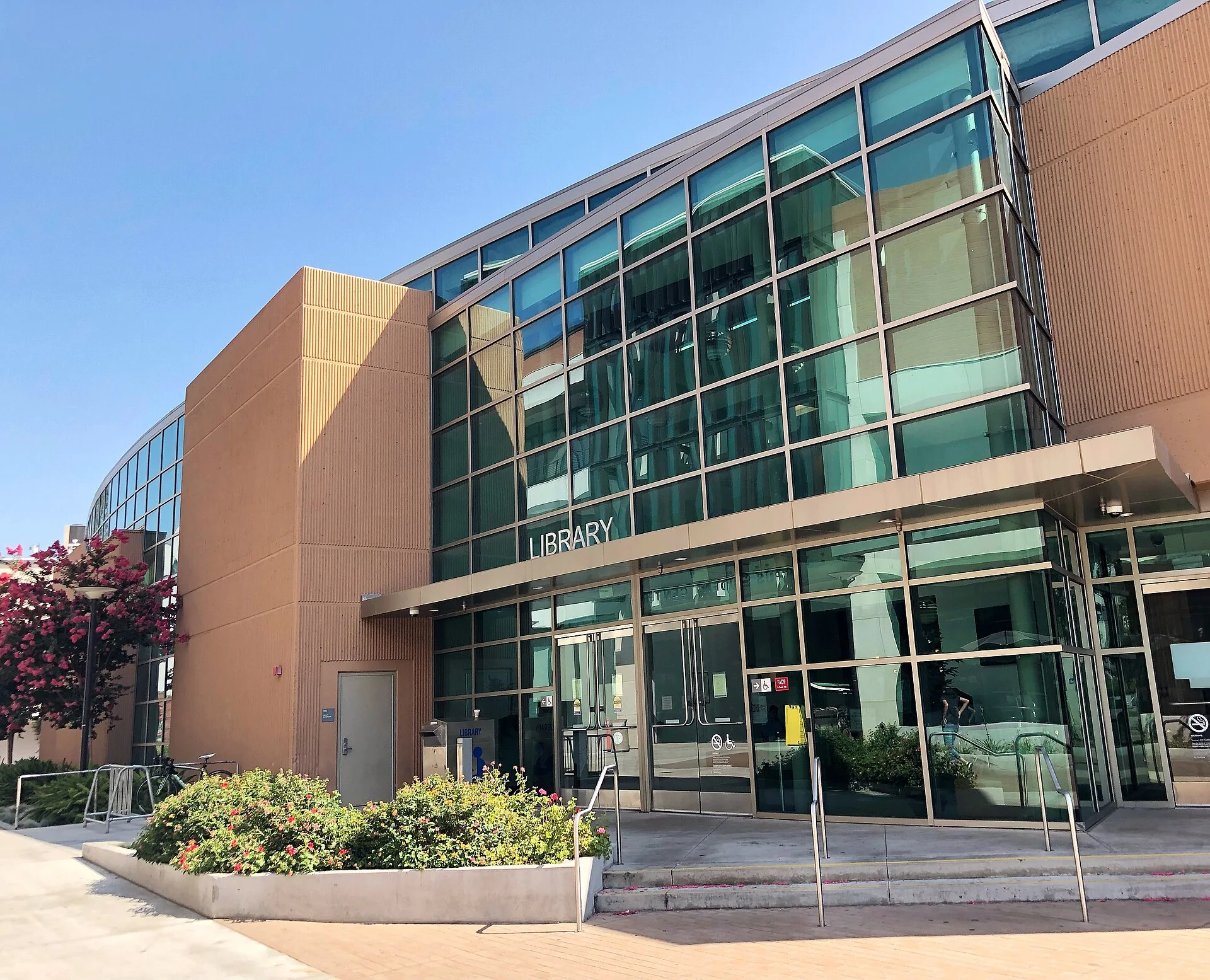
East Los Angeles College offers two direct crime scene investigation credentials: a 60-unit Associate of Science in Forensic Crime Scene Investigation and a 17-unit Certificate of Achievement in Forensic Crime Scene Investigation. Its Administration of Justice pathway also includes a narrower Fingerprint Classification Skills Certificate.
A separate Criminal Investigations Certificate of Achievement serves a different audience. Housed in ELAC’s Public Safety Affiliation Department, it focuses on detective operations, interviewing, homicide investigation, evidence collection, and related training for public-safety personnel.
The direct forensic programs emphasize physical evidence, crime-scene documentation, fingerprints, criminalistics, and investigative support. They are designed more for field CSI and forensic identification work than for laboratory criminalist careers requiring advanced chemistry or biology.
ELAC forensic and investigative programs compared
| Program | Credential and units | Main curriculum | Delivery evidence | Primary career alignment |
|---|---|---|---|---|
| Forensic Crime Scene Investigation AS | Associate of Science, 60 total units with a 30-unit major | Criminal investigation, Criminalistics I and II, fingerprint classification, biology, digital photography, ethics, offender profiling, directed study | Mixed. Recent schedules include online and on-campus sections | Crime scene technician, evidence technician, forensic identification support, latent-print support, investigative roles |
| Forensic Crime Scene Investigation Certificate | Certificate of Achievement, 17 units | Criminal investigation, Criminalistics I and II, offender profiling, ethics, directed study | Advertised by ELAC as online, but individual section formats vary by term | Entry-level crime-scene response and evidence-processing preparation; supplemental training for working professionals |
| Fingerprint Classification Skills Certificate | Skills Certificate, 6 units | Criminal investigation and fingerprint classification | Online and in-person sections have appeared in recent schedules | Fingerprint technician, latent-print support, identification and evidence-related work |
| Criminal Investigations Certificate | Certificate of Achievement, 16 units | Patrol school, detective field operations, advanced investigations, interviewing, homicide and death investigation, search and seizure | Current official sources do not specify a delivery format | Detective and criminal-investigation training, primarily for employed public-safety personnel |
These credentials serve three different purposes. The AS provides the broadest college-level CSI curriculum and includes general education. The 17-unit certificate concentrates on the core investigative sequence without the degree’s separate biology, photography, and fingerprint courses. The fingerprint certificate is a focused two-course option, while the Public Safety Affiliation certificate is oriented toward criminal investigators and officers rather than civilian CSI preparation.
Associate of Science in Forensic Crime Scene Investigation
The Forensic Crime Scene Investigation Associate of Science requires 60 degree-applicable units. Thirty units make up the forensic and CSI major, with the rest coming from general education and other degree requirements.
The major includes:
- Introduction to Administration of Justice
- Criminal Investigation
- Criminalistics I
- Criminalistics II
- Offender Profiling in Criminal Investigations
- Ethics in Forensic Science
- Fingerprint Classification
- Directed Study in Administration of Justice
- Introduction to Biology
- Introduction to Digital Photography
The curriculum is strongest in scene processing and forensic identification. Course descriptions cover crime-scene searching, diagramming, photography, physical-evidence collection, bloodstain-pattern work, fingerprint development, handwriting, human remains, trace evidence, weapon identification, firearms recovery, and gunshot-residue testing. The ethics course adds evidence handling, report writing, admissibility, courtroom testimony, and professional guidelines.
That combination aligns with field-oriented positions in which employees document scenes, recover evidence, process fingerprints, maintain chain of custody, prepare reports, or support investigators. The biology course introduces a natural-science component, while digital photography directly supports scene documentation. Neither course turns the degree into an advanced laboratory-science program, but both broaden it beyond the shorter certificate.
Course sequencing and graduation requirements
The criminalistics sequence must be taken in order. Criminal Investigation must be completed before Criminalistics I, and Criminalistics I must be completed before Criminalistics II.
AS graduation requires at least 60 degree-applicable units, completion of the Los Angeles Community College District general-education plan, a minimum 2.0 overall GPA, and a grade of C or Pass in each major course.
The required Directed Study course is completed under a contract with a supervising instructor. It is not identified as an internship in the catalog. ELAC also offers optional Administration of Justice cooperative education for students already working or volunteering in a related setting, but cooperative education is not a required part of the degree.
Delivery format
The AS is best described as a mixed-delivery program rather than an online degree. ELAC’s Fall 2026 schedule included online sections for several Administration of Justice requirements, including Criminalistics II, Ethics in Forensic Science, and Offender Profiling. Criminalistics II also had an on-campus option, while Directed Study appeared as an on-campus section that term.
Biology, digital photography, course rotation, and section availability can also affect how much of the degree is available online. Students seeking maximum flexibility can complete some of the major remotely, but the published evidence does not establish a consistently online path through all 60 units.
Career fit and transfer use
Among ELAC’s forensic offerings, the AS provides the best fit for someone who needs an associate degree for employment or plans to continue into a bachelor’s program. One 2026 Los Angeles County Forensic Identification Specialist recruitment accepted, under one qualification route, an associate degree in criminalistics, police science, or a related field that included at least eight semester units in photography, crime-scene investigation, fingerprinting, or criminalistics.
That example shows how a relevant associate degree can correspond to a specific public-sector job classification. It is not a statewide hiring standard. California agencies use different titles, and a crime scene investigator may be a civilian specialist at one department or a sworn assignment at another.
The degree may also support transfer, but it is not listed as an Associate Degree for Transfer. Receiving universities determine how individual criminal justice, biology, photography, and general-education courses apply to their bachelor’s requirements. A student planning to enter a chemistry-heavy forensic science program should use electives and transfer coursework to build substantially more chemistry and laboratory science than the ELAC major requires.
Certificate of Achievement in Forensic Crime Scene Investigation
ELAC’s 17-unit Forensic Crime Scene Investigation Certificate of Achievement contains six Administration of Justice courses:
- Criminal Investigation
- Criminalistics I
- Criminalistics II
- Offender Profiling in Criminal Investigations
- Directed Study in Administration of Justice
- Ethics in Forensic Science
This is the shorter route into ELAC’s crime-scene and evidence curriculum. It retains the sequenced criminal investigation and criminalistics courses, along with ethics and supervised directed study. It does not require the AS program’s separate courses in introductory biology, digital photography, fingerprint classification, or Introduction to Administration of Justice.
The criminalistics sequence addresses evidence collection, fingerprints, handwriting, human remains, trace materials, firearms recovery, and related forensic methods. Ethics in Forensic Science covers written reports, evidence handling, admissibility, professional conduct, and testimony. Offender profiling adds an investigative subject, although profiling is not a substitute for photography, fingerprint development, evidence documentation, or laboratory methods.
Who benefits from the shorter certificate?
The certificate is suited to someone who wants concentrated CSI coursework without completing a full associate degree. It can also supplement prior education or professional experience in law enforcement, private investigation, security, evidence management, or another justice-related field.
Its employment value has a defined limit. A 17-unit college certificate cannot satisfy a job classification that requires an associate or bachelor’s degree. It also contains less supporting science and photography than the AS. Someone starting college without another credential will generally gain broader employment and transfer utility from completing the associate degree.
No mandatory internship appears in the current certificate requirements. The two-unit Directed Study course provides supervised academic work, but the catalog does not describe it as an external placement.
Is the certificate fully online?
ELAC advertises this certificate among its 100-percent-online fast-track options. Recent schedules show that several required courses are available online, but not every requirement is consistently listed that way. In Fall 2026, Directed Study appeared as an on-campus section.
The most accurate description is that the certificate has substantial online availability, with section format varying by course and term. The current catalog and schedule list Directed Study as two units, despite an older online-program page showing three units.
Fingerprint Classification Skills Certificate
The Fingerprint Classification Skills Certificate is a six-unit credential consisting of Criminal Investigation and Fingerprint Classification. It is a college Skills Certificate, not a professional certification or state license.
Criminal Investigation introduces crime-scene searches, recording methods, evidence collection and preservation, interviews, follow-up investigation, and case preparation. Fingerprint Classification covers terminology, friction-ridge patterns, interpretation, classification, crime-scene print searches, preservation, and development.
This narrow curriculum can support entry into identification, records, evidence, and latent-print support work. The City of Los Angeles describes Forensic Print Specialists as employees who recover and process latent prints at crime scenes, compare prints, prepare impressions, and testify in court. Its qualification routes can require a four-year degree or a combination of 60 college units and qualifying experience, depending on the route used. The ELAC certificate covers relevant subject matter, but the six-unit award alone is not equivalent to those broader education and experience requirements.
Recent ELAC schedules have included both online and in-person fingerprint coursework. The curriculum does not list a required internship, practicum, or external certification exam.
Criminal Investigations Certificate for public-safety personnel
ELAC also offers a 16-unit Criminal Investigations Certificate of Achievement through its Public Safety Affiliation Department. This is a closely related investigative program, but it is not another version of the civilian-oriented Forensic Crime Scene Investigation certificate.
Required courses include:
- Patrol School
- Field Operations for Detectives
- Advanced Criminal Investigations
- Analytic Interviewing-Basic
- Homicide and Death Investigation
- Search and Seizure Update
Advanced Criminal Investigations includes crime-scene processing, evidence collection, legal issues, and investigative techniques. Other courses address detective field operations, interviewing, homicide and death cases, and search-and-seizure law.
The department is designed primarily for current public-safety employees seeking advancement. Its curriculum is better aligned with an officer moving toward detective or criminal-investigation assignments than with a civilian student pursuing a first crime-scene technician credential. It also omits the Criminalistics I and II sequence found in ELAC’s direct forensic programs.
Current official sources do not specify a delivery format, a separate internship requirement, or a program-specific cost. The published information also does not identify the certificate as California POST-approved, so it should be understood as an ELAC academic credential rather than a claimed external professional certification.
Field CSI preparation versus laboratory criminalistics
ELAC’s forensic curriculum concentrates on crime scenes, physical evidence, fingerprints, documentation, investigative practice, and courtroom responsibilities. That is relevant preparation for positions such as crime scene technician, evidence technician, property and evidence technician, forensic identification assistant, fingerprint technician, or investigative support employee.
Laboratory criminalist and forensic scientist positions require a different scientific foundation. California’s Criminalist examination bulletin requires the equivalent of a bachelor’s degree with a major in a physical or biological science. The required education also includes eight semester hours of general chemistry and three semester hours of quantitative analysis.
The ELAC associate degree includes introductory biology but does not provide a bachelor’s major in chemistry, biology, or another laboratory science. It therefore does not meet the state Criminalist education standard by itself.
Anyone targeting laboratory analysis should prioritize a transfer plan containing general chemistry, organic chemistry, quantitative or analytical chemistry, biology, molecular biology, statistics, instrumentation, and upper-division laboratory methods. The ELAC AS can provide introductory CSI context, but a natural-science bachelor’s program must supply the scientific depth.
Admission, tuition, and college costs
ELAC follows community-college admission rules. Eligible applicants include high school graduates, people with an equivalent credential, and adults age 18 or older. Some younger students can attend under special-admit provisions. No separate selective-admission process is listed for the forensic AS, CSI certificate, or fingerprint certificate.
For 2026-2027, California residents pay an enrollment fee of $46 per unit. At that rate:
- 60 units for the AS equal $2,760 in enrollment fees.
- 17 units for the CSI Certificate of Achievement equal $782.
- Six units for the Fingerprint Classification Skills Certificate equal $276.
These are enrollment-fee estimates, not total program prices. They exclude health and representation fees, books, supplies, equipment, transportation, living expenses, repeated courses, and prerequisites taken outside the stated program totals.
Nonresident and international students pay an additional $397 per unit for 2026-2027, on top of the $46 enrollment fee. That additional charge changes the cost calculation substantially.
ELAC’s published resident cost-of-attendance budget estimates $1,238 in tuition and required fees for fall and spring based on 13 units per semester. It also includes separate estimates for books, transportation, housing, food, and personal expenses. Those indirect expenses are useful for financial planning but are not program tuition.
Eligible students can receive enrollment-fee support through the California College Promise Grant. The Los Angeles College Promise can provide up to two years of free tuition to qualifying first-time, full-time students pursuing transfer, a degree, or an eligible workforce certificate.
Accreditation and the role of FEPAC
East Los Angeles College is institutionally accredited by the Accrediting Commission for Community and Junior Colleges. Its most recent comprehensive review was in 2023, and the next is listed for 2030.
The forensic programs are not described as FEPAC-accredited. That is not a deficiency at this credential level. The Forensic Science Education Programs Accreditation Commission accredits qualifying bachelor’s and master’s forensic science programs, along with certain natural- or computer-science programs containing forensic concentrations. Associate degrees and community-college certificates fall outside its stated scope.
FEPAC becomes more relevant when comparing bachelor’s programs for laboratory forensic science. For ELAC’s associate degree and certificates, institutional accreditation, course content, transferability, and alignment with specific job classifications are more useful measures.
Choosing the right ELAC route
The AS is the broadest option for new college students seeking field CSI preparation, an associate degree, general education, and a possible transfer foundation. Biology, digital photography, fingerprint classification, and the 60-unit degree structure give it more range than the shorter certificate.
The 17-unit Certificate of Achievement works better as concentrated occupational training or as an addition to prior education and experience. It covers ELAC’s central criminalistics sequence but omits several supporting subjects included in the AS.
The Fingerprint Classification Skills Certificate has a narrower purpose. It provides focused instruction in print patterns, development, preservation, and crime-scene searching without attempting to cover the full range of CSI practice.
Public-safety employees moving toward detective work have a separate route in the Criminal Investigations Certificate. Its patrol, interviewing, homicide, evidence, and search-and-seizure coursework reflects investigator training rather than laboratory science or a conventional civilian CSI program.
Students comparing ELAC with other institutions can review additional California school profiles and forensic program options. The practical decision is to match the credential to the job category: choose scene processing, photography, fingerprints, and evidence courses for field CSI; use the associate degree when a degree requirement or transfer goal is involved; and build a chemistry- or biology-based bachelor’s plan for laboratory criminalist work.