
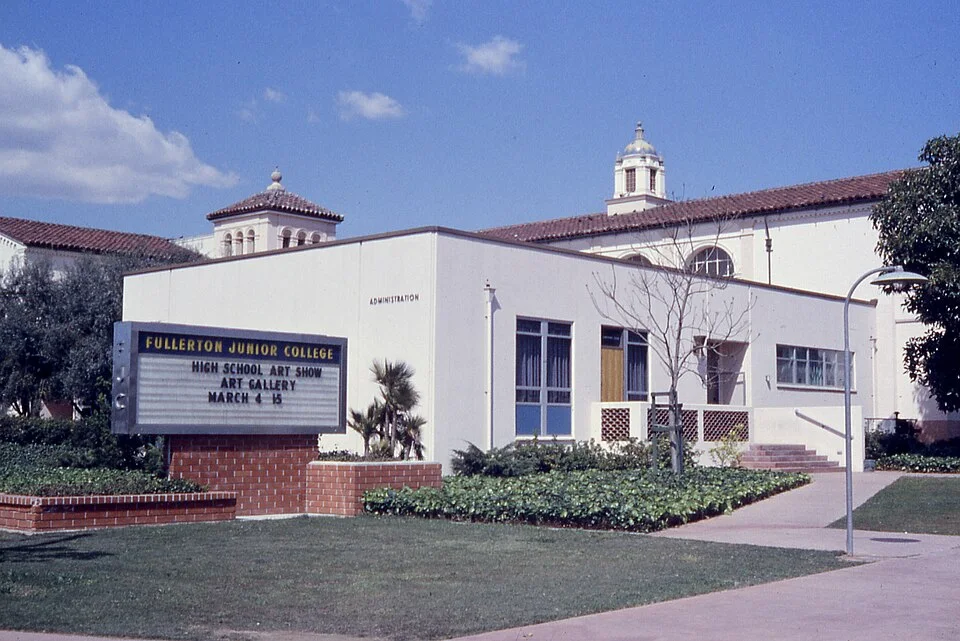
Fullerton College offers two direct forensic credentials with different career aims. The 16.5-unit Crime Scene Investigation Certificate concentrates on scene processing, evidence handling, photography, investigation, and report writing. The 23.5-unit Forensic Technician Certificate adds biotechnology, molecular laboratory methods, chemistry, and forensic microscopy.
The first is the clearer match for field CSI and evidence-technician work. The second provides more relevant preparation for an entry-level laboratory support role, although it is not a replacement for a bachelor’s degree in chemistry, biology, forensic science, or criminalistics.
Fullerton College also has related Administration of Justice, Biological Technician, and Cyber Security programs. These can support broader law-enforcement, laboratory, transfer, or cyber incident-response goals, but they are not additional crime scene investigation degrees.
Fullerton College is a public community college at 321 East Chapman Avenue in Fullerton. It is institutionally accredited by the Accrediting Commission for Community and Junior Colleges, or ACCJC. Readers comparing it with other institutions can also review the broader directory of California schools with CSI and forensic programs.
Fullerton College CSI and forensic program comparison
| Program | Credential and units | Primary focus | Science and practical depth | Best-aligned next step |
|---|---|---|---|---|
| Crime Scene Investigation Certificate | Certificate of Achievement, 16.5 units | Field investigation, evidence, photography, documentation | Applied CSI laboratory work, evidence collection, DNA evidence fundamentals, fingerprints, trace evidence, scene photography | Crime scene technician, evidence technician, forensic specialist, or further Administration of Justice study |
| Forensic Technician Certificate | Certificate of Achievement, 23.5 units | Crime-scene methods combined with biotechnology laboratory training | Chemistry, molecular methods, biotechnology laboratories, DNA concepts, microscopy, trace evidence, chain of custody | Entry-level laboratory or technician work, or preparation for additional science education |
| Administration of Justice AS | Associate degree, 24 to 25 major units plus degree requirements | Broad criminal justice and law enforcement | CSI depth depends on electives | Broader justice employment preparation or pairing with the CSI Certificate |
| Administration of Justice AS-T | 60-unit transfer degree with an 18 to 19-unit major | CSU transfer in criminal justice | CSI courses are optional; little prescribed laboratory science | Transfer into a criminal justice bachelor’s program |
| Biological Technician AS | Associate degree, 29 to 34 major units plus degree requirements | Biotechnology and bioscience laboratories | General chemistry, statistics, protein biochemistry, tissue culture, laboratory methods | Bioscience technician work or transfer into a science bachelor’s program |
| Cyber Security AS or Master Certificate | 34 technical units | Cybersecurity, network defense, incident response | Includes investigation and reconstruction of network data, but not a dedicated digital-evidence sequence | Cybersecurity operations and cyber incident response |
Crime Scene Investigation Certificate
Fullerton’s Crime Scene Investigation Certificate is the institution’s most direct field-oriented CSI program. Its seven required courses cover crime-scene investigation, DNA evidence, police report writing, rules of evidence, criminal investigation, crime-scene techniques, and photography.
The 16.5-unit curriculum is:
- AJ 092 F, Crime Scene Investigation
- AJ 093 F, DNA Genetic Fingerprinting
- AJ 151 F, Police Report Writing
- AJ 222 F, Rules of Evidence
- AJ 223 F, Criminal Investigation
- AJ 230 F, Crime Scene Techniques
- PHOT 111 F, Introduction to Photography from Analog to Digital
AJ 092 F includes laboratory work in evidence collection, preservation, processing, and forensic light-source use. AJ 093 F addresses DNA evidence collection, preservation, fundamentals, and analysis techniques. The remaining Administration of Justice courses develop the legal, investigative, and communication skills needed to move evidence from a scene into a case.
AJ 230 F has especially direct occupational relevance. Its topics include fingerprints, trace evidence, bodily fluids, impression evidence, firearms, drugs, sexual-assault investigations, burglaries, and homicide scenes. AJ 223 F adds scene management, witness interviews, documentation, evidence preservation, and trial preparation. AJ 222 F addresses whether evidence is admissible and how it is presented in court.
Photography is not a peripheral elective in this certificate. Field personnel may need to record overall scenes, midrange relationships, and close evidence details before anything is moved. PHOT 111 F includes both lecture and laboratory work in camera operation and digital imaging. Fullerton’s counseling materials also identify PHOT 101 F as an approved substitute, although the current catalog formally lists PHOT 111 F.
This curriculum aligns most closely with civilian crime scene technician, forensic specialist, field evidence technician, and evidence-processing responsibilities. California agencies use these titles differently. A CSI may be a civilian employee in one department and a sworn assignment in another, so the certificate represents occupational preparation rather than a uniform statewide hiring qualification.
A historical example helps illustrate the field role. A 2019 City of Fullerton Forensic Specialist I bulletin described nonsworn work involving photography, latent prints, diagrams, evidence collection and preservation, reports, laboratory duties, and courtroom testimony. That archived recruitment listed an associate degree in police science or a related field with photography coursework as a typical educational route. It is not a current vacancy or a statewide standard, but it shows why photography, evidence procedure, writing, and courtroom preparation appear together in Fullerton’s certificate.
Practical experience
Fullerton College opened a dedicated Crime Lab in May 2024. Administration of Justice and biotechnology students use the facility for mock scenarios, evidence collection, fingerprint examination, projects, and practical testing. The broader pathway also uses forensic light sources, three-dimensional scanners, a CSI van, and drone technology.
These facilities give the certificate more applied depth than a lecture-only criminal justice sequence. The college also promotes field trips, guest speakers, and internships with local police partners. TECH 295 F can provide internship experience, but an internship is not listed among the certificate’s required courses.
The current catalog requires a grade of C or better in every certificate course, and at least half of the units must be completed at Fullerton College. It does not list a separate selective admission process. Two courses, AJ 092 F and AJ 093 F, use Pass/No Pass grading in the catalog.
The certificate is campus-based in practical terms. Laboratory, photography, and scene-processing activities involve scheduled applied work, and no fully online completion pathway is published.
Forensic Technician Certificate
The Forensic Technician Certificate combines Administration of Justice coursework with biotechnology, chemistry, and photography. It is the better Fullerton option for someone seeking molecular laboratory exposure rather than concentrating primarily on scene management.
The current indexed catalog lists the following requirements:
- AJ 092 F, Crime Scene Investigation
- AJ 093 F, DNA Genetic Fingerprinting
- AJ 222 F, Rules of Evidence
- AJ 230 F, Crime Scene Techniques
- BIOL 190 F
- BIOL 190LF
- BIOL 191 F
- One approved chemistry course
- PHOT 112 F
The certificate totals 23.5 units and requires a grade of C or better in every course. Fullerton also maintains a certificate application process through its Natural Sciences division, with current transcripts required on file.
Its biotechnology courses move beyond the CSI Certificate’s field emphasis. Published program outcomes include laboratory safety, molecular biology techniques, DNA identification, forensic microscopy, trace-evidence work, chain of custody, documentation, evidence processing, and courtroom communication. Chemistry, biotechnology laboratories, photography, and AJ 092 F all contribute applied or laboratory components.
The science content is useful, but its scope needs to be read accurately. This is a community-college certificate containing introductory chemistry and biotechnology, not a full natural-science bachelor’s curriculum. It does not include a documented sequence in organic chemistry, quantitative analysis, instrumental analysis, physical chemistry, or advanced forensic chemistry. It can support technician or laboratory-assistant preparation, but it is too limited by itself for positions requiring bachelor’s-level scientific training.
The unresolved photography requirement
Fullerton College’s current sources conflict on the required photography course. The live 2026-2027 catalog page lists PHOT 112 F. Official curriculum committee minutes record an approved revision replacing PHOT 112 F with PHOT 111 F effective Fall 2026.
The difference affects program planning. PHOT 112 F requires PHOT 101 F or PHOT 111 F with a grade of C or better. If PHOT 112 F remains the operative requirement, a student without previous photography coursework could need an additional prerequisite beyond the certificate’s published 23.5 units. The official sources do not yet present one consistent Fall 2026 sequence.
The certificate also should not be described as online. A Fall 2026 section of BIOL 190 was offered in hybrid format, but associated biology laboratories and other advanced biotechnology courses had scheduled campus meetings. Chemistry, photography, and crime-scene courses also include practical work.
Crime Lab training and internships
The campus Crime Lab supports both direct certificates and reflects cooperation between the Administration of Justice and Biotechnology departments. Mock scenes allow students to practice how field and laboratory functions connect, including collecting material, documenting it, maintaining chain of custody, and preparing findings for legal proceedings.
That connection is useful because field CSI and laboratory analysis are separate occupations even when they work on the same case. A scene technician must recognize, photograph, recover, package, and document evidence without compromising it. A laboratory technician or criminalist then applies validated scientific methods to appropriate items under controlled conditions.
Fullerton’s two certificates divide those priorities sensibly. The CSI Certificate devotes more of its curriculum to investigation, scene techniques, reports, evidence law, and photography. The Forensic Technician Certificate replaces some of that broader investigative emphasis with biotechnology laboratories and chemistry.
Internships can add agency experience to either route. Fullerton reports opportunities with police departments where students may work alongside crime scene personnel. Because the internship is optional, the published certificate totals do not guarantee a placement or a set number of agency hours.
Related associate degrees
Administration of Justice Associate in Science
The Administration of Justice AS requires 24 to 25 major units plus general education and other associate-degree requirements. Introduction to Criminal Justice, Criminal Law, and Police Report Writing are required. Rules of Evidence, Criminal Investigation, Crime Scene Techniques, Investigation of Homicidal Behavior, and other law-enforcement subjects are restricted electives.
This degree has broader value for justice-system education, but it prescribes less CSI training than the dedicated certificate. AJ 092 F and the biotechnology laboratory sequence are not required. A student could complete the degree without taking every course most relevant to scene processing.
Pairing the AS with the CSI Certificate can provide both an associate degree and a focused field-investigation curriculum. Course overlap may reduce duplication, depending on the electives used in the degree. This route is better aligned with broader law-enforcement or justice employment than with scientific crime-laboratory analysis.
Administration of Justice AS for Transfer
The AS-T is a 60-unit CSU-transfer degree with an 18 to 19-unit major. Rules of Evidence, Criminal Investigation, and Crime Scene Techniques are available within its elective structure, but the degree does not prescribe the full CSI Certificate.
Its primary purpose is transfer into a CSU criminal justice bachelor’s program. That can support careers involving investigations, law enforcement, corrections, or justice administration. It is not a science pathway for laboratory criminalistics because it lacks the necessary chemistry and biology sequence.
Someone planning a bachelor’s degree in chemistry, biology, or forensic science should build the community-college plan around the receiving university’s science and mathematics prerequisites rather than defaulting to the criminal justice AS-T.
Biological Technician Associate in Science
The Biological Technician AS is adjacent to forensic laboratory preparation, not a forensic degree. Its 29 to 34 major units include biotechnology laboratory skills, protein biochemistry, quality and regulatory compliance, tissue culture, general chemistry, and statistics. Elective possibilities include molecular biology, microbiology, cell and molecular biology, and further chemistry.
This program provides more sustained laboratory preparation than either forensic certificate. Students learn laboratory math, protocols, experimental interpretation, troubleshooting, and laboratory-notebook practices. It does not require crime-scene processing, chain-of-custody training, forensic evidence examination, or a forensic concentration.
Its strongest use in this context is as a bioscience foundation for technician work or further study. A student aiming for forensic biology or DNA analysis could use this laboratory preparation while planning transfer into an appropriate bachelor’s program. The degree alone does not satisfy California’s bachelor’s-level Criminalist education requirement.
Cybersecurity and limited digital-forensics content
Fullerton College lists four current Cyber Security credentials:
- Cyber Security AS, 34 major units plus degree requirements
- Cyber Security Technician Certificate, 13 units
- Cyber Security Analyst Certificate, 22 units
- Cyber Security Master Certificate, 34 units
The three certificates form a progression. Technician introduces operating systems, networking, cyber hygiene, and cybersecurity. Analyst adds Linux or UNIX, network security, and scripting. Master adds ethical hacking, incident response, application security, and information-security management. The Cyber Security AS uses the same 34-unit technical sequence as the Master Certificate but also requires the college’s associate-degree coursework.
Fullerton’s catalog associates these certificates with cybersecurity and forensics employment, but the actual curriculum is primarily about computer and network security. CYBR 220, required in the AS and Master Certificate, teaches incident-response methods used to investigate and reconstruct network data, including email analysis and packet tracing. CYBR 230 applies scripting to cybersecurity, system administration, and digital-forensics tasks.
The AS and Master Certificate therefore have the clearest connection to cyber incident investigation. The Analyst Certificate has narrower relevance through scripting applications. The Technician Certificate is introductory cybersecurity preparation and does not require incident response or a digital-evidence laboratory.
Fullerton does not currently list a credential titled Digital Forensics or Computer Forensics. These cyber programs should not be confused with field CSI, forensic biology, or criminalistics. They also do not establish a dedicated sequence in device acquisition, forensic imaging, evidence validation, mobile-device examination, or courtroom presentation of digital findings.
Cost and accreditation
California residents pay a lower-division enrollment fee of $46 per unit for Fall 2026. At that rate:
- The 16.5-unit CSI Certificate has approximately $759 in base enrollment fees.
- The 23.5-unit Forensic Technician Certificate has approximately $1,081 in base enrollment fees.
- A 34-unit Cyber Security Master Certificate has approximately $1,564 in base enrollment fees.
These are enrollment-fee estimates, not total program prices. Health and transportation fees, books, laboratory supplies, photography materials, equipment, and course-specific charges are additional. Eligible students may receive a California College Promise Grant that waives enrollment fees. Nonresidents pay additional tuition and capital-outlay charges.
Fullerton College is institutionally accredited by ACCJC. Its accreditation was reaffirmed in January 2025 for seven years, with the next comprehensive review scheduled for fall 2031.
Neither direct forensic certificate is identified as accredited by the Forensic Science Education Programs Accreditation Commission. FEPAC accredits qualifying bachelor’s and master’s forensic science programs, or natural and computer science degrees with forensic concentrations. Standalone community-college certificates are outside the credential types described in FEPAC’s program scope.
Field CSI preparation versus California criminalist requirements
Fullerton’s programs make the most sense when matched to a specific occupational category.
The CSI Certificate addresses scene documentation, photography, evidence collection, fingerprints, reports, evidence law, and investigation. Those are relevant subjects for field CSI, crime scene technician, evidence technician, and forensic specialist positions.
The Forensic Technician Certificate adds biotechnology and chemistry. It is better aligned with entry-level laboratory support, but it remains a 23.5-unit certificate rather than a bachelor’s science degree.
California’s state Criminalist examination standard requires education equivalent to a bachelor’s degree in a physical or biological science. It also specifies eight semester hours of general chemistry and three semester hours of quantitative analysis. Neither Fullerton certificate alone meets that education standard.
A student targeting criminalist or crime-lab analyst positions should prioritize transfer preparation in chemistry, biology, biochemistry, molecular biology, statistics, and quantitative or analytical chemistry. The Forensic Technician Certificate can add relevant applied experience, but it should sit alongside a bachelor’s-oriented science plan rather than replace one.
For a field role, the CSI Certificate is the more efficient starting point. Pairing it with the Administration of Justice AS can add broader education and an associate credential. For laboratory work, the Forensic Technician Certificate or Biological Technician AS provides more science exposure, followed by transfer into a suitable bachelor’s program. Cyber incident-response goals call for the Cyber Security AS or Master Certificate instead, since neither of the direct forensic certificates covers network investigation in comparable depth.