
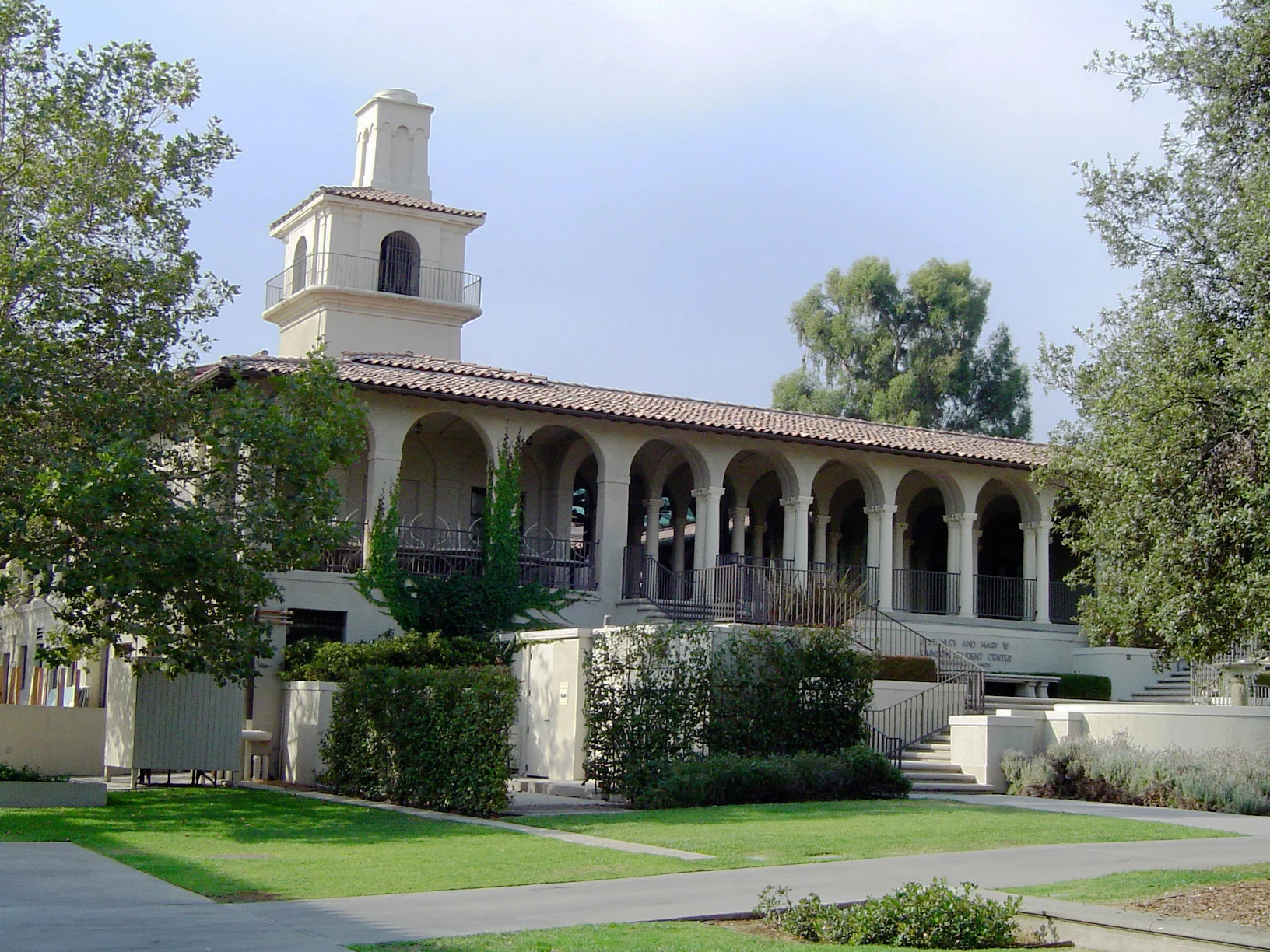
Los Angeles Mission College has one dedicated crime scene investigation credential: the 16-unit Crime Scene Technology Certificate of Achievement. Its five-course curriculum focuses on criminal investigation, forensic evidence, homicide investigation, scene documentation, and forensic photography.
The college also offers two Administration of Justice associate degrees with different purposes. The Associate in Science provides broader preparation for justice-system and law-enforcement careers, while the Associate in Science for Transfer is designed primarily for transfer to a California State University. Neither associate degree automatically includes the certificate’s full CSI sequence.
These are the materially relevant options verified in the latest complete catalog located, the 2025-2026 Los Angeles Mission College catalog and its November 2025 addendum. A complete 2026-2027 catalog was not publicly available during the program review, so this profile does not claim to identify credentials first published or renamed only in that later catalog.
Los Angeles Mission College CSI and related programs compared
| Program | Credential and units | CSI curriculum | Primary use |
|---|---|---|---|
| Crime Scene Technology | Certificate of Achievement, 16 units | Five required courses covering investigation, forensic science, advanced evidence topics, homicide investigation, and forensic photography | Focused preparation for field CSI, evidence documentation, forensic photography, and investigative support |
| Administration of Justice | Associate in Science, minimum 60 total units with a 24-unit major | Criminal investigation is required; introductory forensic science is recommended rather than required | Broader preparation for criminal justice, law enforcement, corrections, and investigative support |
| Administration of Justice | Associate in Science for Transfer, 60 transferable units with an 18-to-19-unit major | Criminal investigation and introductory forensic science can be selected as electives | CSU transfer into criminal justice or a related major |
The certificate is the direct route for crime-scene coursework. The AS and AS-T are broader criminal justice degrees, not forensic science degrees. Students can combine the certificate with an associate degree, but doing so requires deliberate course planning because the degree requirements do not incorporate the entire certificate by default.
Crime Scene Technology Certificate of Achievement
The Crime Scene Technology Certificate of Achievement is Los Angeles Mission College’s most concentrated CSI option. It requires 16 semester units across five Administration of Justice courses:
- ADM JUS 005: Criminal Investigation
- ADM JUS 104: Introduction to Forensic Science
- ADM JUS 111: Advanced Forensic Science
- ADM JUS 204: Homicide Investigation
- ADM JUS 250: Forensic Photography
Together, these courses create a field-investigation sequence rather than a chemistry-based laboratory science program. The curriculum covers crime-scene processing, collection and documentation of physical evidence, fingerprints, impression evidence, firearms, bloodstain patterns, shooting reconstruction, physical anthropology, death investigation, digital photography, and video documentation.
The progression from introductory to advanced forensic science is useful. ADM JUS 104 introduces major evidence categories and collection procedures. ADM JUS 111 then moves into advanced applications involving fingerprint evidence, impression evidence, physical anthropology, and shooting reconstruction. Students must complete ADM JUS 104 before enrolling in ADM JUS 111. No other program-specific enrollment restriction was identified in the official curriculum materials.
Forensic Photography adds a distinct skill set. Crime-scene personnel need photographs that accurately record the location, condition, scale, and relationship of evidence. This is different from general photography because images may become part of an investigative file or courtroom presentation. The course includes digital photography and video documentation of scenes and physical evidence.
Homicide Investigation broadens the sequence beyond evidence collection. Its catalog content includes death-investigation techniques, forensic considerations, and criminal profiling. Combined with criminal investigation and photography, the certificate is aligned with scene processing and investigative support rather than a single evidence specialty.
How much hands-on training is included?
An older official Administration of Justice brochure describes opportunities to process mock crime scenes and analyze physical evidence in a crime lab. Regional career-education records also describe practical skills involving fingerprints, blood and trace evidence, fibers, shoeprint casting, crime-scene photography, and assistance with identifying deceased persons.
The current catalog, however, identifies the required courses primarily as lecture offerings. It does not list a separate laboratory course, internship, or practicum as a certificate requirement. Recent class schedules have also included online sections. The evidence supports describing the curriculum as applied, but not promising a fixed laboratory sequence or a guaranteed number of mock-scene hours.
That difference affects how the certificate compares with a laboratory criminalistics degree. Los Angeles Mission College concentrates on recognizing, documenting, collecting, and interpreting evidence in an investigative setting. It does not provide the extensive chemistry, biology, instrumental analysis, and laboratory-methods curriculum expected for many crime-laboratory positions.
Delivery format and scheduling
The certificate is not verified as fully online. Recent schedules show a mixture of delivery formats:
- Criminal Investigation and Introduction to Forensic Science were offered asynchronously online in Spring 2026.
- Advanced Forensic Science appeared in a hybrid format in Fall 2025.
- Homicide Investigation was scheduled as an on-campus evening course in Spring 2026.
- Forensic Photography appeared in recent schedules, including an on-campus evening section in an earlier Fall 2025 schedule.
Course formats can change by term, but the recent pattern establishes that completing the certificate can involve online, hybrid, and campus-based classes. Local students may benefit from the mix, especially when evening sections are available. A student needing a fully remote credential does not have enough evidence to treat this certificate as one.
The regional program modification projected a schedule under which the five courses could be completed within two years. Actual completion time depends on course rotation, prerequisites, and the number of classes taken each term. Because Advanced Forensic Science requires the introductory forensic course first, the full sequence cannot be completed without observing that order.
Admission and estimated enrollment fees
Los Angeles Mission College follows general community-college admission standards. Basic eligibility includes holding a high school diploma or equivalent, although adults age 18 or older and certain other applicants can also qualify under college admission rules. The Crime Scene Technology certificate does not have a verified selective admission process.
For 2025-2026, the California resident enrollment fee was $46 per unit. At that rate, 16 units produce an enrollment-fee estimate of:
16 units × $46 = $736
This calculation is tuition-related enrollment cost only. It excludes health and representation fees, books, transportation, parking, photography materials or equipment, and living expenses. Nonresident students were charged an additional $377 per unit in tuition during 2025-2026, on top of the enrollment fee.
The catalog designation controls the current credential name. Older college materials called Crime Scene Technology a Skills Certificate or Certificate of Accomplishment, and one college webpage retains older low-unit terminology. The current 2025-2026 catalog identifies it as a 16-unit Certificate of Achievement.
Associate in Science in Administration of Justice
The Associate in Science in Administration of Justice requires at least 60 total semester units, including a 24-unit major. It provides a broader foundation in the justice system than the Crime Scene Technology certificate.
Major coursework includes introductory administration of justice, criminal law, legal aspects of evidence, justice-system procedures, criminal investigation, report writing, corrections, and police organization. Introduction to Forensic Science is recommended, but it is not a required part of the degree.
That structure suits students pursuing general law-enforcement, corrections, investigative, or justice-system employment. Criminal investigation, evidence law, and report writing all support crime-scene work. Reports must preserve observations and explain actions clearly, while evidence courses help students understand admissibility and handling requirements.
The AS does not provide the certificate’s full sequence unless the student adds those courses. In particular, the degree does not require Advanced Forensic Science, Homicide Investigation, or Forensic Photography. Someone targeting evidence documentation or field CSI work can use the degree for breadth and add the certificate for specialized coursework.
The college itself recommends completing an Administration of Justice associate degree along with the certificate to improve job competitiveness. This combination produces a minimum 60-unit college credential plus focused training in evidence, photography, scene processing, and death investigation. Some certificate courses may fit major, elective, or degree requirements, but the exact overlap is governed by the degree plan.
Associate degree completion requires a cumulative GPA of at least 2.0 and grades of C or better in major courses. At the 2025-2026 resident enrollment fee, 60 units equal $2,760 in enrollment fees. That figure excludes mandatory fees, books, transportation, supplies, and other educational or living costs.
Associate in Science for Transfer in Administration of Justice
The Administration of Justice Associate in Science for Transfer is an adjacent pathway rather than a dedicated CSI program. It requires 60 CSU-transferable semester units and an 18-to-19-unit major.
Introduction to Administration of Justice and Concepts of Criminal Law are required. Students then select courses from approved lists. Criminal Investigation and Introduction to Forensic Science are among the List A choices, so the degree can include introductory crime-scene content.
The limitation is depth. The AS-T does not require forensic photography, advanced forensic science, homicide investigation, or a crime-scene laboratory. A student could complete the transfer degree without taking both CSI-related electives. Its primary purpose is transfer into a CSU criminal justice or similar bachelor’s program, not immediate completion of a specialized forensic curriculum.
Completion requirements include:
- 60 CSU-transferable semester units
- Completion of Cal-GETC
- An overall GPA of at least 2.0
- Grades of C or better in major courses
- At least 12 units completed within the Los Angeles Community College District
The transfer route works better for a student whose next objective is a bachelor’s degree in criminal justice. Those who want the complete five-course CSI sequence can add the Crime Scene Technology certificate, provided the combined plan fits transfer, financial aid, and scheduling requirements.
Field CSI preparation versus laboratory criminalistics
The career term “forensic science” covers positions with substantially different educational expectations. A crime scene investigator may document scenes, photograph evidence, collect fingerprints, package physical evidence, maintain chain of custody, and prepare reports. A criminalist or crime-lab analyst may perform chemical, biological, microscopic, or instrumental analysis after evidence reaches a laboratory.
Los Angeles Mission College’s certificate aligns more closely with the first category. Its strongest subjects are scene processing, evidence recognition and collection, fingerprints, photography, reconstruction, homicide investigation, and documentation. Those subjects can support preparation for titles such as crime scene technician, evidence technician, forensic photographer, or investigative support employee, depending on an agency’s hiring standards.
Job titles are not uniform across California. One agency may employ civilian crime-scene personnel, while another assigns scene duties to sworn officers. The U.S. Bureau of Labor Statistics reports that forensic science technicians typically need a bachelor’s degree, although an associate degree may be sufficient for some positions. It also notes that some police-department crime-scene investigators are sworn officers who must meet police academy requirements.
Laboratory criminalistics requires a different academic plan. California’s Criminalist examination bulletin requires education equivalent to a bachelor’s degree with a physical or biological science major. The state requirement also specifies eight semester hours of general chemistry and three semester hours of quantitative analysis.
The Crime Scene Technology certificate and Administration of Justice degrees do not independently meet that science requirement. A student aiming for California Criminalist eligibility should prioritize a bachelor’s pathway in chemistry, biology, biochemistry, forensic science with sufficient laboratory science, or another qualifying physical or biological science. General chemistry, quantitative analysis, organic chemistry, molecular biology, statistics, instrumentation, and laboratory methods are more relevant to that goal than adding more criminal justice electives.
Accreditation and program classification
Los Angeles Mission College is a public two-year institution in Sylmar and is institutionally accredited by the Accrediting Commission for Community and Junior Colleges. ACCJC lists the college as authorized to award associate degrees and certificates of achievement. Its institutional accreditation was reaffirmed for seven years in June 2023.
No reviewed official source claims separate forensic-science programmatic accreditation for the Crime Scene Technology certificate. It should not be described as FEPAC-accredited. FEPAC accreditation is most relevant to college programs designed for forensic science and laboratory preparation; it is not a required label for every field-oriented CSI certificate.
Other Los Angeles Mission College courses and programs were reviewed for forensic relevance but do not form additional verified CSI pathways. A biological anthropology laboratory course includes forensic analysis as one topic, but the college does not list a forensic anthropology credential. Its Cyber Security Associate curriculum covers information security, networking, computer maintenance, databases, programming, and industry certification preparation, but it does not require a verified digital-forensics or computer-forensics course. It is therefore an information-technology pathway, not a digital-evidence program.
Choosing among the three Los Angeles Mission College routes
Choose the Crime Scene Technology Certificate of Achievement for the college’s most focused preparation in scene processing, physical evidence, fingerprints, death investigation, reconstruction, and forensic photography. It is the direct option for field-oriented CSI coursework, although the current catalog does not require a separate internship or laboratory practicum.
Choose the Administration of Justice AS for a broader career degree covering criminal law, evidence, investigation, report writing, corrections, and police organization. Adding the CSI certificate produces a more specialized plan than completing the AS alone.
Choose the Administration of Justice AS-T when transfer to a CSU criminal justice program is the main objective. Select Criminal Investigation and Introduction to Forensic Science when possible, but recognize that those electives do not replicate the complete certificate.
A laboratory criminalist goal calls for a science-centered bachelor’s plan rather than an Administration of Justice degree alone. Chemistry and biological science requirements should drive that route from the beginning. Students comparing Los Angeles Mission College with other institutions can also review the broader directory of California schools with CSI and forensic programs, while using curriculum depth, delivery format, and career target as the main points of comparison.