
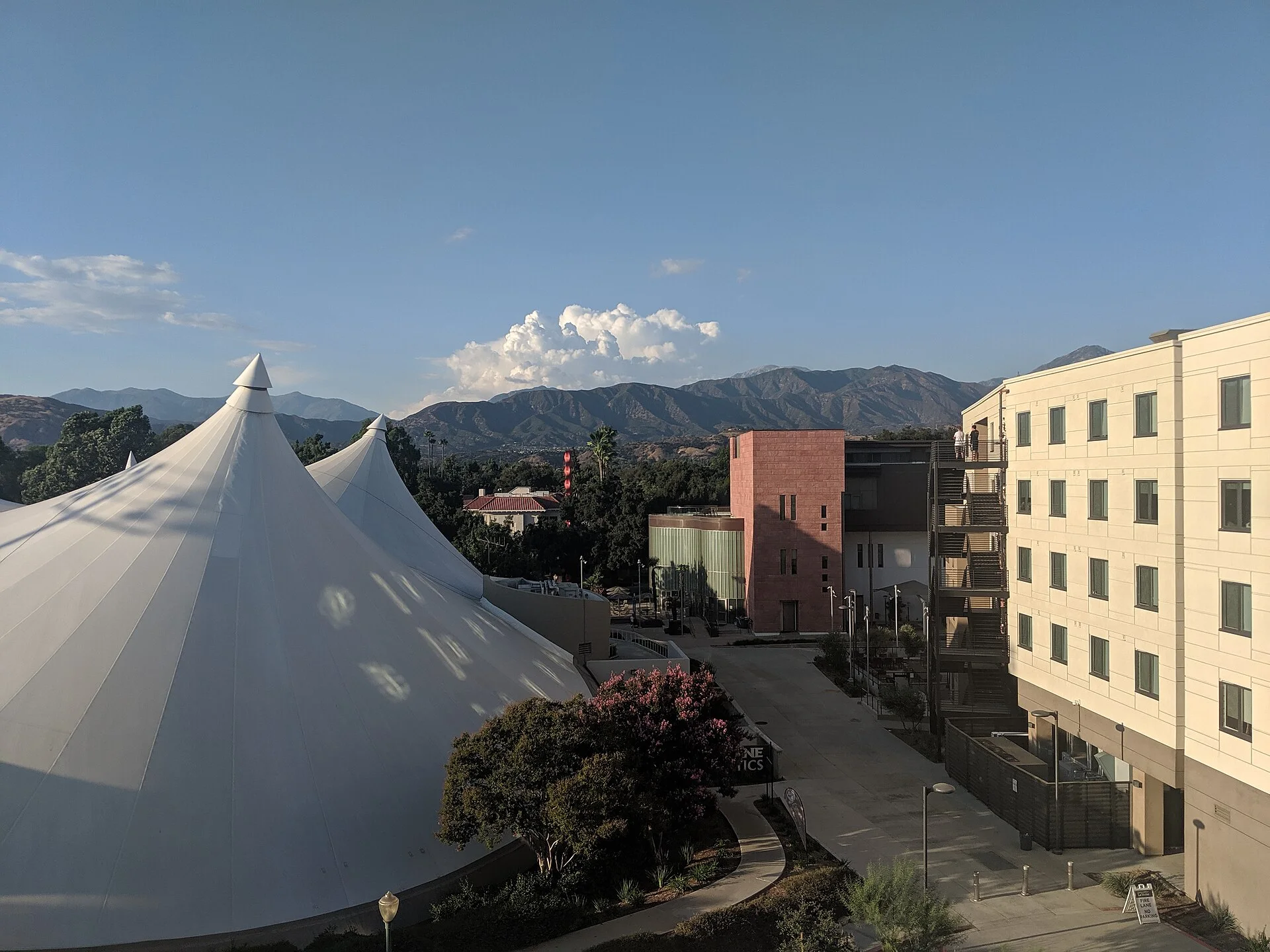
The University of La Verne currently offers two direct undergraduate forensic investigation options: an Anthropology BS with a Forensic Investigation and Identification concentration and a 28-semester-hour Forensic Investigation and Identification Minor.
Both programs emphasize forensic anthropology, human remains, osteology, archaeological recovery, evidence handling, and selected crime-scene methods. They are more closely aligned with human-remains recovery and field investigation than with chemistry-based crime-laboratory analysis.
La Verne also offers criminology, criminal justice, chemistry, and biology degrees that can support related career plans. None of those degrees has a named forensic concentration, however, and the forensic content in the two criminology programs is limited to an optional course.
La Verne’s forensic and related options compared
| Program | Credential and format | Main forensic or investigative content | Best-aligned goals |
|---|---|---|---|
| Anthropology BS with Forensic Investigation and Identification concentration | 62-hour bachelor’s degree at the main campus | Forensic investigations, forensic anthropology, osteology, skeletal biology, archaeological methods, forensic archaeology, internship, and capstones | Forensic anthropology, human-remains recovery, archaeological scene work, death-investigation support, and selected field-investigation roles |
| Forensic Investigation and Identification Minor | 28-hour undergraduate minor | Crime-scene processing, evidence collection, human-remains processing, osteology, forensic archaeology, case reports, and testimony | Adding forensic anthropology and recovery training to another bachelor’s major |
| Criminology BS | 60-hour traditional bachelor’s degree | Criminological theory, research, criminal justice systems, internship, and optional Forensic Investigations course | Policing, corrections, probation, investigations, policy, and social-science study of crime |
| Criminal Justice & Criminology BS | 52-hour bachelor’s degree offered online, in Kern County, and at Naval Base Ventura County | Criminal justice, criminology, research methods, inequality, capstone, and optional Forensic Investigations course | Criminal justice careers for online, regional, and adult learners |
| Chemistry BA or BS | Laboratory-based bachelor’s degree | General, analytical, organic, physical, and instrumental chemistry, plus research | Chemistry-based criminalist and laboratory preparation |
| Biology BS | Laboratory-based bachelor’s degree | Chemistry, cell biology, genetics, statistics, research, and selectable molecular or biochemical courses | Biological evidence, DNA-related study, and life-science laboratory preparation |
The concentration and minor are La Verne’s direct forensic credentials. Chemistry and biology are adjacent science pathways rather than forensic programs. The criminology degrees provide investigative and criminal justice context but substantially less laboratory science.
Anthropology BS with Forensic Investigation and Identification concentration
La Verne’s primary forensic program is formally an Anthropology BS with a concentration, not a standalone forensic science degree. The current 2026-2027 catalog lists 62 semester hours for the major. Older university materials may show a 56-hour curriculum or refer to a forensic “emphasis,” but those archived requirements are no longer the controlling version.
The degree begins with a broader anthropology foundation. Students study cultural anthropology, language and culture, archaeology, anthropological writing and theory, quantitative analysis, and forensic anthropology. The forensic concentration then adds five four-hour courses:
- ANTH 262 Forensic Investigations
- ANTH 354 Human Osteology
- ANTH 355 Techniques in Skeletal Biology
- ANTH 360L Methods in Archaeology Lab
- ANTH 364 Forensic Archaeology
ANTH 262 provides the program’s clearest general crime-scene component. Its catalog description covers forensic investigative techniques, crime-scene preservation, evidence analysis, physical and trace evidence, and scene interpretation and reconstruction.
The remainder of the concentration moves toward human identification and remains recovery. Human Osteology introduces skeletal anatomy and identification. Techniques in Skeletal Biology provides advanced osteological and forensic anthropology study and is designated as research intensive. Methods in Archaeology Lab applies archaeological methods in field and laboratory settings. Forensic Archaeology covers searching for, recovering, analyzing, and interpreting human remains and associated material evidence.
This curriculum fits a specific segment of forensic work. It is relevant to forensic anthropology, archaeological recovery of remains, burial-site investigation, skeletal analysis, and death-investigation support. Students also receive some preparation in scene preservation, evidence recognition, documentation, and reconstruction.
It is not a chemistry-heavy criminalistics curriculum. The published major does not require the extended general, organic, analytical, and instrumental chemistry sequence commonly associated with drug chemistry, toxicology, trace-evidence analysis, or other crime-laboratory specialties. It also lacks the molecular biology sequence expected for many DNA-focused positions.
Internship, collections, and capstone work
The Anthropology BS requires a four-semester-hour internship completed under professional supervision. It also requires two senior capstone courses drawn from different anthropological subfields. These requirements give the bachelor’s pathway more supervised and integrative work than the forensic minor.
The department reports access to modern human skeletal material and anthropological teaching and research collections. Required skeletal-biology and archaeology courses add laboratory, research, and field-method components.
Current public materials do not identify regular internship partners or guarantee placements with law-enforcement agencies, coroners, medical examiners, or crime laboratories. They also do not quantify the number of hours every student spends in crime-scene simulation or excavation. The program nonetheless has verified practical requirements through its archaeology laboratory, research-intensive skeletal course, internship, and capstones.
Course sequencing needs attention. Human Osteology requires specified prior work in biological anthropology, biology, anatomy, or kinesiology. Techniques in Skeletal Biology then requires Human Osteology or an approved anatomy alternative. The current catalog does not publish a term-by-term rotation for every forensic course.
Forensic Investigation and Identification Minor
The 28-hour forensic minor is an academic credential added to a bachelor’s degree. It is not a certificate, professional certification, license, or independent degree.
Its seven required components are:
- Forensic Anthropology
- Forensic Investigations
- Human Osteology
- Techniques in Skeletal Biology
- Methods in Archaeology Lab
- Forensic Archaeology
- An approved cultural anthropology course
The catalog describes the minor as covering crime-scene processing, evidence identification and collection, human-remains processing, evidentiary and testimony rules, case reports, expert-witness responsibilities, and courtroom testimony. The osteology and archaeology sequence gives it more depth in skeletal evidence and remains recovery than a typical introductory CSI elective.
Unlike the Anthropology BS, the minor does not independently require an internship or the major’s two-capstone sequence. Practical work comes primarily through archaeology laboratory methods, osteological study, and research within the required courses.
The minor can complement several majors, but the resulting career preparation depends heavily on the primary degree. Paired with anthropology, it would overlap substantially with the concentration. Paired with criminology, it would add scene, evidence, and human-remains content to a social-science education. That combination would still lack the advanced chemistry and biology needed for many laboratory criminalist positions.
Pairing the minor with chemistry could add crime-scene and recovery context to a strong physical-science degree. Pairing it with biology could support an interest in biological evidence or human identification. La Verne does not publish a guaranteed combined curriculum, so course prerequisites, laboratory scheduling, elective space, and total degree hours can affect completion time.
Field investigation versus laboratory criminalistics
The word “forensic” covers several different occupational tracks. La Verne’s direct offerings are primarily anthropological and recovery oriented. They are not designed as general crime-laboratory degrees.
A field-oriented crime-scene investigator or evidence technician may need preparation in:
- Scene security and preservation
- Evidence recognition and collection
- Photography and documentation
- Fingerprint and trace-evidence procedures
- Reconstruction
- Chain of custody
- Report writing
- Courtroom testimony
La Verne’s Forensic Investigations course covers several of these areas, while the archaeology and anthropology sequence adds specialized skills related to remains and recovery contexts. The curriculum is less focused on fingerprint examination and forensic photography than a dedicated CSI technology program might be, based on the currently published requirements.
Laboratory criminalist work generally requires a different scientific base. California’s state Criminalist classification requires a college major in a physical or biological science, including eight semester hours of general chemistry and three semester hours of quantitative analysis. The state’s examination materials also evaluate preparation in areas such as chemistry, biology, genetics, molecular biology, statistics, forensic science, and criminalistics.
Because the Anthropology BS is an anthropology degree, earning the forensic concentration does not establish that a graduate meets those state criminalist requirements. Its required Quantitative Analysis course does not replace the specified quantitative chemical analysis requirement.
The occupational distinction is practical, not semantic. A forensic anthropologist may focus on human skeletal remains and recovery contexts. A criminalist may analyze controlled substances, biological material, trace evidence, or other items in a laboratory. A crime-scene investigator may process scenes and document or collect evidence. California agencies also use job titles differently, and some CSI assignments are civilian while others are performed by sworn personnel.
Chemistry and biology routes for laboratory careers
La Verne’s Chemistry BA and BS are not forensic degrees, but the Chemistry BS provides the university’s clearest foundation for chemistry-based criminalist work.
Its curriculum includes:
- General Chemistry I and II
- Analytical Chemistry I
- Organic Chemistry I and II
- Physical Chemistry I and II
- Instrumental Methods of Analysis
- Chemistry research
- A senior project
- Advanced chemistry electives
Those courses address several areas that do not appear in the Anthropology forensic concentration. Analytical chemistry and instrumentation are especially relevant to laboratory work involving chemical identification and measurement. The degree has no criminalistics concentration, so it does not provide the same scene-investigation and evidentiary context as a forensic science program. Adding the forensic minor could help fill part of that gap if it fits within the student’s degree plan.
The Biology BS is more relevant to biological evidence. Required preparation includes General Chemistry I and II, Organic Chemistry I, General Biology I and II, cell biology, genetics, and statistics for life sciences. Available selections include molecular biology, microbiology, immunology, biochemistry, and related laboratory subjects. The program also requires two qualifying course-based undergraduate research experiences.
Biology can support DNA and biological-evidence goals when course selections emphasize molecular methods, genetics, biochemistry, microbiology, and statistics. Its standard requirements do not clearly include quantitative chemical analysis, so the published curriculum does not establish full alignment with every criminalist classification.
For laboratory work, the better route is usually the science major whose required coursework matches the intended specialty. The forensic minor can add investigative context, but it cannot substitute for missing chemistry, molecular biology, or instrumentation.
How the criminology degrees differ
La Verne’s traditional Criminology BS is a 60-hour social-science program. Required study includes research methods, quantitative analysis, criminological theory, the criminal justice system, an internship, and senior thesis or capstone work. ANTH 262 Forensic Investigations is available within an elective block, but it is not required.
This route is better aligned with policing, corrections, probation, investigation, public policy, and the social study of crime than with forensic laboratory analysis. The required internship provides practical exposure, although the catalog does not promise a forensic placement.
The 52-hour Criminal Justice & Criminology BS is offered online, in the Kern County region, and at Naval Base Ventura County. It covers criminological theory, research methods, criminal justice systems, inequality, and a senior capstone. Forensic Investigations is again an elective rather than a required course.
The current sources do not establish whether that elective is routinely available online or at every regional location. Even with the course included, the degree remains a criminal justice and criminology program rather than a forensic science or criminalistics degree.
La Verne also lists an individual Forensic Psychology course, but it does not offer a verified forensic psychology degree, concentration, minor, or certificate. An isolated elective is not equivalent to a formal program.
Admissions and transfer planning
La Verne uses rolling undergraduate admission and is test optional. Published priority deadlines are December 1 for spring admission, February 1 for fall freshmen, and April 1 for fall transfer applicants.
Freshman preparation includes four years of English, three years of social science, mathematics through Algebra 2, and two years of science with at least one laboratory science. The application materials include transcripts, a personal statement, a recommendation letter, and a $50 application fee.
University policy allows transfer students to bring as many as 88 semester hours toward a bachelor’s degree, subject to applicable rules. Courses generally require a grade of C- or higher. Completion of CSU General Education or IGETC can satisfy substantial portions of La Verne’s general education requirements, with catalog exceptions.
Major-level restrictions are tighter. The Anthropology BS, Criminology BS, and Criminal Justice & Criminology BS each limit transfer into the major to two courses. A student may therefore transfer substantial general education or elective credit while still having many major courses to complete at La Verne. This is especially relevant in anthropology because the osteology, skeletal biology, archaeology laboratory, internship, and capstone requirements form a sequenced curriculum.
Tuition, fees, and financial aid
For 2026-2027, full-time main-campus undergraduate tuition is listed at $25,000 per semester for 12 to 18 semester hours. A $300 Wellbeing Fee and $200 ASULV fee bring the published semester charge to $25,500 before housing, meals, books, insurance, transportation, and other expenses.
Part-time main-campus tuition is $1,445 per semester hour. The required ANTH 360L Methods in Archaeology Lab course carries a listed $100 anthropology laboratory fee. Other applicable laboratory courses may carry separate fees.
Regional-campus and La Verne Online undergraduate tuition is listed at $675 per semester hour. That rate applies to the regional and online Criminal Justice & Criminology BS, not to a verified online version of the Anthropology forensic concentration. No online Anthropology BS was identified in the current catalog.
These figures are published charges rather than net prices or complete cost-of-attendance estimates. La Verne reports that more than 95 percent of traditional undergraduates receive financial aid, which can include university grants and scholarships, state or federal aid, loans, and work-study.
Accreditation
The University of La Verne is institutionally accredited by the WASC Senior College and University Commission.
Its programs do not appear in the current AAFS directory of FEPAC-accredited programs. FEPAC accreditation is programmatic and applies to qualifying bachelor’s and master’s programs in forensic science or natural or computer science programs with forensic concentrations.
La Verne’s direct pathway is housed in anthropology and specializes in human remains and archaeological recovery. FEPAC’s absence therefore does not erase the program’s relevance to forensic anthropology, but neither the concentration nor the minor should be described as FEPAC accredited.
Choosing a La Verne pathway
Career target should drive the degree decision.
Choose the Anthropology BS concentration for sustained study of human remains, osteology, archaeological recovery, forensic anthropology, and field-oriented investigation. It provides the deepest direct forensic curriculum at La Verne and includes an internship plus two capstones.
Use the forensic minor to add crime-scene, evidence, skeletal-analysis, and recovery coursework to another bachelor’s degree. It has meaningful depth at 28 semester hours, but it does not carry its own internship requirement.
Choose chemistry for chemical-analysis and laboratory criminalist goals. Its analytical, organic, physical, and instrumental chemistry requirements are better aligned with chemistry-based laboratory employment than the anthropology concentration. Biology is the more relevant science route for biological evidence when course choices emphasize genetics, molecular biology, biochemistry, microbiology, and research.
The criminology degrees fit policing, investigations, corrections, policy, and criminal justice administration. Their optional forensic course adds useful exposure, but neither degree supplies a full forensic sequence or the laboratory science expected for criminalist work.
Readers comparing La Verne with other institutions can review additional California school profiles. At La Verne itself, the decision is relatively clear: anthropology serves forensic anthropology and recovery goals, chemistry or biology provides the stronger laboratory base, and criminology supports justice-system and investigative careers.