
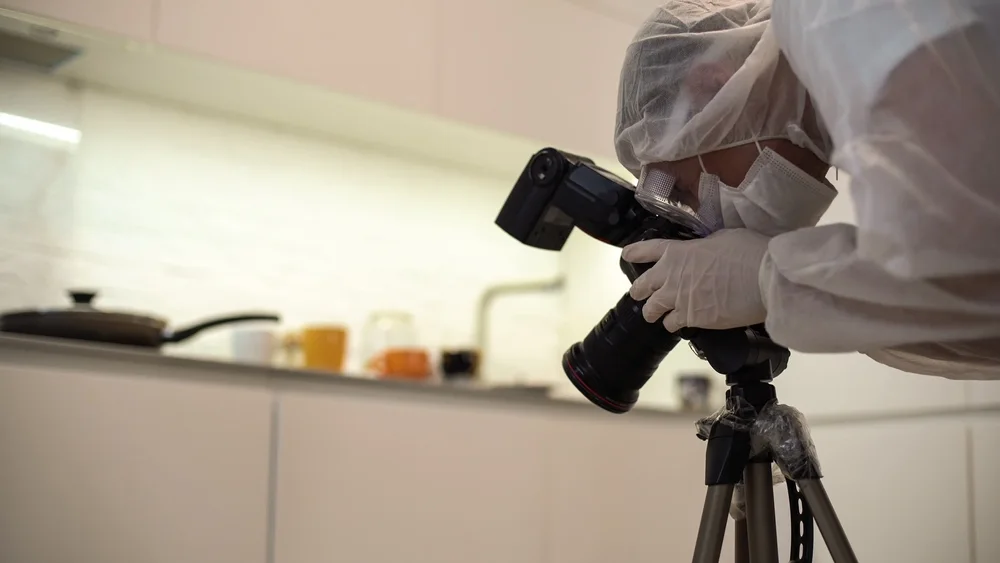
California has no single statewide degree requirement for every position called crime scene investigator. The education needed depends on what the employee actually does, how the agency classifies the position, and whether the job is civilian, sworn, field-based, or laboratory-based.
A civilian evidence technician might qualify with an associate degree, specialized coursework, and relevant experience. Another agency may accept a high school diploma plus training for an entry-level position. A forensic identification specialist might need college credits in photography, fingerprinting, criminalistics, or crime scene investigation. A criminalist working in a government laboratory generally needs a bachelor’s degree in a physical or biological science, including specific chemistry coursework. A sworn officer assigned to crime scenes must satisfy peace-officer selection and academy requirements in addition to any forensic education required by the employing agency.
The phrase “CSI degree requirements” can refer to several separate issues:
- Admission requirements for a college program.
- Courses and credits needed to complete a CSI certificate or degree.
- Education required by a California employer.
- Science prerequisites for laboratory criminalistics.
- Peace-officer requirements for sworn CSI assignments.
The sections below explain each requirement layer and use verified California programs to show how short certificates, associate degrees, bachelor’s concentrations, professional training, and graduate criminalistics programs differ. The examples are representative rather than an exhaustive directory. California also has CSI coursework embedded in broader Administration of Justice programs, and smaller or recently renamed certificates can be difficult to identify through statewide searches.
California CSI education pathways at a glance
| Pathway | Typical award or education requirement | Science depth | Practical emphasis | Common career alignment |
|---|---|---|---|---|
| Short skills training | One course, noncredit certificate, or certificate under 10 units | Low | Evidence handling, basic scene processing, documentation | Supplemental training, introductory evidence duties |
| Community-college CSI certificate | About 10 to 24 units in the verified examples | Usually limited, although some include laboratory science | Photography, fingerprints, reports, evidence collection, chain of custody | Civilian CSI, evidence technician, forensic identification support |
| Associate degree | Usually about 60 total degree units | General education plus major coursework; depth varies | Broader field preparation and college-level writing, science, and mathematics | Agency positions requiring or preferring an associate degree |
| Continuing-education certificate | Structured professional coursework without an academic degree | Varies | Legal procedure, photography, scene management, specialized evidence topics | Working adults, supplemental training, career development |
| Bachelor’s CSI concentration | Four-year forensic science degree | Biology, chemistry, statistics, and advanced forensic coursework | Laboratory work, scene exercises, research, and applied experience | Field CSI and broader forensic roles, depending on the science curriculum |
| Graduate criminalistics degree | Science-based master’s degree | Extensive chemistry, biology, statistics, and analytical preparation | Advanced laboratory methods and research | Crime-laboratory and advanced criminalistics work |
| Sworn-officer route | High school diploma, approved equivalency, or accredited college degree under the current statewide baseline; local agencies may require more education | Determined by agency and assignment | POST selection, police academy, field training, probation, and agency-specific evidence instruction | Police officer or deputy assigned to CSI duties |
Readers comparing specific education options can also review the broader guide to crime scene investigation degrees and certificates in California.
What California crime scene investigators actually need to learn
Program titles are inconsistent, so curriculum is more useful than the words printed on the award. The National Institute of Justice describes crime scene work as a sequence that includes initial response, scene evaluation, documentation, processing, evidence collection, preservation, and completion of the scene record.
A field-oriented CSI curriculum should address several of the following areas:
- Scene security and contamination control
- Notes, sketches, measurements, and diagrams
- General and forensic photography
- Evidence recognition and recovery
- Fingerprint development and collection
- Footwear and tire impressions
- Biological evidence
- Trace evidence
- Bloodstain evidence
- Packaging and preservation
- Chain of custody
- Criminal law and evidence rules
- Report writing
- Courtroom testimony
- Ethical responsibilities
- Quality assurance and cognitive bias
These subjects relate directly to daily scene work. A program that contains only broad criminal-justice survey courses provides less direct preparation than one requiring photography, fingerprints, evidence processing, reports, and mock-scene work.
Laboratory criminalistics requires a different academic foundation. Crime-laboratory analysts use chemistry, biology, molecular methods, instrumentation, statistics, and quality systems to examine evidence. A student targeting forensic chemistry, forensic biology, toxicology, controlled-substance analysis, or trace analysis needs substantially more laboratory science than most Administration of Justice certificates provide.
Requirements for short California CSI certificates
Short CSI certificates generally have accessible admission requirements and concentrated curricula. Their main purpose is to develop field skills or add forensic coursework to an existing criminal-justice education. They are not academically equivalent to associate or bachelor’s degrees.
Verified California examples range from one 3.5-unit course to certificates requiring 24 units.
Certificates of approximately 10 to 18 units
The Napa Valley College Law Enforcement-Crime Scene Investigation Certificate of Achievement requires 10 units. Its three required courses cover criminal law, evidence, and introductory crime scene investigation. The curriculum focuses on identifying, collecting, preserving, and documenting evidence.
Rio Hondo College’s Crime Scene Investigations and Forensics Certificate of Achievement requires 12 units in the verified 2025-2026 program document. Its curriculum includes two levels of CSI, principles of investigation, and introductory forensic science. Topics include scene processing, documentation, DNA, fingerprints, photography, bloodstain evidence, reports, and legal issues.
Long Beach City College currently lists a 15-unit Criminal Forensics Certificate of Achievement. Required study includes evidence, investigation, fingerprint classification and identification, and introductory forensics. Students also select a course in criminal procedure, criminal law, criminal-justice writing, or computer applications. The college’s outcomes include processing scenes, identifying potential evidence, and establishing chain of custody.
Los Angeles Mission College lists a 16-unit Crime Scene Technology certificate. Official college pages use inconsistent award labels, so “certificate” is the most accurate description without relying on the conflicting classification. The required subjects are criminal investigation, introductory and advanced forensic science, homicide and death investigation, and forensic photography.
The Fullerton College Crime Scene Investigation Skills Certificate requires 16.5 units. Students must earn at least a C in every required course, and at least half of the units must be completed at Fullerton College. The curriculum covers introductory CSI, criminal investigation, crime-scene techniques, photography, report writing, evidence rules, and DNA genetic fingerprinting.
East Los Angeles College offers both a 17-unit Certificate of Achievement and a 60-unit Associate of Science in Forensic Crime Scene Investigation. The certificate pathway includes criminal investigation, two levels of criminalistics, ethics in forensic science, offender profiling, and directed study. The associate degree adds the broader requirements associated with a two-year college degree.
The Mt. San Jacinto College Crime Scene Investigation Certificate requires 18 units across six courses. Required subjects include criminal law, evidence, report writing, investigation, forensics for law enforcement, and forensic anthropology. Four Administration of Justice courses must be taken at MSJC. The 2026-2027 catalog lists California resident tuition at $46 per unit, resulting in $828 in tuition for 18 units before mandatory fees, books, transportation, and living expenses.
City College of San Francisco also has an 18-unit CSI certificate designed as a two-semester sequence. Its coursework includes criminal law, administration of justice, report writing, fingerprints, forensic evidence, and crime-scene documentation. It is separate from the college’s broader Administration of Justice associate degree and certificate pathways.
These programs teach relevant field procedures without providing the broad general education, science sequence, or total college credit associated with an associate or bachelor’s degree. They can fit entry-level agency classifications that accept specialized coursework, but they do not satisfy employer rules that expressly require a completed degree.
Certificates with broader coursework
Feather River College’s 19-unit Forensic Crime Scene Investigation Certificate of Achievement combines investigation, criminal law and procedure, crime-scene work, forensic anthropology, and photography or digital-imaging study. It also requires a laboratory science elective selected from physical anthropology, biology, anatomy, or chemistry.
That science requirement gives the certificate a broader foundation than a purely justice-based sequence. It still does not approach the chemistry and biology depth expected for laboratory criminalist employment, but it introduces scientific observation and laboratory study alongside field investigation.
El Camino College offers a 20-unit Forensics option within its Administration of Justice Certificate of Achievement. Students complete criminal investigation, forensic crime-scene investigation, fingerprint classification, crime analysis, report writing, drawing, and elementary photography. At least half of the certificate units must be completed at El Camino College, and the prescribed coursework must be completed with at least a C average.
Riverside City College’s 24-unit Administration of Justice Crime Scene Investigation certificate is among the larger field-oriented certificates in the verified group. The curriculum covers criminal law, evidence, criminalistics, criminal investigation, forensic and crime-scene photography, CSI, and digital forensics. Program outcomes address the identification, collection, preservation, handling, and documented custody of evidence.
A 24-unit certificate provides more room for specialized courses than a 10-unit sequence. It remains a certificate and does not replace an associate degree where an employer expressly requires one.
Very short and noncredit training
The Victor Valley College Forensic Specialist Certificate of Career Preparation consists of one 3.5-unit CSI course. The catalog gives the program a four-month length and states that it is not approved for federal financial aid. The course addresses collecting, packaging, transporting, and processing evidence, along with courtroom testimony.
This award is focused skill development. It does not provide the breadth of a multi-course certificate, much less an associate degree.
California State University, Long Beach offers a different kind of short program: an 80-hour, noncredit CSI certificate. It uses classroom instruction and mock simulations modeled on POST Field Evidence Technician content. Because the training does not carry college credit, it cannot satisfy an employer’s requirement for a specified number of semester units or a completed academic degree. It can supplement an existing education or agency role.
Credit status therefore matters. “Certificate” can describe a transcripted community-college award, a continuing-education program, or noncredit professional training. Employers that specify college credits usually mean coursework from an accredited academic institution, not attendance hours from a noncredit course.
Associate degree requirements and their employment value
An associate degree usually requires about 60 semester units, including general education and major coursework. The exact structure depends on the college and whether the degree is designed primarily for employment or transfer.
East Los Angeles College’s 60-unit Associate of Science in Forensic Crime Scene Investigation is one verified California example of a degree specifically named for the field. Its existence also illustrates the academic difference between a 17-unit major certificate and a complete associate degree. The degree adds college-level general education to specialized forensic coursework.
An associate degree can meet education requirements that a short certificate cannot. For example, a 2026 Los Angeles County Forensic Identification Specialist recruitment included one qualification route based on an associate degree in criminalistics, police science, or a related field. That route also required at least eight semester units or 12 quarter units in photography, crime scene investigation, fingerprinting, or criminalistics.
Contra Costa County’s Crime Scene Investigator II recruitment required a high school diploma or equivalent plus an associate degree. The degree had to include English composition or report writing, mathematics or statistics, and chemistry or biology with a laboratory. Applicants also needed two years of relevant law-enforcement evidence experience.
Those examples show why simply earning any Administration of Justice associate degree can leave curricular gaps. A degree plan intended for civilian CSI employment is stronger when the transcript includes:
- English composition or technical report writing
- Mathematics or statistics
- Biology or chemistry with laboratory work
- General and forensic photography
- Fingerprint classification and comparison
- Criminal investigation
- Evidence law
- Crime-scene processing
- Computer or digital-evidence coursework
The value of the associate route is not limited to the major title. General education can supply writing, quantitative reasoning, communication, and science courses that appear in employer specifications. It also creates a clearer transfer path into a bachelor’s program.
Bachelor’s-level CSI requirements
The most developed undergraduate CSI programs include science, statistics, advanced forensic courses, practical training, and upper-division writing. This structure is closer to national forensic education standards than a short certificate.
San Jose State University BS in Forensic Science, CSI Concentration
San Jose State University offers a Bachelor of Science in Forensic Science with concentrations in Crime Scene Investigation, Biology, Chemistry, and Digital Evidence. The CSI concentration includes biology, chemistry, statistics-related preparation, forensic science core courses, evidence and scene work, photography, ethics, upper-division writing, and advanced forensic study.
The degree plan also contains an applied practical requirement. Available options include an internship or other approved applied Justice Studies coursework. The department describes hands-on laboratory and crime-scene training, faculty research, and internship relationships with forensic and law-enforcement partners.
Admission is more selective than entry into a typical community-college certificate. The department is impacted, and change-of-major applicants are ranked by GPA and available capacity. Forensic Science applicants generally need at least a 3.0 overall GPA, along with designated qualifying and support courses completed with grades of C or better. The application process includes transcripts, a letter of intent, and a personalized graduation plan.
Capacity is a material constraint. As of September 25, 2026, the CSI concentration accepted very few new students. A student beginning elsewhere should build a transfer plan that includes the required science, statistics, and introductory forensic courses rather than completing only criminal-justice classes.
SJSU states that its concentration curricula meet FEPAC educational standards. That wording is not the same as current FEPAC accreditation. Programmatic accreditation must be established through the current FEPAC directory rather than inferred from a curriculum statement.
The university also distinguishes field CSI preparation from crime-laboratory preparation. Its Biology, Chemistry, and Digital Evidence concentrations are more suitable than the CSI concentration for many laboratory or digital-analysis goals. A bachelor’s degree with “forensic science” in the title still needs the right concentration and science sequence for the intended specialty.
What FEPAC standards say about undergraduate CSI education
The Forensic Science Education Programs Accreditation Commission accredits qualifying bachelor’s and master’s programs in forensic science or closely related scientific disciplines with forensic concentrations. Ordinary short certificates are outside its normal degree-program scope.
Under the July 2026 undergraduate CSI standards, a qualifying curriculum includes statistics and at least seven semester hours of laboratory science drawn from physical science, general chemistry, or general biology. The CSI emphasis also requires at least nine semester hours of crime-scene coursework and 15 additional semester hours of advanced forensic coursework with substantial laboratory or hands-on experiences.
General forensic content includes:
- Evidence handling and chain of custody
- Law and courtroom testimony
- Report writing and case review
- Ethics and professional responsibility
- Quality assurance
- Cognitive bias and human factors
- A forensic-science survey
- Laboratory training
- A capstone, internship, or independent-research experience
These standards offer a useful framework even when comparing programs that are not FEPAC-accredited. They show what separates a full undergraduate CSI education from a small collection of justice courses.
FEPAC relevance also has limits. A community-college certificate should be judged by its field-skills curriculum, credit value, transfer utility, and alignment with local agency requirements. It should not be criticized for lacking accreditation that is designed primarily for bachelor’s and master’s programs.
Online delivery does not eliminate the practical component under FEPAC standards. Accredited alternative-delivery programs must still provide suitable in-person, hands-on laboratory experiences.
Online CSI certificate requirements
The University of California, Riverside Professional and Global Education CSI Certificate is a 20-unit online professional certificate with an estimated duration of 12 to 18 months. The listed estimated tuition is $5,500.
Its required subjects include:
- Crime-scene management
- Criminal law and procedure
- Photography
- Digital forensics
- Courtroom testimony
- Fingerprints and impression evidence
- Medicolegal death investigation
- Criminalistics
- Bloodstain patterns
- Report writing
This is a continuing-education certificate, not a bachelor’s degree or FEPAC-accredited forensic science program. Its breadth is useful for legal concepts, evidence principles, and specialized topic coverage. The main evidence gap concerns the exact delivery of practical exercises. The official page describes hands-on experience and case studies, but the verified materials do not establish how online students complete scene simulations, photography exercises, or physical evidence work.
Online study is better suited to some CSI competencies than others. Law, reports, testimony, ethics, and scene-management principles translate readily to an online classroom. Photography under controlled and low-light conditions, fingerprint processing, packaging, measurement, sketching, and mock-scene work benefit from supervised practice with actual equipment.
A practical online curriculum should document how those physical skills are taught. Useful features include mailed evidence kits, required photography assignments, local practicums, scheduled residencies, supervised mock scenes, internships, or hybrid laboratory sessions. If current materials do not identify such requirements, the limitation is the absence of documented practical delivery, not proof that practical work is unavailable.
Advanced professional certificates with prior-degree requirements
Not every certificate is entry-level. Cal State LA’s Forensic Specialist Certificate Program requires at least an associate degree for admission and is offered in person. Enrollment at Cal State LA is not otherwise required.
The program contains Crime Scene Investigation and Friction Ridge Examination tracks. Cal State LA states that every course includes extensive hands-on experience. The official program page links schedules for 2026 and 2027 cohorts, while the application lists January and June starts in both years.
This certificate is designed for more advanced specialty preparation than a one-course or introductory community-college award. Its prior-degree requirement also means it cannot serve as a first postsecondary credential.
The live program page does not publish a current fee. An older FAQ contains historical payment information that should not be used as a present cost estimate. The professional certificate is also separate from Cal State LA’s Master of Science in Criminalistics.
Graduate criminalistics requirements
Graduate criminalistics admission shows how sharply laboratory preparation differs from field CSI education.
Cal State LA Master of Science in Criminalistics
Cal State LA requires applicants to hold a bachelor’s degree in a natural or physical science. A criminal justice, psychology, or anthropology degree does not satisfy that stated academic requirement.
Prerequisite study includes:
- General biology
- Biostatistics
- General chemistry with laboratory work
- Organic chemistry with laboratory work
- Quantitative analysis
- Physics
The program permits quantitative analysis to be completed concurrently under its stated policy. Applicants need at least a 3.0 GPA in the final 60 semester units or 90 quarter units and a 3.0 GPA in the undergraduate major for admission consideration. New graduate students enter in the fall, and the program requires both university and departmental admission.
The curriculum addresses advanced criminalistics, forensic biology and chemistry, analytical methods, trace and pattern evidence, statistics, reconstruction, legal issues, and research. A research project is required as the graduation capstone, and internships are encouraged.
This route is intended for advanced scientific and laboratory work. A student cannot use a short CSI certificate to bypass the undergraduate chemistry, biology, statistics, and physics prerequisites.
California Criminalist education requirements
California’s state Criminalist classification provides a clear example of a science-based forensic career. The classification covers laboratory analysis and can also include crime-scene examination, but its education pattern is not built around a generic CSI or Administration of Justice degree.
The California Criminalist examination bulletin requires education equivalent to graduation with a major in a physical or biological science. Required preparation includes eight semester hours of general chemistry and three semester hours of quantitative analysis.
California DOJ also describes criminalists as commonly holding four-year degrees in fields such as:
- Chemistry
- Biology
- Biochemistry
- Molecular biology
- Physics
- Another physical or biological science
A field-oriented certificate covering fingerprints, reports, evidence rules, and photography does not supply this scientific foundation. Even a bachelor’s degree titled forensic science must be evaluated course by course. The transcript needs to satisfy the science major and chemistry requirements stated in the classification.
Transcript planning for criminalist careers
Someone targeting California criminalist work should prioritize the following when selecting an undergraduate program:
-
A qualifying science major. Chemistry, biology, biochemistry, molecular biology, or another physical or biological science provides a clearer route than a justice-centered CSI major.
-
General chemistry in the required amount. The state pattern specifies eight semester hours. Laboratory components are normally part of a serious science sequence.
-
Quantitative analysis. This is a specific chemistry requirement and should not be confused with general statistics or college algebra.
-
Organic chemistry. It is required for admission to some graduate criminalistics programs and supports several laboratory specialties.
-
Biology and molecular biology. These subjects matter for forensic biology and DNA-focused work.
-
Statistics. Statistical reasoning supports validation, interpretation, uncertainty, and evidence evaluation.
-
Instrumental and analytical methods. Coursework using laboratory instruments and formal analytical procedures is more relevant to crime-laboratory work than scene photography alone.
-
Laboratory experience. Repeated laboratory courses develop documentation, quality control, contamination awareness, and scientific technique.
California DOJ identifies internships in crime laboratories, toxicology laboratories, medical examiner offices, and coroner facilities as useful preparation. Its California Criminalistics Institute primarily trains personnel already employed by eligible government laboratories or law-enforcement agencies. CCI training is not a substitute for an entry-level college science degree.
How California employer requirements vary
Individual agency job specifications often combine education, experience, technical skills, and physical requirements.
Los Angeles County
One 2026 Los Angeles County Forensic Identification Specialist route required an associate degree in criminalistics, police science, or a related field. It also required at least eight semester units or 12 quarter units in photography, CSI, fingerprinting, or criminalistics. The county offered an experience-based route as well and required a California Class C driver’s license for job duties.
This structure rewards applicants who pair a degree with specialized forensic credits. A general associate degree without those classes would not satisfy that particular education route.
Contra Costa County
Contra Costa County’s CSI II recruitment required an associate degree that included:
- English composition or report writing
- Mathematics or statistics
- Chemistry or biology with a laboratory
It also required two years of relevant law-enforcement evidence experience. Additional conditions included a driver’s license, respirator clearance, and color-vision capability.
The academic requirements reflect the actual work. Reports must withstand legal review, measurements require quantitative accuracy, and biological or chemical evidence must be handled with an understanding of contamination and safety.
West Sacramento
West Sacramento’s CSI I specification lists a high school diploma or equivalent, with related college coursework or specialized training described as desirable. Higher CSI levels require combinations of specialized coursework, experience, or an associate degree.
This illustrates a career ladder in which initial entry requirements can be lower than advancement requirements. It also shows why one county’s associate-degree rule cannot be generalized to every California agency.
Nonacademic employment requirements
College completion is only one part of hiring. Depending on the agency, a CSI or forensic identification recruitment may include:
- A background investigation
- A valid driver’s license
- Prior evidence-room or law-enforcement experience
- Color-vision standards
- Medical or respirator clearance
- Ability to work nights, weekends, or on call
- Written examinations
- Photography or fingerprint proficiency tests
- Report-writing assessments
- Courtroom testimony
- Physical ability to work at difficult scenes
A college program does not control these agency-specific conditions. Its role is to provide the academic and technical foundation used during recruitment and supervised on-the-job training.
The U.S. Bureau of Labor Statistics reports that forensic science technicians typically need a bachelor’s degree, although an associate degree is sufficient for some positions. New technicians usually receive supervised workplace training after hire.
Requirements for sworn CSI positions
Some California agencies employ civilian crime scene investigators. Others assign crime-scene duties to police officers, sheriff’s deputies, or other sworn personnel. A CSI certificate does not grant peace-officer status.
California peace-officer candidates must satisfy statewide selection standards covering education, age, criminal history, background suitability, medical fitness, and psychological suitability. As of September 25, 2026, the statewide baseline education requirement can be met through high school graduation, an approved equivalency, or an accredited college degree. A CSI certificate by itself is not listed as a separate substitute for those baseline options. Local agencies may require more education.
Candidates also complete peace-officer basic training. The POST Regular Basic Course has a minimum of 680 hours, and many academies exceed that minimum. Training includes written examinations, skills testing, scenarios, and physical testing.
A person seeking a sworn CSI assignment generally follows this sequence:
- Meet the employing agency’s peace-officer selection requirements.
- Complete the required academy or approved basic training.
- Pass field training and probation.
- Gain law-enforcement experience.
- Compete for or receive an assignment involving crime scenes, evidence, or investigations.
- Complete agency or POST-related evidence training as required.
A forensic degree can strengthen technical preparation, but it does not replace academy, background, medical, psychological, or appointment requirements.
The 2031 California education change
A separate California law becomes operative January 1, 2031. Covered peace officers will be required to earn a qualifying degree or professional policing certificate within 36 months after receiving a POST basic certificate, subject to statutory exceptions.
The professional policing certificate will require at least 16 semester units or 24 quarter units and coursework that includes communications, psychology, writing, ethics, and criminal justice.
This is a future requirement, not the current 2026 statewide education baseline. It applies to covered peace officers rather than every civilian CSI or evidence position.
Admissions requirements by program level
Program admission becomes more selective as the academic level and science intensity increase.
Community-college certificates
The verified program pages for many community-college certificates do not identify separate selective admission processes. Students generally enter the college and complete the required courses, although placement rules, course prerequisites, minimum grades, and residency requirements can still apply.
Examples include:
- Fullerton College requires at least a C in every certificate course and completion of at least half the units at the college.
- Mt. San Jacinto College requires four Administration of Justice courses to be completed at MSJC.
- El Camino College requires the prescribed curriculum with at least a C average and at least 50 percent of certificate coursework completed at El Camino.
- Individual investigation, photography, or forensic courses can have prerequisites even when the certificate itself has no separate application.
Bachelor’s programs
A bachelor’s program may require transfer preparation, science prerequisites, a competitive GPA, and departmental admission. SJSU’s impacted status is an example of why meeting minimum criteria does not guarantee access to the CSI concentration.
Transfer students should map lower-division chemistry, biology, statistics, composition, and forensic courses against the destination program. Completing an unrelated criminal-justice associate degree can add time if it omits required laboratory science.
Professional post-associate certificates
Cal State LA’s Forensic Specialist Certificate requires at least an associate degree. This is a prior-education condition rather than a collection of course prerequisites.
Graduate programs
Graduate criminalistics programs require the most defined science background. Cal State LA’s MS admission rules exclude applicants whose bachelor’s education lacks a qualifying natural or physical science major, even if they have substantial criminal-justice coursework.
How to choose the right requirement path
Start with the intended work, not the program title.
Choose field-oriented CSI education for scene processing
Prioritize photography, fingerprints, sketches, measurements, evidence packaging, contamination control, reports, and chain of custody. Riverside City College, Fullerton College, El Camino College, Los Angeles Mission College, and similar certificates concentrate on these field responsibilities.
An associate degree adds general education and can meet employers that require a completed two-year degree. East Los Angeles College provides a direct degree pathway, while certificates at other colleges may be paired with an Administration of Justice associate degree.
Choose a science bachelor’s route for laboratory criminalistics
Chemistry, biology, biochemistry, or molecular biology is the safer academic foundation for California Criminalist eligibility. The transcript should include the required general chemistry and quantitative analysis, plus other coursework relevant to the intended laboratory specialty.
A short CSI certificate can supplement that degree with scene and evidence knowledge, but it cannot replace the science major.
Choose a full CSI bachelor’s curriculum for broader field preparation
A bachelor’s CSI concentration provides more advanced forensic coursework, science, statistics, and applied experience than a short certificate. SJSU offers the clearest verified California example, but admission capacity is limited and the concentration is more field-oriented than its biology or chemistry counterparts.
Use professional certificates as supplements
UCR’s online certificate can add structured coursework in law, photography, impressions, death investigation, bloodstain evidence, and reports. CSULB’s noncredit 80-hour program provides mock-scene training. Cal State LA’s in-person Forensic Specialist Certificate offers advanced hands-on CSI and friction-ridge instruction after an associate degree.
These credentials serve different purposes. Their credit status, prior-degree requirements, format, and practical components should be compared against the hiring route being pursued.
A practical California planning sequence
A high school graduate seeking civilian CSI work can begin with an associate degree containing report writing, statistics, laboratory science, photography, fingerprints, investigation, and crime-scene processing. Adding a focused certificate can organize the specialty coursework. This route preserves access to positions requiring an associate degree and supports later transfer.
A transfer student targeting a bachelor’s CSI concentration should complete required chemistry, biology, statistics, composition, and introductory forensic courses early. Science classes should be selected from the destination university’s articulated preparation rather than chosen only to satisfy general education.
A future criminalist should build the entire undergraduate plan around a physical or biological science major. General chemistry and quantitative analysis need to appear clearly on the transcript. Organic chemistry, biology, molecular biology, statistics, physics, and analytical laboratory courses can support graduate admission and specialty preparation.
A current officer or agency employee may benefit more from focused evidence, photography, fingerprint, or mock-scene training than from starting another full degree. Noncredit or professional programs can be appropriate in that context because the employee already has an occupational role and needs a defined technical skill set.
California’s CSI requirements are best understood as a series of career-specific thresholds. Certificates teach targeted field procedures. Associate degrees add general education and satisfy some employer degree rules. Bachelor’s CSI programs provide deeper forensic and practical study. Science bachelor’s degrees support laboratory criminalistics. Sworn positions add POST selection, academy, field-training, and agency-assignment obligations. Selecting the correct route at the beginning prevents a common problem: completing a forensic-sounding credential that lacks the degree level, science courses, or specialized credits required for the intended job.