
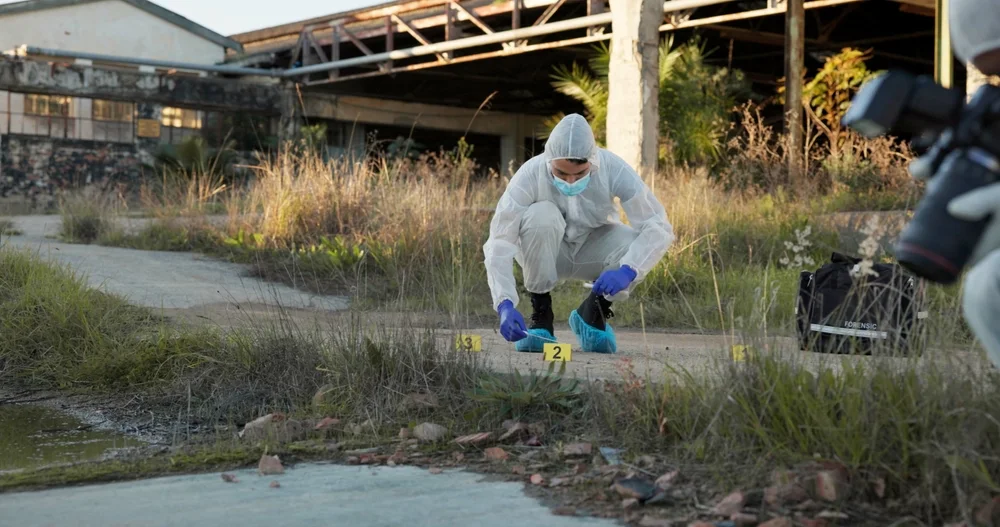
California has one verified current bachelor’s concentration explicitly named Crime Scene Investigation: the Bachelor of Science in Forensic Science with a Crime Scene Investigation concentration at San Jose State University. The concentration is current as of September 24, 2026, but SJSU describes it as impacted and says it accepts a very limited number of new students.
The narrow direct-match list does not mean California lacks relevant forensic education. Several universities offer bachelor’s degrees in forensic chemistry, forensic biology, applied chemistry, or related laboratory sciences. Those programs may be better preparation for criminalist and crime-laboratory careers, but they are not interchangeable with a field-oriented CSI degree.
Prospective students first need to decide which type of work they want:
- Crime scene investigation: Scene documentation, photography, evidence recognition and recovery, fingerprints, chain of custody, reconstruction, report writing, and testimony.
- Crime-laboratory analysis: Chemistry, biology, DNA, toxicology, trace evidence, quantitative analysis, instrumentation, statistics, and laboratory quality procedures.
- Behavioral forensics: Interviewing, psychology of crime, risk assessment, victim services, corrections, and behavioral case analysis.
- Digital evidence: Computer systems, networks, mobile devices, data recovery, cybersecurity, and electronic evidence procedures.
A degree with “forensic” in its title does not necessarily prepare graduates for all four areas. California agencies also set their own hiring standards. A crime scene investigator may be a civilian employee at one department and a sworn-officer assignment at another.
California CSI and Related Bachelor’s Programs at a Glance
| School and program | Classification | Primary academic focus | Direct field-CSI preparation? |
|---|---|---|---|
| San Jose State University, BS in Forensic Science, Crime Scene Investigation concentration | Direct match | Crime-scene processing, evidence, forensic applications, supporting science, and practical experience | Yes, but admission is severely limited |
| San Jose State University, BS in Forensic Science, Biology concentration | Closely related | Biological evidence, DNA, genetics, chemistry, and forensic applications | Some forensic context, but primarily biological science |
| San Jose State University, BS in Forensic Science, Chemistry concentration | Closely related | Chemistry, instrumental methods, toxicology, physical evidence, and criminalistics | Limited field focus; stronger laboratory alignment |
| California State University, East Bay, BS in Biological Sciences, Forensic Science concentration | Closely related | Molecular biology, genetics, chemistry, PCR, sequencing, instrumentation, and investigation | Some investigative coursework, but laboratory oriented |
| California State University, East Bay, BS in Chemistry, Bioanalytical and Forensics concentration | Closely related | Analytical chemistry, instrumentation, genetics, PCR, physical chemistry, and biology | No; designed mainly for analytical and laboratory work |
| University of California, Davis, BS in Applied Chemistry, Forensic Chemistry emphasis | Closely related | Trace evidence, analytical chemistry, statistics, toxicology, and instrumentation | No; laboratory-science route |
| California Baptist University, BS in Forensic Chemistry | Closely related | Chemistry, forensic laboratories, criminalistics, and criminal-justice context | Some investigative context, but chemistry remains central |
| Sacramento State, BA in Chemistry, Forensic Chemistry concentration | Closely related | Quantitative analysis, organic chemistry, physical evidence, biochemistry, and laboratory electives | No; laboratory-oriented preparation |
| Fresno State, BS in Forensic Behavioral Sciences | Adjacent, not CSI preparation | Psychology of crime, neuroscience, interviewing, risk assessment, and criminology | No; the university explicitly says it does not prepare students for CSI or crime-laboratory work |
The direct-match count is unusually short because California’s relevant undergraduate programs are divided among field investigation, natural science, behavioral science, and supplemental minors. Readers comparing other degree levels and educational routes can also review the broader guide to crime scene investigation degrees in California.
The Direct California Option: San Jose State’s CSI Concentration
BS in Forensic Science, Crime Scene Investigation Concentration at San Jose State University
San Jose State University offers California’s only verified current bachelor’s concentration explicitly titled Crime Scene Investigation. It is part of the university’s 120-unit Bachelor of Science in Forensic Science and is taught primarily on campus in San Jose.
The concentration is designed more directly around field investigation than the state’s forensic chemistry and biology degrees. Current curriculum materials include Survey of Forensic Science, Introduction to Evidence, Crime Scene Investigation, Forensic Science Applications, specialized CSI courses, supporting biology and chemistry, forensic electives, and justice-studies coursework. The degree also includes science and practical components rather than treating crime-scene work as a small group of electives within a general criminal justice major.
That emphasis aligns with responsibilities commonly associated with crime scene personnel:
- Recognizing and documenting physical evidence
- Photographing scenes and individual evidence items
- Recovering and preserving evidence
- Maintaining chain of custody
- Applying scene-processing methods
- Preparing written documentation
- Understanding evidentiary limitations
- Connecting scene observations with later forensic analysis
- Presenting findings through reports and testimony
The program includes a three-unit practical requirement. Approved routes can include an internship, research, directed study, journal work, or another authorized experiential option. SJSU’s standard internship structure has historically involved 120 placement hours, but students should not assume that every degree candidate completes the same external internship. The applicable practical option depends on department approval and current program rules.
Admission is highly restricted
SJSU describes the CSI concentration as impacted and says it is accepting a very limited number of new students. Admission availability has changed over time. An October 2024 departmental FAQ said applications were not being accepted then, while current program materials list the concentration and describe limited admission.
Current evidence supporting the concentration’s active status includes:
- The official Forensic Science BS program page
- SJSU’s current undergraduate degree page
- A Fall 2025 CSI major form and roadmap
- Current departmental advising forms
- A Fall 2025 through Spring 2026 transfer-articulation record
- Current language stating that a very limited number of new students are being accepted
One general SJSU degree-index page omits the CSI concentration, but the more specific program, curriculum, form, and articulation records support treating it as current rather than discontinued. Applicants should request written, term-specific confirmation from the department before committing to SJSU solely for this concentration. They also need to verify whether their intended admission route, such as first-year admission, internal change of major, or transfer admission, is open.
The Forensic Science major is competitive. Departmental requirements can include minimum grades, GPA standards, prerequisite courses, statistics, general education, and approved science preparation. These details may vary by concentration and application term.
Career alignment and limitations
SJSU’s CSI curriculum is the most direct California bachelor’s route for scene processing, evidence documentation, and field investigation. It is not the department’s preferred concentration for crime-laboratory careers. Applicants aiming for positions such as criminalist, forensic chemist, forensic biologist, or DNA analyst should compare the Biology and Chemistry concentrations instead.
Completion of the CSI concentration also does not guarantee eligibility for every California CSI position. Agency definitions vary. Some departments hire civilian crime scene investigators or forensic specialists. Others assign scene work to sworn police officers or sheriff’s deputies. Certain evidence-technician positions emphasize property-room operations and chain of custody, while others include scene response. Job titles alone do not reveal the actual duties or education requirements.
Applicants should collect several current job announcements from agencies where they might work. Compare required degrees, science credits, experience, driver’s-license standards, background requirements, physical demands, schedules, and peace-officer status before deciding that the SJSU concentration fits the target role.
Laboratory-Oriented Alternatives at San Jose State
SJSU also offers Biology and Chemistry concentrations within the Forensic Science BS. These are separate academic pathways, not minor variations of the CSI concentration.
The university states that its forensic science curricula meet American Academy of Forensic Sciences Forensic Science Education Programs Accreditation Commission educational standards. That statement does not mean the programs are currently FEPAC-accredited.
BS in Forensic Science, Biology Concentration
The Biology concentration combines forensic coursework with preparation in anatomy and physiology, cellular biology, genetics, chemistry, DNA analysis, physical evidence, and toxicology. It is more relevant than the CSI concentration for biological evidence and DNA-related work.
Laboratory employers often examine transcripts course by course. A program title alone may not establish eligibility. DNA and forensic biology positions can require specific credits in molecular biology, genetics, biochemistry, and statistics. Some employers also expect laboratory experience beyond introductory coursework.
The concentration includes a three-unit experiential requirement, with approved options that may include an internship or research. Applicants should verify the current prerequisite and declaration requirements because the Forensic Science major is competitive and capacity limited.
This route may also provide a broader science foundation for applicants who want some exposure to both scene evidence and laboratory analysis. It is still necessary to compare the exact degree plan with individual job announcements, especially for specialized DNA positions.
BS in Forensic Science, Chemistry Concentration
The Chemistry concentration includes general and organic chemistry, instrumental methods, toxicology, physical evidence, arson and explosive analysis, firearms and toolmarks, and supporting forensic-science coursework. Its scientific content is more closely related to criminalist and forensic chemistry work than the field-oriented CSI concentration.
California criminalist hiring standards can place particular weight on chemistry credits, including quantitative analysis. Applicants should verify that the courses they select satisfy the wording in each employer’s announcement. A transcript may need formal review even when the degree is called forensic science.
The concentration also contains an experiential requirement. As with the Biology concentration, current admission standards, course sequencing, and available placements should be confirmed directly with SJSU.
CSU East Bay’s Biology and Chemistry Routes
California State University, East Bay offers two undergraduate concentrations relevant to forensic laboratory work. One is housed in biological sciences and the other in chemistry. Their academic structures lead toward different types of evidence analysis.
BS in Biological Sciences, Forensic Science Concentration
The CSU East Bay Biological Sciences degree with a Forensic Science concentration is a 120-unit bachelor’s program. Its curriculum includes cell and molecular biology, genetics, evolution, general and organic chemistry, physics, quantitative analysis, PCR and sequencing, advanced molecular and cellular biology, criminal identification, advanced investigation, forensic science, and bioanalytical or forensic instrumentation.
This is a biological-science degree with selected investigation and identification courses. The molecular biology, genetics, PCR, and sequencing components are relevant to biological evidence and DNA-related laboratory work. Chemistry and quantitative analysis also strengthen the scientific foundation.
The program should not be mistaken for a field-CSI bachelor’s degree. Its central requirements are laboratory sciences, and students seeking extensive work in scene photography, fingerprint development, documentation, reconstruction, or field evidence recovery would need to examine available electives, internships, or supplemental training.
Transfer planning requires close attention. Calculus, chemistry, biology, genetics, physics, and upper-division laboratories form prerequisite chains. A missed lower-division course may block multiple advanced requirements and extend graduation.
No universal internship requirement was verified, but extensive laboratory work is built into the curriculum. Prospective students can ask the department how often undergraduates participate in faculty research, internships, or independent laboratory projects.
BS in Chemistry, Bioanalytical and Forensics Concentration
CSU East Bay’s Chemistry BS with a Bioanalytical and Forensics concentration is one of California’s more science-intensive undergraduate forensic pathways. The curriculum includes general and organic chemistry, quantitative analysis, biology, genetics, biochemistry, physics, PCR and sequencing, bioanalytical and forensic instrumentation, instrumental analysis, physical chemistry, and calculus through Calculus III.
This course sequence supports preparation for analytical laboratory work and graduate study. It has more chemistry, mathematics, and instrumentation than a typical criminal justice or field-CSI program. The tradeoff is less emphasis on scene photography, fingerprint documentation, field recovery, and crime-scene reconstruction.
The degree’s long prerequisite chain rewards early planning. Organic chemistry must precede many advanced courses, while calculus and physics may be required before physical chemistry. Transfer students should use official articulation records and consult both the chemistry department and a community college adviser. Completing general education while postponing core chemistry can delay the degree substantially.
Applicants interested in California criminalist employment should compare the required chemistry courses with the state or local agency’s current education specification. Quantitative analysis is specifically relevant, but individual positions may demand additional coursework or experience.
UC Davis Applied Chemistry with a Forensic Chemistry Emphasis
BS in Applied Chemistry, Forensic Chemistry Emphasis at UC Davis
The UC Davis Bachelor of Science in Applied Chemistry offers a Forensic Chemistry emphasis. It focuses on identifying and quantifying trace scientific evidence through analytical chemistry, instrumentation, statistics, physical chemistry, organic chemistry, biology, and toxicology-related study.
This program is intended for scientific evidence analysis rather than primary crime-scene processing. Its preparation can be relevant to forensic chemistry, toxicology, regulatory laboratories, environmental testing, and other analytical settings. The chemistry foundation also leaves room for scientific careers outside criminal justice, which can be useful because public crime-laboratory vacancies may be limited or highly competitive.
UC Davis uses the quarter system. Transfer students need to map course sequences carefully because a semester course at a community college may not align neatly with a single quarter course. General chemistry, organic chemistry, calculus, physics, statistics, biology, and advanced chemistry must be completed in the correct order.
The department’s older program page and the revised 2026-2027 catalog do not show a cleanly matching major-unit total. Students should use the catalog associated with their entering year rather than relying on an older universal figure. Laboratory work is embedded throughout the chemistry curriculum, and undergraduate research opportunities may be available, but a mandatory external internship was not verified.
UC Davis also has a separate Master of Science in Forensic Science that received FEPAC accreditation for March 1, 2026 through March 1, 2031. That accreditation applies to the master’s program, not the Applied Chemistry bachelor’s degree.
California Baptist University’s Forensic Chemistry BS
BS in Forensic Chemistry at California Baptist University
California Baptist University offers an on-campus Bachelor of Science in Forensic Chemistry in Riverside. The current university catalog lists 73 to 77 program units, depending on the selected concentration.
The core curriculum includes general chemistry, biology, calculus, statistics, physics, quantitative chemical analysis, organic chemistry, instrumental analysis, introductory forensic science with laboratory, and forensic chemistry with laboratory. Students choose among three concentrations:
- Criminal Justice Systems
- Criminalistics
- Advanced Chemistry
The Criminal Justice Systems option adds investigative and justice-system context. Criminalistics and Advanced Chemistry provide more specialized scientific depth. None should automatically be described as a field-CSI concentration, even when investigative topics appear in the curriculum.
CBU also describes an integrated senior experience involving research, internship, or thesis-related options. Students should verify which senior routes are available and required under their catalog year. Laboratory scheduling is another practical concern because general chemistry, organic chemistry, quantitative analysis, and instrumental analysis must be completed in sequence.
As a private university, CBU uses its own tuition and fee schedule rather than CSU or UC pricing. A program total cannot be calculated simply by multiplying the major’s 73 to 77 units by a tuition figure. General education, institutional requirements, housing, books, laboratory charges, and other costs may apply. The current financial-aid offer and total cost-of-attendance estimate provide a more useful comparison than the major-unit count alone.
No current FEPAC accreditation was found for the bachelor’s program. Applicants can still evaluate its curriculum against employer requirements, especially chemistry depth, quantitative analysis, laboratory hours, instrumentation, statistics, and senior research experience.
Sacramento State’s Forensic Chemistry Degree
BA in Chemistry, Forensic Chemistry Concentration at Sacramento State
Sacramento State offers a 120-unit Bachelor of Arts in Chemistry with a Forensic Chemistry concentration. Despite the Bachelor of Arts designation, the curriculum includes substantial chemistry and laboratory work.
Requirements include general chemistry, organic chemistry, quantitative analysis, calculus, physics, advanced organic laboratory, physical chemistry, biochemistry with laboratory, criminal justice, and physical evidence. Students also select from advanced laboratory or chemistry options such as instrumentation, inorganic chemistry, physical chemistry laboratory, or advanced biochemistry laboratory.
The degree is aligned with laboratory analysis rather than scene processing. Students do not receive the same concentrated training in field photography, fingerprints, scene documentation, or reconstruction that appears in a dedicated CSI curriculum.
Sacramento State describes its chemistry bachelor’s programs in relation to American Chemical Society recognition or approval. ACS recognition is not the same as FEPAC accreditation. No current FEPAC accreditation was found for this degree.
A mandatory internship was not verified in the degree requirements. Prospective students can ask about research, laboratory assistant work, local government internships, and opportunities connected to Sacramento’s concentration of state agencies.
Sacramento State also plans a future BS in Forensic Science at its Placer campus, with Fall 2028 identified as the target. It was not a current enrollment option as of September 24, 2026. The university’s former Forensic Biology program should likewise not be presented as open to new students because official materials describe continued study for already-enrolled students rather than a current admission pathway.
A Behavioral Forensics Degree Is Not a CSI Degree
BS in Forensic Behavioral Sciences at Fresno State
Fresno State’s Bachelor of Science in Forensic Behavioral Sciences is a current 52-unit major, but it belongs in a separate category from CSI, forensic biology, and forensic chemistry.
The curriculum covers criminology, forensic evidence, psychology of crime, neuroscience, ethics, law, clinical forensic practice, interviewing and interrogation, violence-risk assessment, case formulation, and research methods. An internship may be available as an elective rather than a universal requirement.
These subjects can support work connected to behavioral assessment, victim services, corrections, interviewing, case management, or other criminal-justice settings. Fresno State explicitly states that the degree does not prepare students for crime-laboratory or crime-scene-investigator work. The university directs those interests toward biology or chemistry.
This warning illustrates why program titles must be read alongside course requirements. “Forensic” can refer to scientific evidence, behavioral assessment, anthropology, accounting, nursing, psychology, digital systems, or other applications to legal questions. The underlying discipline determines the program’s career relevance.
Field CSI Education Versus Crime-Laboratory Education
Field investigators and laboratory analysts work with the same evidence system, but their training needs differ.
A field-focused CSI curriculum usually emphasizes:
- Scene safety and control
- Systematic searches
- Notes, sketches, measurements, and diagrams
- General and close-up photography
- Evidence recognition
- Collection and packaging
- Fingerprints and impression evidence
- Biological-evidence precautions
- Chain of custody
- Reconstruction principles
- Report writing
- Courtroom testimony
A laboratory-focused curriculum is more likely to emphasize:
- General and organic chemistry
- Quantitative or analytical chemistry
- Instrumental analysis
- Molecular and cellular biology
- Genetics and biochemistry
- PCR and sequencing
- Toxicology
- Statistics
- Microscopy
- Quality assurance
- Laboratory documentation
- Scientific method and validation
Some positions bridge the two areas, but a few investigation electives cannot replace a science major for many laboratory jobs. The reverse is also true. A chemistry graduate may understand analytical instruments yet have limited training in scene photography, evidence searches, field notes, fingerprint recovery, or scene reconstruction.
The right bachelor’s degree depends on the intended first job. “Forensic scientist,” “forensic science technician,” “criminalist,” and “crime scene investigator” are not universal synonyms. Agencies can assign different duties to the same title.
California Criminalist Requirements and Degree Selection
California’s state Criminalist classification provides a useful example of why science coursework needs close scrutiny. The state education specification requires a physical or biological science major and identifies chemistry preparation that includes general chemistry and quantitative analysis.
A generic criminal justice degree, behavioral-forensics degree, CSI certificate, or forensic minor does not automatically satisfy that specification. A forensic science degree also cannot be assumed to qualify merely because “forensic” appears on the diploma. The completed transcript must contain the required science coursework.
Local city and county laboratories may use different classifications and standards. Applicants should compare their degree plans with several actual job announcements rather than relying on one statewide example. Review:
- Required major or degree field
- Minimum chemistry, biology, or physics credits
- Required quantitative or analytical chemistry
- Molecular biology, genetics, biochemistry, or statistics requirements
- Laboratory experience
- Driver’s-license and background standards
- Citizenship or work-authorization language
- Physical and scheduling requirements
- Whether the position is civilian or sworn
- Required professional experience
A student targeting criminalist work will generally need more natural science than a student targeting civilian scene documentation. A chemistry or biology degree with forensic electives may therefore offer better alignment than a degree concentrated primarily in criminal justice.
Supplemental Minors and Certificates
Applicants unable to enter SJSU’s restricted CSI concentration can build relevant preparation by pairing a science or another suitable major with forensic coursework. A minor does not become a standalone bachelor’s degree, but it can add evidence and investigation training to a stronger disciplinary foundation.
SJSU Forensic Studies Minor
SJSU’s 15-unit Forensic Studies minor is designed primarily around interest in crime-scene investigation. Required coursework includes Survey of Forensic Science, Crime Scene Investigation, and Forensic Science Applications, plus six units of approved electives.
The minor covers evidence evaluation, documentation, preservation, analytical processes, laboratory requirements, and evidentiary limitations. It can complement biology, chemistry, anthropology, photography, justice studies, or another major. It does not provide the science depth of SJSU’s Biology or Chemistry forensic concentrations.
Sacramento State Forensic Investigations Minor
Sacramento State restricts its Forensic Investigations minor to Biological Sciences and Chemistry majors. Admission requires at least a 2.6 GPA, 45 completed units, and designated criminal-justice prerequisites.
The structure is useful for combining a natural-science bachelor’s degree with forensic applications and investigative knowledge. Because access is limited to science majors, the minor supplements rather than replaces laboratory preparation.
CSU Long Beach Forensic Studies Minor and CSI Certificate
CSU Long Beach lists an undergraduate Forensic Studies minor and a separate Crime Scene Investigations certificate. The minor has historically included forensic science, criminal investigation, criminalistics, courts, criminal procedure, and electives such as forensic pathology, high-tech crime, forensic psychology, photography, or internship.
The CSI certificate is not a bachelor’s degree. It may provide supplemental training for degree holders or working professionals, but current admission requirements, delivery format, curriculum, hands-on obligations, and price should be confirmed with CSULB before enrollment.
University of La Verne Forensic Investigation and Identification Minor
The University of La Verne offers a 28-semester-hour minor focused on forensic investigation and identification. Coursework includes forensic anthropology, forensic investigations, human osteology, forensic archaeology, archaeology laboratory methods, and skeletal biology.
This is an anthropology-oriented option relevant to human remains, clandestine-grave recovery, medicolegal investigation, evidence law, report writing, and testimony. It does not substitute for forensic chemistry, DNA analysis, or a general field-CSI degree.
FEPAC Accreditation in California
The Forensic Science Education Programs Accreditation Commission accredits qualifying bachelor’s and master’s forensic science programs. FEPAC accreditation is programmatic and separate from a university’s institutional accreditation.
No California bachelor’s program in this review was verified as currently FEPAC-accredited. SJSU says its curricula meet AAFS-FEPAC educational standards, which is a different claim. UC Davis’s FEPAC-accredited California program is its separate MS in Forensic Science, not its Applied Chemistry bachelor’s degree.
FEPAC status can help applicants evaluate academically oriented forensic science programs, especially those preparing laboratory scientists. It is not the sole measure of program quality or employment eligibility. Chemistry programs may also be evaluated through chemistry-specific standards, while forensic anthropology, behavioral science, psychology, and digital evidence have different disciplinary benchmarks.
Employer requirements remain decisive. An agency can require coursework beyond an accredited program’s degree plan, and an unaccredited forensic program may still contain the exact chemistry or biology courses an employer requests.
Transfer Planning for California Forensic Degrees
Science-heavy forensic programs are difficult to compress because their courses must be taken in sequence. Transfer students should begin planning well before submitting an application.
A typical chemistry pathway may progress through:
- General chemistry with laboratories
- Organic chemistry with laboratories
- Quantitative or analytical chemistry
- Instrumental analysis
- Physical chemistry
- Advanced forensic chemistry or toxicology
Biology pathways may require:
- Introductory biology
- Cell and molecular biology
- Genetics
- Organic chemistry
- Biochemistry
- Statistics
- PCR, sequencing, or advanced laboratory work
Calculus and physics can run alongside these sequences. Missing one prerequisite may delay several upper-division courses, especially when a required laboratory is offered only once per year.
California community college students should use official articulation agreements where available, then obtain departmental confirmation for courses that do not articulate clearly. A course may transfer for general credit without satisfying a specific major requirement.
SJSU applicants face an additional concern because the CSI concentration accepts very few new students. A transfer plan should include a realistic alternative major. Possible options include biology, chemistry, another SJSU forensic concentration when available, or a science degree combined with a forensic minor.
Applicants should avoid selecting a general criminal justice degree as an automatic fallback for laboratory work. Cal State LA, for example, explicitly says its undergraduate Criminal Justice major prepares students for criminal-justice administration rather than criminalistics or forensic science. The university directs prospective forensic scientists toward undergraduate majors such as chemistry, biology, biochemistry, natural sciences, or physics.
Comparing Costs Without Misreading Tuition
Public and private universities report costs differently. A useful comparison separates:
- Tuition
- Mandatory campus fees
- Nonresident tuition
- Laboratory or course charges
- Books and supplies
- Housing and food
- Transportation
- Personal expenses
- Total cost of attendance
- Grants, scholarships, and other aid
SJSU, CSU East Bay, Sacramento State, Fresno State, and CSU Long Beach operate within the California State University system. CSU systemwide tuition does not include all campus fees or living expenses. Nonresident students pay additional tuition.
UC Davis uses UC tuition and fees, which can depend on the student’s entering cohort. California Baptist University sets private-university tuition and fees. Published sticker price and the amount paid after institutional aid can differ substantially.
Time to graduation also affects cost. A less expensive annual tuition rate may not produce a lower total if missing prerequisites add semesters. Laboratory programs may also limit scheduling flexibility because lectures and labs must be taken together or in a prescribed order.
Before choosing a school, request a current financial-aid estimate and map every required course by term. Include summer enrollment, commuting, relocation, and unpaid internship time where applicable.
How to Choose a California CSI Bachelor’s Path
Start with the job function rather than the word “forensic.”
A student aiming to process scenes, photograph evidence, document conditions, recover fingerprints, and maintain chain of custody has the clearest direct option at SJSU. Admission restrictions require a backup plan, and the student should verify whether target agencies hire civilian investigators or assign CSI duties to sworn personnel.
Someone planning to analyze drugs, trace materials, toxicology samples, fire debris, or other chemical evidence should prioritize chemistry, quantitative analysis, instrumentation, organic chemistry, statistics, and laboratory work. SJSU Chemistry, CSU East Bay Chemistry, UC Davis Applied Chemistry, California Baptist Forensic Chemistry, and Sacramento State Forensic Chemistry all deserve comparison for that objective.
Biological evidence and DNA interests point toward molecular biology, genetics, biochemistry, statistics, PCR, and sequencing. SJSU Biology and CSU East Bay’s Biological Sciences concentration provide more relevant foundations than a field-only CSI curriculum, subject to the exact hiring requirements of the intended laboratory.
Behavioral assessment, interviewing, victim services, corrections, and violence-risk work belong in a separate category. Fresno State’s Forensic Behavioral Sciences degree addresses those areas, but the university expressly excludes CSI and crime-laboratory preparation from the program’s purpose.
Before enrolling, complete four checks:
- Download the current degree requirements and build a term-by-term course sequence.
- Compare the required courses with at least five current job announcements.
- Confirm admission status, especially for SJSU’s capacity-limited CSI concentration.
- Review tuition, campus fees, living costs, laboratory scheduling, and practical-training requirements.
California’s bachelor’s options are broader than the single direct CSI concentration suggests, but each pathway prepares a different kind of forensic professional. SJSU provides the clearest field-investigation curriculum. The chemistry and biology programs provide stronger foundations for crime-laboratory work. Minors and certificates can add investigative training, but they do not replace the scientific preparation required by many criminalist and analyst positions.