
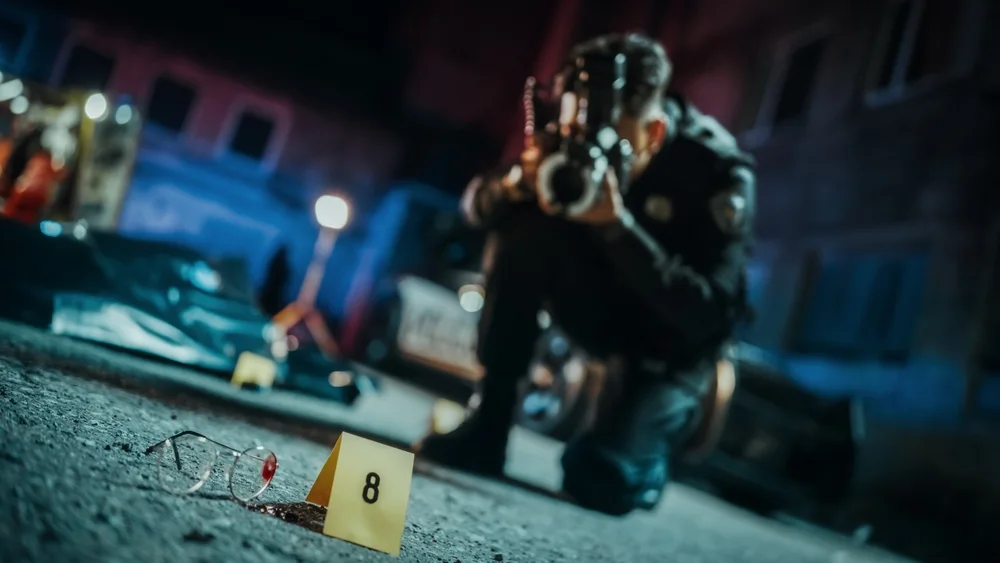
California has six verified associate degree programs directly focused on crime scene investigation, forensic technology, forensic studies, or forensic science. A seventh option, San Diego Miramar College’s Administration of Justice Investigations Specialization, is closely related but provides broader investigative training with less dedicated forensic coursework.
The six direct programs are offered by:
- Grossmont College
- Southwestern College
- Ventura College
- East Los Angeles College
- ATA College
- Palomar College
These degrees are not interchangeable. Some emphasize fingerprints, forensic photography, and field evidence collection. Others include more biology, chemistry, statistics, laboratory work, or specialty electives. ATA College takes a different approach by offering a private, career-oriented Criminal Justice associate degree with a Crime Scene Investigations emphasis.
An associate degree can support preparation for positions such as evidence technician, property and evidence technician, forensic support technician, crime scene technician, or CSI trainee, depending on the employer. It does not, by itself, satisfy the educational requirements for California’s Criminalist classification. Laboratory criminalist and forensic scientist positions commonly require a bachelor’s degree with extensive physical or biological science coursework.
Readers who are still comparing degree levels can begin with the broader guide to crime scene investigation degrees in California.
California CSI associate degree comparison
The table separates direct forensic or CSI degrees from the broader San Diego Miramar investigations specialization.
| School | Formal program | Type | Major or program size | Science preparation | Practical focus |
|---|---|---|---|---|---|
| Grossmont College | Forensic Technology Associate in Science | Direct | 42-unit major | Biology with laboratory and chemistry | Fingerprints, advanced fingerprints, forensic photography, advanced photography, crime scene technology, forensic analysis |
| Southwestern College | Forensic Studies Associate in Science | Direct | 36-unit major | Biology with laboratory and introductory chemistry | Investigation, evidence technology, latent prints, digital forensic photography, laboratory components |
| Ventura College | Forensic Science Associate in Science | Direct | 45-unit major within a 60-unit degree | Biology with laboratory, chemistry, and statistics | Forensic laboratory, photography, evidence law, reports, courtroom procedures, specialty electives, capstone |
| East Los Angeles College | Forensic Crime Scene Investigation Associate of Science | Direct | 60-unit degree; current detailed major total should be confirmed | Current science sequence not fully verified | Fingerprints, evidence collection, photography, chemical print processing, courtroom exhibits, mock scene exercises |
| ATA College | Associate of Science in Criminal Justice, Crime Scene Investigations Emphasis | Direct emphasis | 71.61 semester credits, 1,200 clock hours | Primarily criminal justice rather than laboratory science | Search and seizure, scene documentation, scene processing, evidence, fingerprints, witnesses, scene protection |
| Palomar College | Forensic Technology Associate in Science | Direct | 41-unit major within a 60-unit degree | Biology and chemistry | Beginning and advanced fingerprints, beginning and advanced photography, CSI, forensic analysis, evidence |
| San Diego Miramar College | Administration of Justice Investigations Specialization Associate of Science | Closely related | Last detailed catalog located showed a 33-unit major | Limited dedicated science content in the verified curriculum | Criminal investigation, reports, evidence law, procedure, and one specifically titled law-enforcement forensics course |
Major-unit totals do not include all general education and graduation requirements unless the table identifies a total degree size. California community college associate degrees generally require enough general education, major coursework, and electives to meet the college’s graduation rules.
Direct crime scene investigation and forensic associate degrees
Grossmont College Forensic Technology Associate in Science
Grossmont College’s 42-unit Forensic Technology major has one of the most concentrated photography and fingerprint sequences among California’s associate programs. Required subjects include fingerprint identification, advanced fingerprint identification, forensic photography, advanced forensic photography, criminal investigation, crime scene technology, and forensic analysis.
The curriculum also requires biology with a laboratory and a chemistry option. Those courses introduce scientific reasoning and laboratory practice, but they should not be confused with the upper-division chemistry and biology preparation expected in many criminalist or forensic scientist recruitments.
Grossmont’s structure is closely aligned with physical-scene and identification work. Fingerprint comparison and photography are not treated as isolated survey topics. Both areas continue into advanced courses, which may be useful for applicants targeting latent print support, forensic imaging, field evidence, or crime scene technician positions.
The college recommends a two-unit Forensic Public Service Internship, but the internship is not required for the degree. That difference can affect career preparation. Classroom exercises provide structured practice, while an internship can add agency procedures, professional references, workplace communication, and exposure to evidence-handling systems. Students who do not complete the internship may need to seek volunteer or related work separately.
Major courses must be completed with a grade of C or higher or Pass. Individual prerequisites and scheduling patterns should be checked in the live catalog, especially for advanced photography and fingerprint courses.
Students who finish the major courses may also request the related Certificate of Achievement. That can provide a separate credential while completing the general education needed for the associate degree.
Grossmont is most closely aligned with field evidence, fingerprint, forensic photography, and crime scene technician preparation. A student intending to transfer into chemistry-based criminalistics should compare the biology and chemistry courses with the intended bachelor’s program before registering.
Southwestern College Forensic Studies Associate in Science
Southwestern College offers a 36-unit career-technical Associate in Science in Forensic Studies. The curriculum combines criminal justice foundations with principles of investigation, evidence technology, latent fingerprint examination, digital forensic photography, biology with laboratory, and introductory chemistry.
Several of the investigation, evidence, fingerprint, and photography courses contain laboratory components. That gives the program a practical orientation rather than relying entirely on lecture-based criminal justice instruction. Evidence Technology and Digital Forensic Photography require Principles of Investigation, so course sequencing affects how quickly the major can be completed.
The combination of evidence technology and digital photography addresses two recurring functions in field investigation: preserving the original condition of a scene and creating a record that another investigator, analyst, attorney, or juror can understand. Latent fingerprint coursework adds a more specialized identification component.
Biology and chemistry broaden the curriculum, although both remain introductory preparation. They do not replace a bachelor’s-level science major for California criminalist employment. Students planning to continue into laboratory forensic science should verify whether the selected courses satisfy transfer prerequisites and whether additional general chemistry, organic chemistry, quantitative analysis, molecular biology, or statistics will be needed.
Southwestern’s catalog advises that practical or volunteer agency experience may be needed before paid employment. That is a realistic warning. Many public agencies prefer applicants who can demonstrate evidence handling, professional report writing, photography, public contact, secure property procedures, or work in a regulated environment.
No program-wide online format has been verified. The laboratory and photography components indicate that students should expect scheduled practical work even if some lecture courses are available remotely.
Ventura College Forensic Science Associate in Science
Ventura College’s Forensic Science Associate in Science requires a 45-unit major within a 60-unit degree. Its curriculum combines CSI preparation with a broader set of scientific and professional requirements than many field-focused programs.
Required subjects include biology with laboratory, chemistry, statistics, forensic science with laboratory, evidence law, report writing and courtroom procedures, ethics, forensic photography, career preparation, and a capstone. Students also select electives in areas such as crime scene management, fingerprints, trace and pattern evidence, digital forensics, forensic anthropology, or crime analytics.
The statistics requirement supports later study involving analytical methods and data interpretation. Statistics contributes to the interpretation of measurements, uncertainty, patterns, and research findings. It does not turn an associate curriculum into a full criminalistics degree, but it adds quantitative preparation beyond the standard administration of justice sequence.
The capstone creates a formal point at which students integrate material from earlier courses. CJ V01 is a prerequisite for the capstone, so the program must be planned in sequence. Chemistry placement and prerequisites may also determine whether a student takes General Chemistry I or Elementary Chemistry.
Ventura’s practical requirements include a forensic science laboratory and a four-unit forensic photography course. Electives allow students to add scene processing, fingerprint, trace evidence, or digital material according to their intended role. A student interested in field evidence could prioritize crime scene management and fingerprints, while someone planning further scientific study might select trace and pattern evidence or crime analytics.
The degree covers documentation, reconstruction, evidence collection and preservation, chain of custody, photography, fingerprints, and introductory laboratory analysis. It is designed for roles such as field evidence technician and forensic laboratory technician, as well as police personnel seeking investigative assignments.
The term “forensic laboratory technician” varies by agency. Ventura’s degree does not establish eligibility for the State of California Criminalist classification, which requires bachelor’s-equivalent education in a physical or biological science and specified chemistry coursework.
East Los Angeles College Forensic Crime Scene Investigation Associate of Science
East Los Angeles College lists a 60-unit Associate of Science in Forensic Crime Scene Investigation. It also offers a 17-unit Certificate of Achievement under the same program name. The degree is housed in the Administration of Justice department.
Current official sources confirm that the degree remains active. The newest detailed major course map was not available in the verified material, so prospective students should use ELAC’s current catalog and an academic counselor to confirm the exact course list, prerequisites, and recommended sequence.
Older official program materials describe training in fingerprint classification and comparison, familiarity with automated fingerprint identification systems, crime scene entry, evidence classification and collection, digital photography, chemical fingerprint processing, courtroom exhibit preparation, and a mock crime scene. These outcomes indicate a field-oriented curriculum centered on documentation, identification, and evidence recovery.
Mock-scene exercises can reveal weaknesses that are difficult to see in a lecture. Students must decide where to enter, what to photograph, how to protect fragile material, what to collect first, and how to document each action. Errors in notes, packaging, labeling, or scene control can then be reviewed before the student performs similar tasks in an agency setting.
The older degree map directed students to complete at least 18 units from an approved Administration of Justice course group. That historical structure should not be treated as the current requirement without checking the latest catalog.
ELAC’s program aligns most directly with crime scene response, fingerprint and identification work, and evidence documentation. Applicants seeking chemistry-based laboratory positions will generally need substantially more science education.
ATA College Criminal Justice AS with a Crime Scene Investigations Emphasis
ATA College is the only verified private California option in this statewide comparison. Its formal award is an Associate of Science in Criminal Justice with a Crime Scene Investigations emphasis, rather than a standalone forensic science degree.
The 2026 catalog lists 71.61 semester credits, 1,200 clock hours, and a 60-week schedule. The curriculum begins with a broad Criminal Justice and Public Safety core. The CSI emphasis adds Search and Seizure, Crime Scene Documentation, Crime Scene Processing, Domestic Violence, and Sex Offenders.
The emphasis focuses on lawful scene activity, observation, notes, photography, evidence, fingerprints, witness information, and scene protection. The degree reports 246 laboratory hours overall, although the five emphasis courses are listed as lecture hours in the catalog. Applicants should ask ATA which exercises occur in laboratories or simulated environments and how much supervised scene-processing practice is included.
ATA lists traditional, hybrid, and distance-education availability. Hybrid and virtual delivery still include recurring in-person attendance requirements. A student choosing the program for scheduling flexibility should obtain the current attendance calendar before enrolling. Travel time, required campus sessions, and any equipment or course fees can materially affect convenience and cost.
The catalog lists estimated total program charges of $23,890. That amount is not the same as total cost of attendance. Housing, transportation, food, lost work time, and personal expenses may add substantially to the amount paid for tuition and institutional charges.
ATA states that the institution is accredited by the Council on Occupational Education and approved by the California Bureau for Private Postsecondary Education. Institutional accreditation should not be confused with forensic programmatic accreditation.
Career alignment is strongest for criminal justice, security, scene documentation, evidence-processing foundations, and related public safety work. The curriculum is less science-intensive than programs that require biology laboratories, chemistry, statistics, and dedicated forensic analysis courses. Students planning to transfer should obtain a written evaluation of how ATA credits will apply at the receiving institution before enrolling.
Palomar College Forensic Technology Associate in Science
Palomar College launched its Forensic Technology Associate in Science for fall 2026. It replaces the older picture of Palomar as offering only a general Administration of Justice Investigations degree. Current college sources now list Forensic Technology, and planning records document a transition away from the former investigations curriculum.
The new degree uses a 41-unit major within a 60-unit Associate in Science. The approved curriculum includes criminal justice, criminal law, evidence, criminal procedure or basic investigation, introductory crime scene investigation, introductory forensic analysis, beginning and advanced fingerprint analysis, beginning and advanced forensic photography, biology, chemistry, and ethics or community justice.
Like Grossmont, Palomar provides multi-course sequences in fingerprints and photography. That permits greater depth than a curriculum containing only one general crime scene survey course. The addition of biology and chemistry also gives the program a more explicit science component than Palomar’s former investigations pathway.
Program development materials describe hands-on evidence collection, scene documentation, forensic photography, fingerprint work, laboratory procedures, report preparation, and mock testimony. Exact laboratory hours and current course prerequisites should be checked in Palomar’s current catalog and course outlines.
The program was designed around preparation for evidence technician, property or evidence clerk, forensic support, and CSI trainee roles. Those positions can involve different daily duties. An evidence technician may respond to scenes and collect material. A property and evidence employee may spend more time receiving, tracking, storing, releasing, and disposing of evidence under strict legal procedures.
Advanced fingerprint and photography courses may require their introductory counterparts, which could extend completion time when courses are offered only once per year. New programs can also have changing schedules during their first several terms. Early academic planning is advisable.
A fully online completion path should not be assumed. Photography, fingerprints, evidence processing, forensic analysis, and mock-scene work ordinarily require scheduled practical instruction or access to specialized equipment.
A closely related option: San Diego Miramar College
Administration of Justice Investigations Specialization Associate of Science
San Diego Miramar College offers a current career-technical Associate of Science in Administration of Justice with an Investigations Specialization. The official degree inventory and 2026 commencement record confirm that the award is active.
This is a relevant associate option, but it is broader than the six direct forensic programs. The last detailed catalog located showed a 33-unit major with criminal law, community relations, juvenile procedures, criminal investigation, report writing, criminal procedure, rules of evidence, Law Enforcement Forensics, and an additional justice elective.
Only one required course in that verified curriculum is specifically titled Law Enforcement Forensics. The program therefore should not be treated as equivalent to a degree with several required courses in photography, fingerprints, evidence technology, forensic analysis, biology, and chemistry.
Miramar’s program may fit students primarily interested in criminal investigation, law-enforcement procedure, interviews, reports, evidence rules, and case development. It supplies forensic exposure within a broader administration of justice education.
The department offers classes at several times and in multiple formats across its Administration of Justice programs. The exact portion of this specialization that can be completed online has not been verified. Current course requirements should also be confirmed because the detailed curriculum available for review predates the current award inventory.
Degree-plus-certificate pathways
California has more CSI certificates than dedicated CSI associate degrees. A certificate can be paired with a general Administration of Justice or Criminal Justice associate degree, creating a broader degree plus a concentrated set of crime scene courses.
These pathways should not be counted as specialized CSI associate degrees, but they may be practical where no direct forensic associate program is available nearby.
Fullerton College
Fullerton College offers Administration of Justice associate degrees and a separate Crime Scene Investigation Skills Certificate. The certificate is described as preparation for entry-level crime scene investigator or field evidence technician work.
The degree covers the wider justice system, while the certificate supplies focused crime scene preparation. Fullerton also identifies internship opportunities for students interested in forensics and crime scene investigation. At least half of the certificate units must be completed at Fullerton College.
City College of San Francisco
City College of San Francisco offers an Administration of Justice associate degree and a separate Crime Scene Investigation certificate. Certificate coursework includes criminal law, introductory administration of justice, report writing, evidence, criminal investigation, and crime scene investigation.
This arrangement can work for someone who wants a general justice credential while documenting a formal CSI concentration. Degree and certificate requirements are separate, so completing one does not automatically guarantee completion of the other.
Los Angeles Mission College
Los Angeles Mission College has offered an Administration of Justice associate degree alongside a Crime Scene Technology certificate. The detailed certificate document identifies criminal investigation, introductory and advanced forensic science, homicide and death investigation, and forensic photography.
The latest detailed official document located was older, so current availability and requirements should be verified in the newest college catalog before building an education plan around this option.
Other certificate-only choices
Additional California colleges with verified CSI or criminal-forensics certificates include:
- Long Beach City College
- Río Hondo College
- De Anza College
- Mt. San Jacinto College
- Napa Valley College
Long Beach City College offers a Criminal Forensics Certificate of Achievement alongside its general Administration of Justice degree. Río Hondo’s certificate covers scene processing, documentation, evidence preservation, blood patterns, DNA, fingerprints, photography, reports, and evidence law.
De Anza identifies Forensic Criminal Investigation Technician as a certificate rather than an associate degree. Mt. San Jacinto’s CSI certificate addresses evidence identification, collection, processing, analysis, packaging, cataloging, and presentation. Napa Valley’s certificate covers evidence identification, collection, preservation, and documentation.
Certificate programs can reduce the amount of general education required for an initial credential. They can also be stacked with a broader associate degree. Their transfer value varies, and some certificate courses may apply only as lower-division electives at a four-year institution.
What these degrees prepare you to do
CSI-oriented associate programs generally focus on field investigation and evidence operations. Common subjects include:
- Recognizing evidence at a scene
- Establishing scene boundaries
- Creating notes, diagrams, and photographic records
- Collecting and packaging physical evidence
- Preserving chain of custody
- Processing surfaces for latent fingerprints
- Comparing or classifying fingerprint material
- Writing reports
- Applying evidence law and search-and-seizure rules
- Preparing exhibits
- Explaining procedures in court
- Protecting evidence during storage and transport
Those skills are relevant to several occupations, but job titles do not have uniform meanings across California.
A crime scene investigator at one agency may be a civilian employee who responds to scenes, takes photographs, processes fingerprints, and collects evidence. At another department, CSI may be an assignment given to a sworn officer. Some agencies use titles such as forensic evidence technician, identification technician, police evidence technician, or forensic specialist for similar work.
Property and evidence technicians may have limited scene-response duties. Their work can center on secure intake, barcoding, records, storage conditions, audits, evidence release, court transfers, and lawful disposal.
Latent print examiners perform more specialized comparison and identification work. An associate curriculum containing fingerprint courses may provide an introduction, but agencies can require additional training, experience, competency testing, or a bachelor’s degree.
Forensic photographers need controlled image-capture skills rather than ordinary consumer photography experience. Scene orientation, scale, lighting, close-up documentation, image integrity, file management, and courtroom explanation are central to the job.
CSI education is not the same as criminalist preparation
The California Department of Justice distinguishes criminalistics from criminology. Criminalists examine physical evidence through scientific methods and may also process crime scenes. Their laboratory assignments can involve controlled substances, toxicology, trace evidence, firearms, biology, DNA, or other analytical specialties.
California’s state Criminalist classification requires education equivalent to graduation from college with a physical or biological science major. The education pattern includes eight semester hours of general chemistry and three semester hours of quantitative analysis.
None of the associate degrees on this page satisfies that pattern by itself.
The California DOJ Criminalistics Institute advises that entry into criminalist work requires a four-year degree and substantial physical or biological science preparation. The U.S. Bureau of Labor Statistics likewise identifies a bachelor’s degree as the typical entry-level education for forensic science technicians.
Someone targeting laboratory criminalistics should plan for coursework such as:
- General chemistry
- Organic chemistry
- Quantitative or analytical chemistry
- Biology
- Molecular biology
- Genetics
- Biochemistry
- Physics
- Calculus or college-level mathematics
- Statistics
- Instrumental analysis
- Laboratory quality assurance
- Scientific writing
The exact requirements depend on the employer and specialty. DNA analysis, toxicology, controlled-substance analysis, firearms examination, and trace evidence do not use identical education standards.
A degree title containing “forensic” does not establish that the curriculum meets a criminalist recruitment pattern. Course names, laboratory credits, science prerequisites, and the major printed on the transcript carry more weight than the marketing title.
How California employers treat associate degrees
Some field-evidence recruitments accept associate-level education, especially when it is combined with an evidence technology certificate or equivalent coursework. A San Diego County forensic evidence technician recruitment, for example, included a qualifying route based on an Associate of Science plus an Evidence Technology certificate or equivalent additional education. The same recruitment also provided alternative experience routes.
That example does not establish a statewide rule. California agencies set their own minimum qualifications, and similar titles may have different requirements.
An employer may ask for some combination of:
- An associate or bachelor’s degree
- A CSI, evidence technology, or forensic certificate
- Paid or volunteer experience
- Photography experience
- Knowledge of evidence-management software
- A valid driver’s license
- Availability for nights, weekends, holidays, or on-call work
- A background investigation
- A medical or psychological examination
- Agency-specific training
- Courtroom testimony experience
- Ability to lift equipment or work in difficult environments
Sworn assignments add peace officer hiring and academy requirements. A college CSI program does not substitute for those requirements.
Before selecting a degree, collect several recent job postings from agencies where you could realistically work. Compare their minimum qualifications with the curriculum. This is more reliable than choosing a program based only on its title.
Evaluating science, laboratories, and hands-on training
A strong field-focused program should provide repeated practice rather than one introductory crime scene course. Look for a sequence that addresses scene processing, photography, fingerprints, evidence law, documentation, packaging, chain of custody, and reports.
Photography instruction should cover more than camera operation. Useful coursework addresses overall, midrange, and close-up images; measurement scales; alternate lighting; image logs; digital file integrity; low-light conditions; and the relationship between photographs and written notes.
Fingerprint coursework should distinguish collection from comparison. Dusting or chemically developing a print at a scene is different from conducting a documented latent print comparison. Programs with beginning and advanced fingerprint courses can devote more time to pattern recognition, print quality, comparison procedures, and reporting.
Laboratory courses require close review. “Forensic laboratory” may refer to simulated evidence exercises, wet chemistry, microscopy, biological methods, or a combination of activities. Ask which instruments and methods students actually use.
Mock scenes and capstones are useful because they combine tasks that are often taught separately. A student may need to secure the scene, photograph it, prepare a sketch, identify relevant evidence, choose packaging, document custody, write a report, and defend the process in a presentation or mock testimony.
Internships are not universally required. Grossmont recommends one, and Fullerton identifies internship opportunities within its broader pathway. Where no internship is built into the curriculum, look for volunteer positions with police departments, sheriff’s offices, coroner or medical examiner operations, district attorney offices, campus public safety departments, or evidence units.
Access can be limited by background requirements, confidentiality rules, age restrictions, and agency capacity. Begin searching early rather than waiting until the final semester.
Transfer planning for bachelor’s study
Students planning to transfer should work backward from the intended bachelor’s degree. A career-technical associate program may prepare someone well for field evidence work while applying only partially to a chemistry, biology, or forensic science bachelor’s major.
Start by comparing:
- The associate degree’s required major courses.
- California transfer and general education requirements.
- Lower-division prerequisites for the intended bachelor’s program.
- The educational requirements in target job classifications.
- The number of additional semesters needed after transfer.
A CSI associate degree may require introductory chemistry, while a bachelor’s chemistry or forensic science program requires a calculus-based general chemistry sequence. Taking the wrong chemistry course can add time after transfer.
The same issue occurs in biology. A general education biology laboratory may not substitute for the biology sequence required of science majors. Statistics can be useful, but a bachelor’s program may also require calculus, physics, or computer-based data analysis.
Keep course descriptions and syllabi, especially for specialized forensic courses. A receiving institution may need them to decide whether a course receives major credit, elective credit, or no transferable credit.
Students targeting California criminalist classifications should protect room in the plan for a physical or biological science major and the specified chemistry preparation. A forensic technology associate degree can still provide useful scene and evidence knowledge, but the bachelor’s science requirements must control the transfer plan.
Online study and attendance requirements
No public program in this comparison has been verified as fully online. Individual lecture courses may be available online, but program-level completion is different.
Crime scene programs commonly use:
- Photography equipment
- Fingerprint powders and chemical processes
- Evidence packaging materials
- Mock rooms or outdoor scenes
- Laboratory workspaces
- Specialized lighting
- Microscopes or analytical equipment
- Supervised practical examinations
- Capstone presentations or mock testimony
Those elements may require campus attendance even when criminal law, ethics, report writing, or general education courses are online.
ATA lists traditional, hybrid, and distance-education formats, but its hybrid and virtual options include recurring in-person attendance. Applicants should request a written schedule showing required campus sessions and confirm whether those sessions can change between terms.
Online convenience should be evaluated against commute distance, laboratory scheduling, work hours, equipment access, and course availability. A program with fewer weekly meetings may still require long practical sessions at set times.
Admissions, sequencing, and time to completion
Most community college associate programs use general college admission rather than a separate competitive admission process. Course prerequisites can still control the sequence.
Examples include:
- Principles of Investigation before advanced evidence or photography coursework at Southwestern
- Introductory courses before advanced fingerprint or photography courses
- Chemistry placement or prerequisites at Ventura
- Completion of foundational criminal justice work before a capstone
- English preparation before written communication or report-writing courses
A nominal two-year program can take longer when a required advanced course is offered once per year or when prerequisites are missed. Laboratory and photography sections may also have lower enrollment limits than lecture courses.
Create a term-by-term plan before the first semester. Mark every prerequisite and identify courses offered only in fall or spring. Include general education rather than postponing it until the end.
ATA requires high school completion or an accepted equivalent under its general admission rules. Its accelerated 60-week catalog schedule is materially different from a traditional community college calendar. The faster schedule may reduce elapsed time, but it also compresses coursework and may limit how much a student can work while enrolled.
Cost comparisons
Public community colleges and private career colleges use different pricing structures. A direct total-cost ranking is not possible from the verified information because current program totals were not available for the public colleges.
For each public program, calculate:
- Resident enrollment fees
- Nonresident tuition, if applicable
- Mandatory campus fees
- Laboratory or material fees
- Textbooks
- Camera or photography supplies
- Fingerprint and evidence-processing materials
- Transportation
- Parking
- Internship travel
- General education costs
- Additional transfer coursework
California residents may qualify for state or institutional aid, fee waivers, grants, or other assistance depending on eligibility. Financial aid estimates should be obtained directly from the college.
ATA’s 2026 catalog lists estimated total program charges of $23,890. That figure should not be described as total cost of attendance. Living expenses, transportation, personal costs, and income lost because of class scheduling are separate.
Compare net price after grants rather than relying only on published charges. Also compare credit transferability, completion time, required campus attendance, and whether the program includes the science courses needed for the next educational step.
Accreditation and FEPAC
The Forensic Science Education Programs Accreditation Commission, or FEPAC, accredits qualifying forensic science programs at the bachelor’s and master’s levels. It does not currently accredit associate degree programs.
None of the associate programs listed here should be called FEPAC-accredited. Their exclusion from FEPAC’s scope does not, by itself, indicate poor quality.
FEPAC is most relevant when comparing bachelor’s or master’s forensic science education, especially programs designed for laboratory science or digital evidence. Accreditation applies to the specific program or concentration reviewed, not automatically to every degree offered by the institution.
Institutional accreditation is separate. It affects areas such as federal financial aid eligibility, academic oversight, and transfer review. Confirm each college’s current institutional status through its accreditor and the U.S. Department of Education rather than assuming that institutional and programmatic accreditation are the same.
At the associate level, curriculum depth, laboratory access, faculty experience, course sequencing, transferability, internships, and alignment with local employer requirements provide more useful comparisons than FEPAC status.
Programs that should not be counted as current options
Several older or proposed programs still appear in search results and statewide discovery tools.
Fresno City College formerly offered a Criminology, Forensic Evidence Option Associate in Science. Official materials state that it was deleted effective spring 2022.
Golden West College’s former Criminal Justice: Forensics, Evidence, and Investigation program remains visible on a statewide discovery page, but it is absent from the current college catalog.
Palomar College’s former Administration of Justice Investigations degree should not be presented as the current specialized option. Palomar has transitioned to its new Forensic Technology Associate in Science.
Norco College has proposed an Associate of Science in Forensic Studies with a projected August 20, 2027 start. As of the verified research date, it was not an active degree.
Statewide search portals are useful for discovering possible programs, but they can combine active degrees, certificates, duplicate names, and discontinued awards. The current college catalog and department page should control the final enrollment decision.
Choosing among the California programs
The right program depends on the work you intend to pursue after graduation.
Grossmont and Palomar provide the clearest multi-course sequences in fingerprints and forensic photography. They are logical places to compare for identification, imaging, scene documentation, and evidence technician preparation.
Southwestern combines practical evidence and photography coursework with introductory biology and chemistry. Its own catalog acknowledges that agency or volunteer experience may be needed before paid employment.
Ventura provides the broadest verified combination of forensic laboratory work, biology, chemistry, statistics, evidence law, professional reporting, specialty electives, and a capstone. Its structure may also help students identify whether they prefer field processing, laboratory support, digital evidence, anthropology, or analytical work.
ELAC is strongly oriented toward fingerprints, evidence recovery, photography, and mock-scene preparation, although the newest detailed course list should be confirmed before enrollment.
ATA offers an accelerated private-college format and a Criminal Justice degree with a CSI emphasis. Compare its $23,890 estimated program charges, recurring in-person requirements, science depth, and transfer treatment with the public programs.
San Diego Miramar is better viewed as an investigations degree with forensic exposure. It may serve students interested in criminal investigation, reports, procedure, and evidence law more than specialized fingerprint, photography, or laboratory training.
Before applying, ask each college for four items: the current catalog requirements, a two-year course sequence, a list of required in-person practical sessions, and recent internship or employer partners. Then compare those answers with actual job postings and transfer requirements.
A crime scene investigation associate degree can provide useful field and evidence preparation. Its value depends on the specific courses completed, the amount of supervised practice, and whether the education matches the employer or bachelor’s program that comes next.