
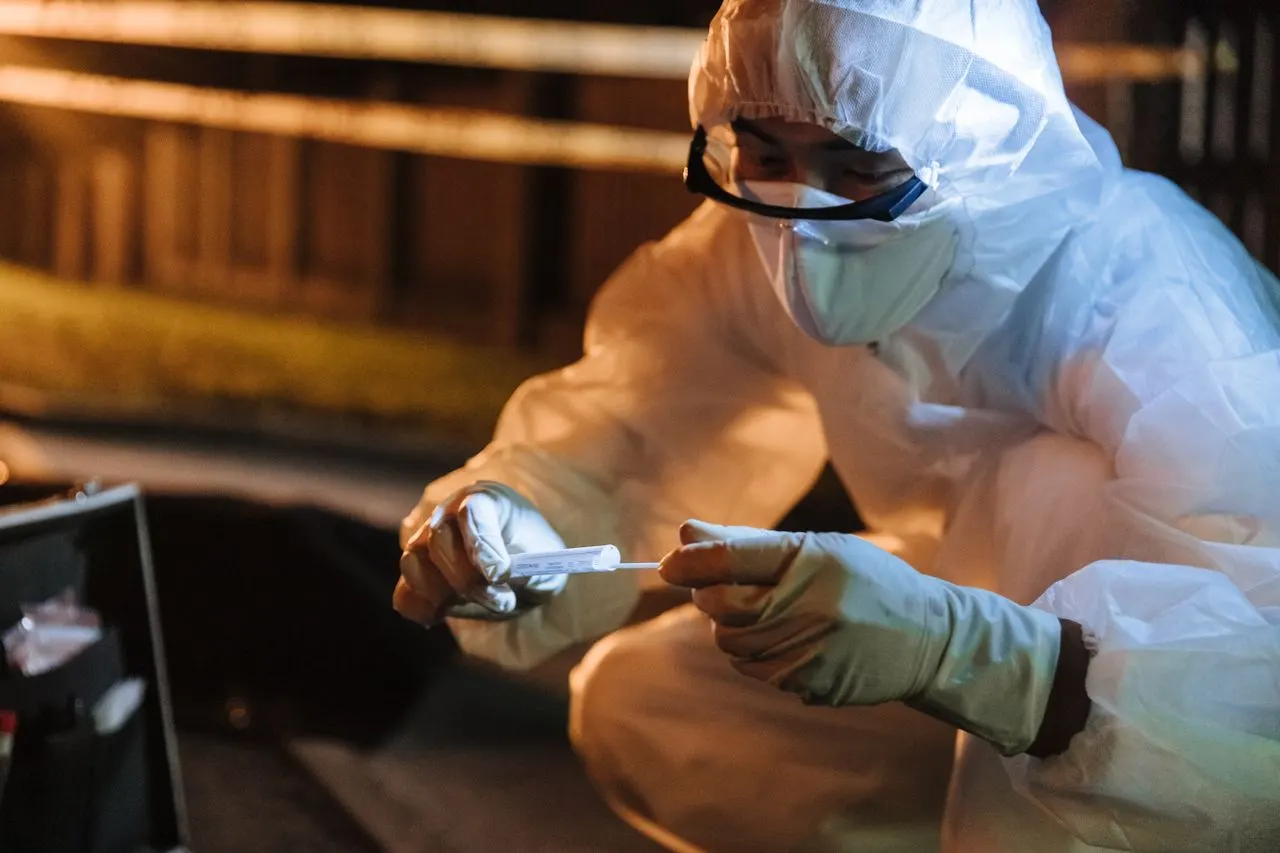
California does not have a large collection of master’s degrees titled exactly Crime Scene Investigation, but the statewide graduate landscape is broader than that title alone suggests. Students interested in advanced scene work can study forensic investigation, criminalistics, forensic science, forensic anthropology, biological anthropology, or criminal justice with an investigative emphasis.
Those paths lead in different directions. National University and Alliant University offer the closest matches to a conventional CSI master’s because both have graduate concentrations centered on investigation and scenes. UC Davis and Cal State LA offer science-heavy forensic programs that reach from crime scenes into laboratory criminalistics. Chico State and Cal State LA also have graduate anthropology pathways that are highly relevant to scenes involving human remains, clandestine graves, disasters, and medicolegal identification.
A working crime scene investigator may benefit from any of those programs, but not for the same reason. Someone who wants advanced scene documentation, photography, evidence handling, and major-case investigation needs a different curriculum from someone interested in DNA, chemical evidence, skeletal recovery, or human identification.
For undergraduate, associate, and certificate options, see the broader guide to Crime Scene Investigation Degrees in California. Students who specifically need distance study can compare online crime scene investigation master’s degrees for California students.
California Graduate Programs With CSI and Forensic Investigation Relevance
| School | Program | Primary Focus | Format | CSI Relevance |
|---|---|---|---|---|
| National University | Master of Forensic Sciences — Investigation | CSI, photography, fingerprints, death investigation, major cases | Online, hybrid, or in person depending on course | Direct |
| Alliant University | M.S. in Forensic Science, Investigation & Technology — Crime Scene and Incident Investigation | Scenes, violent crime, arson, transportation incidents, technology | Online + two weekend residencies | Direct |
| UC Davis | M.S. in Forensic Science | Criminalistics or DNA, research, evidence analysis | In person; full- or part-time | Strong forensic-science overlap |
| Cal State LA | M.S. in Criminalistics | Laboratory criminalistics, evidence, reconstruction, scientific methods | On campus; many courses in evenings | Strong forensic-science overlap |
| Chico State | M.A. in Anthropology — Biological focus | Forensic anthropology, human remains recovery and identification | On campus | Specialized scene/recovery route |
| Cal State LA | M.A. in Anthropology — Biological/Forensic Anthropology pathway | Human osteology, forensic anthropology, bioarchaeology | On campus | Specialized human-remains route |
The first two programs are the most direct choices for students who want graduate study centered on field investigation. UC Davis and Cal State LA’s Criminalistics program are better for students who want stronger laboratory science. The anthropology programs belong in a separate specialty: they focus on recovering, analyzing, and identifying human remains rather than processing every type of crime scene.
National University — Master of Forensic Sciences, Investigation Specialization
National University provides the clearest California-based master’s route for students who want graduate education centered on forensic investigation rather than laboratory science alone.
The Master of Forensic Sciences requires at least 36 semester credits and offers two specializations:
- Criminalistics
- Investigation
Students interested in CSI should focus on the Investigation specialization. National does not require a specific undergraduate major for this route, while the Criminalistics specialization requires an undergraduate laboratory or physical science background.
The degree is available online, in person, and in hybrid formats depending on specialization and course availability. National reports an average completion time of about 24 months and offers monthly starts.
CSI is part of the graduate core
National’s curriculum goes well beyond a single crime-scene elective. MFS students encounter subjects including:
- Crime Scene Investigation
- Fingerprint Analysis
- Digital Evidence
- Forensic Pathology
- Forensic Anthropology
- Law and Criminal Procedure
- Supervised Research
The dedicated Crime Scene Investigation course covers scene protection, initial surveys, documentation, search methods, evidence collection and packaging, latent-print processing, and chain of custody.
That sequence reflects the actual progression of field work: secure the scene, record what is present, search systematically, recover evidence without compromising it, and preserve a defensible chain of custody.
Fingerprint Analysis adds recognition, recovery, classification, comparison, and courtroom use of friction-ridge evidence. Digital Evidence broadens the degree into electronic material, which increasingly appears alongside physical evidence in criminal investigations.
The Investigation specialization adds depth
The specialization adds:
- Advanced Criminalistics
- Forensic Psychology
- Forensic Photography
- Major Case Investigation
Forensic Photography focuses on digital camera operation, lighting, scene and evidence photography, identification, and courtroom presentation. Students are expected to obtain camera equipment that meets course requirements.
Major Case Investigation extends beyond routine scene processing into homicide, sexual assault, arson, assault, burglary, drug cases, terrorism, organized crime, and white-collar investigations. The course follows cases from the initial investigation through adjudication.
This makes National broader than a master’s devoted only to photographs, sketches, fingerprints, and packaging. Students also study pathology, human remains, digital evidence, legal procedure, psychology, and serious-case investigation.
Admission, transfer credit, and cost
Because the Investigation specialization does not require a particular undergraduate major, applicants from criminal justice, law enforcement, psychology, public safety, biology, and other disciplines can potentially enter without completing a second bachelor’s degree.
National allows up to nine semester credits of qualifying graduate transfer work when it fits the program and was not used toward another advanced degree.
Current pricing lists the MFS at $683 per credit, plus a $105 course-material fee per course. National’s published estimated program cost is $25,830.
For someone seeking a California-based graduate program with substantial coursework in scenes, photography, fingerprints, death investigation, digital evidence, and major cases, National is the most direct overall match.
Alliant University — M.S. in Forensic Science, Investigation & Technology
Alliant offers another California-based graduate program with a dedicated crime-scene concentration, although its scope reaches further into technology and complex incident investigation.
The 33-unit M.S. in Forensic Science, Investigation & Technology has three concentrations:
- Criminalistics and Technology
- Crime Scene and Incident Investigation
- Criminal Investigative Intelligence & Analysis
Students interested in CSI should look primarily at Crime Scene and Incident Investigation.
More than conventional scene processing
Alliant describes the concentration around investigations involving violent crime, transportation incidents, arson, identity analysis, and other complex events. The wider degree integrates forensic evidence with law, ethics, science, technology, research, and professional communication.
That gives Alliant a different character from National’s Investigation specialization. National spends more of its curriculum on traditional forensic subjects such as fingerprints, pathology, photography, and major cases. Alliant is more explicitly multidisciplinary and incident-oriented.
Someone interested in arson, collision or transportation scenes, emerging technology, complex-event investigation, or work that crosses forensic and intelligence functions may appreciate that breadth.
Students whose interests change can also choose Criminalistics and Technology for a more evidence-analysis-oriented route or Criminal Investigative Intelligence & Analysis for crime mapping, intelligence, data, and threat-analysis work.
Online study with required in-person work
Most coursework is asynchronous, with optional synchronous sessions. The program is not completely remote: students complete two on-site weekend residencies.
A research thesis is also required, which gives the degree a substantial scholarly component rather than relying entirely on coursework.
Alliant says the degree typically takes less than a year and a half to finish.
For 2026–27, tuition is listed at $580 per unit, putting base tuition for 33 units at about $19,140 before fees and any travel or lodging associated with the residencies.
Students who want online flexibility while retaining some face-to-face practical work may prefer this structure to a completely remote degree.
UC Davis — M.S. in Forensic Science
UC Davis is not a field-CSI master’s, but excluding it from a California graduate CSI guide would leave out one of the state’s strongest forensic programs.
The 54-quarter-unit M.S. in Forensic Science has two tracks:
- Forensic DNA
- Forensic Criminalistics
The program is research-focused and expects students to enter with a substantial natural-science background. Crime-scene investigation appears within a larger curriculum that includes laboratory analysis, physical evidence, DNA, chemistry, statistics, instrumentation, toxicology, and research.
Crime-scene coursework is real, but it sits inside a science degree
UC Davis offers Homicide Crime Scene Investigation, a graduate course covering complex homicide scenes, documentation, evidence recognition, collection and preservation, sequence reconstruction, report writing, and courtroom presentation. The course includes both lecture and laboratory work.
Other forensic coursework can include:
- Human Identification
- Physical Evidence
- Fire and Arson Investigation
- Bloodstain interpretation
- Firearms and trajectory reconstruction
- Digital forensic investigations
- Scientific evidence and courtroom testimony
- Forensic case reports
The Criminalistics track therefore reaches well beyond bench science. Students encounter the relationship between the scene, the evidence collected there, laboratory examination, interpretation, reporting, and testimony.
This is a science-first program
Applicants are expected to hold a bachelor’s degree in a physical or natural science, engineering, or a closely related discipline.
Prerequisites include:
- One year of general chemistry
- Organic chemistry
- General physics
- Mathematics through calculus
- Statistics
Biology, biochemistry, and genetics are recommended.
A student coming from a criminal justice bachelor’s with minimal chemistry and biology should not view UC Davis as an easy transition into graduate CSI. The program is designed for students who already have the scientific foundation.
FEPAC accreditation and cost
UC Davis received full FEPAC accreditation for its M.S. in Forensic Science for the period March 1, 2026 through March 1, 2031, covering both the DNA Analysis and Criminalistics tracks.
The degree is offered in person, with full- and part-time study available. Laboratory work, research, mock crime scenes, moot-court testimony, and thesis or capstone work are part of the graduate experience.
Students entering in fall 2025 or later currently pay $903 per unit. Health insurance, books, laboratory materials, supplies, and living expenses are additional.
UC Davis is a strong option when a student’s interest in CSI is tied to becoming a more technically sophisticated forensic scientist rather than remaining exclusively on the field-investigation side.
Cal State LA — M.S. in Criminalistics
Cal State LA’s M.S. in Criminalistics is also more laboratory-oriented than field-CSI oriented, but it has a strong relationship to physical evidence and reconstruction.
Criminalistics applies scientific methods to evidence. Students study measurement, experimentation, evidence interpretation, chemical and biological sciences, legal issues, research, and scientific communication.
The School of Criminal Justice and Criminalistics identifies crime-scene reconstruction among the scientific concepts covered in its programs.
A forensic setting that is difficult to duplicate
The program operates inside the Hertzberg-Davis Forensic Science Center, a facility associated with forensic operations for the Los Angeles Police Department and Los Angeles County Sheriff’s Department.
Students are encouraged to seek internships in public or private laboratories, and a research project serves as the graduate capstone.
Most criminalistics courses are offered in the evening, which can make the program more workable for students already employed in forensic or public-safety settings, although some electives are available only during the day.
Entry requires substantial science
Cal State LA requires applicants to have a bachelor’s degree in a natural or physical science. The department specifically warns that a degree in criminal justice, psychology, anthropology, or another nonscience discipline does not satisfy the requirement simply because the student has completed a few science courses.
Prerequisites include the equivalent of:
- General Biology I and II
- Biostatistics
- General Chemistry I and II
- Quantitative Analysis
- Organic Chemistry I and II
- Organic Chemistry laboratories
- Physics I and II
Applicants also need a 3.0 GPA in the undergraduate major and a 3.0 GPA in the last 60 semester units or 90 quarter units.
Quantitative Analysis can be completed concurrently if it is the only missing prerequisite.
For fall 2026, Cal State LA lists California-resident graduate tuition and mandatory campus charges of $4,821.04 per semester for students taking more than six units, before living and other educational expenses.
Students who want field photography and scene processing as the center of the degree will find National or Alliant more direct. Students who want to understand what happens after evidence enters a crime laboratory may find Cal State LA much more relevant.
Chico State — M.A. in Anthropology, Biological Focus
Chico State belongs in this guide for a specialized but important type of crime-scene work: the recovery and identification of human remains.
The university’s M.A. in Anthropology includes a Biological focus, and Chico’s biological anthropology faculty work extensively in forensic anthropology. Graduate students can train through the university’s Human Identification Laboratory, which provides active forensic services to law-enforcement agencies, medical examiners, attorneys, and government partners.
The M.A. requires 33–35 units under the current catalog and includes graduate seminars, independent research, a project or thesis, and a comprehensive oral examination.
The Human Identification Laboratory changes the character of the program
Chico’s Human Identification Laboratory is not simply a teaching collection. It performs forensic casework.
The laboratory assists agencies with:
- Search and recovery of human remains
- Outdoor scenes and disaster zones
- Locating clandestine graves
- Forensic archaeological excavation
- Fire-scene recovery
- Human-versus-nonhuman identification
- Biological profiles
- Skeletal trauma analysis
- Radiographic and isotopic work
Graduate students can receive hands-on training in skeletal biology and forensic practice, including reconstruction of fragmented or burned remains, identification techniques, pathology, trauma, and recovery.
The lab has also participated in major disaster responses, including California wildfires and other mass-fatality incidents. Chico describes it as the only full-time forensic anthropology laboratory in California and the largest of its kind west of Texas.
A different kind of CSI career
This is not a program for someone whose main interest is latent prints or burglary-scene photography.
It is much more relevant to students considering:
- Forensic anthropology
- Human-remains recovery
- Medicolegal death investigation
- Disaster victim recovery
- Clandestine-grave excavation
- Skeletal identification
- Law-enforcement search and recovery
Faculty also teach POST homicide courses and other trainings in forensic anthropology, archaeology, excavation, and human-remains recovery.
Admission and cost
The Biological focus admits students for fall entry. Chico requires supplemental materials including letters of recommendation, a statement of purpose, curriculum vitae, and writing sample; the GRE is not required.
For 2026–27, Chico State lists full-time graduate tuition and campus fees at $5,529 per semester for students taking more than six units. Nonresident students pay an additional per-unit charge.
For students specifically interested in scenes involving human remains, Chico may be more professionally relevant than a general CSI master’s even though “crime scene investigation” is nowhere in the degree title.
Cal State LA — M.A. in Anthropology, Biological/Forensic Anthropology
Cal State LA offers another graduate route for students whose CSI interests center on human remains.
The Anthropology M.A. is currently organized under areas including Biological Anthropology, and the department says that the biological anthropology option prepares students for careers in forensic anthropology, bioarchaeology, primatology, and related specialties. Current department degree materials also continue to list a Forensics option, and the graduate application materials identify Forensic Anthropology within the Biological Anthropology pathway.
The department provides graduate training in subjects including:
- Human osteology
- Forensic anthropology
- Bioarchaeology
- Human variation
- Human adaptation
- Biological anthropology theory and methods
Students can pursue a thesis or comprehensive-examination route.
Why this belongs on a CSI page
Forensic anthropologists are often involved when conventional crime-scene methods are not enough—particularly when remains are skeletonized, burned, decomposed, buried, scattered, or recovered from outdoor environments.
The work may involve scene recovery, recognition of human remains, biological-profile estimation, trauma analysis, and collaboration with coroners, medical examiners, law enforcement, archaeologists, and other forensic specialists.
That makes forensic anthropology a specialized branch of scene investigation rather than a substitute for general CSI education.
Admission
Cal State LA’s current materials indicate that applicants to the forensic anthropology pathway need a minimum 3.0 GPA in the last 60 semester units and an interview.
Students without a bachelor’s degree in anthropology may need substantial prerequisite anthropology coursework before beginning the graduate program. The department’s general graduate-admission materials describe 20–32 units of prerequisite anthropology for students whose bachelor’s degree is in another subject.
Cal State LA’s Anthropology program is therefore most appropriate for students deliberately pursuing human-remains work, not for someone simply looking for a broader criminal-investigation master’s.
Other California Graduate Programs Relevant to Investigators
Several additional California master’s programs can be useful to crime-scene professionals, but they should not be presented as CSI degrees.
| School | Program | Why It May Be Relevant | Why It Is Not a CSI Master’s |
|---|---|---|---|
| Stanislaus State | M.A. in Criminal Justice | Faculty expertise includes investigations, crime mapping, forensic science and psychology; hybrid format and internships | Curriculum centers on criminal justice theory, research, administration, and leadership |
| Cal State Long Beach | M.S. in Criminology and Criminal Justice | Fully online; optional Crime and Intelligence Analysis concentration | Focuses on criminology, research, policy, leadership, mapping, and intelligence rather than scene processing |
| San José State | M.S. in Justice Studies | Graduate study in justice systems and research at a university with a strong undergraduate forensic science program | SJSU does not currently offer a forensic science or CSI master’s |
| Fresno State | M.S. in Criminology | Flexible 30-unit graduate program for criminal justice professionals | Broad criminology degree with no dedicated CSI concentration |
Stanislaus State — M.A. in Criminal Justice
Stanislaus State’s M.A. is worth mentioning because the department’s current faculty expertise includes investigations, crime mapping, and forensic science and psychology.
The program uses a hybrid format aimed at working adults and includes research, data analysis, criminal justice management, law, theory, and an internship component.
This can make sense for an experienced CSI who wants to move into supervision, management, research, intelligence, or broader criminal-justice leadership. It does not provide the concentrated scene-processing curriculum found in National’s MFS or Alliant’s CSI concentration.
Cal State Long Beach — M.S. in Criminology and Criminal Justice
CSULB’s 36-unit M.S. in Criminology and Criminal Justice is now available fully online and includes a Crime and Intelligence Analysis concentration.
The concentration covers areas such as crime mapping, social-network and intelligence analysis, and GIS. The broader degree emphasizes criminological theory, research methods, policy, administration, and evidence-based criminal justice practice.
For 2026–27, CSULB lists the program at $675 per unit, or $24,300 total for 36 units.
An investigator interested in intelligence, analysis, management, or promotion may find it useful. A student looking specifically for fingerprints, scene photography, evidence recovery, or reconstruction should choose a more forensic-focused program.
What About a Standalone M.S. in Crime Scene Investigation?
California’s current graduate market is mostly organized under other names.
The closest direct in-state programs are National’s MFS Investigation specialization and Alliant’s Crime Scene and Incident Investigation concentration. The state also has graduate programs in forensic science, criminalistics, forensic anthropology, and criminal justice that overlap with particular parts of CSI work.
Students who specifically want a degree titled M.S. in Crime Scene Investigation will find stronger options online outside California. Stevenson University offers a fully online M.S. with that exact title, while Franklin University offers an online M.A. in Criminal Justice with a CSI specialization.
Those programs are compared separately in our guide to online crime scene investigation master’s degrees.
A Master’s Degree Is Not the Only Graduate-Level Option
For someone already working in evidence or investigation, a certificate can be more targeted and considerably shorter.
National University — Graduate Certificate in Forensic and Crime Scene Investigations
National’s graduate certificate currently includes:
- Forensic Pathology I
- Forensic Pathology II
- Crime Scene Investigation
- Advanced Criminalistics
- Digital Evidence
- Law and Criminal Procedure
- Fingerprint Analysis
The certificate totals 20.67 semester credits. National lists an estimated program cost of $14,840 and an average completion time of about seven months.
Credits may be applicable toward the Master of Forensic Sciences when university requirements are met.
UC Riverside Extension — Crime Scene Investigation Certificate
UC Riverside Extension offers an entirely online, 20-unit professional certificate covering:
- Crime Scene Management
- Crime Scene Photography
- Criminal Law and Procedure
- Digital Forensics
- Courtroom Testimony
- Fingerprints and impression evidence
- Medicolegal death investigation
- Criminalistics
- Bloodstain pattern analysis
- Forensic report writing
UCR currently lists estimated tuition of $5,500 and a typical completion time of 12–18 months.
Cal State LA Forensic Specialist Certificate
Cal State LA’s in-person Forensic Specialist Certificate is more practical than academic. The six-month program combines Crime Scene Investigation with Friction Ridge Examination and totals 300 hours of lecture, laboratory, and fieldwork.
For someone who already has the degree required by an employer but lacks direct scene or fingerprint training, this type of certificate may add more useful skills than a broad master’s.
Do You Need a Master’s Degree to Work in CSI?
Usually not for entry-level crime-scene work.
The U.S. Bureau of Labor Statistics lists a bachelor’s degree as the typical entry-level education for forensic science technicians, the broad occupational group that includes both scene and laboratory personnel.
California employers vary even more. Agencies may hire civilian crime-scene technicians, evidence specialists, forensic identification personnel, or sworn officers with scene responsibilities. Some positions accept an associate degree combined with experience, while others call for a bachelor’s degree or particular forensic coursework.
A master’s becomes more useful when it has a specific purpose, such as:
- Moving into senior or supervisory CSI work
- Developing expertise in death investigation
- Learning advanced forensic science
- Moving toward crime-laboratory work
- Specializing in human remains or forensic anthropology
- Building research or analytical skills
- Preparing for instruction, administration, or management
Students should look at several actual job classifications before assuming graduate school is the next required step.
Which Type of Graduate Program Matches the Work?
The expanded California list is easier to understand when programs are grouped by what happens at a scene.
General crime-scene and forensic investigation
National University is the strongest direct fit for conventional CSI, with coursework in scenes, photography, fingerprints, digital evidence, pathology, anthropology, and major-case investigation.
Alliant University covers crime scenes too, but broadens the work into arson, transportation incidents, technology, and multidisciplinary investigation.
Laboratory evidence and criminalistics
UC Davis and Cal State LA’s M.S. in Criminalistics make more sense when the investigator wants to understand or move toward the scientific examination of evidence after collection.
These routes demand much stronger chemistry and biology preparation.
Human remains and specialized recovery scenes
Chico State and Cal State LA’s Anthropology M.A. serve a very different niche.
Their relevance begins when the evidence is human remains: skeletonized bodies, buried remains, wildfire or disaster scenes, clandestine graves, decomposition, trauma, and identification.
That kind of work can involve highly complex scenes, but the training is rooted in biological anthropology and archaeology rather than general criminal investigation.
Leadership, intelligence, and broader criminal justice work
Stanislaus State and CSULB can make sense for experienced investigators whose next move is toward management, intelligence analysis, policy, research, or supervision rather than deeper CSI technique.
Choosing among these programs is less about finding a degree with the perfect title and more about deciding what part of the forensic process you want graduate school to strengthen. A homicide-scene investigator, a crime-laboratory analyst, and a forensic anthropologist can all work on the same case while needing very different graduate education.