
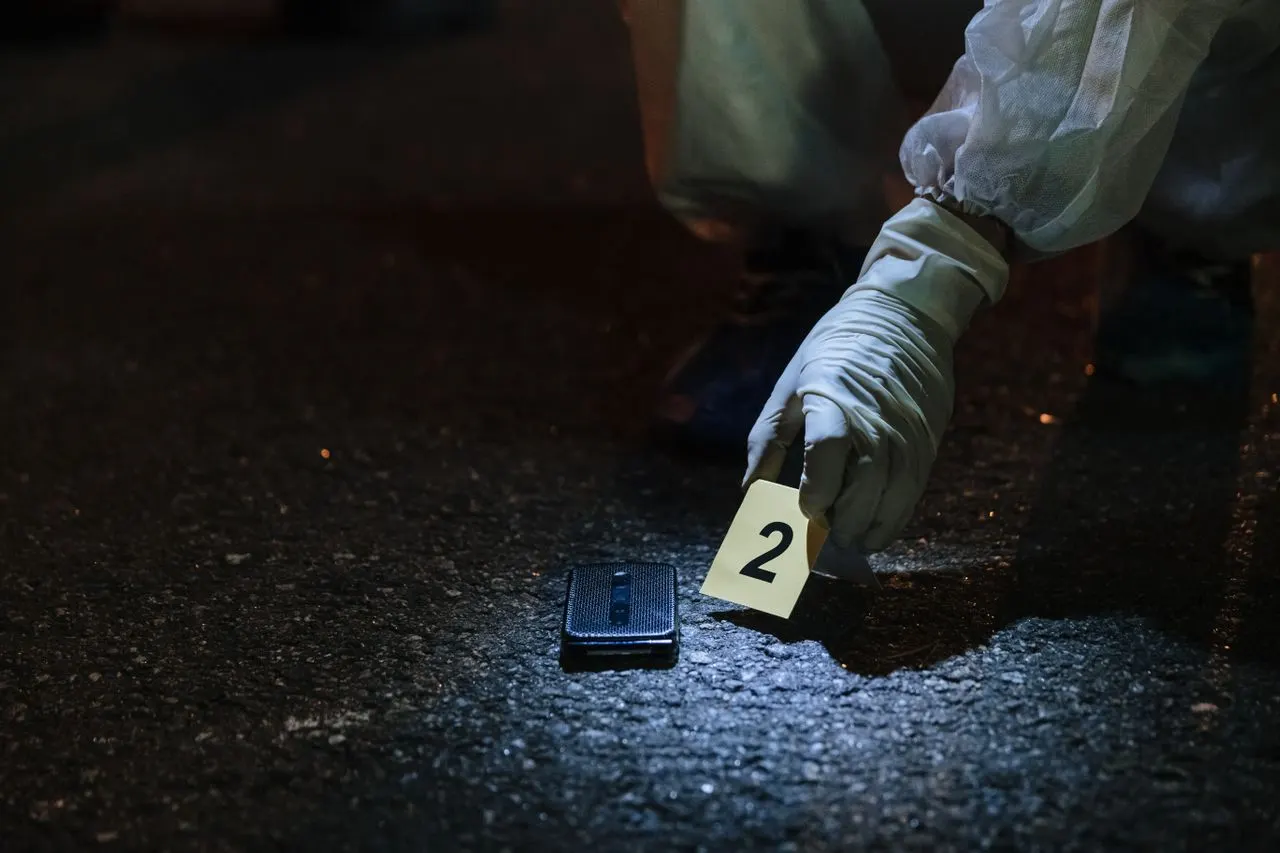
Online master’s degrees specifically focused on crime scene investigation are uncommon, but California students have several legitimate options if they are willing to look beyond programs with the exact words “crime scene investigation” in the degree title.
The strongest choices fall into a few different groups. Stevenson University and Franklin University offer graduate programs explicitly centered on CSI. National University and Oklahoma State University place crime-scene work inside broader forensic investigation degrees. Alliant University combines crime scenes with incident investigation and technology, while the University of Florida’s online forensic medicine master’s is a more specialized route for death scenes and medicolegal investigation.
Those differences matter because CSI is not the same thing as laboratory forensic science. Crime-scene work is primarily concerned with recognizing, documenting, collecting, preserving, and interpreting evidence where an incident occurred. Laboratory programs may instead emphasize DNA, toxicology, drug chemistry, microscopy, serology, or instrumental analysis.
For a broader look at California programs at every degree level, see Crime Scene Investigation Degrees in California. Students comparing laboratory-oriented graduate study can also review online master’s degrees in forensic science.
Online Crime Scene Investigation Master’s Programs to Compare
| School | Program | Credits | Main Focus | Format | Current Cost Context |
|---|---|---|---|---|---|
| Stevenson University | M.S. in Crime Scene Investigation | 36 | Crime-scene processing, photography, physical evidence, pattern analysis | 100% online | $719/credit; no additional university fees |
| Franklin University | M.A. in Criminal Justice — Crime Scene Investigation | 32 | CSI, forensic photography, fingerprints, evidence handling | 100% online | $690/credit plus semester resource fee |
| National University | Master of Forensic Sciences — Investigation | 36 | Crime scenes, photography, fingerprints, death and major-case investigation | Online, hybrid, and in person depending on course | $25,830 estimated program cost |
| Oklahoma State University | M.S. in Forensic Sciences — Forensic Investigative Sciences | 32 minimum | Crime-scene processing, fingerprints, bloodstain patterns, investigative science | 100% online | About $14,352 in 2026–27 nonresident online tuition and listed per-credit fees |
| Alliant University | M.S. in Forensic Science, Investigation & Technology — Crime Scene and Incident Investigation | 33 | Crime scenes, violent crime, arson, transportation incidents | Online + two weekend residencies | $580/unit before fees and travel |
| University of Florida | M.S. in Medical Sciences — Forensic Medicine | 37 | Death scenes, crime-scene processing, forensic medicine | 100% online | $21,275 tuition plus required per-credit fees |
The first four are the closest matches for students who want broad crime-scene and forensic investigation coursework. Alliant expands the scope into incident investigation and technology. UF is more specialized around scenes involving death, trauma, decomposition, and medicolegal investigation.
California residents should also confirm current state-authorization eligibility before enrolling in an out-of-state online program. California does not participate in NC-SARA, so a school’s SARA membership alone does not establish California enrollment authority.
Stevenson University — M.S. in Crime Scene Investigation
Stevenson University offers the most direct match for a student specifically looking for a master’s degree in crime scene investigation. The credential itself is an M.S. in Crime Scene Investigation, and the 36-credit curriculum is delivered entirely online.
The program follows the evidence process from the scene through reporting and testimony. Students study how to document a scene, recognize and process physical evidence, preserve evidence integrity, evaluate patterns, and communicate conclusions in a way that can withstand legal scrutiny.
What the curriculum covers
Stevenson identifies graduate coursework in areas such as:
- Crime Scene Photography
- Physical Evidence at Crime Scenes
- Safety, Quality Control and Quality Assurance
- Crime Scene Investigation
- Pattern Analysis
- Expert Witness Preparation and Practice
- Crime Laboratory Structure and Operations
The curriculum is broader than a basic crime-scene technician certificate. Quality-control and laboratory-operations coursework gives students context for what happens to evidence after it leaves the scene, while expert-witness training addresses how investigative conclusions are communicated later in a case.
That is useful for experienced personnel who already understand basic evidence collection and want to improve the full chain from scene processing to testimony.
Admission and pacing
Applicants need a bachelor’s degree from a regionally accredited institution, official transcripts, a personal statement, and a cumulative undergraduate GPA of at least 3.0.
Unlike science-heavy forensic master’s programs, Stevenson does not require applicants to arrive with a chemistry or biology degree. That makes it more accessible to students from criminal justice, law enforcement, public safety, or other backgrounds.
Courses are offered in eight-week sessions, and Stevenson says the 36-credit degree can be completed in two years or less depending on course load and transfer credit. The university also allows eligible students to apply prior graduate coursework or experience toward the degree, subject to its transfer and prior-learning policies.
Cost and practical limitations
For 2026–27, Stevenson lists tuition for the online CSI master’s at $719 per credit and states that it charges $0 additional university fees for the program. At 36 credits, tuition comes to approximately $25,884 before books or personal expenses.
The primary limitation is also obvious: the program is fully online in a field that depends heavily on hands-on practice. An experienced crime-scene technician may already get practical exposure through work and use the degree to deepen analysis, reporting, quality assurance, and testimony skills. A career changer should think more carefully about how to gain physical scene-processing experience alongside the coursework.
Stevenson also offers an 18-credit online Graduate Certificate in Crime Scene Investigation using several of the same core CSI courses, which can be a shorter option for someone who does not need another full master’s degree.
Franklin University — M.A. in Criminal Justice, Crime Scene Investigation Specialization
Franklin University is a strong addition to the online CSI market because its specialization is unusually concentrated. The 32-credit M.A. in Criminal Justice with a Crime Scene Investigation specialization is 100% online and can be completed in as few as 12 months.
Franklin says it offers online degree programs in every U.S. state and territory, making it one of the clearer out-of-state options for California residents from an enrollment-availability standpoint.
Three focused CSI courses
The specialization itself contains three four-credit courses:
Crime Scene Investigation covers the identification, documentation, and collection of physical evidence. Students study note-taking, scene photography, fingerprinting, sketching, evidence packaging, scene management, and evidence admissibility.
Crime Scene Photography develops the technical use of digital photography for documenting and presenting evidence. The course covers image capture, analysis, maintenance of photographic evidence, chain of custody, and legal and ethical issues.
Science of Fingerprints addresses latent-print processing, recovery, photography, classification, comparison, and the scientific and courtroom issues surrounding fingerprint evidence.
That gives the specialization 12 credits devoted specifically to scene work, photography, and fingerprints rather than scattering one or two forensic electives through a general criminal justice master’s.
The rest of the degree
Franklin combines the specialization with graduate criminal justice coursework in research, administration, policy, leadership, and the justice system. That creates a different graduate profile from Stevenson’s M.S.
Stevenson is the more purely forensic/CSI degree. Franklin mixes practical CSI skills with graduate-level criminal justice administration and research. That can be useful for someone who wants investigative expertise while also preparing for supervisory or organizational responsibility.
There are no program prerequisites beyond Franklin’s graduate admission requirements. The degree requires students to maintain a 3.0 cumulative GPA, and at least 20 of the 32 credits must be completed at Franklin.
Accelerated format and cost
Franklin uses six-week online courses and offers multiple start dates throughout the year. The university says the degree can be finished in as few as 12 months, which is considerably faster than many traditional master’s programs if a student can handle the accelerated pace.
For 2026–27, standard tuition is $690 per credit. At 32 credits, base tuition is approximately $22,080, plus Franklin’s $100 resource fee for each semester of enrollment.
This program is especially practical for someone who wants a clearly defined CSI specialization without committing to a science-heavy master’s or a multi-year graduate schedule.
National University — Master of Forensic Sciences, Investigation Specialization
National University is one of the most substantial California-based options. Its 36-credit Master of Forensic Sciences has separate specializations in Criminalistics and Investigation, and the Investigation route is the one that aligns with CSI.
The program is broader than a master’s titled Crime Scene Investigation. It combines crime-scene work with fingerprints, forensic pathology, anthropology, digital evidence, legal issues, psychology, major-case investigation, and research.
CSI is part of the core, not just an elective
All MFS students complete a dedicated Crime Scene Investigation course covering:
- Approaching and protecting the scene
- Scene survey and documentation
- Detailed search methods
- Evidence collection and packaging
- Latent-print processing
- Chain of custody
Students also encounter fingerprint analysis, digital evidence, forensic pathology, forensic anthropology, forensic law, and supervised research in the core curriculum.
The Investigation specialization then adds four more courses:
- Advanced Criminalistics
- Forensic Psychology
- Forensic Photography
- Major Case Investigation
Forensic Photography focuses on digital SLR camera use, lighting, evidence photography, identification, and courtroom presentation. Students are required to obtain photographic equipment meeting the course specifications.
Major Case Investigation moves beyond basic scene work to homicide, sexual assault, arson, assault, drugs, burglary, terrorism, organized crime, and white-collar cases, following investigations from scene processing through adjudication.
Who can enter the program?
National does not require a specific undergraduate major for the Investigation specialization. That is an important contrast with its Criminalistics specialization, which expects a laboratory or physical science degree.
The broader admission pathway makes the Investigation track accessible to applicants coming from law enforcement, criminal justice, psychology, public safety, or other fields.
National reports an average completion time of about 24 months and year-round monthly starts. Delivery can be online, hybrid, or in person depending on course and specialization.
Tuition and value
For 2026, National lists the MFS at $683 per credit with a $105 course-material fee and an official estimated program cost of $25,830.
National is not the lowest-cost option, but the curriculum is unusually broad for someone who wants crime scenes plus death investigation, forensic photography, fingerprints, and major-case work in a California-based institution.
The program also offers credit-for-prior-learning review for qualifying professional experience and a separate Graduate Certificate in Forensic and Crime Scene Investigations whose credits may be applicable to the MFS under university rules.
Oklahoma State University — M.S. in Forensic Sciences, Forensic Investigative Sciences
Oklahoma State University’s Forensic Investigative Sciences track is one of the most flexible online graduate programs in this comparison.
It is a non-thesis M.S. in Forensic Sciences that can be completed 100% online. The degree requires a minimum of 32 graduate credits, although OSU notes that many students in the track complete 33.
Rather than prescribing a narrow sequence, OSU uses roughly 15 credits of core work and allows students to shape much of the remaining curriculum around their professional interests.
Building a CSI-focused plan
Preferred elective subjects include:
- Forensic Crime Scene Processing
- Fingerprints and Their Role in Forensic Science
- Bloodstain Pattern Analysis
- Criminalistics and Evidence Analysis
- Law and Expert Evidence
- Other forensic-investigation electives
The university explicitly identifies crime scene technician/analyst, criminal investigation, law enforcement, medicolegal death investigation, and firearms/toolmarks work among possible professional directions.
This flexibility is valuable for working professionals who already know where their skill gaps are. It can also be a drawback for students who want a tightly structured CSI curriculum in which every graduate takes the same sequence. Stevenson and Franklin are more prescriptive; OSU gives students more room to build the degree around an existing career.
Admission requirements
Applicants need a completed bachelor’s degree, a personal statement, résumé or CV, and three recommendations. OSU recommends a 3.0 GPA or higher.
The university does not require a particular undergraduate major for the Forensic Investigative Sciences track. Suggested backgrounds include criminal justice, psychology, sociology, forensic science, chemistry, biology, anatomy, or physiology.
No prior forensic-science experience is required for this track.
Cost is a major advantage
Beginning Fall 2026, OSU Center for Health Sciences lists nonresident online graduate tuition at $421 per credit, plus a $25-per-credit web course fee and a $2.50-per-credit graduate master’s fee.
For 32 credits, those listed charges total approximately $14,352 before books and any course-specific costs.
That puts OSU well below most private online programs in this guide. For a California student who wants investigative science and can work within a self-directed elective structure, the price difference is substantial.
Alliant University — M.S. in Forensic Science, Investigation & Technology
Alliant University offers a California-based online master’s with a dedicated Crime Scene and Incident Investigation concentration.
The full M.S. in Forensic Science, Investigation & Technology requires 33 units and is designed to blend law, science, investigation, and technology rather than stay within traditional crime-scene processing alone.
Students choose among:
- Criminalistics and Technology
- Crime Scene and Incident Investigation
- Criminal Investigative Intelligence & Analysis
The CSI concentration addresses investigations involving violent crime, transportation incidents, arson, identity analysis, and other complex incidents.
Broader than conventional CSI
Alliant’s value is its wider definition of investigative work. A student whose interests include arson, transportation scenes, complex incidents, intelligence, emerging technologies, or multidisciplinary investigations may find the curriculum more relevant than a degree centered almost entirely on fingerprints and photography.
That same breadth means it is less of a pure CSI degree than Stevenson or Franklin. Students who want the most concentrated scene-processing curriculum should compare the actual concentration courses rather than relying on the degree title.
Online study with required residencies
Most coursework is asynchronous, with optional synchronous sessions. Students must also complete two on-site weekend residencies and a research thesis.
Alliant says the 33-unit program typically takes less than a year and a half to complete.
For 2026–27, tuition is listed at $580 per unit, making base tuition approximately $19,140 before fees. Because the program requires two residencies, California students should also budget for any travel and lodging associated with the required sessions.
Alliant makes the most sense for someone who wants an online California-based program but does not want CSI training isolated from technology and broader incident investigation.
University of Florida — Online M.S. in Forensic Medicine
The University of Florida’s online master’s is the most specialized program in this guide. It is a 37-credit M.S. in Medical Sciences with a concentration in Forensic Medicine, designed around forensic medicine, forensic pathology, and medicolegal death investigation.
It is not a general CSI master’s. Its value comes from applying crime-scene methods specifically to cases involving death, trauma, decomposition, and human remains.
What students study
UF’s core curriculum includes:
- Principles of Forensic Medicine I and II
- Principles of Crime Scene Investigation
- Forensic Anthropology
- Artifacts of Decomposition
- Trauma Analysis
- Communication in a Forensic Context
Electives can include Forensic Investigation, Traffic Homicide Investigation and Reconstruction, Forensic Toxicology, and other related subjects.
Program outcomes include recognizing, documenting, collecting, and analyzing physical evidence associated with death investigations, preparing professional reports, and developing the ability to provide expert testimony.
That makes the program particularly relevant to people working—or hoping to work—in medical examiner, coroner, death-investigation, forensic pathology, or related medicolegal environments.
Thesis and non-thesis options
Both the thesis and non-thesis routes require 37 credits. The thesis option uses six credits of thesis research, while the non-thesis route uses electives instead.
UF says the degree can be completed in as little as two years and is entirely online.
Applicants need a bachelor’s degree and must meet the university’s graduate admission requirements. Students are expected to maintain a 3.0 GPA once enrolled. The GRE is not required.
Tuition
UF charges $575 per credit for the Forensic Medicine master’s, with no distinction between in-state and out-of-state tuition. Base tuition for 37 credits is $21,275.
The university also lists mandatory per-credit fees for capital improvement, technology, and financial aid, currently totaling $35.75 per credit in addition to tuition.
For a California student focused on ordinary burglary, assault, or general crime-scene processing, this program may be too specialized. For death-scene and medicolegal investigation, it offers a combination the other programs do not.
Other Online Graduate Programs With CSI-Relevant Coursework
A few broader master’s programs do not belong in the primary comparison but may still make sense for certain investigators.
University of North Alabama — M.S. in Criminal Justice
UNA’s 30-credit M.S. in Criminal Justice is offered fully online and is not a dedicated CSI master’s. However, the department has a dedicated Forensics/Crime Scene Investigation program coordinator, and graduate electives include Criminal Investigation, Forensic Investigation, and Criminal Evidence.
The Forensic Investigation course addresses crime-scene evidence detection, collection, preservation, fingerprints, serological evidence, and trace evidence.
UNA allows thesis and non-thesis routes. The non-thesis program consists of nine credits of required core work plus 21 credits of electives, giving students enough room to include multiple investigation courses if offered during their enrollment period.
This is better described as a criminal justice master’s that can be shaped toward forensic investigation—not as a true CSI graduate degree.
Stevenson University — M.S. in Forensic Investigation
Stevenson also offers a separate 36-credit M.S. in Forensic Investigation.
The program includes Investigative Techniques/Physical Evidence, Investigative Techniques/Interviewing, Forensic Information Technology, criminology, fraud investigation, and legal coursework.
It is less scene-specific than Stevenson’s M.S. in Crime Scene Investigation. Students interested primarily in interviewing, broader investigations, documentary and testimonial evidence, or fraud may prefer the Forensic Investigation program. Students interested in scene photography, pattern analysis, evidence processing, and traditional CSI should choose the dedicated CSI master’s instead.
Do You Need a Master’s Degree to Become a Crime Scene Investigator?
Usually not.
The U.S. Bureau of Labor Statistics places many crime-scene and laboratory workers within the broader forensic science technician occupation and lists a bachelor’s degree as the typical entry-level education.
Local agency requirements vary. Some California agencies hire civilian evidence technicians with an associate degree or a combination of college and experience. Others prefer or require a bachelor’s degree. Some departments assign crime-scene responsibilities to sworn officers rather than a separate civilian CSI classification.
A master’s is therefore usually better understood as an advancement or specialization credential.
Graduate study may be useful if you already work in:
- Crime scene investigation
- Evidence or property units
- Law enforcement
- Forensic identification
- Death investigation
- Major-case investigation
- Forensic supervision or administration
It can also help a career changer develop graduate-level knowledge, but the degree does not substitute for hands-on evidence experience. Someone with a master’s and no practical scene exposure may still be less competitive for certain positions than an applicant who has spent several years processing evidence professionally.
CSI Master’s vs. Forensic Science Master’s
The easiest way to separate the degrees is to follow the evidence.
A CSI-oriented master’s spends more time on what happens at and immediately after the scene:
- Scene documentation
- Photography
- Search techniques
- Evidence recognition
- Collection and packaging
- Fingerprints
- Bloodstain patterns
- Reconstruction
- Chain of custody
- Major-case investigation
- Reports and testimony
A laboratory forensic science master’s moves further into what happens after evidence reaches the laboratory:
- DNA and serology
- Drug chemistry
- Toxicology
- Trace analysis
- Microscopy
- Molecular biology
- Instrumental analysis
- Quality-control systems
There is overlap. National’s Investigation specialization includes criminalistics, while Stevenson’s CSI degree covers crime-laboratory structure and quality assurance. But students should not assume that an investigation-focused curriculum provides the same laboratory preparation as a graduate program in forensic chemistry or biology.
California students interested primarily in laboratory work should compare California master’s degrees in forensic science instead.
How Hands-On Can an Online CSI Master’s Be?
This is the central tradeoff in online CSI education.
Crime-scene investigation is physical work. Investigators photograph scenes, handle evidence, develop latent prints, take measurements, package materials, and work around contamination and safety issues. No online platform can perfectly reproduce every part of that environment.
The programs take different approaches.
Stevenson stays completely online and uses graduate coursework to develop evidence-processing, photography, pattern-analysis, quality-control, and testimony skills.
Franklin also stays completely online, with focused courses in crime-scene investigation, digital photography, and fingerprint science.
National University offers online, hybrid, and in-person delivery depending on the course. Its forensic photography course requires students to obtain appropriate camera equipment.
Oklahoma State keeps the Forensic Investigative Sciences track online and gives students flexibility to build their electives around crime-scene subjects.
Alliant uses online coursework but adds two required weekend residencies.
University of Florida delivers its Forensic Medicine master’s online and places crime-scene work in the context of death investigation, trauma, and forensic medicine.
For someone already working in a crime-scene unit, a fully online degree may be perfectly reasonable because the workplace supplies the hands-on environment. Career changers should think more carefully about internships, volunteer exposure, agency training, certificates, or other ways to gain practical experience while completing the degree.
Cost Comparison
Current published costs vary substantially.
| Program | Current Published Cost Context |
|---|---|
| Oklahoma State — Forensic Investigative Sciences | About $14,352 in nonresident online tuition and listed per-credit fees for 32 credits |
| Alliant — Crime Scene and Incident Investigation | About $19,140 base tuition for 33 units, plus fees and residency travel |
| University of Florida — Forensic Medicine | $21,275 tuition plus required per-credit fees |
| Franklin — M.A. Criminal Justice, CSI | About $22,080 base tuition for 32 credits, plus semester resource fees |
| National University — MFS Investigation | $25,830 estimated program cost |
| Stevenson — M.S. Crime Scene Investigation | About $25,884 tuition for 36 credits; university lists no additional university fees |
These figures are not perfect apples-to-apples totals. National publishes an estimated program figure, while others publish tuition rates. Alliant requires travel for residencies. UF adds mandatory per-credit fees. Franklin charges a semester resource fee. Financial aid, employer reimbursement, military benefits, transfer credits, and personal expenses can also change what an individual student pays.
California Enrollment and State Authorization
California is the only state that does not participate in the State Authorization Reciprocity Agreements, commonly called SARA.
That does not mean California residents cannot enroll in online programs from other states. It means out-of-state institutions have to satisfy California’s rules through mechanisms other than simply relying on SARA membership.
Franklin states that it offers online degree programs in every U.S. state and territory. California-based National and Alliant do not present the same out-of-state issue for California residents.
For Stevenson, Oklahoma State, the University of Florida, and any other out-of-state institution, prospective California students should confirm current California enrollment authorization directly with the university before submitting a deposit. State authorization rules can change independently of the academic curriculum.
Crime Scene Investigation Career Outlook
The Bureau of Labor Statistics reports a national median annual wage of $72,060 in May 2025 for forensic science technicians and projects employment to grow 13% from 2025 to 2035.
The occupational category includes both scene and laboratory personnel, so it should not be interpreted as a guaranteed CSI salary.
Crime-scene personnel may work under titles such as:
- Crime scene investigator
- Crime scene technician
- Forensic investigator
- Forensic specialist
- Evidence technician
- Identification technician
- Forensic photographer
- Medicolegal death investigator
- Latent-print specialist
Hiring standards vary significantly by California agency. Some positions are civilian; some are sworn. A city may require college plus experience, while another agency may place more weight on academy training, evidence-unit experience, photography, fingerprints, or specialized certificates.
What to Look for Before Enrolling
The strongest online CSI master’s is the one that fills a real gap in your current background.
If you already process scenes professionally, compare programs based on advanced subjects: pattern analysis, expert testimony, major-case work, quality assurance, research, supervision, death investigation, or newer investigative technology.
If you are changing careers, look harder at the practical question: where will you learn to physically process scenes? A fully online master’s can teach the principles, but employers may still want evidence handling, photography, fingerprints, or agency experience that comes from actual practice.
The six main programs on this page serve different purposes:
- Stevenson is the most direct standalone M.S. in Crime Scene Investigation.
- Franklin offers a concentrated CSI specialization inside an accelerated criminal justice master’s.
- National University provides the broadest California-based forensic investigation curriculum, including photography, fingerprints, pathology, anthropology, and major cases.
- Oklahoma State offers the lowest published cost in this group and the most elective flexibility.
- Alliant blends crime scenes with incident investigation and technology while adding two in-person residencies.
- University of Florida is the most specialized option for death scenes and medicolegal investigation.
A master’s degree is most useful when you can explain exactly what it adds to your existing training. If the answer is simply “a higher degree,” keep comparing. If the curriculum gives you investigative skills, specialization, or advancement opportunities that your current background lacks, then the program has a clearer reason to be there.