
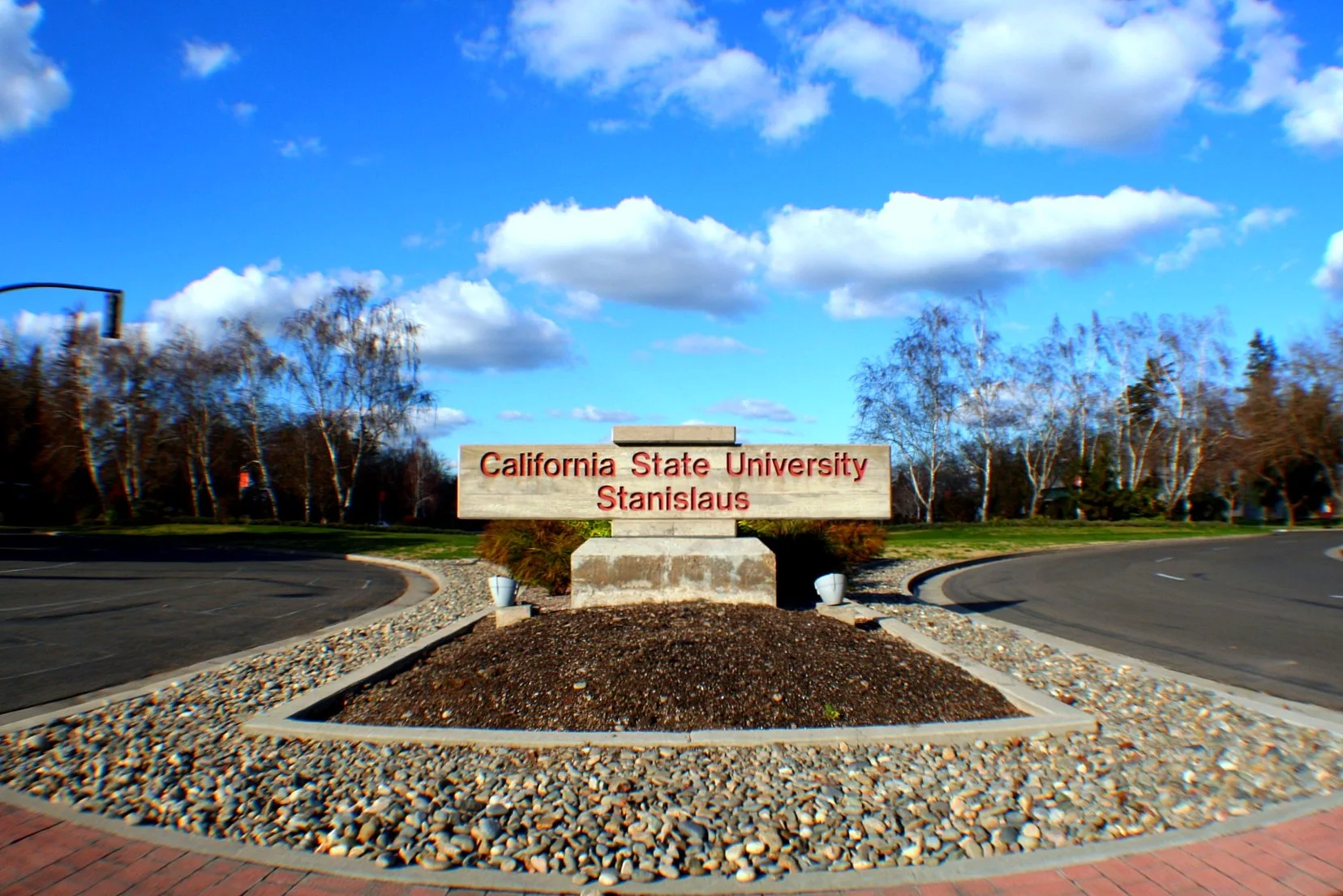
California State University, Stanislaus offers three materially different routes related to forensic work. The B.A. in Criminal Justice has a forensic science concentration designed primarily for crime scene and field investigation. Chemistry or Biology majors can add a Forensic Science minor for a stronger foundation for laboratory criminalistics. The B.A. in Anthropology has a Biological Anthropology Interdisciplinary Concentration that includes skeletal analysis, directed laboratory research, and forensic anthropology coursework.
These routes do not prepare students for the same occupations. Crime scene investigators need training in evidence recognition, documentation, photography, collection, and chain of custody. Criminalists and crime-laboratory analysts generally need substantially more chemistry, biology, quantitative analysis, and laboratory science. Professional forensic anthropology usually involves advanced anthropology education and practical training beyond an undergraduate concentration.
Stanislaus State is a public, semester-based university with its main campus in Turlock and a branch campus in Stockton. The programs discussed here are primarily campus-based. Readers comparing the university with other institutions can also review the broader directory of California CSI and forensic science schools.
Stanislaus State forensic program comparison
| Program | Credential | Primary focus | Practical or research component | Best-aligned direction |
|---|---|---|---|---|
| B.A. in Criminal Justice, Forensic Science Concentration | Bachelor’s degree with concentration | Crime scene investigation, criminalistics, evidence law, forensic DNA, and investigative applications | Required Criminalistics I and II; an internship is available as an elective. Archived course descriptions included laboratory hours and projects, but current materials reviewed do not establish those details as current requirements. | Field CSI, evidence work, investigative support, and related criminal justice positions |
| Forensic Science Minor | 19-unit undergraduate minor | Criminalistics, forensic DNA, criminal law, and selected forensic electives | Required Criminalistics I and II plus Forensic DNA Technology; internship is elective rather than universally required | Chemistry or Biology majors preparing for criminalistics or crime-laboratory careers |
| B.A. in Anthropology, Biological Anthropology Interdisciplinary Concentration | Bachelor’s degree with concentration or track | Human skeletal biology, forensic anthropology, human variation, laboratory research, and related biological anthropology | Bodies of Evidence and Directed Lab Research; optional archaeological field methods and forensic DNA coursework | Preparation for graduate study in forensic or biological anthropology, osteology, or related fields |
| Medical Anthropology Minor | 18-unit undergraduate minor | Health, illness, human biology, medical systems, and ethnomedicine | Forensic exposure depends on elective selection | An adjacent anthropology option rather than a direct forensic credential |
The central choice is between field investigation, laboratory criminalistics, and human-remains analysis. The program title alone does not resolve that choice. The underlying science, investigative, and research courses do.
B.A. in Criminal Justice with a Forensic Science Concentration
The Criminal Justice forensic science concentration is Stanislaus State’s principal undergraduate route for crime scene and field-oriented forensic study. The department describes the concentration as broad preparation for work such as crime scene investigation rather than as a laboratory-science degree.
The department’s currently linked curriculum brochure lists a 63- to 65-unit Criminal Justice major, including 25 to 27 units in the concentration. Its core forensic courses include:
- Bodies of Evidence
- Forensic DNA Technology
- Criminalistics I
- Criminalistics II
- Scientific Evidence and the Law
- Forensic Psychology
Students also choose two electives. The available subjects include forensic anthropology, digital photography and video, genetics, organic chemistry, cybercrime investigation, cybersecurity, geographic information systems, crime intelligence, and an internship.
This selection creates a useful mix for field investigation. Criminalistics addresses physical evidence and evidence-processing methods. Digital photography can support scene documentation. Scientific Evidence and the Law places laboratory findings and physical evidence within courtroom and admissibility contexts. GIS, cybercrime, and crime intelligence allow some specialization outside traditional scene processing.
Archived Stanislaus State course descriptions for Criminalistics I and II included laboratory hours and assigned laboratory projects. The current program brochure still requires both courses, but the current materials reviewed for this profile do not specify whether the historical laboratory structure remains unchanged. The brochure lists an internship as an elective rather than as a universal degree requirement.
Career alignment
The curriculum aligns most directly with crime scene investigation, evidence handling, investigative support, and related criminal justice functions. It covers multiple categories of evidence and introduces students to DNA, forensic anthropology, psychology, and the legal treatment of scientific evidence.
California agencies structure CSI employment differently. A crime scene investigator can be a civilian specialist at one department and a sworn assignment at another. Degree requirements, academy expectations, experience standards, and job titles consequently vary among employers. The Stanislaus State concentration provides relevant academic preparation for field-oriented work, but it is not a statewide occupational license or uniform hiring credential.
The concentration is less suitable as a stand-alone route to laboratory criminalist positions. It includes introductory science prerequisites and applied forensic coursework, but the degree remains a B.A. in Criminal Justice. It does not contain the natural-science depth of a Chemistry or Biology degree.
The university’s guidance addresses this distinction directly. The Criminal Justice department recommends that students targeting crime-laboratory criminalist work major in Chemistry or Biology and add the Forensic Science minor.
Prerequisites and delivery
The concentration requires preparation in chemistry, statistics, human genetics, and introductory psychology. Current university documents conflict over the psychology course number, listing either PSYC 2010 or PSYC 2030. The available materials therefore establish the psychology prerequisite but not one course number that applies across all current catalog years.
The Criminal Justice department does not offer the degree fully online. Some individual classes may be available online, but the program as a whole is primarily campus-based.
Forensic Science Minor
The 19-unit Forensic Science minor is the more strategically useful option for students pursuing laboratory criminalistics, provided it is paired with an appropriate science major. Stanislaus State specifically presents the minor as a supplement for Chemistry and Biology majors interested in criminalistics or related careers.
Its required courses are:
- Criminal Law
- Criminalistics I
- Criminalistics II
- Forensic DNA Technology
At least six additional units come from electives such as Bodies of Evidence, psychology of criminal behavior, cybercrime investigation, Scientific Evidence and the Law, crime intelligence, forensic psychology, and an internship.
The minor gives a science major exposure to the justice-system side of forensic work. A Chemistry student already developing laboratory technique, instrumentation knowledge, and chemical analysis skills can add instruction in physical evidence, forensic DNA, criminal law, and the courtroom treatment of scientific findings. A Biology student can connect genetics and molecular science with DNA evidence and criminalistics.
Archived university descriptions of Criminalistics I and II included laboratory instruction and assigned projects. Those historical descriptions help explain the courses’ intended applied character, but they do not establish the exact current laboratory hours or project requirements. The current brochure confirms that both courses remain required for the minor.
The reverse academic combination is not equivalent. Adding a few science electives to a Criminal Justice major does not reproduce the chemistry or biology sequence contained in a laboratory science degree. For laboratory careers, the science major supplies the foundation and the forensic minor supplies the criminalistics and legal context.
Chemistry or Biology as the primary major
Stanislaus State offers B.A. and B.S. degrees in Chemistry, including biochemistry options, but it does not advertise a named forensic chemistry degree. Major Chemistry courses are conducted in person and paired with hands-on laboratory experiences. The B.S. program is approved by the American Chemical Society.
Chemistry is the more direct pairing for roles involving controlled substances, toxicology-related analysis, trace evidence, instrumentation, or chemical identification. California Department of Justice criminalist education standards illustrate why. The state’s criminalist classifications emphasize a bachelor’s-level major in a physical or biological science, and the cited Senior Criminalist examination bulletin specifies general chemistry and quantitative analysis coursework.
The DOJ bulletin applies to a particular state classification rather than every forensic employer in California. It nevertheless provides a concrete example of the science coursework used in crime-laboratory hiring. A Criminal Justice degree with forensic courses and a Chemistry degree with sustained laboratory training are materially different forms of preparation.
Stanislaus State also offers B.A. and B.S. degrees in Biology. The B.S. includes optional concentrations in organismal, ecological and evolutionary biology or molecular, cellular and microbial biology. There is no separately named forensic biology or forensic DNA concentration. A molecular, cellular, or microbial emphasis has the closer connection to DNA and biological evidence, while the Forensic Science minor adds criminalistics and legal context.
The minor does not carry a separately published price, and it is not an independent professional certification. It is an academic minor completed within a bachelor’s degree.
B.A. in Anthropology with a Biological Anthropology Interdisciplinary Concentration
The Anthropology department’s current program materials present a Biological Anthropology Interdisciplinary Concentration, sometimes calling it a track. This is the active undergraduate pathway containing Stanislaus State’s strongest concentration of forensic anthropology content.
The Anthropology B.A. includes lower-division preparation in cultural anthropology, physical anthropology, and archaeology. Within the biological anthropology pathway, Bodies of Evidence and Directed Lab Research fulfill the methods component. Students then select at least 11 units from options that include:
- Talking Skeletons: Case Studies in Forensic Anthropology
- DNA Technology in Forensic Science
- Human Adaptability
- Primate studies
- Medical anthropology
- Medical sociology
- Archaeological field methods
Bodies of Evidence addresses subjects associated with human osteology, bone biology, pathology, identification of human remains, and forensic anthropology techniques. Talking Skeletons uses forensic anthropology case studies and analytical methods. Directed Lab Research adds supervised methodological experience, while archaeological field methods can develop skills related to excavation, context, and systematic recovery.
The DNA course introduces another scientific dimension, but it has genetics and chemistry prerequisites. Students planning to include it need to sequence those supporting sciences early enough to fit the course into the degree.
Career alignment and advanced study
This concentration is a better academic match for skeletal biology and human-remains analysis than the Criminal Justice forensic science concentration. It emphasizes biological anthropology, osteology, directed laboratory research, and optional archaeological fieldwork rather than broad training in criminal procedure and scene investigation.
The American Academy of Forensic Sciences guidance on careers in forensic anthropology states that forensic anthropologists usually earn a Ph.D. in anthropology with an emphasis on human osteology and anatomy. It also identifies broad physical or biological anthropology training and archaeological experience as relevant preparation. AAFS professional membership requirements further distinguish undergraduate students from practitioners with graduate education and relevant forensic experience.
The Stanislaus State concentration supplies an undergraduate foundation for that route. It does not, by itself, establish the advanced education, supervised experience, or casework competence associated with professional forensic anthropology practice. Students targeting that profession should use the degree to build preparation in osteology, anatomy, biological anthropology, archaeological recovery, research methods, genetics, and scientific writing before graduate study.
The B.A. can also support further education or entry-level work connected to biological anthropology, archaeology, museums, collections, cultural resources, and related research settings. Elective selection matters. A plan that includes Talking Skeletons, forensic DNA, archaeological field methods, and additional science will be more closely aligned with forensic anthropology than one concentrated mainly in medical or cultural anthropology.
The former Forensic Anthropology Track name
Some older Stanislaus State material still refers to a Forensic Anthropology Track. The detailed Anthropology program page places that title within requirements for 2006 through 2016. More recent advising materials provide roadmaps for the general Anthropology B.A. and the Biological Anthropology Concentration instead.
The current route is best described as the B.A. in Anthropology with a Biological Anthropology Interdisciplinary Concentration or track. Its curriculum retains meaningful forensic anthropology content, but the historical Forensic Anthropology Track should not be presented as a separate active credential.
Medical Anthropology Minor
The 18-unit Medical Anthropology minor is related to biological and human-health study, but it is not a direct forensic program. Its principal subjects are health, illness, human biology, medical systems, human evolution, and ethnomedicine.
Students need introductory Cultural Anthropology and Physical Anthropology with grades of C or better, along with a minimum 2.0 GPA. Bodies of Evidence and Talking Skeletons can be used among the upper-division options, so the minor can include some forensic anthropology content.
Its forensic relevance depends heavily on elective choice. A plan containing both forensic anthropology courses gives more exposure to skeletal evidence than one focused entirely on medical systems and ethnomedicine. Even with those electives, the minor lacks the focused methods sequence of the Biological Anthropology Interdisciplinary Concentration. It works as an adjacent addition to another major, not as a substitute for the anthropology concentration or forensic science minor.
Admissions and transfer planning
Freshman applicants follow the California State University A-G course pattern. Stanislaus State does not require or use ACT or SAT scores to determine freshman admission eligibility. Continued English and quantitative-reasoning coursework during senior year is recommended by the university.
Upper-division transfer applicants generally need:
- At least 60 transferable semester units
- A cumulative GPA of at least 2.0
- Good standing at the last institution attended
- At least 30 CSU general-education units
- Required general-education work in oral communication, written composition, critical thinking, and quantitative reasoning
Transfer planning is especially significant for these forensic pathways because prerequisite chains can extend the time needed to graduate. The Criminal Justice concentration relies on chemistry, statistics, genetics, and psychology. The Forensic Science minor requires Criminal Law, introductory criminal justice preparation, chemistry, and a sequenced pair of Criminalistics courses. The Anthropology concentration’s forensic DNA option adds genetics and chemistry requirements.
Community college students interested in laboratory criminalistics should prioritize transferable general chemistry and the mathematics needed for later chemistry coursework. Organic chemistry, quantitative analysis, biology, genetics, and statistics may also be relevant depending on the intended major and career target. Completing only lower-division criminal justice courses can leave much of the laboratory-science sequence unfinished.
Biological Sciences transfers who have not completed the necessary biology prerequisites can be admitted as undeclared with an interest in the major until those prerequisites are complete. That route can delay access to upper-division science courses, so science preparation should be built into the transfer plan before enrollment.
Anthropology transfers interested in forensic work should preserve room for Bodies of Evidence, Directed Lab Research, forensic anthropology electives, and supporting science. Adding genetics and chemistry late can make the forensic DNA elective harder to schedule.
Tuition and estimated attendance costs
For the 2026-2027 academic year, Stanislaus State publishes the following undergraduate charges:
- State University tuition: $6,838
- Campus fees: $2,308
- Combined tuition and campus fees: $9,146
The $9,146 figure covers published direct tuition and campus fees. It excludes books, housing, food, transportation, personal expenses, nonresident tuition, and course-specific charges.
Published total cost-of-attendance estimates range from $26,602 for a student living with parents to $37,744 for a student living off campus. Cost of attendance is a financial-aid budgeting estimate, not the same as the university bill. Laboratory supplies, commuting, housing arrangements, and elective choices can change an individual student’s expenses.
University fees are subject to change, and nonresident students pay additional tuition.
Accreditation
California State University, Stanislaus holds institutional accreditation from the WASC Senior College and University Commission. Institutional accreditation applies to the university as a whole.
Stanislaus State did not appear in the directory of accredited programs maintained by the Forensic Science Education Programs Accreditation Commission when that directory was reviewed on September 26, 2026. Its forensic science offerings should not be described as FEPAC-accredited.
FEPAC programmatic accreditation is most relevant to qualifying forensic science programs and natural or computer science degrees with forensic concentrations. It is not the appropriate standard for judging the Medical Anthropology minor or the broader Anthropology concentration. It is also separate from WSCUC institutional accreditation.
Choosing the right Stanislaus State route
The Criminal Justice forensic science concentration fits students primarily interested in scene processing, evidence recognition, investigative support, photography, criminalistics, and the legal use of scientific evidence. Its required courses directly address forensic applications, but its science depth remains below that of a Chemistry or Biology major.
Laboratory criminalistics calls for a different academic plan. A Chemistry or Biology major paired with the 19-unit Forensic Science minor follows the university’s recommendation and better matches the science expectations found in California crime-laboratory classifications. Chemistry provides the clearest preparation for chemically oriented evidence analysis. Biology, particularly molecular and cellular study, aligns more closely with DNA and biological evidence.
The Biological Anthropology Interdisciplinary Concentration is the appropriate route for skeletal biology, osteology, human variation, and preparation for graduate forensic anthropology study. Directed Lab Research, Bodies of Evidence, Talking Skeletons, and archaeological field methods form a more coherent undergraduate foundation for that specialty than the Criminal Justice concentration.
The Medical Anthropology minor has a narrower supporting role. It can add selected forensic anthropology courses to another degree, but its central focus remains health and medical anthropology.
The practical decision is straightforward: choose the Criminal Justice concentration for field investigation, a laboratory science major plus the Forensic Science minor for criminalistics, or the Anthropology concentration for skeletal analysis and advanced forensic anthropology preparation. The career goal should determine the major, because the word “forensic” appears in several parts of the curriculum without making those programs academically interchangeable.