
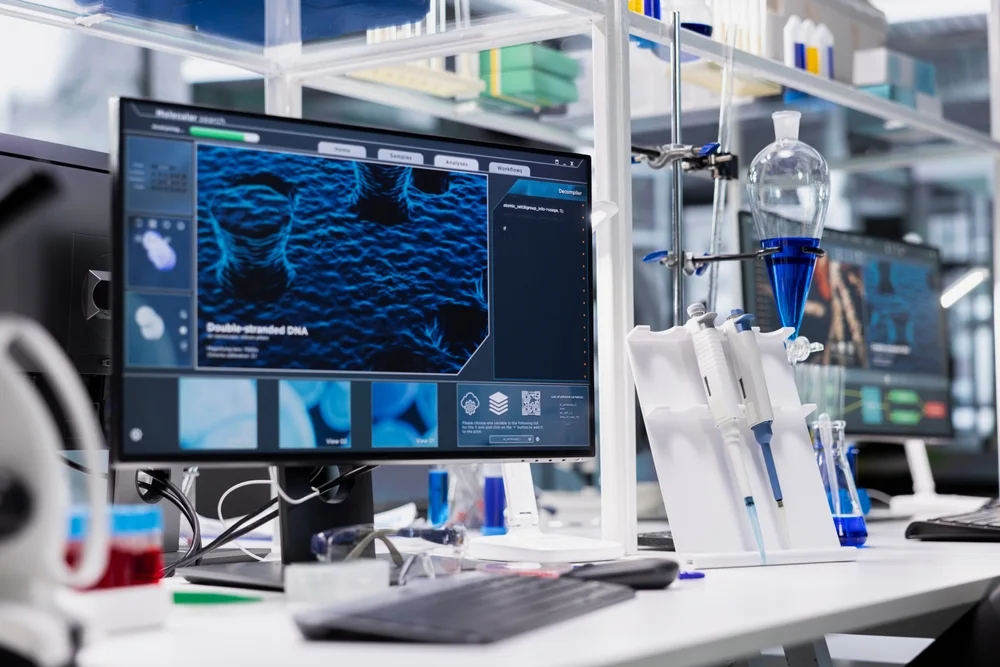
California laboratories rarely advertise a position using the exact title “forensic biologist.” The same work is more commonly assigned to a Criminalist, Forensic Scientist, or Forensic Analyst specializing in forensic biology, serology, DNA casework, or DNA databank operations.
That naming difference affects how you plan your education and conduct a job search. Searching only for “forensic biologist” will miss relevant openings, while earning a degree simply because it contains the word “forensic” can leave you without the chemistry, molecular biology, or statistics courses required by an employer.
The usual pathway into professional forensic biology work in California is:
- Earn a bachelor’s degree in biology, biochemistry, chemistry, forensic science, criminalistics, or a closely related natural science.
- Complete the courses required for DNA analysis and California criminalist positions.
- Develop laboratory experience through research, internships, or laboratory employment.
- Apply under several job titles, including Criminalist, Forensic Scientist, and Forensic Analyst.
- Complete any required civil-service examination, transcript review, background investigation, and drug screening.
- Finish the hiring laboratory’s training program and competency testing before conducting independent DNA casework.
A master’s degree is not a universal entry requirement. Professional DNA analysts generally enter with a relevant bachelor’s degree, followed by extensive employer training. Graduate education becomes more significant for research, advanced technical roles, and DNA technical leadership.
What a forensic biologist actually does
Forensic biology applies biological science to evidence associated with criminal investigations, death investigations, and human identification. According to the National Institute of Justice, the field encompasses DNA, RNA, proteins, body-fluid identification, population genetics, mixture interpretation, probabilistic genotyping, and related biological technologies.
The work can include:
- Examining evidence for possible blood, semen, saliva, or other biological material
- Performing presumptive and confirmatory biological screening tests
- Selecting samples for DNA analysis
- Extracting and quantifying DNA
- Amplifying DNA and generating genetic profiles
- Evaluating single-source and mixed DNA profiles
- Applying statistics or population genetics to the results
- Comparing profiles with known reference samples
- Preparing written laboratory reports
- Explaining findings to investigators, attorneys, and juries
- Testifying as an expert witness
- Maintaining contamination controls and complete case records
- Participating in proficiency testing, method validation, and quality-assurance work
Biological evidence screening and DNA analysis are related but not identical functions. Screening focuses on locating and characterizing possible body fluids or other biological material. DNA analysis develops and interprets genetic profiles. Some laboratories assign both functions to the same analyst, while others divide the work among different units or classifications.
The specialty is also different from crime-scene investigation. A forensic biologist may occasionally respond to a scene, help collect biological material, or advise investigators about preservation. Most of the position, however, is laboratory-centered. Crime-scene investigators focus more heavily on documentation, photography, evidence recognition, collection, packaging, fingerprints, reconstruction, and chain of custody at the scene.
It is also separate from forensic pathology, forensic anthropology, forensic psychology, and clinical laboratory science. Each field has its own educational route and professional responsibilities.
Education requirements for California forensic biology careers
A bachelor’s degree is the normal minimum for the professional analyst classifications reviewed across California. Acceptable majors frequently include:
- Biology
- Molecular biology
- Biochemistry
- Chemistry
- Forensic science
- Criminalistics
- Another closely related natural or laboratory science
The degree title alone is not enough. California employers evaluate the transcript to determine whether an applicant completed the required sciences and laboratory courses.
California’s state Criminalist requirements
The State of California uses the title Criminalist for scientists who conduct technical laboratory analyses and may assist with crime-scene examinations or scientific investigations. The California Criminalist examination bulletin requires a major in a physical or biological science.
The state minimum qualifications also specify:
- Eight semester hours of general chemistry
- Three semester hours of quantitative analysis
Those chemistry requirements can create a problem for biology majors whose degree plans include only a brief chemistry sequence or no quantitative analytical chemistry. A student can graduate with substantial coursework in ecology, anatomy, or organismal biology and still lack courses needed for the state Criminalist classification.
The examination covers a broad scientific foundation that can include biology, biochemistry, genetics, molecular biology, statistics, chemistry, instrumental analysis, and forensic science. That breadth reflects the nature of criminalistics work. Even scientists assigned to biology units operate within laboratories that rely on validated methods, measurement, instrumentation, statistical analysis, and formal quality systems.
Federal educational standards for DNA analysts
Forensic DNA laboratories also operate under federal quality-assurance standards. The FBI Quality Assurance Standards for Forensic DNA Testing Laboratories, effective July 1, 2025, require a DNA analyst to have at least a bachelor’s degree or equivalent in a biology-, chemistry-, or forensic-science-related field.
The analyst must have at least nine credit hours of biology- or chemistry-related coursework that provides a foundation for DNA analysis. Analysts hired, appointed, promoted, or qualified on or after July 1, 2020 must also complete coursework in statistics or population genetics.
California county requirements illustrate how laboratories translate those standards into specific transcript expectations:
- San Diego County’s DNA route identifies molecular biology, biochemistry, genetics, and statistics or population genetics, in addition to general chemistry.
- Contra Costa County requires personnel performing DNA casework to have coursework in molecular biology, genetics, biochemistry, and statistics consistent with FBI standards.
- A 2026 Kern County recruitment used a similar DNA-oriented combination of biochemistry, genetics, molecular biology, and statistics or population genetics.
- Santa Clara County’s Criminalist I specification requires a relevant science degree plus the qualifications applicable to the assigned discipline under FBI standards, accreditation requirements, and relevant regulations.
These examples do not establish one identical course list for every California laboratory. They do show a consistent educational pattern. Molecular biology, genetics, biochemistry, and statistics or population genetics are central transcript-planning priorities for DNA work.
A practical forensic biology curriculum
The most reliable undergraduate plan combines a strong biology foundation with chemistry, quantitative analysis, statistics, and substantial laboratory work.
A well-aligned curriculum includes the following areas.
General biology and cell biology
General biology establishes the vocabulary and principles used throughout the field. Cell biology provides a closer study of cell structure, function, replication, and biological processes relevant to sample analysis.
Introductory survey courses intended for non-science majors are less useful than a majors-level sequence with laboratory components. Professional laboratory employers are looking for evidence that applicants can work within scientific procedures, understand experimental controls, and interpret biological results.
Genetics
Genetics is directly relevant to inheritance, genetic variation, DNA markers, and the biological principles underlying forensic comparisons. A dedicated genetics course also helps meet the explicit requirements used by several California employers.
A forensic science survey that briefly discusses DNA is not an adequate replacement for a full genetics course when a job specification names genetics as a prerequisite.
Molecular biology
Molecular biology covers DNA structure and function, replication, transcription, amplification, and other mechanisms that support forensic DNA methods. California DNA positions frequently name this course directly.
The strongest preparation includes laboratory work using molecular techniques. Classroom knowledge helps satisfy academic requirements, while hands-on work develops accuracy with pipetting, sample handling, contamination control, and documentation.
Biochemistry
Biochemistry connects chemistry with biological systems. It supports an understanding of proteins, enzymes, nucleic acids, and reactions used in analytical procedures.
Because biochemistry is frequently listed alongside genetics and molecular biology, omitting it can disqualify an otherwise well-prepared biology graduate from a DNA assignment.
General and organic chemistry
General chemistry is essential for California criminalist eligibility and broader laboratory competence. California’s state classification specifies eight semester hours, which generally corresponds to a two-course sequence.
Organic chemistry is not listed as a universal professional DNA analyst requirement in the reviewed sources, but it strengthens preparation for analytical work and appears in some laboratory classifications. Los Angeles County’s Criminalistics Laboratory Technician specification, for example, requires college coursework in both general and organic chemistry.
Organic chemistry also preserves access to other criminalistics specialties if a biology position is not immediately available.
Quantitative or analytical chemistry
California’s state Criminalist minimum includes three semester hours of quantitative analysis. Degree plans sometimes call this course quantitative analysis, analytical chemistry, or quantitative chemical analysis.
This requirement deserves attention during undergraduate planning. Many biology programs do not include analytical chemistry as a standard requirement, so a student targeting California DOJ employment may need to add it as an elective.
Statistics or population genetics
DNA conclusions involve statistical interpretation. Analysts need to understand the weight of genetic evidence rather than merely determine whether alleles appear to correspond.
A general statistics course may meet some position requirements, while certain employers specifically identify statistics or population genetics. Completing a statistics course within a biology, mathematics, or statistics department, followed by population genetics where available, provides stronger preparation than relying on a brief statistics unit embedded in another course.
Instrumentation and laboratory methods
Forensic biology laboratories use specialized equipment and validated workflows. Useful undergraduate experience can involve:
- Micropipettes
- Centrifuges
- Thermal cyclers
- Electrophoresis
- Spectrophotometry
- Microscopy
- DNA extraction methods
- Quantitative PCR
- Laboratory information or sample-tracking systems
- Reagent preparation
- Calibration and quality-control procedures
A recent Sacramento County recruitment described work involving DNA extraction robots, microscopes, centrifuges, and other laboratory instrumentation. Entry-level employees are not expected to arrive qualified on every platform, but prior exposure to modern laboratory practice reduces the gap between academic study and structured workplace training.
Scientific writing and communication
Forensic conclusions must be documented clearly enough to withstand technical review and legal scrutiny. Coursework involving formal laboratory reports, research papers, oral presentations, and interpretation of scientific literature is highly relevant.
A forensic biologist may have to explain sampling decisions, test limitations, mixture interpretation, statistical findings, and quality controls to audiences without scientific training. Court testimony requires accurate communication without overstating what the evidence establishes.
Forensic science courses
Courses in criminalistics, evidence handling, forensic biology, serology, ethics, law, and courtroom testimony can add useful context. They help connect laboratory science with chain of custody, evidence integrity, discovery obligations, and the legal process.
These courses should supplement the natural sciences, not replace them. A curriculum heavy in criminal justice, policing, and investigation but light in chemistry, molecular biology, genetics, and biochemistry is poorly aligned with forensic DNA analyst requirements.
Which bachelor’s degree is the best preparation?
Several majors can lead to forensic biology. The better choice depends on the actual course plan rather than the label printed on the diploma.
Biology
Biology can be an effective route when it includes molecular biology, genetics, biochemistry, chemistry, statistics, and laboratory research. A molecular or cellular biology concentration generally aligns more closely with DNA casework than an ecology, wildlife, or anatomy-centered concentration.
The main risk is insufficient chemistry. A biology major aiming for California state Criminalist jobs needs the full general chemistry requirement and quantitative analysis, even if those courses exceed the biology department’s graduation minimum.
Biochemistry
Biochemistry offers a direct combination of biological and chemical preparation. These programs commonly require substantial laboratory work, organic chemistry, and advanced chemistry.
Some biochemistry plans still need a separate genetics course, molecular biology course, or statistics course to cover DNA employment requirements. An academically rigorous major is useful only when the named prerequisite subjects appear on the transcript.
Chemistry
Chemistry provides strong analytical and instrumentation training and can qualify a graduate for a broader range of criminalistics assignments. A chemistry student targeting forensic biology will usually need to add genetics, molecular biology, biochemistry, and statistics or population genetics.
This route can be effective for someone who wants flexibility across trace evidence, controlled substances, toxicology, and biological evidence, provided the biological prerequisites are completed.
Forensic science or criminalistics
A science-based forensic science degree can combine chemistry, biology, laboratory methods, evidence handling, and legal context. Its value depends on how much upper-level natural science the program requires.
Programs centered on crime-scene processing or criminal justice are designed for a different occupational direction. They may prepare graduates for evidence collection or investigative roles without satisfying DNA analyst or California Criminalist science requirements.
The transcript should show the same scientific depth expected from a conventional biology, biochemistry, or chemistry graduate.
FEPAC accreditation and what it means
The Forensic Science Education Programs Accreditation Commission accredits qualifying bachelor’s and master’s programs in forensic science, as well as eligible natural or computer science programs with forensic concentrations.
FEPAC accreditation applies to an academic program. It does not accredit individual scientists, crime laboratories, biology departments as a whole, or employers.
Graduating from a FEPAC-accredited program can show that the curriculum underwent specialized forensic science review. It is not a universal California employment requirement. A biology, biochemistry, or chemistry graduate can qualify for forensic biology positions without holding a degree from a FEPAC-accredited program, provided the degree and coursework satisfy the employer’s standards.
Crime laboratory accreditation is separate. The California Department of Justice Bureau of Forensic Services, for example, is accredited by ANAB to ISO/IEC 17025 for activities within its accreditation scope. That laboratory accreditation does not turn every academic program associated with its employees into a FEPAC-accredited program.
Building relevant laboratory experience
A degree establishes scientific preparation, but experience helps demonstrate that an applicant can follow procedures, document work, and handle samples accurately.
Useful experience can come from:
- A forensic science or criminalistics laboratory internship
- A coroner or medical examiner internship
- A toxicology laboratory
- A molecular biology research laboratory
- A genetics or biochemistry research group
- A public health laboratory
- A clinical or biotechnology laboratory with relevant methods
- A senior research project involving DNA or biological analysis
- A master’s thesis involving molecular biology, genetics, or analytical methods
- Paid laboratory assistant or technician employment
The California Department of Justice recommends crime laboratory, toxicology laboratory, coroner, and medical examiner internships as career preparation. Its California Criminalistics Institute career page explains that CCI, Forensic Library, and Bureau of Forensic Services internships are occasionally offered based on staffing and placement capacity.
An internship is useful, but it is not the only way to become competitive. University research can provide repeated experience with controls, laboratory notebooks, reagents, contamination prevention, instrumentation, data analysis, and troubleshooting. A sustained research project often demonstrates more scientific depth than a short observational placement.
Recent California hiring materials also show that employers may ask applicants to document laboratory components and both paid and unpaid laboratory experience. Keep course descriptions, laboratory syllabi, research abstracts, and records of the techniques used. These materials can help explain a transcript during a detailed minimum-qualification review.
Technician positions as an alternate laboratory entry point
Some California agencies employ laboratory technicians who support criminalists and forensic scientists. These jobs can provide experience with evidence processing, reagent preparation, routine testing, and laboratory quality procedures.
They are not equivalent to professional DNA analyst positions.
Los Angeles County’s Criminalistics Laboratory Technician classification can perform DNA evidence processing and extraction, biological-fluid identification, reagent preparation, and screening tests on sexual-assault evidence under close procedural control. The classification requires 60 semester units, including general and organic chemistry, rather than a completed bachelor’s degree.
Sacramento County’s Forensic Laboratory Technician classification may conduct routine laboratory tests, assist with serological procedures, and operate equipment such as DNA extraction robots. Results receive review from a Criminalist or Supervising Criminalist. The minimum education is 60 semester or 90 quarter units, including specified general chemistry or biology coursework.
These positions illustrate a legitimate support-level route into a forensic laboratory. They can build familiarity with evidence handling, contamination control, standard operating procedures, and laboratory documentation. They do not authorize the employee to interpret DNA profiles independently or replace the bachelor’s-level preparation required for professional criminalist and forensic DNA analyst work.
Promotion from technician to criminalist is not automatic. An employee seeking professional analyst duties still needs the qualifying bachelor’s degree, subject-specific coursework, employer selection, analyst training, and competency testing.
Finding California jobs under the right titles
A broad job search is necessary because California agencies classify the specialty differently.
Useful search terms include:
- Criminalist
- Criminalist I
- Forensic Scientist
- Forensic Scientist I
- Forensic Analyst
- Forensic Biology
- Forensic DNA
- DNA Analyst
- DNA Criminalist
- Biology/DNA Criminalist
- Serology
- Biological Evidence Screening
- DNA Databank
- Forensic Laboratory Technician
- Criminalistics Laboratory Technician
Read the assignment description, not just the classification title. A Criminalist posting could involve DNA, toxicology, controlled substances, firearms, trace evidence, latent prints, or another specialty.
A 2026 California DOJ posting, for example, used the title Criminalist for DNA databank work. Duties included processing legally collected samples, developing DNA profiles, and importing profiles into CODIS for comparison with unsolved-case evidence. The posting described Criminalist as an entry, training, and subjourney classification. It closed in February 2026, but it illustrates how relevant work can appear without “forensic biologist” in the title.
California opportunities are concentrated in public laboratories operated by:
- The California Department of Justice Bureau of Forensic Services
- County sheriff or district attorney laboratories
- County medical examiner or coroner systems
- City police department laboratories
- Other regional government laboratory systems
Federal, private, academic, and contract laboratory positions also exist, but state and local classifications are central to a California-focused search. Related occupations and specialties are covered on the site’s broader California forensic careers page.
The California hiring process
Public laboratory hiring can take several stages. California DOJ applicants normally must establish civil-service eligibility, demonstrate that they meet the classification’s minimum qualifications, and apply to a specific vacancy.
The process can involve:
- A civil-service examination or eligibility assessment
- A detailed state or local employment application
- Official or unofficial transcripts
- A Statement of Qualifications or supplemental questionnaire
- An interview or technical assessment
- Reference checks
- Live Scan fingerprinting
- A broader background investigation
- Drug screening for classifications subject to that requirement
- A medical or other pre-employment review when applicable
The California DOJ application guidance explains that state applicants may need transcripts and a position-specific Statement of Qualifications. Selected candidates may undergo Live Scan or a more extensive background investigation before receiving a final offer.
The state Criminalist series requires drug screening. California DOJ also applies drug-history policies to internship and employment candidates. Those policies belong to that employer and classification context rather than establishing one statewide rule for every laboratory.
Accuracy throughout the application is essential. Forensic personnel work in a setting where credibility, evidence integrity, and courtroom testimony are central responsibilities. Omissions or inconsistencies uncovered during a background investigation can affect suitability even when the applicant has strong academic credentials.
Graduation is followed by laboratory training
A newly hired scientist does not begin issuing independent DNA conclusions immediately after college.
Under FBI quality-assurance standards, DNA analysts must complete laboratory training and competency testing before independent casework. Training must address analytical procedures, interpretation, and statistics. It also includes practical exercises using samples representative of actual casework.
Entry-level California classifications reflect this structure. Orange County’s Forensic Scientist series places entry personnel under a mentor or direct supervision while they learn evidence flow, preservation, and analytical techniques. Contra Costa County provides supervised on-the-job training before new personnel assume broader responsibilities. Santa Clara County’s Criminalist I initially works in a training capacity under close supervision.
Training length and organization vary by laboratory and assignment. A DNA analyst program can cover:
- Laboratory quality systems
- Evidence handling and chain of custody
- Sample selection
- Biological screening
- DNA extraction
- Quantification
- Amplification
- Instrument operation
- Profile interpretation
- Mixture interpretation
- Statistical calculations
- Report writing
- Technical and administrative review
- Testimony preparation
- Mock casework
- Competency examinations
Analysts also participate in continuing education and proficiency testing after qualification. The scientific degree provides the foundation. The laboratory’s documented training program qualifies the employee on that laboratory’s methods and procedures.
Work conditions and professional expectations
Forensic biology combines detailed bench science with intensive documentation. Every sample transfer, reagent lot, instrument result, calculation, and interpretation must be recorded according to controlled procedures.
The work often involves repetitive tasks requiring sustained concentration. Contamination controls are strict because small amounts of transferred DNA can affect results. Analysts may wear protective equipment, separate pre-amplification and post-amplification activities, clean work areas carefully, and follow defined movement or sample-handling procedures.
Casework also undergoes review. Another qualified scientist may examine analytical data, calculations, interpretations, and conclusions before a report is released. Administrative review can address report consistency, required documentation, and laboratory policy.
The subject matter can be difficult. Cases may involve homicide, sexual assault, child abuse, unidentified remains, and other traumatic events. A scientist must remain objective while examining evidence and reading case information that can be disturbing.
Deadlines can arise from trials, investigative priorities, court orders, and case backlogs. Analysts may need to explain what can be concluded within the limitations of the evidence, even when investigators or attorneys want a more definitive answer.
Court testimony adds another dimension. A forensic biologist can be questioned about education, training, laboratory procedures, contamination controls, validation, statistical interpretation, and possible alternative explanations. Clear records and careful scientific language are therefore part of the analytical work, not secondary administrative tasks.
Salary and employment outlook in California
No authoritative statewide dataset isolates forensic biologists as a separate occupation. Salary and outlook agencies group this work under the broader Forensic Science Technicians category, which also includes crime-scene and other laboratory specialties.
The California Employment Development Department reported the following statewide wages for Forensic Science Technicians in the first quarter of 2026:
- Mean hourly wage: $51.87
- Median hourly wage: $50.46
- 25th-percentile hourly wage: $39.94
- 75th-percentile hourly wage: $65.64
Using 2,080 hours as a mathematical annualization, the mean equals approximately $107,890 and the median approximately $104,957. Those conversions are not reported annual salaries or guaranteed compensation. Actual pay depends on the agency, classification, step, bargaining agreement, experience level, schedule, and specialty.
The California EDD occupation profile is useful for statewide context, but it is not a forensic-biologist salary survey.
Individual agency ranges demonstrate how widely public-sector pay can vary. A Sacramento County Criminalist Level I-IV recruitment published in July 2026 listed annual salaries ranging from $74,541.60 to $158,437.44 across four experience levels. The recruitment closed in August 2026, so the figures serve as a historical hiring example rather than an active offer or statewide range.
California projects employment in the broader Forensic Science Technicians occupation to increase from 2,200 jobs in 2022 to 2,600 in 2032. That represents 400 additional positions, or 18.2 percent growth. It does not indicate how many openings will specifically involve biology or DNA.
Nationally, the Bureau of Labor Statistics reported a May 2025 median annual wage of $72,060 for Forensic Science Technicians. BLS projects 13 percent employment growth from 2025 to 2035, with about 2,800 openings per year on average. Again, the category combines scene-based and laboratory roles and is broader than forensic biology.
Advancement after entering the field
Advancement typically comes through casework experience, qualification in additional methods, technical review responsibilities, continuing education, and demonstrated ability to handle complex cases.
Possible directions include:
- Senior or journey-level criminalist
- Advanced DNA analyst
- Biological screening specialist
- Technical reviewer
- DNA mixture interpretation specialist
- CODIS-related responsibilities
- Method validation
- Quality assurance
- Training new analysts
- Research and method development
- Supervisory criminalist
- Laboratory management
- DNA technical leader
Career ladders differ by employer. Sacramento County provides one documented example through a four-level Criminalist series. Level I is a training and developmental classification that can receive forensic biology assignments. Higher levels progress into difficult casework, research, method development, training, and lead responsibilities.
The DNA technical leader route
A DNA technical leader has substantially higher requirements than an entry-level analyst. Under FBI standards, the technical leader must hold at least a master’s degree in a biology-, chemistry-, or forensic-science-related field, complete the required foundational and statistical coursework, and have at least three years of human forensic DNA analyst experience.
This is the clearest point at which graduate education becomes a defined professional requirement. A bachelor’s degree can support entry into DNA casework, but an analyst planning for technical leadership should choose graduate coursework that satisfies the federal standard and supports advanced molecular biology, genetics, statistics, and laboratory management responsibilities.
Professional certification
California does not have a universal forensic-biologist license identified in the reviewed state and local requirements. Professional certification is separate from occupational licensing and usually occurs after entry into the field.
The American Board of Criminalistics currently offers certifications in:
- Biological Evidence Screening
- Forensic DNA
The Biological Evidence Screening credential is intended for practitioners already working in forensic laboratories and can cover testing for blood, semen, and other body fluids. It is not a substitute for a qualifying science degree, employer training, or competency testing.
Certification can document professional knowledge after an analyst has developed the required education and experience. It is not listed as a universal entry requirement in the California classifications reviewed here.
A practical California preparation plan
The strongest route begins with transcript planning rather than the degree title.
During the first half of college, complete majors-level biology and the full general chemistry sequence with laboratories. Build enough mathematical preparation to take statistics and quantitative or analytical chemistry.
During the later undergraduate years, prioritize:
- Genetics
- Molecular biology
- Biochemistry
- Statistics or population genetics
- Quantitative or analytical chemistry
- Upper-level laboratory courses
- Scientific writing
- A research project or sustained laboratory placement
Add forensic science, criminalistics, evidence, and courtroom courses where they fit without displacing the required natural sciences.
Before graduation, compare the completed transcript with three standards: California’s Criminalist minimum qualifications, the FBI DNA analyst educational requirements, and representative county DNA classifications. This comparison reveals gaps more effectively than relying on a major checklist alone.
Build laboratory experience that demonstrates careful sample handling, contamination prevention, written documentation, quality control, and data interpretation. Research laboratories, public laboratories, medical examiner offices, toxicology units, and relevant biotechnology settings can all contribute, depending on the work performed.
When applying, search across multiple classifications and distinguish support jobs from professional analyst jobs. A technician position can provide genuine laboratory experience, but the route to independent DNA interpretation still requires the bachelor’s-level scientific foundation and formal analyst qualification.
Once hired, expect another period of structured learning. The laboratory will train and test you on its validated procedures before authorizing independent casework. Long-term advancement then depends on case experience, proficiency, technical review skills, method knowledge, communication, and continued professional development.
Forensic biology is a science career operating within the legal system. In California, the most dependable preparation is a laboratory-intensive natural science degree with deliberate coursework in chemistry, genetics, molecular biology, biochemistry, and statistics. Pair that education with relevant laboratory experience and a job search broad enough to capture Criminalist, Forensic Scientist, Forensic Analyst, DNA, serology, and biological-evidence classifications.