
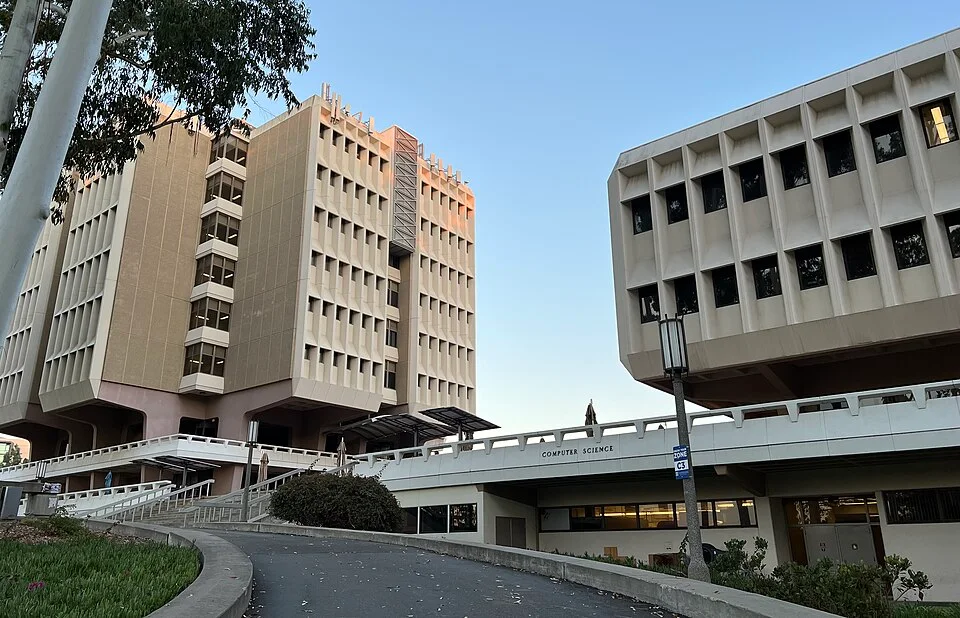
The University of California, Irvine offers one degree explicitly named for forensic psychology: the Master of Legal and Forensic Psychology. It is an online, nonclinical master’s program centered on psychological research, legal systems, policy, and professional applications. It does not prepare graduates for psychologist or counseling licensure.
UCI also has several related pathways. Doctoral students can study psychology and law through a research-focused Psychology PhD track, while the Clinical Psychology concentration provides assessment, treatment, practicum, and internship training relevant to clinical practice. A separate Psychological Testing Technician Training Program prepares eligible participants for a narrowly defined California registration. At the undergraduate and post-baccalaureate levels, students can build psychology-and-law preparation without earning a named forensic psychology degree.
These distinctions determine what each credential can support. Studying eyewitness testimony, juries, violence, legal decision-making, or forensic policy is different from completing the supervised clinical training required for psychologist licensure. Neither route is equivalent to crime-scene investigation or laboratory criminalistics education.
UCI forensic psychology options at a glance
| UCI pathway | Credential and format | Primary emphasis | Main limitation |
|---|---|---|---|
| Master of Legal and Forensic Psychology | 52-unit master’s; asynchronous online courses plus a five-day Irvine residency | Psychology and law, research methods, forensic assessment concepts, policy, and legal reasoning | No clinical licensure pathway, internship, or supervised forensic practice |
| Psychology PhD with Psychology and Law training track | Campus-based research doctorate with a four-course supplemental track | Academic research on psychology, behavior, and legal systems | Not a clinical forensic psychology practice program |
| Psychology PhD with Clinical Psychology concentration | Campus-based doctorate with practica and a full-time internship | Clinical assessment, treatment, psychopathology, research, and possible forensic applications | Not a named forensic psychology concentration |
| Psychological Testing Technician Training Program | Post-degree training certificate; online courses plus an in-person practicum | Test administration and scoring under a licensed psychologist | Registration has a narrow supervised scope and is not psychologist licensure |
| Post-Baccalaureate Program in Psychology | 32 or 36-unit certificate with campus coursework | Psychology prerequisites, research, statistics, and graduate preparation | Not a forensic psychology degree or professional credential |
| Psychology BA | 52-unit undergraduate major | General psychology with optional forensic psychology electives | No formal forensic concentration |
| Criminology, Law and Society BA | 44-unit undergraduate major | Crime, law, justice systems, policy, and forensic-evidence issues | No clinical, CSI, or laboratory criminalistics training |
UC Irvine is a public research university in Irvine and uses the quarter calendar. The institution is accredited by the WASC Senior College and University Commission, commonly known as WSCUC, through fall 2032. Readers comparing UCI with other institutions can also review the broader directory of California schools offering CSI and forensic-related education.
Master of Legal and Forensic Psychology
The Master of Legal and Forensic Psychology, or MLFP, is UCI’s direct answer to a search for a forensic psychology program. It is jointly offered by the Department of Psychology and the Department of Criminology, Law and Society within the School of Social Ecology.
The 52-unit program runs for two years across six quarters. Students take 13 courses under a fixed schedule, normally completing two online courses during each regular quarter. They cannot accelerate the degree, extend it into a slower part-time sequence, or use non-MLFP UCI courses toward the program.
Curriculum and academic focus
Required subjects include legal and forensic psychology, psychology and law, quantitative methods, research methods, forensic assessment, legal reasoning and jurisprudence, and a capstone. Elective examples include:
- Children and the law
- Clinical interviewing and treatment
- Aggression and violence
- Psychosis and the law
- Addiction and the law
- Juries
- Family law
The curriculum examines how psychological evidence and theory apply to courts, corrections, public policy, legal decision-making, and other justice settings. Students learn to evaluate research and connect that research to legal policy or professional practice.
The capstone is an independent research paper completed during the second year. It replaces a thesis. This structure is useful for professionals interested in policy analysis, program evaluation, behavioral research, court systems, or justice administration, but it does not provide the depth of independent research expected in a dissertation-based doctorate.
“Forensic assessment” in the curriculum should not be confused with authorization to conduct independent clinical evaluations. The degree can teach the concepts, research, and legal context surrounding assessment without providing the clinical training, supervised experience, or license needed to practice as a psychologist.
Online delivery and required residency
Most MLFP classes are asynchronous and online, allowing students to complete weekly academic work without attending scheduled live classes. The degree is not fully remote, however. Before the first fall quarter, every student completes a mandatory five-day introductory course on the Irvine campus.
Travel, lodging, meals, and personal costs associated with the residency are separate from the published program fees. This is the program’s only listed campus residency, but it is a required part of the degree rather than an optional orientation.
The program does not provide an internship, clinical practicum, or formal faculty research placement. Applicants seeking direct clinical contact, supervised assessment experience, or a built-in agency internship will not receive those components through the MLFP. Its practical product is the research and policy capstone.
Admissions
MLFP applicants need a bachelor’s degree from an accredited institution and at least a 3.0 undergraduate GPA. The application includes:
- Two recommendation letters
- A statement of purpose
- A resume or curriculum vitae
- Academic transcripts
The GRE is not required. A specific undergraduate psychology major is not listed as an admission requirement, which gives applicants from criminal justice, social science, public policy, law, education, and related fields a possible route into the program.
UCI states that Fall 2027 applications are scheduled to open in October 2026. The published priority deadline is March 1, 2027, followed by rolling review through May 15, 2027.
Fees and total cost considerations
For the cohort entering in Fall 2026, UCI lists $17,278 in required program and Student Services Access fees for the 2026-27 academic year. The university bills these fees across the fall, winter, and spring quarters.
That figure is an annual amount, not a guaranteed price for the entire two-year degree. UCI uses a program-specific fee structure for the MLFP, and its program page states that out-of-state students do not pay an additional nonresident program amount. The optional systemwide graduate and professional council fee totals $7.
A realistic budget also needs to include books and the required Irvine residency. UCI’s annual fee schedule does not include the student’s transportation, hotel, food, or other residency expenses.
Career alignment
The MLFP is best aligned with work that uses psychology-and-law knowledge without requiring independent clinical practice. Potential settings include courts, corrections, victim services, law enforcement support, public policy, behavioral research, case management, intelligence analysis, advocacy, and justice-related nonprofit or government programs.
Job eligibility still depends on the employer and position. The degree itself does not award a professional certification and does not qualify a graduate as a licensed psychologist, counselor, or independent forensic evaluator. It also does not create expert-witness status.
The program is less suitable for three other career categories:
- Clinical forensic psychology: Clinical practice requires doctoral clinical education, supervised experience, internship training, and state licensure.
- Crime-scene investigation: CSI preparation emphasizes photography, evidence recognition and recovery, fingerprints, scene documentation, chain of custody, and reconstruction. Those are not the MLFP’s focus.
- Laboratory criminalistics: Crime-lab roles commonly require substantial chemistry, biology, laboratory methods, instrumentation, and quantitative science. The MLFP is a psychology-and-law degree rather than a forensic laboratory science program.
Two doctoral routes with different professional purposes
UCI’s Psychology PhD includes two relevant but separate pathways. The optional Psychology and Law training track is a supplemental research specialization. The Clinical Psychology concentration is a structured clinical pathway with assessment courses, practica, and an internship.
They should not be described as interchangeable versions of a forensic psychology doctorate.
Psychology PhD with the Psychology and Law training track
The Psychology PhD catalogue entry describes Psychology and Law as an optional four-course training track added to the doctorate’s regular major and minor specialization requirements. Doctoral applicants enter the Psychology PhD, identify a primary research area and potential faculty mentors, and then integrate legal-psychology study into that broader research plan.
The track requires PSY P266, Psychology and the Law, plus three approved electives. Relevant options include Eyewitness Testimony and Memory and the Law, along with approved courses from Psychology, Social Ecology, or the School of Law.
This route supports research on subjects such as eyewitness memory, legal decision-making, juvenile justice, violence, psychopathy, and policy. Students also complete the PhD’s advanced methods, statistics, faculty-supervised research, candidacy, and dissertation requirements. The catalogue lists five years as the normative completion time, with a seven-year maximum.
The track does not inherently include clinical forensic assessment or treatment. A student could become an expert researcher on jury behavior or eyewitness identification without receiving the clinical preparation needed to diagnose patients or conduct licensed psychological evaluations.
UCI paused Psychology PhD admissions for the 2026-27 academic year. Its newer doctoral program page reports that applications are being accepted for the 2027-28 cohort through December 1, 2026. Those statements reflect a one-cohort admissions pause rather than discontinuation of the doctorate.
Psychology PhD with a Clinical Psychology concentration
The Clinical Psychology concentration is the relevant UCI pathway for doctoral applicants seeking clinical assessment and intervention training. It is not named as a forensic psychology concentration, but UCI identifies forensic psychology positions among its possible career outcomes and indicates that forensic clinical placements may be available.
The curriculum includes six departmental core courses, eight clinical core courses, and five breadth courses. Clinical subjects include:
- Psychological assessment and interviewing
- Cognitive and neuropsychological assessment
- Adult psychopathology
- Ethics
- Evidence-based treatments
- Research methods
- Statistics
- Psychometrics
Clinical training extends beyond classroom study. Students complete at least two years, or six academic quarters, of part-time clinical placements. Training can include supervised work in UCI’s outpatient Psychology Clinic and later practica in hospitals or clinics. A one-year, full-time clinical internship is required. The normative completion period is six years, including the internship, and the first five years are intended to be spent in residence at UCI.
According to the current accreditation heading on UCI’s clinical program page, the Clinical Psychology PhD is APA-accredited on contingency through October 29, 2029. The contingent status applies to the clinical doctoral concentration. It does not extend APA accreditation to the MLFP, the nonclinical Psychology and Law track, or UCI’s undergraduate programs.
This concentration provides the clinical foundation missing from the MLFP and the nonclinical doctoral track. A student interested in forensic assessment as licensed psychological practice needs assessment coursework, supervised clinical placements, an internship, and eventual compliance with state licensing requirements. The clinical concentration addresses that kind of preparation, although its identity remains broader clinical psychology rather than a dedicated forensic psychology doctorate.
The department’s current materials do not separately explain whether every clinical applicant follows the same 2027-28 application timeline published for the broader Psychology PhD.
Psychological Testing Technician Training Program
UCI’s Psychological Testing Technician Training Program is a narrower and more practical assessment pathway. It combines two online courses with supervised in-person training:
- Psychological Assessment
- Psychological Ethics
- Psychological Assessment Practicum or Clinical Field Study
Participants complete 60 hours of supervised in-person experience. That training includes at least 20 hours of direct observation and 40 hours administering and scoring tests in the presence of a licensed psychologist.
UCI gives enrollment priority to MLFP graduates, but the program is separate from the master’s and cannot be completed concurrently with it. California expanded qualifying educational fields effective January 1, 2026. The applicable fields now include psychology, specified education disciplines, neuroscience, cognitive science, and behavioral science, subject to the California Board of Psychology’s final eligibility determination.
After completing eligible education and training, a participant can apply to the Board for registration as a psychological testing technician. Registration permits the technician to administer and score objective psychological or neuropsychological tests and describe testing behavior under supervision.
The scope is deliberately limited. A registered technician cannot independently select tests, interpret results, write evaluation reports, or provide feedback. The registration is not psychologist licensure, and the supervised work does not count as professional experience toward psychologist licensure.
UCI publishes a program cost of $16,000, consisting of a $7,000 program fee and $9,000 in course fees. Its program materials do not list financial aid or scholarships for this training.
This certificate is most relevant to eligible graduates pursuing supervised psychometric support work. It is not a substitute for a clinical psychology doctorate, and it should not be described as a state-issued certification. UCI provides the training certificate; California separately awards registration to approved applicants.
Post-baccalaureate preparation for psychology and law
The Post-Baccalaureate Program in Psychology is an academic preparation option for people who already hold a bachelor’s degree but need more psychology coursework, research experience, statistics, or faculty recommendations before applying to graduate school.
Domestic students complete 32 units, while international students complete 36. Individual plans can include psychology and law, abnormal psychology, clinical psychology, research methods, statistics, Eyewitness Testimony, directed research, and field study. Research laboratory work or an internship can be included according to the student’s plan.
The certificate is flexible enough to support later applications to legal psychology, forensic psychology, or other psychology graduate programs. It does not carry a formal forensic specialization and does not provide clinical licensure preparation.
UCI lists a concurrent-enrollment charge of $1,236 per academic-year course and a summer visitor rate of $351 per unit. Those are component rates rather than a complete cost of attendance, and they are subject to annual change. Applications for Fall 2027 are scheduled to open in October 2026.
Undergraduate routes into psychology and law
UCI does not offer a bachelor’s degree named forensic psychology. The Psychology BA and Criminology, Law and Society BA can both support later study in the field, but they build different foundations.
Psychology BA
The Psychology BA requires 13 courses totaling 52 units. The degree covers psychology foundations, life-span development, abnormal psychology, health psychology, social psychology, and upper-division electives.
Available electives can include Forensic Psychology and the advanced forensic psychology seminar. Students may also pursue faculty research or field-study placements, including placements in legal settings. These experiences are options within a general psychology major, not a required forensic sequence.
Among UCI’s undergraduate choices, Psychology is the more direct foundation for later clinical or psychology graduate study. It provides greater exposure to human behavior, abnormal psychology, research, and psychological theory. A strong graduate-school plan would pair those foundations with statistics, research experience, relevant electives, and legal-setting fieldwork.
Criminology, Law and Society BA
The Criminology, Law and Society BA requires 11 courses totaling 44 units. It emphasizes criminology, law, justice, crime policy, institutions, and social-science analysis.
Relevant course options include Psychology and the Law, Forensic Psychology, Advanced Forensic Psychology, and Forensic Science, Law, and Society. The forensic science course examines subjects such as DNA testing, fingerprints, trace evidence, profiling, admissibility, and forensic laboratory regulation.
That course approaches scientific evidence through legal, statistical, regulatory, and policy questions. It does not turn the major into a laboratory science degree. The curriculum does not provide the chemistry, biology, instrumentation, or laboratory methods associated with criminalist preparation. It also lacks the scene-processing, evidence-recovery, photography, and fingerprint practice expected in a dedicated CSI curriculum.
Criminology, Law and Society is the better UCI undergraduate route for studying justice institutions, evidence policy, criminal law, and the social operation of legal systems. Psychology is better aligned with later clinical training and the scientific study of behavior. Either major can incorporate forensic psychology electives, but neither contains a formal forensic concentration.
Choosing the right UCI pathway
The appropriate route follows from the work a student intends to perform.
Choose the Master of Legal and Forensic Psychology for graduate-level study of psychology’s application to legal systems, policy, courts, corrections, and justice-related professional work. Its online delivery is convenient for working professionals, but the five-day Irvine residency, fixed two-year sequence, and absence of an internship need to fit the student’s plans.
Choose the Psychology PhD with the Psychology and Law track for an academic or research career centered on behavior and law. This path emphasizes methods, statistics, faculty research, and a dissertation rather than clinical practice.
Choose the Clinical Psychology concentration for doctoral clinical training that includes assessment, treatment, supervised practica, and a full-time internship. It can support forensic career development through relevant research and placements, but it is a broad clinical psychology program rather than a named forensic specialty.
Choose the Psychological Testing Technician Training Program for a defined supervised testing role under California law. Its $16,000 cost and narrow scope are easiest to justify when the intended job specifically uses test administration and scoring under a licensed psychologist.
Use the post-baccalaureate certificate to repair or strengthen academic preparation before graduate applications. At the undergraduate level, select Psychology for behavioral science and later clinical preparation, or Criminology, Law and Society for legal institutions, crime policy, and forensic-evidence issues.
UCI is strongest in legal psychology, psychology-and-law research, and related clinical assessment pathways. It is not a destination for crime-scene processing or laboratory criminalistics education. Keeping those career categories separate prevents a degree with “forensic” in its title from being mistaken for training it does not provide.