
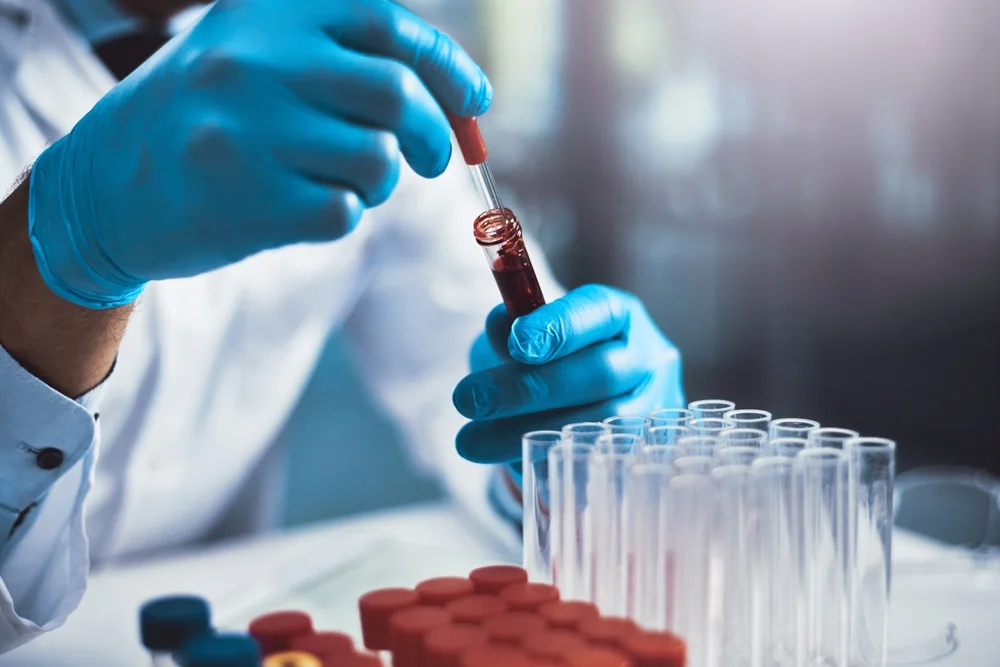
California forensic biology degree requirements depend on what the term “requirements” means. University admission rules, courses required for graduation, state criminalist qualifications, and forensic DNA laboratory standards are separate sets of requirements.
For a California state Criminalist position, the baseline education is a major in a physical or biological science, eight semester hours of general chemistry, and three semester hours of quantitative analysis. For forensic DNA analysis, the current FBI Quality Assurance Standards require at least a bachelor’s degree in a biology-, chemistry-, or forensic-science-related field, relevant coursework supporting the foundation of DNA analysis, and statistics or population genetics for analysts entering or advancing in the field under the current standard.
Neither standard says that a degree must carry the exact title “forensic biology.” A biology, biochemistry, molecular biology, chemistry, or forensic science degree can provide appropriate preparation when the transcript contains the required science and laboratory courses. Conversely, a degree with “forensic” in its title can still be too light in chemistry, genetics, molecular biology, or quantitative analysis for a particular laboratory position.
The California programs below illustrate several viable routes, including forensic science bachelor’s degrees, a biological sciences concentration, a forensic DNA master’s track, graduate criminalistics programs, and a community-college certificate. They are useful examples rather than a claim that every relevant biology or natural-science pathway in California is listed.
Requirements at a glance
| Requirement category | Useful undergraduate preparation | Relevance to forensic DNA work | Relevance to California state Criminalist eligibility |
|---|---|---|---|
| Degree field | Biology, chemistry, biochemistry, molecular biology, forensic science, or another closely related natural science | At least a bachelor’s degree in a biology-, chemistry-, or forensic-science-related area is required under the FBI standards | A major in a physical or biological science is required |
| General chemistry | Commonly two semesters with laboratories | Supports the broader scientific foundation and later analytical coursework | Eight semester hours are specifically required |
| Quantitative or analytical chemistry | Quantitative analysis, analytical chemistry, or an institutionally equivalent course | Useful for measurement, validation, instrumentation, and quality systems | Three semester hours of quantitative analysis are specifically required before appointment |
| Organic chemistry | At least one course; a full sequence may provide better preparation | Relevant to biochemical and molecular laboratory work | Not part of the general state Criminalist minimum stated in the examination bulletin, but frequently relevant to laboratory preparation |
| Biology | General biology with laboratories | Foundational for biological evidence analysis | A biological science may serve as the qualifying major |
| Genetics and molecular biology | Both are advisable for a DNA-focused curriculum | Directly relevant to DNA extraction, amplification, interpretation, inheritance, and population concepts | Not listed as universal minimum courses for the state classification, but the examination inventory asks about them |
| Statistics or population genetics | At least one applicable course | Required for analysts hired, appointed, promoted, or qualified on or after July 1, 2020 under the FBI standards | Statistics appears among the subjects examined in the state criminalist inventory |
| Mathematics and physics | Calculus and college physics | Common in science-intensive programs and useful for instrumentation | Not part of the stated baseline course minimum, though physics is relevant to broader criminalistics work |
| Laboratory experience | Biology, chemistry, molecular biology, instrumentation, and forensic laboratory work | Academic work must be followed by laboratory training and qualification before independent casework | Criminalist duties can include laboratory analysis, method development, crime-scene response, reporting, and testimony |
| Professional forensic study | Evidence handling, quality assurance, law, ethics, report writing, testimony, and cognitive bias | Relevant to laboratory quality systems and legal reporting | Relevant to the full range of state criminalist responsibilities |
| Capstone, research, or internship | A substantial applied or scholarly experience | Useful preparation for technical documentation and laboratory work | Helpful but not identified as a universal state classification minimum |
This is a planning framework synthesized from California classifications, current FBI standards, FEPAC educational standards, and the curricula of California programs. It is not a single statewide degree checklist.
What California criminalist requirements mean for degree planning
The California Department of Human Resources and Department of Justice Criminalist examination bulletin establishes a clear minimum for the state classification:
- Graduation with a major in a physical or biological science
- Eight semester hours of general chemistry
- Three semester hours of quantitative analysis
A candidate who lacks quantitative analysis can take the examination, but the coursework must be completed before appointment. That provision does not reduce the academic requirement. It only changes when the missing course must be finished.
The classification covers more than biological evidence. State criminalists may perform laboratory analysis, examine crime scenes, prepare reports, develop methods, and testify as expert witnesses. The examination inventory refers to organic chemistry, biochemistry, genetics, molecular biology, statistics, biology, physics, instrumental analysis, and forensic science. A transcript built only around the three explicit minimums would therefore provide a narrow foundation for the actual range of criminalistics work.
The California Criminalistics Institute similarly describes criminalists as scientists who usually hold four-year degrees in subjects such as chemistry, physics, biology, biochemistry, or molecular biology. Its career guidance identifies a chemistry minor, or at least the specified general chemistry and quantitative analysis courses, as appropriate preparation.
These state requirements apply to the California Criminalist classification. A city police department, county sheriff or district attorney, federal agency, private laboratory, or wildlife laboratory can use different titles and impose different educational requirements. California agencies also use terms such as forensic scientist, DNA analyst, evidence technician, and crime scene investigator in different ways.
A crime scene investigator may be a civilian evidence specialist at one agency and a sworn assignment at another. Field CSI preparation emphasizes photography, documentation, fingerprints, evidence recovery, scene processing, chain of custody, reconstruction, and report writing. Forensic biology and criminalist preparation requires substantially more biology, chemistry, molecular science, mathematics, and laboratory work.
Forensic DNA analyst education requirements
The FBI’s Quality Assurance Standards for Forensic DNA Testing Laboratories, effective July 1, 2025, establish minimum personnel qualifications for qualifying forensic DNA laboratories. They are laboratory quality standards, not a California degree-licensing statute.
A forensic DNA analyst must have:
- At least a bachelor’s degree or equivalent in a biology-, chemistry-, or forensic-science-related area.
- At least nine credit hours of biology- or chemistry-related coursework that provides an understanding of the foundation of DNA analysis.
- Coursework in statistics or population genetics when hired, appointed, promoted, or qualified on or after July 1, 2020.
- Laboratory training and successful qualification under the laboratory’s quality system before performing independent casework.
The standards define the required scientific foundation by substance rather than imposing one universal list of course titles. Genetics, molecular biology, biochemistry, and population genetics are therefore central planning subjects, even though universities may organize the material under different catalog names.
Course content can matter as much as the title printed on a transcript. Retaining official catalog descriptions and syllabi for genetics, molecular biology, biochemistry, statistics, population genetics, quantitative analysis, and advanced laboratory courses creates a useful record of what each class covered. Laboratories assessing educational qualifications may need to distinguish, for example, a general survey of genetics from a course that meaningfully covers molecular inheritance and DNA analysis.
A degree does not authorize a graduate to begin independent DNA casework. Laboratory-specific training, competency testing, authorization, and ongoing proficiency requirements follow academic preparation. A master’s degree also does not eliminate those steps.
The education threshold changes for a forensic DNA technical leader. Under the FBI standards, that role requires at least a master’s degree in a related field, relevant credit hours, statistics or population genetics, at least one graduate-level course among the required foundational coursework, and additional experience requirements. A bachelor’s degree can meet the minimum degree level for analyst positions, while technical leadership has a higher academic threshold.
A practical forensic biology curriculum
A well-planned forensic biology bachelor’s curriculum normally extends beyond biology electives attached to a criminal justice major. The following subjects create a stronger foundation for California criminalist and forensic DNA pathways:
Chemistry
Two semesters of general chemistry with laboratories provide the base for organic, analytical, and instrumental work. California’s state Criminalist classification expressly requires eight semester hours of general chemistry.
Quantitative analysis deserves special attention because it is another explicit state requirement. A course called analytical chemistry is not automatically identical to a course called quantitative analysis, but the subjects often overlap. The relevant institution or employer determines whether a particular course satisfies its requirement.
Organic chemistry supports later work in biochemistry, toxicology, biological molecules, and laboratory methods. Advanced chemistry can also strengthen preparation for criminalist positions that rotate among disciplines rather than hiring exclusively into DNA analysis.
Biology and molecular science
General biology with laboratories should lead into genetics, molecular biology, and biochemistry. Cell biology, microbiology, and advanced molecular laboratory methods add useful depth.
DNA-focused preparation needs more than a conceptual introduction to heredity. Analysts work with extraction, quantitation, amplification, separation, interpretation, quality assurance, and statistical evaluation. Coursework involving PCR, sequencing, fragment analysis, capillary electrophoresis, and biological-fluid identification connects foundational science to forensic applications.
Mathematics and statistics
Statistics or population genetics is a direct requirement under the current FBI personnel standards for covered analysts entering or advancing in the field. Calculus is also common in science-intensive forensic programs and appears in the FEPAC undergraduate biology framework.
Statistics coursework should support scientific interpretation rather than serving only as a general education survey. Probability, hypothesis testing, uncertainty, data interpretation, and population concepts are especially relevant to DNA evidence.
Physics and instrumentation
College physics supports an understanding of measurement, optics, energy, and instruments. Instrumental analysis or bioanalytical instrumentation adds experience with how laboratory data are produced, calibrated, evaluated, and documented.
Forensic biology is not isolated from the rest of the laboratory. Analysts operate within quality systems, use validated methods, document controls, assess limitations, and communicate results. Instrumentation and analytical chemistry courses help develop that broader laboratory judgment.
Forensic professional practice
Science courses establish technical competence, but forensic work also requires evidence handling, chain of custody, laboratory quality assurance, ethics, law-science interaction, report writing, and courtroom testimony.
Current FEPAC educational standards also address cognitive bias and human factors. Those subjects are not substitutes for chemistry or biology. They prepare scientists to recognize how procedures, context, decision-making, and documentation can influence forensic work.
Applied experience
A capstone, research project, internship, or substantial independent study can demonstrate the ability to design work, maintain records, analyze data, and present conclusions. These experiences are not interchangeable.
An internship provides workplace exposure, but it may not include intensive laboratory research. A thesis can develop deeper scientific independence without placing the student in an operational crime laboratory. Embedded laboratory courses can be extensive even when an external internship is optional. Program requirements need to be read according to the actual form of experience they provide.
California bachelor’s degree examples
More California forensic biology education options are covered in the broader guide to forensic biology degrees in California. The programs below are especially useful for comparing undergraduate course requirements.
San Jose State University Forensic Science, Biology Concentration, BS
San Jose State University offers a 120-unit Bachelor of Science in Forensic Science with a Biology Concentration. Its curriculum combines natural science with forensic methods rather than treating forensic biology as a small group of electives.
The accessible major form includes introductory biology, two semesters of general chemistry, chemistry laboratory work, calculus, statistics, physics, genetics, organic chemistry, and biochemistry or physical chemistry. Students also complete a forensic science survey, forensic methods, advanced forensic science courses, and forensic biology or DNA-related study.
That combination addresses several major transcript needs. General chemistry supports California Criminalist eligibility, while genetics and upper-division forensic biology support a DNA-focused path. Organic chemistry, physics, statistics, and advanced chemistry provide broader laboratory preparation than a criminal justice degree with a few forensic courses.
Required lower- and upper-division core courses must be completed with grades of C or better. SJSU’s departmental rules for current students seeking to change into its Biology, Chemistry, or Digital Evidence forensic science concentrations also list a minimum 3.0 overall GPA. The change-of-major process requires specified preparation that includes FS 11, statistics, and either CHEM 1A or BIO 30 with grades of C or better. Those departmental declaration rules are separate from freshman and transfer admission to the university.
The degree includes a three-unit practical requirement. Approved forms include an internship, independent study, Themis project, or directed reading. SJSU also warns that some forensic courses are offered only in a particular semester. Missing a prerequisite or taking a required course out of sequence can therefore delay later coursework.
SJSU states that its concentration curricula meet FEPAC educational standards. The current AAFS directory reviewed for this article did not list the program as FEPAC-accredited. “Meets FEPAC educational standards” is the university’s curriculum statement, while FEPAC accreditation is a separate programmatic status granted and listed by the commission.
The current departmental page continued to list the Biology Concentration in 2026, although the downloadable major form available during research was labeled Fall 2022. Students follow the catalog requirements assigned to their cohort, so later course numbers or sequencing rules can differ from that form.
California State University, East Bay Biological Sciences, BS, Forensic Science Concentration
CSU East Bay places forensic science within a Biological Sciences BS. This structure creates a strong identity as a biology degree first, with forensic and analytical applications added through the concentration.
The detailed 2025-2026 requirements identify 78 units of core and concentration study. Foundational coursework includes cell and molecular biology, organismal biology, two general chemistry lecture and laboratory sequences, calculus, two physics courses, genetics, and evolutionary biology.
Concentration courses extend into PCR, sequencing and fragment analysis, advanced cell and molecular biology, quantitative analysis, organic chemistry, and bioanalytical and forensic instrumentation. The program also includes criminal investigation, criminal identification, or forensic science coursework, depending on the applicable requirements.
This course sequence addresses several common gaps in otherwise relevant biology degrees. Quantitative analysis aligns directly with the California state Criminalist education requirement. Genetics, PCR, sequencing, and advanced molecular biology are relevant to DNA laboratories. Organic chemistry and instrumentation strengthen preparation for broader criminalistics work.
Advanced electives can include biochemistry, bioinformatics, anatomy and physiology, statistics, internship, independent study, or directed research, subject to concentration rules. The reviewed requirements sheet does not make an external internship mandatory for every student. Practical laboratory work is instead built throughout the biology and chemistry curriculum, with research and internship options available in the advanced elective structure.
Prerequisite courses generally require grades of C-minus or better before progression. Because chemistry, physics, mathematics, and upper-division biology are sequential, early planning has a direct effect on graduation time. A delayed chemistry sequence can postpone organic chemistry, quantitative analysis, and instrumentation. A delayed mathematics sequence can interfere with physics and other science requirements.
The university’s 2026-2027 roadmap index continued to list the concentration as active. The detailed departmental sheet available for review covered 2025-2026, so the applicable catalog remains the controlling curriculum for each student.
For a DNA career, the concentration provides clear molecular and analytical content. Statistics or population genetics still needs deliberate attention because FBI educational compliance depends on the completed transcript, not the concentration title. Selecting an applicable statistics elective can close that gap when it is not already satisfied elsewhere in the degree.
Graduate forensic biology and DNA requirements
A master’s degree is not the universal entry requirement for forensic biology. Graduate study is better understood as advanced preparation for applicants who already possess a substantial natural-science foundation.
Strong graduate programs do not use the master’s curriculum to replace missing introductory chemistry, biology, calculus, or physics. They expect applicants to arrive with those subjects and then move into forensic DNA analysis, serology, research, quality assurance, and advanced interpretation.
University of California, Davis MS in Forensic Science, DNA Track
UC Davis offers a 54-quarter-unit Master of Science in Forensic Science with DNA and Criminalistics tracks. The DNA track is the most directly specialized graduate option among the California programs reviewed.
Applicants need an appropriate bachelor’s degree in a physical or natural science, engineering, or a closely related field. The program normally expects a GPA of at least 3.0. Prerequisite preparation includes:
- One year of general chemistry
- One quarter of organic chemistry
- One quarter of general physics
- Calculus
- Statistics
General biology, biochemistry, and genetics are recommended. The recommendation has practical force for the DNA track because Forensic DNA Analysis assumes previous genetics and molecular biology coursework. An applicant with the formal minimum chemistry, physics, calculus, and statistics prerequisites but little molecular biology would face a weak academic transition into advanced DNA study.
The degree requires nine core courses totaling 26 to 27 quarter units, three seminar units, nine elective units, and thesis or capstone work. DNA-related offerings include Forensic DNA Analysis, Principles and Practice of Forensic Serology and DNA Analysis, Forensic Biology, and Non-Human Forensic DNA.
Forensic DNA Analysis covers extraction, quantitation, STR amplification, capillary electrophoresis, data analysis, legal issues, and quality assurance. The serology and DNA course includes laboratory work involving preservation of biological evidence, bodily-fluid identification, DNA extraction, quantification, and typing. These are applied laboratory subjects rather than a purely policy-oriented treatment of forensic science.
Students choose a thesis or capstone route. Both require advanced work beyond ordinary course completion, although the research scope and final product differ.
The AAFS FEPAC directory lists the UC Davis MS in Forensic Science with DNA Analysis and Criminalistics tracks as fully accredited from March 1, 2026 through March 1, 2031. Accreditation applies to the specified program, not to every UC Davis degree.
UC Davis provides advanced DNA, serology, research, and quality-assurance education. It does not replace laboratory training, competency testing, or authorization for independent casework after hiring.
California State University, Los Angeles MS in Criminalistics
Cal State LA’s MS in Criminalistics is a broader laboratory criminalistics degree rather than a program titled forensic biology or a dedicated forensic DNA track. It belongs in this discussion because its science prerequisites and laboratory outcomes include the biological, chemical, and physical foundations used in forensic analysis.
Applicants are expected to hold a bachelor’s degree in a natural or physical science such as biology, biochemistry, molecular genetics, chemistry, or physics. Published prerequisite preparation includes general biology, biostatistics, general chemistry, organic chemistry with laboratories, quantitative analysis, and physics.
The program requires a minimum 3.0 GPA in both the final 60 semester units and the undergraduate major. New students are admitted for the fall term, and the published application deadline is March 15.
Cal State LA’s learning outcomes address laboratory analysis using appropriate forensic instrumentation and techniques, application of biological, chemical, and physical knowledge, laboratory documentation, interpretation of evidence, scientific communication, and completion of a capstone research project. The school also reports internship opportunities through public and private laboratories.
Most courses are scheduled in the evening, which can help working professionals attend, although some electives may meet during the day. The program remains campus-based and laboratory-oriented.
This route is better aligned with broad criminalistics than with a narrowly defined DNA specialization. Its required undergraduate preparation is also a useful model for bachelor’s planning: biology alone is insufficient without general and organic chemistry, quantitative analysis, statistics, physics, and laboratory work.
National University Master of Forensic Sciences, Criminalistics Specialization
National University offers a 36-semester-credit Master of Forensic Sciences with Criminalistics and Investigation specializations. Only the Criminalistics specialization has the verified laboratory-science prerequisite and dedicated serology and DNA coursework discussed here.
Admission to the Criminalistics specialization requires an undergraduate degree in a laboratory science or physical science, such as biology or chemistry, unless the academic program director grants an exception. The specialization includes Trace Evidence, Advanced Forensic Toxicology, Forensic Serology and DNA, and Advanced Forensic DNA Analysis.
The verified serology and DNA content addresses forensic biology laboratory functions, biological-fluid identification, quality systems, and DNA-testing fundamentals. The degree culminates in a supervised research project.
National advertises online, in-person, and hybrid formats, but delivery varies by specialization. Some Criminalistics courses may require in-person laboratory participation. The current program materials do not specify the exact number or location of all required laboratory sessions.
This is a broad forensic science master’s degree with an identifiable DNA and serology component. It is not equivalent in structure to the dedicated UC Davis DNA track, and the Investigation specialization should not be confused with the laboratory-oriented Criminalistics specialization.
A certificate route and its limits
Victor Valley College Forensic Science, Biology Concentration Certificate of Achievement
Victor Valley College offers a 25-unit Certificate of Achievement in Forensic Science with a Biology Concentration. Required coursework includes forensic pathology, principles of forensic biology, microbiology, human physiology, and biological research or experimental design.
Students also select additional study in heredity, research design and analysis, forensic anthropology, or crime-scene investigation. Required courses must be completed with grades of C or better, and individual science courses can have their own prerequisites.
The certificate provides an accessible way to explore biological evidence, add forensic context to prior science education, or begin transfer-oriented study. Laboratory and experimental-design work are present in the curriculum.
It is not a substitute for the bachelor’s degree required under the FBI forensic DNA analyst standards or for positions expressly requiring a four-year natural-science degree. Victor Valley College itself explains that entry-level criminalistics employment commonly requires a natural or physical science major and that advanced positions generally require a bachelor’s or graduate degree.
The most productive use of this certificate depends on the student’s broader academic plan. Someone who already holds a relevant bachelor’s degree may use the coursework to add forensic context. A new college student targeting criminalist or DNA analyst employment needs a transfer plan that leads to a qualifying bachelor’s degree and preserves the necessary chemistry, mathematics, and biology sequences.
How FEPAC affects the requirements question
The Forensic Science Education Programs Accreditation Commission, commonly called FEPAC, accredits eligible bachelor’s and master’s programs in forensic science or natural science with a forensic science concentration. Its scope also includes qualifying undergraduate crime-scene investigation programs under separate provisions.
FEPAC accreditation is programmatic. It applies to a named degree program, not an entire institution. A school can offer several forensic or science degrees while only one specific program holds accreditation.
The current undergraduate biology-emphasis framework includes:
- Foundational biology
- Physics
- General chemistry
- Organic chemistry
- Calculus
- Statistics
- Additional advanced biology or chemistry
- Laboratory coursework
- Advanced forensic biology with laboratory or hands-on work
- Evidence handling and professional practice
- Law and courtroom testimony
- Quality assurance
- Ethics
- Report writing
- Cognitive bias and human factors
- A capstone, internship, or independent research experience with a scholarly product
This framework is useful because it shows the breadth expected in a carefully designed forensic biology education. It is more demanding than completing a general criminal justice major and adding one DNA course.
Accreditation is not the same as employment eligibility. A graduate of a FEPAC-accredited program still must meet the exact education, training, and qualification rules for the position. A graduate of a non-FEPAC program can still qualify when the degree and transcript satisfy the employer’s requirements.
As of the directory reviewed for this article, UC Davis was the California program among these examples listed as currently FEPAC-accredited. SJSU states that its curricula meet FEPAC educational standards, which is a different claim. No current FEPAC accreditation was verified for CSU East Bay, Cal State LA, National University, or the Victor Valley College certificate.
Transfer planning for a forensic biology degree
Transfer planning is most successful when chemistry and mathematics begin early. General education completion alone does not place a student near the end of a science-intensive degree.
A typical sequence can involve:
- General chemistry before organic chemistry, quantitative analysis, or instrumentation
- Introductory biology before genetics and molecular biology
- Mathematics before calculus-based or program-specific physics
- Genetics and molecular biology before advanced DNA analysis
- Foundational laboratory courses before research, internship, or capstone work
Skipping one term in a year-long chemistry sequence can affect several later courses. SJSU also identifies required forensic courses that may be available only in fall or spring. CSU East Bay’s curriculum is similarly structured around prerequisite chains.
Community-college students benefit from prioritizing transferable general chemistry with laboratories, biology with laboratories, calculus, statistics, and physics. Organic chemistry may also be appropriate before transfer when articulation and scheduling permit. Quantitative analysis can be harder to locate at a community college, so its placement in the transfer plan requires particular attention.
Course articulation establishes whether a class transfers for a particular university requirement. Employment standards create a separate issue. A course accepted by a university as elective credit might not contain enough relevant material for a hiring laboratory’s DNA coursework evaluation. Catalog descriptions and syllabi provide evidence of content when the title alone is vague.
Why online-only forensic biology degrees are difficult to build well
Forensic biology requires wet-laboratory science. General chemistry, organic chemistry, molecular biology, microbiology, genetics laboratories, instrumental analysis, PCR, sequencing, and serology cannot be reduced to reading and discussion without losing essential technical preparation.
A program can deliver lectures online while requiring local or campus laboratories. Hybrid design is therefore more realistic than a fully remote route for serious laboratory preparation. National University illustrates this distinction: the overall degree is advertised in multiple formats, but some Criminalistics courses may require in-person laboratory participation.
Online flexibility is more feasible for subjects such as ethics, forensic law, quality assurance theory, scientific writing, or portions of statistics. It is less suitable as a replacement for supervised laboratory work involving instruments, biological samples, controls, documentation, and validated procedures.
Students comparing formats should distinguish three different claims:
- Online coursework is available.
- The entire degree can be completed remotely.
- All required science laboratories can be completed without travel.
Those statements are not equivalent. In forensic biology, the second and third claims require especially strong evidence.
Matching the degree to the intended career
“Forensic biology” can lead toward several jobs, but their educational priorities differ.
Forensic DNA analyst
Prioritize a qualifying bachelor’s degree, genetics, molecular biology, biochemistry, statistics or population genetics, and laboratory courses related to DNA analysis. The FBI Quality Assurance Standards provide the core personnel framework, followed by employer training and qualification.
SJSU and CSU East Bay provide relevant undergraduate science foundations. UC Davis offers more specialized graduate DNA work. National University includes forensic serology and advanced DNA courses within a broader criminalistics specialization.
California state criminalist
Prioritize a physical or biological science major, eight semester hours of general chemistry, and three semester hours of quantitative analysis. Broader preparation in organic chemistry, biochemistry, physics, statistics, instrumentation, and forensic methods better reflects the duties and examination subjects.
CSU East Bay explicitly includes quantitative analysis within its concentration. Cal State LA expects quantitative analysis before graduate criminalistics study. Any other degree route needs enough chemistry to satisfy the state minimum and support laboratory work.
Crime scene investigator or technician
Prioritize evidence recognition and recovery, photography, fingerprints, documentation, scene processing, reconstruction, chain of custody, report writing, and testimony. Extensive biology can be useful, but a laboratory-oriented forensic biology degree is not always required for field-only roles.
Agency structure matters because some California CSI assignments are civilian while others are performed by sworn personnel. A forensic biology curriculum prepares for biological evidence and laboratory science more directly than for every form of field investigation.
Evidence or property technician
Evidence intake, storage, documentation, chain of custody, packaging, and property-room procedures can be more central than molecular biology. A forensic biology bachelor’s degree may exceed the science education required for some of these roles, while still providing useful evidence knowledge.
Wildlife forensic specialist
Specialized positions can have more detailed requirements than the general Criminalist classification. California’s Wildlife Forensic Specialist classification requires a biological science bachelor’s degree and specified coursework in general chemistry, biochemistry, organic chemistry or quantitative analysis, and genetics or molecular biology.
This example shows why a broad “forensic science” label is not enough. Specialty positions can examine the transcript at a much finer level.
A transcript-audit plan before graduation
A disciplined transcript audit is more useful than choosing a degree by title alone.
1. Identify the target role
Separate laboratory criminalist, forensic DNA analyst, field CSI, evidence technician, and specialty scientist positions. These occupations overlap, but they do not use one universal education standard.
2. Start with the controlling requirement
For a California state Criminalist goal, use the state classification and examination bulletin. For DNA analysis, use the FBI Quality Assurance Standards and the hiring laboratory’s personnel criteria. For a specialty classification, use its current specification.
3. Map completed and planned courses
Create a list covering:
- General chemistry and laboratories
- Quantitative or analytical chemistry
- Organic chemistry
- Biology and laboratories
- Genetics
- Molecular biology
- Biochemistry
- Statistics or population genetics
- Calculus
- Physics
- Instrumental analysis
- Forensic biology or DNA analysis
- Quality assurance
- Evidence handling
- Scientific writing
- Research, capstone, or internship experience
Record semester and quarter units exactly as awarded. Do not silently convert between them without an approved equivalency.
4. Identify sequencing gaps early
Calculus, physics, organic chemistry, and upper-division molecular courses often depend on earlier prerequisites. A missing first course can affect an entire academic year. The earlier the gap appears in the plan, the more options remain for correcting it without delaying graduation.
5. Preserve evidence of course content
Keep catalog descriptions, syllabi, laboratory outlines, and major requirement sheets. This is especially useful for courses with broad titles such as advanced biology, research methods, applied statistics, or analytical methods.
6. Evaluate laboratory depth separately from degree format
Count actual laboratory courses and applied projects. An online lecture in forensic biology does not provide the same preparation as supervised work in extraction, PCR, biological-fluid testing, microscopy, chromatography, or instrumental analysis.
7. Treat the degree as academic preparation, not final authorization
The degree establishes scientific readiness. Employment-based laboratory training, competency testing, authorization, and proficiency testing follow. Planning for both stages produces a more accurate path into forensic biology than relying on the word “forensic” in a program title.
California offers several workable routes. SJSU combines forensic science with a biology concentration and a practical experience requirement. CSU East Bay builds forensic study into a biological sciences degree with quantitative analysis, genetics, PCR, sequencing, and instrumentation. UC Davis provides a FEPAC-accredited graduate DNA track for applicants who already possess substantial science preparation. Cal State LA and National University offer broader criminalistics master’s pathways with biological-evidence relevance, while Victor Valley College provides an introductory or supplemental certificate rather than a replacement for a qualifying bachelor’s degree.
For laboratory careers, the strongest academic plan is the one that produces the right transcript: substantial chemistry, molecular biology, genetics, statistics, laboratory experience, and the specific courses required by the intended employer or quality standard.