
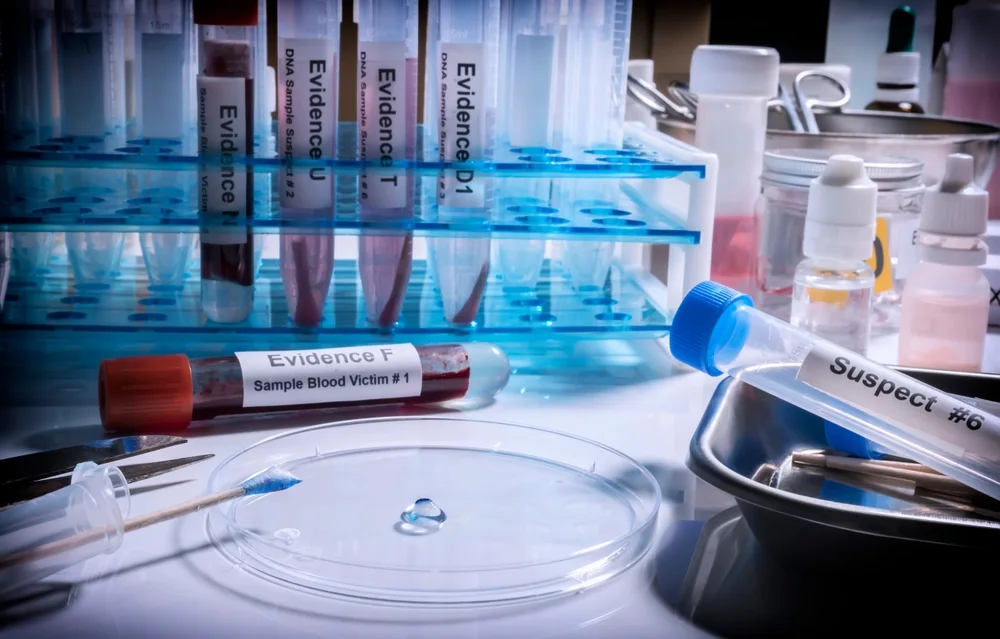
California has few graduate degrees literally titled “forensic biology.” The practical choices are more varied: a forensic science master’s with a DNA track, a broad criminalistics degree, a biology or biochemistry concentration, or an online forensic DNA program available to California residents.
The best academic fit depends heavily on the intended job. A DNA analyst needs advanced biology, genetics, statistics, and DNA-analysis coursework. A California criminalist may work across several evidence disciplines and usually needs a strong foundation in chemistry or biology. A crime scene investigator needs evidence documentation, photography, scene processing, and chain-of-custody skills, which are not the central focus of every forensic biology degree.
This guide covers eight verified options within a practical scope: California-based graduate programs and directly relevant online programs that Californians can complete without relocating. It does not attempt to catalog every campus program elsewhere in the United States. Readers exploring other degree levels can also review the broader guide to forensic biology degrees in California.
Comparing forensic biology master’s options
| School and program | Delivery | Degree and biology focus | Research or practical component | FEPAC status | Published cost basis |
|---|---|---|---|---|---|
| UC Davis, MS in Forensic Science, DNA Track | On campus in Davis | 54 quarter units; dedicated DNA track with molecular techniques, DNA analysis, population genetics, and DNA typing | 15 research units; thesis and capstone plans appear in current catalog materials | FEPAC-accredited from March 1, 2026 through March 1, 2031 | $903 per unit for fall 2025 entrants and later; 2026-27 annual tuition and fees estimate is $25,110 |
| Cal State LA, MS in Criminalistics | Primarily on campus in Los Angeles; most graduate courses in the evening | Broad criminalistics degree supported by substantial biology and chemistry prerequisites | Required research capstone; internships encouraged | Not listed as FEPAC-accredited | Fall 2026 resident graduate tuition and mandatory fees are $3,027.04 for up to six units or $4,821.04 for more than six units |
| National University, Master of Forensic Sciences, Criminalistics Specialization | Online, hybrid, and selected in-person study; some courses may require laboratory attendance | 36 credits; includes forensic serology, DNA, and advanced DNA analysis within a broader forensic curriculum | Supervised research project; possible in-person laboratory participation | Not listed as FEPAC-accredited | $683 per credit; published estimated tuition and fees total is $25,830 |
| Stevenson University, MS in Forensic Science, Forensic Biology Concentration | 100 percent online | 36 credits; serology, immunology, DNA analysis, trace evidence, toxicology, and quality systems | No required residency or supervised wet-laboratory practicum is identified on the current program page | Not listed as FEPAC-accredited | $719 per credit; program page lists no additional program fees |
| University of Florida, MS in Pharmacy, Forensic DNA and Serology Concentration | Entirely online with asynchronous elements | 32 credits; biological evidence, serology, forensic genetics, DNA analysis, molecular biology, biochemistry, and statistics | Literature survey and final special-topics examination; no required wet-laboratory residency listed | Not listed as FEPAC-accredited | $575 per credit plus applicable fees |
| University of Central Florida, Chemistry MS, Forensic Science Track, Forensic Biochemistry Concentration | Online | 32 to 34 credits; biochemistry-oriented forensic science with biological-evidence coursework | Thesis and nonthesis routes; delivery details for a listed laboratory course are not explained on the public summary | Online master’s is not listed as FEPAC-accredited | Published nonresident online rate is $1,234.15 per credit |
| Oklahoma State University, MS in Forensic Sciences, Forensic Biology/DNA Concentration | Fully online for the 32-credit nonthesis route | Molecular biology, population genetics, and forensic bioscience | Online capstone paper or project; thesis route requires on-site research | Withdrew from FEPAC accreditation effective January 1, 2024 | Current program-specific online total was not established in the reviewed materials |
| University of the Southwest, MS in Biology, Forensics Specialization | 100 percent online | 30 credits; genetics, DNA analysis, biochemistry, toxicology, forensic statistics, and forensic science | Current degree plan does not identify an internship, residency, thesis, or supervised wet-laboratory practicum | Not listed as FEPAC-accredited | Current program-specific tuition total was not established in the reviewed materials |
How these programs differ
UC Davis is the clearest direct California option for graduate study in forensic DNA. Its named DNA track, laboratory science prerequisites, research requirement, and current FEPAC accreditation give it a structure closely aligned with forensic laboratory education.
Cal State LA takes a different approach. Its MS in Criminalistics is broader than forensic biology, but admission requires the scientific foundation expected for laboratory criminalistics. It is a strong match for someone seeking broad evidence-analysis preparation rather than a curriculum centered almost entirely on DNA.
National University is the California-based flexible option in this comparison. It includes two DNA-focused courses and a serology course, but much of the degree addresses other forensic subjects. Some criminalistics courses may also require in-person laboratory work.
The five out-of-state universities provide distance-accessible alternatives. Stevenson, Florida, Oklahoma State, and the University of the Southwest have explicitly named biology, DNA, serology, or forensics concentrations. UCF places forensic study inside a chemistry master’s and offers a forensic biochemistry concentration.
The online programs provide advanced academic study without regular relocation. Their main tradeoff is practical laboratory exposure. Coursework in DNA theory, quality assurance, genetics, and serology is useful, but forensic laboratories separately require documented training and competency assessments after hiring. A degree cannot substitute for that employer-controlled process.
UC Davis MS in Forensic Science, DNA Track
UC Davis offers the most directly aligned California graduate program for forensic biology and DNA analysis. The 54-quarter-unit MS in Forensic Science has DNA and Criminalistics tracks, and the DNA track concentrates on forensic DNA methods, applications, and interpretation.
The curriculum includes Molecular Techniques, Forensic DNA Analysis, Population Genetics, and Principles and Practices of DNA Typing. Students also complete Forensic Science Fundamentals, Homicide Crime Scene Investigation, Forensic Case Reports, seminars, electives, and substantial research. The DNA track specifies 15 research units and at least nine elective units.
That research commitment separates UC Davis from fully online programs based mainly on academic coursework. Laboratory research can develop experience with experimental design, scientific documentation, data interpretation, quality practices, and technical communication. These abilities are relevant to casework laboratories even though newly hired analysts still complete the training and competency process required by their employer.
The current catalog describes Plan I thesis and Plan II capstone structures. The DNA-track page places particular emphasis on research, including the 15-unit research component and a dedicated DNA laboratory course. Current public materials do not fully explain which plan options are available to every incoming DNA-track student, so the program is best understood as a research-intensive graduate route rather than a purely course-based degree.
Admissions preparation
Applicants need a bachelor’s degree in a natural or physical science. UC Davis publishes a 3.0 expectation for both overall performance and prerequisite courses. Required preparation includes:
- General chemistry with laboratory
- Organic chemistry with laboratory
- Physics with laboratory
- Calculus
- Statistics
- Biology for DNA-track applicants
These prerequisites reflect the scientific range used in laboratory criminalistics. DNA analysis relies on molecular biology and genetics, but analysts also need quantitative reasoning, an understanding of chemical processes, and the ability to interpret statistical evidence.
Someone holding a criminal justice bachelor’s degree without the required natural science sequence would face substantial prerequisite deficiencies. By contrast, biology, biochemistry, chemistry, genetics, or molecular biology graduates are more likely to have the necessary foundation, though the transcript still needs to include the specific required subjects.
Accreditation and cost
The current AAFS/FEPAC directory lists the UC Davis MS in Forensic Science with DNA Analysis and Criminalistics tracks as fully accredited from March 1, 2026 through March 1, 2031. It is the only California graduate program identified in the current directory review.
UC Davis operates the degree as a self-supporting program. The published rate for students entering in fall 2025 or later is $903 per unit, with the same program rate for California, out-of-state, and international students. Health insurance, books, supplies, laboratory materials, housing, and personal expenses are separate.
For 2026-27, UC Davis estimates $25,110 in annual tuition and fees for a new full-time student. Its estimated annual total cost of attendance is $59,170 after adding insurance, housing, food, transportation, and personal expenses. The latter is a financial-aid budget, not a guaranteed program bill.
UC Davis fits applicants seeking campus laboratory access, substantial research, a dedicated DNA curriculum, and current FEPAC accreditation. It is less compatible with someone who needs a fully online schedule or cannot regularly attend in Davis.
Cal State LA MS in Criminalistics
Cal State LA’s MS in Criminalistics is a laboratory-science degree with broader coverage than a dedicated forensic biology program. It remains a current graduate offering and admits a relatively small cohort, reported by the university as approximately 14 to 18 students.
The program is housed in the School of Criminal Justice and Criminalistics and operates in the Hertzberg-Davis Forensic Science Center. Public program materials emphasize scientific methods, instrumentation, evidence examination, forensic research, law, and ethics. The curriculum is designed around criminalistics as a profession rather than a single evidence discipline.
That breadth can be useful for California criminalist positions, where a laboratory may recruit scientists into DNA, toxicology, controlled substances, trace evidence, firearms, or another specialty. It offers less concentration in molecular biology and genetics than UC Davis’s named DNA track.
Science prerequisites and admissions
Cal State LA requires a bachelor’s degree in a natural or physical science. A degree in criminal justice, psychology, or anthropology by itself does not meet the published major requirement. Prerequisite subjects include:
- Biology
- Biostatistics
- General chemistry
- Organic chemistry with laboratories
- Physics
- Quantitative analysis
These requirements are well aligned with the California Department of Justice’s emphasis on physical or biological science, chemistry, and quantitative analysis for crime-laboratory preparation.
Applicants need at least a 3.0 GPA in the final 60 semester units or 90 quarter units and a 3.0 GPA in the undergraduate major. The program admits new students for fall only, and the published application deadline is March 15.
Most graduate courses are scheduled in the evening. Some electives may meet during the day, so evening scheduling does not mean the entire program can be completed outside conventional working hours. The standard structure is described as full time over two years.
Students complete a research capstone. The program also encourages internships with public or private laboratories, although current materials describe internships as encouraged rather than universally required. An internship can be especially useful in a broad criminalistics program because it adds exposure to laboratory workflow, evidence handling, documentation, and quality procedures.
Cost and career alignment
For fall 2026, California resident graduate tuition and mandatory campus fees total $3,027.04 for enrollment of up to six units or $4,821.04 for more than six units. Those semester charges do not include books, parking, housing, personal expenses, or nonresident tuition.
Cal State LA is not listed as a FEPAC-accredited graduate program in the current directory. Its suitability should therefore be evaluated through its science prerequisites, laboratory environment, research capstone, internship access, curriculum, and graduate outcomes rather than through a programmatic-accreditation label.
This route works better for a scientist seeking broad criminalistics preparation than for someone who wants a narrowly constructed molecular genetics curriculum. A prospective DNA analyst would need enough qualifying biology, chemistry, statistics, and population-genetics coursework across the undergraduate and graduate transcripts.
National University Master of Forensic Sciences, Criminalistics Specialization
National University offers a 36-semester-credit Master of Forensic Sciences with a Criminalistics specialization. Delivery options include online, hybrid, and selected in-person study. The university also advertises year-round enrollment and monthly starts.
The criminalistics coursework includes Trace Evidence, Advanced Forensic Toxicology, Forensic Serology and DNA, and Advanced Forensic DNA Analysis. Those courses provide meaningful biological-evidence content, especially for someone who already has an undergraduate laboratory science degree.
The rest of the degree is broad. Core topics include crime scene investigation, forensic pathology, anthropology, fingerprints, digital evidence, law, and research. This is not a dedicated forensic biology curriculum. Its scope is better suited to someone who wants advanced exposure to multiple forensic disciplines while retaining a DNA component.
Admission to the Criminalistics specialization normally requires an undergraduate laboratory or physical science degree, such as biology or chemistry. The academic program director can approve an exception, but that exception would not change the separate science-course requirements used by forensic DNA employers.
A supervised research project concludes the program. National University also states that some Criminalistics courses may require in-person laboratory participation. The public page does not provide one residency schedule that applies to every student or location. As a result, “online” does not mean that every criminalistics sequence is guaranteed to be free of laboratory travel.
The published tuition is $683 per credit, and National University lists an estimated program tuition and fees total of $25,830. Personal expenses and any travel or laboratory-related costs are separate.
National University is institutionally accredited by the WASC Senior College and University Commission. The Master of Forensic Sciences is not listed as FEPAC-accredited in the current AAFS directory.
Stevenson University Online MS in Forensic Science, Forensic Biology Concentration
Stevenson University offers a 36-credit MS in Forensic Science with a Forensic Biology concentration. The program is delivered entirely online in eight-week courses.
The published curriculum includes:
- Serology and Immunology
- DNA Analysis
- Physical Evidence at Crime Scenes
- Trace Evidence
- Toxicology
- Laboratory safety
- Quality assurance and quality control
- Expert Witness Preparation and Practice
This is a direct forensic biology option rather than a generic forensic science degree containing one DNA elective. Serology, immunology, DNA analysis, and quality systems address core academic areas used in biological-evidence laboratories. Crime-scene evidence and expert-witness coursework add context for collection, case interpretation, and testimony.
Admission requires substantial prior science study. Published prerequisites include general chemistry I and II with laboratories, organic chemistry I and II with laboratories, biology with laboratory, calculus or statistics, and physics I and II with laboratories. Stevenson also publishes a minimum 3.0 cumulative GPA and a 3.0 math and science GPA expectation.
Those prerequisites serve another purpose beyond admission. They make the online graduate curriculum more appropriate for people who have already developed basic wet-laboratory skills through undergraduate chemistry, biology, and physics courses. An online master’s cannot recreate every part of that laboratory foundation through lectures and remote assignments.
Stevenson advertises the degree as 100 percent online. The current program page does not list a required residency, internship, or supervised forensic wet-laboratory practicum. The curriculum can provide advanced scientific and casework knowledge, but employer laboratory training remains a separate stage.
Tuition is listed at $719 per credit, with no additional program fees shown on the program page. Books and normal personal expenses can still add to the final cost. Stevenson is institutionally accredited by the Middle States Commission on Higher Education, while the online master’s is not listed as a FEPAC-accredited program.
University of Florida Online Forensic DNA and Serology Concentration
The University of Florida offers one of the most focused online curricula in this comparison. The exact credential is a Master of Science in Pharmacy with a major in Pharmaceutical Sciences and a concentration in Forensic DNA and Serology. The diploma reads “Master of Science in Pharmacy.”
The 32-credit curriculum includes:
- Biological Evidence and Serology
- Bloodstain Pattern Analysis
- Forensic Analysis of DNA
- Forensic Immunology
- Forensic Genetics
- Principles of Nucleotide Activity
- Metabolic Biochemistry
- Mammalian Molecular Biology
- Applied statistics
- Laboratory quality assurance and quality control
The final term includes a literature survey and a special-topics examination. Most students complete the degree in two to three years, although the university permits up to seven years.
UF states that the coursework was designed to meet FBI national educational guidelines. That statement concerns curriculum design. Employment eligibility still depends on the complete transcript, degree field, required subject credits, laboratory training, competency assessment, and the hiring laboratory’s review.
The exact degree title deserves attention because California job announcements may specify eligible degree fields. A transcript showing the Pharmaceutical Sciences major and Forensic DNA and Serology concentration gives employers more detail than the diploma alone, but each agency applies the wording in its vacancy announcement and classification rules.
Applicants need a bachelor’s degree in a natural science and at least a 3.0 upper-division GPA. The GRE is not required.
Courses are entirely online and include asynchronous elements. UF states that participation does not require travel or related living expenses. No required supervised wet-laboratory residency appears in the published degree structure.
Tuition is $575 per credit plus applicable fees, charged at the same rate regardless of location. The program is not listed as FEPAC-accredited in the current directory.
UF is best aligned with scientists seeking advanced DNA, serology, genetics, biochemistry, and molecular biology study while remaining employed in California. The Master of Science in Pharmacy title and lack of a required forensic laboratory practicum are the principal differences from a campus forensic science research degree.
University of Central Florida Online Chemistry MS, Forensic Science
UCF’s program leads to a Master of Science in Chemistry with a forensic science track. Available concentrations include forensic professional, forensic analysis, and forensic biochemistry. The degree requires 32 to 34 credits and has thesis and nonthesis options.
The forensic biochemistry concentration is the closest match to forensic biology. A published course titled Forensic Analysis of Biological Materials addresses the recovery and typing of DNA from evidentiary materials. Other examples on the online program page include forensic science topics, quality assurance, and instrumental or chemical evidence analysis.
A chemistry master’s can be useful in laboratories that value broad analytical science. It may also support work outside DNA, including toxicology, trace evidence, or controlled-substance analysis, depending on the concentration and prior coursework. Someone targeting forensic DNA specifically would need to map the program against required biology, genetics, molecular biology, statistics, and population-genetics subjects.
The public online summary does not provide enough detailed prerequisite information to describe a complete admissions science sequence. It also labels the biological-materials course as a laboratory course without explaining how distance learners complete the laboratory element. The published page does not say whether the course uses remote exercises, local facilities, intensive sessions, or another model.
UCF’s online page lists a nonresident rate of $1,234.15 per credit. That is a cost basis rather than an exact program total because the selected plan can range from 32 to 34 credits and additional charges can apply.
UCF has a FEPAC-accredited bachelor’s program, but that accreditation cannot be transferred to this graduate degree. The online Chemistry MS is not identified as FEPAC-accredited in the current directory.
Oklahoma State University MS in Forensic Sciences, Forensic Biology/DNA
Oklahoma State University Center for Health Sciences offers a Forensic Biology/DNA concentration within its MS in Forensic Sciences. Californians can complete the 32-credit nonthesis pathway fully online.
The curriculum identifies Molecular Biology, Population Genetics, and Forensic Bioscience as specialized courses. OSU recommends undergraduate preparation in biology I and II, biochemistry, and genetics. Preferred undergraduate fields include biology, cell biology, genetics, and molecular biology.
Online nonthesis students complete a capstone paper or project through FRNS 5980. This gives the degree a defined culminating requirement even though the online pathway does not require a thesis.
OSU also has a thesis route requiring at least 30 credits. That option requires faculty approval and on-site research, so it is not a fully remote alternative. An optional campus methods course and an opportunity to apply for an on-campus internship are described separately from the required online curriculum.
The ability to select between a fully online capstone route and an on-site research route clarifies the program’s practical structure. A working California scientist can finish the academic degree online, while someone seeking faculty-directed research would need to attend on campus for the thesis pathway.
Oklahoma State’s MS in Forensic Science voluntarily withdrew from FEPAC accreditation effective January 1, 2024. It is therefore not currently FEPAC-accredited. Older pages or records showing past accreditation do not describe its present status.
A reliable current program-specific online tuition total was not established in the reviewed official materials. OSU’s published online graduate rates and required fees are the appropriate basis for a current cost calculation.
University of the Southwest MS in Biology, Forensics Specialization
The University of the Southwest offers a 30-credit MS in Biology with a Forensics specialization. All of the university’s graduate programs are delivered in a 100 percent online environment.
Its published degree plan contains several subjects directly related to forensic biology:
- Human Genetics
- Molecular Genetics
- Forensic DNA Analysis
- Advanced Biochemistry
- Toxicology
- Statistics in Forensic Science
- Forensic Science
- Forensic Anthropology
- Forensic ethics
- Technical communication
The genetics, DNA, biochemistry, toxicology, and statistics sequence gives this program more biological depth than a broad forensic degree built mainly around investigations or criminal justice. It also retains a wider interdisciplinary element through anthropology, ethics, and communication.
The current program page and linked degree plan do not clearly publish detailed undergraduate science prerequisites. The degree plan also does not identify a supervised wet-laboratory course, internship, campus residency, thesis, or research practicum. Its academic content is relevant to forensic biology, but the documented practical component is less developed than in the UC Davis research curriculum.
The linked plan is marked as revised in June 2022 and remains connected to the current program page. A reliable current program-specific tuition total was not established in the reviewed official sources.
The University of the Southwest is institutionally accredited by the Higher Learning Commission. The program is not listed as FEPAC-accredited.
The university makes a broad statement about meeting FBI and New Mexico educational requirements. That claim does not establish eligibility for every California criminalist or DNA analyst vacancy. California agencies review the applicant’s degree field, full transcript, subject credits, experience, and the language of the particular classification or job announcement.
What California forensic biology careers require
A master’s degree is not the universal entry credential for forensic laboratory work. The U.S. Bureau of Labor Statistics identifies a bachelor’s degree as the typical entry-level education for forensic science technicians. The national median annual wage was $67,440 in May 2024, and employment is projected to grow 13 percent from 2024 through 2034.
That occupational category combines laboratory and crime-scene roles, so it is broader than forensic biology. A DNA analyst, criminalist, evidence technician, and crime scene investigator can have different educational and training requirements even when all fall somewhere within forensic science.
California crime-laboratory scientists are commonly called criminalists. The California Department of Justice Criminalistics Institute emphasizes a four-year physical or biological science degree rather than a generic criminal justice degree. It also recommends preparation in chemistry and quantitative analysis.
The undergraduate degree remains significant after earning a master’s. A person with a biology bachelor’s and a forensic DNA master’s presents a different science record from a person with a criminal justice bachelor’s and the same graduate degree. Graduate work can add missing advanced subjects, but it does not erase degree-field and prerequisite language in government classifications.
California DOJ laboratories perform biology and DNA analysis along with toxicology, controlled-substance, firearms, impression, trace-evidence, and crime-scene work. Criminalists may analyze evidence, write technical reports, and testify in state or federal proceedings. Broad criminalistics programs can therefore be relevant, but DNA-focused applicants need the biology and statistics courses used in that specialty.
FBI educational standards for forensic DNA analysts
The FBI’s Quality Assurance Standards for Forensic DNA Testing Laboratories, effective July 1, 2025, establish education and training requirements used by covered DNA laboratories.
A forensic DNA analyst must hold at least a bachelor’s or advanced degree in a biology-related, chemistry-related, or forensic-science-related area. The analyst must also complete at least nine credit hours of biology or chemistry coursework that supports an understanding of DNA analysis.
Analysts qualified on or after July 1, 2020 also need coursework covering statistics or population genetics. The standards then require documented laboratory training and competency. Academic education and employer qualification are related but separate.
A master’s can help by adding forensic genetics, population genetics, molecular biology, biochemistry, DNA interpretation, and statistics. It can also support later specialization or research. It is less useful when the curriculum repeats introductory survey material without repairing gaps in the applicant’s transcript.
The FBI standards for a DNA analyst also differ from technical-leader requirements. A graduate degree can be relevant to technical leadership, but degree completion by itself does not establish technical-leader eligibility. Experience, subject coverage, and other standard-specific requirements still apply.
Building the right transcript for DNA and criminalist work
Course titles matter because laboratories may review transcripts course by course. The program name alone gives an incomplete picture.
Biology and genetics
For DNA-focused work, prioritize molecular biology, genetics, forensic genetics, cell biology, and biochemistry. Population genetics is especially useful because forensic DNA interpretation involves allele frequencies, statistical comparisons, and evidentiary weight.
UC Davis includes molecular techniques, forensic DNA analysis, population genetics, and DNA typing. UF covers forensic genetics, molecular biology, biochemistry, nucleotide activity, immunology, and statistics. The University of the Southwest includes both human and molecular genetics. Oklahoma State identifies molecular biology and population genetics.
Chemistry
Chemistry remains relevant even in a biology-centered career. California DOJ guidance specifically emphasizes chemistry and quantitative analysis. General chemistry and organic chemistry also appear in the prerequisites for UC Davis, Cal State LA, and Stevenson.
Applicants whose undergraduate science degree contains little chemistry may find that a forensic biology master’s does not repair every deficiency. A curriculum concentrated entirely on DNA interpretation could still leave missing foundational chemistry courses needed for a broader criminalist classification.
Statistics and population genetics
Statistics is not an optional side topic in forensic DNA. Analysts need to understand probabilities, population data, uncertainty, and the statistical meaning of a reported association.
A course labeled general statistics can support the foundation, while population genetics is more directly connected to DNA interpretation. UC Davis, Oklahoma State, UF, and the University of the Southwest include statistics or population-genetics content in their published curricula.
Laboratory experience
Academic laboratory courses demonstrate prior scientific practice, but they are not the same as qualification on a forensic laboratory’s methods. Undergraduate wet-laboratory work, graduate research, internships, and relevant employment can strengthen preparation before the formal employer training process begins.
UC Davis has the clearest published research component in this group. Cal State LA requires a research capstone and encourages laboratory internships. National University requires a supervised research project and warns that some specialization courses may involve in-person laboratory participation.
The online programs are more variable. Their pages describe advanced academic content, but most do not publish a required supervised forensic wet-laboratory practicum. That structure is more suitable for someone who already has laboratory experience than for a learner trying to obtain all scientific practice through remote study.
Online versus campus study
Online forensic biology education can work well for an employed laboratory scientist, a biology graduate with substantial undergraduate lab experience, or a professional seeking qualifying academic subjects without moving away from California.
Stevenson, UF, Oklahoma State’s nonthesis route, and the University of the Southwest clearly describe fully online study. National University advertises online and hybrid formats but notes possible in-person laboratory requirements. UCF is online, though its public summary does not explain the distance delivery of a course identified as a laboratory class.
Campus programs provide easier access to research facilities, scientific instruments, faculty-directed projects, and local laboratory networks. UC Davis offers the strongest documented combination of a dedicated DNA track and graduate research. Cal State LA adds a forensic science center, a capstone, and encouraged internships.
Online delivery provides scheduling and geographic flexibility. It can also lower relocation and commuting costs. UF explicitly states that its degree requires no travel. The educational tradeoff is that remote coursework can teach quality systems, interpretation, genetics, and evidence theory without providing routine access to a forensic wet laboratory.
For a working scientist who already performs laboratory procedures, an online degree may complement existing practice. For someone entering directly from a nonlaboratory background, campus research or a program with defined practical training usually provides better preparation.
Understanding FEPAC accreditation
The Forensic Science Education Programs Accreditation Commission, or FEPAC, is the specialized accreditor for eligible forensic science programs. Accreditation applies to a specific program, not to every forensic degree offered by an institution.
UC Davis is currently the only California graduate program in this comparison listed as FEPAC-accredited. Its MS in Forensic Science accreditation runs from March 1, 2026 through March 1, 2031.
The current directory does not list the graduate programs at Cal State LA, National University, Stevenson, UF, UCF, Oklahoma State, or the University of the Southwest as FEPAC-accredited. Oklahoma State previously held accreditation but voluntarily withdrew effective January 1, 2024.
Institutional accreditation is a separate status. Stevenson’s MSCHE accreditation, National University’s WSCUC accreditation, and the University of the Southwest’s Higher Learning Commission accreditation establish institutional standing. They do not confer FEPAC accreditation on the forensic program.
FEPAC status provides an external review of forensic science education, but it is not the only relevant measure. Curriculum, science prerequisites, faculty research, laboratory access, cost, degree title, and fit with a particular employer’s requirements also deserve attention. Some established online programs are not FEPAC-accredited, and some related degrees fall outside the commission’s usual program categories.
Admissions and cost planning
The direct forensic biology and criminalistics programs generally expect a science bachelor’s degree. UC Davis, Cal State LA, Stevenson, UF, National University’s Criminalistics specialization, and Oklahoma State all publish science preparation or degree-field expectations.
A biology degree is not sufficient by label alone. Missing organic chemistry, physics, quantitative analysis, calculus, or statistics can create admissions deficiencies at programs with detailed prerequisite lists. UC Davis and Stevenson publish particularly extensive science sequences. Cal State LA also expects quantitative analysis and biostatistics.
Published prices use different methods and should not be ranked as though they are identical:
- UC Davis publishes a per-unit program rate and a separate annual cost-of-attendance estimate.
- Cal State LA publishes semester tuition and mandatory campus fees according to unit load.
- National University provides a per-credit rate and an estimated tuition and fees total.
- Stevenson and UF publish per-credit tuition.
- UCF publishes an online nonresident rate.
- Current program-specific totals were not established for Oklahoma State or the University of the Southwest.
Cost of attendance includes more than tuition. UC Davis’s estimated annual total rises substantially after insurance and living expenses. Online programs may avoid relocation costs, but books, technology, fees, and any optional or required travel can still affect the budget.
The least expensive published tuition basis is not necessarily the least expensive route to career readiness. A lower-cost online degree may be financially efficient for an experienced laboratory employee. A new graduate who needs research, instrumentation, or internship access may gain more practical value from a campus program even with higher living costs.
Choosing a route based on career direction
For forensic DNA analysis
Prioritize molecular biology, genetics, forensic DNA analysis, statistics or population genetics, biochemistry, laboratory quality systems, and prior wet-laboratory preparation.
UC Davis provides the clearest California campus route. UF has one of the most concentrated online DNA and serology curricula, though the credential is an MS in Pharmacy. Stevenson and Oklahoma State provide explicitly named forensic biology concentrations. The University of the Southwest covers genetics, DNA, biochemistry, and forensic statistics but does not publish a supervised laboratory requirement.
For broad California criminalist work
Cal State LA offers broad criminalistics preparation supported by demanding science prerequisites. National University also covers multiple evidence disciplines, though it devotes less of the overall degree to biology and may require some in-person laboratory participation.
UC Davis’s Criminalistics track may also be relevant, but this article focuses on its DNA track because the search intent is forensic biology.
For research experience
UC Davis has the most clearly documented research structure, including 15 research units. Cal State LA requires a research capstone, and National University requires a supervised research project.
Oklahoma State’s thesis route includes on-site research, while its fully online route uses a capstone paper or project. UCF offers thesis and nonthesis options, although its public online summary provides limited detail about practical delivery.
For fully online study without travel
UF explicitly states that no travel is required. Stevenson describes its program as 100 percent online. Oklahoma State’s 32-credit nonthesis pathway is fully online, and the University of the Southwest delivers all graduate programs online.
These routes are most efficient for applicants who already possess undergraduate laboratory science and want advanced subject knowledge. They provide less clearly documented hands-on forensic practice than the campus research options.
For repairing undergraduate science gaps
A master’s is rarely the simplest place to complete basic chemistry, biology, physics, and mathematics prerequisites. Programs such as UC Davis and Stevenson expect these courses before admission.
Someone missing foundational subjects may need undergraduate prerequisite coursework first. The most useful sequence is determined by the target occupation: biology and genetics for DNA work, chemistry and quantitative analysis for broad criminalistics, and scene documentation courses for field-based CSI work.
A note about Fresno State’s former program
Older search results and archived catalogs may refer to an MS in Forensic Science at Fresno State. Current official university pages describe undergraduate forensic science preparation and an MS in Criminology, not an active laboratory-focused MS in Forensic Science.
The criminology master’s serves a different academic purpose and should not be substituted for the former forensic science degree. Fresno State’s current forensic preparation guidance remains useful because it recommends chemistry, quantitative analysis, statistics, biochemistry, genetics, and molecular biology for relevant laboratory careers.
Practical next steps
Begin with the intended laboratory specialty rather than the word “forensic” in a degree title. DNA analysis calls for biology, genetics, molecular methods, statistics, and quality systems. Broad criminalistics demands a wider chemistry and instrumental-analysis foundation. Field CSI work places more emphasis on scene processing, photography, evidence recovery, documentation, and testimony.
Next, map the existing transcript against three categories:
- Graduate admission prerequisites: chemistry, organic chemistry, biology, physics, calculus, statistics, and any required laboratory courses.
- DNA analyst subject coverage: biology or chemistry coursework supporting DNA analysis, plus statistics or population genetics under current FBI standards.
- California employer criteria: degree field, subject credits, experience, and the language used in each criminalist or analyst vacancy.
Then compare program structure. UC Davis provides campus research, a named DNA track, and current FEPAC accreditation. Cal State LA offers broad criminalistics education at a public-university tuition structure. National University combines flexible scheduling with a broad forensic curriculum and two advanced DNA-related courses.
Among the fully online options, UF is highly concentrated in DNA and serology, Stevenson combines biological evidence with broader forensic subjects, Oklahoma State offers a clearly defined online nonthesis Forensic Biology/DNA pathway, UCF places forensic biochemistry inside a chemistry degree, and the University of the Southwest emphasizes genetics, DNA, biochemistry, and forensic statistics.
The final choice should close a specific educational gap. An experienced laboratory scientist may need advanced genetics or statistics and benefit from a fully online program. A recent biology graduate may gain more from campus research and instrumentation. Someone targeting a broad California criminalist role needs chemistry and quantitative preparation alongside biology. Matching the curriculum to that defined objective is more reliable than selecting a program solely because “forensic” appears in its title.