
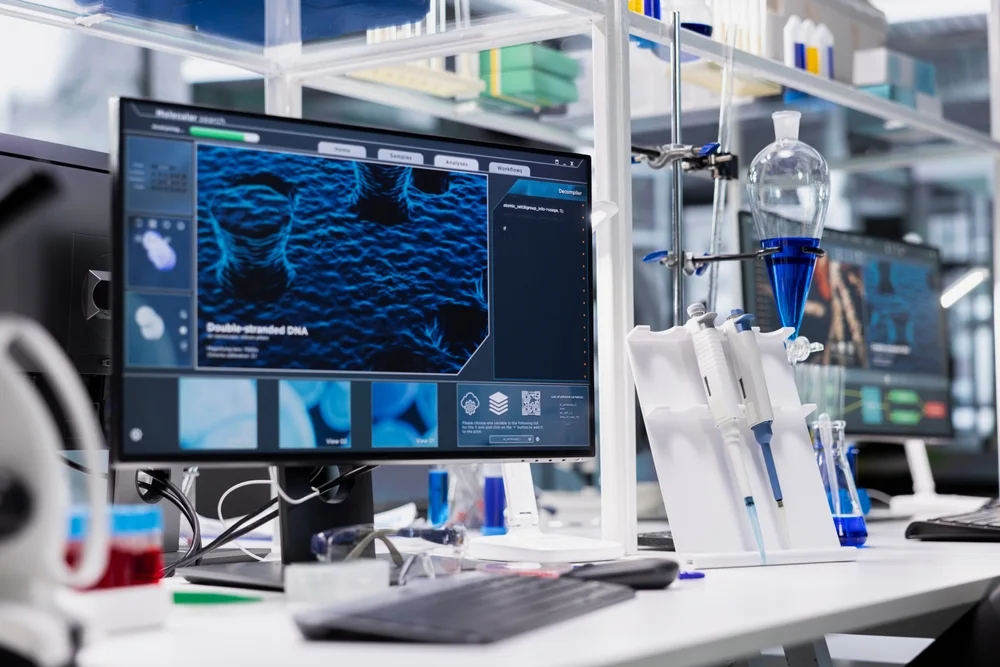
Forensic biology applies biological science to evidence used in legal investigations. The field includes serology, DNA analysis, genetics, molecular biology, biological evidence preservation, statistical interpretation, laboratory quality procedures, and scientific reporting. It is distinct from crime scene investigation, forensic anthropology, forensic psychology, and general criminal justice.
California has relatively few bachelor’s programs named specifically for forensic biology. Current research verified two direct matches:
- San José State University’s BS in Forensic Science with a Biology Concentration
- California State University, East Bay’s BS in Biological Sciences with a Forensic Science Concentration
Both are campus-based, 120-unit degrees with substantial biology and chemistry requirements. San José State places forensic science within its Department of Justice Studies and includes a formal practical-experience requirement. CSU East Bay houses its concentration in Biological Sciences and gives particular attention to genetics, PCR, sequencing, quantitative analysis, and scientific instrumentation.
Several other California colleges offer adjacent routes. These include a biology degree paired with a forensic science minor, a conventional biology concentration supplemented by forensic biology laboratory courses, and a community-college certificate designed partly for transfer. These alternatives can be useful, but they are not equivalent to a named forensic biology bachelor’s concentration.
Readers comparing other degree levels and related educational routes can also use the broader guide to forensic biology degrees in California.
Direct California forensic biology bachelor’s programs
| University | Degree | Science and laboratory emphasis | Practical component | Accreditation wording | 2026-2027 resident tuition and fees |
|---|---|---|---|---|---|
| San José State University | BS in Forensic Science, Biology Concentration | Biology, general and organic chemistry, physics, statistics, genetics, cell biology, biochemistry, forensic biology, DNA analysis, physical evidence, toxicology, and instrumental analysis | Three-unit practical requirement completed through an internship or an approved academic alternative | SJSU states that the curriculum meets AAFS FEPAC educational standards. Current FEPAC accreditation was not independently established. | $9,553 before books and living costs |
| California State University, East Bay | BS in Biological Sciences, Forensic Science Concentration | Cell and molecular biology, genetics, organic chemistry, quantitative analysis, physics, PCR, sequencing, fragment analysis, and bioanalytical and forensic instrumentation | Laboratory coursework and an advanced cell and molecular biology capstone; no required external internship was identified in the published roadmap | No current FEPAC accreditation claim was verified | Estimated $8,454 before books and living costs |
The published figures are tuition and mandatory fees, not total cost of attendance. Housing, food, transportation, books, supplies, and personal expenses can add substantially to the annual budget.
Neither direct program was verified as fully online. That is consistent with the amount of laboratory science, instrumentation, and practical work built into both curricula.
San José State University BS in Forensic Science, Biology Concentration
San José State University offers a 120-unit Bachelor of Science in Forensic Science with concentrations in Biology, Chemistry, Digital Evidence, and Crime Scene Investigation. The Biology Concentration is the relevant route for students interested in biological evidence, DNA, serology, genetics, and laboratory criminalistics.
The curriculum begins with a conventional science foundation. Lower-division requirements include biology, general chemistry, organic chemistry with laboratory work, physics, mathematics, statistics, and introductory forensic science. Upper-division study continues into advanced biology, chemistry or biochemistry, and specialized forensic science coursework.
The department identifies forensic biology and DNA analysis, anatomy and physiology, cellular biology, genetics, organic and inorganic chemistry, biochemistry, physical evidence, toxicology, and instrumental analysis among the program’s subject areas. This combination is much closer to criminalist and forensic biology preparation than a criminal justice degree built mainly around policing, courts, corrections, and criminological theory.
Science sequencing and academic standards
Students must earn a grade of C or better in required lower- and upper-division core courses. The chemistry sequence deserves early attention because later work depends on successful completion of general and organic chemistry. A student who needs preparatory chemistry before beginning the regular sequence may need additional time to reach upper-division forensic courses.
The official major form also warns that some science courses are offered only in particular semesters. Missing a prerequisite or postponing a course can therefore affect graduation timing. A workable four-year plan needs to coordinate biology, chemistry, physics, mathematics, and forensic science rather than treating each subject as an independent set of electives.
The concentration includes nearly all of the coursework needed for an SJSU chemistry minor. According to the published advising document, one additional course can complete that minor. The chemistry depth is useful because California criminalist classifications and crime-laboratory positions often evaluate the transcript course by course. A forensic degree title does not substitute for missing chemistry.
Internship or other approved practical work
SJSU includes a three-unit practical requirement. An internship is the normal route, but approved alternatives may include individual study, work on the student forensic publication, directed reading, or related academic activity.
The department identifies local crime laboratories, law-enforcement agencies, a coroner’s office, and faculty research as potential practical settings. Placement details can vary, but the requirement itself gives students a defined space in the curriculum for applied work.
This practical component can support several types of professional development:
- Learning how evidence is documented, tracked, and handled
- Observing laboratory workflow and quality practices
- Applying scientific methods outside a standard teaching laboratory
- Developing technical writing and professional communication
- Building familiarity with legal and courtroom expectations
- Testing whether a laboratory, crime scene, research, or evidence-management role is the better career fit
The approved alternatives also matter. Crime-laboratory internships can be limited and competitive, so the program does not make graduation entirely dependent on securing one particular type of placement.
Career alignment
SJSU’s Biology Concentration is designed more directly around forensic science than a standard biology degree. It retains substantial natural-science coursework while adding physical evidence, forensic laboratory methods, professional preparation, and investigative context.
Students targeting forensic DNA analysis need to examine the exact completed coursework, not only the concentration name. The current FBI Quality Assurance Standards for Forensic DNA Testing Laboratories require an appropriate bachelor’s or advanced degree and specified foundational education relevant to DNA analysis. Analysts qualified under the newer standards also need statistics or population-genetics coursework. Laboratory technical leaders review transcripts when assessing educational qualifications.
San José State includes biology, genetics, chemistry, statistics, and DNA-related preparation, which gives students a relevant foundation. Eligibility for a particular DNA analyst position still rests on the final transcript and the employer’s application of current standards.
FEPAC wording
San José State says each forensic science concentration’s curriculum meets the educational standards of the American Academy of Forensic Sciences Forensic Science Education Programs Accreditation Commission, commonly called FEPAC.
That statement should be read precisely. Meeting FEPAC educational standards is not the same claim as holding current FEPAC program accreditation. The available evidence supports the university’s curriculum statement, not a separate assertion that the program is currently FEPAC-accredited.
FEPAC is most relevant to forensic science and criminalistics education. It is not a general measure for unrelated specialties such as forensic psychology, and it should not replace a close review of the biology and chemistry sequence.
Cost
For 2026-2027, SJSU lists California-resident undergraduate tuition of $6,838 and campus fees of $2,715, totaling $9,553. This is not the full cost of attendance. Books, supplies, housing, food, transportation, and personal expenses are separate.
SJSU publishes different cost-of-attendance budgets based on living arrangements and other factors. Nonresident students also pay an additional per-unit charge. For Californians comparing the two direct programs, tuition and fees are only part of the financial calculation. Commuting feasibility and housing in the San José area can have a larger effect on the final budget than the difference in CSU campus fees.
California State University, East Bay BS in Biological Sciences, Forensic Science Concentration
California State University, East Bay offers a 120-unit Bachelor of Science in Biological Sciences with a Forensic Science Concentration. Unlike SJSU’s justice-studies structure, this degree is housed within a biological sciences department.
The department describes the BS as the usual route for students preparing to become professional biologists, forensic scientists, laboratory scientists, researchers, or graduate students. The forensic concentration preserves that biology-centered identity while adding chemistry, instrumental analysis, forensic science, criminal identification, and investigation courses.
Biology and chemistry preparation
The 2026-2027 roadmap includes:
- Cell and molecular biology
- Organismal biology
- Genetics
- Evolutionary biology
- Advanced cell and molecular biology
- General chemistry
- Organic chemistry I and II
- Quantitative analysis
- Physics I and II
- Calculus
- PCR, sequencing, and fragment analysis
- Bioanalytical and forensic instrumentation
This is a scientifically demanding sequence. Quantitative analysis is especially relevant because California criminalist guidance specifically identifies quantitative chemistry preparation. Genetics, PCR, sequencing, and fragment analysis connect directly to the scientific principles used in DNA laboratories.
Organic chemistry and instrumental analysis also broaden the degree beyond DNA alone. Criminalists can work in controlled substances, toxicology, trace evidence, alcohol analysis, and other sections where chemical methods are central. Not every graduate will qualify for every specialty, but a mixed biology and chemistry foundation preserves more laboratory options than a curriculum focused almost entirely on criminal investigation.
Forensic and investigative coursework
CSU East Bay adds Criminal Identification, Survey of Forensic Science, Basic Criminal Investigation, and Advanced Criminal Investigation to its laboratory-science core. These courses provide investigative context for scientific evidence.
The balance is useful because forensic biologists do not work in isolation from the legal process. They need to understand how evidence reaches a laboratory, what chain of custody records communicate, how findings relate to an investigation, and how scientific conclusions are presented to non-scientists.
At the same time, the degree remains science-led. The roadmap contains the chemistry and molecular biology work that a generic criminal justice degree usually lacks. That is the right balance for students seeking laboratory roles rather than primarily policing, corrections, or court administration careers.
Laboratory work and capstone
The concentration includes PCR, sequencing, fragment analysis, and bioanalytical and forensic instrumentation. Advanced Cell and Molecular Biology serves as the listed capstone.
These courses address different parts of laboratory preparation. PCR and sequencing concern biological analysis at the molecular level. Fragment analysis has direct relevance to forensic DNA methods. Instrumentation exposes students to analytical tools and the interpretation of generated data. The capstone brings advanced biological concepts together near the end of the degree.
The current roadmap demonstrates substantial laboratory preparation, but it does not identify a mandatory external internship. CSU East Bay’s applied experience is therefore documented most clearly through its laboratory courses, instrumentation work, and capstone rather than a formal placement requirement.
Students who want an internship embedded in the degree may prefer SJSU’s defined practical requirement. Those who prioritize a biology-department curriculum with specifically listed PCR, sequencing, quantitative analysis, and instrumentation courses may find CSU East Bay’s structure better aligned with that goal.
Course sequencing
The CSU East Bay roadmap has a tightly connected prerequisite chain. Genetics comes before advanced molecular work. General chemistry precedes organic chemistry and quantitative analysis. Upper-division instrumentation depends on earlier scientific preparation.
Transfer students need to map these dependencies carefully. Arriving with general education complete but missing a transferable chemistry sequence can extend the degree because several upper-division requirements cannot be taken immediately. The same issue applies to calculus, physics, genetics, and foundational biology.
A science-major transfer plan should therefore prioritize articulated lower-division biology and chemistry courses, not merely the minimum number of transferable units.
Career alignment
CSU East Bay’s inclusion of quantitative analysis, genetics, PCR, sequencing, organic chemistry, physics, and forensic instrumentation matches several recurring expectations in California laboratory recruitment. The degree provides a relevant base for criminalist, forensic biology, and laboratory-science applications.
For human DNA analysis, the completed transcript must still meet the laboratory’s interpretation of federal educational standards. Course titles sometimes conceal differences in content. A general statistics class, a population-genetics class, and a biology course with limited statistical coverage are not necessarily evaluated the same way.
The California state forensic scientist examination bulletin provides another useful example of transcript-level screening. Its listed education route calls for a bachelor’s degree in a biological science and includes general chemistry, biochemistry, organic chemistry or quantitative analysis, and genetics or molecular biology. CSU East Bay’s roadmap contains several of these subjects, but applicants are evaluated on documented completed coursework.
Cost
CSU East Bay’s estimated 2026-2027 California-resident undergraduate budget lists $6,838 in tuition and $1,616 in fees, totaling $8,454 before books and living expenses.
The financial-aid budget separates tuition and fees from total cost of attendance. Housing, food, transportation, personal expenses, and course materials are additional. Because this is a campus-based laboratory program, travel to campus and attendance at scheduled laboratory sessions need to fit both the student’s budget and weekly schedule.
What education do California forensic biology employers examine?
“Forensic biologist” is not one standardized California job classification. Agencies may use titles such as criminalist, forensic scientist, forensic DNA analyst, forensic science technician, laboratory analyst, or biology analyst. Similar titles can carry different education and experience requirements at different agencies.
The California Department of Justice California Criminalistics Institute explains that criminalists commonly hold four-year degrees in chemistry, physics, biology, biochemistry, molecular biology, or another physical or biological science. Its guidance identifies chemistry preparation, including general chemistry and quantitative analysis, as relevant to criminalist work.
A California state forensic scientist classification offers a more specific illustration. The published educational requirements call for a bachelor’s degree in a biological science, along with designated coursework in general chemistry, biochemistry, organic chemistry or quantitative analysis, and genetics or molecular biology.
These examples explain why the words “forensic biology” on a diploma are not sufficient by themselves. Employers may review the applicant’s transcript for individual classes, credits, laboratories, and prerequisite chains.
A practical transcript checklist
A student planning for forensic biology, DNA, or criminalist work should build as much of the following foundation as the target specialty requires:
- General biology with laboratories
- Cell biology
- Molecular biology
- Genetics
- General chemistry with laboratories
- Organic chemistry with laboratories
- Quantitative or analytical chemistry
- Biochemistry
- Statistics or population genetics
- Microbiology where relevant
- Physics
- Calculus or other required mathematics
- PCR and DNA-analysis methods
- Instrumental analysis
- Scientific writing
- Laboratory quality procedures
- Evidence handling and chain of custody
- Ethics and courtroom communication
No single checklist covers every California agency. A DNA laboratory will emphasize molecular biology, genetics, statistics, and DNA foundations. A controlled-substances unit may place greater weight on chemistry and instrumentation. A toxicology laboratory may expect chemistry, biochemistry, pharmacology, or toxicology. Trace-evidence work can involve microscopy, materials science, chemistry, and instrumentation.
The two direct programs take somewhat different approaches to this preparation. SJSU integrates biology and chemistry within a forensic science degree and adds a defined practical requirement. CSU East Bay begins with a biological sciences degree structure and adds molecular techniques, quantitative analysis, instrumentation, and criminal investigation.
Forensic biology is not the same as CSI
Crime scene investigators document scenes and recognize, collect, package, and preserve evidence. Relevant education can include photography, fingerprints, scene reconstruction, evidence recovery, chain of custody, report writing, and courtroom testimony.
Forensic biologists usually work more deeply with biological evidence in a laboratory. Their preparation emphasizes molecular biology, genetics, serology, DNA methods, statistics, chemistry, instrumentation, validation, and quality control.
Some criminalists also respond to crime scenes, and some CSI positions involve biological evidence collection. The occupations can overlap, but the education is not interchangeable.
A CSI concentration that contains little chemistry or molecular biology is not adequate preparation for many DNA analyst or laboratory criminalist roles. Conversely, a heavily laboratory-based biology degree may not provide enough scene photography, fingerprint processing, or reconstruction work for a field-centered CSI position.
California agencies also structure CSI employment differently. One department may use civilian crime scene technicians, while another assigns scene work to sworn officers. There is no single statewide hiring model for CSI positions.
Adjacent California pathways
The direct bachelor’s list is short, but several related programs can support a forensic biology plan when the student deliberately builds the required science sequence.
California State University, Sacramento: biology degree with forensic biology electives
Sacramento State presents a complicated catalog picture. Its current Biological Sciences program list includes concentrations in Biomedical Sciences, Cell and Molecular Biology, Clinical Laboratory Sciences, Ecology, Evolution and Conservation, and Microbiology, along with General Biology. The department’s current program navigation does not list a Forensic Biology concentration.
However, another current catalog page retains a residual reference to Forensic Biology among concentration choices. The reason for that conflict is unresolved. It could reflect incomplete catalog cleanup, catalog rights for continuing students, or another transition that is not explained in the published material.
Because the dedicated concentration page and current department program list are absent, Sacramento State should not be presented as a verified third direct bachelor’s option for newly entering students.
The university does continue to offer relevant forensic biology courses. BIO 150, Forensic Biology, covers evidence preservation, serological testing, hair comparison, mitochondrial and nuclear DNA profiles, biological statistics, crime-laboratory organization, and courtroom roles. It also includes a weekly laboratory component.
BIO 151, Advanced Laboratory Techniques in Forensic Biology, covers serology, DNA typing, mixture interpretation, low-copy-number interpretation, research ethics, and courtroom communication. The course includes six laboratory hours and is described as preparation for entry-level DNA analyst work, although completing it does not guarantee employment or eligibility at a particular laboratory.
A current Microbiology concentration can include BIO 150 and BIO 151 as upper-division electives. That creates a viable adjacent route: complete a recognized biology concentration with substantial microbiology, molecular biology, chemistry, and laboratory science, then add forensic biology courses where scheduling permits.
BIO 150 is listed as a spring course that is not offered every semester. Students relying on it need to account for that limited schedule in their academic plan.
Sacramento State lists 2026-2027 full-time undergraduate charges of $3,419 in tuition and $1,409 in mandatory campus fees per semester. The published total is $4,828 per semester, or $9,656 across two semesters, before books and living expenses.
Anyone seeking the historical concentration specifically needs written clarification from the Biological Sciences department about whether it is open to students entering under the 2026-2027 catalog. The verified alternative is a current biology concentration supplemented with available forensic biology electives.
Chico State Biological Sciences BS plus Forensic Science Minor
Chico State offers an on-campus BS in Biological Sciences and a separate undergraduate Forensic Science minor. The university discontinued its former Forensic Science Certificate for the 2026-2027 catalog and replaced it with the minor.
The biology degree includes chemistry, physics, mathematics, laboratory research, and a Cellular and Molecular Biology option. The minor adds evidence analysis, human identification, laboratory methods, professional and ethical standards, legal context, report writing, and collaboration with law enforcement.
This is a customizable science-plus-forensics route rather than a named forensic biology bachelor’s degree. It can work well for a student who wants the broader identity of a biology major while adding formal forensic coursework.
Chico State also operates a Human Identification Laboratory that supports undergraduate research, internships, mentorship, and laboratory training. Its emphasis is forensic anthropology, skeletal biology, and human identification. That experience is relevant to forensic anthropology and medicolegal work, but it is not equivalent to DNA analysis or serology training.
Forensic DNA remains possible as a longer-term goal if the bachelor’s plan includes molecular biology, genetics, biochemistry, chemistry, statistics or population genetics, and appropriate laboratory work. The minor alone does not provide the same direct DNA-centered sequence documented at SJSU or CSU East Bay.
Chico’s own program guidance notes that entry-level criminalistics jobs commonly require a physical or natural science major with general chemistry and quantitative analysis. Pairing the minor with Biological Sciences, Biochemistry, or Chemistry is therefore more suitable for laboratory criminalistics than pairing it with a major that lacks extensive natural science.
Victor Valley College Forensic Science, Biology Concentration Certificate of Achievement
Victor Valley College offers a 25-unit Certificate of Achievement in Forensic Science with a Biology Concentration. The official catalog lists a program length of 24 months and presents the certificate as preparation for employment or transfer into a four-year forensic science, biology, or related program.
Required courses include:
- Forensic Pathology
- Principles of Forensic Biology
- General Microbiology
- Human Physiology
- Biological Research II: Experimental Design
Students also select four units from Principles of Heredity, Biological Research III, Introduction to Forensic Anthropology and Archaeology, or Crime Scene Investigation.
The curriculum covers biological evidence, DNA and serology, bloodstain patterns, trace evidence, forensic pathology, experimental design, and time-of-death estimation. The catalog describes hands-on applications and collaboration with local law-enforcement agencies, although it does not list a separate mandatory internship.
This certificate can introduce forensic subject matter before transfer or supplement other college science work. It is not a substitute for a bachelor’s degree. It also does not independently establish eligibility for a California criminalist or forensic DNA analyst position.
The catalog lists federal financial-aid approval for the certificate as pending. Financial aid should therefore not be included in a funding plan as though program approval were already active.
For transfer purposes, the certificate’s specialized courses need to be evaluated separately from the lower-division biology, chemistry, physics, calculus, and statistics required by the destination university. A certificate can add useful forensic context while still leaving substantial bachelor’s prerequisites unfinished.
Transfer planning from a California community college
A transfer student’s largest scheduling risk is arriving at a four-year university without the science prerequisites needed to enter upper-division courses.
Biology and chemistry curricula are sequential. General chemistry often precedes organic chemistry. Organic chemistry may precede biochemistry or instrumentation. Introductory biology leads into genetics, cell biology, and molecular biology. Calculus and physics also have their own prerequisite chains.
A sound lower-division transfer plan generally gives priority to:
- A full articulated general biology sequence with laboratories
- General chemistry with laboratories
- Organic chemistry where articulation and scheduling permit
- Calculus or the mathematics specified by the destination degree
- Statistics
- Physics
- Transferable general education courses that fit around the science sequence
Official articulation agreements are more useful than matching courses by title alone. Two classes called “general biology” may differ in laboratory content, credit value, or major applicability.
SJSU’s roadmap warns that courses offered in specific semesters can affect graduation timing. CSU East Bay’s roadmap similarly depends on completing earlier biology and chemistry before advanced molecular and instrumental work. Transfer preparation should therefore be built backward from the intended university’s upper-division prerequisites.
Completing every general education course before transfer is not always the fastest route if doing so delays chemistry or biology. Missing a major prerequisite can block several later classes, while an outstanding general education requirement may fit into a future semester more easily.
Victor Valley College’s forensic biology certificate can complement this preparation, but certificate completion and university transfer readiness are separate goals. A student could finish specialized forensic courses and still need more general chemistry, organic chemistry, physics, calculus, or introductory biology before entering a bachelor’s concentration.
Can a California forensic biology bachelor’s degree be completed online?
No fully online direct California program was verified in the current research.
Both direct degrees rely on laboratory science. Organic chemistry, biology, PCR, sequencing, instrumentation, physics, and evidence-analysis courses require supervised practical work or access to specialized equipment. A program may place some lectures or general education courses online, but that is different from offering the entire bachelor’s degree remotely.
The absence of a verified fully online option has practical consequences. Commuting distance, laboratory schedules, daytime course availability, and housing can influence program feasibility as much as tuition.
Online forensic science programs from institutions outside California exist, but they fall outside this California-program comparison. An online program also requires careful scientific review. A curriculum centered on investigations, criminal justice, or forensic theory without sufficient chemistry and laboratory biology is a poor match for criminalist or DNA analyst goals.
Comparing the two direct degrees
SJSU and CSU East Bay both provide credible science preparation, but they organize it differently.
Choose based on practical experience structure
SJSU publishes a three-unit practical requirement that is normally completed through an internship, with approved research and academic alternatives. This creates a formal experiential component within the degree.
CSU East Bay’s published roadmap documents extensive laboratory work and a capstone but does not identify a mandatory external internship. Its strength lies in the listed technical sequence, including PCR, sequencing, fragment analysis, quantitative analysis, and bioanalytical and forensic instrumentation.
Choose based on academic home
SJSU houses forensic science in Justice Studies. The program still contains substantial biology and chemistry, but its structure incorporates crime laboratory methods, physical evidence, crime scene investigation, and professional forensic practice.
CSU East Bay houses the degree in Biological Sciences. Its concentration begins from a professional biology curriculum and integrates forensic and investigative courses into that framework.
Neither structure is inherently better. The practical question is whether the student wants a forensic science degree with a biology concentration or a biological sciences degree with a forensic concentration.
Compare the chemistry sequence
Both programs require chemistry, but individual course content and depth need close attention for career planning. California criminalist preparation often involves general chemistry, organic chemistry, quantitative analysis, and sometimes biochemistry.
CSU East Bay explicitly lists quantitative analysis, two semesters of organic chemistry, and forensic instrumentation in its roadmap. SJSU includes general chemistry, organic chemistry, biochemistry or an approved chemistry alternative, and instrumental-analysis content. Its Biology Concentration also comes close to satisfying a chemistry minor.
Students interested in DNA should not ignore chemistry. Crime laboratories frequently hire into broad criminalist classifications, and later assignments can involve analytical methods outside a single biological specialty.
Compare molecular and DNA preparation
CSU East Bay’s roadmap explicitly lists PCR, sequencing, and fragment analysis. SJSU identifies forensic biology and DNA analysis, genetics, cell biology, anatomy and physiology, and biochemistry within its program topics.
The best comparison is not the number of courses containing “forensic” in the title. More useful measures include molecular biology content, genetics, statistics, laboratory hours, analytical methods, report writing, and access to applied experience.
Compare total cost rather than tuition alone
The published tuition-and-fee difference is $1,099 for 2026-2027:
- CSU East Bay: estimated $8,454
- SJSU: $9,553
That difference can be outweighed by housing, commuting, transportation, and the ability to live at home. Both universities publish broader cost-of-attendance budgets that include direct and indirect expenses.
Matching the degree to the intended career
A forensic biology education can support several career directions, but the job titles should remain separate.
Forensic DNA analyst
Prioritize molecular biology, genetics, biochemistry, DNA methods, PCR, statistics or population genetics, laboratory quality systems, and scientific reporting. Federal quality-assurance standards and laboratory transcript review are central to this path.
Criminalist or forensic scientist
Prioritize a broader natural-science foundation. General chemistry, organic chemistry, quantitative analysis, biology, genetics, molecular biology, biochemistry, physics, and instrumentation can all affect eligibility depending on the classification and laboratory assignment.
Crime scene investigator or crime scene technician
Prioritize evidence recognition, documentation, photography, fingerprints, scene processing, evidence recovery, chain of custody, reconstruction, report writing, and testimony. A forensic biology degree can provide useful evidence knowledge, but it is more laboratory-intensive than many CSI roles require.
Evidence or property technician
These roles focus on evidence intake, storage, documentation, chain of custody, packaging, retention, and release procedures. A bachelor’s degree may help, but the work is not the same as conducting biological analyses.
Forensic anthropologist or human identification specialist
Prioritize anthropology, osteology, skeletal biology, archaeology, human identification, and graduate education where required. Chico State’s Human Identification Laboratory aligns more closely with this specialty than with DNA analysis.
Forensic biologist in a research or private laboratory
Biology, molecular methods, genetics, microbiology, statistics, quality procedures, and instrumentation are central. The job may involve legal evidence, paternity or kinship testing, private DNA services, or research rather than a public crime laboratory.
A practical decision framework
Start with the intended work rather than the degree title.
For a direct California bachelor’s concentration in forensic biology, the verified comparison is between San José State and CSU East Bay. SJSU provides a forensic science degree with broad laboratory and justice-system context, nearly enough chemistry for a minor, and a formal practical requirement. CSU East Bay provides a biological sciences degree with quantitative analysis, genetics, PCR, sequencing, fragment analysis, instrumentation, and criminal-investigation coursework.
Sacramento State can support a biology-plus-forensic-electives plan, especially through BIO 150 and BIO 151, but its current catalog does not clearly establish an active named Forensic Biology concentration for new students. Chico State offers a broader biology degree paired with a forensic science minor, with particular opportunities in human identification and forensic anthropology. Victor Valley College supplies an introductory certificate and potential transfer pathway, not a bachelor’s-level substitute.
For laboratory criminalistics, give priority to the full science transcript. General chemistry, organic chemistry, quantitative analysis, biochemistry, genetics, molecular biology, statistics or population genetics, and laboratory methods carry more professional weight than a large number of survey courses with forensic titles.
For DNA work, map the bachelor’s curriculum against the current FBI education standards before selecting electives. For broader California criminalist opportunities, preserve chemistry depth and analytical training. For field CSI work, place more weight on scene processing, photography, fingerprints, documentation, evidence recovery, and reconstruction.
The strongest plan is the one that reaches the target occupation with the required science sequence intact, laboratory access built into the degree, and a realistic path through prerequisites. In California, that usually means treating forensic biology as a laboratory science first and a criminal justice specialty second.