
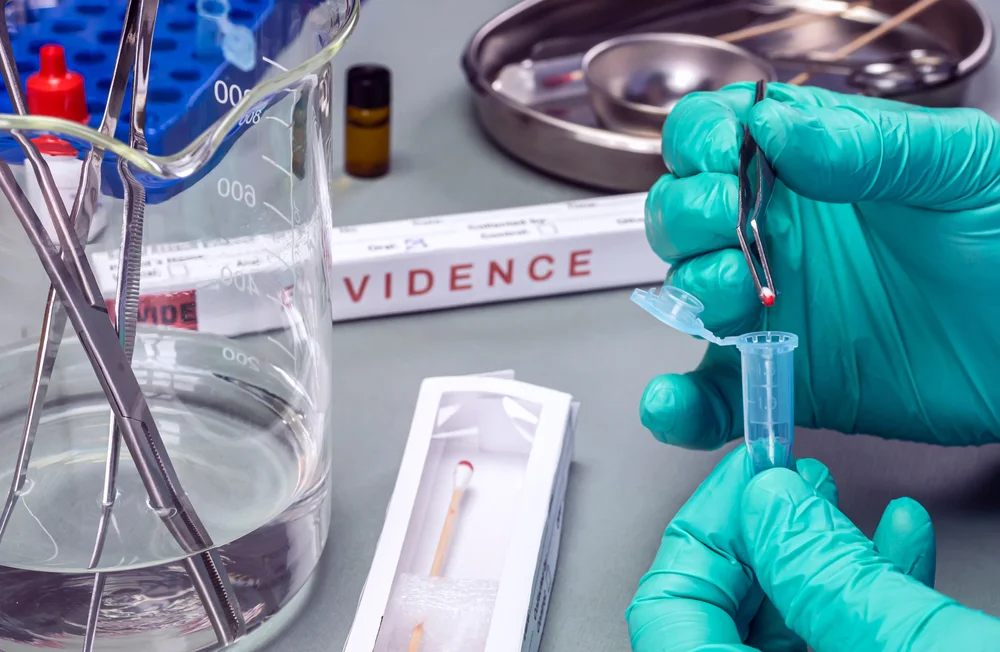
California does not appear to offer a current master’s degree with the exact title “Master of Science in Forensic Chemistry.” The relevant graduate options use broader titles: forensic science, criminalistics, forensic sciences with a criminalistics specialization, or chemistry with individually arranged analytical or forensic research.
Three California programs provide identifiable graduate pathways into laboratory criminalistics or chemistry-related forensic work. UC Davis offers an MS in Forensic Science with a Criminalistics track, Cal State LA offers an MS in Criminalistics, and National University offers a Master of Forensic Sciences with a Criminalistics specialization. Fresno State’s MS in Chemistry is a separate, adjacent option because its faculty and research include analytical and forensic chemistry, but the degree has no formal forensic chemistry concentration.
This is a best-effort inventory of current California master’s programs with defined or meaningfully related preparation in forensic chemistry and laboratory criminalistics. A faculty member at another university could approve an individual forensic thesis within a general chemistry degree, but undocumented arrangements are not equivalent to established programs. Readers comparing degree levels can also review the broader guide to forensic chemistry education in California.
California forensic chemistry master’s programs compared
| School and program | Program type | Chemistry and laboratory focus | Format | Published cost information | FEPAC status |
|---|---|---|---|---|---|
| UC Davis MS in Forensic Science, Criminalistics track | Direct forensic science pathway | Instrumental analysis, trace evidence, controlled substances, drug chemistry, toxicology, spectroscopy, forensic statistics, laboratory research | In person; full-time and part-time enrollment advertised | $903 per quarter unit for students entering fall 2025 or later; approximately $48,762 in instructional tuition for 54 units, excluding other costs | FEPAC-accredited from March 1, 2026, through March 1, 2031 |
| Cal State LA MS in Criminalistics | Direct criminalistics pathway | Trace evidence, microscopy, controlled-substance analysis, toxicology, serology and DNA, reconstruction, statistics, research | Campus-based laboratory program | Fall 2026 resident graduate tuition and mandatory fees are $3,027.04 for 0 to 6 units or $4,821.04 for more than 6 units; nonresidents add $471 per unit | Held FEPAC accreditation from 2011 through 2016; current FEPAC accreditation was not verified |
| National University Master of Forensic Sciences, Criminalistics specialization | Closely related forensic pathway | Trace evidence, advanced toxicology, serology, DNA and advanced DNA analysis, plus broad forensic subjects | Online, in-person and hybrid options advertised; some criminalistics courses may require in-person laboratory participation | Estimated total program cost of $25,830 for 36 semester credits | Current FEPAC accreditation was not verified |
| Fresno State MS in Chemistry | Adjacent chemistry pathway | Graduate analytical chemistry and possible faculty-supervised analytical or forensic research | Campus-based | No verified program-specific total included here | No formal forensic concentration or current FEPAC accreditation verified |
The first three programs belong in the main comparison because they formally identify forensic science or criminalistics at the graduate level. Fresno State belongs in a separate category. Its chemistry degree can support advanced analytical training, but it does not guarantee coursework in evidence handling, forensic toxicology, criminal law, courtroom testimony, or crime-laboratory procedures.
1. University of California, Davis: MS in Forensic Science, Criminalistics track
The UC Davis MS in Forensic Science is the clearest California graduate pathway for chemistry-centered forensic laboratory preparation. It is a 54-quarter-unit, research-focused, in-person program with Criminalistics and DNA tracks. The Criminalistics track is the relevant option for applicants interested in controlled substances, toxicology, trace materials, spectroscopy and forensic instrumental analysis.
Curriculum and laboratory preparation
The Criminalistics curriculum addresses forensic science fundamentals, analytical chemistry, instrumentation, drug chemistry, controlled substances, toxicology, trace evidence and spectroscopy. It also includes forensic statistics, case reporting, professional responsibilities and legal issues. This combination connects chemical measurement to the evidentiary and procedural requirements of forensic laboratory work.
That integration separates a dedicated forensic science degree from a conventional chemistry master’s. A chemistry department can teach chromatography, spectroscopy and quantitative methods at an advanced level, but forensic analysis also requires attention to sampling, contamination, evidence integrity, method limitations, documentation and communication in legal proceedings. UC Davis incorporates laboratory work, case reports, mock crime-scene exercises and moot-court testimony alongside scientific coursework.
Students complete either an approved thesis or capstone route. The program’s research orientation is useful for laboratory careers because it requires more than learning established procedures. Graduate research develops skills in literature analysis, experimental design, validation, interpretation and scientific writing. Those abilities are relevant to method development and technically demanding crime-laboratory assignments.
Admissions and science prerequisites
Applicants need a bachelor’s degree in a physical or natural science, engineering, or a closely related field, plus a minimum 3.0 GPA. Criminalistics preparation includes calculus, physics, statistics, a full general chemistry sequence with laboratory work, and organic chemistry with laboratory work.
These prerequisites create a relatively high scientific entry threshold. They also signal what the graduate curriculum expects students to know before beginning specialized forensic study. The program is not designed to replace an undergraduate foundation in chemistry and quantitative science.
A criminal justice graduate with limited laboratory science would generally need substantial prerequisite coursework before becoming a viable applicant. A chemistry, biochemistry, biology or related science graduate is more likely to enter with the expected foundation, although individual transcripts can still differ in physics, calculus, statistics and organic chemistry coverage.
Format and practical work
UC Davis describes the degree as in person and research focused. Full-time and part-time enrollment options are advertised, but part-time availability does not turn it into a remote program. Laboratory work, instrumentation, research activities, mock scenes and testimony exercises require physical participation.
The in-person structure is appropriate for a curriculum built around analytical instruments and laboratory methods. It also limits geographic flexibility. A working professional outside the Davis region would need to account for regular campus attendance rather than occasional online engagement.
Tuition and accreditation
For students entering in fall 2025 or later, UC Davis lists tuition at $903 per quarter unit. Multiplying that rate by the 54-unit requirement produces approximately $48,762 in instructional tuition. Health insurance, books, supplies, laboratory materials and living expenses are separate. The program is self-supporting, and the same per-unit rate applies to resident, nonresident and international students.
The MS in Forensic Science, including its Criminalistics and DNA Analysis tracks, received full accreditation from the Forensic Science Education Programs Accreditation Commission for March 1, 2026, through March 1, 2031. FEPAC accreditation documents an external review against forensic science education standards. It is not a professional license or a promise of employment, but it provides a current, independently reviewed marker for the program’s structure and content.
Career alignment
UC Davis has the most explicit analytical chemistry curriculum among the verified California forensic graduate options. Its Criminalistics track aligns directly with drug chemistry, toxicology, trace-material examination and instrument-based laboratory analysis.
Applicants pursuing DNA analysis need a different course audit. DNA laboratories commonly emphasize molecular biology, genetics, biochemistry and statistics rather than analytical chemistry alone. UC Davis offers a separate DNA track, which allows the degree plan to reflect that difference instead of treating every crime-laboratory discipline as interchangeable.
2. California State University, Los Angeles: MS in Criminalistics
The Cal State LA MS in Criminalistics is a campus-based laboratory program housed in the Hertzberg-Davis Forensic Science Center. The center is a partnership involving Cal State LA, the Los Angeles Police Department Scientific Investigation Division, and the Los Angeles County Sheriff’s Department Scientific Services Bureau.
Its curriculum is broader than forensic chemistry alone. Documented areas include trace evidence, forensic microscopy, controlled-substance analysis, forensic toxicology, serology and DNA, crime-scene reconstruction, research methods, statistics, ethics and courtroom issues. That breadth supports generalist criminalistics preparation while retaining substantial chemistry relevance.
A demanding undergraduate science foundation
Admission requires a bachelor’s degree in a natural or physical science. Published prerequisites include two biology courses, biostatistics, two general chemistry courses, quantitative analysis, two organic chemistry courses with laboratories, and two physics courses. Quantitative analysis may be completed concurrently under the program’s stated policy.
The quantitative analysis requirement is especially relevant to chemical criminalistics. General chemistry introduces chemical principles and laboratory technique, while quantitative analysis develops measurement, calibration, uncertainty and data interpretation skills. Those subjects are directly connected to controlled-substance testing, toxicology and trace-evidence analysis.
The program requires a minimum 3.0 GPA in the last 60 semester units or 90 quarter units and a 3.0 GPA in the undergraduate major. Admission occurs for the fall term only, and the published program deadline is March 15. University admission and program admission are separate decisions.
Curriculum and research environment
Cal State LA’s criminalistics curriculum covers multiple laboratory disciplines rather than creating a narrow forensic chemistry track. A student can encounter microscopy, trace materials, toxicology, drug analysis, biological evidence, statistics and legal issues within one graduate program.
This generalist approach fits laboratories or career plans that value familiarity across several evidence categories. It is less specialized than a graduate chemistry degree centered on advanced chemical theory, and it is less narrowly structured around analytical chemistry than UC Davis’s Criminalistics track. Its strength is the combination of substantial prerequisite science, laboratory criminalistics and exposure to a forensic science center shared with major public crime-laboratory partners.
The culminating experience is a required research project. Internships are encouraged rather than documented as a universal degree requirement. Research can strengthen preparation for technical interviews and laboratory hiring because it gives the student a concrete project to discuss, including methods, quality controls, limitations and results.
The accessible current program pages did not clearly publish a 2026 total degree-unit count or a complete current course sequence. Older quarter-system figures and archived course numbers are not reliable substitutes for the active semester-based curriculum.
Campus attendance and scheduling
The degree is a campus laboratory program. Current materials indicate evening-oriented logistics, but a definitive 2026 modality statement was not located in the reviewed official pages. The scientific content and research setting make regular in-person participation the realistic expectation.
Evening scheduling can help employed students, but laboratory programs remain less location-independent than lecture-based online degrees. Lab periods, research access and instrument availability can require time on campus beyond a simple weekly classroom meeting.
Tuition and FEPAC history
For fall 2026, Cal State LA lists resident graduate tuition and mandatory campus fees of $3,027.04 for 0 to 6 units and $4,821.04 for more than 6 units. Nonresident students pay an additional $471 per unit. These are term charges, not a complete program price. The final total depends on the number of terms, course load and future fee schedules.
Cal State LA’s MS in Criminalistics held FEPAC accreditation from January 2011 through January 2016. The historical accreditation record does not establish current accreditation in 2026, and current FEPAC status was not verified in the reviewed accreditation materials. The program’s science prerequisites, research requirement and laboratory setting can still be evaluated on their own merits, but historical accreditation should not be described as present accreditation.
Career alignment
Cal State LA aligns well with broad criminalist preparation, especially for work involving trace evidence, toxicology, controlled substances, microscopy or multidisciplinary laboratory assignments. Its required undergraduate chemistry, quantitative analysis, physics, biology and statistics also track closely with the type of science foundation sought by many public laboratories.
The degree is not devoted exclusively to forensic chemistry. Someone seeking intensive graduate work in chemical instrumentation and drug chemistry may prefer the more explicitly chemistry-centered UC Davis track. Someone interested in broader laboratory criminalistics, including biological evidence and reconstruction, may prefer Cal State LA’s multidisciplinary structure.
3. National University: Master of Forensic Sciences, Criminalistics specialization
National University’s Master of Forensic Sciences is a 36-semester-credit degree with Criminalistics and Investigation specializations. The Criminalistics specialization is the relevant route for laboratory-focused study.
The degree advertises online, in-person and hybrid delivery, as well as monthly start opportunities. Some Criminalistics courses may require in-person laboratory participation. The current program materials do not provide one universal laboratory-attendance schedule covering every student and delivery route.
Criminalistics curriculum
The specialization includes trace evidence, advanced forensic toxicology, forensic serology and DNA, and advanced forensic DNA analysis. Those courses provide direct exposure to several crime-laboratory disciplines.
The broader master’s core covers crime-scene investigation, forensic pathology, forensic anthropology, fingerprints, digital evidence, law and criminal procedure, and research. This creates a wider forensic education than a specialized analytical chemistry degree. It also means that a portion of the 36-credit program is devoted to subjects outside chemical analysis.
Readers targeting drug chemistry, toxicology or trace evidence should compare that distribution with their prior chemistry preparation. The program provides relevant forensic content, but it does not document the same concentration of instrumental analysis, spectroscopy and advanced analytical chemistry found in the UC Davis Criminalistics track.
The required supervised research project adds an applied academic component. Depending on the approved subject, the project can support laboratory or evidence-related professional development. The program page does not establish that every research project involves wet-laboratory chemical analysis.
Admissions and scientific background
The Criminalistics specialization requires an undergraduate degree in a physical or laboratory science unless the academic program director approves an exception. That requirement is more appropriate for laboratory criminalistics than open admission from any undergraduate major.
An approved exception to the major requirement would not change an employer’s independent educational rules. A student admitted with limited undergraduate chemistry could complete the master’s yet still lack a required quantitative analysis course, chemistry sequence or science major for a particular public laboratory classification.
This issue is especially relevant in California because the state Criminalist classification examines the underlying major and specific chemistry credits. Graduate admission and employment eligibility answer different questions.
Delivery format and laboratory participation
National University has the widest range of advertised delivery modes among the three forensic programs in this comparison. Its online and hybrid availability can reduce routine commuting for some courses. Criminalistics, however, includes laboratory subjects that may require in-person participation.
The published program information does not specify a single statewide location, frequency or travel schedule for all required laboratory sessions. As a result, the degree should be viewed as flexible in delivery rather than uniformly remote. Potential travel and local attendance can affect both scheduling and total cost.
Published cost
National University lists an estimated total program cost of $25,830 for the 36-credit Master of Forensic Sciences. The published calculation is based on a $683 per-semester-credit rate and a $105 course-material fee. Tuition and estimates remain subject to university policy changes.
The estimate is more immediately comparable as a program-level figure than Cal State LA’s term charges. It is still not a complete cost of attendance. Housing, ordinary living expenses, transportation and any travel connected to laboratory participation are not itemized in the cited program estimate.
Career alignment
National University can serve learners seeking broader forensic education with more scheduling options. Its Criminalistics specialization contains credible laboratory subjects, particularly toxicology, trace evidence, serology and DNA.
It is less concentrated in advanced chemistry than UC Davis and less clearly tied to a campus forensic laboratory center than Cal State LA. A chemist seeking additional forensic context could use the degree to add toxicology, trace evidence, biological evidence, law and research. A student starting with minimal chemistry would not gain the same scientific depth simply because the degree includes “forensic” in its title.
An adjacent option: Fresno State MS in Chemistry
Fresno State currently advertises an MS in Chemistry, not an MS in Forensic Science or a formal forensic chemistry concentration. Graduate preparation spans physical, organic, analytical, biochemical and inorganic chemistry. The department also has faculty activity in analytical and forensic chemistry, including graduate analytical chemistry teaching and related research projects.
This can be a viable route for a student whose primary goal is advanced chemical analysis. A thesis or research project involving analytical or forensic questions could build experience with instrumentation, method development and quantitative interpretation. Such a project would depend on faculty supervision, approval, laboratory capacity and the student’s research plan.
The limitation is structural. The degree does not promise a prescribed forensic sequence covering evidence handling, crime-laboratory quality systems, toxicology, criminalistics, forensic statistics or testimony. It therefore belongs beside the formal forensic programs, not inside the direct-program list.
An archived 2009-2010 Fresno State catalog listed an MS in Forensic Science. Current university materials advertise the MS in Chemistry instead, so the archived title is not a current degree option.
Why Sacramento State is not on the master’s list
Sacramento State can appear in searches because it offers a bachelor’s-level Forensic Chemistry concentration. Its 2026-2027 catalog lists graduate degrees in Chemistry and Chemistry with a Biochemistry concentration, but it does not list forensic chemistry as a graduate concentration.
The 30-unit MS in Chemistry includes synthesis, molecular separation and analysis, experimental and computational chemistry, research methods, instrumentation and independent research. Those are relevant scientific subjects, but the formal curriculum does not create a designated forensic chemistry pathway. Published faculty research areas include analytical methods and instrumentation development, yet no named graduate forensic chemistry research program was identified.
The same principle applies to other general chemistry master’s degrees in California. Analytical chemistry alone is not enough to classify a program as a forensic chemistry master’s. A formal or recurring forensic pathway needs identifiable curriculum, specialization, research infrastructure, or program-level commitments beyond the ordinary presence of instrumentation courses.
How California criminalist requirements affect degree choice
The California state Criminalist classification offers a useful example of why course-level planning matters. According to the official California Criminalist examination bulletin, the classification requires a college major in a physical or biological science, eight semester hours of general chemistry and three semester hours of quantitative analysis.
A master’s degree with “forensic” in the title does not replace those undergraduate science requirements. A person could earn a broad forensic graduate degree and remain short of the required science major or quantitative analysis coursework. Conversely, a chemistry graduate may already possess the foundational education and use a forensic master’s to add criminalistics, evidence and legal context.
These are requirements for California’s state classification. City police departments, county sheriff’s departments, district attorney laboratories, federal agencies and private laboratories can use different titles and standards. Even “criminalist” can encompass different disciplines and experience levels across employers.
The California Department of Justice’s California Criminalistics Institute reports that criminalists commonly hold degrees in chemistry, physics, biology, biochemistry, molecular biology, or another physical or biological science. It also distinguishes criminalists from crime scene investigators.
A criminalist generally performs scientific examination and interpretation in a laboratory discipline. A crime scene investigator may document scenes, recover evidence, photograph items, process fingerprints and preserve chain of custody. Some agencies use civilian CSI employees, while others assign scene duties to sworn personnel. An investigations-focused master’s is not interchangeable with chemistry-intensive crime-laboratory preparation.
Audit the science curriculum before choosing a program
A useful transcript review starts with the intended laboratory discipline rather than the degree title.
General and organic chemistry
General chemistry with laboratory work is a baseline requirement for many chemistry-related forensic roles. Organic chemistry supports the analysis of drugs, toxic compounds, polymers and other carbon-based materials. Programs such as UC Davis expect this preparation before graduate enrollment, while Cal State LA requires a substantial sequence that includes organic chemistry laboratories.
Quantitative and analytical chemistry
Quantitative analysis deserves special attention because California’s state Criminalist classification names it explicitly. Course titles vary, but the work typically involves calibration, measurement, error analysis, equilibrium, separations and numerical interpretation.
Analytical chemistry and instrumental analysis extend that foundation into chromatography, mass spectrometry, spectroscopy and related techniques. Applicants targeting controlled-substance analysis, toxicology or trace materials benefit from both conceptual depth and hands-on instrument experience.
Physics and calculus
Physics and calculus support the theory behind spectroscopy, optics, mechanics, thermodynamics and instrument behavior. UC Davis includes both in its prerequisites, and Cal State LA requires physics. These courses can become admission barriers for graduates whose bachelor’s degrees emphasized criminal justice or general biology without the corresponding physical science sequence.
Statistics
Forensic conclusions depend on data interpretation, uncertainty, comparison and defensible reporting. Statistics is relevant across chemistry, toxicology and DNA analysis. Biostatistics can be especially useful in biologically oriented tracks, while general statistical methods support experimental design and validation.
Biology, biochemistry and molecular biology
A chemistry-heavy transcript may still be insufficient for DNA or serology work. Those fields typically rely on genetics, molecular biology and biochemistry. National University’s Criminalistics specialization devotes substantial coursework to serology and DNA, while UC Davis separates DNA and Criminalistics into different tracks.
Career plans centered on forensic biology require a different course balance from plans centered on controlled substances. Adding one DNA course to a chemistry degree is not the same as building a full molecular biology foundation.
Laboratory experience and research
Course lists show content, but sustained laboratory experience shows whether a student can execute methods, maintain records, troubleshoot procedures and interpret results. Thesis work, supervised research and rigorous capstone projects can provide stronger evidence of technical readiness than lecture-only electives.
Research also gives applicants material for interviews. They can explain the scientific question, method selection, quality controls, uncertainty, limitations and outcome rather than relying only on a list of completed classes.
Dedicated forensic degree or general chemistry master’s?
A dedicated forensic science or criminalistics degree combines scientific study with evidence procedures, professional standards and legal communication. UC Davis, Cal State LA and National University all provide some version of that integration, although their chemistry intensity differs.
A general MS in Chemistry usually provides deeper access to chemical theory, instrumentation and research but can omit forensic practice. Missing subjects may include evidence intake, chain of custody, discipline-specific validation, forensic reporting, legal admissibility, courtroom testimony and the operational structure of public crime laboratories.
The better route depends on the gap in the student’s existing education:
- A chemistry graduate who lacks forensic context can benefit from criminalistics, toxicology, evidence and legal coursework.
- A forensic studies graduate with weak chemistry needs more foundational and advanced science, not simply another broad forensic credential.
- A working laboratory analyst seeking research depth may benefit from a chemistry thesis tied to instrumentation or method development.
- A prospective DNA analyst needs biology, genetics, molecular biology and statistics rather than a degree dominated by drug chemistry.
- A prospective CSI needs scene documentation, photography, evidence recovery, fingerprints and reconstruction. Those priorities differ from preparation for bench chemistry.
The degree title is secondary to the combined undergraduate and graduate course record.
Comparing cost without mixing unlike figures
The available cost figures use different formats, so a simple price ranking would be misleading.
UC Davis publishes a per-unit instructional tuition rate. At $903 per quarter unit across 54 units, the calculation is approximately $48,762 before health insurance, books, supplies, laboratory materials and living costs.
Cal State LA publishes tuition and mandatory fees by term and enrollment load. Fall 2026 charges are $3,027.04 for 0 to 6 units or $4,821.04 for more than 6 units for resident graduate students. Nonresidents add $471 per unit. A complete program total cannot be calculated from those figures without a verified current unit count, course sequence and number of enrolled terms.
National University publishes an estimated total program cost of $25,830 for 36 semester credits. That figure offers a clearer degree-level estimate, although in-person laboratory participation could add transportation or travel costs that are not separately identified in the published total.
Fresno State’s program-specific total was not established in the reviewed sources. It should not be assigned an estimated price based on another CSU campus or an undergraduate fee schedule.
Format also affects the practical budget. A campus laboratory degree can create commuting, relocation and reduced-work-hour costs. An online or hybrid label can reduce some of those expenses, but National University’s criminalistics laboratory participation prevents treating it as an entirely location-free degree.
How much weight should FEPAC accreditation carry?
The Forensic Science Education Programs Accreditation Commission accredits qualifying bachelor’s and master’s programs in forensic science or in a natural science with a forensic concentration. It is programmatic accreditation, separate from a university’s institutional accreditation.
UC Davis has verified current FEPAC accreditation for its MS in Forensic Science through March 1, 2031. Cal State LA held accreditation in the past, but its 2011 to 2016 status cannot be represented as current. National University has institutional accreditation through WSCUC, while current FEPAC accreditation for its Master of Forensic Sciences was not verified.
FEPAC states that nonaccredited programs can still provide sound preparation. Accreditation is therefore one useful indicator rather than the only measure. Science prerequisites, laboratory access, faculty expertise, research, course depth and alignment with a target discipline remain central to the comparison.
FEPAC is also more relevant to forensic science and criminalistics education than to unrelated fields carrying the forensic label. It is not the standard for judging forensic psychology, forensic anthropology or digital forensics programs.
Choosing among the California options
Use the intended job function to narrow the list.
For drug chemistry, toxicology, trace evidence and instrumentation
UC Davis provides the most direct verified curriculum. Its Criminalistics track explicitly includes instrumental analysis, trace evidence, drug chemistry, toxicology and spectroscopy, supported by research and practical forensic exercises. The tradeoff is a higher published instructional tuition figure and an in-person format.
For broad laboratory criminalistics in a public-sector forensic environment
Cal State LA combines demanding science prerequisites with multidisciplinary criminalistics, research and a forensic science center connected to major Los Angeles-area laboratory partners. Its coverage extends beyond chemistry into microscopy, biological evidence and reconstruction. Current program materials leave the exact total unit count unresolved, but the admission science sequence and laboratory focus are clearly documented.
For broader forensic study with more delivery choices
National University advertises online, in-person and hybrid routes and monthly starts. The Criminalistics specialization includes toxicology, trace evidence, serology and DNA, while the core spreads credits across crime scenes, pathology, anthropology, fingerprints, digital evidence and law. Its chemistry concentration is lighter than UC Davis’s, and some laboratory courses may require physical attendance.
For advanced chemistry with an individually designed research direction
Fresno State can support analytical chemistry study and possibly forensic-related research under appropriate faculty supervision. It is not a formal forensic chemistry master’s, so the student would need to build forensic knowledge through the approved research topic, prior experience or other training. This route works better for someone who already understands the professional requirements of the intended laboratory discipline and primarily needs advanced chemical research.
A practical final checklist
Before selecting a degree, map the complete education plan against the intended role:
- Name the target discipline. Drug chemistry, toxicology, trace evidence, DNA, serology and crime-scene investigation require different scientific preparation.
- Review the undergraduate major. California’s state Criminalist classification requires a physical or biological science major, not merely a graduate forensic credential.
- Count actual chemistry credits. Include general chemistry, organic chemistry, quantitative analysis, analytical chemistry and instrumental analysis.
- Identify laboratory components. Separate courses with substantial laboratory work from lecture-only survey classes.
- Check biology depth for DNA work. Genetics, molecular biology, biochemistry and statistics are more relevant than additional crime-scene coursework for many DNA roles.
- Compare research requirements. UC Davis offers thesis and capstone routes, Cal State LA requires a research project, and National University requires supervised research.
- Account for physical attendance. UC Davis and Cal State LA are campus laboratory programs. National University advertises flexible delivery, but some Criminalistics courses may require in-person laboratory participation.
- Compare costs on the same basis. Distinguish per-unit tuition, term tuition and fees, estimated program cost, and total cost of attendance.
- Use current accreditation language accurately. UC Davis is currently FEPAC-accredited. Cal State LA’s documented FEPAC accreditation is historical, and current FEPAC status was not verified for Cal State LA or National University.
- Evaluate the whole transcript, not the master’s title. Employers can require specific science majors and courses even after an applicant completes a forensic graduate degree.
California’s short list reflects the narrowness of the specialty. Many universities offer undergraduate forensic science, forensic chemistry, criminal justice or general chemistry programs, but few advertise a chemistry-centered forensic pathway at the master’s level. UC Davis is the direct analytical criminalistics option, Cal State LA provides broad laboratory criminalistics with extensive science prerequisites, National University combines a criminalistics specialization with more varied delivery, and Fresno State remains an adjacent chemistry research route rather than a formal forensic chemistry degree.