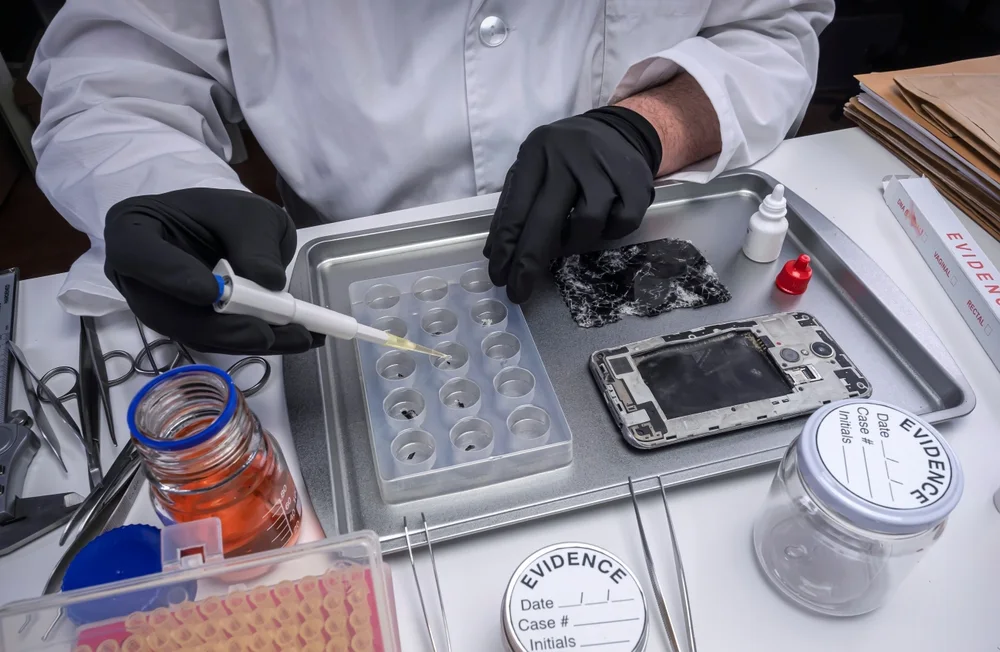
Digital forensics is the collection, preservation, examination, analysis, and reporting of electronic evidence. According to the National Institute of Standards and Technology, potential evidence can come from computers, hard drives, mobile phones, networks, cloud environments, vehicles, and drones. The work requires more than general cybersecurity knowledge. Examiners must acquire data without compromising its integrity, document their methods, interpret technical artifacts, and communicate defensible findings.
California has relatively few bachelor’s programs with substantial digital-forensics coursework. Three active California programs qualify as direct pathways for this guide:
- San José State University’s BS in Forensic Science with a Digital Evidence concentration
- National University’s BS in Cybersecurity with a Digital Forensics specialization
- San Diego City College’s BS in Cyber Defense and Analysis
Only one of those degrees is titled as forensic science. The other two place digital forensics within broader cybersecurity or cyber-defense education. Several additional California bachelor’s programs offer one required investigation course, a forensic elective, or an optional certificate. Those can support a digital-forensics career plan, but they are not equivalent to a dedicated concentration or required forensic sequence.
This guide covers active California-based programs supported by current institutional sources, along with one approved community college bachelor’s program that had not opened enrollment by the research cutoff. Minor omissions may remain among newly approved or poorly indexed programs. National online universities without an established California-based program are outside the scope. Readers comparing other degree levels can also review the broader guide to digital forensics degrees in California.
Comparing California’s bachelor’s pathways
| School | Bachelor’s pathway | Digital-forensics depth | Format | Current status |
|---|---|---|---|---|
| San José State University | BS in Forensic Science, Digital Evidence Concentration | Dedicated concentration combining forensic science, computing, mathematics, natural science, and practical work | Primarily campus-based in San José | Active |
| National University | BS in Cybersecurity, Digital Forensics Specialization | Four-course sequence in introductory, operating-system, network, and mobile-device forensics | Flexible four-week course structure with year-round enrollment | Active |
| San Diego City College | BS in Cyber Defense and Analysis | Required Network Forensics and Digital Forensics courses with laboratory hours | Limited online and in-person options | Active |
| Cerro Coso Community College | Approved BS in Cyber Security Technology | Multiple forensic courses in the approved curriculum, including computer and Windows forensics | Final format not yet published | Approved, launch pending |
| University of Southern California | BA in Intelligence and Cyber Operations | Required Digital Forensics course plus advanced forensic electives | Campus-based in Los Angeles | Active, closely related |
| CSU San Bernardino | BS in Information Systems and Technology, Cyber Security Concentration | One required Incident Handling and Cyber Investigation course with hands-on evidence work | Campus-based | Active, adjacent |
| Sacramento State | BS in Computer Science plus optional Information Assurance and Security Certificate | Three-course certificate requiring Computer Forensics Principles and Practices | Campus-based | Active, adjacent |
| CSU Bakersfield | BS in Computer Science, Cybersecurity Concentration | Digital Forensics is one elective in a larger security elective block | Campus-based | Active, adjacent |
| Platt College | BS in Cybersecurity degree completion | One course includes computer-forensics investigation and digital-evidence analysis | Fully online | Active, adjacent |
The differences are substantial. San José State integrates digital evidence into a forensic-science degree and requires supporting work in programming, computer architecture, data structures, mathematics, biology, and physics. National University starts from cybersecurity and adds four sequential forensic courses. San Diego City College combines cyber defense with two required forensic laboratory courses and an applied capstone.
The remaining programs can still lead toward digital investigation, incident response, consulting, or graduate study. Their curricula allocate less space to forensic examination, however, so students need to use electives, certificates, projects, and relevant work experience deliberately.
Direct digital-forensics bachelor’s pathways
San José State University BS in Forensic Science, Digital Evidence Concentration
San José State University offers the clearest forensic-science-centered bachelor’s route in California. The 120-unit BS in Forensic Science includes concentrations in Digital Evidence, Biology, Chemistry, and Crime Scene Investigation. Digital Evidence students study within a forensic-science department while completing a substantial computing and quantitative curriculum.
The lower-division requirements include introductory forensic science, digital evidence, statistics, programming, computer architecture, biology, physics, calculus, and discrete mathematics. The degree then moves into upper-division forensic science and computer science, including data structures and algorithms and other advanced computing work. Required courses must generally be completed with grades of C or better.
That combination supports the technical demands of examining electronic evidence. Programming and computer architecture help an examiner understand how software, memory, storage, and operating systems generate artifacts. Data structures and algorithms develop the ability to evaluate how tools process and search information. Statistics and mathematics support analytical reasoning. Physics and biology add scientific breadth within the wider forensic-science curriculum.
SJSU also includes a three-unit practical requirement. According to the published major form, students may satisfy it through an internship, individual study, Themis, or directed reading with appropriate approval. The department describes research opportunities, community-partner internships, and access to a Silicon Valley Digital Forensics Laboratory. Its degree roadmap advises students to apply to the laboratory during the fourth year.
This practical component separates the program from options built around classroom cybersecurity alone. Digital-forensics employers often need evidence that a graduate can follow a documented process, manage case materials, analyze artifacts, and prepare a clear written result. A supervised laboratory, research project, or internship can produce that evidence more convincingly than a transcript containing one survey course.
Current SJSU students seeking to change into the Digital Evidence concentration face departmental requirements. The published process calls for at least a 3.0 overall GPA, completion of designated foundational courses such as introductory forensic science, statistics, and digital evidence with grades of C or better, and satisfaction of stated basic-skills preparation. Space is determined by the department during fall and spring change-of-major cycles. Those rules concern students changing majors within SJSU and should not be read as the complete freshman or transfer admission standard.
SJSU states that each forensic-science concentration’s curriculum meets the educational standards of the American Academy of Forensic Sciences’ Forensic Science Education Programs Accreditation Commission. That statement is not the same as formal FEPAC accreditation. The Digital Evidence concentration was not verified in the current FEPAC-accredited program directory, so it should be described as meeting FEPAC educational standards according to SJSU, not as FEPAC-accredited.
The program fits students seeking digital evidence taught within a forensic-science setting rather than a general security degree. Its science, mathematics, computing, practical work, and forensic context are useful preparation for digital-evidence laboratories, law-enforcement support units, public-sector investigations, consulting, incident-response teams, and private corporate investigations. Appointment to a particular agency position can still involve background screening, employer-specific experience, sworn or civilian status requirements, and specialized training.
No fully online version was identified. The verified curriculum includes campus-oriented laboratory, science, computing, and practical components in San José. That structure favors students able to participate in an in-person university environment and pursue local laboratory or internship opportunities.
National University BS in Cybersecurity, Digital Forensics Specialization
National University approaches digital forensics from the cybersecurity side. Its 120-credit BS in Cybersecurity includes a four-course Digital Forensics specialization:
- Introduction to Digital Forensics
- Operating Systems Forensics
- Network Forensics
- Mobile Device Forensics
The sequence progresses from foundational examination concepts into evidence found across Windows, Linux, and macOS systems, network captures, and mobile devices. The introductory course must follow the designated cybersecurity preparation, and the advanced forensic courses build on that first course.
The specialization is narrower in institutional context than SJSU’s forensic-science degree but broader in the types of digital systems examined. Operating-system, network, and mobile forensics are distinct technical areas. A computer may contain file-system artifacts, deleted data, logs, application records, browser history, and operating-system metadata. Network examination focuses on traffic, communications, sessions, and intrusion evidence. Mobile-device work can involve device storage, application data, communications, location information, and operating-system security controls.
National University’s cybersecurity core provides the technical foundation surrounding those examinations. The curriculum covers networking, Windows and Linux administration, programming, security automation, system architecture, auditing, threat intelligence, incident handling, ethical hacking, network defense, policy, and technical communication. Students also complete a three-course cybersecurity project sequence.
This route is well aligned with incident response and security operations because forensic work is embedded in a wider defensive-security curriculum. Corporate examiners commonly work on compromised accounts, malicious software, unauthorized access, data loss, insider activity, and network intrusions. They need to understand how attacks occur and how systems are administered, not solely how evidence is processed after seizure.
National University advertises four-week courses and year-round enrollment. This accelerated course structure can help working adults focus on one subject at a time, although it also compresses reading, technical exercises, and project deadlines. The supplied program materials did not establish one universal delivery schedule for every student or course, so the strongest verified format claim is the university’s flexible four-week model rather than a promise that every requirement is available in a particular online or campus arrangement.
The university’s September 2026 tuition information listed a base rate of $640 per credit and estimated program tuition of $69,000 for the BS in Cybersecurity. The published estimate is not the same as total cost of attendance or guaranteed net price. Transfer credit, scholarships, fees, repeated coursework, and individual course sequencing can change the amount a student pays.
National University is institutionally accredited by the WASC Senior College and University Commission. Its cybersecurity bachelor’s and master’s programs also hold the National Centers of Academic Excellence in Cyber Defense designation. NCAE-CD recognizes cybersecurity education and is not FEPAC forensic-science accreditation. Current FEPAC accreditation was not established for this program.
Compared with SJSU, National University devotes more of the named forensic specialization to specific digital environments. SJSU places the subject inside a forensic-science degree with natural science, mathematics, justice studies, and practical options. National University places it inside cybersecurity with incident handling, network defense, auditing, and security architecture. The preferred route depends on whether the intended career is centered on forensic laboratories and investigative evidence or on cybersecurity operations where forensic methods support breach response.
The current program materials do not list a separate required internship. Practical development instead comes through specialized course exercises and the three-course project sequence. Students pursuing examiner roles can use those projects to document tool usage, evidence-handling methods, analytical reasoning, and reporting, provided the work can be shared without exposing sensitive data or violating course policies.
San Diego City College BS in Cyber Defense and Analysis
San Diego City College’s BS in Cyber Defense and Analysis is a community college baccalaureate with substantial required digital-forensics content. It is not titled as a digital-forensics degree, but all students complete Network Forensics and Digital Forensics. Both courses have lecture and laboratory hours.
The wider upper-division curriculum includes network security monitoring, intrusion detection, malware analysis, incident response, threat intelligence, security auditing, security architecture, and a capstone. Digital investigation therefore sits within the detection, analysis, response, and recovery process rather than functioning as an isolated elective.
This is a direct pathway for purposes of digital-forensics planning because the two forensic courses are required and laboratory-based. That is a materially different structure from a cybersecurity concentration in which students can graduate without taking the available forensic elective. Required laboratory hours also provide practice with evidence and tools under structured academic supervision.
The capstone calls for an applied project involving the detection, response, and recovery phases of a cybersecurity incident. Such a project can connect technical monitoring with forensic analysis. An investigator may need to identify an intrusion, preserve relevant logs or system images, establish a timeline, assess the affected systems, explain the attacker’s actions, and support recovery decisions. A curriculum covering both cyber defense and digital evidence reflects that overlap.
The degree requires at least 120 semester units. The published pathway may total 120 to 124 units depending on general-education choices. Junior-entry applicants generally need San Diego City College’s AS in Cybersecurity or equivalent preparation, along with critical-thinking and writing coursework and grades of C or better. The college also publishes a freshman-entry pathway. Admission to the bachelor’s program is selective and separate from general college admission.
Limited online and in-person options are available. The official materials do not establish that every required laboratory or upper-division course can be completed fully online, so students should plan around the published cohort schedule rather than treating the degree as universally remote.
Cost is a major point of separation from private-university options. San Diego City College estimates California-resident enrollment charges of approximately $10,056 to $10,240 for the full 120- to 124-unit pathway. That figure represents enrollment charges, not the complete cost of earning the degree. Books, equipment, transportation, housing, food, and other living expenses remain separate.
The program is no longer merely proposed. Its first cohort began in 2024, and San Diego City College graduated 31 students from the inaugural Cyber Defense and Analysis bachelor’s cohort in May 2026. That active status, paired with required laboratory courses in both network and digital forensics, places the program among California’s principal undergraduate routes into technical cyber investigation.
The curriculum fits students seeking affordable public higher education and direct cyber-defense applications. It is less centered on general forensic science than SJSU, but it requires more digital-forensics coursework than most adjacent cybersecurity degrees in the state.
Approved program awaiting launch details
Cerro Coso Community College BS in Cyber Security Technology
Cerro Coso Community College announced final state and Accrediting Commission for Community and Junior Colleges approval for a BS in Cyber Security Technology on July 1, 2026. The official California Community Colleges directory listed it as approved and coming soon at the research cutoff.
The approved curriculum proposal describes a 120-unit degree with 70 units in the major. Its forensic content includes Computer Forensics Fundamentals, Windows Forensics, system logs and event management, network security, incident response, evidence documentation, technical reporting, and additional investigative techniques.
Multiple forensic courses justify treating the planned program as a direct pathway rather than a general cybersecurity degree containing a single survey class. The proposal also connects examination with logging, monitoring, security operations, and incident response. That structure could prepare graduates for work involving compromised systems, security investigations, forensic acquisition, and technical reporting.
Cerro Coso had not yet published final bachelor’s admissions requirements, tuition, launch date, or enrollment timeline by September 25, 2026. Its existing associate-level Cyber Security Technology program is available online, but that fact does not establish the final delivery format of the BS. Final laboratory and residency arrangements were also unresolved.
Because enrollment was not open on the verified record, Cerro Coso belongs on a forthcoming list rather than among currently available programs. It could become a significant public-college option once the college publishes a catalog entry and first admission term.
Moorpark College presents a separate unresolved case. The California Community Colleges Chancellor’s Office lists its Applied Cyberdefense and Network Operations BS as coming soon, while Moorpark’s own page calls the degree proposed and pending final approval. Until those authoritative sources align and the college publishes an enrollment date or current catalog record, the program cannot be profiled as an active bachelor’s option.
Closely related and adjacent bachelor’s pathways
A direct concentration is not the only route into digital forensics. Computer science, information systems, cyber operations, and cybersecurity programs can provide a strong technical base. The deciding issue is how much actual evidence examination the curriculum requires.
USC BA in Intelligence and Cyber Operations
The University of Southern California offers a 51- to 54-unit BA in Intelligence and Cyber Operations. Digital forensics is required through TAC 375, and students can select technical electives such as Apple Forensics and Security, Cyber Breach Investigations, and Advanced Digital Forensics.
The major combines international relations, intelligence, information security, ethical hacking, programming, digital forensics, law or policy, and regional studies. Its central focus is broader than forensic examination. Students study the political, strategic, and institutional settings surrounding cyber operations rather than devoting the entire major to computing and evidence analysis.
USC also offers an 18-unit Digital Forensics minor and a 10-unit specialization. Course options include mobile-device forensics, malware analysis and reverse engineering, cyber law, advanced forensics and incident response, investigation and report writing, and a compromised-networks capstone. Neither offering is a standalone bachelor’s degree. A student completes it alongside an undergraduate major.
The Intelligence and Cyber Operations BA is better aligned with national-security analysis, cyber policy, intelligence work, and investigations requiring geopolitical context than with a narrowly technical examiner role. Selecting advanced technical electives or adding the Digital Forensics minor can increase laboratory and investigative depth.
USC’s 2026-2027 undergraduate cost information listed tuition of $75,384 for two semesters of full-time study at 12 to 18 units per semester. Mandatory fees and living costs are separate, while institutional aid can change the net price substantially. This is published tuition, not a complete estimate of what every student will pay.
CSU San Bernardino BS in Information Systems and Technology, Cyber Security Concentration
California State University, San Bernardino offers a 120-unit BS in Information Systems and Technology with an 18-unit Cyber Security concentration. The concentration requires Incident Handling and Cyber Investigation rather than presenting it only as an optional course.
That course covers the identification, preservation, and analysis of digital evidence, use of forensic tools, and presentation of findings. The catalog specifically includes hands-on experience identifying and preserving evidence. Other concentration subjects include cybersecurity management, penetration testing, ethical hacking, and a seminar.
CSUSB occupies a middle position between direct forensic pathways and security programs with only an optional forensic elective. Every student in the concentration completes a substantive investigation course, but the overall program remains an information-systems and cybersecurity degree. A single required course cannot provide the same breadth as sequences covering operating-system, network, and mobile-device forensics separately.
The information-systems context can be useful in corporate investigations. Examiners working inside organizations need familiarity with business systems, users, governance, risk, and operational processes. Students seeking more specialized examination work would benefit from pairing the required course with projects, internships, security-laboratory experience, or later graduate study.
Sacramento State BS in Computer Science with Information Assurance and Security Certificate
Sacramento State allows Computer Science BS students to add an optional nine-unit Information Assurance and Security Certificate. The certificate requires Cryptography, Computer Forensics Principles and Practices, and Computer System Attacks and Countermeasures.
The forensic course covers incident investigations, file-system and storage analysis, network forensics, forensic tools, anti-forensics, and legal standards. It also includes projects involving the use, understanding, and design of digital-forensics tools. Upper-division networking preparation is required before entering the course.
This path provides deeper technical grounding than a general criminal justice degree with a technology elective. Computer science students study programming, data structures, algorithms, systems, architecture, operating systems, and networks. Those subjects support the ability to understand what forensic software is doing, identify tool limitations, and create scripts or utilities for repetitive analysis.
The certificate is optional, not a named concentration within the bachelor’s degree. A Sacramento State computer science student who does not add it has not completed the same forensic coursework. Course scheduling also affects how easily the certificate fits within the degree plan.
Sacramento State’s BS in Computer Science is accredited by the Computing Accreditation Commission of ABET. That is computing accreditation, not digital-forensics programmatic accreditation. The combination is best understood as an accredited computer science bachelor’s plus a defined academic certificate containing computer forensics.
CSU Bakersfield BS in Computer Science, Cybersecurity Concentration
CSU Bakersfield’s 120-unit BS in Computer Science includes a Cybersecurity concentration. The computer science core covers programming, data structures, discrete structures, computer architecture, algorithms, software engineering, databases, programming languages, operating systems, networks, calculus, and related requirements.
Students choose 12 units from an information-security elective block. Digital Forensics is one option alongside subjects such as vulnerability analysis, Linux administration, network and computer security, applied cryptography, artificial intelligence, and data mining. A student can complete the concentration without taking Digital Forensics.
The main tradeoff is breadth versus guaranteed forensic content. CSUB provides the systems and computing foundation that can support advanced forensic study, but the concentration itself does not ensure that every graduate has studied evidence acquisition, chain of custody, file-system analysis, or forensic reporting. Students targeting digital investigation need to reserve elective space for Digital Forensics and use senior projects or internships to deepen that work.
The curriculum includes Senior Project I and II, which creates an opportunity to pursue a security or investigation topic if appropriate supervision is available. No separate digital-forensics internship or required forensic laboratory sequence was identified.
For 2026-2027, CSUB’s published cost budget listed $6,838 in systemwide tuition and $2,105 in mandatory campus fees for full-time California-resident undergraduates. Housing, food, books, transportation, personal expenses, and loan fees are separate parts of cost of attendance.
Platt College BS in Cybersecurity Degree Completion
Platt College administers an online BS in Cybersecurity degree-completion program through its Anaheim campus. Applicants need an associate degree in information technology or a closely related field, official transcript evaluation, an admissions interview, and any applicable entrance assessments.
The program covers cybersecurity, network defense, incident response, ethical hacking, policy, and risk management. Its Wireless and Mobile Device Security course includes computer-forensics investigation, digital-evidence collection, and analysis.
This is a general cybersecurity degree with verified forensic instruction rather than a digital-forensics specialization. The curriculum does not contain the multilevel forensic sequence found at National University or the two required forensic laboratory courses at San Diego City College.
No on-campus laboratories, clinical rotations, or externships are required. All instruction is delivered through distance education. That arrangement removes commuting and residency requirements, but practical development occurs through online coursework rather than a physical forensic laboratory or required external placement.
Platt College Los Angeles LLC is institutionally accredited by the Accrediting Commission of Career Schools and Colleges and approved to operate by California’s Bureau for Private Postsecondary Education. The cybersecurity degree does not have separately identified digital-forensics accreditation. Tuition and supply costs are published in the college’s current catalog addendum; no reliable program total was extracted for this comparison.
The program’s entry structure is especially relevant. This is not a four-year freshman-entry bachelor’s pathway. It is a completion option intended for applicants who already hold relevant associate-level education.
What a digital-forensics curriculum should contain
Degree titles do not reveal enough. A cybersecurity program may devote only one elective to forensics, while a broader cyber-defense degree may require two forensic laboratories and a related capstone. Course requirements provide the better comparison.
Computing foundations
Digital examiners need working knowledge of:
- Programming or scripting
- Computer architecture
- Operating systems
- File systems
- Networking
- Databases and structured data
- Linux and Windows administration
- Cloud and virtualized systems
Programming is useful even when a position relies heavily on commercial forensic software. Scripts can parse records, normalize data, automate searches, validate results, and handle unusual artifacts. Computer architecture and operating systems explain where evidence comes from and how user actions, applications, memory, and storage interact.
A technically broad computer science degree can therefore be a credible foundation. It becomes a forensic pathway only when the student also learns acquisition, preservation, examination methods, documentation, and legal constraints.
Evidence acquisition and integrity
NIST’s forensic model includes collection, examination, analysis, and reporting. Collection is not simply copying files. It can involve forensic imaging, write blocking, hashing, volatile-data capture, mobile extraction, network-packet collection, cloud records, and documentation of the original source.
A sound program should explain how to preserve evidence integrity and create a reproducible record of what was done. Tool-generated output is not self-validating. Examiners need to know whether a method changed the source, omitted data, misinterpreted timestamps, or produced incomplete results.
Operating-system and file-system analysis
A broad introductory course may discuss these subjects, but deeper programs devote substantial time to them. Useful topics include:
- File-system structures and metadata
- Deleted or hidden data
- System and application logs
- User accounts and permissions
- Browser and communication artifacts
- External-device records
- Persistence mechanisms
- Timeline construction
- Encryption and access controls
- Anti-forensic techniques
National University’s separate Operating Systems Forensics course gives this area dedicated space. Sacramento State’s forensic course includes file-system and storage analysis. Cerro Coso’s approved plan contains Windows Forensics alongside foundational computer forensics.
Network and mobile forensics
Network forensics concerns traffic, sessions, protocols, logs, intrusion evidence, and communications between systems. It is especially relevant to incident response, threat hunting, breach investigation, and security operations. San Diego City College and National University both require a course explicitly focused on network forensics.
Mobile-device examination is another specialty. Phones and tablets can contain application data, messages, media, browser records, account information, location artifacts, and links to cloud services. National University requires Mobile Device Forensics, while Platt includes mobile and wireless evidence topics in a broader course.
Law, ethics, and reporting
California Department of Justice digital-evidence training covers search warrants, search and seizure, file systems, write blocking, evidence identification, case management, analysis, and courtroom presentation. The training is intended for investigators assigned to digital-evidence examination and does not replace a bachelor’s degree, but its subject list shows how technical work intersects with legal authority and communication.
A degree should address:
- Authorized scope of an examination
- Search and seizure principles
- Chain of custody
- Evidence documentation
- Ethical limits
- Repeatable methods
- Technical report writing
- Presentation of findings
- Courtroom or administrative testimony
An examiner can perform a technically accurate analysis and still produce unusable work if the evidence was collected outside the authorized scope or the report does not explain the method and findings. California DOJ’s Bureau of Forensic Services likewise requires lawfully possessed evidence and legally authorized examination scope for submissions.
Practical work
Laboratory courses, capstones, internships, supervised research, and case-based projects allow students to apply the process from acquisition through reporting. Practical work should involve more than clicking through a tool interface. Strong assignments require documentation, interpretation, validation, and a written conclusion supported by artifacts.
SJSU includes a practical requirement and promotes laboratory and internship opportunities. San Diego City College requires forensic laboratory hours and an applied capstone. National University uses a three-course project sequence. Sacramento State’s forensic course includes tool-oriented projects. These features differ in structure, but each provides more evidence of applied skill than a lecture-only survey.
Accreditation and designations
FEPAC is the specialized accreditation body most directly associated with eligible forensic-science programs. It can accredit qualifying bachelor’s and master’s programs, including programs in natural science or computer science with forensic concentrations.
A university statement that its curriculum meets FEPAC educational standards is not formal FEPAC accreditation. SJSU uses the former wording. Neither SJSU’s Digital Evidence concentration nor National University’s program was verified as currently FEPAC-accredited in the official directory used for this research.
Other forms of recognition answer different questions:
- WSCUC, ACCJC, and ACCSC institutional accreditation apply to institutions rather than serving as digital-forensics program accreditation.
- ABET computing accreditation evaluates eligible computing programs. Sacramento State’s Computer Science BS has this accreditation, but its optional security certificate is not thereby a FEPAC-accredited forensic program.
- NCAE-CD designation recognizes qualifying cybersecurity education. National University reports this designation for its cybersecurity programs. It is not forensic-science accreditation.
- California BPPE approval concerns authorization to operate private postsecondary education in the state. It does not certify a curriculum as a specialized digital-forensics program.
FEPAC is most relevant to degrees explicitly designed around forensic science and digital evidence. It is less useful as a judgment tool for an intelligence BA, a general computer science program, or an information-systems degree with one investigation course.
Career alignment in California
Digital-forensics graduates can work in law enforcement, government, cybersecurity consulting, incident response, litigation support, corporate investigations, security operations, and specialized examination laboratories. Job titles are inconsistent across employers. Relevant postings may use titles such as:
- Digital forensic examiner
- Computer forensic analyst
- Cybercrime analyst
- Digital evidence technician
- Incident response analyst
- Forensic consultant
- Security operations analyst
- Mobile-device examiner
- Network forensic analyst
- Electronic discovery analyst
Some California law-enforcement agencies use civilian digital-evidence specialists, while others assign investigative or technical duties to sworn personnel. A bachelor’s degree does not by itself determine whether a graduate can enter a sworn assignment, qualify for a security clearance, testify as an expert, or obtain a particular government classification.
Digital forensics also differs from traditional laboratory criminalistics. California criminalist positions often emphasize natural-science education because employees may analyze controlled substances, toxicology evidence, DNA, trace materials, firearms evidence, or other physical evidence. A computing-centered digital-forensics degree is not interchangeable with chemistry or biology preparation for those roles.
The closest federal labor category commonly used for context is information security analyst. The U.S. Bureau of Labor Statistics reported a 2025 national median wage of $129,180 and projected 21 percent employment growth from 2025 through 2035 for that occupation. BLS identifies a bachelor’s degree in a computer-related field as the typical entry-level education, often with related experience.
Those numbers describe information security analysts broadly, not digital forensic examiners specifically. Security analysts may focus on preventive controls, monitoring, risk, governance, or defensive engineering without conducting evidence examinations. Digital-forensics salaries vary by employer, location, experience, clearance requirements, technical specialty, and whether the role is in government, consulting, or private industry.
Choosing among the California options
Start with the type of work rather than the word “forensics” in a degree title.
SJSU offers the strongest verified integration of forensic science, computing, mathematics, natural science, and practical study among the active California programs reviewed here. It is the clearest fit for a student seeking a campus-based digital-evidence education within a forensic-science department.
National University provides the clearest named sequence across operating-system, network, and mobile-device forensics. Its broader cybersecurity curriculum favors incident response, network investigation, corporate security, and technical examination connected to cyber operations. The four-week format may suit working adults comfortable with compressed courses.
San Diego City College combines affordability with required Network Forensics and Digital Forensics laboratories. Its cyber-defense orientation is useful for breach investigation and incident response, and the applied capstone links examination to detection and recovery. Junior-entry students need appropriate lower-division cybersecurity preparation.
USC serves a different goal. Its Intelligence and Cyber Operations BA connects digital forensics with intelligence, international relations, national security, law, policy, and regional studies. Advanced electives or the separate minor can add technical depth, but the degree is not centered solely on forensic examination.
CSUSB guarantees at least one substantive cyber-investigation course within its Cyber Security concentration. Sacramento State allows computer science majors to add a defined three-course security certificate with computer forensics. CSUB supplies a broad computer science foundation but leaves Digital Forensics optional. Platt offers a fully online completion route with some forensic instruction for applicants who already hold a relevant associate degree.
Cerro Coso could add another direct and comparatively affordable public pathway once admissions and enrollment begin. Its approved curriculum contains enough forensic content to merit attention, but it was not yet an enrollable program at the research cutoff.
For examiner-centered work, prioritize required courses in evidence acquisition, operating systems, file systems, network forensics, mobile devices, legal authority, chain of custody, and technical reporting. For incident response, add networking, system administration, threat intelligence, malware analysis, logging, intrusion detection, and security operations. For tool development or highly technical analysis, favor programming, algorithms, computer architecture, operating systems, and data structures.
The best academic plan is the one that produces both a credible technical foundation and documented investigative work. A named specialization is useful, but employers also need evidence that a graduate can preserve data, analyze artifacts methodically, explain limitations, and write a defensible report. California’s direct bachelor’s options approach that goal from different directions: forensic science at SJSU, cybersecurity specialization at National University, and laboratory-based cyber defense at San Diego City College.