
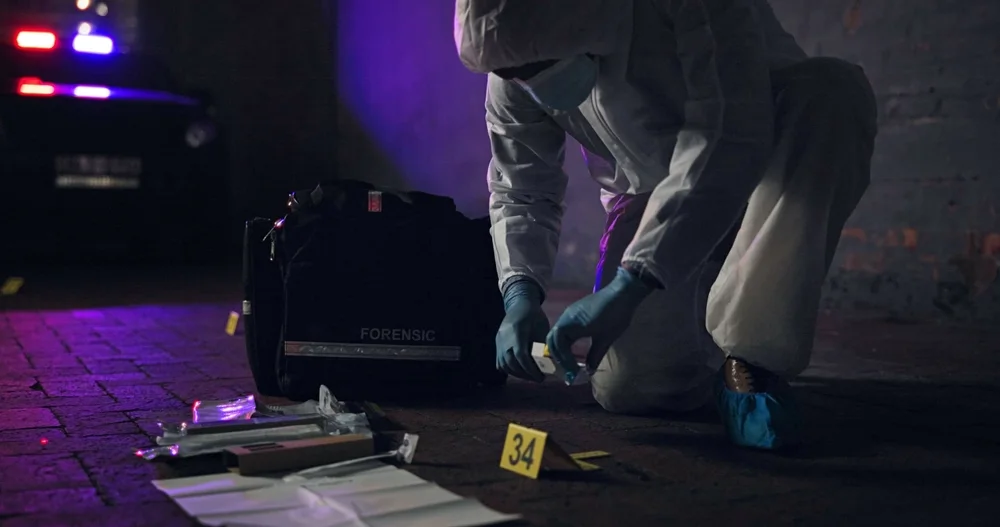
California colleges use the word “criminology” in several different ways. It can identify a degree, an option within a degree, a formal emphasis, a department, a transfer focus, or a single course inside a criminal justice program. Those labels are not interchangeable.
The programs below are limited primarily to California associate degrees that use criminology in the award name, option, emphasis, or structured pathway. Closely related transfer and renamed programs are included separately when they directly serve the same educational goal. This is not a directory of every Administration of Justice or Criminal Justice associate degree in California. Those broader categories contain many additional programs, but including all of them would obscure meaningful differences in curriculum and award type.
The first decision is whether the goal is criminological theory, law enforcement, corrections, evidence work, emergency response, or transfer to a bachelor’s program. A local Associate of Science designed for employment can be useful preparation for public-safety work, but it may not transfer as efficiently as an Associate Degree for Transfer. A forensic-evidence option can teach evidence recognition and handling without providing the physical or biological science degree required for the California Department of Justice Criminalist classification. A law-enforcement degree also remains separate from police academy completion and agency hiring.
Readers comparing associate programs with bachelor’s and graduate options can also review the broader guide to criminology degrees in California.
California criminology associate programs at a glance
| College | Associate program | Primary emphasis |
|---|---|---|
| Fresno City College | Criminology, Criminology Option AS | General criminology and justice studies |
| Fresno City College | Criminology, Correctional Science Option AS | Corrections, probation, parole, and criminal behavior |
| Fresno City College | Criminology, Forensic Evidence Option AS | Evidence handling and justice-system applications |
| Fresno City College | Criminology, Law Enforcement Option AS | Policing, investigation, criminal law, and ethics |
| Fresno City College | Criminology, Administration of Justice for Transfer AS-T | CSU transfer preparation |
| Reedley College | Criminology: Law Enforcement AS | Policing, courts, investigation, and public safety |
| Reedley College | Criminology: Corrections AS | Corrections, interviewing, supervision, probation, and parole |
| Madera Community College | Criminology: Law Enforcement AS | Law enforcement and justice-system operations |
| Madera Community College | Criminology: Corrections AS | Corrections, detention, probation, and parole |
| Clovis Community College | Criminology: Corrections AS | Corrections-focused justice education |
| Santa Barbara City College | Administration of Justice AS, Criminology Emphasis | Criminological theory, behavior, ethics, and justice policy |
| Institute of Technology, Clovis | Criminology and Emergency Response Management AAS | Occupational training, scene support, security, and emergency response |
| Institute of Technology, Modesto | Criminology and Emergency Response Management AOS | Occupational training, scene support, security, and emergency response |
| College of the Canyons | Sociology AA-T, Criminology Focus | Sociology-based transfer preparation |
| Clovis Community College | Criminal Justice: Law Enforcement AS | Closely related renamed law-enforcement pathway |
California has no standardized community-college transfer degree formally titled “Criminology.” The common statewide transfer award is the Administration of Justice AS-T. A college may also place a criminology focus inside a Sociology AA-T, as College of the Canyons does.
Most California community-college associate degrees require at least 60 semester units even when the major itself contains only 18 to 31 units. The balance usually consists of general education, electives, and other institutional graduation requirements.
Fresno City College criminology associate degrees
Fresno City College has the broadest group of formally named criminology associate options identified in this review. Its current degree material lists a general Criminology Option, Correctional Science, Forensic Evidence, and Law Enforcement. It also offers an Administration of Justice transfer degree associated with the criminology department.
These programs share a justice-system foundation but lead in different academic directions. The Forensic Evidence option is oriented toward evidence work, while the Correctional Science option emphasizes institutional and community corrections. The revised Law Enforcement option concentrates on policing and investigation. The general option provides a broader route for learners who do not want to specialize immediately.
Criminology, Criminology Option AS
The general Criminology Option is the least specialized of Fresno City College’s locally awarded criminology degrees. Current official degree material lists it as an Associate of Science, although a detailed indexed 2026-2027 major sheet was not available during the research review.
The program is intended to address crime, criminal behavior, legal institutions, and the operation of the justice system. Compared with Fresno’s occupational options, it provides more room for broad criminology and social-science study rather than directing the entire major toward corrections, policing, or evidence.
This route is appropriate for general justice-system preparation or later study in criminology, sociology, criminal justice, or a related subject. Current program materials do not list a required police academy, internship, or laboratory component. Work-experience courses may provide an experiential option, but no required placement was identified.
Because it is a local AS rather than a standardized transfer degree, its courses need to be mapped carefully to the intended bachelor’s program. Fresno’s Administration of Justice AS-T provides a more structured option for CSU-bound students.
Criminology, Correctional Science Option AS
Fresno’s Correctional Science option uses a 31-unit major. The published major sheet requires grades of C or better in major courses, while completion of the associate degree requires at least 60 semester units and a cumulative 2.0 GPA under the cited college rules.
Core subjects include criminal law, justice procedures, criminal justice communications, constitutional rights, and corrections. Elective choices add subjects such as criminal investigation, juvenile delinquency, psychology of criminal behavior, probation and parole, gangs and corrections, psychology, sociology, languages, and work experience.
The curriculum is better aligned with corrections, detention, probation, parole, and related justice services than with policing or forensic laboratory analysis. Psychology of criminal behavior and correctional electives add useful context for working with justice-involved populations. Criminal law, communication, and constitutional-rights coursework also have direct relevance to documentation and lawful procedure.
Work Experience Education is elective rather than a graduation requirement. Fresno also operates separate academy and professional training programs, but earning this AS is not the same as completing a corrections academy or meeting an employer’s full selection requirements.
Criminology, Forensic Evidence Option AS
The Forensic Evidence option is the Fresno pathway most directly connected to evidence recognition and processing. The college continues to list it in current degree material, but a detailed current major sheet was not located in the indexed sources used for this review.
The word “forensic” requires careful interpretation here. The option belongs to a criminology and justice context, not a laboratory science sequence. Its occupational relevance is evidence documentation, scene support, chain of custody, evidence collection, and related criminal justice functions. Those duties are distinct from chemical, biological, toxicological, or DNA analysis conducted by criminalists and other forensic laboratory scientists.
Readers targeting a civilian evidence technician or crime-scene support role may find this focus more relevant than a general criminology degree. Agency titles and duties vary. Some California agencies assign crime-scene responsibilities to civilian personnel, while others use sworn officers or combine evidence duties with property-room work.
For laboratory careers, the available curriculum does not show the science preparation required by the California Department of Justice Criminalist classification. The entry standard requires a degree with a major in a physical or biological science, including eight semester hours of general chemistry and three semester hours of quantitative analysis. The related state examination materials identify additional knowledge areas such as organic chemistry, biochemistry, genetics, molecular biology, statistics, toxicology, instrumental analysis, microscopy, chromatography, spectroscopy, and laboratory instrumentation. Those additional subjects are relevant preparation and job knowledge, but the state materials do not describe every one of them as a universal course requirement for every California laboratory position.
Fresno’s evidence option serves a different purpose. Evidence collection, photography, fingerprints, documentation, and chain of custody support field and property-evidence work, while laboratory criminalistics requires substantially deeper science preparation.
Current program materials do not identify a mandatory internship, field placement, or laboratory requirement. The evidence gap concerns the detailed current curriculum, not whether the award remains listed.
Criminology, Law Enforcement Option AS
Fresno City College revised its Law Enforcement Option for Spring 2026. The current major contains 30 units and includes introductory criminology, community relations, criminal law, enforcement services, criminal investigation, criminal justice communications, and police ethics.
Students select another nine units from choices that can include evidence, juvenile delinquency, constitutional rights, work experience, psychology, sociology, ethnic studies, and related subjects. That structure combines occupational policing content with social and behavioral coursework.
The required investigation and communication courses make this option more targeted than the general criminology degree. Community relations and ethics also address areas that directly affect police practice, public interaction, decision-making, and report preparation.
Fresno City College operates a regional law-enforcement training facility, and its police academy and peace-officer training courses are certified by California POST. The academy is separate from the associate degree. Degree completion alone does not grant peace-officer status or bypass agency selection, background, medical, academy, or field-training requirements.
Graduates of a Basic Police Academy or Reserve Police Officer Level 1 program can apply for credit for prior learning. That provision can help people who completed qualifying training integrate it into an academic credential, subject to the college’s credit process.
Criminology, Administration of Justice for Transfer AS-T
Fresno’s transfer program is formally an Administration of Justice AS-T, even though current college material associates it with criminology. The Spring 2026 revision requires 60 CSU-transferable units, Cal-GETC, 18 to 20 units in the major, a minimum 2.0 GPA, and grades of C or P in major courses.
The curriculum requires Introduction to Criminology and Concepts of Criminal Law. Additional coursework can include justice-system subjects, sociology, psychology, or statistics.
This is Fresno’s clearest route for students planning to continue into a CSU program in criminal justice, administration of justice, criminology, or a related field. The standardized transfer structure is its main advantage over a local AS. It is academic preparation rather than academy training, and practical experience depends on the electives selected.
Reedley College criminology degrees
Reedley College offers separate Criminology: Law Enforcement and Criminology: Corrections Associate in Science degrees. Each uses a 30-unit major. Some specialized courses are offered only as needed and depend on sufficient enrollment, so course rotation can affect the order and pace of completion.
Criminology: Law Enforcement AS
The Law Enforcement AS draws from criminology, evidence, justice procedures, community relations, criminal law, police operations, criminal investigation, criminal justice communications, constitutional rights, multicultural public safety, police ethics, and work experience. Up to three units may also come from corrections-oriented coursework.
This range supports a practical understanding of policing and the broader justice system. Evidence and investigation courses are useful for patrol, investigative support, security, and scene documentation. Communications coursework supports report writing and professional interaction, while constitutional-rights and ethics courses address the legal limits of government authority.
Criminal justice work experience is available as an option, but no mandatory placement or academy requirement was identified. The degree can support law-enforcement or security career preparation, yet it remains an academic award rather than a California POST credential.
The curriculum also provides a foundation for further study. Students focused primarily on transfer should compare the local AS with an Administration of Justice AS-T, since the transfer degree follows a standardized CSU-oriented framework.
Criminology: Corrections AS
Reedley’s Corrections AS includes criminology, evidence, justice procedures, criminal law, investigation, communications, constitutional rights, corrections, correctional interviewing and counseling, supervision, and probation and parole.
Correctional interviewing and counseling gives this option a more specialized profile than a broad criminal justice degree. It addresses interpersonal and case-management skills relevant to correctional settings. Supervision and probation and parole coursework expand the focus beyond confinement to community supervision and institutional operations.
Optional work experience can add occupational exposure. A corrections academy was not listed as a required part of the degree. Employment in corrections, detention, probation, or parole can include separate examinations, background screening, training, and agency-specific educational standards.
The detailed program evidence comes from Reedley’s 2025-2026 catalog. It provides the applicable published structure for that catalog period, including the warning that some courses run only as needed.
Madera Community College criminology degrees
Madera Community College’s 2026-2027 new student guide lists criminology associate degrees in both Law Enforcement and Corrections. It also lists matching certificate pathways.
The current guide confirms that both associate options remain active. The most detailed curriculum evidence available for this review came from an earlier catalog, so the descriptions below use that catalog for course content while relying on the 2026-2027 guide for current award availability.
Criminology: Law Enforcement AS
Madera’s Law Enforcement AS has been structured as a 30-unit major covering criminology, evidence, justice procedures, community relations, criminal law, police operations, investigations, criminal justice communications, constitutional rights, multicultural issues, ethics, and optional work experience.
The combination is occupationally focused. Police operations and investigation address law-enforcement practice, while evidence and communications support documentation and case preparation. Community relations, constitutional law, multicultural issues, and ethics add legal and social context.
Cooperative work experience is available as an option. Some specialized criminology courses may run only as needed, which can make course sequencing significant for part-time students.
This degree supports preparation for policing and other justice-system roles, but it is not police academy completion. A graduate pursuing a sworn position still goes through the hiring agency’s selection and required training processes.
Criminology: Corrections AS
The Corrections option combines general criminology and justice-system study with corrections, correctional interviewing and counseling, supervision, criminal law, evidence, communications, and related electives.
Its strongest alignment is with correctional institutions, detention, probation, parole, and community supervision. Interviewing, counseling, and supervision provide a different skill base from the investigation and police-operations emphasis found in the Law Enforcement AS.
Current materials do not list a required academy or internship. Cooperative work experience may be available through the department. The degree provides academic and occupational preparation, while job eligibility depends on the position and hiring agency.
Clovis Community College
Clovis Community College’s program names illustrate why award titles need to be read carefully. Its 2025-2026 materials list a Criminology: Corrections AS, but the law-enforcement associate degree is called Criminal Justice: Law Enforcement. A Criminology: Law Enforcement certificate is listed separately.
Clovis is institutionally accredited by the Accrediting Commission for Community and Junior Colleges. No separate specialized criminology accreditation was identified.
Criminology: Corrections AS
The 2025-2026 Clovis catalog and the college’s 2024-2025 corrections major sheet document a corrections-focused curriculum that includes criminology, evidence, criminal law, communications, corrections, correctional interviewing, supervision, and probation and parole. These course details apply to the cited catalog and major-sheet periods. The current degree guide verifies the award title, but a detailed 2026-2027 course map was not located.
The documented course mix is aligned with institutional corrections, detention, probation, parole, and community supervision. Interviewing and supervision coursework provides a closer connection to correctional operations than a general criminal justice degree would provide. The curriculum is not designed as preparation for laboratory criminalistics.
The cited materials do not list a mandatory corrections academy as part of the degree. Academy training, background screening, examinations, and other hiring requirements remain separate when required by an employer.
Criminal Justice: Law Enforcement AS
The law-enforcement associate pathway at Clovis is titled Criminal Justice: Law Enforcement, not Criminology: Law Enforcement. It is included because it is the college’s current associate-level law-enforcement route in the same academic area where a Criminology: Law Enforcement certificate is listed.
The official 2025-2026 catalog contains law-enforcement subjects such as criminal law, evidence, investigation, communications, police operations, and justice procedures. Those details describe the published 2025-2026 curriculum rather than an unlocated 2026-2027 course map.
The degree is aimed at academic and occupational preparation for law enforcement and related justice work. No academy requirement was identified within the associate curriculum. It remains separate from POST academy completion and from agency hiring requirements.
Clovis demonstrates why a statewide search cannot rely only on the word “criminology.” The law-enforcement pathway remains directly relevant to criminology students even though the associate award uses the Criminal Justice title.
Santa Barbara City College Administration of Justice AS, Criminology Emphasis
Santa Barbara City College offers an Administration of Justice Associate of Science with a formal Criminology Emphasis. The major requires 21 units. Degree completion requires at least 60 degree-applicable units, a 2.0 GPA, 12 units completed at SBCC, an approved general-education pattern, and grades of C or P in major courses.
Required courses include Introduction to Administration of Justice, Ethics, Introduction to Criminology, The Study of Murder, and Crime and Human Behavior. Students then select two electives from subjects such as evidence, corrections, diversity, criminal law, forensics, criminal investigation, constitutional law, terrorism, abnormal psychology, deviance, and social problems.
The required core gives this program a stronger criminological theory and behavior orientation than many law-enforcement AS degrees. Crime and Human Behavior, The Study of Murder, and Introduction to Criminology examine offending and social response rather than concentrating only on police operations.
The elective structure lets students add occupational justice content, but Introduction to Forensics and Criminal Investigation are optional rather than required. The current catalog does not list an internship or academy requirement.
SBCC’s program fits readers interested in criminological theory, criminal behavior, ethics, justice policy, or transfer preparation. It is less directly occupational than a law-enforcement option and less focused on correctional operations than a corrections AS.
For Fall 2026 and Spring 2027, California residents pay a $46 per-unit enrollment fee. SBCC also charges health, representation, activity, and transportation fees. Nonresidents pay additional per-unit tuition and capital-outlay charges.
Institute of Technology criminology and emergency response programs
Institute of Technology offers a private career-college program in Criminology and Emergency Response Management at its Clovis and Modesto campuses. The curriculum differs substantially from a public community-college criminology degree in price, calendar, award type, and occupational focus.
Both versions contain 97 quarter credits and 1,300 instructional hours. The advertised length is 65 weeks, with hybrid instruction scheduled Monday through Thursday plus independent study. Published tuition is $25,454, with fees, books, and supplies charged separately. That figure is program tuition, not total cost of attendance.
The curriculum combines criminology, criminal justice, law-enforcement methods, corrections, security, emergency response, first-responder content, ethics, algebra, and professional development. Practical exercises and simulations are more prominent than in many theory-centered associate programs.
Crime Scene Technician training covers scene drawings, scene security, photography, fingerprint work, evidence collection, chain of custody, courtroom testimony, and related technical tasks. These topics are relevant to scene and evidence support. The curriculum does not show the physical or biological science degree, general chemistry, and quantitative analysis required for California DOJ Criminalist eligibility.
The California campuses are institutionally accredited by the Accrediting Commission of Career Schools and Colleges. No FEPAC accreditation was identified.
Criminology and Emergency Response Management AAS, Clovis
The Clovis campus awards an Associate of Applied Science. Its occupational curriculum includes criminal justice and emergency-response subjects, practical simulations, crime-scene exercises, and access to an IVR-300 simulator.
The program is aimed at justice-system support, corrections, security, emergency response, and related occupational roles. Its fixed 65-week schedule is much faster and more structured than the pace many part-time community-college students follow.
The main tradeoff is cost and transfer orientation. Published tuition is considerably higher than California resident enrollment fees at a public community college, and an applied occupational degree is not designed around the standardized CSU transfer framework. The program’s practical scene content is more extensive than a theory-based criminology emphasis, but it remains separate from police academy training and laboratory forensic science.
IOT advertises certificate-related coursework and occupational credential opportunities. Program coursework can prepare students for those opportunities, but the available evidence does not establish automatic issuance of every external credential.
Criminology and Emergency Response Management AOS, Modesto
The Modesto campus awards an Associate of Occupational Studies for substantially similar CERM training. It also uses a hybrid 97-quarter-credit, 1,300-hour curriculum with an advertised 65-week schedule.
Coursework covers criminology, corrections, security, emergency response, crime-scene procedure, evidence handling, first-responder skills, ethics, mathematics, and workplace preparation. Simulation-based instruction gives the program a practical orientation.
California Bureau for Private Postsecondary Education reporting supports current Modesto availability. Published tuition is $25,454 plus fees, books, and supplies.
The AOS title signals an occupational purpose. It is best compared with career-training programs rather than treated like an Administration of Justice AS-T. Learners intending to earn a bachelor’s degree need a receiving institution to evaluate how the quarter credits apply to that degree.
IOT’s general marketing references its Redding location in connection with the institution and CERM, but the July 17, 2026 Redding catalog addendum does not list CERM among programs taught there. Redding is therefore outside this verified program list.
Transfer-oriented alternatives with a criminology connection
A search limited to awards formally titled “Criminology” can miss useful transfer routes. California colleges commonly place criminology inside Administration of Justice, Criminal Justice, or Sociology programs.
That does not mean every degree containing one criminology course belongs on a criminology program list. The alternatives below have a stronger and formally identified connection.
College of the Canyons Sociology AA-T, Criminology Focus
College of the Canyons identifies a Criminology Focus within its Sociology Associate in Arts for Transfer. The formal credential is Sociology AA-T, not Criminology AA-T.
The program is relevant to learners who want to study crime as a social phenomenon and then transfer into sociology, criminology, or an adjacent bachelor’s program. A sociology framework can address institutions, inequality, deviance, social control, research, and human behavior. That orientation differs from occupational degrees built around police operations, evidence collection, or correctional procedure.
The current official pathway identifies the criminology focus, but the published pathway page does not specify whether the focus appears on the diploma or transcript. No academy, laboratory, crime-scene practical, or required internship was identified.
This pathway works better for social-science transfer goals than for immediate CSI or policing preparation. Its AA-T structure is also more transfer-centered than a locally designed occupational AS.
Administration of Justice AS-T programs
The Administration of Justice AS-T is the most common California community-college transfer alternative for future criminology and criminal justice majors. A typical AS-T requires 60 CSU-transferable semester units, general education, at least 18 units in the major, a minimum 2.0 GPA, and C or P grades in major courses.
Pasadena City College, for example, describes its Administration of Justice AS-T as preparation for further study in criminology or criminal justice. Similar AS-T programs exist across California, although they are not all profiled here because their formal award titles do not contain criminology.
An AS-T is generally more useful than a local occupational AS when the primary goal is CSU transfer. A local degree can contain more specialized courses in policing, corrections, or evidence, while the transfer degree prioritizes a standardized lower-division pattern. The better route depends on whether the next step is university study or immediate occupational preparation.
California’s ASSIST articulation system can show how specific community-college courses apply to a particular CSU or UC major. Transfer planning should be based on the intended university and major, since criminology, criminal justice, justice studies, and sociology can sit in different academic departments.
How these degrees align with specific careers
Police officer or deputy sheriff
A law-enforcement AS can provide useful academic preparation in criminal law, constitutional rights, investigation, ethics, communications, evidence, and community relations. Fresno, Reedley, and Madera all offer criminology pathways built around those subjects. Clovis offers a closely related Criminal Justice: Law Enforcement AS.
The degree is only one part of the route to a sworn position. California POST academy training, agency selection, background investigation, medical and psychological screening, and field training are separate processes. Fresno’s college-operated academy illustrates the distinction clearly: the academic degree and POST-certified academy are connected resources, but they are not the same credential.
Corrections, detention, probation, or parole
Corrections-focused degrees at Fresno, Reedley, Madera, and Clovis provide the most direct curriculum match. Relevant subjects include corrections, probation and parole, correctional interviewing, counseling, supervision, criminal law, constitutional rights, communications, and psychology of criminal behavior.
Reedley’s inclusion of correctional interviewing and counseling is especially relevant to work involving case management and institutional interaction. Fresno offers electives in probation and parole, gangs and corrections, and criminal behavior. Madera’s published pathway similarly combines corrections with interviewing, supervision, and justice-system foundations.
These degrees provide academic preparation but do not replace an academy, background screening, examination, or employer training required for a particular position.
Crime-scene or evidence work
Fresno’s Forensic Evidence Option and IOT’s Crime Scene Technician coursework are the most explicitly evidence-oriented choices in this group.
Fresno’s option sits within a public community-college criminology framework. IOT provides a more accelerated occupational format with practical instruction in scene security, photography, fingerprints, evidence collection, chain of custody, scene drawings, and courtroom testimony.
Evidence work is broader than collecting items at a scene. Depending on the agency, duties can include documentation, packaging, property-room control, database entry, report writing, court testimony, photography, and latent-print tasks. Job titles such as crime scene investigator, evidence technician, property and evidence technician, and forensic technician are not used consistently across California agencies.
A reader focused on scene processing should prioritize photography, evidence recognition and recovery, fingerprints, documentation, chain of custody, report writing, and courtroom testimony. On the available evidence, IOT provides the most explicitly documented practical instruction in those areas, while Fresno offers the public-college degree option most directly identified with forensic evidence.
Criminalist or forensic laboratory scientist
None of the listed criminology associate degrees satisfies the documented entry standard for the California DOJ Criminalist classification on its own. The official Criminalist examination bulletin requires a degree with a major in a physical or biological science. The degree must include eight semester hours of general chemistry and three semester hours of quantitative analysis.
That is a specific state classification standard, not proof that every public or private California laboratory uses identical requirements. It nevertheless shows why a justice-based evidence associate degree and a laboratory-science degree lead toward different work.
The California examination materials also identify knowledge involving biology, organic chemistry, biochemistry, genetics, molecular biology, statistics, toxicology, instrumental analysis, microscopy, chromatography, spectroscopy, DNA methods, and laboratory instrumentation. These subjects describe relevant scientific preparation and job knowledge. They should not all be presented as individually mandatory courses for every criminalist opening.
Courses in evidence, criminal investigation, fingerprints, photography, and chain of custody remain useful for scene processing and evidence control. They do not replace the physical and biological sciences used in forensic chemistry, forensic biology, toxicology, DNA analysis, and other laboratory specialties.
Fresno’s Forensic Evidence Option and IOT’s crime-scene instruction are therefore evidence and scene-support routes, not laboratory criminalistics degrees. A student targeting laboratory work should begin with a bachelor’s program in chemistry, biology, biochemistry, forensic science with substantial laboratory science, or another physical or biological science that includes the required chemistry and quantitative analysis.
Criminology research, policy, or graduate study
Santa Barbara City College’s Criminology Emphasis, Fresno’s general Criminology Option, and the College of the Canyons Sociology AA-T with a Criminology Focus have the strongest theory and social-science orientation in this group.
These programs address criminal behavior, ethics, social systems, deviance, justice institutions, and related behavioral subjects. A transfer degree is usually the more direct first step when the long-term plan includes a bachelor’s degree and possibly graduate education.
College of the Canyons provides the clearest sociology-based transfer framing. Santa Barbara City College combines criminological theory and behavior with selected justice electives. Fresno’s general option offers a broader local criminology degree, while its Administration of Justice AS-T supplies the more standardized CSU transfer route.
Cost and format differences
California residents at public community colleges generally pay a $46 enrollment fee per semester unit. At that rate, 12 units equal $552 before campus fees, books, transportation, housing, and other expenses. Eligible students may receive a California College Promise Grant that waives enrollment fees.
A 60-unit associate degree would represent $2,760 in enrollment fees if every unit were charged at the current resident rate. That calculation is not a full program price. Campus fees, repeated courses, books, supplies, commuting, and living expenses can raise the actual cost, and future fee changes can alter the total.
IOT publishes tuition of $25,454 for its CERM program, plus fees, books, and supplies. Its faster 65-week schedule and occupational simulations explain part of the structural difference from a public community college, but the two routes remain far apart in published tuition.
Delivery format also differs. IOT expressly identifies CERM as hybrid and schedules classes Monday through Thursday with independent study. None of the public-college programs reviewed here had a published guarantee of fully online completion. Individual online and hybrid sections may be available, but specialized evidence, work-experience, or occupational courses can follow a different schedule.
The public options are generally better suited to learners seeking low resident enrollment fees, general education, local transfer planning, or a traditional semester schedule. IOT provides a shorter, fixed occupational format with documented simulations and crime-scene exercises, but at a much higher published tuition price and without the standardized CSU transfer structure of an AS-T or AA-T.
Choosing a California criminology associate pathway
Start with the intended next step rather than the degree title.
Choose a law-enforcement option when the desired curriculum includes police operations, investigation, criminal law, constitutional rights, community relations, communications, and ethics. Fresno, Reedley, and Madera provide clearly defined criminology law-enforcement pathways. Clovis offers the closely related Criminal Justice: Law Enforcement AS.
Choose a corrections option for coursework in institutional corrections, interviewing, counseling, supervision, probation, parole, and correctional behavior. Fresno, Reedley, Madera, and Clovis all list criminology-titled corrections degrees.
Choose an evidence-oriented route for scene documentation, evidence collection, fingerprints, photography, chain of custody, and courtroom procedure. Fresno’s Forensic Evidence Option and IOT’s CERM curriculum have the strongest identified connection to these subjects. Neither is a laboratory criminalistics degree.
Choose a transfer-oriented degree when a bachelor’s program is the primary objective. Fresno’s Administration of Justice AS-T and College of the Canyons’ Sociology AA-T with a Criminology Focus provide structured transfer routes. Administration of Justice AS-T programs at other California community colleges can also lead into criminology or criminal justice study even when “criminology” does not appear in the associate-degree title.
Choose the theory-centered route when the main interests are crime, criminal behavior, ethics, deviance, justice policy, and social institutions. Santa Barbara City College’s Criminology Emphasis, College of the Canyons’ sociology pathway, and Fresno’s general Criminology Option fit that goal more closely than occupational law-enforcement programs.
For laboratory criminalist work, begin with the science requirement rather than the criminology label. The California DOJ entry standard calls for a physical or biological science degree with specified general chemistry and quantitative analysis coursework. Evidence-processing classes can supplement that education, but they cannot replace it.
The practical comparison is direct. Law-enforcement and corrections degrees teach justice agencies and procedures. Evidence programs address scene and property-handling functions. Transfer degrees organize lower-division coursework for university study. Laboratory forensic careers require a separate science foundation. Matching the curriculum to one of those destinations is more reliable than choosing by the word “criminology” alone.