
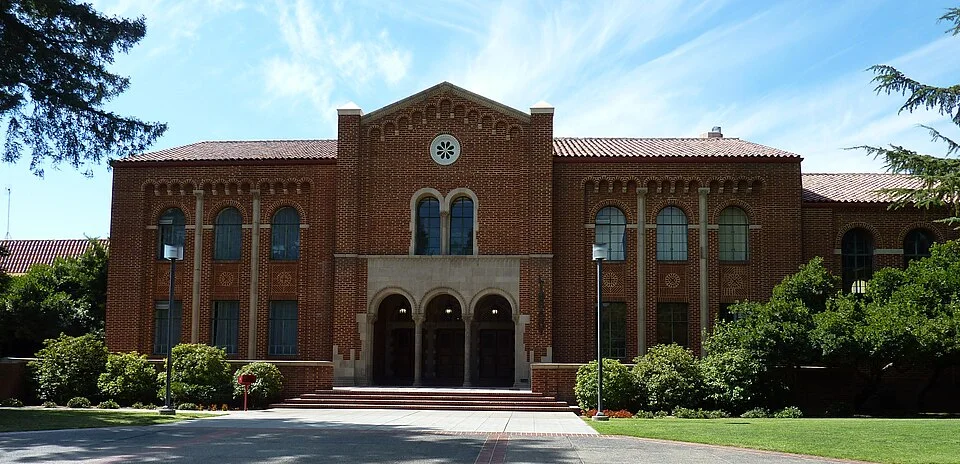
Fresno City College formerly offered a dedicated Criminology, Forensic Evidence Option as both an Associate in Science and a Certificate of Achievement. Those credentials were officially deleted effective Spring 2022. Older college pages and republished documents still display the program name, but the formal catalog deletion is the more authoritative record.
The college’s current forensic-related education is narrower. Its Law Enforcement Option includes criminal investigation training, while evidence-focused courses have appeared in recent catalogs and certificate materials. Fresno City College also has an IT-centered Network Security/Computer Technician certificate that required a Computer Forensics course in its verified 2024-2025 curriculum.
These options serve different career directions. The criminology curriculum is oriented toward policing, investigations, crime-scene procedures, and evidence handling. The computer course addresses digital evidence. Neither pathway is a current forensic science or laboratory criminalistics degree built around advanced chemistry, biology, instrumental analysis, or molecular methods.
Fresno City College’s forensic and evidence options at a glance
| Option | Status in verified materials | Main emphasis | Forensic relevance |
|---|---|---|---|
| Criminology, Forensic Evidence Option AS and certificate | Deleted effective Spring 2022 | Physical evidence, crime-scene work, science, investigation | Former direct CSI and evidence pathway |
| Criminology, Law Enforcement Option AS | Current degree inventory; revised effective Spring 2026 | Law enforcement and criminal investigation | Closely related, but not a forensic science degree |
| Criminology, Law Enforcement Option Certificate of Achievement | Listed in recent certificate materials | Law enforcement with evidence-related coursework | CRIM 8 required in the verified 2024-2025 plan; evidence electives were available |
| CRIM 8: Criminal Investigation | Documented course; revised AS requires it | Crime-scene logistics, evidence recovery, documentation, trial presentation | Practical investigation and evidence foundation |
| CRIM 9: Crime Scene Forensic Evidence | Documented in the 2023-2024 catalog and 2024-2025 certificate sheet; current scheduling unresolved | Physical evidence and crime-scene analysis | Direct introductory forensic-evidence course |
| Network Security/Computer Technician Certificate of Achievement | Verified in a 2024-2025 major sheet; 2026-2027 status unresolved | Networking, hardware, operating systems, and IT security | Required CIT 58B Computer Forensics |
| CIT 58B: Computer Forensics | Verified in recent curriculum; no Spring 2026 section located | Digital investigations, acquisition, analysis, and forensic tools | Introductory digital-evidence training |
| Basic Police Academy | Current adjacent training option | California peace-officer preparation | Relevant to sworn positions that include crime-scene duties |
Readers comparing this institution with other California CSI and forensic schools should focus on Fresno City College’s present curriculum, rather than the discontinued Forensic Evidence Option still found in older search results.
The former Criminology, Forensic Evidence Option
The discontinued Forensic Evidence Option was the college’s clearest direct route into physical crime-scene and evidence work. Fresno City College offered it as an Associate in Science and a Certificate of Achievement before deleting both credentials in Spring 2022.
The former certificate required 33 units. The associate degree’s major totaled 39 units after electives, with the full degree also requiring applicable general education and graduation coursework. Its curriculum included:
- Biological anthropology with laboratory work
- Biology for science majors
- General chemistry
- Two-dimensional computer-aided drafting
- Introductory criminology
- Legal aspects of evidence
- Criminal investigation
- Crime-scene forensic evidence
- Criminal justice communications
That course combination addressed more than general criminal justice. Biology, chemistry, anthropology laboratory work, evidence law, documentation, scene assessment, evidence searches, evidence processing, reconstruction, and courtroom preparation gave the former program a distinct CSI orientation.
Historical Fresno City College materials stated that the option had approval from the International Association for Identification. That approval belongs only to the former program and is not current accreditation for the Law Enforcement Option or another present credential. The former program was not documented as accredited by the Forensic Science Education Programs Accreditation Commission.
The deletion creates a practical problem for people researching the college online. A stale page or handout can show that a program once existed without establishing that new students can enter it. Fresno City College’s current degree and certificate inventories omit the Forensic Evidence Option, consistent with the formal deletion notice.
Current physical-evidence coursework
CRIM 8: Criminal Investigation
CRIM 8 is the central current course for investigation and evidence procedures. In the 2023-2024 catalog, it was a four-unit class with three lecture hours and three laboratory hours each week. Its topics included:
- Crime-scene logistics
- Searches
- Evidence recovery and preservation
- Scene and evidence documentation
- Scientific examination
- Trial presentation
The laboratory component separates CRIM 8 from a lecture-only overview of investigations. Evidence recognition and recovery require procedural practice because poor documentation, contamination, or broken chain of custody can compromise an investigation.
The Law Enforcement Option AS was revised effective Spring 2026, and the revised curriculum requires a three-unit version of CRIM 8. The available documents do not explain how the revised course’s contact hours compare with the older four-unit catalog description. CRIM 8 was also absent from the published Spring 2026 schedule, so its next term and delivery format are not established by the accessible schedule.
For career planning, CRIM 8 aligns more closely with field investigation and crime-scene responsibilities than with laboratory criminalistics. Its evidence-recovery, preservation, documentation, and courtroom topics are useful for police investigators, civilian evidence personnel, and entry-level crime-scene roles. It does not provide the upper-level chemistry, biology, molecular science, statistics, or instrumentation generally associated with crime-laboratory analyst positions.
CRIM 9: Crime Scene Forensic Evidence
CRIM 9 Crime Scene Forensic Evidence is the college’s most directly relevant documented physical-evidence course. The 2023-2024 catalog describes it as a three-unit lecture course that requires CRIM 8 first.
Its curriculum covers:
- Locating and identifying physical evidence
- Evidence handling and analysis
- Crime-scene analysis
- Pattern evidence
- Firearms
- Questioned documents
- Controlled substances
The course carries the C-ID AJ 150 designation and is CSU-transferable. CRIM 8 carries C-ID AJ 140. These designations can help California community college students document comparable lower-division coursework when planning transfer, although acceptance toward a particular major depends on the receiving institution’s degree requirements.
CRIM 9 appears in the 2023-2024 catalog and as an elective in the 2024-2025 Law Enforcement Option certificate sheet. It was not found in the Spring 2026 schedule. More recent evidence also shows that the revised Spring 2026 Law Enforcement Option AS does not include CRIM 9 among its required courses or course options.
The available records therefore support describing CRIM 9 as a documented Fresno City College course, but not as a class offered every term or as a current requirement in the associate degree. One introductory evidence course also remains far short of a complete forensic science degree.
Criminology, Law Enforcement Option Associate in Science
Fresno City College’s current degree inventory lists the Criminology, Law Enforcement Option Associate in Science. An August 2025-2026 catalog addendum revised the program effective Spring 2026 and set the major at 30 units.
The revised associate degree requires CRIM 8 Criminal Investigation. Its broader subject area covers criminology, criminal law, community relations, enforcement services, communications, ethics, and investigative work. That is an appropriate foundation for law-enforcement employment or further study in criminal justice.
The degree is not a renamed version of the deleted Forensic Evidence Option. The former program contained required biology, chemistry, anthropology, and specialized evidence courses. The current Law Enforcement Option is centered on policing and criminal justice, and the Spring 2026 revision does not list CRIM 9.
This route works better for a student pursuing law enforcement or an investigative role than for someone targeting a scientific crime laboratory. California agencies structure crime-scene positions differently. At one agency, a crime scene investigator may be a civilian specialist. At another, evidence collection may be assigned to a sworn officer. A law-enforcement curriculum can support the latter route, but it does not replace academy training where peace-officer status is required.
Laboratory criminalist preparation is a separate academic problem. Those careers commonly require substantial college science, particularly chemistry and biology. The current Law Enforcement Option does not document the science sequence needed to present it as a laboratory criminalistics degree.
Criminology, Law Enforcement Option Certificate of Achievement
The verified 2024-2025 Law Enforcement Option Certificate of Achievement requires 31 major units, with grades of C or better in each major course.
That curriculum includes 22 units of required law-enforcement coursework and at least nine elective units. In the 2024-2025 plan, CRIM 8 was required, while CRIM 3 Legal Aspects of Evidence and CRIM 9 Crime Scene Forensic Evidence appeared among the electives.
Choosing evidence-related electives could create a more focused introduction to crime-scene procedure and evidence law. The credential would still remain a Law Enforcement Option certificate, rather than a forensic evidence certificate. Its verified materials do not list a required forensic internship, residency, or separate crime-scene practicum beyond the practical work built into courses such as CRIM 8.
The certificate is shorter than an associate degree because it concentrates on the occupational major and does not represent the same amount of general education. It can serve someone seeking targeted law-enforcement coursework without immediately completing a full associate degree. Transfer-minded students usually receive more value from planning the certificate courses as part of a broader degree, especially when C-ID courses can support lower-division preparation.
The 31-unit figure comes from the 2024-2025 certificate sheet. Because the associate degree changed in Spring 2026 and a corresponding newer certificate revision was not located, the certificate and AS should not be presumed to have identical current requirements.
Digital forensics through Computer Information Technology
Fresno City College’s physical-evidence and digital-evidence offerings sit in separate academic areas. The verified 2024-2025 Network Security/Computer Technician Certificate of Achievement requires 33 major units, including CIT 58B Computer Forensics.
The rest of the certificate emphasizes:
- Computer concepts
- Operating systems
- Data communications
- Computer hardware
- Network security
- Switching and routing
- Server administration
- Security+ fundamentals
- Ethical hacking
- Digital concepts
This is primarily an IT networking and computer-support credential. Its published occupational objective focuses on entry-level microcomputer and networking technician work. The required Computer Forensics course adds digital-evidence relevance, but one course does not turn the entire certificate into a dedicated digital forensics program.
CIT 58B: Computer Forensics
CIT 58B is a three-unit course. The 2023-2024 catalog assigned it three weekly lecture hours and one weekly laboratory hour. Course topics included:
- The computer-investigation process
- Operating-system boot processes
- Disk structures
- Data acquisition and analysis
- Professional ethics
- Standard computer-forensics tools
This content is directly relevant to introductory digital investigations. The laboratory hour provides practical exposure to acquisition, analysis, and forensic software rather than limiting the class to conceptual cybersecurity material.
CIT 58B does not address physical crime-scene photography, latent prints, biological evidence, firearms examination, or evidence collection at a conventional scene. Its focus is data stored on computers and related investigative methods.
Several related security courses ran in Spring 2026, including Network Security, Cybersecurity Operations, Security+ Fundamentals, Wireless Network Security, and Ethical Hacking. CIT 58B was not found in that schedule. The Network Security/Computer Technician certificate is verified through its 2024-2025 major sheet, but its presence in the inaccessible 2026-2027 catalog could not be established from the available evidence.
Older official documents also listed a Network Security/Computer Technician AS and a 13-unit Information Security I local certificate containing CIT 58B. Those credentials were verified only in 2023-2024 materials, not sufficiently recent documents to profile them as current offerings. The older Information Security I credential was a local college certificate rather than a Certificate of Achievement, and the college document stated that it did not appear on the transcript.
Basic Police Academy and crime-scene assignments
Fresno City College operates a Basic Police Academy and State Center Regional Training Facility. Its police academy and peace-officer training courses are certified by California POST. Available formats include intensive, extended-night, and modular options.
The academy is relevant where an employer assigns crime-scene processing or investigative duties to sworn officers. It provides skills-based peace-officer preparation rather than an academic forensic curriculum. Academy training should therefore be evaluated separately from CRIM 8, CRIM 9, or a science degree.
Civilian evidence technicians and crime-scene personnel do not necessarily follow the academy route. Hiring structures differ by agency, and job titles are not standardized across California. A civilian crime-scene technician position can emphasize evidence collection, photography, fingerprints, documentation, and report writing, while a sworn investigator role also requires the legal authority and training associated with peace-officer employment.
The academy is not preparation for employment as a forensic chemist, forensic biologist, or laboratory criminalist.
Tuition, fees, and admissions context
For Spring 2026, California residents paid a $46-per-unit enrollment fee at Fresno City College. Nonresidents paid an additional $312 per unit in nonresident tuition. Health fees, student charges, books, supplies, course materials, and other applicable expenses were separate.
Using the resident enrollment rate only:
- A three-unit course would generate $138 in enrollment fees.
- The 31-unit Law Enforcement Option certificate would generate $1,426 in enrollment fees if every unit were billed at the same rate.
- The 33-unit Network Security/Computer Technician certificate would generate $1,518 in enrollment fees under the same assumption.
These calculations are not total costs of attendance. They exclude mandatory charges, equipment, books, transportation, living expenses, and any future fee changes. The associate degree also requires applicable general education and graduation units beyond its 30-unit major, so pricing only the major would understate the degree’s full enrollment cost.
General college admission requirements apply to the academic programs. Major courses in the verified Law Enforcement certificate require grades of C or better. Individual course sequencing also affects access. In the documented curriculum, CRIM 9 requires CRIM 8, while CIT 58B listed recommended prior preparation in computer concepts, operating systems, data communications, server administration, and English composition.
Police Academy admissions are separate and include age, education, testing, physical, driving-record, medical, and firearms-clearance conditions.
Institutional and specialized accreditation
Fresno City College is a public two-year institution accredited by the Accrediting Commission for Community and Junior Colleges. In June 2025, ACCJC reaffirmed the college’s accreditation for 18 months and required a follow-up report by October 1, 2026 addressing stated compliance requirements. The college remained listed as accredited as of the research date.
Institutional accreditation applies to the college as a whole. It is different from specialized approval of a forensic science curriculum.
No current Fresno City College program in this review was documented as accredited by the Forensic Science Education Programs Accreditation Commission. FEPAC is most relevant to forensic science and criminalistics degrees designed for scientific laboratory careers. It is not the accrediting body for a police academy, a general law-enforcement degree, or a networking certificate.
The former Forensic Evidence Option’s historical International Association for Identification approval must also remain separate from the status of current programs.
Choosing a Fresno City College route
Fresno City College currently provides related coursework rather than a verified standalone physical forensic-evidence credential.
A student pursuing policing or field investigation can use the Law Enforcement Option AS as the broadest current academic route. CRIM 8 supplies the clearest required connection to crime-scene logistics, evidence recovery, preservation, documentation, and trial presentation. The certificate offers a shorter law-enforcement curriculum, although the available detailed plan predates the Spring 2026 associate-degree revision.
Someone interested specifically in physical crime-scene work should pay close attention to the scheduling of CRIM 8 and CRIM 9. Both courses contain relevant material, but neither appeared in the published Spring 2026 schedule, and CRIM 9 is no longer part of the revised Law Enforcement Option AS.
Digital-evidence interests point toward CIT 58B and the Network Security/Computer Technician certificate. That route develops a wider base in operating systems, networking, hardware, and information security, with one required computer-forensics course in the verified 2024-2025 plan. It is better aligned with introductory digital investigation than with conventional CSI work.
Laboratory criminalistics requires a different academic plan. A reader targeting criminalist, forensic chemist, forensic biologist, or crime-lab analyst positions should prioritize a degree with substantial chemistry and biology, including appropriate laboratory sequences and advanced scientific coursework. Fresno City College’s current Law Enforcement Option does not document that preparation.
The former Forensic Evidence Option once combined science and crime-scene education in a single credential. Since its deletion, the practical choice at Fresno City College is to select among law enforcement, individual evidence courses, academy training, or an IT pathway with computer forensics, based on the specific type of work being pursued.