
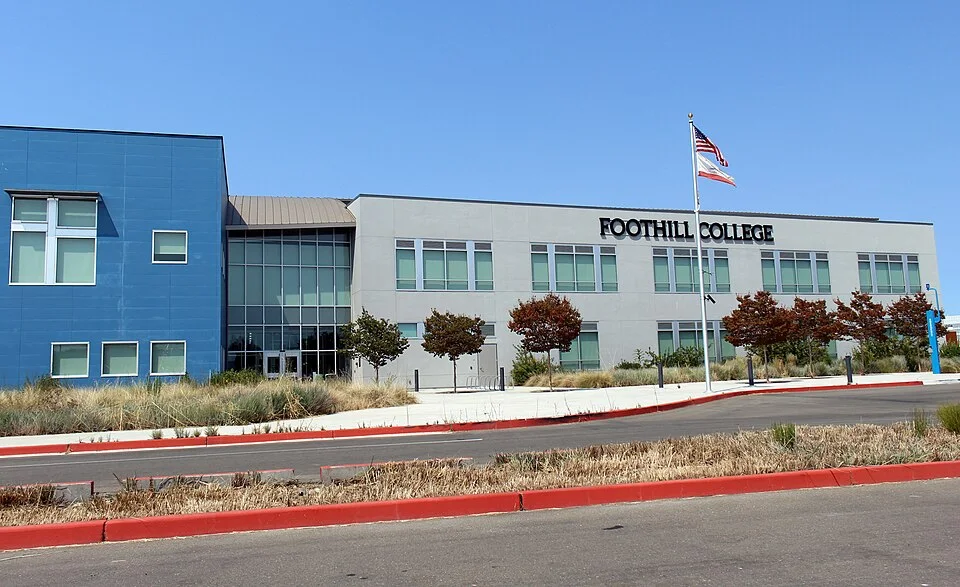
Foothill College offers one credential specifically devoted to forensic anthropology: a 14-quarter-unit, non-transcriptable Forensic Anthropology Certificate of Proficiency. The Los Altos Hills community college also offers anthropology associate degrees and certificates that can incorporate forensic coursework, plus a separate cybersecurity certificate containing a computer forensics course.
These options serve different goals. The dedicated certificate provides focused introductory study of human skeletal identification, trauma, remains recovery, documentation, and testimony. The Anthropology AA and AA-T provide a broader academic base for transfer and graduate-school planning. The cybersecurity program concerns digital evidence rather than human remains or biological anthropology.
None of Foothill’s programs is a terminal professional qualification for forensic anthropologists. Professional practice generally requires graduate education, advanced training in human osteology and anatomy, supervised case experience, and often doctoral preparation. Foothill is best understood as an affordable lower-division starting point or a supplement to broader anthropology education.
Foothill College forensic and related programs compared
| Program | Credential | Forensic content | Primary use |
|---|---|---|---|
| Forensic Anthropology Certificate of Proficiency | 14 quarter units, non-transcriptable | Required forensic anthropology lecture and laboratory, biological anthropology lecture and laboratory, and medical anthropology | Focused introductory education in skeletal analysis and forensic anthropology |
| Anthropology Associate in Arts | 36-unit major, at least 90 total quarter units | Forensic anthropology lecture and laboratory available as support courses | Broad anthropology education with flexible forensic electives |
| Anthropology Associate in Arts for Transfer | 29 to 33 major units, at least 90 total quarter units | Forensic anthropology lecture and laboratory available as electives | Transfer preparation for a CSU anthropology or related bachelor’s program |
| Physical Anthropology Certificate of Proficiency | 13 quarter units, non-transcriptable | Forensic anthropology courses are optional | Biological anthropology foundation with customizable electives |
| Applied Anthropology Certificate of Proficiency | 17 quarter units, non-transcriptable | Forensic anthropology and applied physical anthropology field methods are optional | Broad applied-anthropology study with a possible forensic component |
| Cybersecurity Certificate of Achievement | 27 quarter units | Required computer forensics course | Network security and digital-evidence preparation, not forensic anthropology |
Foothill operates on the quarter system and uses an open-admission process for students pursuing degrees, certificates, transfer preparation, or personal enrichment. The college offers in-person, online, and hybrid courses. Its online inventory has listed all six credentials in the table as online options, although section format and course availability can vary from one quarter to another.
Readers comparing other institutions can find additional profiles in the guide to California CSI and forensic schools.
Forensic Anthropology Certificate of Proficiency
The Forensic Anthropology Certificate of Proficiency is Foothill’s most direct option in this field. It requires 14 quarter units across five curriculum components:
- Biological anthropology lecture
- Biological anthropology laboratory
- Introduction to forensic anthropology
- Forensic anthropology laboratory
- Medical anthropology
The certificate has no English or mathematics proficiency requirements. It is designated as non-transcriptable, and it is a college Certificate of Proficiency rather than a professional certification, license, associate degree, or Certificate of Achievement.
What the curriculum covers
The biological anthropology courses establish the scientific context for studying human variation, evolution, anatomy, and skeletal biology. That background is necessary because forensic anthropology applies biological anthropology methods to questions involving human remains.
ANTH 13, Introduction to Forensic Anthropology, addresses osteology, odontology, DNA and population genetics, remains-recovery scenes, chain of custody, skeletal trauma, taphonomy, identification, report writing, ethics, and expert testimony. The course is four quarter units and is transferable to both CSU and UC.
Taphonomy is particularly relevant to forensic anthropology because it concerns the processes affecting remains after death. Environmental exposure, decomposition, animal activity, burial conditions, and other changes can complicate interpretations of trauma or identity. Combining taphonomy with osteology and recovery methods gives students a more realistic introduction than skeletal identification alone would provide.
ANTH 13 is a lecture course without a separate laboratory component built into its four units. Practical work comes through ANTH 13L, the one-unit Forensic Anthropology Laboratory. Students must complete ANTH 13 or ANTH 13H before or while taking the laboratory.
ANTH 13L requires three laboratory hours per week, totaling 36 hours during the quarter. Published activities include skeletal identification, assessment of trauma and pathology, crime-scene methods, evidence documentation, photography, database entry, instrumentation, and a mock presentation of judicial evidence. These exercises introduce the workflow through which observations become documented findings that can be explained in legal settings.
The laboratory requirement gives this certificate more practical depth than a lecture-only introduction. The official curriculum does not establish that students work on active medicolegal cases or handle remains from current investigations, so the experience is academic laboratory preparation rather than documented professional casework.
Medical anthropology adds a broader view of health, illness, biology, and culture. It is less directly associated with skeletal identification, but it helps place human biological evidence within social and cultural contexts. That perspective is useful in anthropology, where interpretation requires more than measuring physical features.
What the certificate can and cannot prepare you to do
The certificate is appropriate for exploring forensic anthropology, adding focused coursework to another degree, or beginning lower-division preparation for advanced anthropology study. It may also help students decide whether they want to pursue osteology, archaeology, biological anthropology, medicolegal death investigation, or a related field.
It does not qualify a graduate to practice independently as a forensic anthropologist. The American Board of Forensic Anthropology describes graduate education and specialized anthropology training as standard preparation for professional work. Board certification requires a PhD, practical case experience, and successful examination. The American Academy of Forensic Sciences likewise reports that forensic anthropologists usually earn a PhD emphasizing human osteology and anatomy.
This certificate is also narrower than a general crime scene investigation program. It addresses recovery scenes, documentation, photography, and chain of custody as they relate to forensic anthropology. It is not a broad CSI curriculum covering fingerprints, bloodstain pattern analysis, firearms, trace evidence, controlled substances, and all other categories of physical evidence.
Nor is it a laboratory criminalistics program. Students pursuing criminalist or forensic chemist positions generally need substantially more chemistry, biology, quantitative science, and instrumental laboratory preparation than this 14-unit anthropology certificate provides.
Anthropology AA and AA-T pathways
Foothill’s two anthropology associate degrees offer more breadth than the short certificate. They cover biological anthropology, cultural anthropology, and archaeology, then allow students to add forensic anthropology through elective or support-course choices.
Anthropology Associate in Arts
The Anthropology AA requires a 36-unit major and at least 90 total quarter units. Core and support courses require a grade of C or P or better, with a minimum 2.0 GPA.
Students can select ANTH 13 or its honors version and ANTH 13L as support courses. Other relevant options may include medical anthropology, statistics, research methods, biological anthropology laboratory work, archaeology laboratories, and field-methods courses.
The local AA provides room to build a broader course plan around individual interests. A future forensic anthropology student could combine the forensic lecture and laboratory with research methods, statistics, archaeology, and field training. This creates a stronger academic base than completing the 14-unit certificate by itself.
The tradeoff is that forensic coursework is not inherent in the degree title or guaranteed by its structure. Two students can finish the Anthropology AA with different levels of forensic preparation depending on their support-course selections.
Anthropology Associate in Arts for Transfer
The Anthropology AA-T requires 29 to 33 units in the major and at least 90 total quarter units. Its core includes biological anthropology, biological anthropology laboratory, cultural anthropology, and archaeology. The forensic anthropology lecture and laboratory are List B electives rather than mandatory courses.
The AA-T is the clearer route for a student whose main objective is transfer into a CSU anthropology or related bachelor’s program. It provides an organized lower-division anthropology foundation while preserving the opportunity to take Foothill’s forensic sequence.
Transfer planning should extend beyond finding a bachelor’s program with “forensic” in its name. Future forensic anthropologists need substantial preparation in areas such as:
- Biological anthropology
- Human anatomy
- Human osteology
- Archaeology and field recovery
- Biology and genetics
- Chemistry
- Statistics
- Research design and scientific writing
The AA-T is an early step in that progression, not the final professional credential. Admission to a particular CSU campus, anthropology major, or forensic concentration is governed by the receiving institution’s requirements.
Physical Anthropology Certificate of Proficiency
The Physical Anthropology Certificate of Proficiency requires 13 quarter units and is non-transcriptable. It begins with biological anthropology lecture and laboratory, followed by eight units selected from approved courses.
Possible electives include forensic anthropology, forensic anthropology laboratory, medical anthropology, field methods, biology, genetics, psychology, sociology, and related subjects. A student can therefore shape the certificate toward forensic anthropology by selecting ANTH 13 and ANTH 13L.
The main difference from the dedicated forensic certificate is that forensic coursework is optional. The Physical Anthropology Certificate guarantees a biological anthropology foundation but not the complete forensic sequence. It works better for broader study of human biology, evolution, and variation, especially when the student has not yet committed to a forensic specialization.
Someone already planning to complete both forensic anthropology courses will receive a more clearly defined curriculum through the dedicated Forensic Anthropology Certificate. Someone seeking flexibility across genetics, biology, psychology, or human evolution may prefer the physical anthropology structure.
Applied Anthropology Certificate of Proficiency
Foothill’s Applied Anthropology Certificate of Proficiency is a 17-quarter-unit, non-transcriptable credential. It requires introductory biological anthropology, cultural anthropology, applied anthropology, one field-methods course, and a four-unit elective.
Introduction to Forensic Anthropology is one possible elective, but students can instead select a non-forensic subject such as linguistic or medical anthropology. The required field-methods unit can come from applied cultural, physical, or archaeological anthropology.
ANTH 56, Applied Physical Anthropology Field Methods, can involve projects in forensic anthropology or osteology. Other possible project areas include medical, environmental, and design anthropology. Its published content includes research design, data collection, preliminary analysis, report preparation, and presentation.
Because the project topic can vary, the Applied Anthropology Certificate does not guarantee forensic laboratory or osteology experience. A deliberately chosen combination of ANTH 13 and ANTH 56 could add useful forensic exposure, but the certificate remains a broad applied-anthropology credential. It is less focused than the dedicated forensic certificate and does not require ANTH 13L.
Cybersecurity and computer forensics
The term “forensics” also appears in Foothill’s computer science curriculum. This pathway is unrelated to skeletal analysis, human remains, and biological anthropology.
The Cybersecurity Certificate of Achievement requires 27 quarter units. Its required courses cover Linux, networking, cybersecurity fundamentals, firewalls and threat management, ethical hacking, and computer forensics.
C S 53D, Introduction to Computer Forensics, is a 4.5-unit course containing both lecture and laboratory work. Topics include evidence integrity, forensic rules of evidence, data acquisition, drive imaging, hashing, forensic tools, documentation, report preparation, and expert technical testimony. C S 53A is advisory preparation.
This program aligns with computer security and digital-evidence interests. It does not prepare students for forensic anthropology, physical evidence analysis, or crime-scene work involving human remains. Its inclusion in Foothill’s program inventory reflects a second meaning of forensic practice: preserving, analyzing, and explaining evidence stored on computers and digital media.
Online availability and hands-on work
Foothill’s 2025-2026 online-program inventory listed the Forensic Anthropology Certificate, Anthropology AA, Anthropology AA-T, Physical Anthropology Certificate, Applied Anthropology Certificate, and Cybersecurity Certificate as options that could be completed through fully online courses. The relevant credentials remain active in the 2026-2027 catalog.
Online listing does not mean every required course is offered in every quarter. Course timing and section modality can change. This is most consequential for the forensic anthropology certificate because ANTH 13L is a required 36-hour laboratory course. Even when delivered online, the course retains practical assignments involving skeletal identification, documentation, photography, database work, instrumentation, and mock testimony.
Foothill’s current catalog does not specify that online laboratory students must travel to campus or attend an in-person residency. It also does not provide a permanent quarter-by-quarter guarantee of online availability.
Tuition, fees, and financial planning
For 2026-2027, Foothill College lists a California resident enrollment fee of $31 per unit. Nonresident students pay an additional $253 per unit, for stated per-unit charges totaling $284.
Using those rates:
- The 14-unit Forensic Anthropology Certificate produces $434 in resident enrollment fees or $3,976 in stated nonresident per-unit charges.
- The 13-unit Physical Anthropology Certificate produces $403 in resident enrollment fees.
- The 27-unit Cybersecurity Certificate produces $837 in resident enrollment fees or $7,668 in stated nonresident per-unit charges.
These figures are tuition or enrollment-fee calculations, not complete program prices. Foothill separately charges applicable quarterly fees, which can include health, Campus Center, SmartPass, student representation, student body, parking, books, materials, and course-specific expenses.
Associate-degree totals cannot be calculated accurately from the published per-unit rate alone. Transfer credit, general education overlap, residency, enrollment pace, and financial aid all affect the final amount.
The catalog states that most federal financial-aid eligibility requires enrollment in an eligible academic program of at least 24 units. The 14-unit forensic certificate falls below that general threshold, while a student completing the certificate within an eligible associate-degree plan has a different academic structure.
Accreditation
Foothill College is institutionally accredited by the Accrediting Commission for Community and Junior Colleges. The college reports that its accreditation was reaffirmed in spring 2026 through 2031.
No specialized forensic anthropology accreditation was identified for these programs. They also are not identified as accredited by the Forensic Science Education Programs Accreditation Commission. FEPAC accredits qualifying bachelor’s and master’s programs in forensic science, or natural or computer science programs with a forensic science concentration. It is not the appropriate accreditation category for Foothill’s short, non-transcriptable anthropology certificate.
Institutional accreditation supports college-level study and transfer, but it does not turn the certificate into a professional forensic anthropology qualification.
Choosing the appropriate Foothill route
The dedicated Forensic Anthropology Certificate is the direct choice for focused introductory study. It requires both the lecture and laboratory sequence and covers skeletal analysis, trauma, recovery, chain of custody, documentation, and testimony within 14 quarter units.
The Anthropology AA-T is better aligned with a planned transfer to a CSU anthropology program. Adding ANTH 13 and ANTH 13L preserves the forensic focus while building the broader academic foundation needed for upper-division and graduate study.
The local Anthropology AA provides more flexibility for combining forensic courses with research methods, statistics, archaeology, medical anthropology, and fieldwork. The Physical Anthropology Certificate is useful for exploring human biology while retaining elective choice, but its forensic content is not required. Applied Anthropology offers a possible forensic elective or project without guaranteeing either one.
A future forensic anthropologist should use Foothill to build lower-division preparation, then continue into a bachelor’s program with strong biological anthropology, anatomy, archaeology, science, statistics, osteology, research, and field recovery opportunities. Graduate study and supervised experience follow that undergraduate foundation. Readers interested in digital evidence rather than human remains should look instead at the Cybersecurity Certificate and its required computer forensics laboratory course.