
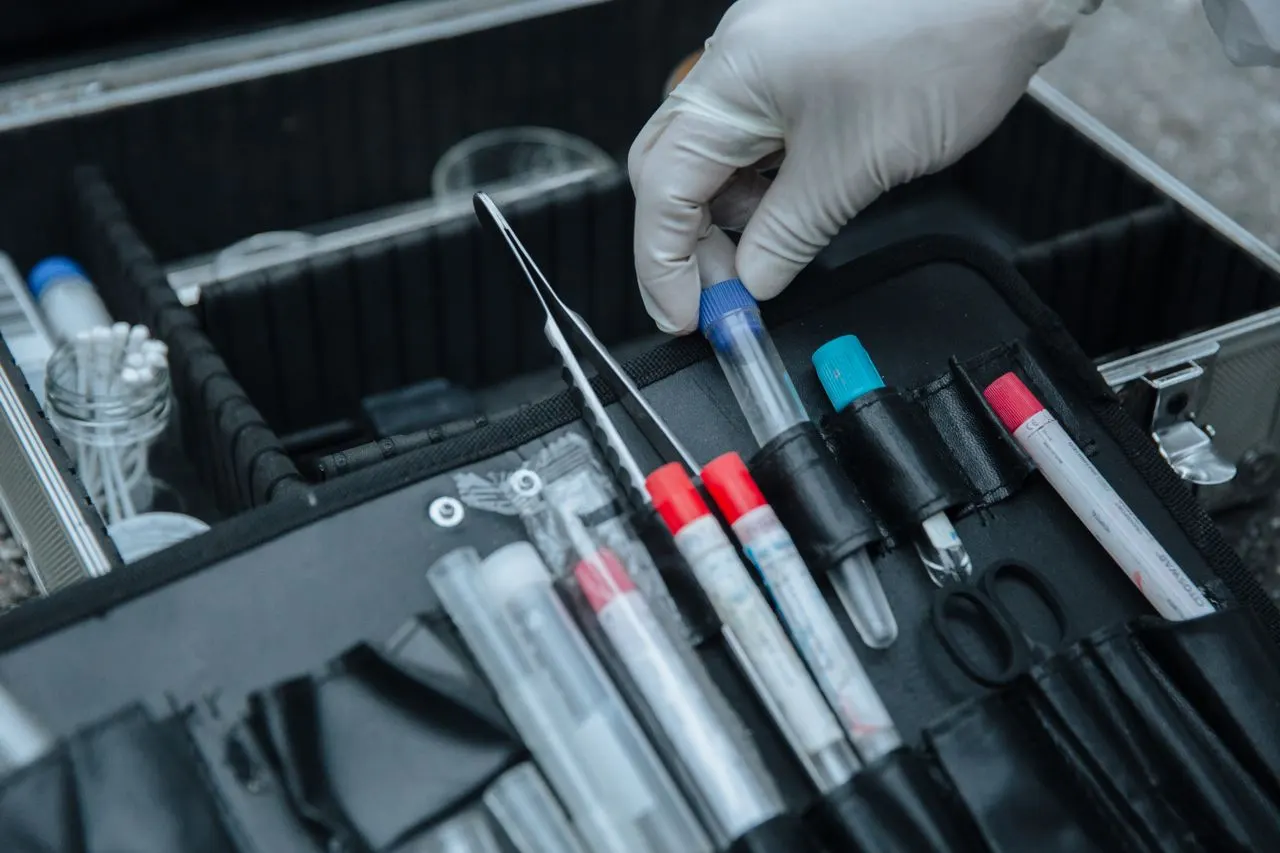
California students looking for an affordable online master’s in forensic science have more choices outside the state than within it. California-based National University and Alliant University both offer online graduate options, but several public universities in other states currently charge lower published online tuition while still accepting distance students.
Price alone should not decide the program. A forensic science master’s can focus on DNA, chemistry, toxicology, crime-scene investigation, laboratory management, intelligence analysis, or general professional advancement. A cheaper program that does not match the work you want can be a poor value.
There is another California-specific issue to keep in view. The state’s Criminalist classification requires the equivalent of a bachelor’s degree with a major in a physical or biological science, including at least eight semester hours of general chemistry and three semester hours of quantitative analysis. An online master’s can add specialization, but it does not automatically replace missing undergraduate science requirements.
For a wider comparison of online programs regardless of price, see online master’s degrees in forensic science. The broader forensic science degree guide for California includes bachelor’s, master’s, associate, and online pathways.
Affordable Online Forensic Science Master’s Programs
The table below uses current published tuition or program-cost information available from the universities. Estimates are before scholarships, employer assistance, military benefits, and most personal expenses. Travel is called out separately where a program requires residencies.
| School | Program | Credits | Published Cost Context | Format |
|---|---|---|---|---|
| Oklahoma State University | M.S. in Forensic Sciences | 32 for non-thesis routes | About $14,352 in 2026–27 nonresident online tuition and listed per-credit online/master’s fees | Fully online for non-thesis tracks |
| Arizona State University | Professional Science Master’s in Forensic Science | 30 | About $18,150 at the published $605/credit general graduate online rate, before program-specific fees | Online |
| University of Florida | Online forensic science master’s options | 32 | $18,400 tuition plus fees | Fully online, asynchronous |
| Alliant University | M.S. in Forensic Science, Investigation & Technology | 33 | About $19,140 tuition at $580/unit, before fees and residency travel | Online + two weekend residencies |
| Florida International University | Professional Science Master’s in Forensic Science | 33 | Program page currently lists $21,566 cost of attendance | Online, asynchronous |
| Grand Canyon University | M.S. in Forensic Science | 36 | About $21,960 tuition at $610/credit | Online |
| National University | Master of Forensic Sciences | 36 | $25,830 official estimated program cost | Online, hybrid, or in person depending on specialization |
| Stevenson University | M.S. in Forensic Science | 36 | About $25,884 tuition at $719/credit; university lists $0 additional online fees | 100% online |
These figures are useful for comparison, but they are not identical accounting measures. Oklahoma State’s estimate includes its listed online and master’s per-credit fees. UF publishes tuition plus separate fees. Alliant’s figure above is tuition only and does not include travel for its two residencies. FIU labels its figure as cost of attendance rather than a simple tuition total. National publishes an estimated program total that includes its course-material fee structure.
Oklahoma State University — M.S. in Forensic Sciences
Oklahoma State University is the lowest-cost substantial online forensic science master’s we found in the current research.
The non-thesis M.S. requires 32 credit hours and can be completed fully online. OSU offers several areas of emphasis, including:
- Forensic Biology/DNA
- Forensic Chemistry/Toxicology
- Forensic Investigative Sciences
- Arson, Explosives, Firearms and Toolmarks Investigation
- Forensic Psychology
- Forensic Crime Analysis
- Forensic Threat Assessment and Management
The range is unusually broad, so students need to choose carefully. The Biology/DNA and Chemistry/Toxicology tracks are the more relevant choices for laboratory-oriented students. The investigative, psychology, crime-analysis, and threat-assessment tracks serve different professional goals.
For the 2026–27 academic year, Oklahoma State’s Center for Health Sciences lists nonresident online graduate tuition at $421 per credit, plus a $25 online course fee and $2.50 master’s program fee per credit. At 32 credits, those listed charges total approximately $14,352, before books and any course-specific expenses.
The science tracks also expect an appropriate academic background. Forensic Biology/DNA recommends prior study in fields such as biology, genetics, or molecular biology, while Forensic Chemistry/Toxicology recommends a physical or natural science background such as chemistry, biology, or biochemistry.
One accreditation point deserves clarification. Oklahoma State’s M.S. previously held FEPAC accreditation but voluntarily withdrew effective January 1, 2024. It should not be described as currently FEPAC-accredited.
For California students who already have a suitable science bachelor’s degree, OSU is difficult to ignore on price.
Arizona State University — Online Professional Science Master’s in Forensic Science
Arizona State University’s 30-credit Professional Science Master’s in Forensic Science is another comparatively inexpensive option, but it serves a different purpose from a traditional laboratory-science master’s.
The degree consists of 10 online classes, generally delivered in 7.5-week sessions. Coursework combines forensic science with subjects such as ethics, quantitative methods, pharmacology, governance, laboratory leadership, policy, and professional practice.
That makes the PSM particularly relevant to people already working in forensic science, law enforcement, medicolegal settings, or related fields who want to move toward advanced professional or supervisory responsibilities.
ASU Online lists 2026–27 graduate tuition at $605 per credit for most programs. Using that published base rate, 30 credits equal approximately $18,150 in tuition before any program-specific fees. Students should use ASU’s tuition estimator for the final program figure.
ASU specifically lists California among the states where it is authorized to operate, and the forensic science PSM is not identified among its California program exceptions.
Students whose primary goal is advanced DNA or analytical chemistry training may prefer a program with a more specialized laboratory-science curriculum. ASU’s PSM is strongest when professional growth and forensic leadership are part of the objective.
University of Florida — Online Forensic Science Master’s Programs
The University of Florida combines relatively low tuition with one of the deepest sets of online forensic science specializations.
UF currently offers four 32-credit online master’s options:
- Forensic Science
- Forensic DNA & Serology
- Forensic Drug Chemistry
- Forensic Toxicology
The programs are fully online and use asynchronous coursework. Students can normally complete the degree in two to three years, although UF allows a longer completion window for students who need to move more slowly.
The general Forensic Science concentration covers areas such as biological evidence, forensic DNA, serology, criminalistics, toxicology, crime-scene investigation, bloodstain pattern analysis, and drug-related chemistry. Students who already know their specialty can pursue the DNA, drug chemistry, or toxicology route instead.
UF currently charges $575 per credit for all online forensic science students regardless of location. The university lists base tuition for the 32-credit master’s at $18,400 plus fees.
Admission is science-oriented. Master’s applicants generally need a bachelor’s degree in a natural science and an upper-division GPA of at least 3.0. UF no longer requires the GRE for these programs.
One detail to understand before applying is the formal degree title. The Forensic Science, DNA & Serology, and Drug Chemistry options are issued through Pharmaceutical Sciences, while the Forensic Toxicology route is administered through Veterinary Medical Sciences.
For California residents who already hold an appropriate science degree, UF offers a strong mix of specialization, price, and a completely online format.
Alliant University — M.S. in Forensic Science, Investigation & Technology
Alliant is one of the two California-based programs on this list. Its 33-unit M.S. in Forensic Science, Investigation & Technology costs less in base tuition than several national alternatives and is designed around working professionals.
Students choose among three concentrations:
- Criminalistics and Technology
- Crime Scene and Incident Investigation
- Criminal Investigative Intelligence & Analysis
The Criminalistics and Technology concentration is the closest match for students interested in physical and biological evidence, including DNA, trace evidence, toxicology, pharmacological evidence, preservation, and identification methods.
The Crime Scene and Incident Investigation concentration moves toward field investigation. The intelligence concentration focuses more on crime mapping, geospatial work, open-source intelligence, digital information, analytics, and threat assessment.
For 2026–27, Alliant lists tuition at $580 per unit. At 33 units, base tuition is approximately $19,140 before additional fees.
The online format is not completely travel-free. Students must attend two on-site weekend residencies and complete a research thesis. California residents should include transportation and lodging when comparing Alliant with programs that have no residency requirement.
Alliant can be cost-effective for someone who wants a California-based program with an investigative or technology component. Students focused solely on bench chemistry or molecular biology should compare the Criminalistics and Technology track with more narrowly scientific programs.
Florida International University — Online Professional Science Master’s in Forensic Science
Florida International University’s online Professional Science Master’s in Forensic Science is designed around professional advancement in forensic organizations.
The 33-credit program combines graduate forensic science with business and public-administration coursework. FIU describes the program as asynchronous, flexible, and cohort-based, with a typical completion time of about 16 months.
The Forensic Science Management route is particularly relevant to laboratory personnel, forensic practitioners, and other professionals who want to move toward supervision or administration rather than simply add more entry-level technical coursework.
FIU’s program page currently lists a cost of attendance of $21,566. Because FIU presents that as a program cost-of-attendance figure rather than a simple per-credit tuition rate, students should verify the current amount and what it includes before comparing it directly with tuition-only figures from other universities.
Applicants need a bachelor’s degree from an accredited institution and prior science preparation that includes at least a year of biology, chemistry, and/or physics. FIU also requires two recommendation letters and may require an interview.
FIU Online states that the university is individually approved to offer online programs in California, which is useful because California does not participate in NC-SARA.
Grand Canyon University — Online M.S. in Forensic Science
Grand Canyon University offers a 36-credit M.S. in Forensic Science in an online format with eight-week courses.
The curriculum includes advanced criminalistics, forensic ethics, quality assurance and quality control, courtroom presentation of scientific evidence, physical evidence analysis, and other forensic-science subjects.
GCU currently lists online graduate tuition for this program at $610 per credit. At 36 credits, that comes to approximately $21,960 in tuition before any additional charges or financial aid.
Admission requires more science than the general graduate requirements might suggest. Students need a bachelor’s degree in forensic science or a related discipline, or an undergraduate degree in another subject combined with prerequisite study in chemistry, organic chemistry, and advanced biology.
GCU also allows up to 12 credits, or one-third of the program, to transfer when the coursework meets university requirements. Students with applicable graduate work may therefore face a lower remaining tuition bill than the full 36-credit estimate.
This program can be a practical middle-ground option for students who want a direct M.S. in Forensic Science without the higher tuition charged by some private universities.
National University — Master of Forensic Sciences
San Diego-based National University gives California students an in-state institutional option with online, hybrid, and in-person study.
The 36-credit Master of Forensic Sciences offers two specializations:
- Criminalistics
- Investigation
Criminalistics is the science-oriented route. Coursework includes areas such as trace evidence, advanced forensic toxicology, forensic serology and DNA, and advanced DNA analysis. National requires students entering this specialization to hold an undergraduate degree in a laboratory or physical science.
Investigation is broader and does not require a specific undergraduate major. It covers areas such as crime-scene investigation, forensic photography, major-case investigation, law, and forensic psychology.
The distinction is important for California students. Someone trying to strengthen qualifications for laboratory work should evaluate Criminalistics. Investigation is a different professional path and should not be treated as equivalent laboratory preparation.
National currently lists a base rate of $683 per credit, a $105 course-material fee, and an official estimated program cost of $25,830 for the MFS.
The degree is not the cheapest option on this list, but monthly starts, a California base, and flexible delivery may be valuable to working students who prioritize scheduling as well as tuition.
Stevenson University — Online M.S. in Forensic Science
Stevenson University’s 36-credit online M.S. is the highest-priced program in this affordable group, but its cost is unusually transparent: the university lists $719 per credit and $0 additional university fees for the online forensic science master’s.
At 36 credits, that produces an estimated tuition total of $25,884.
Stevenson offers two concentrations:
- Forensic Biology
- Forensic Chemistry
The program is 100% online and is built for students who already have a natural-science foundation. Admission prerequisites include general chemistry I and II with labs, organic chemistry I and II with labs, biology with lab, calculus or statistics, and physics I and II with labs.
Coursework covers areas such as physical evidence, laboratory safety, quality assurance, serology and immunology, DNA analysis, trace evidence, toxicology, and expert-witness preparation.
Those prerequisites make Stevenson a more natural fit for students who already have the science background expected of laboratory professionals. Someone coming from a nonscience bachelor’s degree may need considerable prerequisite work before the master’s becomes an option.
How We Defined “Affordable”
There is no official price at which an online forensic science master’s becomes affordable.
For this guide, the useful comparison was current published program tuition or required program charges before financial aid, with an emphasis on degrees that come in at roughly $26,000 or less based on current university figures.
We did not subtract:
- Scholarships
- Employer tuition assistance
- Military or veteran benefits
- Federal financial aid
- Transfer credits a student may or may not receive
- Tax benefits
We also did not add normal living expenses because an online student would generally have housing and food costs whether enrolled or not.
Travel is different. When a degree specifically requires a residency, as Alliant does, that expense is directly connected with enrollment and should be part of the student’s comparison.
Tuition changes regularly, so applicants should confirm the current rate with the university before enrolling.
Cheapest Does Not Always Mean Best for Laboratory Work
The least expensive degree can still cost too much if it does not satisfy the prerequisites for the career you want.
California’s current Criminalist minimum qualifications require the equivalent of a bachelor’s degree with a major in a physical or biological science, including:
- Eight semester hours of general chemistry
- Three semester hours of quantitative analysis
The state also evaluates relevant coursework and experience in subjects such as organic chemistry, biochemistry, genetics, molecular biology, statistics, toxicology, physics, instrumental analysis, chromatography, microscopy, and DNA techniques.
Students targeting California crime laboratories should review the current Criminalist examination bulletin alongside the master’s curriculum.
A student with a B.S. in chemistry or biology may be able to use an affordable online master’s to add forensic specialization. A student with an unrelated bachelor’s degree should not assume that a graduate forensic degree will make up for a missing qualifying undergraduate science major.
What About FEPAC Accreditation?
The Forensic Science Education Programs Accreditation Commission accredits specific forensic science bachelor’s and master’s programs. Institutional accreditation and FEPAC programmatic accreditation are not the same thing.
Distance education itself does not prevent FEPAC accreditation; FEPAC standards recognize distance delivery but still expect appropriate laboratory experience in science-based programs.
Students should check the exact degree in the current FEPAC directory rather than assuming that accreditation applies to every forensic program at a university.
Oklahoma State is a good example of why current verification matters. Its M.S. in Forensic Science was previously accredited, but the university voluntarily withdrew from FEPAC accreditation effective January 1, 2024.
FEPAC status is useful information, but it should be weighed alongside science prerequisites, curriculum depth, laboratory preparation, cost, research, and career alignment.
Is an Online Master’s Financially Worth It?
A master’s degree is not required for every forensic science job. The U.S. Bureau of Labor Statistics lists a bachelor’s degree as the typical entry-level education for forensic science technicians.
BLS reported a national median annual wage of $72,060 in May 2025 and projects 13% employment growth from 2025 to 2035.
That makes the financial case for graduate school highly individual. A master’s may be useful when it provides a specific scientific specialty, helps an existing forensic professional move into advanced work or management, supports research, or fills a clearly identified requirement for a desired position.
It is harder to justify borrowing heavily for a graduate degree simply because it has “forensic science” in the title.
Before applying, compare three things:
- Your existing undergraduate transcript.
- The master’s curriculum and full program cost.
- Current qualification requirements for California jobs you would realistically pursue.
If the degree fills a specific gap between the first and third items at a price you can manage, the investment is much easier to evaluate.
For students primarily concerned with cost, Oklahoma State, Arizona State, and the University of Florida currently form the strongest low-price group in this research, while Alliant gives California residents a reasonably priced in-state option with a broader investigative focus. The remaining programs cost more but may justify that difference through curriculum, specialization, scheduling, or admissions fit.
The right affordable program is not simply the cheapest one. It is the least expensive program that actually moves you toward the forensic work you intend to do.